
Celestial Secrets
The Hidden History of the Fatima Incident — Volume II of the Fátima Trilogy, on How the Church's 1941 Account Replaced the 1917 Record
Core Thesis
Celestial Secrets: The Hidden History of the Fatima Incident is the middle volume of the Fátima Trilogy, and its argument is archival rather than theological. In 1978, the Portuguese historians Joaquim Fernandes and Fina D'Armada were given access to the original 1917 records of the Fátima events, held at the Sanctuary of Fátima since they occurred — the parish inquiry documents, the earliest interviews with the three children, and the contemporaneous material generated before any of it had been shaped into devotional narrative. What they found, and what this book argues, is that the account the world knows does not come from those documents. It comes principally from the memoirs Lúcia dos Santos wrote under Church direction in the 1930s and 1940s, more than two decades after the events, and it differs from the earliest record in ways that consistently push the material toward a purely Marian reading and away from the strange, physical, uncomfortably specific details the 1917 interviews contain. This site's Fatima Miracle of the Sun case file draws on that argument directly.
About the Author
Joaquim Fernandes is a Portuguese historian and university academic, and Fina D'Armada a historian and researcher; their qualification for this work is documentary rather than ufological. They read Portuguese, they work in Portuguese archives, and in 1978 they obtained access to a body of primary material about Fátima that had not previously been examined by researchers approaching it as historians rather than as devotees.
That access is the trilogy's foundation and its non-negotiable claim to attention. Almost everything written about Fátima in English, in the century since 1917, descends from Lúcia's memoirs and from Church-approved accounts built on them. Fernandes and D'Armada worked from what was written down at the time, in Portuguese, by parish officials and journalists with no interest in producing a devotional narrative.
The trilogy's three volumes are published in English by Anomalist Books and this site covers all three. Heavenly Lights: The Apparitions of Fátima and the UFO Phenomenon (1995) sets out the case that the 1917 accounts describe something closer to a close encounter than to a purely visionary event; this volume examines how the record was subsequently reshaped; and Fatima Revisited: The Apparition Phenomenon in Ufology, Psychology, and Science (2008), edited with Fernando Fernandes and Raul Berenguel, gathers multi-disciplinary responses.
The English edition's apparatus is worth flagging honestly, because it affects how the book is received. It was edited by Andrew D. Basiago, translated by Alexandra Bruce, and carries a foreword by Jim Marrs — a conspiracy-focused author whose own work sits well outside the historiographical standards Fernandes and D'Armada apply. A rigorously-sourced Portuguese archival study arriving in English wrapped in that packaging is a real problem for its reception, and it is not the authors' doing.
Historical Context & Origins
The events at the Cova da Iria near Fátima, Portugal, ran from May to October 1917 and culminated on October 13 in a mass-witnessed solar phenomenon observed by a crowd estimated in the tens of thousands. This site's case file records the detail that makes the event evidentially unusual: the phenomenon was corroborated by the chief editor of an explicitly anticlerical newspaper, Avelino de Almeida of O Século, who had travelled to Fátima expecting to write a debunking and instead published an account of what he saw.
Portugal in 1917 was a violently anticlerical republic. The 1910 revolution had separated church and state, expelled religious orders, and made public Marian devotion a political act. That context matters twice over: it explains why the events drew hostile press attention and therefore generated non-devotional documentation, and it explains why the Church subsequently had strong institutional reasons to manage the narrative carefully.
The Church's own investigation ran thirteen years, concluding in 1930 with the declaration that the apparitions were worthy of belief. Lúcia's memoirs — four of them, written between 1935 and 1941 at the direction of her bishop — postdate that process and were produced inside it. They are the source of most of what modern readers know about Fátima, including the Secrets, and they were written by an adult nun recalling events she experienced as a ten-year-old child, under the direction of superiors with a settled view of what those events meant.
The specific things Fernandes and D'Armada find in the 1917 record and not in the later account are the book's substance: descriptions of the apparition's physical appearance, dimensions, sound, movement and departure that read less like Marian iconography than like a close encounter, and details the children gave to parish investigators in 1917 that do not survive into the canonical narrative.
The wider UFO-Fátima literature this book belongs to is older than the trilogy. Writers had noted the parallels between Marian apparitions and close-encounter reports since at least the 1960s — Jacques Vallée makes the connection explicitly in Passport to Magonia (1969). What Fernandes and D'Armada added was primary-source access, which none of the earlier writers had.
One further piece of context explains why the archival gap existed for sixty-one years. Fátima's records were held by the institution the events had made famous and enriched, in a country where the Church's political position had been precarious and then recovered, and access was granted at institutional discretion. That is not a conspiracy; it is the ordinary situation of any religious archive. But it does mean the documents were available for six decades to anyone the Sanctuary chose to admit, and that the first researchers to approach them as historians rather than devotees found things that had not been reported — which says something about who had been reading them and what they were reading for.
Core Arguments & Key Concepts
The 1917 record and the canonical account are different documents. The book's foundational claim and the one everything else rests on. This is a checkable historiographical assertion, not an interpretation, and it is why the trilogy is taken seriously by readers who reject its conclusions.
The 1941 memoirs function as a cover story. The authors' framing, and the strongest form of their argument: that Lúcia's Church-directed recollections, written a quarter-century after the fact, both shaped the modern understanding of Fátima and obscured what the earliest documents describe. 'Cover story' implies intent, which the evidence does not establish; 'institutional reframing' would be the more defensible formulation and is what the documentary comparison actually supports.
The earliest descriptions read like a close encounter. The specific 1917 details — the apparition's small stature, the described light and sound, the physical effects on the crowd, the departure — are the trilogy's evidentiary core. Readers should note that reading them as a close encounter is itself an interpretation applied to a text, and that the children were describing something to adults who were asking leading questions about the Virgin Mary.
Fátima is a UAP case, not just a religious one. The trilogy's overarching thesis, developed across all three volumes: that the October 13 solar phenomenon and the preceding apparitions belong in the same category of event as modern close-encounter and mass-sighting reports, and that treating them as exclusively religious is a categorisation decision rather than a finding.
The strongest independent support is Almeida. An anticlerical newspaper's chief editor, present specifically to debunk, publishing an account of an anomalous solar phenomenon is the single most valuable piece of testimony in the entire Fátima record, and it is independent of both the children and the Church.
The strongest objection the book does not answer. A crowd of tens of thousands, told in advance that a miracle would occur, staring at the sun after hours of rain, in a period of intense religious expectation, is a setting in which perceptual and physiological explanations — retinal effects, expectation, collective suggestion — have unusually strong purchase. The trilogy engages this less thoroughly than its documentary work deserves, and this site's own case file gives it more weight.
Key Cases & Evidence Discussed
The Fátima apparitions and the Miracle of the Sun (Cova da Iria, May–October 1917). The trilogy's whole subject. See this site's Fatima Miracle of the Sun case file for the full evidentiary treatment, including the thirteen-year Church investigation and the later Portuguese historical re-examination arguing for a physical rather than purely visionary origin.
The 1917 parish and press documentation. The material Fernandes and D'Armada obtained in 1978, and the reason the trilogy exists. Its value is that it was generated before any interpretive framework had settled.
Lúcia's memoirs (1935–1941). Four documents written under episcopal direction, the source of the Secrets and of most of the canonical narrative, and the specific object of this volume's critique.
Avelino de Almeida's O Século report. The hostile-witness corroboration that gives the October 13 event its unusual evidentiary standing. This site's Almeida entry covers him.
The Zeitoun apparitions (Cairo, 1968–71). Not this book's subject but the natural comparison case for anyone assessing its thesis: a mass-witnessed, photographed Marian apparition in a modern setting, with a large and religiously diverse witness pool.
The wider apparition-UAP literature. Vallée's Passport to Magonia makes the structural argument without archival access; the trilogy supplies the archive for one case. Read together they are considerably stronger than either alone.
Critical Reception & Controversies
Reception has been sharply split along lines that have little to do with the documentary work. Catholic readers and institutions have generally rejected the trilogy's framing outright; UFO readers have embraced its conclusion while largely not engaging its method; and academic historians of religion have mostly ignored it, in part because of the English editions' packaging.
That packaging is the most avoidable damage. A foreword by Jim Marrs and an editor better known for extraordinary personal claims signal to any academic reader that this is a conspiracy title, which the Portuguese scholarship underneath it is not. Fernandes and D'Armada's archival work would have been received very differently through a university press.
The strongest substantive criticism is about inference rather than documents. Establishing that the 1917 record differs from the 1941 account is a genuine finding. Establishing that the difference constitutes a deliberate cover story, and that the earlier material describes a physical craft-and-occupant encounter, requires two further steps that the documents alone do not compel. The authors move between the three levels more fluidly than a cautious reader will want.
A specific caution about the interpretive step: the 1917 interviews were conducted by adults with a firm prior belief about what the children had seen, asking questions in those terms, of children aged seven to ten. That the resulting descriptions contain odd, non-canonical physical detail is genuinely interesting; that the detail can be read as a technological encounter is a modern reader's reading of a century-old text produced under leading conditions.
In the trilogy's favour: it is one of the very few UFO-adjacent projects anywhere built on original archival access to primary documents in a language most of the field cannot read, by researchers with the training to handle them. Whatever one concludes about the thesis, the documentary contribution is real and is not otherwise available in English.
A note on how this site handles the trilogy's category claim, since it bears directly on this library's own rules. The site's UAP Topic Relevance Rule requires a genuine, primary connection to UFO/UAP phenomena rather than a thematic parallel to an unrelated subject, and pure Marian-apparition literature does not clear that bar — several devotional accounts of Fátima and Zeitoun were excluded from this library on exactly that basis. The Fátima Trilogy is different, and the difference is the point: these books argue explicitly and at length that the events belong in the UAP category, from primary documents, as their central thesis. A book that makes the connection its subject is a different object from a book that happens to describe something a UFO reader finds suggestive.
Influence & Legacy
The trilogy is the reason Fátima is discussed in modern UAP contexts at all rather than being left entirely to religious history. Its specific contribution — that the earliest documentary record differs materially from the canonical account — has entered the wider literature and is now routinely cited by writers who have never read the Portuguese sources.
It has also become a reference point for a broader methodological argument this site makes repeatedly: that the most valuable work in this field is archival, that most national records remain unread, and that language is the principal barrier. The Fátima documents sat at the Sanctuary for sixty-one years before two historians who could read them asked to see them.
Within this site's library the three volumes function together — Heavenly Lights for the core UAP reading, this volume for the documentary reframing argument, and Fatima Revisited for the multi-disciplinary responses. This site's case file draws on all three while weighing the perceptual and expectation-driven explanations more heavily than the authors do.
The trilogy's most durable general lesson may be the least comfortable one for both sides. If the canonical account of the most famous Marian apparition of the twentieth century diverges measurably from the documents written at the time, that is a fact about how religious narratives are formed — and the same process operates on UFO cases, where a witness's later published account routinely differs from the first report they filed. The mechanism Fernandes and D'Armada document at Fátima is not unique to Fátima.
The Book
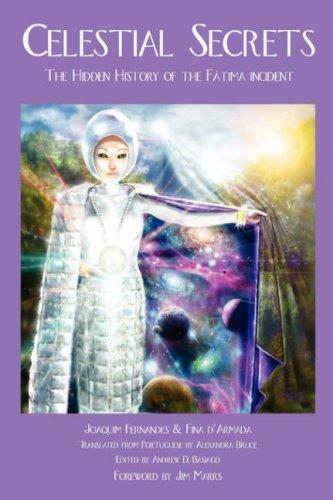
Celestial Secrets
The Hidden History of the Fatima Incident — Volume II of the Fátima Trilogy, on How the Church's 1941 Account Replaced the 1917 Record
Find on Amazon →As an Amazon Associate, OverClassified may earn from qualifying purchases made through this link, at no extra cost to you.
Why This Is Essential Reading
Read it for the archive and hold the inference loosely. Fernandes and D'Armada obtained access in 1978 to the original 1917 Fátima records — parish inquiry documents and earliest interviews held at the Sanctuary since the events — and established something genuinely checkable: the account the world knows descends from Lúcia dos Santos's Church-directed memoirs of 1935–41, not from what was written down at the time, and the two differ in ways that consistently remove the strangest physical detail. That is a real historiographical finding and it is not available in English anywhere else. Whether the earlier material describes a close encounter is a further step the documents do not compel, and the crowd of tens of thousands staring at the sun after being told a miracle was coming is an objection the trilogy under-weights. Read it with Volume I, Volume III, and this site's own case file, and ignore the English edition's foreword.
Related Cases & Theories
Sources Cited
- Fernandes, Joaquim, and Fina D'Armada. Celestial Secrets: The Hidden History of the Fatima Incident. Andrew D. Basiago, ed.; Alexandra Bruce, trans.; foreword by Jim Marrs. Anomalist Books, June 25, 2007. ISBN-10 193366522X / ISBN-13 9781933665221. amazon.com
- Google Books record, Celestial Secrets: The Hidden History of the Fatima Incident — bibliographic data and publisher description of the 1978 archival access and the 1941 'cover story' argument. books.google.com
- AbeBooks bibliographic record, ISBN 9781933665221 — Anomalist Books edition, translator and editor credits. abebooks.com
- BetterWorldBooks listing, Celestial Secrets: The Hidden History of the Fatima Incident — independent bibliographic confirmation and the Volume II designation within the Fátima Trilogy. betterworldbooks.com
- Biblio bibliographic record, Celestial Secrets by Joaquim Fernandes and Fina D'Armada. biblio.com
- Amazon UK listing, Celestial Secrets: The Hidden History of the Fatima Incident, ISBN-10 193366522X — independent confirmation of the ASIN. amazon.co.uk
- AbeBooks author search, Joaquim Fernandes and Fina D'Armada — the pair's full bibliography including the other trilogy volumes. abebooks.com
- Anomalist Books publisher listing for the Fátima Trilogy — the imprint that issued all three English volumes. abebooks.co.uk
- Wikipedia, "Miracle of the Sun" — the October 13, 1917 event, the crowd estimates, and the range of proposed perceptual and meteorological explanations this article weighs against the trilogy's reading. en.wikipedia.org
- Wikipedia, "Our Lady of Fátima" — the May–October 1917 apparition sequence, the October 13 solar phenomenon, the thirteen-year Church investigation concluding in 1930, and Lúcia dos Santos's memoirs written between 1935 and 1941 at her bishop's direction. en.wikipedia.org
- Fernandes, Joaquim. Heavenly Lights: The Apparitions of Fátima and the UFO Phenomenon, 1995 — Volume I of the trilogy. OverClassified breakdown
- Fernandes, Fernando, Joaquim Fernandes and Raul Berenguel. Fatima Revisited: The Apparition Phenomenon in Ufology, Psychology, and Science, 2008 — Volume III. OverClassified breakdown
- Vallée, Jacques. Passport to Magonia: From Folklore to Flying Saucers, 1969 — the structural apparition/close-encounter argument made without archival access. OverClassified breakdown
- OverClassified case file, The Fatima Miracle of the Sun — source for the mass-witnessed solar phenomenon, the corroboration by the anticlerical O Século chief editor Avelino de Almeida, the thirteen-year Church investigation, and the later Portuguese historical re-examination arguing for a physical rather than purely visionary origin.
Have corrections, additional research, or peer-reviewed sources? Help improve this entry.
Suggest an Edit