
Fatima Revisited
The Apparition Phenomenon in Ufology, Psychology, and Science
Core Thesis
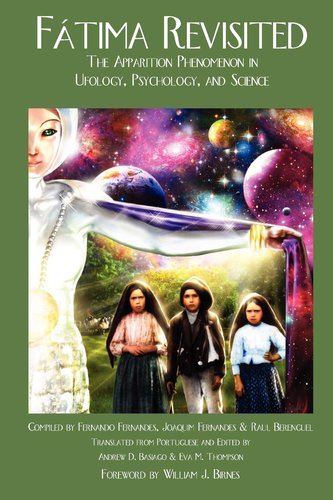
Fatima Revisited: The Apparition Phenomenon in Ufology, Psychology, and Science is not a single sustained argument but an edited, multidisciplinary academic collection — compiled by engineer Fernando Fernandes, historian Joaquim Fernandes, and researcher Raul Berenguel — that takes the ufological reading of the 1917 Fatima apparitions developed across the first two volumes of the Fatima Trilogy and submits it to outside scrutiny from geomagnetism, neuroscience, parapsychology, comparative religious studies, and physics, rather than simply restating it. Framed by its publisher as the output of the Multicultural Apparitions Research International Academic Network (Project MARIAN) at Universidade Fernando Pessoa in Porto, the book poses its organizing question directly: was the entity encountered at Cova da Iria the Virgin Mary, an angel, or something answerable to a physical, unidentified-phenomenon explanation — and can any single discipline settle that question alone, or only a genuinely cross-disciplinary one.
About the Author
The book is credited to three compilers rather than a single author. Fernando Fernandes holds a Ph.D. in Electronic Engineering from the University of Porto and taught at Instituto Superior de Engenharia do Porto, contributing the volume's technical and physical-sciences framing. Joaquim Fernandes holds a Ph.D. in Contemporary History from the University of Porto (2005), with a doctoral thesis on the extraterrestrial theme in Portuguese cultural history; he is a professor at Universidade Fernando Pessoa, has written a UFO column for the Lisbon daily Diário de Notícias since 1975, and in 1973 co-founded CEAFI (Centro de Estudos Astronómicos e de Fenómenos Insólitos), later restructured as CNIFO (Comissão Nacional de Investigação do Fenómeno OVNI) — the same organizational background documented in this site's own Ota Air Base Encounter case file. Raul Berenguel holds a Master's degree and serves as a research associate at CTEC (Centro Transdisciplinar de Estudos da Consciência) at Universidade Fernando Pessoa, where the trilogy's institutional home is based; he was also affiliated with CEAFI and CNIFO and later founded the Portuguese Society for Scientific Exploration.
The volume's translators, Andrew D. Basiago and Eva M. Thompson, and its foreword author, UFO researcher and broadcaster William J. Birnes, are credited on the title page alongside the three compilers, consistent with the same English-language production team behind the trilogy's first two volumes. The book itself, however, is structured as an edited collection: its chapters draw on outside specialist contributors, including Jacques Vallée, abduction researcher David M. Jacobs, parapsychologist Stanley Krippner, and neuroscientist Michael Persinger (known for research into geomagnetically induced altered states), each writing from their own discipline rather than co-authoring a single unified thesis with the three Portuguese compilers.
This division of labor matters for how the book should be read: Fernando Fernandes, Joaquim Fernandes, and Berenguel are the volume's editors and the source of its organizing argument, but individual chapters carry the authority, and the disciplinary limits, of whichever specialist contributor wrote them — a structure this article's Core Arguments and Critical Reception sections both treat as central rather than incidental to assessing the book.
Historical Context & Origins
Fatima Revisited arrived in 2008 as the third and concluding volume of a project that began three decades earlier. Joaquim Fernandes and Fina d'Armada gained research access to the Fatima shrine's own archive of original 1917-era depositions between 1977 and 1980, and their Portuguese-language study of that material, first published in 1995 as As Aparições de Fátima e o Fenómeno OVNI, became the trilogy's foundation. Anomalist Books, a small U.S. press specializing in Fortean and paranormal-adjacent nonfiction, brought the trilogy to English-language readers as Heavenly Lights: The Apparitions of Fatima and the UFO Phenomenon (2007) and Celestial Secrets: The Hidden History of the Fatima Incident (2007), with Fatima Revisited following in 2008 to close out the series.
The book's publication sat within a specific window of renewed public attention to Fatima. In May 2000, Pope John Paul II beatified the two younger shepherd children, Francisco and Jacinta Marto, at Fatima itself, and the following month the Vatican published the long-withheld text of the so-called Third Secret of Fatima — a release that generated a wave of mainstream press coverage of the apparitions, including the skeptical June 27, 2000 profile of Joaquim Fernandes's thesis in the Lisbon daily Público, titled (in translation) "Ufologist tries to prove Our Lady was an ET." Fatima Revisited followed roughly eight years later, at a point when the trilogy's authors had already absorbed both that press scrutiny and the accumulated skeptical response to the first two volumes.
Rather than simply restating the archival argument a third time, the compilers used this closing volume to formalize the trilogy's institutional footing, presenting it as the output of the Multicultural Apparitions Research International Academic Network (Project MARIAN) at Universidade Fernando Pessoa's CTEC (Centro Transdisciplinar de Estudos da Consciência) — the same research center that had absorbed CNIFO's case archive after that organization dissolved in the mid-1990s. That move situates the book as an attempt to answer the trilogy's critics by widening the argument's disciplinary base rather than deepening its archival one.
Core Arguments & Key Concepts
Where Heavenly Lights and Celestial Secrets built their case primarily from archival depositions and historiographical analysis, Fatima Revisited restructures the project as an edited multidisciplinary volume, assembling chapters on geomagnetic influences on the Cova da Iria site, altered-states-of-consciousness research relevant to visionary experience, psychological and social factors in crowd perception, comparative analysis of alien-abduction and religious-apparition narratives, and the physics of anomalous atmospheric phenomena. The organizing move is to treat the 1917 events as a test case that no single discipline can adjudicate alone, and to invite specialists from each relevant field to weigh in on the same underlying data independently rather than have the three Portuguese compilers argue every angle themselves.
The comparative-phenomenology chapters are the volume's most direct continuation of the earlier books' thesis: contributions examining alien-abduction narratives alongside Marian-apparition and religious-visionary accounts extend the earlier books' argument that the two categories of reported experience share more structural features — missing time, altered perception, a transformative aftermath in the percipient — than either a purely theological or a purely psychiatric framework accounts for on its own. This is the same comparative-phenomenology territory this site's own Interdimensional Hypothesis theory file surveys from the UAP-research side.
Michael Persinger's contribution brings his own, independently developed and separately controversial research program — the proposition that geomagnetic activity and tectonic strain can induce temporal-lobe effects producing sensed-presence and visionary experiences — to bear on the Fatima case specifically, a chapter that functions as a genuine internal check on the trilogy's own anomalous-phenomenon reading rather than a supporting citation, since Persinger's broader body of work is itself squarely in the naturalistic, brain-based explanatory camp rather than the ufological one.
The physics-of-anomalous-phenomena chapters attempt to move the discussion from historiography to mechanism: rather than arguing only that witnesses described something resembling a discrete aerial object, these sections engage the atmospheric-optics and plasma-physics literature directly, the same territory this site's own Fatima Miracle of the Sun case file surveys in its Conventional Explanation Candidate section when weighing Stanley Jaki's atmospheric-lensing account against the anomalous-phenomenon reading.
Key Cases & Evidence Discussed
The book's central case is the Fatima apparition sequence itself, documented in exhaustive detail in this site's own Fatima Miracle of the Sun case file (Case File #275): the six monthly apparitions reported by shepherd children Lucia dos Santos, Francisco Marto, and Jacinta Marto at Cova da Iria near Fátima, Portugal, between May and October 1917, culminating in the October 13, 1917 "Miracle of the Sun" witnessed by a crowd commonly estimated at 30,000 to 100,000 people, including the openly skeptical chief editor of the anticlerical Lisbon daily O Século. This book's own chapters draw specifically on the September 13, 1917 precursor event — the reported cooling of the air, dimming of the sun, and a directional, controlled-seeming luminous globe crossing the sky — as the strongest single data point for a discrete-object rather than purely solar reading.
The volume's comparative chapters extend the case beyond Fatima itself into the broader category of mass-witnessed devotional sky phenomena that this site's own catalogue treats on the same evidentiary footing, most directly the Zeitoun Marian Apparitions (Case File #272) — a multi-year sequence of reported Marian sightings over a Coptic Orthodox church in Cairo, Egypt, beginning in 1968, witnessed by crowds that reportedly included both Christians and Muslims and, unlike Fatima, was not preceded by a predicted date or child percipients, making it a useful comparative test of whether the Fatima pattern recurs independently of its specific 1917 Portuguese devotional context.
Persinger's geomagnetic-effects chapter, and the volume's altered-states-of-consciousness contributions more broadly, situate the Fatima children's reported visionary experiences within the wider clinical and parapsychological literature on temporal-lobe sensed-presence phenomena, sleep paralysis, and crowd-suggestion effects — the same explanatory family this site's own Fatima case file weighs in its Conventional Explanation Candidate section against the book's own anomalous-phenomenon reading.
Critical Reception & Controversies
The trilogy's ufological reading of Fatima has consistently drawn skepticism from two directions that agree on very little else. The Catholic Church maintains its own Marian theological framing of the events, formalized in Bishop José Alves Correia da Silva's 1930 pastoral letter approving the apparitions as "worthy of belief," and has never engaged the ufological reading on its own terms. Mainstream historians of the apparitions, for their part, generally treat the Fernandes/d'Armada/Berenguel reading of the archival record as an interpretation driven by a prior UFO-research commitment rather than the most parsimonious account the depositions themselves support — the position reflected in Público's skeptical June 2000 profile of Joaquim Fernandes's thesis, published under a headline questioning whether "Our Lady was an ET."
Skeptical UFO researchers have engaged the case independently of the religious question, arguing the reported solar effects are adequately explained by conventional means. Paranormal investigator Joe Nickell's 2009 Skeptical Inquirer analysis, "The Real Secrets of Fatima," proposes a combination of atmospheric optics (thin cloud cover creating a sundog-like silver disc, shifting cloud density producing an advancing-and-receding appearance) and temporary retinal distortion from sustained gazing at the midday sun — a naturalistic account that, notably, the book's own physics and geomagnetism chapters engage directly rather than ignore, since the volume's editorial premise is to test the anomalous-phenomenon reading against competing explanations rather than assert it uncontested.
A separate, more structural critique concerns the book's own multidisciplinary format: because Fatima Revisited is an edited collection rather than a single argument, its individual chapters carry uneven evidentiary weight and, in the case of Persinger's geomagnetic-effects contribution specifically, come from a research program that is independently controversial within neuroscience and parapsychology alike, quite apart from anything to do with Fatima. Readers evaluating the volume's claims are, by its own structure, evaluating several separate specialist arguments of varying rigor rather than one integrated case.
Set against that skepticism, this specific volume's contributor roster — Jacques Vallée, David M. Jacobs, Stanley Krippner, and Michael Persinger among them — represents a genuine attempt to bring outside, professionally credentialed voices into the trilogy's argument rather than have its three Portuguese compilers assert every discipline's authority themselves, which is itself the most direct answer the book offers to the charge, leveled against the earlier two volumes, that the ufological Fatima thesis was argued from a position of prior conviction rather than open inquiry.
Influence & Legacy
As the concluding volume of the Fatima Trilogy, this book's clearest influence is in formalizing the institutional structure — Project MARIAN at Universidade Fernando Pessoa's CTEC — that has continued to host Portuguese academic engagement with apparition-phenomenon research since 2008, giving the trilogy's argument a standing research affiliation beyond the three original compilers.
Within ufology's own literature, the trilogy as a whole, and this volume specifically for widening its contributor base, remains the most sustained book-length attempt to argue that a major twentieth-century religious apparition event should be evaluated using the same evidentiary standards applied to conventional UAP case files — a project this site's own Fatima Miracle of the Sun case file explicitly adopts as its own methodology, crediting Fernandes and d'Armada's research by name while treating it as a contested minority interpretation rather than an established finding.
The book's multidisciplinary format also connects it to two separate, larger research conversations it draws contributors from: the comparative study of abduction and religious-apparition phenomenology that this site's own Interdimensional Hypothesis theory file surveys, and the psychological/social explanatory tradition for mass-witnessed anomalous events that this site's own Psycho-Social Hypothesis theory file documents, which the book's own crowd-perception and altered-states chapters engage directly rather than dismiss.
Because the trilogy is Joaquim Fernandes's central, decades-spanning research project, this volume's 2008 publication also marks the point at which his academic career — a 1973 CEAFI/CNIFO founder who went on to earn a Contemporary History doctorate specifically on this subject — and his UFO-research career converge most explicitly into a single, institutionally housed body of work, distinct from the earlier decades when Portuguese ufology and Fatima scholarship were pursued as separate, if overlapping, interests.
The Book
As an Amazon Associate, OverClassified may earn from qualifying purchases made through this link, at no extra cost to you.
Why This Is Essential Reading
Fatima Revisited earns a place on this list not because its multidisciplinary format resolves the question its own trilogy poses — it does not, and does not claim to — but because it is a rare example of a UFO-adjacent research project responding to accumulated skepticism by widening its contributor base rather than restating its original claim more forcefully. Bringing Jacques Vallée, David M. Jacobs, Stanley Krippner, and Michael Persinger into direct engagement with Joaquim Fernandes, Fernando Fernandes, and Raul Berenguel's Fatima thesis — on a case this site's own Fatima Miracle of the Sun file treats as one of the best-corroborated mass-witness events in the historical record, regardless of which explanatory framework ultimately accounts for it — produces a genuinely unusual document: a serious attempt to test a UFO hypothesis against a major world religious event using the standards of several disciplines at once, rather than the standards of any single one.
Related Cases & Theories
Essential Viewing

Sources Cited
- Fernandes, Fernando; Fernandes, Joaquim; Berenguel, Raul (comp.), trans. Andrew D. Basiago & Eva M. Thompson, foreword William J. Birnes. Fatima Revisited: The Apparition Phenomenon in Ufology, Psychology, and Science. Anomalist Books, 2008 (ISBN 9781933665238, cited here). anomalistbooks.com
- Amazon.com product listing for ISBN 1933665238 / 9781933665238 (contributor roster, translators, foreword credit, publication date). amazon.com
- Open Library edition record for ISBN 9781933665238 (publisher, publication place, pagination, LC classification, subjects). openlibrary.org
- Academia.edu, Joaquim Fernandes, Curriculum Vitae (page no longer live as of Aug 2026; no archived mirror found), Universidade Fernando Pessoa (doctoral thesis, CEAFI/CNIFO founding, CTEC affiliation).
- ResearchGate, Joaquim Fernandes research profile, Universidade Fernando Pessoa / CECLICO.
- Público, "Ovnilogista tenta provar que Nossa Senhora era um ET", June 27, 2000 — mainstream Portuguese press coverage and reception of the trilogy's thesis, published in the same month as the Vatican's release of the Third Secret of Fatima.
- Joe Nickell, "The Real Secrets of Fatima", Skeptical Inquirer, November/December 2009 — naturalistic/optical counter-explanation for the October 13, 1917 solar phenomenon.
- Exopolitica Portugal, "Fina D'Armada (1945–2014)" — biographical background on the trilogy's earlier co-researcher.
- This site's own case file: The Fatima Miracle of the Sun (Case File #275), which documents the 1917 events this book examines in full detail, including its own citation of this exact edition.
- This site's own case file: The Zeitoun Marian Apparitions (Case File #272), for the comparative mass-witnessed Marian apparition case discussed above.
- This site's own case file: The Ota Air Base Encounter, for co-compiler Joaquim Fernandes's separate CNIFO investigative background.
- This site's own theory file: The Interdimensional Hypothesis, for the comparative abduction/apparition phenomenology this book's chapters engage.
- This site's own theory file: The Psycho-Social Hypothesis, for the crowd-perception and altered-states explanatory tradition this book's chapters engage.
- This site's own key-figures entry: Joaquim Fernandes, for his broader academic and CEAFI/CNIFO background.
- This site's own key-figures entry: Jacques Vallée, one of this volume's outside contributors, for his broader career background.
- This site's own resources library: Full Reading List.
Have corrections, additional research, or peer-reviewed sources? Help improve this entry.
Suggest an Edit