
Flying Saucers
A Modern Myth of Things Seen in the Skies
Core Thesis
Jung explicitly refuses to adjudicate whether flying saucers are physically real spacecraft, arguing instead that the question of most lasting importance is psychological: the saucer's circular, mandala-like form is a modern eruption of an ancient archetype of wholeness and the Self, surfacing spontaneously in the collective unconscious of a world split by the Cold War and menaced by atomic annihilation — and, through his concept of synchronicity, he leaves open the possibility that an archetype activated intensely enough across a large enough population could correlate with genuinely observed physical events, without that correlation proving the objects are extraterrestrial craft.
About the Author
Carl Gustav Jung was born on July 26, 1875, in Kesswil, Switzerland, and trained as a psychiatrist at the Burghölzli hospital in Zürich under Eugen Bleuler. He was not a ufologist by any measure — he is one of the twentieth century's most influential psychological thinkers, the founder of analytical psychology, and for roughly six years (1907–1913) Sigmund Freud's closest collaborator and presumed successor before a rupture over the nature of the unconscious and the sexual basis of neurosis split the two men permanently. What Jung brings to a book about flying saucers is not investigative fieldwork but four decades of an already fully developed theoretical apparatus, applied late in his career to a brand-new contemporary phenomenon.
Two concepts from that apparatus do almost all the work in this book. The first is the collective unconscious and its archetypes — Jung's proposal that beneath each person's individual unconscious lies a shared, inherited layer of the psyche populated by universal symbolic patterns (the Mother, the Trickster, the Self) that surface involuntarily in dreams, myths, religious imagery, and, he argues here, in modern rumor and testimony. The second is synchronicity, a concept Jung formalized in a 1952 essay written in dialogue with physicist Wolfgang Pauli, describing meaningful coincidences between inner psychic states and outer events that are acausally, rather than causally, connected. Synchronicity is the hinge that lets Jung discuss UFOs as psychologically real without ever needing to settle whether they are physically real.
Jung wrote this book near the very end of his life — he died on June 6, 1961, less than three years after its German publication — and it draws on a personal fascination with the mandala, the circular symbol of psychic wholeness, that had preoccupied him since the 1920s, when he began using mandala drawings in his own self-analysis and in patients' therapy as a diagnostic window onto the drive toward psychic integration he called individuation. Seen against that longer body of work, Flying Saucers is less a departure into a fringe subject than a late-career test case: could the archetypal machinery Jung had spent decades documenting in dreams, alchemy, and world religion also explain a genuinely new, mass, technologically framed phenomenon happening in real time?
Jung's own first public statement on the subject came almost accidentally: a 1954 letter answering a query from the Zurich weekly Die Weltwoche, in which he spoke cautiously but respectfully of the possibility that some sightings might be genuine. Extracts from that letter were later stripped of their qualifications, re-translated, and condensed as they moved through the international "flying saucer" press, and in 1958 an Associated Press wire story ran under headlines announcing that the world-famous psychologist believed flying saucers were real — a claim Jung called "altogether false." That distortion, and the UFO-believer organizations that seized on it (one made him an unauthorized honorary "psychological consultant"), is part of what pushed Jung to write a full, careful statement of his actual position rather than let a mangled wire quote stand as the record.
Historical Context & Origins
Jung was writing at the crest of a decade-long wave of public UFO fascination that began with private pilot Kenneth Arnold's June 1947 sighting near Mount Rainier and the newspaper coinage "flying saucer" that followed it. Through the 1950s that wave built steadily: a wartime-adjacent "foo fighter" precedent, repeated Air Force investigative projects (Sign, Grudge, and Blue Book), the 1952 Washington, D.C. radar-visual flap that forced an Air Force press conference, and a new "contactee" movement led by figures like George Adamski claiming direct, friendly meetings with benevolent Venusians — all of it unfolding against a Cold War backdrop of nuclear terror, superpower confrontation, and a genuine, widely shared sense that the world could end at any moment. Jung read the saucer wave's timing as inseparable from that anxiety: a population needing a symbol of hope and unity was manufacturing one, consciously or not.
The book's immediate trigger was narrower and more personal: the garbled 1958 wire-service version of Jung's 1954 Weltwoche letter, which had him publicly on record as a believer in physical saucers — a position he had never actually taken. Jung wrote Ein moderner Mythus von Dingen, die am Himmel gesehen werden (literally, "A modern myth of things seen in the sky") that same year, publishing it with the Zurich house Rascher Verlag, specifically to lay out his full, carefully hedged position rather than leave a distorted headline as the last word. R.F.C. Hull's English translation, retitled Flying Saucers: A Modern Myth of Things Seen in the Skies, followed in 1959 from Routledge & Kegan Paul in Britain, with Jung adding a new preface addressing the misreporting directly; the book was later collected into Volume 10 of Jung's Collected Works and reissued as a standalone Bollingen Series paperback by Princeton University Press.
Unlike most other titles on this reading list, Flying Saucers did not enter a body of existing UFO literature it needed to argue with — there was no rival cover-up chronology or contactee memoir it was responding to. It entered instead as an outside intervention from an already world-famous intellectual figure applying a fully formed, decades-old psychological system to a contemporary news phenomenon most of his own scientific peers considered beneath serious comment — which is precisely what made the book impossible for either UFO believers or UFO skeptics to simply ignore.
Core Arguments & Key Concepts
Jung states his central methodological move early and repeats it throughout: whether flying saucers have any physical, extraterrestrial reality is a question he explicitly declines to answer. "As it is questionable," he writes, "in how far UFOs are physical facts, it is indubitable that they are psychological facts." That sentence is the book's organizing principle — Jung treats the sheer volume, consistency, and emotional intensity of saucer reports and rumors as data about the human psyche regardless of what, if anything, is actually in the sky, a stance that let him analyze the phenomenon seriously without ever having to certify a single sighting as genuine.
The archetype doing the specific work here is the mandala — the circular, radially symmetrical symbol Jung had spent thirty years identifying across dreams, world religions, and alchemical texts as an image of psychic wholeness and the Self. His argument is that a mandala archetype charged with unusual energy by the acute collective anxiety of the atomic age cannot be integrated directly into ordinary consciousness, and instead breaks through as an involuntary projection that appears, to the person experiencing it, as an external physical object: "the rounded wholeness of the mandala becomes a space ship controlled by an intelligent being." In this reading, the flying saucer is a technological-age costume worn by a symbol as old as the sun wheel and the rose window — a cosmic-savior myth arriving exactly when a divided, nuclear-threatened world most needed one.
Synchronicity supplies the book's most-debated hedge. Having developed the concept with physicist Wolfgang Pauli as a meaningful, acausal connection between inner psychic states and outer events, Jung uses it to argue that an archetype constellated powerfully enough across a large enough population could, in principle, correlate with real external events — radar returns, multiple independent witnesses — without that correlation requiring the events to be extraterrestrial spacecraft. It is a genuinely narrow claim, easy to overstate in either direction: it does not mean Jung thought psychic energy could summon physical objects, but it does mean he refused to fully rule out a physical component to the phenomenon on psychological grounds alone.
Structurally the book moves outward from the individual mind to the culture at large: an opening treatment of UFOs as "visionary rumours" circulating almost like a folk belief; a chapter analyzing saucer imagery appearing in his patients' dreams; a chapter reading contemporary abstract and surrealist painting's fascination with circular, cosmic forms as the same archetype surfacing in fine art rather than in the sky; a historical chapter tracing precedents for aerial "prodigies" and sky-battle reports back centuries before 1947; and a closing chapter explicitly considering the subject "in a non-psychological light," in which Jung concedes that some reports — particularly ones with radar or multiple-witness corroboration — resist a purely internal explanation, restating rather than resolving the book's central ambiguity.
Key Cases & Evidence Discussed
Jung's book is not built around named contemporary incidents the way most other titles on this list are; his primary source material is the undifferentiated mass of 1950s press rumor, patients' dreams, and correspondence that the postwar saucer wave generated, beginning with the term-coining Kenneth Arnold sighting (Case #007, 1947) that opened the modern era he is responding to.
Where Jung does engage a specific, citable historical case at length, it is the 1561 Nuremberg celestial phenomenon (Ancient Record #001) — he reproduces Hans Glaser's broadsheet woodcut of globes, crosses, and tubes battling at dawn over the city and reads its paired, four-fold groupings as "crossed marriage quaternities," proposing that if the objects were imagined as living things at all, "one would think of a swarm of insects rising with the sun, not to fight one another but to mate and celebrate the marriage flight" — a strikingly gentle reading of an event the original broadsheet frames as violent aerial combat, and it was Jung's discussion, not any ufological source, that pulled the four-century-old pamphlet out of specialist German print-history circles and into the international UFO literature for the first time.
Jung also discusses the related Basel celestial phenomenon (Case #054, 1566), reading the dark spheres described over Basel as an effect of backlighting from the rising sun and treating their erratic movement as characteristic of the broader class of reports he is analyzing, without endorsing a literal extraterrestrial reading of either 16th-century broadsheet any more than he does for the 1950s wave itself.
Beyond these two historical broadsheets, the book's real evidentiary base is deliberately informal: rumors relayed by correspondents, dream material from Jung's own clinical practice, and contemporary newspaper and magazine coverage of the saucer craze — source material chosen specifically because its psychological texture, not its evidentiary weight, is what Jung is trying to measure.
Critical Reception & Controversies
The book's first and strangest reception problem arrived before most readers had actually read it. The 1958 Associated Press wire story that mangled Jung's cautious 1954 Weltwoche letter into a headline claiming the famous psychologist believed flying saucers were real spread, in Time magazine's later account, "like wildfire from the far West round the earth to the far East" in distorted form. UFO-believer organizations moved quickly to claim the credibility windfall: the civilian group APRO listed Jung as an honorary member and, without his authorization, implied he served as its psychological consultant. Jung was "surprised and mildly annoyed" at the misuse of his name, and part of the book's own preface is devoted to correcting the record directly.
That correction did not fully satisfy skeptics, either. Astronomer Donald Menzel, the most prominent scientific UFO debunker of the era, published his own book five years later, The World of Flying Saucers: A Scientific Examination of a Major Myth of the Space Age (1963, with Lyle Boyd) — deliberately echoing Jung's "myth" framing in the subtitle, but, unlike Jung, meaning it as a diagnosis of pure error and cultural gullibility rather than as a serious symbol worth psychological respect. Where Jung treated the saucer-as-myth as a genuine, meaningful psychic event, Menzel's use of the same word was closer to an insult — a sign of how differently the book's central metaphor could be read once it left Jung's own hands.
Believers came away frustrated in the opposite direction, for want of the clean endorsement the AP story had wrongly promised them. A widely retold anecdote has aviator Charles Lindbergh, who dined with Jung not long before the book's publication, expressing surprise that Jung seemed to take the reality of saucers seriously — only for Jung to lose interest in continuing the conversation once Lindbergh raised the U.S. Air Force's official denials, an exchange that captures exactly the position Jung occupied throughout: too open-minded for the debunkers, too noncommittal for the true believers.
Modern general readers have reached a similarly split verdict. The book holds a middling 3.75-star average across roughly 690 Goodreads ratings, and recurring reader complaints echo the same structural tension reviewers noted in 1959: one reader called the 160-page book "padded out," agreeing with Jung's core idea about UFOs as "visionary rumours" but losing patience with the extended detours into dream and art analysis; another summed it up as "an intriguing idea to examine a cultural phenomenon that unfortunately got away from the author," a complaint less about Jung's thesis than about his famously digressive prose style being let loose on a subject already prone to overreading.
Influence & Legacy
The book's most direct legacy runs straight into what ufology now calls the psycho-social hypothesis (PSH) — the proposal that UFO reports are better explained by social, cultural, and psychological processes than by physical craft. Jung is routinely credited as one of PSH's founding figures: his framing of the saucer as a projected mandala answering Cold War collective anxiety supplied the field's first serious, credentialed psychological account of why sightings cluster when and where they do, opening the door for later, more empirically grounded work by researchers such as medical sociologist Robert Bartholomew.
Jung's archetype-and-continuity framework also fed directly into computer scientist and astronomer Jacques Vallée's landmark 1969 book Passport to Magonia, published just over a decade later. Vallée extended Jung's core move — reading a contemporary phenomenon as the latest costume worn by an older, recurring psychic pattern — by holding centuries of European fairy and elf folklore up against modern UFO contact and abduction narratives, arguing both draw on a single, shared substrate of human experience across otherwise unconnected eras. That direct line from Jung's archetype of the mandala to Vallée's folklore-continuity thesis is one of ufology's clearest and best-documented cases of one serious researcher's framework becoming the explicit foundation for another's.
On this site specifically, Jung's book already functions as working infrastructure rather than a novelty citation: it is referenced across resources.html in connection with the Basel Celestial Phenomenon, the Nuremberg Celestial Phenomenon, and the Psycho-Social Hypothesis theory file, and its synchronicity-based hedge on physical reality is treated by this site's own Egregore & Collective Thoughtform Hypothesis file as closer to that theory's own "middle path" claim than to a pure-hallucination model.
More than sixty-five years after its first German publication, the book remains continuously in print — through the Princeton/Bollingen paperback edition cited here and a separate Routledge Classics edition — and is still the reference any subsequent psychological or archetypal reading of the UFO phenomenon has to engage with, favorably or not, making it one of the very few titles from ufology's first Cold War decade still read outside the field itself.
The Book
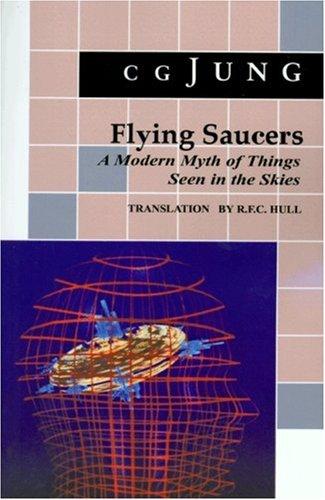
As an Amazon Associate, OverClassified may earn from qualifying purchases made through this link, at no extra cost to you.
Why This Is Essential Reading
Flying Saucers: A Modern Myth of Things Seen in the Skies earns its place on this list not because Jung was a UFO researcher — he explicitly was not — but because he was the first genuinely major intellectual figure to take the phenomenon seriously enough to build a real theoretical apparatus around it, and disciplined enough to refuse the easy answer either camp wanted from him. His deliberate agnosticism about physical reality, hardened by a 1958 wire-story distortion that briefly made him look like a credulous believer, is the book's real achievement: it gave ufology a rigorous, credentialed vocabulary — archetype, collective unconscious, synchronicity — for taking belief itself seriously as an object of study, a full decade before Jacques Vallée extended the same move into folklore with Passport to Magonia. Read it for the mandala argument and the synchronicity hedge that still anchor the psycho-social hypothesis today, and go in expecting exactly the ambiguity that frustrated Lindbergh, Menzel, and APRO alike — Jung never intended to resolve the saucer question, only to ask what it revealed about the century that produced it.
Related Cases & Theories
Essential Viewing

Carl Jung - Flying Saucers: A Modern Myth of Things Seen in the Sky
A New Mythos — A reading of Jung's 1958 study, the first sustained psychological treatment of the UFO phenomenon, framing the flying saucer as a projected mandala of the collective unconscious.
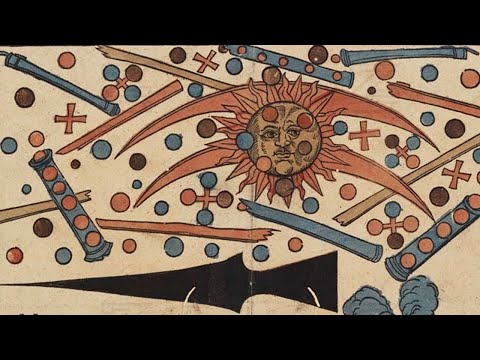
Carl Jung on UFOs: A Modern Myth of Hope and Fear
Eternalised — A walkthrough of Jung's archetypal framing of the saucer wave and his cautious, deliberately unresolved hedge on the objects' physical reality.
Sources Cited
- Jung, C.G. Flying Saucers: A Modern Myth of Things Seen in the Skies. Princeton University Press (Bollingen Series), 1958/1978. press.princeton.edu
- "Flying saucers : a modern myth of things seen in the skies." Internet Archive (digitized copy, 1978 Princeton/Bollingen ed.). archive.org
- "Flying Saucers: A Modern Myth of Things Seen in the Skies." Goodreads (reader ratings and review aggregation). goodreads.com
- "Science: Dr. Jung & the Saucers." Time, August 4, 1958 (archived). time.com
- "Carl Jung's Fascinating 1957 Letter on UFOs." Open Culture. openculture.com
- "Carl Jung." Wikipedia (biography, analytical psychology, collective unconscious, synchronicity). en.wikipedia.org
- "Carl Jung." Encyclopaedia Britannica (biography). britannica.com
- "Psychosocial hypothesis." Wikipedia (Jung's role as a founding figure of PSH, 1958 quote controversy). en.wikipedia.org
- "The World of Flying Saucers: A Scientific Examination of a Major Myth of the Space Age." Menzel, Donald H. & Boyd, Lyle G. Doubleday, 1963 (bibliographic record). abebooks.com
- Kirkwood, Andrew. "Magonia Revisited: 56 years later the UFO classic…" Medium (on Jung's direct influence on Jacques Vallée's Passport to Magonia). medium.com
- This site's own theory file: Psycho-Social Hypothesis (PSH), which names this book its founding depth-psychological text.
- This site's own theory file: Egregore & Collective Thoughtform Hypothesis, which builds directly on this book's synchronicity hedge.
- This site's own ancient record: The Nuremberg Celestial Phenomenon, for the 1561 case this book made internationally famous.
- This site's own case file: Basel Celestial Phenomenon, for the companion 16th-century case this book also discusses.
- This site's own key-figures entry: Carl Jung, for his full biography and case connections.
Have corrections, additional research, or peer-reviewed sources? Help improve this entry.
Suggest an Edit