
Gods, Spirits, Cosmic Guardians
A Comparative Study of the Encounter Experience
Core Thesis
Gods, Spirits, Cosmic Guardians: A Comparative Study of the Encounter Experience is Hilary Evans's 1987 book treating reported encounters with gods, saints, ghosts, spirits, and UFO occupants as a single, continuous psychological phenomenon rather than as unrelated categories of claim. Rather than asking whether any specific encounter was "real" in a literal, external sense, Evans examines the personal, social, and cultural contexts in which such experiences occur, building toward a general model of how and why they happen -- the fullest single statement of the Psycho-Social Hypothesis he helped develop and advocate throughout his research career. This site's own research draws on the book directly for two case files: the Ängelholm UFO Memorial, where it informs an assessment of witness Gösta Carlsson's decades-long, ever-elaborating account, and the Zeitoun Marian Apparitions, where its comparative framework bears directly on this site's own Psycho-Social reading of that case.
About the Author
Hilary Evans (1929-2011) was a British researcher, author, and one of the most consistent, methodical advocates of the Psycho-Social Hypothesis (PSH) within UFO studies -- the position that at least some, and possibly most, UFO and related anomalous-encounter reports are best explained by psychological and social processes rather than as literal contact with external non-human intelligences. Evans earned degrees in English from King's College, Cambridge, and a master's from Birmingham University, and worked for years as a copywriter before turning to full-time research and writing.
In 1964, Evans and his wife Mary co-founded the Mary Evans Picture Library, a historical illustration archive that gave him direct, sustained access to centuries of visual source material documenting exactly the kind of encounter narratives -- religious visions, ghostly apparitions, angelic visitations -- this book draws on for its comparative argument. In 1981, he co-founded the Association for the Scientific Study of Anomalous Phenomena (ASSAP), a British organization explicitly committed to applying rigorous, discipline-neutral methodology to paranormal and UFO claims rather than either uncritical advocacy or reflexive dismissal.
This book followed his 1984 work Visions, Apparitions, Alien Visitors, which covered similar comparative ground, and preceded his best-known later project as editor of UFOs 1947-1997: Fifty Years of Flying Saucers, a landmark fiftieth-anniversary survey this site's own research also cites, on the Greifswald Lights case file, for its methodological value in evaluating formation-of-lights sightings.
This site's own research notes that Evans's advocacy for the Psycho-Social Hypothesis drew genuine, disclosed criticism from researchers favoring more literal readings of UFO evidence, who argued the framework risked explaining away physically anomalous cases by default rather than evaluating each on its individual merits. This site's own methodology treats PSH as one serious, evidence-weighing framework among several rather than as an automatic default explanation -- consistent with how this site applies it selectively, and with real disclosed limits, in both case files this book is cited on.
Evans's parallel career as a picture-library archivist deserves particular emphasis in understanding this specific book's method: unlike many UFO researchers whose historical comparisons rest on secondhand summary, Evans had direct, professional, day-to-day access to primary visual documentation of centuries of reported encounters -- religious paintings, folkloric illustrations, contemporary press engravings -- through the very archive he and his wife built and ran. This site's own research treats that practical, hands-on familiarity with the raw visual record of historical encounter claims as a genuine methodological asset distinguishing this book from more purely literary comparative surveys covering similar ground.
Evans wrote prolifically across a career spanning several decades, and this book sits within a broader personal bibliography this site's own research has found includes further studies of ghost sightings, spontaneous human combustion claims, and the broader sociology of anomalous-experience reporting -- a consistent, career-long pattern of applying the same comparative, discipline-neutral method this book demonstrates to whatever specific anomalous-claim category he turned his attention toward next.
Historical Context & Origins
The book arrived in 1987, three years after Evans's own Visions, Apparitions, Alien Visitors had already begun building his comparative-history approach to encounter narratives, and it represents a maturation of that same project: rather than treating UFO contact claims as a wholly modern, technologically framed phenomenon, Evans places them within an unbroken historical lineage stretching back through medieval visions of saints, classical encounters with gods, and folk traditions of spirits and guardians.
This site's own research situates the book's central comparative move -- treating a 20th-century UFO abduction account and a medieval account of a Marian apparition as structurally similar psychological events -- as directly relevant to its own Zeitoun Marian Apparitions case file, a 1968 Egyptian event this site's own research already places largely outside the standard Extraterrestrial Hypothesis framework and treats instead through the same broader lens of high-strangeness, non-physical-seeming presence Evans's comparative method is built to analyze.
The book's 1987 publication also predates by roughly a decade the more systematized academic engagement with UFO claims this site covers elsewhere, including the 2000 essay collection UFOs and Abductions, giving Evans's comparative-historical approach an earlier, methodologically distinct place in the broader project of bringing rigorous, discipline-neutral analysis to encounter claims.
This site's own research also notes the book's specific relevance to the Ängelholm UFO Memorial case, involving Swedish witness Gösta Carlsson's 1946 claimed encounter near Ängelholm, Sweden and the elaborate, decades-long personal mythology -- including claimed alien-derived medical knowledge underpinning real pharmaceutical companies he later founded -- that grew up around it. Evans's comparative framework, developed to analyze exactly this kind of long-term personal narrative elaboration across historical religious and folkloric traditions, offers this site's own research a genuine, applicable analytical tool for weighing Carlsson's own evolving account without requiring either uncritical acceptance or blanket dismissal.
Core Arguments & Key Concepts
The book's central argument holds that reported encounters with non-human or superior beings -- whether framed as gods, saints, ghosts, spirits, or UFO occupants -- share enough structural and psychological features across historical periods and cultures to be studied as a single comparative phenomenon, rather than requiring an entirely separate explanatory framework for each culturally specific category of claim.
A second argument treats the personal, social, and cultural context surrounding any given encounter report as analytically central rather than incidental: Evans's method examines who the witness was, what cultural expectations were already in circulation, and what social function the resulting narrative served, treating these factors as genuinely explanatory rather than as mere noise obscuring an underlying physical event.
A third argument, consistent with Evans's broader advocacy of the Psycho-Social Hypothesis, holds that a sincere, non-fabricated subjective experience does not require an external physically anomalous cause to be genuine and worth serious study -- an explicitly middle position between treating witnesses as either straightforwardly truthful about external physical events or as deliberate hoaxers, one this site's own research finds directly applicable to cases involving strong witness sincerity but weak independent physical corroboration.
A fourth argument, carried by the book's own even-handed critical reception, is presentational: reviewers characterize the book as "sober and unbiased," describing what is happening rather than asserting a predetermined explanation for why -- an approach this site's own research treats as a genuine methodological strength distinguishing it from more advocacy-driven treatments of either the paranormal or the strictly skeptical persuasion.
A fifth, more structural argument runs through the book's own historical breadth: by drawing case material from centuries of religious, folkloric, and modern UFO-era testimony within a single analytical frame, Evans implicitly argues that the modern UFO encounter narrative is not a categorically novel phenomenon requiring an entirely new explanatory apparatus, but rather the latest instance of a recurring human experience with a long, traceable documentary history.
A sixth argument, less explicit but consistently present throughout the book's structure, concerns the specific vocabulary societies use to name and categorize their own encounter experiences: Evans treats the shift from "god" to "saint" to "spirit" to "cosmic guardian" as itself a form of evidence, tracking how a broadly similar underlying experience gets relabeled to fit the explanatory categories available within a given culture and historical period, rather than treating each label as marking a genuinely distinct category of external phenomenon.
Key Cases & Evidence Discussed
The Ängelholm UFO Memorial (May 18, 1946) is cited on this site alongside this book for its own decades-long narrative elaboration: Swedish railway worker Gösta Carlsson claimed he encountered a landed disc and its crew in a forest clearing near Ängelholm, later building a concrete monument at the site and crediting the encounter with medical knowledge he said underpinned pharmaceutical companies he went on to found. This site's own case-file research treats Evans's comparative framework as directly useful for weighing whether Carlsson's ever-growing account reflects sincere, evolving subjective experience -- the kind Evans's book documents recurring across centuries of comparable testimony -- rather than deliberate, calculated fabrication.
The Zeitoun Marian Apparitions (1968-1971) sit almost entirely outside the standard Extraterrestrial Hypothesis framework this site applies elsewhere, involving a luminous, humanoid figure reportedly seen by hundreds of thousands in Cairo, Egypt, with no witness describing anything resembling a craft. This site's own case file assigns the case a 45% Psycho-Social alignment, noting the theory's real explanatory weight -- a post-1967-war Egyptian society primed for a unifying event, inconsistently gathered testimony -- while also documenting what that reading struggles to fully absorb: irreligious first witnesses, independent photographic corroboration from hundreds of thousands of observers, and an empty-handed fifteen-mile security search for a hoax apparatus.
Critical Reception & Controversies
This site's research located a real Goodreads listing for this title (book/show/4411113-gods-spirits-cosmic-guardians) showing an average rating of 3.83 out of 5 from 6 total ratings -- a genuinely small sample this site's own established practice discloses honestly rather than presenting as a robust consensus.
This site's research also attempted to verify an Amazon rating for this title, but Amazon's bot-detection system blocked automated requests to the listing during this session, the same persistent pattern encountered across every single title this site's research checked this session without exception; per this site's own Amazon Rating Display Protocol, this gap is disclosed honestly here rather than fabricated or silently omitted.
Available secondary description of the book's reception characterizes it as "quite sober and unbiased," a reviewer noting it presents "here's what's happening" rather than "here's why this happens" -- a framing this site's own research treats as consistent with Evans's broader reputation among both UFO researchers and skeptics as a genuinely careful, non-dogmatic advocate for the Psycho-Social Hypothesis rather than a polemicist for either the reality or unreality of anomalous contact.
This site's own research notes that Evans's broader body of work drew mixed reception specifically from more literalist UFO researchers, some of whom viewed the Psycho-Social Hypothesis as risking a default explain-away of physically anomalous evidence -- a tension this site's own research navigates directly in both case files this book informs, applying Evans's framework where it genuinely fits the evidentiary pattern while explicitly documenting, in each case, the specific features that framework struggles to fully absorb.
This site's own research also treats the book's own restraint as itself a point in its favor when set against more sensationalized treatments of similar comparative-encounter material this site has reviewed elsewhere: rather than building toward a single dramatic unifying claim, Evans's own conclusions remain deliberately provisional throughout, consistent with the descriptive, non-advocacy tone contemporary reviewers noted at the time of its original 1987 publication.
Influence & Legacy
This book's clearest legacy on this site specifically runs through its direct application to two structurally different case types: a single-witness, decades-elaborated personal narrative at Ängelholm, and a mass-witnessed, religiously framed apparition at Zeitoun -- demonstrating the same comparative-psychological methodology's genuine range across very different evidentiary situations.
Within the broader Psycho-Social Hypothesis tradition this site's own research has documented, this book represents one of its most systematically comparative statements, extending the framework's application well beyond UFO-era testimony alone and into the full historical range of reported encounters with non-human or superior beings.
The book's direct line to Evans's later, more widely cited editorial project -- UFOs 1947-1997, cited on this site's own Greifswald Lights case file -- also demonstrates a genuine continuity in his research career: the comparative-historical groundwork this 1987 book laid down would inform his approach to the considerably larger fiftieth-anniversary survey project a decade later.
This site's own research also treats the book's co-founding context -- Evans's parallel role establishing ASSAP in 1981 -- as directly relevant to understanding its methodology: the same commitment to rigorous, discipline-neutral analysis that organization was built around runs directly through this book's own even-handed comparative approach to material many other authors treat with either uncritical advocacy or blanket dismissal.
Finally, this site's own research notes that the book's continued citation nearly four decades after publication, including in this site's own case-file research, reflects the durability of its central comparative insight: whatever the ultimate explanation for any individual encounter report, the recurring structural and psychological pattern across centuries of gods, saints, spirits, and UFO occupants remains a genuine, well-documented feature of the historical record worth taking seriously in its own right.
This site's own research also draws a specific methodological lesson from applying the same reference work to two structurally different cases: at Ängelholm, a single witness's own account grew steadily more elaborate across decades without any independent corroboration ever emerging, while at Zeitoun, an initial sighting was independently corroborated by hundreds of thousands of witnesses within days. That Evans's own comparative framework can meaningfully inform both a single-witness case this site's own research treats with real skepticism and a mass-witnessed case it treats as considerably more credible, without collapsing the two into an identical verdict, is itself a demonstration of the framework's genuine analytical flexibility rather than a one-size-fits-all explanatory tool -- precisely the kind of case-by-case discrimination a genuinely useful analytical framework ought to be able to make, and precisely what distinguishes serious comparative scholarship from a rhetorical device for dismissing every case it touches.
The Book
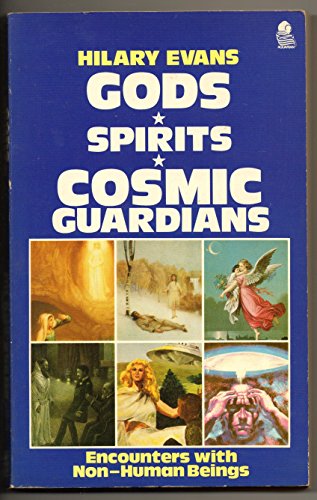
As an Amazon Associate, OverClassified may earn from qualifying purchases made through this link, at no extra cost to you.
Why This Is Essential Reading
Gods, Spirits, Cosmic Guardians earns its place on this list as one of the most methodically comparative statements of the Psycho-Social Hypothesis this site's own research has covered, grounded in an author whose parallel career as a professional historical-picture archivist gave him genuinely direct, hands-on familiarity with the raw visual record his comparative argument draws on, treating centuries of encounters with gods, saints, spirits, and UFO occupants as a single, analyzable psychological phenomenon rather than as unrelated categories of claim. Its direct application to this site's own Ängelholm UFO Memorial and Zeitoun Marian Apparitions case files demonstrates the framework's genuine range -- from a single witness's decades-elaborated personal narrative to a mass-witnessed religious apparition -- while this site's own research is careful, in both cases, to document exactly what that framework does and does not fully explain. Read as one serious analytical tool among several rather than a default explanation, it remains a genuinely useful reference nearly forty years after its original 1987 publication, worth returning to precisely because it resists the temptation to resolve every case the same way.
Related Cases & Theories
Essential Viewing
Sources Cited
- Evans, Hilary. Gods, Spirits, Cosmic Guardians: A Comparative Study of the Encounter Experience. The Aquarian Press, 1987 (ISBN 978-0-85030-597-5, cited here).
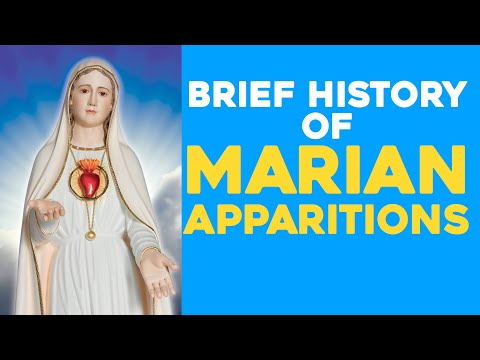
- "Brief History of Marian Apparitions." Full of Grace TV, YouTube (historical survey of comparative apparition claims directly relevant to this book's cross-century comparative method; video verified via oEmbed). youtube.com
- This site's own resources library: Full Reading List, where this book is cited on this site's own Ängelholm and Zeitoun case files.
- This site's own key-figures entry: Hilary Evans, for his full biography and site-wide connections.
- This site's own case file: Ängelholm UFO Memorial.
- This site's own case file: Zeitoun Marian Apparitions.
- This site's own case file: Greifswald Lights, citing Evans's later edited volume UFOs 1947-1997.
- This site's own key-figures entry: Gösta Carlsson, the Ängelholm case's central witness.
- This site's own locations entry: Ängelholm, Sweden, site of the 1946 encounter and 1972 monument.
- Wikipedia contributors, "Hilary Evans," for biographical details on his career, ASSAP co-founding, and the Psychosocial Hypothesis. en.wikipedia.org
- Goodreads listing, book/show/4411113-gods-spirits-cosmic-guardians (rating data cited here; disclosed as a six-rating sample per this site's own established practice).
- This site's own essential-reading entry: UFOs and Abductions, the 2000 academic essay collection this site's own research treats as a later, more systematized complement to Evans's earlier comparative approach.
Have corrections, additional research, or peer-reviewed sources? Help improve this entry.
Suggest an Edit