
The Seven Balloons of Pori
Around midday on April 12, 1969, Finnish Air Force Fouga Magister jet trainers were flying a dive-attack exercise at Pori Airport. The officer controlling the exercise radioed pilot Tarmo Tukeva (call sign 286): “Hei 286, keskeytäpä syöksysi ja katso, mitä noi seitsemän ilmapalloa yläpuolellasi ovat” (“Hey 286, break off your dive and look at what those seven balloons above you are”). Tukeva reported seven objects standing still over the field at an estimated 1,500–3,000 meters. Jouko Kuronen, on the runway for a navigation flight to Kuopio, turned his aircraft and saw them too: seven yellowish, round or disc-shaped objects, “like pieces cut from the moon.” As Tukeva approached, they formed up and pulled away northward into a strong headwind. The controller told him, “You won’t catch them any more.” Kuronen estimated that 20–25 people at the airfield saw the objects, and radar contact was reported. According to the Finnish accounts, the objects were also noted at Vaasa, just under 200 km north, within the same minute. Yle describes Pori as Finland’s only UFO case whose authenticity the Air Force has acknowledged. A 2012 article in the Defence Forces magazine Ruotuväki is reported to have compared it with other sightings over water during exercises and suggested foreign spy aircraft. No contemporary Air Force document has been published.
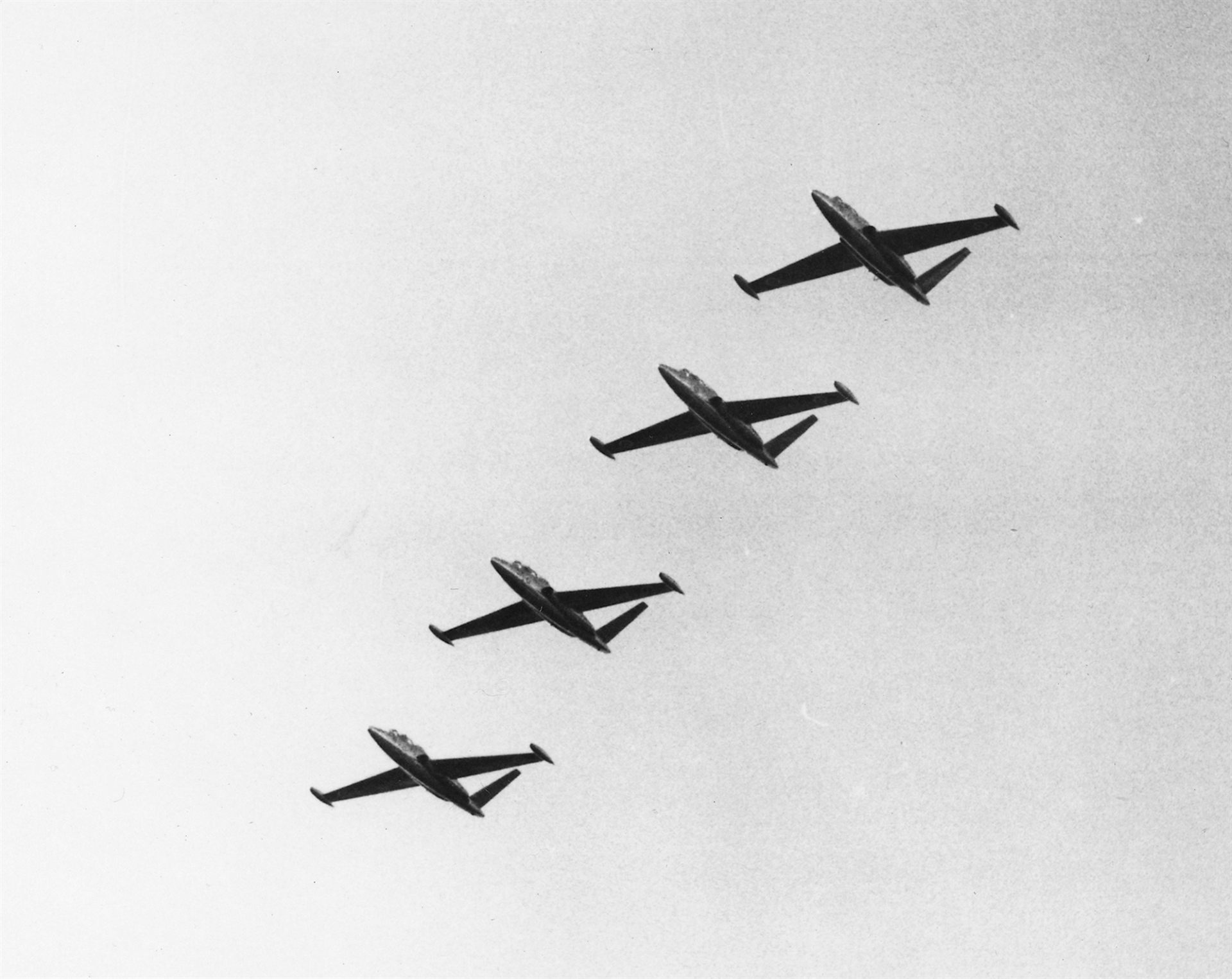
Pictured: Finnish Air Force Fouga CM.170 Magister jet trainers flying in formation, from the Finnish Aviation Museum’s collection, dating to the same operational era as the Pori incident — not a photograph of the actual encounter. No photograph of the objects themselves is known to exist.
Theoretical Alignment
Pori aligns moderately with an exotic-craft hypothesis. Trained military pilots described a group of round objects that held position, formed up and outpaced a jet trainer into a strong headwind, and radar contact was reported. The alignment is capped because the account survives only in later interviews and secondary summaries. No witness could judge the objects’ size or distance, and no contemporary report, radar record or photograph has been published. The low Psycho-Social figure reflects the number of trained observers on duty, though the core account is filtered through memory and retelling.
Background
Pori Airport, on Finland’s southwestern coast in Satakunta, has long served both civil and military aviation. In 1969 Finland, officially neutral under its 1948 treaty with the Soviet Union, flew the French-designed Fouga CM.170 Magister as its jet trainer. It had 80 of the type, 62 of them built under licence by Valmet, in service from 1958 to 1988. On April 12, 1969 Fouga Magisters were flying a dive-attack (bombing) exercise at Pori. Tarmo Tukeva, identified in Finnish accounts by call sign 286, was flying one of them. Jouko Kuronen, a pilot of the Karelia Wing (Karjalan lennosto), was on the runway preparing for a navigation flight to Kuopio with a mechanic on board. The exercise was being controlled from the ground by an officer whom the sources call variously the flight controller, the instructor, and the squadron commander. He is not named.
Complete Timeline
| Date | Event |
|---|---|
| 1958–1988 | Finland flies the Fouga CM.170 Magister as its jet trainer (80 aircraft, 62 licence-built by Valmet). |
| April 12, 1969, around midday | Fouga Magisters fly a dive-attack exercise at Pori Airport; Tarmo Tukeva (call sign 286) is airborne, and Jouko Kuronen is on the runway for a flight to Kuopio. |
| Same day | The controlling officer radios Tukeva to break off his dive and look at “those seven balloons above you,” estimated at 1,500–3,000 m. |
| Same day | Tukeva reports seven objects standing still over the field. Kuronen, hearing the radio, turns his aircraft on the runway and sees seven yellowish, round or disc-shaped objects. |
| Same day | As Tukeva approaches at about 700 km/h, the objects form up and accelerate north into a headwind of about 100 knots. The controller tells him he will not catch them. |
| Same minute | According to the Finnish accounts, the objects are also noted at Vaasa, just under 200 km north (by Vaasa flight control, per Yle’s 1982 programme). |
| 1969 | No published contemporary Air Force report or press coverage of the event was found for this page. |
| 1970 | Researcher Tapani Kuningas publishes Ufoja Suomen taivaalla (“UFOs in the Finnish sky”); whether it covers Pori was not checked for this page. |
| 1982 | Episode 2 of Yle’s 16-part radio series Mystillistä (Eila Sandborg and Osmo Jokinen) covers the Pori case, with journalist Matti Harha interviewing Kuronen and with Kuningas taking part. |
| 1992 | Juhan af Grann releases the documentary Visitors from Space. Footage of Tukeva describing the chase circulates online; whether it comes from this film was not confirmed. |
| 1994 | Kuningas, Teuvo E. Laitinen and Markku Löfman publish 100 ufoa Suomessa, the source Yle cites in 2009 for the account of the case. |
| December 3, 2009 | Yle Satakunta publishes “Porin ufohavainto puhuttaa yhä” (“Pori’s UFO sighting is still talked about”). Kuronen, later head of Lappeenranta air station, confirms the account: “En osaa selittää havaintoa mitenkään ja tuskin kukaan koskaan pystyy sitä tekemään.” |
| May 8, 2012 | Ilta-Sanomat and Uusi Suomi report a Ruotuväki article on the case. According to Wikipedia’s summary of the Ilta-Sanomat report, Ruotuväki compared it with sightings over water during exercises and suggested “transnational spy planes or aircraft.” |
| Since | Yle’s Living Archive describes Pori as Finland’s only UFO case whose authenticity the Air Force has acknowledged, and the Finnish UFO Researchers Association (FUFORA) lists it among Finland’s significant cases. |
The Alert: Seven Objects Over the Runway
The Finnish accounts agree on the outline. The exercise was controlled from the ground by an officer who saw seven objects over the field and called Tukeva, using his call sign: “Hei 286, keskeytäpä syöksysi ja katso, mitä noi seitsemän ilmapalloa yläpuolellasi ovat” (“Hey 286, break off your dive and look at what those seven balloons above you are”). That wording comes from Ruotuväki as reported by Uusi Suomi, and from FUFORA. Yle’s 1982 programme says flight control saw the objects about a kilometre away. Jouko Kuronen was on the runway, about to take off for Kuopio, and heard the call. He turned his aircraft for a better view. “Siinä keskellä kenttää oli seitsemän tuommoista kellertävää, pyöreää kappaletta,” he told Yle in 1982 (“there in the middle of the field were seven of these yellowish, round pieces”). He described them as “like pieces cut from the moon” (“kuin kuusta leikattuja palasia”), and said they were in an uneven formation, as if observing something. Kuronen’s account matters because he was a second trained observer who saw the objects independently of Tukeva’s approach.
Tukeva turned toward the field and climbed. He reported, according to Ruotuväki as quoted by Uusi Suomi: “Ne seisovat paikallaan tässä kentän päällä” (“They are standing still over this field”), at roughly 1,500–3,000 meters, and seven of them. Close to, he said, they looked round but blurry. Yle’s 2009 account adds that with no landmarks he could not judge their distance, and every serious treatment of the case has kept that caveat. The radio wording survives in quotation in these later sources, not as a recording.
The Pursuit and the Instant Departure
As Tukeva closed in, the objects formed up and accelerated away to the north. Yle (2009, from the 1994 book 100 ufoa Suomessa) says they were apparently unaffected by a strong headwind. Yle’s 1982 programme puts the wind at altitude at about 100 knots and says the objects flew into it. Over the radio the controller told Tukeva, in Yle’s 2009 wording, “Et sä saa niitä enää kiinni… ne häipyvät pohjoisen taivaalle” (“You won’t catch them any more… they’re vanishing into the northern sky”). The 1982 programme gives it as “Et sä niitä saavuta, ne jättää sun,” and attributes the remark to the squadron commander. Tukeva’s jet was doing about 700 km/h, yet it seemed to stand still as the objects pulled away. FUFORA’s summary gives the wind at 3 km as about 185 km/h. Its wording is ambiguous about the direction, so this page follows Yle in saying the objects moved against the wind.
What the Numbers Can and Cannot Tell Us
The figures in the Pori story are easy to over-read, so it is worth setting out what they imply. The calculations in this section were made for this page and are labelled as such.
The jet. The Fouga CM.170 Magister was a two-seat trainer with a maximum speed of about 715 km/h, reached at 30,000 feet, and a service ceiling of about 11,000 m. The “about 700 km/h” in the retellings is therefore close to the aircraft’s top speed, and more than it could reach at the 1,500–3,000 m where the objects were estimated to be. That does not discredit the account. Pilots and retellers round, and what matters is that the objects drew away from a jet flying at a good speed.
Distance and apparent speed. Neither Tukeva nor Kuronen could judge the objects’ distance, and Tukeva said so. A pilot judges whether he is gaining on something by how fast it grows or shrinks in his view. Without knowing its size or range, he cannot turn that into an absolute speed. An object much farther away or higher than estimated, and so much larger than it seemed, would appear to pull away from an approaching aircraft even if it were moving slowly. That is not a claim that this is what happened. It means the reported speed is an impression, not a measurement.
The wind. A wind of about 100 knots (185 km/h) at 3,000 m would be exceptional at that height, well below the levels where jet-stream winds are usually found. If accurate, it rules out balloons drifting against it. But the figure comes from the 1982 interview and FUFORA, not from a weather record, and the direction is given only as a headwind to the objects’ northward departure. No radiosonde data for the day were checked for this page.
Vaasa. Pori and Vaasa are just under 200 km apart in a straight line. If the same objects covered that distance “in the same minute,” their average speed would be at least 11,000–12,000 km/h, about Mach 9 at low altitude. If they took “minutes,” as Uusi Suomi has it, five minutes would mean about 2,300 km/h. Either speed would be well beyond any aircraft of 1969 at those heights. No sonic boom is reported, though a boom need not have been heard on the ground. The calculation shows why the Vaasa link carries so much weight in popular accounts. It also shows that the link rests on a timing nobody has documented.
No source describes Tukeva photographing the objects. The whole episode, from the radio call to the objects’ disappearance, appears to have lasted only a few minutes.
Radar and the Vaasa Report: What the Record Supports
Two radar claims recur. The first is radar contact at Pori itself. Yle’s 1982 programme says pilots, flight controllers and radar all registered the objects above the field. FUFORA says air traffic control and radar operators locked on. Finnish Wikipedia says Kuronen’s aircraft radar and air traffic control detected them. None of these accounts names the radar or gives any data. The second is Vaasa, on the same coast just under 200 km north. The 1982 programme says Vaasa flight control detected the objects in the same minute. Yle’s 2009 article says they were “reportedly seen” at Vaasa within the same minute. Uusi Suomi says they were in Vaasa “within minutes,” and English Wikipedia speaks of “undetermined radar images” at Vaasa.
Those variations matter. No source located for this page shows that the Pori and Vaasa observations were compared at the time, or reconciled afterwards into a single track. The Vaasa report is used in the Finnish accounts mainly to illustrate the objects’ speed: covering just under 200 km “in the same minute” would mean around 12,000 km/h. That figure rests entirely on the claim that both sites saw the same objects in the same minute, and nobody has documented that claim. The Vaasa report is best treated as a striking but unverified coincidence of direction and timing.
The Account Source by Source
The Pori case is known only through retellings, so it helps to see what each one actually says. The table compares five sources read for this page: Yle’s Living Archive summary of the 1982 Mystillistä radio programme, which includes Kuronen’s own interview; Yle’s 2009 article, based on the 1994 book 100 ufoa Suomessa; Uusi Suomi’s 2012 report of the Ruotuväki article; the English-language case summary of the Finnish UFO Researchers Association (FUFORA); and Finnish Wikipedia. Where a cell says “not given,” the source is silent on that point.
| Point | Yle 1982 (Kuronen) | Yle 2009 | Ruotuväki via Uusi Suomi, 2012 | FUFORA | Finnish Wikipedia |
|---|---|---|---|---|---|
| Kuronen’s position | Flying from Pori to Kuopio with a mechanic, call sign 283 (as Yle’s summary reads) | Flew the second Fouga (Karelia Wing pilot) | On the runway, departing for Kuopio; turned his aircraft | Preparing a navigation flight to Kuopio | Taxiing for Kuopio; heard the radio |
| Who called Tukeva | An unnamed captain / flight control; the “squadron commander” said they would outpace him | A controller | Air traffic control: “Hei 286, keskeytäpä syöksysi…” | The controller: “Hey, 286, abort your dive…” | The instructor overseeing the flights |
| Objects | Seven, yellowish, round, “like pieces cut from the moon”; uneven formation | Seven, yellow, spherical or disc-shaped | Seven; disc-shaped (Kuronen); “fireballs” (headline) | Seven, yellow, disc- or ball-shaped | Seven yellow balls |
| Altitude | Not given | Not given | About 1,500–3,000 m (Tukeva) | 1,500–3,000 m (controller’s estimate) | 1,500–3,000 m |
| Radar | Radar registered them above the field | Not mentioned | Not mentioned | ATC and radar operators locked on | Kuronen’s aircraft radar and ATC |
| Vaasa | Vaasa flight control detected them in the same minute | “Seen” in Vaasa within the same minute | In Vaasa “within minutes” | Seen over Vaasa within about a minute | Recorded in Vaasa within the same minute |
| Wind aloft | About 100 knots; objects flew into it | Strong headwind, objects unaffected | Not given | About 185 km/h at 3 km | Strong headwind |
Three points stand out. First, Kuronen’s own position is told two ways: in the air on his way to Kuopio (as Yle’s 1982 summary reads) or still on the runway (the 2012 and FUFORA versions). The 2009 article even has him flying “the other” Fouga. Second, the radar contact is asserted in some versions and absent from others. No version names the radar or gives a figure. Third, the Vaasa report shifts from “flight control detected them” to “seen” to “within minutes.” None of these differences touches the core of the case, seven yellowish objects over the field that moved off northward. But they show how little of the detail can be pinned down.
Silence, Then a Voice: 1969 to 2009
Finland had no official UFO-investigation body in 1969, and no Air Force report on the Pori case has been published. The documentation comes from private researchers and broadcasters. Tapani Kuningas (1945–2009) was a founding member and later chairman of the Finnish UFO Researchers Association (Suomen Ufotutkijat ry) and editor of Ultra magazine. He published Ufoja Suomen taivaalla in 1970, and with Teuvo E. Laitinen and Markku Löfman he co-wrote 100 ufoa Suomessa (1994), which Yle cited in 2009 as its source for the case. In 1982 the second episode of Yle’s 16-part radio series Mystillistä, made by Eila Sandborg and Osmo Jokinen, was devoted to Pori. In it journalist Matti Harha interviewed Kuronen, and Kuningas took part. Kuronen told the programme: “Tietenkin me näimme jotakin, jotka olivat ihan selviä kappaleita” (“Of course we saw something, quite distinct objects”) and “Meille kyllä jäi mysteeriksi täysin, mistä oli kysymys” (“It remained a complete mystery to us what it was”). Juhan af Grann, a Finnish director, made the documentary Visitors from Space in 1992. Footage of Tukeva telling the story circulates online, but this page could not confirm that it comes from af Grann’s film.
Breaking the Institutional Silence: 2009 and 2012
On December 3, 2009, Yle Satakunta published “Porin ufohavainto puhuttaa yhä” (“Pori’s UFO sighting is still talked about”). The article was based on 100 ufoa Suomessa and on Kuronen, who by then had served, among other posts, as head of Lappeenranta air station. He confirmed the account: “En osaa selittää havaintoa mitenkään ja tuskin kukaan koskaan pystyy sitä tekemään” (“I can’t explain the sighting in any way, and hardly anyone ever will be able to”). An earlier version of this page dated the article 12 March 2009, a date taken from English Wikipedia; Yle’s own page gives 3 December 2009.
On May 8, 2012, Ilta-Sanomat (“Ruotuväki: Ilmavoimien lentäjät tekivät merkittävän ufo-havainnon 60-luvulla”) and Uusi Suomi (“Ruotuväki: Kaksi ilmavoimien lentäjää kohtasi 7 tulipalloa taivaalla,” by Teemu Kammonen) reported an article on the case in Ruotuväki, the Finnish Defence Forces’ own magazine. The Uusi Suomi report retells the sighting and quotes the radio exchanges. It does not mention an official acknowledgment or offer an explanation. The “spy aircraft” explanation is known from English Wikipedia’s summary of the Ilta-Sanomat report: Ruotuväki said the reports resembled other cases over bodies of water during military exercises and might have been “transnational spy planes or aircraft.” The Ruotuväki article itself was not read for this page. The claim that Pori is the only UFO case whose authenticity the Air Force has acknowledged appears in the headline of Yle’s Living Archive feature (“Suomen ainoa ufo-tapaus, jonka todenperäisyyden ilmavoimat on myöntänyt”) and in Finnish Wikipedia. No formal Air Force statement to that effect was found. What the record does show is that the Defence Forces’ own magazine treated the sighting as a genuine event by its pilots and offered a conventional possibility rather than dismissing it.
Two further claims appear only in secondary UFO-interest sources. Anomalien.com, citing the Finnish UFO Researchers Association, says the Finnish Air Force confirmed in a letter signed by an information chief that the objects “were never explained in any normal way.” The same source says Tukeva died of a heart attack about two weeks after discussing the case publicly. Neither the letter nor the circumstances of Tukeva’s death could be verified from a primary Finnish source, and both should be treated as unverified.
The "Seven Balloons" Name — And Why the Objects Were Almost Certainly Not Balloons
The Finnish name, Porin seitsemän ilmapalloa (“The Seven Balloons of Pori”), comes from the controller’s first radio call, “those seven balloons above you,” an everyday word for round objects seen at a distance. Closer up, Tukeva and Kuronen described round or disc-shaped objects. The behaviour reported next does not fit free balloons: forming up and moving away against a strong wind faster than a 700 km/h jet. A balloon drifts with the wind. That said, the speed and the wind figures come from later retellings, and nobody could judge the objects’ distance, so their true speed is unknown. The 2012 Ruotuväki suggestion, as reported, was foreign reconnaissance aircraft rather than balloons.
The Daytime Sky over Pori
The sighting was in daylight, around midday. Finland kept Eastern European Time (UTC+2) without summer time in 1969, so local noon fell at about 10:00 UT. A JPL Horizons ephemeris computed for this page gives the Sun at about 37° altitude in the south at that time. The Moon, a waning crescent about 21% lit, was low in the southwest at about 7° and sinking. Venus was within days of inferior conjunction, about 1% lit and close to the Sun, so it was effectively invisible. No astronomical object accounts for seven objects over the airfield. The “pieces cut from the moon” comparison is about colour and shape, not the Moon itself.
Finland’s UFO Record around 1969
Pori came during a busy period for Finnish UFO reports. The Pudasjärvi light phenomena in northern Finland ran from November 1967 to January 1971, and drew visiting researchers from elsewhere in Finland and from Sweden. That case is known from secondary summaries and has been linked by some to earthquake lights. Tapani Kuningas published four UFO books between 1970 and 1973, and he was a founding member of the Finnish UFO Researchers Association, which still lists Pori among the country’s significant cases. Finland had no official UFO-investigation office, and no Finnish equivalent of Project Blue Book or GEIPAN existed then or since. The 2012 Ruotuväki article, as summarised, set Pori among other reports made over bodies of water during military exercises. That grouping fits the spy-aircraft suggestion, since exercises are what a foreign intelligence flight would most want to observe. The article’s other examples were not identified for this page.
Kuronen's Later Career and the Weight of a Consistent Witness
Jouko Kuronen later held senior posts, including head of Lappeenranta air station, and repeated his account in public over several decades. He did so on Yle radio in 1982 and in Yle’s 2009 article. His core account is consistent: seven yellowish round objects over the field, distinct objects, and no explanation. An earlier version of this page described him in 1969 as a “trainee pilot” and said Ruotuväki “drew on Air Force records touching his and Tukeva’s original statements.” Neither claim was found in the sources. Yle’s 2009 article calls him a pilot of the Karelia Wing.
How the Story Was Transmitted
The chain of sources matters here more than usual, because the earliest published account located for this page dates from thirteen years after the event. No 1969 newspaper report, Air Force report or log has been published. Tapani Kuningas published Ufoja Suomen taivaalla in 1970, the year after the sighting. It was not consulted for this page, and it is not known whether it covers Pori. The first account that can be read today is the 1982 Yle radio programme, in which journalist Matti Harha interviewed Jouko Kuronen. That interview is the source of the “pieces cut from the moon” description, the 20–25 witnesses, the 100-knot wind, and the remark that the objects would outpace the jet. It also places Vaasa flight control in the story.
The next layer is 100 ufoa Suomessa (1994), by Kuningas, Teuvo E. Laitinen and Markku Löfman. Yle used it in 2009 for the details of Tukeva’s approach: round but blurry objects, no landmarks to judge distance, formation and departure north against the headwind, the “vanishing into the northern sky” quotation, and the 700 km/h comparison. Tukeva’s own words appear in these retellings, but this page found no interview with him that could be dated and read.
The third layer is the 2012 Ruotuväki article, known here through Uusi Suomi and, at second hand, through Ilta-Sanomat as summarised by Wikipedia. It supplies the call sign, the Finnish wording of the radio call, Tukeva’s “standing still over this field,” the 1,500–3,000 m estimate and the clear, sunny weather. According to the Wikipedia summary, it also offers the spy-plane suggestion. The fourth layer is the English-language web, where the case is usually summarised from Wikipedia and FUFORA. That is where the precise “185 km/h” wind, “radar operators locked on,” and the “only acknowledged” formula are most often repeated.
None of this makes the sighting doubtful in itself. Kuronen’s 1982 account and the 2012 Defence Forces article agree on the essentials. But every specific number in the case, including the altitude, the speed, the wind, the witness count and the Vaasa timing, comes from accounts given years or decades later, and none can be checked against a record made on the day.
Key Researchers
- Tapani Kuningas (1945–2009) — Founding member and later chairman of the Finnish UFO Researchers Association and editor of Ultra; author of Ufoja Suomen taivaalla (1970) and co-author of 100 ufoa Suomessa (1994), the source of Yle’s 2009 account. He took part in Yle’s 1982 Mystillistä programme on the case.
- Juhan af Grann (1944–2023) — Finnish director of the documentary Visitors from Space (1992). Whether it includes Tukeva’s account was not confirmed.
- Matti Harha — Yle journalist who interviewed Jouko Kuronen for the 1982 Mystillistä programme, the earliest account of the case that can be read today.
- Eila Sandborg and Osmo Jokinen — Makers of Yle’s 16-part 1982 radio series Mystillistä, whose second episode (43 minutes, now on Yle Areena) was devoted to Pori.
- Teuvo E. Laitinen and Markku Löfman — Co-authors with Kuningas of 100 ufoa Suomessa (Kirjayhtymä, 1994), the book Yle drew on for its 2009 account.
- Teemu Kammonen — Journalist whose May 8, 2012 Uusi Suomi report on the Ruotuväki feature brought the Finnish Air Force's official acknowledgment of the case to a wider national audience.
- Suomen Ufotutkijat ry (FUFORA, the Finnish UFO Researchers Association) — The country's principal UFO research organization, which continues to characterize Pori in its own published case summaries as one of Finland's most credible documented encounters.
Key Witnesses
Tarmo Tukeva
Flying a Fouga Magister on a dive-attack exercise, Tukeva was told by radio to break off his dive and look at seven “balloons” over the field. He reported them standing still at an estimated 1,500–3,000 meters, round but blurry, and said he could not judge their distance for lack of landmarks. As he approached at about 700 km/h, they formed up and pulled away north. English Wikipedia calls him a pilot-in-training, and the Uusi Suomi report calls him a fighter pilot.
Jouko Kuronen
On the runway at Pori for a navigation flight to Kuopio, with a mechanic aboard, Kuronen heard the radio call, turned his aircraft and saw seven yellowish round objects in an uneven formation over the field. He estimated that 20–25 people saw them. He described the sighting on Yle radio in 1982 and confirmed it to Yle in 2009, saying he could not explain it and doubted anyone ever would.
Unnamed Controlling Officer
He spotted the objects, called Tukeva off his dive to look at them, and told him over the radio that he would not catch them. The sources differ on his role, and none names him.
Pori Airport Ground Personnel (~20–25 witnesses)
Kuronen, in Yle’s 1982 programme, estimated that about 20 to 25 people, among them pilots and flight controllers, saw the objects. None is named in any source consulted for this page.
Tapani Kuningas
Not a witness. Kuningas co-wrote 100 ufoa Suomessa (1994), the book Yle drew on for its 2009 account, and took part in Yle’s 1982 radio programme on the case.
The Five Observables Assessment
The Five Observables framework, developed by former AATIP director Luis Elizondo, is used to classify UAP encounters by performance characteristics exceeding known technology of their era. Applied to Pori, the framework returns a genuinely mixed result:
Assessment: Anti-Gravity Lift is rated speculative: the objects reportedly held position over the field in a strong wind aloft, with no visible means of support. Instant Acceleration is rated present, because both pilots described the objects going from stationary to outpacing a 700 km/h jet. This rests on visual impressions, with no measured distance. Hypersonic Velocity is speculative: the only figure implying it, a 200 km trip to Vaasa “in the same minute,” is unverified. Low Observability is absent, since the objects were plainly visible in daylight. Trans-Medium is absent.
Evidence Assessment
Supporting Anomalous Origin
- Two pilots, one airborne and one on the runway, described the same set of seven objects, and the controlling officer saw them first.
- The radio exchanges, including the call to break off the dive and the “you won’t catch them” remark, are quoted consistently in the Finnish accounts.
- Objects moving away against a strong headwind faster than a jet trainer is not balloon behaviour.
- Radar contact was reported at Pori, and a report from Vaasa within the same minute, though neither is documented.
- The Defence Forces’ own magazine treated the sighting as genuine in 2012, and Yle describes it as the only UFO case the Air Force has acknowledged.
Supporting Conventional Explanation
- No contemporary report, radar record, photograph or log has been published; the account comes from later interviews and books (1982, 1994, 2009, 2012).
- The controlling officer, the first and most important observer, is not named, and the sources differ on his role.
- The Vaasa report is described inconsistently (radar images, flight control, “seen”) and has never been shown to be the same objects.
- The 2012 Ruotuväki article reportedly suggested foreign spy aircraft.
- No one could judge the objects’ size or distance, so their speed and altitude are estimates.
Why "Credible"
Pori is a multi-witness military sighting with a consistent core: seven yellowish round objects over the airfield, seen by an airborne pilot, a pilot on the runway and the officer controlling the exercise, which then pulled away from a jet trainer. That is stronger than a single-witness report. The Defence Forces’ own magazine treated it as genuine. Against this, nothing from 1969 has been published, no report, log, radar record or photograph, and the account reaches us through interviews and books from 1982 onward. The controlling officer is unnamed. The radar contacts are asserted but not documented, and the Vaasa link is unverified. Several claims on an earlier version of this page were not supported. These included a formal Air Force acknowledgment beyond Yle’s headline, Air Force records behind the 2012 article, and Kuronen as a trainee who became a base commander. The case remains a credible multi-witness report with no documentary trail.
Sensor & Instrumentation Detection Profile
The instrumentation record is thin. Yle’s 1982 programme says radar registered the objects above the field. FUFORA says air traffic control and radar operators locked on, and Finnish Wikipedia mentions Kuronen’s aircraft radar. No source names the radar, gives a range or bearing, or reproduces any record. (The Fouga Magister trainer did not carry a search radar, so if “aircraft radar” is correct, Kuronen was presumably in another type; the sources do not say.) The Vaasa report is discussed above. It is described variously as radar images, flight control and a sighting, and was never documented as the same objects. On the record, the radar evidence consists of assertions in later accounts.
Environmental & Geospatial Context
April 12, 1969 was clear, bright and sunny at Pori, according to the Ruotuväki account reported by Uusi Suomi. FUFORA says the ground wind was light. Aloft, Yle’s 1982 programme puts the wind at about 100 knots, and FUFORA gives about 185 km/h at 3 km. These figures come from the retellings, not from a weather record. The ERA5 reanalysis shown below suggests substantial cloud over the area that day, which does not match the witnesses’ clear sky. Reanalysis can be wrong for a particular place and hour, so this page follows the witnesses. Pori lies on the Gulf of Bothnia coast, and Vaasa is just under 200 km to the north along the same coast. In 1969 this was airspace of a neutral state lying between Sweden and the Soviet Union.
Observer Credibility & Occupational Profile
All the witnesses were Finnish Air Force personnel on duty. Tarmo Tukeva was flying solo in a jet trainer on a dive-attack exercise, a good position for judging relative motion, and he was frank that he could not judge size or distance. Jouko Kuronen watched from the runway and later held senior posts, which gives his repeated public confirmations some weight. The controlling officer saw the objects first and spoke to Tukeva in real time. The 20–25 other observers are Kuronen’s estimate, and none is named. The main weakness is not the witnesses but the record: what they said survives only in retellings decades later. Tukeva’s own account is a particular gap. His words reach us through the 1994 book, the 2012 article and online video of uncertain origin, and no dated interview with him was found for this page. Kuronen, by contrast, can be heard in his own voice in the 1982 programme. That recording, made thirteen years after the event, is the oldest first-hand account available. Because the 1982 interview, the 1994 book and the 2012 article all describe the same core event, the case does not depend on a single person’s memory. But they may share sources, and the 2012 article may have drawn on the 1994 book or the 1982 programme. They cannot be counted as fully independent confirmations.
Physical & Material Assays
No physical evidence was recovered, and none is claimed. No photograph or film of the objects is known.
Historical Precedents & Archive Matches
Pori belongs to a pattern of Cold War jet-pursuit and radar-visual reports. Examples include the 1948 Gorman Dogfight, the 1976 Tehran UFO Incident and the 1989–1991 Belgian UFO Wave. It stands out for how its own air force treated it: the Defence Forces’ magazine discussed it as a genuine sighting by its pilots, and Yle reports that the Air Force has acknowledged its authenticity. In Finland it is the case most often cited by the Finnish UFO Researchers Association.
Material Analysis
There is no physical or material evidence to analyse. Nothing fell or was recovered. No interference with any aircraft is reported. The absence of evidence fits a stimulus that simply left the area, whether exotic or a conventional aircraft.
Supporting a Genuinely Unusual Stimulus
- The absence of debris or wreckage is consistent with an object set that left the area under controlled power rather than crashing or being brought down, unlike cases where a mundane object (a balloon, a damaged aircraft) is later recovered.
- No electromagnetic interference or instrument malfunction aboard Tukeva's aircraft is reported, meaning nothing in the material record contradicts his account, even though nothing directly proves it either.
Supporting a Mundane, Undocumented Origin
- The total absence of any photograph, radar printout, or physical trace means the case cannot be independently forensically verified by this or any other researcher today; every conclusion rests on secondhand personnel statements.
- An undocumented foreign reconnaissance aircraft or balloon-borne sensor package, if genuinely present in Finnish airspace during a Cold War military exercise, would also be expected to leave no recoverable physical trace once it departed the area, making the absence of evidence equally consistent with a mundane military overflight.
The Conventional Explanation Candidate: Foreign Reconnaissance Aircraft
The 2012 Ruotuväki article, as summarised from Ilta-Sanomat in English Wikipedia, compared Pori with other reports over water during exercises and suggested “transnational spy planes or aircraft.” Finland lay between Sweden and the Soviet Union, and foreign reconnaissance flights near Finnish exercises are plausible in principle. The suggestion comes from the Defence Forces’ own publication, but the article itself was not read for this page, and its sourcing is unknown.
Where the Reconnaissance-Aircraft Theory Falls Short
No aircraft type, nation or sortie has been identified, and the reported “may have been” wording is a suggestion, not a finding. The theory also struggles with the description: seven round, yellowish objects holding position over the field, then moving off together faster than a jet trainer, with no reported engine noise, wings or contrails. Any reconnaissance explanation would need the witnesses to have badly misjudged the distance and nature of what they saw. Since no one could judge distance, that cannot be ruled out.
Weather Balloons (the Case's Own Folk Name)
The case’s nickname comes from the controller’s first word for the objects. A cluster of balloons could look like seven yellowish round objects. But a balloon cannot move into a strong headwind or outpace a jet, and the 2012 Ruotuväki article did not suggest balloons. If the reported wind and motion are accurate, balloons are a poor fit. If they are not, the remaining description fits balloons reasonably well, and nothing checks them.
Optical or Radar Artifact / Temperature Inversion
A mirage or radar artifact would require the visual sighting by several trained observers, the formation, and the departure to be illusions, with the radar contact and the Vaasa report as unrelated coincidences. No source proposes this, and it does not fit seven distinct objects seen to move off on a heading.
Instrument or Research Balloons with Reflective Envelopes
A variant of the balloon idea deserves separate mention. Some balloons have metallised or highly reflective envelopes, and a group of them in sunlight could look like yellowish discs and return radar echoes. Such balloons would fit the controller’s first impression and the reported radar contact better than ordinary rubber weather balloons. They run into the same problem, though: they cannot move against a strong wind or outpace a jet. This candidate works only if the wind and departure details in the retellings are wrong. No source mentions a balloon launch near Pori that day, and none was checked.
What Would Settle the Case
Unlike many older cases, Pori could in principle be tested against records that may still exist. The most useful would be:
- The 2012 Ruotuväki article itself. Reading it would show what sources the Defence Forces magazine used, whether it cited Air Force files, and its exact wording on spy aircraft and on the case’s official status.
- Air Force records for 12 April 1969. These include flight logs for the exercise, the unit’s war diary or daily records, and any report made to higher command. Finnish military records of the period are held by the National Archives of Finland. Whether a report on the sighting was ever filed is not known.
- Vaasa air traffic records. These would show whether Vaasa logged anything that day, and when, which would confirm or remove the most dramatic element of the story.
- Upper-air soundings. Finnish Meteorological Institute radiosonde data for the morning of 12 April 1969 would show whether a wind near 100 knots blew at around 3,000 m, and from which direction. Shough did the same for the West Freugh case using UK Met Office records.
- Kuningas’s 1970 book and the 1994 book. Ufoja Suomen taivaalla would show whether the case was recorded within a year, and in what form. 100 ufoa Suomessa would show where the 1994 details came from.
Until some of these are found, the case rests on the consistent memory of trained observers, told and retold from 1982 onward.
Foreign Reconnaissance Aircraft
InconclusiveThe Finnish Defence Forces' own preferred candidate, geopolitically plausible, but never matched to a specific identified aircraft or sortie.
Weather Balloons
ImplausibleThe case's own folk name, but contradicted by the objects' reported behavior against strong high-altitude winds.
Optical or Radar Artifact
ImplausibleUnsupported by any source and inconsistent with the consistent multi-witness visual description.
Related Cases
Confirmed Documents & Official Records
Uusi Suomi’s report (Teemu Kammonen) on the Ruotuväki article, retelling the sighting and quoting the radio exchanges, including “Hei 286, keskeytäpä syöksysi…” and Tukeva’s “Ne seisovat paikallaan tässä kentän päällä.” It does not itself state that the Air Force officially acknowledged the case.
UNCLASSIFIED — Public Institutional PublicationYle Satakunta’s report, based on 100 ufoa Suomessa (1994) and on Jouko Kuronen’s confirmation of the sighting forty years later.
UNCLASSIFIED — Public Broadcast ArchiveYle’s Living Archive feature on episode 2 of the 1982 radio series Mystillistä, with Kuronen’s interview. Its headline describes Pori as Finland’s only UFO case whose authenticity the Air Force has acknowledged.
UNCLASSIFIED — Public Broadcast ArchiveSearch Government & Archival Sources Directly
Further Reading — Recommended Literature
The UFO Encyclopedia, 4th Edition
The definitive global UFO reference work, useful for situating a single-nation case like Pori within the wider pattern of Cold War-era military radar-visual encounters catalogued worldwide.
Above Top Secret: The Worldwide U.F.O. Cover-Up
A wide-ranging survey of international military UFO encounters and official government responses, useful context for evaluating how differently, or similarly, national air forces have handled cases like Pori.
UFOs: Generals, Pilots, and Government Officials Go on the Record
A journalistic compilation of firsthand pilot and military testimony from multiple countries, directly relevant to a case built almost entirely on the credibility of two trained air force pilots.
Dimensions: A Casebook of Alien Contact
Vallée's international casebook approach, examining sightings and their cultural treatment across many countries, offers a useful comparative framework for a case whose official Finnish institutional acknowledgment is unusual within the wider UFO literature.
Northern Lights: High Strangeness in Sweden
Though focused on Sweden rather than Finland, this is one of the only English-language deep dives into the same Cold War-era Nordic pattern of military-adjacent UFO encounters that Pori exemplifies, useful regional context for readers without access to Finnish-language sources.
DISCLOSURE: Some links above are affiliate links. If you purchase through them, OverClassified receives a small commission at no additional cost to you. This helps support independent research.
Essential Viewing
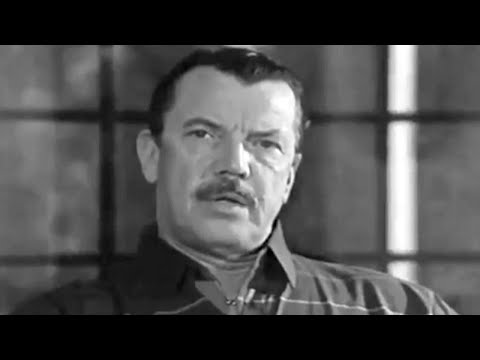
Pilot Tarmo Tukeva talks about the 1969 UFO sighting in Pori, Finland
Archival footage of Tukeva himself describing the pursuit, hosted by Eyes On Cinema, a channel this site's editorial standards treat as a reliable source for period UFO-witness footage.
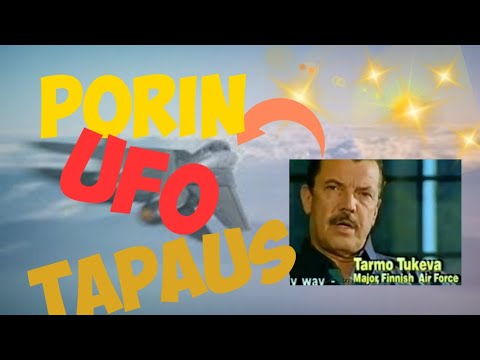
Porin UfO tapaus
A Finnish-language case summary devoted specifically to the Pori sighting, for readers wanting the domestic Finnish framing of the story alongside this file's English-language treatment.

UFO CASE That Was Confirmed by FINNISH AIR FORCE (1969)
A case-specific overview of the Pori sighting and the Finnish Air Force's official acknowledgment, covering the same core narrative documented in this file.
Sources
- "Finnish Air Force UFO sighting," Wikipedia (English). en.wikipedia.org
- "Porin seitsemän ilmapalloa," Wikipedia (Finnish). fi.wikipedia.org
- Yle Uutiset (Yle Satakunta). “Porin ufohavainto puhuttaa yhä,” December 3, 2009 (updated December 7, 2009). yle.fi
- Yle Elävä Arkisto. "Porin taivaalla nähtiin 1960-luvulla Suomen ainoa ufo-tapaus, jonka todenperäisyyden ilmavoimat on myöntänyt." yle.fi
- Kammonen, Teemu. "Ruotuväki: Kaksi ilmavoimien lentäjää kohtasi 7 tulipalloa taivaalla," Uusi Suomi, May 8, 2012. uusisuomi.fi
- Ilta-Sanomat. "Ruotuväki: Ilmavoimien lentäjät tekivät merkittävän ufo-havainnon 60-luvulla," May 8, 2012. is.fi
- Eksopolitiikka.fi. "Porin seitsemän ilmapalloa 12.4.1969." eksopolitiikka.fi
- Findance.com. "Suomessa on vain yksi virallisesti tunnustettu UFO-havainto — ilmavoimat havaitsivat uskomattoman ilmiön," December 13, 2019. findance.com
- Suomen Ufotutkijat ry (FUFORA). "The Seven Balloons of Pori," Some Significant Finnish UFO Cases. fufora.fi
- HandWiki. "Finnish Air Force UFO sighting" (mirror). handwiki.org
- The UFO Database. "Tarmo Tukeva." theufodatabase.com
- Anomalien.com. "Most Well-Known Finnish UFO Cases," May 20, 2015. anomalien.com
- NoManZone.com. "UFO Sightings in Finland," February 26, 2025. nomanzone.com
- Gomez, Cristina. "Government Archives Reveal Nordic UFO Encounters," Medium. medium.com
- Gomez, Cristina. "Finnish Pilots Say UFOs Are Real. Radar Data Finally Proves They're Right," Medium (mirrored at UFO News). ufonews.co
- "Fouga CM.170 Magister," Wikipedia. en.wikipedia.org
- "Pori Airport," Wikipedia. en.wikipedia.org
- "Vaasa Airport," Wikipedia. en.wikipedia.org
- "Juhan af Grann," Wikipedia. en.wikipedia.org
- "Tapani Kuningas," Wikipedia (Finnish). fi.wikipedia.org
- Wikimedia Commons. "Fouga CM-170 Magisters flying in a formation," Finnish Aviation Museum collection, CC BY 2.0. commons.wikimedia.org
- Kuningas, Tapani. Ufoja Suomen taivaalla, 1970 (not consulted).
- Kuningas, Tapani, Teuvo E. Laitinen & Markku Löfman. 100 ufoa Suomessa, Kirjayhtymä, 1994 (source of Yle’s 2009 account; not consulted directly).
Corrections (October 2026)
This page was checked in October 2026 against Yle’s 2009 article and its Living Archive feature on the 1982 Mystillistä programme, Uusi Suomi’s 2012 report on the Ruotuväki article, FUFORA’s case summary, and the Finnish and English Wikipedia articles. Ilta-Sanomat could not be fetched. The core account is confirmed: seven yellowish round objects over Pori airfield on 12 April 1969; Tukeva called off his dive; Kuronen on the runway; 1,500–3,000 m; departure north into a strong headwind; the 700 km/h comparison; and 20–25 witnesses (Kuronen’s estimate). Corrected: the Yle article is dated 3 December 2009, not 12 March 2009. The “you won’t catch them” remark is attributed by the 1982 programme to the squadron commander. The “only officially acknowledged” status is Yle’s and Finnish Wikipedia’s description; no formal Air Force statement, and no Air Force records behind the 2012 article, were found. The spy-plane suggestion is known from Wikipedia’s summary of the Ilta-Sanomat report. Kuronen is described in the sources as a Karelia Wing pilot who later headed Lappeenranta air station, not as a trainee who became a base commander. Kuningas was a founding member and later chairman of the Finnish UFO Researchers Association; that he was its founding chairman was not confirmed.
Following this review, the rating was changed from Credible 68 to Credible 60 (October 27, 2026), because the higher rating had rested partly on claims corrected or removed above.
Removed as unsupported: that Fouga Magisters carried no gun cameras; Tukeva’s reconstructed transmission “They are standing still… there appear to be seven of them” (replaced by the Finnish quotation); that Kuningas’s 1970 book covered Pori “within a year,” with “roughly seventy” cases on a standard form; that the 1970 book was published by Kustannus Oy Rajatieto; that af Grann’s 1992 film carried Tukeva’s account and won a Las Vegas award; Pori Airport’s wartime Luftwaffe use; and Kuronen’s “implicit” 2012 confirmation. Added: the Finnish radio quotations, call sign 286, the 1982 programme’s details, and the 1994 book 100 ufoa Suomessa.
See something inaccurate? Have additional information or sources?
Suggest an Edit →Last Updated: October 2026