
Northern Lights
High Strangeness in Sweden — The First English-Language Survey of a National Record Held in the World's Largest UFO Archive
Core Thesis
Northern Lights: High Strangeness in Sweden is the first book written in English devoted entirely to the Swedish anomalous record, and the gap it fills is larger than its modest presentation suggests. Sweden produced the 1946 ghost rocket wave, one of the most consequential unexplained episodes of the twentieth century and the immediate precursor to the American flying saucer era; it hosts, at Norrköping, the Archives for the Unexplained, the largest collection of UFO and anomalous-phenomena material anywhere in the world; and it has a continuous national investigative tradition running from the 1940s to the present. Almost none of that has been readable in English. Fred Andersson's survey covers encounters with entities, craft reports, claimed time anomalies, men in black and cryptid material across a Swedish record running from 1920 to 2013.
About the Author
Fred Andersson is a Swedish researcher, writer and story producer with more than twenty years in commercial television, and the author of three books. He is not an academic or a field investigator by training; he is a professional researcher for factual television who turned the same skills on his own country's anomalous record.
That background produces a specific kind of book. Television research is about locating material, establishing what is documented, finding the people still alive who were there, and organising it into a narrative — and those are exactly the strengths on display here. It does not produce evidential assessment, and Andersson does not attempt much.
He co-hosts the Swedish podcast Märklighetsfaktorn, appears frequently on international podcasts and radio, and writes in both Swedish and English on Swedish high strangeness. His public role is that of an interpreter between the Swedish material and an English-speaking audience, which is precisely what this book is doing.
The choice to write in English rather than Swedish is the most consequential thing about the project. Sweden has a substantial domestic literature on these subjects, an active national organisation, and archives that researchers travel to use — and effectively none of it circulates outside Scandinavia. Andersson is not adding to the Swedish record; he is exporting it.
The book's publisher, Beyond the Fray, is a small American independent specialising in paranormal titles rather than an academic or trade house. That places the book in the popular-market end of the field and explains both its accessible register and its lack of apparatus.
Historical Context & Origins
Sweden's anomalous record begins seriously in the summer of 1946, and the reason it matters is chronological. Between May and December that year, Swedish authorities logged roughly a thousand reports of cigar- or rocket-shaped objects crossing the country, some observed to enter lakes. The military mounted a serious investigation, the government imposed reporting restrictions, and American and British observers took an active interest. All of this happened a full year before Kenneth Arnold's June 1947 sighting named the flying saucer.
The ghost rockets are therefore the single strongest argument against a purely American cultural origin for the modern phenomenon. Whatever was reported over Sweden in 1946 was reported before the vocabulary existed, in a country with a different press, a different recent war experience and a different relationship to the emerging superpower rivalry. This site treats the wave in its own case file and in a separate essential-reading article.
The lake searches are the most concrete part of that record. Swedish military divers repeatedly searched lakes into which objects were reported to have fallen — Lake Kölmjärv in Norrbotten being the best documented — and recovered nothing. The searches themselves are documented, funded, official activity, which puts the Swedish material on a different evidential footing from most national records.
The country's second famous case is contested in a way the first is not. In May 1946 — and, in the more celebrated version, in May 1946 at Kronoskogen near Ängelholm — Gösta Carlsson reported an encounter with a landed craft and its occupants. Carlsson subsequently built a substantial business he attributed to knowledge gained from the encounter, and erected a monument at the site. This site's case file examines both the account and the commercial motive that shadows it.
The institutional story is the one least known outside Scandinavia and arguably the most important. The Archives for the Unexplained at Norrköping — built from the collections of Anders Liljegren and colleagues, and now holding the personal papers and case files of researchers from around the world — is the largest archive of its kind in existence. Researchers who want to see the primary material for cases from a dozen countries go to Sweden.
Sweden also has an active national organisation with a serious investigative culture, and Clas Svahn — a working journalist at Dagens Nyheter as well as a UFO researcher — has been its most visible figure for decades, producing case investigations to a standard the American popular literature rarely matches. The 2022 Swedish feature film UFO Sweden was a fictionalised tribute to that organisation.
The book's coverage from 1920 to 2013 deliberately spans a period longer than the modern phenomenon, and the pre-1946 material is the most novel to an English-speaking reader — a Scandinavian record of anomalous encounters that predates both the ghost rockets and the flying saucer.
Core Arguments & Key Concepts
Sweden has a national anomalous record that English-speaking researchers have never had access to. The book's foundational claim and the reason it exists. This is not a rhetorical point: the material is genuinely there, it is genuinely documented in Swedish, and it has genuinely not been available. A survey in English is a real contribution regardless of the survey's own analytical depth.
The 1946 ghost rockets are the record's centre of gravity and they predate the American phenomenon. The strongest argument available from Swedish material and one Andersson makes properly. A thousand reports, an official military investigation, government reporting restrictions, foreign intelligence interest and organised lake searches, all a year before the phrase 'flying saucer' existed.
High strangeness should be treated as one category rather than several. The book's structural choice: craft reports, entity encounters, claimed time anomalies, men in black and cryptid material appear together. The defence is that Swedish witnesses do not sort their experiences into disciplinary boxes and that separating them imposes an American taxonomy on a different national record. The cost is that a reader cannot tell which material has documentary support.
Small, well-documented national records are more tractable than large ones. An implicit argument worth drawing out. Sweden's population is around ten million, its reporting infrastructure is centralised, its archives are unusually complete, and its military investigation files exist. That combination makes the Swedish corpus more amenable to systematic study than the far larger and far messier American one.
The institutional achievement is the real story. Sweden built and maintains the world's largest archive of anomalous-phenomena material, in a small country, largely through volunteer labour, and preserved the primary papers of researchers from many nations that would otherwise have been destroyed. That is a more substantial contribution to the subject than any individual Swedish case.
The weakest feature is the absence of evidential sorting. The ghost rockets have a military investigation file behind them; the Ängelholm encounter has a single witness with a commercial interest; the time-anomaly and cryptid material has neither. Presenting all of it in the same register at similar length gives a reader no way to distinguish the documented from the anecdotal.
Its second weakness is sourcing. The book is written for a popular audience and does not carry the apparatus that would let an English-speaking reader follow a claim back to a Swedish source. Given that the whole point of the project is to open the Swedish material to outsiders, the absence of a bibliography a non-Swedish reader could use is a real missed opportunity.
Key Cases & Evidence Discussed
The ghost rockets, 1946. The roughly one thousand Swedish reports between May and December 1946 of rocket- or cigar-shaped objects, the military investigation, the government reporting restrictions and the Anglo-American intelligence interest. This site covers them in a case file and in a separate essential-reading article.
The lake searches. The Swedish military dives into lakes where objects were reported to have entered the water, Lake Kölmjärv above all — documented, funded official operations that recovered nothing and remain the most concrete physical-search programme in any national UFO record.
The Ängelholm encounter, May 1946. Gösta Carlsson's claimed encounter with a landed craft and its occupants at Kronoskogen, the business he subsequently attributed to it, and the monument he erected at the site. Examined in this site's case file.
The pre-1946 Swedish material. The anomalous reports from the 1920s and 1930s that open the book — the least known part of the record to an English-speaking reader and the part establishing that Swedish reporting predates both the ghost rockets and the flying saucer.
Entity and occupant encounters. The Swedish close-encounter reports, which have their own regional character and have circulated almost entirely within Scandinavian ufology.
Men in black reports. Swedish instances of the visitation-and-intimidation motif, useful precisely because they let a reader test how far the American version of the story travelled and how much of it recurs independently.
Claimed time anomalies. Reports of temporal displacement and missing time, presented alongside the craft material — the category with the least documentary support in the book and the one requiring the most caution.
The cryptid material. Scandinavian creature reports included under the high-strangeness umbrella, reflecting the book's deliberate refusal to separate categories that Swedish witnesses do not separate.
The Norrköping archive. The Archives for the Unexplained — the largest collection of UFO and anomalous-phenomena material in the world, built substantially by Anders Liljegren and colleagues, and the institutional backdrop to everything else in the book.
Critical Reception & Controversies
The book was published by a small American independent press and has no reviews in the mainstream or academic literature. Its reception has been through podcasts, where Andersson has been a frequent guest, and reader platforms, where it sits at a strong rating across a small number of ratings.
That reception is characteristic of the current market rather than a judgement on the book. A first English-language survey of a national record, published by a small paranormal imprint in 2023, is not going to be reviewed anywhere that reviews books, and the podcast circuit is where such work now finds its audience.
The substantive criticism is the one that applies to almost every national survey in this library: it does not sort its material by evidential quality. Sweden's record contains an officially investigated 1946 wave with a surviving military file and a set of documented lake searches, and it also contains single-witness time-anomaly claims. A book that presents them in one voice makes the strong material weaker by association and the weak material stronger.
The second criticism is about apparatus and it is sharper here than elsewhere. The book's stated purpose is to open Swedish material to readers who cannot read Swedish; the one thing such readers most need is a route back to the sources; and the book does not supply one in usable form. A researcher who wants to follow up a case has to start over.
There is also a comparison the book invites and does not survive. Swedish investigative work at its best — the archive's holdings, Clas Svahn's case investigations, the documentary reconstruction of the ghost rocket file — is careful, source-based and sceptical. A popular English survey drawing on that tradition is a considerably lighter object than the tradition itself, and readers should not mistake one for the other.
The countervailing point is simply that nothing else exists. There is no other English-language book on the Swedish record, the primary material is in a language almost no Anglophone researcher reads, and a great deal of what the international literature says about the ghost rockets is second- and third-hand. An imperfect first survey is worth more than the previous state, which was silence.
It should also be said that Andersson is transparent about what the book is. He does not present it as an investigation, does not claim to have resolved anything, and writes as a researcher introducing material rather than as an advocate. Within its declared scope it does what it says.
Influence & Legacy
The book's contribution is access, and access is not a trivial contribution in a field whose evidence base is shaped by which languages its researchers read. Every survey of the phenomenon's history written in English has treated the Swedish 1946 wave as a footnote to 1947, largely because nobody outside Scandinavia could read the sources. That is a defect in the field's foundations, not just in its coverage.
It also draws attention to Norrköping. The Archives for the Unexplained holds the papers of researchers from many countries and is the place where a great deal of the primary material for cases outside Sweden actually survives, and it is very poorly known among English-speaking researchers. Anything that raises its profile improves the field's documentary base.
For the study of national records comparatively, Sweden is the most useful control case available: a small population, a centralised reporting system, complete archives, official military investigation, and a wave that predates the American phenomenon. Any serious comparative work on how UFO reporting behaves across cultures has to use it, and until this book that was difficult.
Its cautionary legacy is about the cost of the high-strangeness frame. Collecting craft reports, entities, time anomalies and cryptids under one heading is defensible as ethnography and corrosive as evidence, because the weakest category in the set sets the standard the reader applies to all of them. Sweden's ghost rocket file deserves better company than it keeps here.
The Book
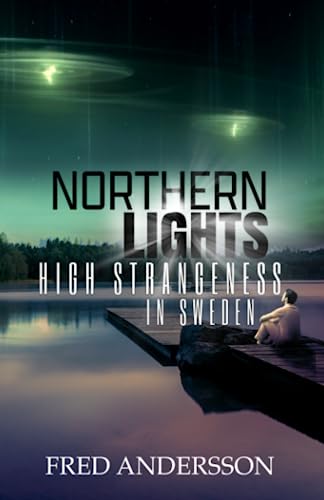
Northern Lights
High Strangeness in Sweden — The First English-Language Survey of a National Record Held in the World's Largest UFO Archive
Find on Amazon →As an Amazon Associate, OverClassified may earn from qualifying purchases made through this link, at no extra cost to you.
Why This Is Essential Reading
Read it, because there is nothing else, and read it with the sorting the book declines to do. Northern Lights is the first and only English-language survey of the Swedish anomalous record, written by a professional television researcher rather than an investigator, published by a small paranormal press, and covering everything from 1920s reports to 2013 without distinguishing the officially investigated from the singly witnessed. That is a real limitation and it matters most for the material that deserves better: the 1946 ghost rockets, with a thousand reports, a surviving military file, government reporting restrictions and documented lake searches, are the strongest argument in existence that the modern phenomenon did not begin in America in 1947 — and they are the reason to pick this book up. Read it alongside this site's ghost rockets article for the evidence, and treat the time-anomaly and cryptid chapters as a separate and much weaker class of claim.
Related Cases & Theories
Sources Cited
- Andersson, Fred. Northern Lights: High Strangeness in Sweden. Beyond the Fray Publishing, July 3, 2023. ISBN-10 1954528728 / ISBN-13 9781954528727. amazon.com
- Goodreads edition record, Northern Lights: High Strangeness in Sweden — the July 3 2023 publication date, the publisher, reader rating data, the cover-art source, and the description identifying the book as the first written in English entirely devoted to high strangeness in Sweden, covering encounters with otherworldly beings, strange flying craft, time rifts, men in black and cryptozoology across incidents from 1920 to 2013. goodreads.com
- Open Library edition record, ISBN 1954528728 — bibliographic verification. openlibrary.org
- AbeBooks catalogue record, ISBN 9781954528727 — edition and format verification. abebooks.com
- Mysterious Galaxy catalogue record, ISBN 9781954528727 — independent bookseller listing and description. mystgalaxy.com
- Beyond the Fray Publishing — the independent press that issued the book. beyondthefraypublishing.com
- Fred Andersson's author site — his biography as a Swedish researcher, writer and story producer with more than twenty years in commercial television, his three books, and his podcast Märklighetsfaktorn. fred-andersson.medium.com
- Wikipedia, "Ghost rockets" — the 1946 Swedish wave, the scale of the reporting, the military investigation, the lake searches and the Anglo-American intelligence interest. en.wikipedia.org
- Wikipedia, "Archives for the Unexplained" — the Norrköping institution that is the largest archive of UFO and anomalous-phenomena material in the world, and its origins. en.wikipedia.org
- Wikipedia, "Kenneth Arnold UFO sighting" — the June 1947 event that the Swedish 1946 wave precedes by a full year. en.wikipedia.org
- Fred Andersson, "Film review: UFO Sweden (Victor Dinell, 2022)" — his own account of the Swedish feature film dramatising the country's UFO organisation, and of the investigative tradition behind it. fred-andersson.medium.com
- Fred Andersson, "Is There Room For Humor Within Ufology?" — representative of his published writing on the subject and of his stated approach to it. fred-andersson.medium.com
- Amazon Sweden edition record, ISBN 1954528728 — the book's availability and edition data in its country of subject. amazon.se
Have corrections, additional research, or peer-reviewed sources? Help improve this entry.
Suggest an Edit