
The NZ Files
UFOs in New Zealand — The First National Survey, and the First Publication of the Kaikōura Defence Report
Core Thesis
The NZ Files is the first serious attempt at a national survey of New Zealand UFO reports, and it did something in 1998 that no one else had done: it printed the official New Zealand defence report on the 1978 Kaikōura lights in full. That matters because New Zealand's relationship with its own UFO archive has been unusually restrictive. The Defence Force did not release its accumulated correspondence — roughly 2,500 pages in twelve volumes, spanning 1952 to 2009 — until December 2010, and the original documents underlying that release remain sealed in the national archive, some until 2080. Peter Hassall's short, plainly written book preceded that release by twelve years, and it remains the only book-length treatment of the New Zealand corpus as a corpus rather than as a single famous case with footnotes.
About the Author
Peter Hassall is a New Zealand researcher who has spent decades compiling the country's UFO record. He is not an academic, not a serving official and not a member of any of the international research bureaucracies; he is a national-archive specialist working on a national archive that hardly anyone else was working on, and that is precisely what makes the book useful.
He remains active. He appeared on Radio New Zealand's Afternoons programme in 2025 to give a New Zealand perspective on the current wave of official interest in unidentified anomalous phenomena, introduced there simply as the author of The NZ Files — a description that has held for nearly thirty years because nothing has displaced the book.
His method is documentary rather than investigative. Hassall did not primarily conduct field interviews or run his own case investigations; he assembled, transcribed and published the paper record — defence correspondence, scientific-department memoranda, air traffic control material, press coverage and witness statements — and let it sit where readers could see it. In a country whose official files were largely inaccessible at the time of writing, that was the more valuable contribution.
The publisher, David Bateman Ltd of Auckland, is a long-established New Zealand trade house best known for natural history, reference and New Zealand-interest titles. This is worth noting because it places the book on a general trade list rather than a paranormal one — a different editorial context, and a different implied claim about what kind of book it is, than most of the works in this library carry.
Historical Context & Origins
New Zealand's UFO record is older than the modern phenomenon. The airship wave that crossed the country in 1909 — investigated on this site as the New Zealand airship wave — produced hundreds of reports of a lighted, apparently controlled craft over both islands, thirty-eight years before Kenneth Arnold and at a point when no aircraft in the southern hemisphere could have done what was described. Any national survey has to start there, and Hassall's does.
The post-war record accumulates in the usual way: a 1955 National Airways Corporation captain's report of a colour-changing light, which the director of the Carter Observatory attributed to Venus; the July 13, 1959 Blenheim sighting reported by Mrs. Frederick Moreland from the family farm on Old Renwick Road, Marlborough, of a hovering object and helmeted figures; a photograph taken aboard HMNZS Royalist in February 1965 that entered the naval record and has never been resolved. None of these is individually decisive. Together they establish that New Zealand had a continuous reporting history that no one was systematically collecting.
Then came December 1978 and the case that changed everything. Over two nights, Safe Air Ltd freight crews flying the night mail run between Blenheim, Wellington and Christchurch encountered unidentified lights above the Kaikōura coast. On December 21 the pilots' sighting was tracked simultaneously by Wellington air traffic control radar. Nine nights later an Australian television crew led by Quentin Fogarty, with cameraman David Crockett, boarded a follow-up flight and shot roughly fourteen minutes of colour 16mm film, again with concurrent ground radar.
The official response was immediate and equivocal, and it is the reason a book like this was needed. The Department of Scientific and Industrial Research investigated and reported to the United Nations in January 1979 that the objects would remain classified as 'UFOs until identified'; the Royal New Zealand Air Force preferred 'natural but unusual phenomena.' The optical physicist Bruce Maccabee analysed the film at length and considered it among the most instrumented civilian sightings on record. Prime Minister Robert Muldoon took a personal interest. And then the file closed.
That closure is the book's operative context. Between 1979 and 1998 the New Zealand material sat in defence and scientific-department files that the public could not see, in press archives that no one had indexed, and in the memories of witnesses who were getting older. Hassall's book is an act of retrieval performed in that window.
The vindication came twelve years later. In December 2010 the New Zealand Defence Force released a redacted version of its UFO file — about 2,500 pages in twelve volumes covering 1952 to 2009, including private and military sighting reports, inter-departmental investigations, press clippings and correspondence from people claiming contact. Defence Minister Wayne Mapp's public position was that most reports had natural explanations. The files had been held by Archives New Zealand and were to be released earlier; the Defence Force intervened to redact personal information under the Privacy Act.
The most significant fact about that release is what it did not include. The original documents on which the released copies were based remain sealed, some of them until 2080 — a closure period longer than most national security classifications, applied to a subject the government's own minister described as mostly explicable. That is the situation Hassall's book anticipated, and it is why publishing the Kaikōura defence report in 1998 was not a redundant act.
Core Arguments & Key Concepts
New Zealand has a substantial national UFO record and had never been treated as having one. This is the book's foundational claim and it is simply correct. Before 1998 the international literature's engagement with New Zealand consisted almost entirely of Kaikōura, treated as an isolated marvel. Hassall's contribution is to show a century-long continuous reporting history — 1909 airships, mid-century pilot reports, naval photographs, close encounters, the 1978 events, and everything after — of which Kaikōura is the best-documented instance rather than an anomaly.
The paper record is the evidence, and it should be published rather than summarised. Hassall's editorial choice to print the official Kaikōura report in full, rather than paraphrase it, is the book's methodological argument. Ufology's chronic weakness is that its case literature consists of authors' accounts of documents rather than the documents themselves, which makes independent checking impossible and errors self-propagating. A short book that reproduces primary material is worth more than a long one that characterises it.
Official ambivalence is itself a finding. The DSIR's 'UFOs until identified,' the RNZAF's 'natural but unusual phenomena,' and the eventual 2080 sealing of the underlying documents describe an official posture that neither endorses nor closes. Hassall's implicit argument is that this posture — visible in the correspondence he reproduces — is more informative about how governments handle the subject than any individual sighting is.
Geographic isolation makes New Zealand a natural control case. This is the strongest analytical point available from the New Zealand material and Hassall gestures at it without fully developing it. New Zealand in 1909 was about as far from the American and European media environments as any settled place on earth, and it produced an airship wave with the same structure as the American one of 1896–97. Either the same stimulus was present in both places, or the transmission of the narrative was faster and more complete than a social-contagion account of that era comfortably allows.
The Kaikōura film is the best case and it is still unresolved. Hassall does not overclaim here, which is to his credit. The combination of professional pilot witnesses, simultaneous independent ground and airborne radar, fourteen minutes of colour film, and cockpit audio is genuinely rare. So is the fact that the competing mundane explanations — squid-boat lights on the Kaikōura fishing grounds, Venus, Jupiter, unusual propagation producing spurious radar returns in an area the DSIR itself described as notorious for them — are individually plausible and collectively insufficient to account for every element.
The weakest strand is the inclusion of unevaluated contemporary reports. Like most national surveys, the book carries a tail of thinly documented sightings that add bulk rather than weight. A reader should treat the documentary chapters and the modern anecdotal chapters as different classes of material, because they are.
National archives should not be sealed for a century over a subject the state calls explicable. Hassall does not make this argument in 1998 — he could not have — but the book's subsequent history makes it for him. The 2010 release confirmed his premise that there was a substantial official record; the 2080 sealing of the originals confirms that publishing what could be obtained was the right thing to have done.
Key Cases & Evidence Discussed
The 1909 airship wave. The nationwide sequence of reports of a lighted, controlled, apparently powered craft over both islands — examined separately in this site's case file. The single most under-studied episode in the whole southern-hemisphere record, and the one that most complicates purely cultural explanations of the phenomenon's origins.
The 1955 National Airways Corporation pilot report. A captain's account of a light exhibiting movement and colour change, attributed by the Carter Observatory's director to Venus. Hassall reproduces the exchange, and it is a compact demonstration of the pattern that would define official New Zealand handling for the next fifty years: a prompt astronomical attribution offered without a full reconstruction of the observation.
The Blenheim close encounter, July 13, 1959. Mrs. Frederick Moreland's early-morning report from the family farm on Old Renwick Road, Marlborough, of a green glow, a hovering object and helmeted figures — contemporaneously documented in Brad Steiger's 1966 survey — New Zealand's best-known occupant case, contemporaneous with the international wave of similar reports and geographically close to the airspace that would produce Kaikōura nineteen years later.
The HMNZS Royalist photograph, February 1965. An image of an unexplained object taken aboard a Royal New Zealand Navy cruiser and preserved in the naval record. Physical-record cases involving serving military personnel are scarce anywhere; this one is essentially unknown outside New Zealand.
The Kaikōura lights, December 21 and December 30–31, 1978. The book's centrepiece, and the reason it exists. Safe Air freight crews, Wellington and Christchurch air traffic control, RNZAF ground personnel, the Fogarty and Crockett television crew, fourteen minutes of 16mm colour film, simultaneous radar. This site's case file classifies it Credible.
The DSIR report to the United Nations, January 1979. The formal government position — that the objects would be classified as 'UFOs until identified' — delivered to an international body, and the closest any New Zealand government has come to an official statement on the subject. Hassall reproduces the documentary trail around it.
The official defence report on Kaikōura. The book's distinguishing content: the full text of the New Zealand defence investigation, published here for the first time and twelve years before the Defence Force's general 2010 release. This is the material that gives the book a permanent place in the literature regardless of its other merits.
Critical Reception & Controversies
The book was published for a domestic New Zealand market by a general trade house and received the reception such books receive: modest local press notice, no international review, and no engagement from the scientific community. It has never been reprinted and second-hand copies circulate at collector prices. Its readership has always been small.
Its standing within New Zealand ufology, by contrast, is close to canonical. It is the reference work, cited whenever the country's UFO history is discussed, and Hassall is still introduced on national radio a quarter-century later by reference to it. When Radio New Zealand wanted a local perspective on the international UAP disclosure story in 2025, this is the book that made him the person to ask.
The most substantial criticism is one of analytical ambition rather than accuracy. Hassall assembles and reproduces; he does not build a sustained argument, and he does not systematically test the mundane explanations against the strong cases. For Kaikōura specifically, the squid-boat and anomalous-propagation hypotheses deserve more rigorous treatment than 176 pages allow, and readers wanting that must go to Maccabee's technical analyses or to the DSIR material itself.
There is also an evenness problem. The documentary chapters are excellent and the contemporary sighting chapters are not, and the book does not signal the difference. A reader who takes the whole volume at a uniform standard of reliability will overrate the anecdotal material and, paradoxically, underrate the archival work that is the book's real achievement.
The critical position that has aged worst is the dismissive one. When the book appeared, the implicit official line was that there was little in the New Zealand file worth seeing. The 2010 Defence Force release — 2,500 pages across twelve volumes and six decades — established that there was a great deal in it, and the decision to seal the underlying originals until 2080 established that someone still thinks so. Hassall's premise was right.
Later New Zealand research has been organisational rather than authorial. UFOCUS NZ has documented the circumstances of the 2010–11 file release in some detail, and the New Zealand press has returned to the subject periodically. But no successor book exists, which is a striking gap for a country with a case of Kaikōura's calibre in its record.
The fair assessment is that this is a modest book doing an immodest job. It is short, unadorned, unambitious in argument and indispensable in content, and its indispensability rests almost entirely on the fact that its author bothered to publish primary documents in a country whose archive was closed and, in significant part, still is.
Influence & Legacy
The book's clearest legacy is precedent. Publishing the official Kaikōura report in 1998 established, in a small way, that this material was public property rather than departmental property — a position the New Zealand Defence Force eventually adopted in December 2010, and one that the continuing 2080 seal on the original documents shows was never conceded in full.
It also anchored New Zealand's place in the international literature. Before 1998 the country appeared in surveys of the field as a footnote attached to a single film; afterwards it appeared as a national case corpus with a century of history. That reframing has held, and it matters for comparative work: New Zealand's isolation, small population and centralised aviation infrastructure make its record unusually tractable for exactly the kind of statistical and geographical analysis that larger national corpora resist.
For readers of this site the book is the connective tissue between three separate case files — the 1909 airship wave, the 1978 Kaikōura lights, and the wider southern-hemisphere material — and the source that establishes they belong to one national record rather than three disconnected curiosities.
Its cautionary legacy concerns archives rather than aliens. A democratic government investigated a series of reports, told the United Nations they were unidentified, told the public they were mostly explicable, and sealed the underlying paper for a century. Whatever was in the Kaikōura file, that combination is the fact most worth carrying away from this book, and it is why a short trade paperback from Auckland in 1998 still earns its place.
The Book
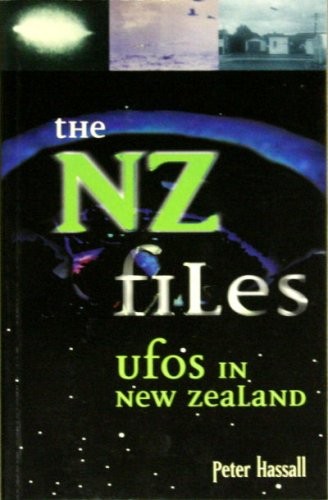
The NZ Files
UFOs in New Zealand — The First National Survey, and the First Publication of the Kaikōura Defence Report
Find on Amazon →As an Amazon Associate, OverClassified may earn from qualifying purchases made through this link, at no extra cost to you.
Why This Is Essential Reading
Track it down if you can — it is scarce and it is worth the effort, though only for a particular reader. The NZ Files is not an argument, a theory or a piece of investigative journalism; it is a national archive assembled by one person and printed while the official archive was shut. Its documentary chapters, and above all its full publication of the official Kaikōura defence report twelve years ahead of the Defence Force's own release, give it a permanence its 176 pages and modest local print run would not otherwise earn. Read it alongside this site's Kaikōura case file and Quentin Fogarty's own first-hand account of the December 1978 flights, and treat its contemporary sighting chapters with more caution than its documentary ones. If you want New Zealand's UFO history in one place, this is still, remarkably, the only place it is.
Related Cases & Theories
Sources Cited
- Hassall, Peter. The NZ Files: UFOs in New Zealand. David Bateman Ltd, Auckland, 1998. 176 pp. ISBN-10 1869533704 / ISBN-13 9781869533700. amazon.com
- Open Library edition record, ISBN 1869533704 — bibliographic verification and cover-art source. openlibrary.org
- Open Library author record for Peter Hassall — authority record and works list. openlibrary.org
- Goodreads edition record, The NZ Files: UFOs in New Zealand — publisher, 1998 publication date, 176-page extent, and the description identifying the book's publication of the full official New Zealand defence report on the Kaikōura sightings. goodreads.com
- Radio New Zealand, Afternoons, "A local take on UAPs (Unidentified Anomalous Phenomena)" — Peter Hassall interviewed as the author of The NZ Files, with reference to New Zealand naval records including the February 1965 HMNZS Royalist photograph. rnz.co.nz
- Wikipedia, "UFO sightings in New Zealand" — the 1955 National Airways Corporation report and Carter Observatory attribution, the July 13 1959 Blenheim occupant case, the December 1978 Kaikōura events, the 2010 Defence Force release and Wayne Mapp's public position, and later cases. en.wikipedia.org
- Wikipedia, "Kaikoura lights" — the December 21 and December 30–31 1978 sightings, the Safe Air crews, the Australian television film, the radar corroboration and the official investigations. en.wikipedia.org
- Phys.org, "New Zealand military releases UFO files," December 2010 — contemporaneous reporting on the release of approximately 2,500 pages in twelve volumes covering 1952 to 2009. phys.org
- SBS News, "New Zealand military releases UFO files" — further contemporaneous coverage of the December 2010 release and its contents. sbs.com.au
- National Library of New Zealand catalogue record, "Unidentified flying objects (UFO) files: copies for release" — the official record of the declassified 1952–2009 defence correspondence released under the Official Information Act. natlib.govt.nz
- UFOCUS NZ, "Relinquishing Responsibility? Circumstances Surrounding the Release of the New Zealand MoD UFO Files 2010–11" — the detailed New Zealand account of how the release was handled, including the Archives New Zealand and Privacy Act sequence. ufocusnz.org.nz
- Otago Daily Times, "Saucers full of secrets: Looking into NZ's unexplained UFO sightings" — New Zealand press retrospective on the national sighting record and the released defence files. odt.co.nz
- Wikipedia, "Department of Scientific and Industrial Research (New Zealand)" — the government science agency that investigated Kaikōura and reported to the United Nations in January 1979. en.wikipedia.org
- David Bateman Ltd — the Auckland trade publisher that issued the book. bateman.co.nz
Have corrections, additional research, or peer-reviewed sources? Help improve this entry.
Suggest an Edit