
The Cryptoterrestrials
A Meditation on Indigenous Humanoids and the Aliens Among Us
Core Thesis
The Cryptoterrestrials: A Meditation on Indigenous Humanoids and the Aliens Among Us proposes, in its own carefully hedged framing as a "meditation" rather than a settled theory, that at least some of what gets reported as extraterrestrial contact may instead be encounters with a hidden, technologically advanced humanoid population indigenous to Earth itself — a "sister species" that may have diverged from a shared ancestral line deep in prehistory or survived some earlier catastrophe, retreated from an expanding human population into caves, deep ocean trenches, or other inaccessible refuges, and maintained its concealment partly through genuine stealth capability and partly through a deliberate strategy of impersonation: encouraging witnesses to read encounters as visits from interstellar aliens, a fantastic but ultimately safer story than the more immediately threatening possibility of a rival intelligence sharing its own planet.
About the Author
Mac Tonnies was born August 20, 1975, in Independence, Missouri, and attended William Chrisman High School before earning a B.A. in English literature from Ottawa University. He settled in Kansas City, Missouri, where he spent his adult working life outside any academic or research institution, supporting his writing with a string of day jobs that included time behind the counter at Starbucks. From 2003 until his death, his blog Posthuman Blues — a self-described mix of original fiction, personal reflection, and running commentary on transhumanism, space exploration, and Fortean news — earned him recognition in a 2004 profile by Kansas City's alt-weekly The Pitch as one of the city's best blogs; his own later description of his readership was "small, but devoted." He was a frequent guest on paranormal-interest radio, appearing repeatedly on Coast to Coast AM and The Paracast, including a Coast to Coast appearance on September 28, 2009, discussing the cryptoterrestrial hypothesis less than a month before his death.
Tonnies's writing career began with fiction rather than theory: Illumined Black (1995), a collection of science-fiction short stories that carried a cover endorsement from novelist Bruce Sterling. His first nonfiction book, After the Martian Apocalypse: Extraterrestrial Artifacts and the Case for Mars Exploration (Simon & Schuster, 2004), argued for continued scientific investigation of the Cydonia region's "Face on Mars" and nearby surface anomalies — a position closer to mainstream planetary-anomaly speculation than to the terrestrial hypothesis he would propose six years later, and one that traces his own thinking moving, over the course of a single decade, from looking outward toward Mars to looking, as The Cryptoterrestrials puts it, closer to home.
Tonnies died in his sleep of cardiac arrhythmia on October 22, 2009, at his Kansas City apartment; he was 34. He had last updated Posthuman Blues four days earlier, on October 18. Investigators found no evidence of foul play or suicide and attributed the death to natural causes, though the suddenness of it — a healthy man in his mid-thirties, gone overnight — unsettled friends and readers enough that some, including cryptozoologist Loren Coleman, publicly questioned how little explanation "natural causes" actually provided. Tonnies was, by every account, weeks away from delivering the finished manuscript of The Cryptoterrestrials to his publisher when he died; his family and friends worked from his nearly complete drafts to assemble the book Anomalist Books published posthumously in March 2010, with a foreword by fellow Fortean researcher Nick Redfern, an afterword by Radio Misterioso host Greg Bishop, and interior illustrations by Mike Clelland. That circumstance — a book about a hidden, elusive intelligence finished and released only after its own author had, in the most literal and final sense, become unavailable to explain himself further — is recorded here because it is true and well documented, not because it flatters the theory.
Historical Context & Origins
By the time Tonnies wrote The Cryptoterrestrials, the terrestrial-origin alternative to the Extraterrestrial Hypothesis had already existed for four decades in the specific form this site's own Operation Trojan Horse entry documents: John Keel's 1970 ultraterrestrial framework and Jacques Vallée's contemporaneous folklore-continuity and control-system arguments. What had not existed in that older literature — deliberately, since both Keel and Vallée treated the phenomenon as resistant to literal physical embodiment — was a confident claim that the non-human intelligence behind UFO reports was a literal, evolved, biological population: a species with a body, an ecology, and a survival strategy, rather than a perception-manipulating field effect or a symbolic control system. That is the specific gap Tonnies's book steps into.
Tonnies arrived at that position from an unusual angle for ufology: not fieldwork, but a decade of independent research and blogging that ran through After the Martian Apocalypse's Cydonia argument, sustained engagement with transhumanist and futurist thought on Posthuman Blues, and a kind of applied Fermi Paradox logic that the book makes explicit. If genuinely interstellar visitation were the correct explanation for UAP reports, Tonnies argued, six decades of modern ufology should by 2010 have produced more decisive confirming evidence than it had; rather than treating that absence as grounds to dismiss the phenomenon outright, as mainstream skeptics did, or to keep insisting on literal interstellar travel against the evidentiary silence, as the die-hard "nuts-and-bolts" wing of ufology did, Tonnies proposed redirecting the search closer to home.
The book's subtitle — A Meditation on Indigenous Humanoids and the Aliens Among Us — signals its own genre self-awareness: Tonnies repeatedly frames the cryptoterrestrial idea as speculative brainstorming rather than a settled claim, a stance reviewers have consistently credited him for maintaining throughout the text rather than lapsing into the more assertive, evidence-overclaiming register common to much contactee and crash-retrieval literature.
Core Arguments & Key Concepts
The book's central proposal is that at least some UAP encounters and their occupants are best explained not by interstellar visitation but by contact with an indigenous, non-human hominid population — a "sister species" to Homo sapiens that Tonnies speculates may have diverged from a shared ancestral lineage deep in prehistory, or survived some earlier catastrophe, and subsequently retreated from an expanding and increasingly technological human population into refuges — deep caves, remote wilderness, or the ocean floor — that keep it beyond the reach of ordinary detection. Tonnies deliberately declines to commit to a single origin story for the cryptoterrestrials, offering several non-exclusive possibilities across the book rather than asserting one as fact; what stays constant is the insistence that whatever is being encountered is a literal, embodied, evolved population rather than a purely psychic, symbolic, or metaphysical presence.
That insistence is the book's clearest point of departure from John Keel's ultraterrestrial framework, documented on this site's own Operation Trojan Horse and Ultraterrestrial Hypothesis pages. Keel's ultraterrestrials are explicitly non-physical in the conventional sense — an intelligence Keel described as operating "at the very highest possible point of the frequency spectrum," capable of manipulating perception directly and changing its apparent form across history to match whatever supernatural vocabulary a given culture supplied, appearing as fairies, demons, and angels long before it borrowed the vocabulary of flying saucers. Tonnies's cryptoterrestrials do none of that shape-shifting: they are a fixed, single biological population wearing one costume — the extraterrestrial-visitor mask — deliberately and strategically, not an ever-mutable field phenomenon reflecting back whatever a witness's own culture expects to see. Where Keel's model is difficult to falsify because it can absorb any contradictory observation as simply another mask, Tonnies's model is difficult to falsify for the opposite reason: it makes a concrete biological and archaeological claim — a surviving hominid population — that in principle could be confirmed or ruled out by exactly the kind of fossil, genetic, or physical evidence that decades of paleoanthropology have not produced.
The book's relationship to Jacques Vallée's control-system hypothesis, documented on this site's own The Invisible College entry, is closer but still distinct: both models agree the phenomenon is not literally interstellar, and both treat its persistence across history as evidence of an ongoing, deliberate strategy rather than a series of unrelated events. But Vallée's control system does not require a population at all — it can be, in his own framing, a mechanism regulating "man's consciousness needs" with no embodied operator behind it, closer to an information-theoretic process than a species. Tonnies's cryptoterrestrials are the more concrete, more biologically committed claim: not a system, but a civilization, with its own ecology, technology, and self-interested motive for staying hidden.
That distinction is not merely this site's own reading. The first peer-reviewed academic treatment of the idea, Tim Lomas, Brendan Case, and Michael P. Masters's 2024 paper in Philosophy and Cosmology, explicitly places Tonnies's cryptoterrestrial hypothesis as a specific subset of the broader ultraterrestrial category Keel's work established four decades earlier — an "unconventional terrestrial explanation" for UAP distinct from both the conventional terrestrial (human-made technology) and extraterrestrial classes, defined by intelligent beings concealed in stealth "here on Earth ... and/or even 'walking among us.'" The paper's own taxonomy confirms what the book itself argues: cryptoterrestrial is Tonnies's specific, embodied variant within Keel's older, broader terrestrial-origin family of ideas, not simply another name for it.
Central to the book's account of why cryptoterrestrials would encourage an extraterrestrial reading of their own activity is a survival calculation: heavily outnumbered by an expanding human population and unwilling to risk contact or conflict, they have, in Tonnies's account, every incentive to appear cosmic and remote rather than local and vulnerable — encouraging humanity to keep looking up rather than down or around. The book ties this directly to a version of Fermi's Paradox reasoning: if genuine interstellar visitation were the explanation, Tonnies argues, decades of dedicated ufological investigation should have produced more decisive confirming evidence than the field's inconclusive record actually shows, and that persistent absence is itself grounds to look nearer rather than farther for the source of the reports.
Key Cases & Evidence Discussed
The book discusses the Betty and Barney Hill abduction (Case File #006, 1961), one of American ufology's foundational contact narratives, as part of its broader survey of reported humanoid encounters — testimony Tonnies treats, consistent with the book's overall method, as suggestive of a physically embodied encounter with something rather than dispositive proof of any single origin for it.
The Travis Walton abduction (Case File #009, 1975), centered on the Apache-Sitgreaves National Forest in Arizona, also appears in the book's case material — a well-documented, multiply-witnessed disappearance and five-day absence that Tonnies, like many writers working the humanoid-encounter literature, treats as too well corroborated by Walton's logging crew to dismiss outright, even where the specific occupant description resists easy classification as either extraterrestrial or cryptoterrestrial.
Tonnies draws a direct comparison between the 1957 Antônio Vilas Boas encounter (Case File #153) in Brazil and Whitley Strieber's later, far more culturally prominent account in Communion (1987), reading the two reports' similarities across three decades and two very different witnesses as evidence of a stable underlying pattern of humanoid contact rather than independently invented stories — the same kind of cross-case consistency argument this site's own Passport to Magonia and The Invisible College entries document Vallée making about folklore and psychic testimony, applied here specifically to physical humanoid descriptions.
This site's own Crypto-Terrestrial Hypothesis theory page, built directly on Tonnies's framework and citing this book as its foundational text, extends his argument to additional case material he did not live to write about himself, including the 1977 Colares wave's disputed physical-trace evidence — a reminder that the theory page and the book that inspired it are related but not identical documents, and that later material presented under the cryptoterrestrial banner reflects the site's and other researchers' extension of Tonnies's idea rather than his own casework.
Critical Reception & Controversies
The most substantive independent review of the book comes from the blog Odd Things Considered, which praised Tonnies's "crisp" prose and his ability to present "complex ideas in manageable bites" without demanding the reader's belief, crediting him for restoring a sense of wonder to fringe research the reviewer compared to "the excitement I felt reading Victorian sci-fi as a kid." The same review is candid about the book's structural weakness: the cryptoterrestrial hypothesis itself, in the reviewer's assessment, makes up only a fraction of the text, with Tonnies "constantly spinning five dizzying ideas at once" rather than developing any single argument to its conclusion — a diffuseness other readers have attributed to the book's unfinished, posthumously assembled state.
Reader reaction on The Paracast's own community forum split along predictable lines shortly after publication. Paul Kimball's review called the book a paradigm-shifting must-read, prompting a fellow poster to question whether a personal friend of Tonnies's could review the book objectively — a fair-comment concern Kimball did not dispute so much as answer by noting he would have stayed silent had his opinion been negative. A more substantive skeptical objection came from forum poster Frank Stalter, who dismissed the cryptoterrestrial hypothesis as "great science fiction ... not a very good hypothesis," arguing that UAP reports credibly tracked on radar exceeding the speed and maneuverability of any known aircraft point toward a genuinely exotic, plausibly extraterrestrial technology rather than a terrestrial population with no independent physical evidence behind it.
Trade reception at publication leaned on Fortean-adjacent endorsement rather than mainstream science or literary press coverage: novelist John Shirley called it, on the book's own jacket copy, "Mac Tonnies' final Fortean landmark," comparing it directly to Charles Fort's own foundational work in terms this site's own Book of the Damned entry documents shaping ufology's entire anomalous-data tradition. Radio Misterioso host Greg Bishop's own afterword to the book struck a more measured note, describing it as "an honest pursuit of ideas that might lead to some greater understanding of the paranormal" rather than a finished proof. The book's more durable critical validation arrived fourteen years later and from an entirely different direction: the 2024 Lomas, Case, and Masters paper in Philosophy and Cosmology is the first treatment of the cryptoterrestrial hypothesis in a peer-reviewed academic venue, moving Tonnies's idea from an independent blogger's posthumous book into citable philosophical literature — a slow, unusual path to legitimacy for a theory that spent its first decade and a half almost entirely outside institutional science.
Influence & Legacy
The clearest, most direct line from this book to this site's own library runs through the Crypto-Terrestrial Hypothesis theory page (CTH-001), which names Tonnies directly as the framework's originator and cites this book as its foundational text — the same relationship this site's Ultraterrestrial Hypothesis page documents for Keel's Operation Trojan Horse a generation earlier. Where Keel's book spent decades as the sole reference point for the terrestrial-origin argument, Tonnies's narrower, more concrete variant has, within its own first fifteen years, already generated a dedicated theory page of its own on this site and a specific line of academic engagement Keel's more diffuse framework never received in comparable form.
That academic engagement is itself the book's most concrete legacy: the 2024 Lomas, Case, and Masters paper, co-authored by Harvard Human Flourishing Program researchers and a Montana Technological University biological anthropologist, is the direct reason the cryptoterrestrial hypothesis moved from an independent author's blog-era idea into citable, peer-reviewed philosophical literature — a transition few Fortean-adjacent books achieve at all, let alone one finished by its author's friends and family after his death.
The book's afterlife also runs through Tonnies's own unfinished body of work. His blog Posthuman Blues, active from 2003 until four days before his death, has since been compiled and republished across multiple volumes by friends and readers working to preserve it, and a small, persistent community of former readers has kept his site and memory active well past the book's original publication — the same "small, but devoted" readership The Pitch identified while he was alive, now functioning as an informal custodianship of an author who did not live to build on his own most fully realized idea.
The Book
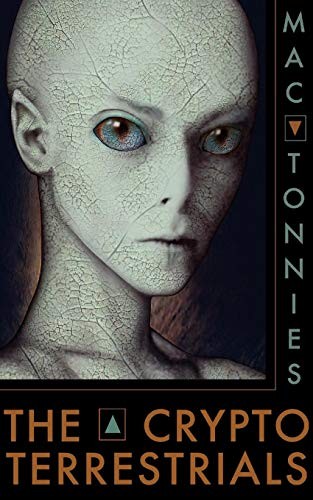
The Cryptoterrestrials
A Meditation on Indigenous Humanoids and the Aliens Among Us
Find on Amazon →As an Amazon Associate, OverClassified may earn from qualifying purchases made through this link, at no extra cost to you.
Why This Is Essential Reading
The Cryptoterrestrials earns its place on this list not because Tonnies proves his case — by his own repeated framing, and his own choice of the word "meditation" over "argument" in the subtitle, he does not attempt to — but because it is the clearest, most concrete embodiment claim in this site's own terrestrial-origin lineage: where Operation Trojan Horse gave ufology a non-human intelligence that could be electromagnetic, mythic, and endlessly mask-shifting, and The Invisible College gave it a control system with no operator required at all, Tonnies insisted on something falsifiable in principle: an actual, evolved, biological population, hiding for reasons a reader can follow without needing to accept any of the book's more speculative origin stories. That the book's author did not live to defend, extend, or revise the idea himself — dying weeks before he was due to deliver the finished manuscript, with friends and family completing it from his drafts — is not incidental to its place here; it is part of why the cryptoterrestrial hypothesis spent a decade and a half as an unusually static target, argued over by others but never adjusted by the one person who might have settled its more speculative claims. The 2024 academic paper that finally gave the idea peer-reviewed treatment is the first real test of whether that stasis was a weakness or simply an idea whose moment had not yet arrived.
Related Cases & Theories
Essential Viewing
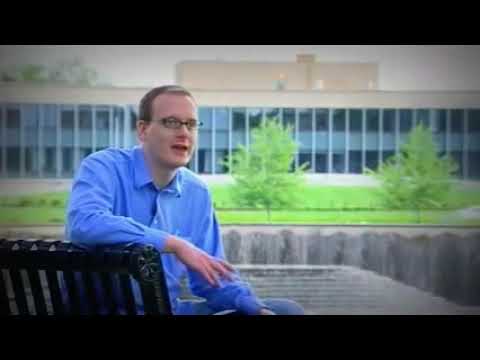
Mac Tonnies talks about The Cryptoterrestrials
Dave Williams — Archival footage of Mac Tonnies himself discussing his cryptoterrestrial hypothesis, verified via YouTube oEmbed before inclusion — one of the few surviving recorded talks in which Tonnies explains the idea directly, from before his death in October 2009.
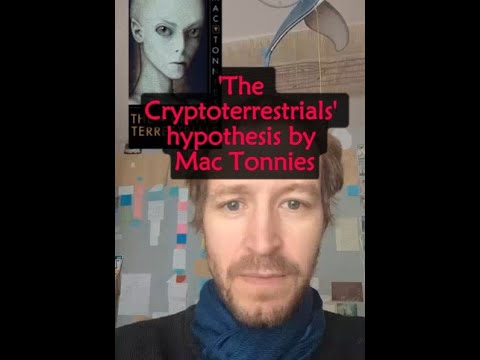
'The Cryptoterrestrials' hypothesis by Mac Tonnies
Lex Pelger — A secondary walkthrough of Tonnies's cryptoterrestrial hypothesis and how it fits into the broader terrestrial-origin tradition this site documents through Keel and Vallée, verified via YouTube oEmbed before inclusion.
Sources Cited
- Tonnies, Mac. The Cryptoterrestrials: A Meditation on Indigenous Humanoids and the Aliens Among Us. Anomalist Books, 2010 (ISBN-13 9781933665467, paperback, foreword by Nick Redfern, afterword by Greg Bishop, illustrated by Mike Clelland). amazon.com
- "Mac Tonnies." Wikipedia (biography, career timeline, bibliography, date and circumstances of death). en.wikipedia.org
- "Mac Tonnies, 34, Has Died." Cryptomundo, October 2009 (contemporary obituary; circumstances of death; manuscript status at time of death). cryptomundo.com
- "The Cryptoterrestrials by Mac Tonnies." Odd Things Considered (independent review; praise for prose and tone, criticism of the book's diffuse structure). oddthingsconsidered.com
- "The Cryptoterrestrials by Mac Tonnies — A Review." The Paracast Community Forums (reader reception thread; Paul Kimball review and objectivity question; Frank Stalter's skeptical radar-evidence objection). theparacast.com
- Lomas, Tim; Case, Brendan; & Masters, Michael P. "The Cryptoterrestrial Hypothesis: A Case for Scientific Openness to a Concealed Earthly Explanation for Unidentified Anomalous Phenomena." Philosophy and Cosmology, Vol. 33, 2024, pp. 67–122 (first peer-reviewed academic treatment; taxonomy placing CTH as a subset of the ultraterrestrial hypothesis). ispcjournal.org
- "The Cryptoterrestrials is out, plus Mac Tonnies tribute site." Technoccult, March 2010 (publication announcement and posthumous context). technoccult.net
- "Remembering Mac Tonnies." Technoccult, March 2010 (tributes from friends and readers; blog legacy). technoccult.net
- "After the Martian Apocalypse: Extraterrestrial Artifacts and the Case for Mars Exploration." Amazon (Simon & Schuster, 2004 edition listing; earlier book's Cydonia/Face on Mars argument). amazon.com
- "THE CRYPTOTERRESTRIALS: A Meditation on Indigenous Humanoids and the Aliens Among Us." Biblio.com (edition data; foreword, afterword, and illustrator credits). biblio.com
- "The Cryptoterrestrials." Goodreads (edition data, reader rating distribution). goodreads.com
- This site's own theory file: Crypto-Terrestrial Hypothesis (CTH-001), built directly on this book's framework.
- This site's own theory file: The Ultraterrestrial Hypothesis (UTH-001), for the broader terrestrial-origin category this book's hypothesis is a subset of.
- This site's own essential-reading entry: Operation Trojan Horse, John Keel's 1970 book and the direct theoretical ancestor of this one.
- This site's own essential-reading entry: The Invisible College, Jacques Vallée's 1975 control-system hypothesis, this book's closer but still distinct terrestrial-origin cousin.
- This site's own case file: Betty and Barney Hill Abduction (Case File #006), discussed directly in this book.
- This site's own case file: Travis Walton Abduction (Case File #009), discussed directly in this book.
- This site's own case file: Antônio Vilas Boas Encounter (Case File #153), compared by Tonnies to Whitley Strieber's Communion.
- This site's own key-figures entry: Mac Tonnies, for his broader career background.
- This site's own resources library: Full Reading List, where this title is cited on this site's Crypto-Terrestrial Hypothesis theory page.
Have corrections, additional research, or peer-reviewed sources? Help improve this entry.
Suggest an Edit