
The Complete Book of Aliens and Abductions
Core Thesis
The Complete Book of Aliens and Abductions is Jenny Randles's 1999 survey of the abduction phenomenon, written from her position as one of British ufology's most prolific and longest-serving investigators. Rather than either endorsing abduction accounts at face value or dismissing them as fabrication, Randles's own stated position — that many claimed abductions reflect a witness reliving "a genuine trauma" that becomes reconfigured under hypnosis into UFO-abduction imagery — gives the book a distinctive middle position between the credulous contactee tradition and outright hoax-based skepticism. The book is cited directly by this site's own case files for two structurally very different cases: the mass-witness Ariel School landing in Zimbabwe and the single-witness Prospect Kentucky Abduction, giving Randles's survey real, checkable reach across both of this site's most significant entity-contact cases.
About the Author
Jenny Randles was born Jennifer Christine Randles on October 30, 1951, in Bacup, Lancashire, England, and studied physics and geology before turning her scientific training toward UFO investigation. She became a British UFO Research Association (BUFORA) investigator in 1973, the same year she helped form the Northern UFO Network, and began editing its bulletin Northern UFO News in 1974. She went on to serve as BUFORA's Director of Investigations from 1982 to 1994, one of the longest tenures of any senior investigator in the organization's history. On June 10, 1981, she was among the founders of the Association for the Scientific Study of Anomalous Phenomena (ASSAP), alongside Fortean Times editor Bob Rickard and others, an organization created specifically to apply the same evidentiary rigor long used by the Society for Psychical Research to a wider range of anomalous subjects — earth mysteries, cryptids, and UFO phenomena among them — rather than treating UFO research as methodologically separate from other anomaly investigation.
By the time this book was published in 1999, Randles had already built one of the most substantial bibliographies in the field: her first book, UFOs: A British Viewpoint, appeared in 1979, and her publisher credits her with more than fifty published books and over 1.5 million copies sold across a career that would eventually extend to Breaking the Time Barrier (2005) and beyond, covering crop circles, extrasensory perception, and other anomalous subjects alongside her core UFO research.
This site's own research documents Randles's investigative work directly: as a BUFORA investigator, she was among the researchers who examined the March 1993 Cosford Incident and floated the rocket-body re-entry explanation later confirmed in detail by Gary Anthony's trajectory analysis, and she published Margaret Fry's 1990s findings on the 1974 Berwyn Mountains Incident through BUFORA's own network. In the 2000s, alongside David Clarke and Andy Roberts, she co-authored The UFOs That Never Were (2000) and helped re-investigate the Lakenheath–Bentwaters incident, locating and interviewing the Venom aircrews whose testimony substantially complicated that case's classic narrative.
Randles's own stated interpretive framework for abduction testimony, developed across her body of work including this book, treats many claimed abductions as witnesses reliving "a genuine trauma" — a real emotional or psychological event — that becomes reinterpreted, often under hypnosis, into UFO-abduction imagery rather than as evidence of literal alien contact. This positions her investigative approach as neither a believer's uncritical acceptance nor a debunker's blanket dismissal, but as a search for the real underlying experience a witness's testimony may be encoding.
The same methodology is visible in her work on an entirely different case: the 1974 Berwyn Mountains Incident in Wales, popularly dubbed "the Welsh Roswell." After researcher Margaret Fry fed newly gathered witness testimony into BUFORA's network and into Randles's own widely read writing in the early 1990s, Randles joined Andy Roberts and David Clarke in their jointly authored 2000 book The UFOs That Never Were to argue the entire episode was fully explicable through the combination of a documented regional earthquake, a coincident meteor fireball, and, for the remaining light reports from surrounding nights, ordinary poachers working the hillsides with powerful lamps — a mundane, well-precedented rural activity capable of generating exactly the intermittent, moving lights a community primed by an initial dramatic event tends to reinterpret as anomalous. The same pattern this analysis identifies — a real triggering event reinterpreted through a UFO-belief lens rather than fabricated outright — is structurally identical to the trauma-reconfiguration framework this book applies to individual abduction testimony, just scaled up to an entire community's collective reporting behavior.
Historical Context & Origins
Piatkus Books published The Complete Book of Aliens and Abductions in 1999, twenty years into Randles's already-substantial publishing career and five years after the September 1994 Ariel School encounter that had, by the time of this book's publication, already drawn international attention through Dr. John Mack's Harvard-based investigation and the resulting peer-review controversy at Harvard Medical School.
The book arrived during a period when the abduction narrative itself had matured into a recognizable subgenre of ufological literature, distinct from the earlier contactee tradition: Betty and Barney Hill's 1961 case, first widely publicized in John Fuller's 1966 book The Interrupted Journey, and the 1957 Antônio Vilas-Boas case (documented in this site's own Flying Saucer Occupants essential-reading entry) had by 1999 established abduction as ufology's dominant narrative mode, giving Randles a well-developed body of prior case literature to synthesize and reassess rather than a genre she was defining for the first time.
As a British researcher writing primarily for a British and international general readership rather than a specialist academic audience, Randles's book occupies a different niche than John Mack's own clinically framed abduction research: where Mack approached the phenomenon from Harvard psychiatric credentials and a stated openness to the literal reality of the experiences reported, Randles's decades of BUFORA field investigation gave her book a more skeptically calibrated, investigator's-eye-view of the same body of testimony.
This title is worth distinguishing clearly from Randles's other similarly named books, since her prolific output produced several close variants readers could easily conflate: Alien Contacts and Abductions: The Real Story from the Other Side (Sterling Publishing) is a separate, earlier work, and The Complete Book of UFOs: 50 Years of Alien Contacts and Encounters, co-authored with Peter Hough, is a distinct broader UFO-history survey rather than this book's specifically abduction-focused reference volume. This site's own Prospect Kentucky case file independently cites the 1997 Alien Contacts and Abductions title in its formal sources list, a separate genuine Randles work from this one rather than a duplicate or citation error, and this article addresses only The Complete Book of Aliens and Abductions specifically.
The book's American case material also arrived at a moment when UFO reporting had gained an unusual degree of mainstream political legitimacy: this site's own Prospect Kentucky case file notes that January 1977 coincided with the inauguration of President Jimmy Carter, who had himself publicly described witnessing a UFO in 1969, a detail that situates the Lee Parrish case within a period when the American public discourse around unidentified objects carried more institutional credibility than in either the preceding or following decades.
Core Arguments & Key Concepts
The book's central interpretive argument is that abduction testimony should be read as evidence of a real underlying experience — psychological, physiological, or occasionally genuinely anomalous — rather than treated as either literally true accounts of alien physiology and spacecraft interiors, or as pure fabrication. Randles's own framing of many cases as a witness "reliving a genuine trauma" reconfigured under hypnosis into abduction imagery gives the book a distinct middle position this site's own research finds useful for comparison against both the more credulous end of its essential-reading library (such as Cynthia Hind's UFOs Over Africa) and its more skeptical end (such as Robert Sheaffer's UFO Sightings: The Evidence).
A second theme, consistent with Randles's decades of BUFORA field experience, is procedural skepticism toward hypnotic regression specifically, and this is not a minor aside in her body of work but an institutional position she personally helped establish: Randles was instrumental in arranging BUFORA's own continuing moratorium on the use of hypnotic regression by its investigators, in effect since 1988, on the stated grounds that "hypnosis does not result in increased memory accuracy but merely increased output," that hypnotized witnesses become highly suggestible and vulnerable to implanted false detail, and that the unconscious mind under hypnosis functions as what BUFORA's own published position describes as a "dreamlike fantasy factory" that fills memory gaps to match a witness's expectations. This puts her book in direct, checkable tension with the American abduction-research tradition, where, as BUFORA's own materials note, hypnotic "retrieval" and "enhanced memory" techniques became standard investigative practice — including, this site's own Prospect Kentucky case file documents, the very hypnotic regression sessions Louisville hypnotist Lawrence Allison conducted with Lee Parrish in February 1977. Randles's own published caution — "hypnosis destroys evidence and creates memories" — reads as a direct methodological critique of exactly the technique that produced the detailed entity descriptions in one of this book's own two cited cases.
A third theme is treating physical and circumstantial evidence — documented electrical equipment failures, physiological symptoms like eye inflammation, independent secondary witnesses — as more evidentially significant than the abduction narrative content itself, a methodological emphasis visible in how this site's own Prospect Kentucky case file credits the book with documenting "eye injuries and electrical failures" specifically, rather than focusing primarily on witness Lee Parrish's own subjective account of what happened aboard the craft.
A fourth theme, evident in the book's broad international scope covering cases from Zimbabwe to Kentucky, is treating abduction as a genuinely global phenomenon pattern rather than a culturally specific American or British narrative — a comparative framing that lets the book place a mass-witness African school encounter and a single-witness rural American sighting within the same interpretive structure.
Key Cases & Evidence Discussed
The Ariel School Encounter (Case File #010, September 16, 1994) at Ariel School, Ruwa, Zimbabwe, is cited by this site's own case file as receiving detailed treatment from Randles connected to Dr. John Mack's own investigative role in the case, including his Harvard tenure battle and academic inquiry. That inquiry, which this site's own case file documents at length, began in May 1995 when Harvard Medical School Dean Daniel Tosteson appointed a confidential ad-hoc peer-review committee chaired by Dr. Arnold Relman, editor emeritus of the New England Journal of Medicine, to investigate Mack's clinical methods following his public validation of the Ariel School children's testimony. The fourteen-month inquiry, an unprecedented case of a tenured Harvard professor investigated over the nature of his research rather than misconduct, concluded in August 1995 with no disciplinary action and a formal reaffirmation of Mack's academic freedom. Randles's inclusion of this case situates it within her broader survey of the abduction phenomenon's most internationally significant modern instance, published five years after the encounter and after Mack's own Harvard peer-review inquiry had already concluded, giving her the benefit of hindsight most immediate reporting on the case lacked.
The Prospect Kentucky Abduction (Case File #024, January 27, 1977) at Prospect, Kentucky, involved 19-year-old artist and part-time truck driver Lee Parrish, who reported an orange-red glowing rectangular object roughly 40 by 10 feet hovering over Highway 42 during his drive home from his girlfriend Kathy Johnson's house. His radio and headlights dimmed as the object approached; he described being drawn aboard in a beam of white light and examined by three distinctly colored entities his own testimony named the Black Entity, the Red Entity, and a coordinating White Entity, before being returned to his car with forty-five minutes of missing time and severe bilateral eye inflammation he described as a "giant fire in the sky" burning sensation. His 1970 Jeepster's alternator windings were later found melted by what a local mechanic assessed as a massive electromagnetic surge. His mother arranged hypnotic regression sessions with Louisville hypnotist Lawrence Allison, joined by Don Elkins and Carla Rueckert of L/L Research, with Dr. Burton Monroe featuring the case and its repair-shop documentation in the APRO Bulletin that February. This site's own case file cites Randles's book specifically for its coverage of "physical and psychological symptoms associated with close encounters, documenting eye injuries and electrical failures" — a description matching the case's own documented alternator meltdown and eye inflammation exactly, and directly consistent with Randles's own stated emphasis, discussed above, on physical and circumstantial corroboration over hypnotically recovered narrative content alone. The case's later trajectory — L/L Research's 1981 channeling of what it called the Ra entity used Parrish's case as a baseline reference point — is precisely the kind of downstream reinterpretation of an original traumatic experience into an elaborated belief system that Randles's own trauma-reconfiguration framework was developed to address.
Critical Reception & Controversies
On Goodreads, the book carries a 3.8-out-of-5 average from a small sample of 5 ratings (checked August 2026) — a modest but positive reception consistent with a specialist reference-style survey more than two decades after publication, presented here honestly with its small-sample caveat rather than oversold.
On Amazon, the book carries a 4.4-out-of-5 average from a small sample of 4 ratings (checked August 2026) — consistent with the modestly positive Goodreads figure above, though both samples are small enough that neither should be read as a definitive verdict on a specialist reference title more than two decades after publication.
The book's most substantial independent validation on this site specifically is its citation record: two case files spanning two continents and seventeen years cite it directly, each for a different kind of contribution — narrative and biographical context for the internationally prominent Ariel School case, and specific physical-evidence documentation for the more obscure Prospect Kentucky case — demonstrating a genuinely broad reference utility rather than a narrow focus on one flagship case.
Randles's own broader critical reputation within ufology is itself a form of reception worth noting: her willingness to apply the same skeptical, trauma-reinterpretation framework across her body of work, including her later co-authored The UFOs That Never Were, has made her one of the field's more methodologically consistent investigators — a reputation this site's own research treats as lending this book's judgments real weight even where its individual case coverage cannot be independently verified in full.
The hypnosis moratorium Randles helped establish continues to receive direct professional endorsement decades later: Judy Jaafar, a clinical hypnotherapist and former BUFORA investigator, has stated of the policy, "the more I have studied hypnosis, the more I am in agreement," adding that she does not believe the moratorium should ever be lifted — an unusual form of durable institutional validation for a position this specific book's methodology reflects, coming from a practicing hypnotherapist rather than a ufologist with no clinical training in the technique itself.
Read against this site's own separately published essential-reading entry for Cynthia Hind's UFOs Over Africa, which documents the same Ariel School case from the position of the field investigator who arrived four days after the encounter, Randles's book represents a meaningfully different critical vantage point: an outside synthesizer writing five years later with the benefit of the completed Harvard peer-review inquiry, rather than a first-responder building the case's original evidentiary record. Neither approach supersedes the other in this site's own assessment — Hind's proximity gives her book irreplaceable primary-source value, while Randles's distance gives hers a comparative, methodologically self-aware framing that only becomes possible once a case's full documentary record has settled.
Influence & Legacy
The clearest evidence of this book's lasting relevance on this site specifically is its citation record across two of this site's own most significant contact-case files, the Ariel School Encounter and the Prospect Kentucky Abduction — a citation span from 1977 to 1994 and from rural Kentucky to Zimbabwe that reflects the book's own genuinely international survey scope.
As one entry within Randles's decades-long investigative career, this book represents her mature, post-BUFORA-directorship synthesis of the abduction phenomenon, published between her earlier individual field investigations (Berwyn Mountains, Cosford Incident) and her later 2000s collaborative reinvestigation work with David Clarke and Andy Roberts on cases like Lakenheath–Bentwaters, making it a useful documentary snapshot of how her own interpretive framework had developed by 1999.
The trauma-reinterpretation framework this book applies to abduction testimony directly anticipates the more fully developed skeptical treatment Randles and her collaborators would bring to The UFOs That Never Were the following year, and it stands, per this site's own research, as a methodologically consistent middle position between the credulous and purely dismissive poles that continue to define much of the field's popular literature.
Randles's institutional legacy extends beyond any single book: the BUFORA hypnotic-regression moratorium she helped establish in 1988 remains in force today, still actively defended by working clinical hypnotherapists within the organization, making it one of the more durable methodological reforms any single British ufologist has produced. This site's own Prospect Kentucky case file, documenting an American case built substantially on hypnotic regression testimony gathered the same year BUFORA's own skeptical consensus was forming, offers a useful transatlantic contrast in how differently the two research traditions came to treat the same investigative technique.
Set alongside this site's other essential-reading entries touching the same 1970s American abduction wave — the Lorenzens' 1967 Flying Saucer Occupants, documenting the earlier, foundational Vilas-Boas case through APRO's own uncritical field-investigation lens, and this book's own 1999 vantage point on a decade of accumulated case literature including Prospect Kentucky — Randles's work marks a genuine methodological maturation point in the genre: the same organization type and broadly similar case material, reassessed a generation later with a hypnosis-skeptical, trauma-reinterpretation framework the earlier literature had no equivalent for.
The Book
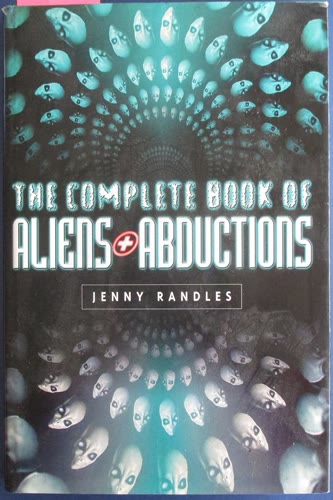
The Complete Book of Aliens and Abductions
Find on Amazon →As an Amazon Associate, OverClassified may earn from qualifying purchases made through this link, at no extra cost to you.
Why This Is Essential Reading
The Complete Book of Aliens and Abductions earns its place on this list as the mature survey work of one of British ufology's most experienced field investigators, applying a consistent, skeptically calibrated framework across two of this site's own most significant contact cases. Jenny Randles, already twenty years into a career that would eventually span more than fifty published books, brought her BUFORA field-investigation background to bear on both the internationally prominent Ariel School encounter and the far more obscure Prospect Kentucky Abduction, treating each with the same emphasis on physical corroboration and trauma-based reinterpretation that defines her broader body of work. Its citation record across two continents and seventeen years of case history demonstrates a genuinely useful reference scope, and its author's own institutional legacy — the 1988 BUFORA hypnotic-regression moratorium she helped establish, still defended by working clinical hypnotherapists decades later — gives this book's underlying methodology real, lasting professional weight beyond its own sales figures or star ratings. Read alongside her later collaborative work The UFOs That Never Were as two data points in a methodologically consistent investigative career, and against this site's own Cynthia Hind and Lorenzen essential-reading entries as contrasting points on the credulity spectrum, this book is essential because it applies a genuinely global, comparative, and skeptically self-aware lens to the abduction phenomenon at a moment when the genre's most significant modern case was still fresh enough to benefit from a seasoned investigator's synthesis.
Related Cases & Theories
Essential Viewing
Sources Cited
- Randles, Jenny. The Complete Book of Aliens and Abductions. Piatkus Books, 1999 (ISBN 0-7499-1956-6, cited here).
- "The Complete Book of Aliens and Abductions." Goodreads (rating 3.8/5, 5 ratings, checked August 2026). goodreads.com
- "The Complete Book of Aliens and Abductions by Randles, Jenny (1999) Hardcover." Amazon.com (ISBN 0749919566, rating 4.4/5 from 4 ratings, checked August 2026). amazon.com
- "The Complete Book of Aliens & Abductions." AbeBooks (ISBN 9780749919566, marketplace listing photograph used for this article's cover image). abebooks.com
- "Jenny Randles." Wikipedia (biography: birth date and place, BUFORA roles, ASSAP co-founding, publication history). en.wikipedia.org
- "Jenny Randles." HandWiki (biography, cross-referenced against Wikipedia for consistency). handwiki.org
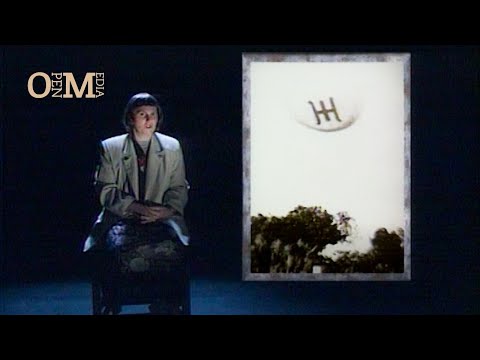
- "Jenny Randles and the truth behind UFOs." The Secret Cabaret, 1990, via Open Media (video verified via YouTube oEmbed; contemporaneous television segment featuring Randles discussing UFO investigation methodology). youtube.com
- This site's own resources library: Full Reading List, where this exact 1999 edition is cited across 2 separate case-file pages.
- This site's own key-figures entry: Jenny Randles, for her full biography and site-wide case connections.
- This site's own case file: Ariel School Encounter, which cites this book for its treatment of Dr. Mack's investigative role.
- This site's own case file: Prospect Kentucky Abduction, which cites this book for its physical-evidence documentation.
- This site's own essential-reading entry: The UFOs That Never Were, Randles's later 2000 collaborative work with David Clarke and Andy Roberts.
- This site's own essential-reading entry: Flying Saucer Occupants by Coral and Jim Lorenzen, documenting the earlier Vilas-Boas case that helped establish the abduction narrative genre this book surveys.
- This site's own essential-reading entry: UFOs Over Africa by Cynthia Hind, the primary field investigator's own account of the Ariel School case this book covers at one remove.
- "Jenny Randles." Open Library (author page: full bibliography cross-check, including this title's publication record). openlibrary.org
- "The complete book of aliens & abductions." Internet Archive (catalog record for the original 1999 Piatkus edition). archive.org
- "Hypnosis Article." British UFO Research Association (BUFORA) (official organizational statement on the 1988 hypnotic-regression moratorium Randles helped establish, quoted directly above). bufora.org.uk
Have corrections, additional research, or peer-reviewed sources? Help improve this entry.
Suggest an Edit