
The UFOs That Never Were
Three of Britain's Most Established UFO Investigators Take Apart Nine of the Country's Best-Known Cases, from the Berwyn Mountains to Rendlesham Forest
Core Thesis
The UFOs That Never Were is, in its own authors' words, not written "to demolish UFOs, or to disprove that something strange ever happens" — it is instead nine separate, source-cited investigations into some of the best-known British UFO reports of the previous three decades, each pursued with the archival access, interview legwork, and Freedom of Information persistence that its three authors had spent years building. Jenny Randles, Andy Roberts and David Clarke each brought a distinct track record to the project: Randles as BUFORA's former director of investigations and Britain's most prolific UFO author, Roberts as a folklore-minded Fortean researcher and the editor of UFO Brigantia, and Clarke as an academic folklorist already using the UK's newly enacted Freedom of Information Act to pry classified Ministry of Defence files loose. Rather than arguing for or against UFOs as a general phenomenon, the book works case by case — the Berwyn Mountains "Welsh Roswell," a 1996 Isle of Lewis "phantom plane crash," the Howden Moor crash-retrieval rumor, hoaxed photographs at Cracoe Fell and by schoolboy Alex Birch, and, in the book's most personally exposed chapter, Randles's own reassessment of Rendlesham Forest — showing how each one, examined closely enough and long enough, resolves into misidentification, hoax, or folklore in motion rather than an unexplained craft.
About the Author
Jenny Randles was born October 30, 1951, in Bacup, Lancashire, and studied chemistry, mathematics and physics before training and working as a schoolteacher in Cheshire. She became involved in organized UFO research in the early 1970s, helping form the Northern UFO Network in 1973 and taking over as editor of its newsletter, Northern UFO News, the following year — a post she held for nearly three decades, until 2001. Her first book, UFOs: A British Viewpoint, appeared in 1979, the start of a bibliography that has since grown past fifty titles covering UFOs, crop circles, and other anomalous-experience topics, output substantial enough that a 1986 reviewer called her "the most well-known British 'UFOlogist.'"
Randles served as the British UFO Research Association's Director of Investigations from 1982 to 1994, the period during which she became one of the first investigators of the December 1980 Rendlesham Forest case, co-authoring the early book Sky Crash: A Cosmic Conspiracy (1984) and two further Rendlesham-focused books through the 1990s. Her own view of the case shifted substantially across that period, from an early, more open treatment toward the considerably more skeptical position she laid out in this book's Rendlesham chapter. Randles also coined the term "the Oz Factor" to describe witnesses' reported sensation of being briefly isolated from ordinary reality during an encounter — now a standard piece of ufological vocabulary — and has written for Fortean Times and The Skeptic as a regular columnist.
Andy Roberts is a British Fortean researcher and writer who edited the Yorkshire-based journal UFO Brigantia and has contributed articles on UFOs, folklore and Earth mysteries to Fortean Times and other outlets since the early 1970s. Self-described as a skeptic rather than "an out-and-out extra-terrestrial believer," Roberts specialized in exactly the kind of patient, primary-document investigation this book required, and went on to write the most detailed single published investigation of one of its central cases, UFO Down? The Berwyn Mountain UFO Crash (2010). He later became better known outside ufology entirely as the author of Albion Dreaming: A Popular History of LSD in Britain (2008) and several subsequent books on Britain's psychedelic history, but his Fortean and UFO writing, collected in the anthology Strangely Strange, But Oddly Normal, remains the foundation of his published research career.
David Clarke holds a BA in Archaeology, Prehistory and Medieval History (University of Sheffield, 1990) and a PhD in Folklore, completed at Sheffield's National Centre for English Cultural Tradition in the late 1990s with a thesis on the severed-head motif in British folklore. Before and during his academic career he worked as a journalist for the Sheffield Star and the Yorkshire Post, and from 1998 he began using the UK's Freedom of Information Act — two years before it was even fully in force — to pursue closed Ministry of Defence UFO files, work that eventually led to his appointment as media consultant and curator for The National Archives' UFO-files release project from 2008 to 2013, overseeing the public release of roughly 60,000 pages across ten tranches. He later joined Sheffield Hallam University's Department of Media Arts and Communication, becoming Associate Professor and co-founding its Centre for Contemporary Legend research group, and has continued publishing on UFO history and folklore in books including Out of the Shadows (2002, with Roberts), The UFO Files (2009), and How UFOs Conquered the World (2015).
The three had already been working adjacent territory together for years by the time this book appeared: Roberts and Clarke's own archival digging fed each other's research on cases like the 1974 Berwyn Mountains Incident and the 1957 West Freugh radar case, while Randles's decades of BUFORA case files and her own direct involvement in Rendlesham gave the project a fourth angle no single author could have supplied alone. The result, credited to all three on the cover in that order — Randles, Roberts, Clarke — is presented less as a single unified argument than as a set of independently reported case studies unified by a shared method: go back to the primary sources, track down the people who were actually there, and see what survives.
Historical Context & Origins
By 2000, British ufology had spent nearly a decade absorbing a wave of American-influenced abduction and cover-up narratives — Budd Hopkins- and Whitley Strieber-style abduction literature, and conspiracy-driven crash-retrieval claims modeled on Roswell — layered on top of the country's own older stock of celebrated cases that had never received a rigorous, source-cited re-examination. Randles, Roberts and Clarke had each spent years working specific pieces of that backlog individually: Clarke's Freedom of Information requests were prying MoD files loose file by file, Roberts was accumulating primary interviews and documents on cases like Berwyn Mountain, and Randles carried BUFORA's own institutional case archive along with her personal history of having helped popularize Rendlesham Forest in the first place. The book represents those three individually accumulated case files finally being brought together under one cover.
The book also arrived only shortly after the UK's Freedom of Information Act 2000 received royal assent (November 2000, with the Act not fully in force until 2005) — legislation Clarke would go on to use extensively throughout the following decade to build the primary-source record for his later books, but whose earlier, more limited version and general regulatory direction were already shaping how British UFO researchers approached official documentation by the time this book went to press. That shift toward archive-based, FOI-literate investigation, rather than reliance on secondhand testimony or previously published case summaries, is precisely the method the book applies case by case.
It also entered a UK ufological landscape still working through its own version of the credibility questions American ufology had faced with the Majestic 12 documents: a decade of British "UFO crash" claims — Berwyn Mountain chief among them, but joined by more recent rumors like the 1996 Isle of Lewis and 1997 Howden Moor incidents the book also investigates — had accumulated without a single sustained, three-author effort to run each one down using original interviews, contemporaneous documents, and (where hoaxes were suspected) direct confrontation with the people involved. Curtis Peebles's Watch the Skies! (1994) had already done something structurally similar for the American flying-saucer myth as a whole; this book's project was narrower and more forensic — not a cultural history of belief, but a prosecutor's case file built one incident at a time.
Core Arguments & Key Concepts
The book's organizing method, stated plainly in its own introduction, is investigative rather than theoretical: the authors write that it "is not aimed to demolish UFOs, or to disprove that something strange ever happens," positioning themselves as documenting what actually happened in nine specific, well-known cases rather than arguing a general thesis about the phenomenon. Each chapter follows a similar arc — the case as popularly remembered, then the primary documents, witness re-interviews, and physical evidence the authors were able to recover, and finally a specific, evidence-led conclusion rather than a blanket dismissal.
David Clarke's opening chapter on the Great Airship Wave of 1896–97 sets the book's methodological template before turning to any twentieth-century case, using the airship scares to demonstrate how folklore, hoax reports, and a primed public expectation can generate an entire UFO wave with no unifying physical cause — a pattern the book then argues recurs, in miniature, across its later British cases.
The book's central chapter, dedicated to the January 1974 Berwyn Mountains Incident and titled "A British Roswell?", lays out the authors' case that the night's events near Llandrillo, Wales are explicable through the combination of a genuine, recorded earthquake, a coincident bright meteor fireball that several independent witnesses across Wales and northern England reported seeing burn up in the atmosphere at almost the same moment, and, for a residue of peripheral light reports from the surrounding nights, ordinary poachers working the Berwyn hillsides after dark with powerful lamps — a mundane explanation for the least dramatic residual sightings that nonetheless produces exactly the kind of intermittent, moving light reports that feed a UFO flap once a community's attention has been primed by an initial dramatic event.
Several chapters turn on physical evidence the authors were able to run down and have independently examined: the Cracoe Fell UFO photograph, shown on inspection to be sunlight reflecting off exposed rock; a widely circulated UFO film shot by a witness named Peter Day, identified as burning fuel jettisoned from an F-111 fighter jet in mechanical trouble; and a set of 1962 photographs taken by a Yorkshire schoolboy, Alex Birch, which the authors track down and, through direct confrontation with the by-then-adult photographer, establish as a deliberate hoax — the book's reviewers have specifically singled out this chapter as a rare case of an alleged UFO hoaxer being tracked down and made to account for the fabrication decades later.
The book's most personally exposed chapter belongs to Randles herself: her Rendlesham Forest chapter, pointedly titled "Rendle Shame Forest," revisits the case she had helped popularize as a young investigator in the early 1980s and reaches a considerably more skeptical conclusion than her own earlier books had — that the first night's sighting coincided with the atmospheric burn-up of an unusually bright meteor, and that the airmen who reported a flashing light moving among the pine trees were most likely looking directly at the Orford Ness lighthouse, several miles away but visible in a sightline through the forest. Her own summary judgment, stated in the chapter itself, is that "no unearthly craft were seen in Rendlesham Forest" and that the case's core is "a series of misperceptions of everyday things encountered in less than everyday circumstances."
Key Cases & Evidence Discussed
The Berwyn Mountains Incident (Case #047, January 1974) receives the book's single most detailed chapter, "A British Roswell?", and is the case this site's own investigation most directly draws the book's authors into: Andy Roberts and David Clarke, working both jointly and separately, produced the case's most sustained skeptical analysis, and this site's own case file quotes their earthquake-plus-meteor-plus-poachers explanation directly from this book.
The Rendlesham Forest Incident (Case #004, December 1980) receives the book's other major individual chapter, Jenny Randles's own "Rendle Shame Forest," in which the researcher who helped bring the case to public attention in the early 1980s revisits it with a considerably more skeptical eye — proposing the Orford Ness lighthouse and a coincident meteor as the core explanation for what witnesses described, a marked evolution from her own earlier published position on the same case.
The RAF Boulmer Sighting (Case #146, 1977) is cited on this site's own case file as comparative reading from the same investigative team responsible for Out of the Shadows (2002), the fuller Clarke-and-Roberts account of the Boulmer case published two years after this book — useful here for weighing how the same researchers' skeptical case-by-case method, developed across this book's nine chapters, was later extended to Boulmer specifically.
The RAF Topcliffe Sighting (Case #128, 1952) is cited on this site as a template for exactly the kind of rigorous, case-by-case skeptical re-investigation this book pioneered, useful for understanding the same investigative discipline David Clarke later applied directly to reconstructing the Topcliffe file itself.
The West Freugh UFO Sighting (Case #085, 1957) is cited on this site's own case file alongside this book for the same reason as Boulmer — the West Freugh radar case received its own fullest published treatment in Clarke and Roberts's later Out of the Shadows, with this book's nine-case survey representing the earlier stage of the same ongoing research relationship between its authors and Britain's classic radar-visual cases.
The St Athan Police Helicopter Chase (Case #222, 2008) postdates this book by eight years and is not among its nine original chapters, but this site's own case file cites the book as the closest existing published template for the case-by-case skeptical method — appropriately, since David Clarke went on to offer the leading mundane explanation for St Athan directly, identifying wedding-released Chinese lanterns as the likely source of the helicopter crew's sighting.
Critical Reception & Controversies
Fortean Times, hardly a publication reflexively hostile to UFO claims, reviewed the book favorably on publication, calling it "a welcome antidote to the sloppy research that fills a good deal of the saucer bookshelf" — praise notable for coming from a magazine whose readership includes a substantial share of believers as well as skeptics, and for framing the book's value specifically as a matter of research quality rather than ideological alignment.
Magonia, the British journal most closely associated with the folklore-and-psychosocial school of UFO analysis that Roberts and Clarke were themselves closely tied to, gave the book a detailed and broadly admiring review from Peter Rogerson, who called it "an important book taking a critical look at some of the major British IFOs of the last 30 years" and singled out Clarke's opening chapter on the 1896–97 airship wave as potentially "the most important" in the collection for showing how folklore, hoax reports and social expectation can generate a UFO wave without any single unifying physical cause. Rogerson was equally direct about the book's evidentiary strength on individual cases, writing of the Peter Day film chapter that "its demolition suggests that almost any case can be explained given sufficient time and trouble."
That same review offered the book's most pointed piece of genuine critical pushback — aimed not at the book's methodology in general but specifically at Randles's own Rendlesham chapter, where Rogerson judged her tone still perceptibly reluctant to fully release the case's sense of mystery even while arguing for a mundane explanation, memorably writing that in her prose "you can hear the slipping fingernails grating against the rocks." It is a specific, sourced piece of critical reception rather than a generic complaint, and one made all the more notable for coming from a reviewer otherwise sympathetic to the book's overall project.
Reception from ufology's more committed believer wing was, unsurprisingly, cooler: a case-by-case skeptical demolition of nine well-remembered British UFO stories was never going to be commercially or ideologically comfortable reading for readers invested in those cases remaining open questions, and the book's own introduction anticipates exactly that resistance by explicitly disclaiming any intent to "demolish UFOs" as a category — a hedge its authors clearly felt was necessary going in.
Influence & Legacy
The book's most concrete, independently verifiable influence is documented on this very site: this exact 2000 London House edition, under ISBN 1902809351, is cited across resources.html in connection with 5 separate case-file pages — the Berwyn Mountains Incident, the RAF Boulmer Sighting, the RAF Topcliffe Sighting, the West Freugh UFO Sighting, and the St Athan Police Helicopter Chase — reflecting its ongoing use here as a working source and comparative template for British case-by-case skeptical investigation, not a novelty citation confined to a single page.
Within British ufology specifically, the book functioned as a launching point for each of its three authors' subsequent, more specialized work: Andy Roberts's solo book UFO Down? The Berwyn Mountain UFO Crash (2010) is the direct successor to this book's Berwyn chapter, while David Clarke and Roberts's jointly authored Out of the Shadows: UFOs, the Establishment and Official Cover-Up (2002) extended the same archival method to a wider set of MoD-related cases, including fuller treatments of the RAF Boulmer and West Freugh incidents this book had already touched. Clarke's own subsequent career — curating The National Archives' UFO-files release project from 2008 to 2013 and publishing The UFO Files (2009) and How UFOs Conquered the World (2015) — grew directly out of the archival-investigation habits this book's research required.
The book's standing within the field's own community of researchers and archivists is reflected in a more recent development: respected UFO-literature archivist Isaac Koi has called it "arguably the best UFO book published in the last 50 years," praising its "excellent analysis and supporting references" and its demonstration of "a model of collaboration between leading researchers" — and, notably, all three authors granted Koi permission to upload a full scanned copy to his online archive, hosted at the Archives for the Unexplained (AFU), specifically to encourage wider study of the book's case-by-case method a generation after its original, limited print run.
More broadly, the book's Rendlesham Forest chapter marked a documented public turning point in Jenny Randles's own decades-long relationship to that specific case — the researcher who had helped bring Rendlesham to international attention in the early 1980s using this book to formally, publicly revise her own earlier position, a reversal that stands, within the specific literature of that one case, as one of the more consequential pieces of the book's downstream influence.
The Book
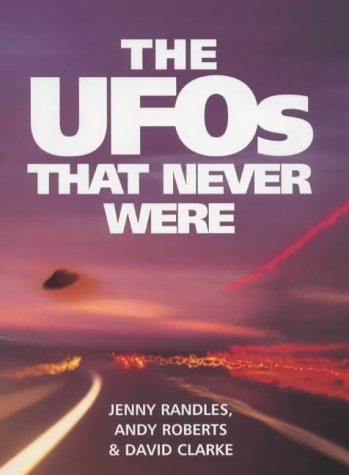
The UFOs That Never Were
Three of Britain's Most Established UFO Investigators Take Apart Nine of the Country's Best-Known Cases, from the Berwyn Mountains to Rendlesham Forest
Find on Amazon →As an Amazon Associate, OverClassified may earn from qualifying purchases made through this link, at no extra cost to you.
Why This Is Essential Reading
The UFOs That Never Were earns its place on this list for a reason distinct from most other skeptical titles here: it is not a general theory of why people believe in UFOs but nine separate, source-cited prosecutions of specific, famous British cases, built by three researchers — Jenny Randles, Andy Roberts and David Clarke — who between them supplied the institutional case archive, the primary-document persistence, and the folklore-literate reading each case actually required. Its limits are real and honestly built into its own introduction: it never claims to resolve the UFO question in general, and even its most sympathetic reviewer found at least one chapter, Randles's own Rendlesham reassessment, not fully free of the mystery it was arguing against. But as a demonstration of what patient, source-cited British case investigation actually looks like — the direct ancestor of Clarke's later National Archives work and Roberts's own dedicated Berwyn Mountains book — it remains, by the assessment of reviewers on both the skeptical and ufological sides of the field, one of the most methodologically serious British UFO books ever published, and the working template this site's own British case files keep citing back to.
Related Cases & Theories
Essential Viewing
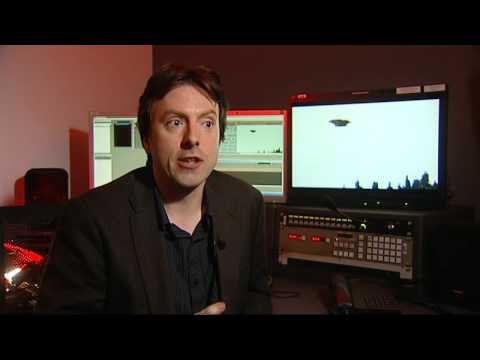
Welsh 'Roswell' UFO sighting explained
Onlooker — A news explainer on the January 1974 Berwyn Mountains incident, the Welsh case this book's central chapter, "A British Roswell?," investigates through the combined earthquake, meteor and poacher explanation.
#74 Dr. David Clarke - Lakenheath UFO 1956 (Never before heard interview clips with RAF Personnel)
Disclosure Team — An on-camera interview with co-author David Clarke discussing his archival, FOI-driven investigative method applied to a British radar-visual case — the same primary-source approach he brought to this book's nine chapters.
Sources Cited
- "Jenny Randles." Wikipedia (biography: birth date, education, BUFORA Director of Investigations 1982–1994, Northern UFO News editorship, Oz Factor, bibliography). en.wikipedia.org
- "David Clarke (journalist)." Wikipedia (biography: education, PhD in Folklore, journalism career, Freedom of Information UFO-files research, National Archives project, bibliography). en.wikipedia.org
- "About Me." Dr David Clarke (drdavidclarke.co.uk), personal/academic biography page. drdavidclarke.co.uk
- "David Clarke." Sheffield Hallam University staff profile (academic role, department, research specialism). shu.ac.uk
- "War Stories & Cosmic Flights: An Interview with Andy Roberts." Musings of the Mad Artist, January 2017 (Roberts's own account of his Fortean and UFO research background). musingsofthemadartist.wordpress.com
- Koi, Isaac. "Best UFO book in last 50 years? PDF of 'The UFOs That Never Were.'" Isaac Koi UFO Uploads, August 2023 (praise quote, author-authorized PDF release, AFU archive hosting). uploads.isaackoi.com
- Rogerson, Peter. "UFOs That Never Were" (book review, originally published in Magonia). Reprinted at Review Archive, December 2009 (case-by-case chapter summaries, critical assessment, "slipping fingernails" quote on the Rendlesham chapter). mrobsr.blogspot.com
- "The UFOs That Never Were." ThriftBooks (bibliographic listing: publisher, page count, Fortean Times review quote, case summary). thriftbooks.com
- "The UFOs that never were." Open Library (bibliographic record: ISBN, publish date, page count). openlibrary.org
- "The UFOs That Never Were." AbeBooks, first-edition listing (publisher, edition, ISBN, binding). abebooks.com
- "The UFOs That Never Were." Amazon.com (ISBN 1902809351, product listing). amazon.com
- Ridpath, Ian. "Rendlesham Forest UFO explained — the original article." ianridpath.com (background on Randles's Rendlesham chapter, the Orford Ness lighthouse and meteor explanation). ianridpath.com
- This site's own resources library: Full Reading List, where this exact edition (ISBN 1902809351) is cited across 5 separate case-file pages.
- This site's own case file: The Berwyn Mountains Incident, for the 1974 case this book's central chapter, "A British Roswell?," investigates directly.
- This site's own case file: The Rendlesham Forest Incident, for the 1980 case Jenny Randles's own chapter, "Rendle Shame Forest," reassesses.
- This site's own case file: The RAF Boulmer Sighting, for the 1977 case this book's authors later covered in fuller detail in Out of the Shadows.
- This site's own case file: RAF Topcliffe Sighting, for the 1952 case this site cites this book's method against directly.
- This site's own case file: The West Freugh UFO Sighting, for the 1957 radar case this book's authors also later expanded on in Out of the Shadows.
- This site's own case file: St Athan Police Helicopter Chase, for the 2008 case this site cites this book's method against as comparative reading.
- This site's own key-figures entry: Jenny Randles, for her full biography and case connections.
- This site's own key-figures entry: Andy Roberts, for his full biography and case connections.
- This site's own key-figures entry: David Clarke, for his full biography and case connections.
Have corrections, additional research, or peer-reviewed sources? Help improve this entry.
Suggest an Edit