
The Allagash Abductions
Undeniable Evidence of Alien Intervention
Core Thesis
The Allagash Abductions: Undeniable Evidence of Alien Intervention is Raymond E. Fowler's condensation of a ten-volume, 702-page private research file into a single argument: that when four childhood friends — twin brothers Jack and Jim Weiner, Charlie Foltz, and Chuck Rak — are hypnotically regressed separately, deliberately kept ignorant of what the others recalled, and still produce broadly convergent accounts of the same missing hours, the convergence itself becomes evidence too strong to explain away. The book picks up thirteen years after this site's own Allagash Waterway Abduction case file documents the four men watching a pulsating sphere of light descend toward their canoe on Eagle Lake on the night of August 20, 1976, and returning to camp to find their signal fire burned down far more than their subjective sense of elapsed time allowed. It was not until 1988, after Jim Weiner's temporal-lobe epilepsy diagnosis brought on recurring nightmares of examination by large-headed beings, that Fowler — already well known in ufology for his twelve-month investigation of the Andreasson Affair a decade earlier — opened a formal inquiry, this time built specifically to answer the objection that had shadowed every abduction case since the Hills: what happens when more than one witness goes under hypnosis to the same story?
About the Author
This site's own Essential Reading entry on The Andreasson Affair covers Raymond Fowler's biography, NICAP and CUFOS career, and later disclosure of his own claimed abduction experiences in full; this entry does not repeat that ground. What matters specifically for this second book is the eleven years separating the two investigations and what Fowler brought forward from the first into the second. The Andreasson case had been a single-witness problem: one woman, fourteen sessions, and an investigative apparatus — polygraph testing, character-reference checks, a professional hypnotist — built to establish that one person's account held together under scrutiny. The Allagash case handed Fowler an entirely different evidentiary structure: four witnesses who had spent over a decade as close friends discussing the same ambiguous sighting, which meant the central question was no longer just whether any one man's testimony was internally consistent, but whether four separately conducted regressions could be trusted not to have simply agreed with each other by ordinary social contagion before hypnosis ever began.
Fowler's answer was procedural rather than psychological, and it drew directly on the 25 years he had spent as a task manager and senior planner on Sylvania/GTE's Minuteman intercontinental ballistic missile program rather than on any training in clinical hypnosis or memory science. He had hypnotist Anthony Constantino schedule each of the four men's sessions individually and confidentially, instructed Constantino to keep every subject unaware of what the others had said, and brought in MUFON investigator David Webb to help document the process as it happened rather than reconstruct it afterward — a controlled-conditions design that reads less like a UFO investigator's fieldwork and more like an engineer isolating variables in a test program, applied for the first time in Fowler's career to a genuinely multi-subject case. Whether that engineering discipline was sufficient to rule out twelve years of prior informal discussion among four close friends is a question this entry's own Critical Reception section takes up directly — but it is the specific methodological contribution this second book, more than the first, asked Fowler's non-clinical background to make.
The Allagash investigation, running from 1988 to the book's 1993 publication, was also effectively the last major field investigation of Fowler's active MUFON/CUFOS career; his subsequent books turned inward, first back to the expanding Andreasson material with The Watchers (1990) and The Watchers II (1995), and finally to his own claimed lifelong abduction experiences in UFO Testament (2002). The second edition of this book, the exact printing cited on this site, carries an introduction by Missing Time author Budd Hopkins — placing Fowler's engineering-inflected, procedurally cautious investigative style inside a direct endorsement from the researcher whose own 1981 book had done the most to establish hypnotic regression as ufology's standard abduction-investigation tool in the first place.
Historical Context & Origins
The twelve years between the August 20, 1976 Eagle Lake sighting and the start of any formal investigation were, as this site's own Allagash Waterway Abduction case file documents in detail, years of ordinary silence: none of the four men associated the strange light and burned-down campfire with anything beyond an unresolved curiosity from a memorable canoe trip, and none pursued any active interest in ufology. That changed around 1987–1988, when Jim Weiner sustained a head injury that led to a temporal-lobe epilepsy diagnosis accompanied by recurring nightmares of large-headed, black-eyed beings performing procedures on him while he lay paralyzed — nightmares his twin Jack Weiner independently began reporting around the same period. In 1988, Jim attended a public UAP lecture given by Raymond Fowler and approached him afterward with the story; Fowler, recognizing structural parallels to other New England abduction cases, opened what would become a multi-year, ten-volume, 702-page research file.
The book Fowler eventually published in 1993 arrived into a UFO research culture already transformed by the decade separating it from his own Andreasson Affair: Budd Hopkins's Missing Time (1981) had formalized hypnotic-regression abduction investigation as a standing methodology, Whitley Strieber's Communion (1987) had made the large-eyed grey alien a mass-market cultural fixture, and Harvard psychiatrist John E. Mack's clinical interest in abduction reports was building toward his own 1994 book Abduction. This site's own Allagash case file identifies exactly this cultural saturation as a genuine evidentiary problem for the case: by the time Constantino began regressing the four men in January 1989, "the modern abduction narrative — large-eyed grey beings, examination tables, sample collection — was already a well-established cultural template," raising the possibility that convergent testimony reflected shared cultural exposure rather than shared memory.
The investigation's timing also placed it squarely inside the ferment surrounding the Abduction Study Conference held at the Massachusetts Institute of Technology in June 1992, chaired by physicist David E. Pritchard and co-chaired by Mack, at which MUFON investigator David Webb — already familiar with the Allagash case through his own field work assisting Fowler — presented material on the broader landscape of reported abduction experiences. Fowler published The Allagash Abductions the following year, illustrated throughout with the four witnesses' own artwork, drawing on their shared training as students at the Massachusetts College of Art. A second edition, the exact printing cited on this site, later added an introduction by Hopkins, formally connecting this book to the investigative tradition his own Missing Time had helped establish twelve years earlier.
Core Arguments & Key Concepts
The book's title makes an evidentiary claim stronger than almost anything in Fowler's earlier Andreasson work: not merely that the case deserves serious investigation, but that its specific evidentiary structure — four men, regressed individually, corroborating one another without cross-contamination — amounts to something "undeniable." The argument rests entirely on the procedural separation Fowler built into the investigation: Anthony Constantino scheduled each man's sessions independently and confidentially between January 1989 and 1991, and none was told what the others had recalled. Under hypnosis, all four described a broadly consistent sequence — a beam of light drawing the canoe toward the hovering craft, separation from one another aboard the ship, tables, a diffuse white examination light, and beings with disproportionately large heads and dark, wraparound eyes using an illuminated probe.
Because all four men were trained visual artists, Fowler had each of them independently illustrate what they recalled — the craft's interior, the examination room, the beings themselves — without reference to one another's drawings, and the book reproduces these illustrations extensively as its most distinctive evidentiary device. Fowler's argument is that four professionally trained artists, working from memory without collaboration, converging on comparable renderings is harder to dismiss than four sets of purely verbal testimony would be; this site's own Allagash case file registers the obvious skeptical counter directly, that the four men had already spent over a decade as close friends discussing the original sighting before any hypnosis began, leaving room for a shared visual vocabulary to form long before Constantino ever put any of them under.
All four men also underwent polygraph examinations administered by a former FBI examiner, and Fowler is candid, as he had been in the Andreasson book, about what a polygraph can and cannot show: the results indicated each man believed he was telling the truth about what he recalled, which is genuine evidence of sincerity but not independent proof that a hypnotically recovered memory corresponds to an external event, especially given how thoroughly the intervening decade had saturated American popular culture with the same imagery. Fowler pairs this candor with two physical details he treats as corroborating but explicitly unverified: a scoop-mark scar and burn-like marks on Jack Weiner's feet and ankle, and a sudden-onset mass on Jim Weiner's leg that was surgically removed and reportedly sent for outside analysis, with no published clinical result ever made public.
Running beneath the case-specific argument is a broader methodological claim Fowler makes implicitly by publishing the four men's testimony side by side rather than as a single composite narrative: that a multi-witness abduction case, properly firewalled during data collection, is categorically stronger evidence than any single-witness account, including his own earlier Andreasson investigation. This entry's own Critical Reception section takes up the question this claim leaves open — whether the firewall Fowler built during the hypnosis sessions themselves could ever fully compensate for twelve years of unrecorded conversation among four friends before those sessions began.
Key Cases & Evidence Discussed
This book's subject is, of course, this site's own Allagash Waterway Abduction case file (Case File #045, 1976) in full: that file cites The Allagash Abductions directly in its own further-reading section as "the definitive primary source on this case, condensed by the lead investigator from his own ten-volume, 702-page research file, illustrated throughout with the four witnesses' own artwork," and its Sources list separately cites the 1993 Wild Flower Press edition by name. The case file's own Critical Reception material — the temporal-lobe epilepsy alternative explanation, the absence of any radar or photographic evidence, and Chuck Rak's 2016 recantation — is the same evidentiary record this book itself was built to document, making the two pieces of this site's coverage direct companions rather than overlapping duplicates.
The case file makes the connection back to Fowler's earlier work explicit from the opposite direction, crediting his decade-earlier investigation of the Andreasson case as "the direct template for his later multi-witness Allagash methodology." Read together, the two books trace one investigator's evolving answer to the same underlying question — how much documentary apparatus does a hypnotically recovered abduction account need before it can be taken seriously — first against a single witness's fourteen sessions, then against four witnesses' separately firewalled ones.
Fowler's own book situates the case explicitly against the Betty & Barney Hill Abduction (Case File #006, 1961), the case that established the basic missing-time-then-hypnosis template both his books extended, and this site's own Allagash file draws the same comparison to the Travis Walton case (Case File #009, 1975) and the Pascagoula Abduction (Case File #016, 1973) as fellow credible-civilian-witness, missing-time cases from the same decade. The book also arrives directly inside the ferment this site's own Abduction entry documents surrounding the June 1992 MIT Abduction Study Conference, at which MUFON investigator David Webb, already familiar with the Allagash case through his own field assistance to Fowler, presented related material.
Read alongside this site's own Missing Time and The Interrupted Journey entries, this book occupies a specific chronological position: published twelve years after Hopkins formalized hypnotic-regression investigation as ufology's standard tool and twenty-seven years after Fuller's Hill book first popularized the underlying technique, it is the book that pushed that same technique furthest in the direction of formal multi-subject corroboration — the second edition's introduction by Hopkins himself makes that lineage explicit rather than merely implied.
Critical Reception & Controversies
The most substantive scholarly treatment of this book specifically is psychologist Don Donderi's essay review "Three New England Abduction Stories and One New Reality," published in the Journal of Scientific Exploration (Vol. 28, No. 2, 2014, pp. 361–372), which considers The Allagash Abductions alongside The Interrupted Journey and two other New England hypnotic-regression cases. Donderi, himself sympathetic to hypnotic-regression research, nonetheless treats Jim Weiner's documented temporal-lobe epilepsy as a genuine complicating factor for the case's recall trigger, and the review's broader comparative framing underscores a problem specific to this book among the four cases it examines: that the Allagash witnesses, unlike the Hills, had years of informal contact and shared retelling behind them before any of the men were regressed, a precondition none of the other cases in Donderi's review shares to the same degree.
A methodologically distinct skeptical treatment came from Robert Sheaffer's paper "A Skeptical Perspective on UFO Abductions," delivered at and published in the proceedings of the same June 1992 MIT Abduction Study Conference this book's own investigation overlapped with (Alien Discussions: Proceedings of the Abduction Study Conference Held at M.I.T., North Cambridge Press, 1994, pp. 382–388). Sheaffer's broader argument — that commonalities exist "in the appearances, behavior, technology, and societies of fictional and allegedly real abductors," tracing reported entity descriptions back to science-fiction films such as Invaders from Mars (1953) — applies directly to a case whose four witnesses, all trained visual artists, had spent decades absorbing the same popular-culture imagery before illustrating what they recalled under hypnosis.
Terry Matheson's Alien Abductions: Creating a Modern Phenomenon (Prometheus Books, 1998), already cited on this site's own Allagash case file, takes up this book specifically as an example of how abduction narratives evolve and accumulate detail across retellings and successive published accounts, a literary rather than strictly investigative critique that complements Donderi's and Sheaffer's more methodological objections.
The most direct challenge to the book's central "undeniable evidence" claim, however, came from inside the witness group itself: in a September 2016 interview with a Houlton, Maine newspaper, Chuck Rak stated that the abduction portion of the story had been fabricated "for financial gain," describing it as "brilliant storytelling" while continuing to affirm that he had genuinely witnessed strange lights during the trip. Because Rak was one of the four men whose separately regressed testimony Fowler's book presents as mutually corroborating, his recantation is a first-person admission, not an outside skeptic's speculation — and it lands specifically against the multi-witness convergence this book's subtitle stakes its whole claim on. Jim Weiner, Jack Weiner, and Charlie Foltz have continued to affirm the full account into the 2020s.
Set against these objections, the investigation drew real respect within ufology for its procedural design specifically: the deliberate confidentiality Fowler and Anthony Constantino built into the separately scheduled hypnosis sessions, the independent illustrations, and the polygraph corroboration represented a more rigorous attempt to guard against cross-contamination than most contemporary multi-witness cases attempted, even if, as Donderi's review and this site's own case file both note, that firewall could only ever apply to the hypnosis sessions themselves and not to the twelve years of ordinary friendship and conversation that preceded them.
Influence & Legacy
The book's most durable legacy is definitional within its own narrow category: it remains one of the most frequently cited multi-witness abduction cases in ufology literature specifically because of the procedural apparatus Fowler built around it, discussed alongside the Hill case, the Travis Walton case, and the Pascagoula Abduction as one of the small handful of American abduction accounts involving more than one regressed witness rather than a single individual's testimony.
The case reached a mass American audience on September 18, 1994, when NBC's Unsolved Mysteries featured it in a segment covering multiple alien-encounter cases, and the four men also appeared on The Joan Rivers Show in the years following publication — exposure that this site's own Allagash case file notes cemented the story's place in popular UFO culture alongside the Hill and Walton cases specifically because of the book's earlier, more academically framed publication.
Within ufology's institutional history, the book's investigation sat directly inside the ferment surrounding the June 1992 MIT Abduction Study Conference that this site's own Abduction entry documents in detail, at which MUFON investigator David Webb presented material informed by his own field assistance to Fowler on this case — placing the Allagash investigation inside the same institutional conversation that produced John E. Mack's subsequent clinical work.
Within Fowler's own career, this book represents the last major original field investigation before he turned to consolidating and expanding his existing Andreasson material and, eventually, disclosing his own claimed abduction experiences; the second edition's introduction by Missing Time author Budd Hopkins formally links this book to the wider hypnotic-regression research tradition Hopkins's own 1981 work helped establish, closing a circle that opened with The Andreasson Affair in 1979 and runs through this book to the broader abduction-research infrastructure both men helped build.
The Book
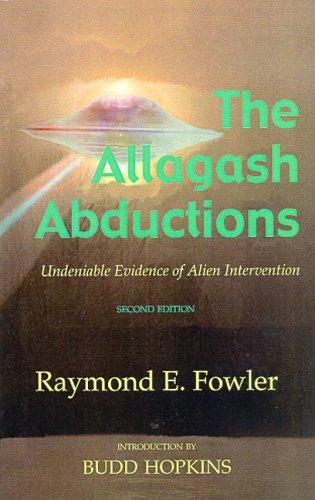
As an Amazon Associate, OverClassified may earn from qualifying purchases made through this link, at no extra cost to you.
Why This Is Essential Reading
The Allagash Abductions earns its place on this list as the book that took the investigative apparatus Raymond Fowler built for the Andreasson case and pointed it at ufology's harder evidentiary problem: not whether one witness's hypnotically recovered testimony holds together, but whether four witnesses' separately conducted regressions can be trusted not to have simply agreed with each other beforehand. Fowler's engineering-trained instinct for procedural isolation — confidential, individually scheduled sessions, independent illustrations, polygraph corroboration — produced a genuinely more rigorous multi-witness design than most contemporary abduction cases attempted, and this site's own Allagash Waterway Abduction case file treats it as the definitive primary source for exactly that reason. But the book's own subtitle claims more than its evidence can fully bear: Don Donderi's scholarly review, Robert Sheaffer's cultural-contamination critique, Terry Matheson's narrative-evolution analysis, and finally Chuck Rak's own 2016 recantation each identify the same underlying limit from a different angle — that no amount of procedural care during hypnosis can retroactively firewall twelve years of unrecorded conversation among four close friends beforehand. Read against this site's own case file and alongside Missing Time and Abduction, this book is essential not because it settles the multi-witness question but because it is the fullest, most procedurally self-aware attempt any single investigator made to answer it.
Related Cases & Theories
Essential Viewing

The Allagash Abductions - An OpenMinds.tv Documentary
OpenMindsTV — A dedicated documentary overview of the case this book investigates, covering the Eagle Lake sighting, Fowler's investigation, and the hypnotic regression sessions, verified via YouTube oEmbed before inclusion.
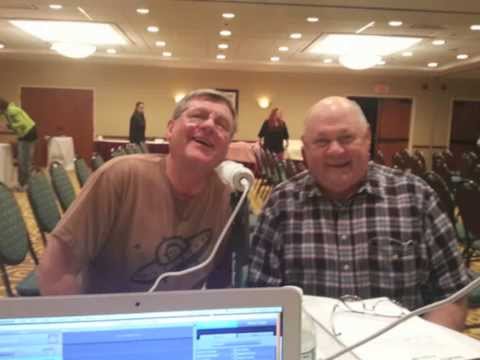
Allagash Abductions Interview, Jim Weiner & Charlie Foltz, Podcast UFO
Podcast UFO Live Shows — A direct, extended interview with two of the four witnesses profiled in this book, recounting the Eagle Lake sighting and decades of standing by the account, verified via YouTube oEmbed before inclusion.
Sources Cited
- Fowler, Raymond E. The Allagash Abductions: Undeniable Evidence of Alien Intervention. Wild Flower Press, Tigard, OR, 1993; 2nd ed. pbk. with introduction by Budd Hopkins (ISBN 0926524224 / 9780926524224, cited here, matching the edition already cited on this site's resources library and Allagash Waterway Abduction case file). archive.org
- "Raymond E. Fowler." Wikipedia (biography: birth, education, Sylvania/GTE career, NICAP/MUFON/CUFOS roles, Andreasson and Allagash investigations, publication list). en.wikipedia.org
- Donderi, Don. "Three New England Abduction Stories and One New Reality" (essay review). Journal of Scientific Exploration, Vol. 28, No. 2, 2014, pp. 361–372 (comparative scholarly review covering this book alongside The Interrupted Journey and other New England hypnotic-regression cases). journalofscientificexploration.org
- Sheaffer, Robert. "A Skeptical Perspective on UFO Abductions." In Pritchard, David E., Mack, John E., et al., eds., Alien Discussions: Proceedings of the Abduction Study Conference Held at M.I.T., North Cambridge Press, 1994, pp. 382–388 (skeptical paper delivered at the same 1992 MIT conference this book's investigation overlapped with).
- "Perspectives on the alien abduction phenomenon." Wikipedia (cites Sheaffer's comparison of reported abductors to science-fiction film aliens, sourced to the Alien Discussions conference proceedings). en.wikipedia.org
- Matheson, Terry. Alien Abductions: Creating a Modern Phenomenon. Prometheus Books, 1998 (literary/psychological analysis discussing this book's case directly as an example of narrative evolution across retellings; already cited on this site's Allagash Waterway Abduction case file). amazon.com
- Portland Press Herald. "Unafraid of alienating themselves," September 7, 2013 (interview with Jim Weiner and Charlie Foltz reaffirming the account). pressherald.com
- The County (Houlton, ME). "How much of a famed 1976 UFO abduction is true?", September 21, 2016 (Chuck Rak's recantation interview). thecounty.me
- Unsolved Mysteries (Cosgrove-Meurer Productions / NBC). "The Mysterious Abduction of the Allagash Four," archival case gallery from the September 18, 1994 broadcast. unsolved.com
- "The Allagash abductions: undeniable evidence of alien intervention." WorldCat.org bibliographic record (OCLC 28065058, confirming publisher, edition, and ISBN details). worldcat.org
- This site's own resources library: Full Reading List, where this exact 1993 Wild Flower Press edition (ISBN 0926524224) is cited directly.
- This site's own case file: Allagash Waterway Abduction (Case File #045), the case this book documents, citing this exact edition as its definitive primary source.
- This site's own key-figures entry: Raymond E. Fowler, for his broader site-wide career and case connections beyond this book.
- This site's own key-figures entry: Jack Weiner, one of the four Allagash witnesses.
- This site's own key-figures entry: Jim Weiner, one of the four Allagash witnesses and the case's central figure.
- This site's own key-figures entry: Chuck Rak, the witness who publicly recanted the abduction narrative in 2016.
- This site's own key-figures entry: Charlie Foltz, one of the four Allagash witnesses.
- This site's own key-figures entry: Anthony Constantino, the hypnotist who conducted the separately scheduled regression sessions.
- This site's own essential-reading entry: The Andreasson Affair by Raymond E. Fowler, the 1979 investigation whose methodology this book directly extends.
Have corrections, additional research, or peer-reviewed sources? Help improve this entry.
Suggest an Edit