
DMT: The Spirit Molecule
A Doctor's Revolutionary Research into the Biology of Near-Death and Mystical Experiences
Core Thesis
DMT: The Spirit Molecule is psychiatrist Rick Strassman's account of the five years, 1990 to 1995, in which he gave the short-acting psychedelic DMT to human volunteers at the University of New Mexico. It is not a UFO book. It is a clinical-research memoir with a long speculative coda, and nobody in it sees anything in the sky. It is on this list for one reason. By Strassman's own count at least half of his sixty volunteers reported meeting intelligent beings while under the drug, some in settings that sounded like examination rooms, and Strassman himself set those reports beside the alien-abduction accounts collected by Harvard psychiatrist John E. Mack. The book therefore contains two different things that readers tend to blur. One is data: a government-approved dosing study, published in psychiatric journals. The other is conjecture: that the human pineal gland makes DMT, that the body releases it at birth, death and in mystical states, and that spontaneous contact experiences are produced the same way. The first is solid. The second was presented by Strassman as unproven, and later research has not been kind to the pineal part of it. A note on this breakdown: it was written from the author's own chapter-by-chapter summaries, the full sample chapter on entity contact that he publishes on his website, the publisher's description, his peer-reviewed papers, three reviews and the later scientific literature. This site has not read the book cover to cover.
About the Author
Rick Strassman was born in Los Angeles in 1952. According to the biography on his own website, he studied zoology at Pomona College for two years, transferred to Stanford and graduated in biological sciences in 1973, then took his medical degree at the Albert Einstein College of Medicine in New York in 1977. He trained in general psychiatry at the University of California, Davis, worked for a year in Fairbanks, Alaska, and held a clinical psychopharmacology research fellowship in San Diego in 1982 and 1983.
In 1984 he joined the faculty of the University of New Mexico School of Medicine in Albuquerque. His first research there concerned melatonin, the hormone of the pineal gland. That choice was not accidental. His chapter summaries describe an interest in the pineal dating from his undergraduate years at Stanford, and say he ran a two-year melatonin study in the hope of finding a natural compound with strong effects on consciousness. He found that melatonin's mental effects were mild, and turned to DMT. His biography says the university work was funded by grants from the National Institute on Drug Abuse and the Scottish Rite Foundation for Schizophrenia Research, and that he reached the rank of tenured associate professor.
A second thread runs through his life and through the book. Strassman began a relationship with an American Zen Buddhist monastery in the early 1970s and received lay ordination in a Western Buddhist order in 1984. He writes that Buddhist ideas shaped the questionnaire he designed for the study and the quiet, non-directive way he sat with volunteers. The same community later turned against the research, an episode he describes in a chapter titled "Stepping on Holy Toes."
He left the university in 1995. His biography lists later clinical work in community mental health in Washington State and in Taos, Gallup and Española, New Mexico, and says he has written full-time since 2008. He holds the title of Clinical Associate Professor of Psychiatry at the University of New Mexico. His later books include Inner Paths to Outer Space (2008, as co-author), DMT and the Soul of Prophecy (2014), The Psychedelic Handbook (2022) and My Altered States (2024). He is also a co-author of two laboratory papers, discussed below, that test the ideas he first floated in this book.
Historical Context & Origins
Human research with psychedelic drugs was a busy field in American psychiatry in the 1950s and 1960s and had stopped by the early 1970s, after the drugs were made illegal and the subject became professionally toxic. Strassman's opening chapter covers that rise and fall. His own study is usually described as the first new research of its kind in the United States in about twenty years. That is his own description, and later commentators have repeated it.
DMT, or N,N-dimethyltryptamine, was an unusual candidate. It is the active ingredient of plant preparations used in the Amazon basin, including the brew ayahuasca. Its effects in humans were first described in the mid-1950s by Stephen Szára, who tried it on himself and colleagues in Budapest. In the years that followed it was detected in human body fluids, which made it the first psychedelic known to occur naturally in the body. Psychiatry briefly wondered whether it played a part in schizophrenia, and then dropped the question.
Getting permission took almost as long as some studies take to run. Strassman's protocol, numbered 89-001 by the university ethics board, proposed something modest: to establish what different doses of DMT do to a dozen healthy people who already had experience with psychedelics. He writes that approval from the Drug Enforcement Administration and the Food and Drug Administration took 22 months, and that the obstacle was less hostility than the absence of any working procedure for such research. A chapter called "Labyrinth" is given to that process.
The timing matters for this site. Mack's Abduction appeared in 1994, while Strassman's sessions were under way, and Passport to the Cosmos followed in 1999, before Strassman's book went to press. The abduction phenomenon was at its cultural peak during exactly the years when volunteers were lying in a hospital bed in New Mexico describing probes, examinations and non-human observers. Strassman names both of Mack's books in his own summary of the work.
Core Arguments & Key Concepts
The data: what the drug does. The measured findings are the least disputed part of the book and were published separately. Two papers in the Archives of General Psychiatry in 1994, written with C. R. Qualls and others, reported a double-blind, placebo-controlled study of four dose levels in about a dozen experienced users. Effects began almost at once, peaked within roughly two minutes and were largely gone within half an hour. Blood pressure, heart rate, pupil size, temperature and several hormones rose with dose. Melatonin did not. The papers also introduced the Hallucinogen Rating Scale, a questionnaire that separated dose levels better than the biological measures did. A 1996 paper reported that four closely spaced doses produced no tolerance to the psychological effects. Across all the studies, Strassman says, sixty volunteers received nearly 400 doses.
The pineal hypothesis. Two early chapters argue that the pineal gland is the likeliest source of the body's own DMT, on the grounds that the precursors and enzymes needed are concentrated there. From this Strassman builds a larger picture: that the gland may release DMT at birth, in deep meditation, in psychosis, near death and at death. He ties the idea to the fetal appearance of the pineal at 49 days and to the 49-day interval in Tibetan Buddhist teaching on rebirth. He labels these chapters speculative, and nothing in his study measured DMT produced by anyone's body.
Spontaneous experiences have a chemical mediator. The practical point of the pineal idea is a prediction. If injected DMT reliably produces near-death imagery, mystical union and meetings with beings, then the naturally occurring versions of those experiences may be produced by naturally occurring DMT. Strassman sorts his volunteers' sessions into categories built to make that comparison, and in his own summary he lists contact with beings alongside near-death and mystical states as experiences he proposes are mediated by endogenous DMT. The publisher's description states the abduction version of the claim more bluntly than he does.
The beings might be real. This is the argument that separates Strassman from a conventional skeptic. He writes that he began by treating the entity reports as complicated hallucinations, then as symbols of personal conflicts, and that the volunteers rejected both readings. He then adopted what he calls a thought experiment: to respond as if the places and their inhabitants were real. In the final section he goes further and suggests that DMT may alter what the brain can receive, in the way that changing the channel changes what a television shows, and he raises dark matter and parallel universes as places the beings might be. He concedes that he knows little theoretical physics.
The drug is not a therapy by default. The least quoted argument is the most sober. Follow-up interviews one to two years later found that few volunteers had changed their lives. Strassman concluded that DMT was neither helpful nor harmful in itself, that setting and intent decided the outcome, and that a hospital room and a strictly biomedical design had produced intense experiences and little lasting benefit.
Key Cases & Evidence Discussed
The first sessions. The prologue describes the morning on which the first two volunteers came back for a much larger dose than their first. Both experienced it as an overdose, became confused and could recall little afterwards. Strassman presents the episode as a warning about how little was known at the start. The sessions took place in Room 531 of the university hospital's research unit, with a research nurse present, and the bedside notes ran to about a thousand pages.
Earlier reports of beings. The chapter this site read in full opens with a point that is easy to miss. Strassman had expected some entity reports. He knew Terence McKenna's talk of machine elves, and interviews he conducted with twenty DMT users before the study produced similar stories. He also quotes two clinical reports from the 1950s, one from Szára's former laboratory in Hungary and one American, in which patients given DMT described small dark creatures or non-human figures. He says he could find nothing comparable in the research literature on other psychedelics.
Examinations and an implant. The volunteers appear under first names only. One describes approaching what he took for a space station attended by android-like figures. One finds himself in a nursery watched over by beings, and in a later session feels a machine rewiring him. One reports an alien laboratory and a bond with a being who seemed to be in charge, and remarks that it was unlike any UFO abduction he had heard of because the beings were friendly. A former military policeman reports figures resembling cactus plants who probed him and inserted something into his forearm. Strassman's summary of the pattern is the passage abduction researchers notice: a build-up of sound and vibration, an abrupt shift of scene, a bed or high-technology room, beings who seem to expect the visitor, one of them in charge, and testing or modification of the body.
The comparison with Mack. The second contact chapter follows two volunteers through long and elaborate sequences: one involving insect-like beings and a hive, the other a race of beings who had lost the capacity for feeling. Strassman's summary says he then discusses the alien contact experience as described in Mack's two books and notes the striking resemblances to his volunteers' accounts. This site has not read that passage itself. What can be said from the chapter it has read is that the volunteers knew the abduction story, used the word alien freely, and in one case measured their experience against it.
Near-death and mystical sessions. These were the experiences Strassman had hoped to see, and they were rarer than the title suggests. By his account only two volunteers had sessions dominated by death and dying, one of whom felt that popular near-death books might have been written about her. He describes three volunteers whose sessions he classed as mystical. He puts the shortfall down to the volunteers' experience and the drug's brevity.
What went wrong. A chapter on adverse effects reports that almost half the volunteers had some difficulty at high doses. Most recovered quickly. Some dropped out, one after an assault by reptilian figures, and two had alarming swings in blood pressure. The closing chapters list the reasons the project ended: increasingly intrusive follow-up experiments, trouble recruiting, an ethics committee that would not allow work outside the hospital, a graduate student's misconduct, his wife's illness, the criticism from his Buddhist community after an article of his appeared in Tricycle, and the being reports themselves, which he calls personally disorienting. He returned the drugs and the final year of grant money to the government.
Critical Reception & Controversies
The book was warmly received by people already sympathetic to its subject. The publisher's page carries endorsements from Andrew Weil, Rupert Sheldrake, Ralph Metzner and near-death researcher Bruce Greyson of the University of Virginia. It also carries one from Mack, then at Harvard, who wrote that the research added to a growing awareness of a multi-dimensional universe. That blurb is worth noting for what it is: the abduction field's most prominent academic reading a drug study as support for his own conclusions. The publisher also lists notices in UFO Magazine and Fortean Times, which this site has not seen.
The professional reviews were friendly and more measured. In the American Journal of Psychiatry in August 2002, Alissa Hirshfeld-Flores called it highly readable and provocative, in an excerpt reproduced on Strassman's site; this site has not read the full review. In the Journal of Near-Death Studies in 2003, James Fadiman and Jordan Gruber described a sober and even sombre book and stressed that Strassman himself came to see DMT as not inherently therapeutic. They were careful to call the pineal release idea a major speculation, and they filed the book under explanatory literature on possible physiological events. Fadiman added that he finished it less interested in trying the drug than when he began.
The sharpest criticism is of the pineal hypothesis. In 2010 Jon Hanna, writing for the drug-information archive Erowid, traced how the claim that the pineal gland makes DMT had spread as fact, helped by comedian and broadcaster Joe Rogan's enthusiastic retellings, and stated that no scientific evidence then supported it. Hanna reported that Strassman had examined pineal glands from about ten cadavers and found no DMT. Strassman replied in an addendum, saying he had tried to separate fact from conjecture and that readers kept treating his conjectures as established. He wrote: "We don't know whether DMT is made in the pineal."
In 2018 the pharmacologist David E. Nichols published a review in the Journal of Psychopharmacology titled as an exercise in separating fact from myth. His abstract notes that the adult pineal weighs less than a fifth of a gram and makes about 30 micrograms of melatonin a day, and concludes that the traces of DMT detected in brain tissue are too small to be psychoactive. He offered other explanations for altered states under stress and near death that do not need DMT at all.
A separate criticism concerns treating the reports as contact. Scott McGreal, in a two-part 2012 article for Psychology Today, accepted that the entity reports were real and puzzling and rejected the step from there to other realities. His argument was that confidence and vividness are poor guides to accuracy, citing research on distorted memories held with complete certainty, and that the volunteers were all experienced psychedelic users who might be unusually open to unconventional beliefs. He suggested that the personality trait called absorption might predict who meets beings and who believes in them, and noted that nobody had tested this. He also observed that Strassman's abduction idea had never been tested either. A related objection can be made from the book's own pages: volunteers who say alien and compare their sessions with UFO abductions are not culturally naive witnesses.
Influence & Legacy
The book's reach has been large for a clinical memoir. Strassman's website says it had sold a quarter of a million copies by mid-2021 and been translated into more than a dozen languages. A documentary of the same title, directed by Mitch Schultz and narrated by Rogan, appeared in 2010, with Strassman as co-producer. Amazon showed 4.7 stars from 2,590 ratings when checked for this article. Strassman has discussed the work in many recorded interviews since, including one with Graham Hancock.
The laboratory record since 2001 is mixed, and Strassman helped produce it. In 2013 a team led by Steven Barker, with Strassman as a co-author, reported detecting DMT in fluid sampled from the pineal glands of living rats, a first. In 2019 a group based in Ann Arbor, Michigan, led by J. Borjigin and again with Strassman among the authors, reported the machinery for making DMT in rat and human brain tissue, and DMT in rat cortex at levels they compared to those of known neurotransmitters. Levels rose after experimentally induced cardiac arrest. But the same paper found that the levels, and the rise, were the same in rats whose pineal glands had been removed. In 2023 Borjigin's group reported that rats lacking the enzyme long assumed to make DMT showed no loss of the relevant activity, which leaves the pathway itself unsettled. So there is evidence that mammalian brains make DMT, no demonstration of a release in any human experience, and little left of the pineal as the special source. Nichols's review predates the 2019 paper, and the two are not easily reconciled on the question of amounts.
The entity reports have fared better than the anatomy. A Johns Hopkins survey published in 2020 collected 2,561 accounts of encounters after inhaled DMT and found respondents most often called the entity a being, guide, spirit, alien or helper; its authors wrote that the experiences resemble those described in religious, alien abduction and near-death settings. A 2022 analysis of 3,778 online reports found entity encounters in 45.5 percent, close to Strassman's own rough figure. A 2021 field study by Michael, Luke and Robinson found encounters with beings in 94 percent of 36 interviews and drew the abduction comparison directly. At Imperial College London in 2018, a placebo-controlled study of thirteen people found that DMT raised scores on a standard near-death experience scale, and that the scores tracked the volunteers' baseline absorption and tendency to delusional thinking, which is the kind of link McGreal had suggested looking for.
For this site the book is the anchor of the DMT & Psychedelic Contact Hypothesis file. It should be read with a caution. A drug that produces examination scenes in a hospital bed shows that a brain can generate them. It does not show that any witness on a road or a riverbank, such as Chris Bledsoe or Betty and Barney Hill, had DMT in their bloodstream. No study has measured that in anyone. The better-supported route to bedroom encounters such as the one reported by Peter Khoury remains sleep paralysis, the subject of David Hufford's The Terror That Comes in the Night and Susan Clancy's Abducted.
The Book
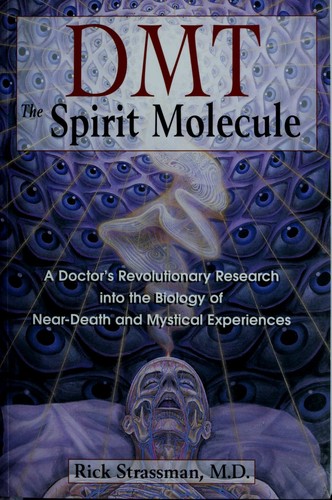
DMT: The Spirit Molecule
A Doctor's Revolutionary Research into the Biology of Near-Death and Mystical Experiences
Find on Amazon →As an Amazon Associate, OverClassified may earn from qualifying purchases made through this link, at no extra cost to you.
Why This Is Essential Reading
DMT: The Spirit Molecule is worth reading for what it documents and worth handling carefully for what it proposes. The documented part is a real, approved, published study in which a known compound, given to screened adults in a hospital, repeatedly produced scenes of being examined by non-human intelligences. Anyone weighing abduction testimony has to account for that, whichever way they lean. The proposed part, that the pineal gland floods the brain with DMT at life's extremes and that this explains spontaneous contact, was offered by Rick Strassman as conjecture and has not been confirmed in a quarter of a century. He also does not argue what skeptics sometimes cite him for. He does not say the beings are hallucinations; he leaves open that they exist. Read it beside John E. Mack's Abduction and David Nichols's 2018 review. This site worked from the author's summaries, one full chapter, his papers and the reviews, and will revise this assessment when it has read the whole text.
Related Cases & Theories
Essential Viewing
Sources Cited
- Strassman, Rick. DMT: The Spirit Molecule: A Doctor's Revolutionary Research into the Biology of Near-Death and Mystical Experiences. Rochester, VT: Park Street Press, 2001 (ISBN 0892819278 / 9780892819270). Distributor's record with publisher's description, endorsements, page count and release date. simonandschuster.com
- Strassman, Rick. "DMT: The Spirit Molecule: Chapter Summaries." Author's website (his own summary of the introduction, prologue, all 22 chapters and epilogue; source for volunteer and dose totals, the approval timeline, the reasons the study ended and the reference to Mack). rickstrassman.com
- Strassman, Rick. "Contact Through the Veil: 1" (chapter 13, pp. 185–201) and "Prologue: First Sessions," sample chapters published by the author; read in full for this article. rickstrassman.com
- Strassman, Rick. "Pre-Publication Reviews" and "Post-Publication Reviews and Awards" (endorsements by John Mack, Bruce Greyson and others; excerpt of the American Journal of Psychiatry review). rickstrassman.com
- Strassman, Rick. "Biography." Author's website (education, appointments, funding, Buddhist ordination, later career, sales figure). rickstrassman.com
- Strassman, R. J., and Qualls, C. R. "Dose-response study of N,N-dimethyltryptamine in humans. I. Neuroendocrine, autonomic, and cardiovascular effects." Archives of General Psychiatry 51(2), 1994, pp. 85–97 (abstract). pubmed.ncbi.nlm.nih.gov
- Strassman, R. J., Qualls, C. R., Uhlenhuth, E. H., and Kellner, R. "Dose-response study of N,N-dimethyltryptamine in humans. II. Subjective effects and preliminary results of a new rating scale." Archives of General Psychiatry 51(2), 1994, pp. 98–108 (abstract). pubmed.ncbi.nlm.nih.gov
- Strassman, R. J., Qualls, C. R., and Berg, L. M. "Differential tolerance to biological and subjective effects of four closely spaced doses of N,N-dimethyltryptamine in humans." Biological Psychiatry 39(9), 1996, pp. 784–795 (abstract). pubmed.ncbi.nlm.nih.gov
- Fadiman, James, and Gruber, Jordan. Book review of DMT: The Spirit Molecule. Journal of Near-Death Studies 21(4), Summer 2003, pp. 241–243; read in full. digital.library.unt.edu
- Hirshfeld-Flores, Alissa. Review of DMT: The Spirit Molecule in "Book Forum: Psychedelic Research." American Journal of Psychiatry 159(8), August 2002, p. 1448 (cited from the excerpt on the author's site; full review not read). psychiatryonline.org
- Hanna, Jon. "DMT and the Pineal: Fact or Fiction?" Erowid, June 3, 2010, with an addendum by Rick Strassman (June 29, 2010) and a 2017 addendum. erowid.org
- Nichols, David E. "N,N-dimethyltryptamine and the pineal gland: Separating fact from myth." Journal of Psychopharmacology 32(1), 2018, pp. 30–36 (abstract). pubmed.ncbi.nlm.nih.gov
- Barker, S. A., Borjigin, J., Lomnicka, I., and Strassman, R. "LC/MS/MS analysis of the endogenous dimethyltryptamine hallucinogens, their precursors, and major metabolites in rat pineal gland microdialysate." Biomedical Chromatography 27(12), 2013, pp. 1690–1700 (abstract). pubmed.ncbi.nlm.nih.gov
- Dean, J. G., Liu, T., Huff, S., Sheler, B., Barker, S. A., Strassman, R. J., Wang, M. M., and Borjigin, J. "Biosynthesis and Extracellular Concentrations of N,N-dimethyltryptamine (DMT) in Mammalian Brain." Scientific Reports 9, 9333, 2019. nature.com
- Glynos, N. G., Carter, L., et al. "Indolethylamine N-methyltransferase (INMT) is not essential for endogenous tryptamine-dependent methylation activity in rats." Scientific Reports 13, 280, 2023. nature.com
- Timmermann, C., Roseman, L., Williams, L., et al. "DMT Models the Near-Death Experience." Frontiers in Psychology 9, 1424, 2018. frontiersin.org
- Davis, A. K., Clifton, J. M., Weaver, E. G., Hurwitz, E. S., Johnson, M. W., and Griffiths, R. R. "Survey of entity encounter experiences occasioned by inhaled N,N-dimethyltryptamine: Phenomenology, interpretation, and enduring effects." Journal of Psychopharmacology 34(9), 2020, pp. 1008–1020 (abstract). pubmed.ncbi.nlm.nih.gov
- Lawrence, D. W., Carhart-Harris, R., Griffiths, R., and Timmermann, C. "Phenomenology and content of the inhaled N,N-dimethyltryptamine (N,N-DMT) experience." Scientific Reports 12, 8562, 2022. nature.com
- Michael, P., Luke, D., and Robinson, O. "An Encounter With the Other: A Thematic and Content Analysis of DMT Experiences From a Naturalistic Field Study." Frontiers in Psychology 12, 720717, 2021. frontiersin.org
- McGreal, Scott. "DMT, Aliens, and Reality," Parts 1 and 2. Psychology Today, October 2012. psychologytoday.com
- "Rick Strassman" and "DMT: The Spirit Molecule" (2010 film). Wikipedia (later bibliography; documentary credits). en.wikipedia.org
- "DMT: the spirit molecule." University of New Mexico Digital Repository, Health Sciences Center faculty book record (Park Street Press, Rochester, Vermont, 2001). digitalrepository.unm.edu
- Amazon listing for ISBN 0892819278 (print length, star rating and rating count as read in October 2026). amazon.com
- Mack, John E. Abduction: Human Encounters with Aliens (Scribner, 1994) and Passport to the Cosmos (Crown, 1999); see this site's own breakdowns.
Have corrections, additional research, or peer-reviewed sources? Help improve this entry.
Suggest an Edit