
Sydney Abduction of Peter Khoury
In July 1988, Sydney resident Peter Khoury reported being paralyzed and encountering a tall, golden-yellow humanoid that inserted a needle-like object into his head. Four years later, in July 1992, he reported waking to find two unfamiliar women on his bed and afterward discovered and preserved a strand of fine, light-colored hair. In 1996 he showed the hair to Australian researcher Bill Chalker, who arranged forensic DNA testing by a CSIRO molecular biologist — making this one of the very few alleged abduction cases anywhere in the world where physical trace evidence was subjected to real laboratory analysis. The scientists' own published conclusion: the hair was human, from a genetically unusual but real human lineage — not, on the DNA evidence itself, proof of anything non-human.

Pictured: Sydney Harbour Bridge at night, illustrative of the city where the reported encounters took place; not a photograph of the incident itself. Photo by David Iliff, Wikimedia Commons (CC BY-SA 3.0).
Theoretical Alignment
This file weights Psycho-Social/Mundane highest because the case rests on a single witness's uncorroborated testimony for its core narrative, and because the leading skeptical explanation — sleep paralysis with associated hallucination — is a well-documented, common neurological phenomenon that closely matches the timing (early morning) and paralysis component of both reported encounters. It assigns meaningful weight to Extraterrestrial specifically because of the DNA testing: while the lab results themselves indicate a human donor, the specific combination of traits the scientists reported (a light hair color inconsistent with the mitochondrial lineage identified, and inconsistent nuclear markers between the hair shaft and root) is genuinely unusual enough that the investigating scientists themselves did not consider the case fully closed. Interdimensional Hypothesis receives the least weight of the three because nothing in either the 1988 or 1992 testimony, nor anything in the physical evidence, points toward the kind of trans-dimensional or non-physical framing that theory typically requires to explain a case; the entities Khoury describes are consistently physical, tangible, and biologically sampleable, which places the case's anomalous content, if genuine, more naturally within a conventional extraterrestrial-visitor framework than an interdimensional one.
Background
Peter Khoury was born in Lebanon in 1964 and, according to his own account, had his first anomalous experience there in the summer of 1971 at around age seven: playing with seven other children on the flat rooftop of a neighbor's house, he says the group watched a silent, chrome-colored, egg-shaped object hovering nearby, after which all eight children found themselves back on the ground floor with no memory of the intervening period. Khoury has said that during the 1988 encounter he believed he recognized the same hooded, diminutive figures from that childhood rooftop episode, a detail some later commentators have noted echoes the "small hooded figures" described by author Whitley Strieber in his own 1987 abduction memoir Communion — a resemblance this file treats as an interesting point of comparison in the broader abduction literature rather than as corroborating evidence for either account. Khoury and his family migrated to Australia in 1973, settling in Sydney. He met his future wife, Vivian, at school in 1981, and the two married in 1990; Khoury went on to work in the building trades, running a cement rendering business. In April 1993, after what he described as frustration with the internal politics of organized ufology, he founded his own group, the UFO Experience Support Association (UFOESA), intended to help other experiencers process and document their own encounters outside the structure of the established Australian UFO organizations. The timing placed UFOESA's founding roughly nine months after the July 1992 encounter and four years before Khoury disclosed the hair sample to Chalker, meaning the support-association work and the eventual forensic investigation ran on largely separate, non-overlapping tracks for most of the 1990s rather than being launched together as a coordinated publicity effort.
Against that backdrop, Khoury and Vivian first reported a UFO-related sighting together in February 1988 — by his account, a bright, baseball-sized object that emitted a beam of light and crossed the night sky, with Vivian as a second witness. Five months later, in July 1988, Khoury reported a far more disturbing, consciously remembered encounter alone in his own bedroom. Four years after that, in July 1992, he reported a second, more explicit encounter with two unfamiliar women in his bedroom, after which he discovered and preserved a strand of fine, light-colored hair. He sealed the hair in a small bag, noted the date, and filed it away; he did not share it with anyone in the UFO research community for four years, until 1996, when he showed it to Bill Chalker, a chemist and one of Australia's most prominent UFO researchers. Chalker recognized the hair as a rare opportunity to subject a claimed piece of physical abduction evidence to genuine forensic analysis rather than treating it purely as testimony, and spent the next several years arranging for it to be examined by a working molecular biologist rather than simply cataloguing it as another unverifiable exhibit.
Complete Timeline
| Date | Event |
|---|---|
| Feb. 1988 | Peter and Vivian Khoury report their first UFO-related experience together. |
| July 12, 1988 | Khoury reports experiencing paralysis on his bed and encountering a tall, golden-yellow being with large black eyes, which he says inserted a needle-like object into his head; his family separately reports missing time (perceiving roughly ten minutes when closer to one to two hours had passed); Khoury reports a verifiable puncture-type injury afterward. |
| July 23, 1992 | At approximately 7 a.m., Khoury reports waking to find two naked women on his bed, one with pale, elongated features and blonde hair he later described as "Nordic," the other with Asian features; he reports a brief, disturbing physical interaction before both figures vanished, after which he found and preserved a strand of fine, light-colored hair recovered from his own body. |
| 1996 | Khoury shows the preserved hair sample to Bill Chalker, who arranges forensic biochemical analysis. |
| 1998–1999 | An initial round of PCR-based mitochondrial DNA testing on the hair shaft, led by CSIRO molecular biologist Dr. Horace Drew, identifies a rare "Chinese Mongoloid type" mitochondrial sequence — a finding the researchers noted was inconsistent with the hair's actual light, blonde-to-clear coloration. |
| 1999 | The findings are published as "Strange Evidence" in the International UFO Reporter, the journal of the Center for UFO Studies. |
| 2005 | A second round of analysis, examining the hair root rather than only the shaft, identifies a different, "rare Basque/Gaelic type" mitochondrial signature and possible indicators consistent with a CCR5-delta32 gene deletion — a real, well-documented human genetic variant, not itself exotic. Chalker publishes the full case history in his book Hair of the Alien: DNA and Other Forensic Evidence of Alien Abductions. |
| 2010 | Khoury voluntarily undergoes a polygraph examination to support his account's credibility; Chalker publicly cautions against treating polygraph results as scientific validation, noting the technique's disputed reliability. |
| Present | The case remains one of the most-cited examples of alleged abduction physical evidence subjected to genuine forensic DNA testing, and remains actively disputed between researchers who find the DNA anomalies significant and skeptics who favor a sleep-paralysis explanation for the underlying experience. |
The 1988 Encounter
Khoury's first solo encounter, on July 12, 1988, followed the classic structure of a paralysis-onset experience. By his account, he was lying in bed when he felt something grip his ankles; paralysis set in, and he became aware of what he described as three or four small, hooded figures around the bed. He reported receiving a telepathic communication instructing him to relax and not be afraid, because, as the message reportedly put it, "it would be like last time" — a phrase Khoury and later researchers took as a possible allusion to an earlier, unremembered episode. A tall, golden-yellow humanoid figure with large black eyes then reportedly stood over him and inserted a needle-like instrument into the side of his head, at which point he lost consciousness.
Khoury says he regained awareness abruptly and rushed into an adjoining room, where he found other family members — by some accounts including his brother — in an unresponsive, "switched off" state. He and his brother initially estimated that only about ten minutes had elapsed, but Khoury's own reconstruction of the night placed the true gap at closer to an hour, and by some tellings as much as two. The next morning, he reported finding a puncture mark with dried blood on the side of his head, roughly where he said the instrument had been inserted — an injury multiple secondary accounts describe as physically verified, though no contemporaneous medical examination of the wound is on record. This file treats the wound as a real, observed mark whose cause is unresolved rather than as independently authenticated evidence of an exotic origin; as the skeptical assessment later in this file notes, a puncture wound and scab in approximately the right location does not, on its own, rule out a far more mundane cause such as an insect bite or a blemish that Khoury, primed by a vivid and frightening dream, incorporated into his waking account of the night.
The 1992 Encounter and the Hair Sample
On July 23, 1992, at approximately 7 a.m., Khoury reported waking to find two unfamiliar women kneeling on his bed. He described one as having straight, dark, shoulder-length hair, dark eyes, and dark-toned skin, features he took to be Asian. He described the other, who he said appeared to be in charge of the encounter, in far more unusual terms and later used the popular UFO-literature label "Nordic" for her: long, wavy blonde hair falling roughly halfway down her back, pale skin, light or "bluish" eyes he estimated as two to three times the normal human size, an elongated, "too long" face, and unusually high, chiseled cheekbones, on a frame he judged to be over six feet tall. Khoury reported a brief and disturbing physical interaction — the Nordic-described figure pulling his head toward her chest three times, during which he bit down on her skin — before both figures vanished. He reported that his bite drew no visible blood and provoked no apparent pain response from the figure, a detail he and later investigators treated as itself unusual.
In the aftermath, Khoury discovered a strand, or by some accounts two strands, of extremely fine, almost clear light-colored hair on his own body. Rather than discarding it or treating it as an incidental stray hair, he sealed it in a small plastic sachet, noted the date, and put it away. That decision — made in the immediate, disoriented aftermath of the experience, well before any researcher had suggested forensic testing was even possible — is one of the details researchers sympathetic to the case point to when arguing the sample is unlikely to have been assembled after the fact as a deliberate hoax prop. Khoury did not share the hair with anyone in the UFO research community for four years, keeping it privately stored until he showed it to Bill Chalker in 1996. From an evidentiary standpoint, that four-year gap cuts in two directions at once, and this file considers both fairly. On one hand, it removes any possibility that the sample was collected with a UFO researcher's forensic testing protocol already in mind, which argues against a deliberately manufactured hoax prop assembled for maximum scientific impact. On the other hand, it also means the sample spent four years in ordinary, non-clinical storage — a plastic sachet in a private home, not a sealed, refrigerated, chain-of-custody evidence bag — before any scientist ever saw it, and a further two to nine years elapsed before the 1998–1999 and 2005 testing rounds respectively. That storage history is directly relevant to how much weight the DNA anomalies can bear, since PCR-based genetic analysis is well documented to be sensitive to sample degradation and contamination over exactly these kinds of uncontrolled, multi-year storage intervals.
The DNA Analysis
What sets this case apart from the overwhelming majority of alleged abduction reports in this archive is that Khoury's hair sample was not merely described or photographed — it was handed to a credentialed molecular biologist and subjected to real, published forensic testing. Dr. Horace Drew is not a fringe figure recruited for the occasion: he earned his doctorate in chemistry at Caltech in 1981, where he worked with Richard Dickerson's laboratory on some of the first high-resolution X-ray crystal structures of DNA ever solved, including work that helped establish the existence of left-handed DNA. He then spent roughly five years as a researcher with Nobel laureate Aaron Klug at the Medical Research Council Laboratory of Molecular Biology in Cambridge, England, before relocating permanently to Australia in 1987 to take up a position with the Commonwealth Scientific and Industrial Research Organisation (CSIRO). Across a mainstream research career running from the mid-1970s to around 2010, Drew's published work focused on DNA structure and its role in molecular biology and human health, including contributions to gene-therapy techniques and PCR-based diagnostic procedures — the same underlying laboratory method he would later apply, on his own time and outside his official CSIRO duties, to Khoury's hair.
Hair is, in fact, a genuinely useful forensic substrate for this kind of testing: unlike most tissue, a hair shaft retains extractable mitochondrial DNA even without an attached root or follicle, which is precisely why forensic laboratories and ancient-DNA researchers alike have long used shed or cut hair for identification work when no blood or saliva sample is available. That real forensic utility is part of what made Khoury's sample viable for analysis at all nearly a decade after it was recovered, even though, as discussed below, mitochondrial DNA on its own has real and specific limits as an identification tool. Drew led a small biochemistry team that ran polymerase chain reaction (PCR) mitochondrial DNA profiling on the hair shaft in 1998–1999, work Chalker has described as the world's first PCR DNA profiling ever conducted on biological material specifically implicated in an alleged alien abduction. The results were genuinely unusual, though not in the way popular coverage of the case often implies. The team reported that the shaft carried a set of five distinctive mitochondrial markers characteristic of a rare sub-group within the Chinese Mongoloid genetic lineage — a real, if statistically uncommon, human haplogroup that a contemporary literature survey suggested was shared, worldwide, by only a handful of other known individuals, all of them ethnically Chinese and all with black hair. That lineage would ordinarily be expected to produce black hair, not the pale, blonde-to-clear hair Khoury's sample actually displayed, and the team's own published interpretation treated the coloring itself as the anomaly: since a lineage carrying those markers would not obviously need melanin-rich hair or skin as protection against strong sunlight, they suggested the donor could plausibly be an individual whose ancestry included that rare marker set but who nonetheless presented as fair-skinned and fair-haired.
The 2005 Root Analysis
The 2005 round of testing, published in full in Chalker's book Hair of the Alien, examined the hair root rather than only the shaft, and rather than resolving the shaft's discrepancy, it added a second one on top of it. The root's mitochondrial profile came back as a different signature, described in Drew's own published account as a rare type traceable to Basque or Gaelic populations of the British Isles and northwestern Europe — genetically almost the opposite geographic origin from the shaft's East Asian-linked lineage. Alongside that finding, the team reported markers they interpreted as possibly consistent with a CCR5-delta32 gene deletion. This file notes, in the interest of scientific accuracy, that the CCR5-delta32 variant is itself a well-documented, unremarkable human genetic polymorphism found at meaningful frequency in some European populations (most famously associated with resistance to HIV infection, and studied for decades in ordinary clinical genetics) — its presence, if genuinely confirmed in this sample, would not itself constitute evidence of anything non-human. Chalker and Drew's own speculative gloss on the finding — that such a deletion, if deliberately selected for, could theoretically make intrusive close contact with humans safer from a disease-transmission standpoint — is explicitly interpretive rather than a claim the DNA data can establish on its own, and this file treats it as such.
Critically, the investigating scientists' own published conclusion was never that the hair was non-human. As their analysis put it in terms Chalker has repeated in multiple public accounts of the case, the most probable donor of the hair had to be, consistent with Khoury's account, "a tall blonde female who does not need much colour in her hair or skin ... perhaps because she does not require it" as protection from the sun — a real, if genetically unusual, human being, not a confirmed non-human organism. Chalker himself has been notably restrained in how he frames the finding's evidentiary weight, stating in one detailed account of the case that the DNA results are "not conclusive evidence, but it is enough of a potent breakthrough to argue that the research direction it inspired is a very worthwhile hypothesis to pursue." That is a considerably more cautious claim than the case's popular "alien hair" shorthand suggests, and this file considers the distinction essential to representing the science honestly: the finding is best described as a real but modest anomaly — an inconsistency between hair color and identified mitochondrial lineage, and inconsistent results between two independently conducted testing rounds separated by six years — rather than confirmed non-human genetic material.
Drew's Own Later Public Comments
Dr. Drew himself has continued to discuss the case publicly in the years since the original testing, using online science and paranormal-research forums to summarize his findings in his own words. In one such public account, referring to his 1999 mitochondrial DNA work on the sample, he described the result in slightly different shorthand than the "Chinese Mongoloid" phrasing used in the original 1999 International UFO Reporter article, stating that the profile "matched a rare, blond genotype from the British Isles." This file notes the apparent discrepancy between Drew's later, informal recollection and the originally published 1998–1999 shaft result (which the contemporaneous published record attributes to an East Asian-linked lineage, with the British Isles-linked Basque/Gaelic signature instead emerging from the 2005 root analysis) as exactly the kind of detail that argues for caution in treating any single account of the case, including a scientist's own later recollection given informally rather than in a peer-reviewed paper, as a fully settled record. Multiple retellings of the same complex, multi-year laboratory history, spaced years or decades apart, are prone to exactly this kind of drift, and it is a caution this file applies evenhandedly to skeptical and supportive sources alike.
What the Testing Could and Could Not Establish
It is worth being precise about the limits of what PCR-based mitochondrial sequencing of an eleven-year-old, privately stored hair sample can actually demonstrate. Mitochondrial DNA is inherited exclusively through the maternal line and represents only a tiny fraction of an organism's total genetic material; it can identify broad ancestral lineage markers but cannot, by itself, characterize an individual's full genome, confirm species identity beyond "human or not," or rule out laboratory contamination, especially in a small, privately arranged analysis conducted outside a formal chain-of-custody protocol and without the sample being split for independent, blinded replication at a second laboratory. No peer-reviewed genetics journal has published the Khoury hair results; they exist in the ufological literature (the Center for UFO Studies' International UFO Reporter and Chalker's own book) rather than in a venue subject to standard scientific peer review. None of this means Drew's laboratory work was performed carelessly — his professional credentials in DNA chemistry are real and independently verifiable — but it does mean the case's DNA evidence should be read as a genuinely interesting, unresolved anomaly investigated by a qualified scientist, rather than as a peer-reviewed scientific finding of non-human genetic material.
It is also worth noting what mitochondrial haplogroup analysis is actually good at identifying, since some popular retellings of this case blur the distinction between "unusual" and "impossible." Human mitochondrial DNA varies across geographically and ancestrally distinct populations in ways that are extremely well mapped by mainstream population genetics; a "rare" haplogroup combination, or one that does not match the presumed ancestry suggested by a sample's physical appearance, is a genuinely interesting anomaly worth investigating, but it remains, on the data alone, a statement about human genetic diversity and ancestral mixing rather than a marker of non-human origin. Humans with unexpected combinations of ancestry-linked genetic markers and outward physical traits are not unknown to population geneticists, particularly in individuals with mixed or historically undocumented ancestry; the Khoury hair sample's combination of an Asian-linked or Basque/Gaelic-linked mitochondrial signature with pale coloration is unusual enough to be scientifically interesting without requiring an explanation outside ordinary human genetic variation, migration, and admixture over many generations.
Key Figures
Three people carry most of the evidentiary weight in this case, and each occupies a distinct role rather than duplicating the others. Khoury is the sole direct witness to both encounters and the person who physically recovered and preserved the hair sample; his credibility is entirely testimonial and cannot be independently verified by any third party. Chalker is the investigator and gatekeeper who decided the sample was worth taking seriously, brought professional scientific standards to bear on how it should be tested, and has since served as the primary documentarian of the case in print. Drew is the working scientist whose laboratory credentials give the DNA findings whatever independent, third-party evidentiary weight they carry; critically, he was not a UFO researcher recruited to reach a predetermined conclusion, but a credentialed CSIRO molecular biologist whose involvement Chalker had to actively arrange and whose stated conclusions, as detailed above, stopped well short of claiming a non-human result.
Peter Khoury
Lebanese-born Sydney tradesman who reported paralysis and humanoid encounters in July 1988 and July 1992, and preserved a hair sample from the second encounter that he later submitted for forensic DNA testing. He founded the UFO Experience Support Association (UFOESA) in April 1993.
Bill Chalker
Received the hair sample from Khoury in 1996, arranged its forensic DNA analysis, and documented the case in his 2005 book Hair of the Alien. A chemistry and mathematics graduate of the University of New England, he was the first outside researcher granted access to Royal Australian Air Force UFO files.
Horace Drew
Led the biochemistry team that conducted the 1998–1999 and 2005 rounds of forensic DNA analysis on the hair sample. A Caltech-trained DNA crystallographer who helped solve some of the first high-resolution X-ray structures of DNA, he undertook the analysis privately, outside his official CSIRO research role.
The Five Observables Assessment
The Five Observables framework applies awkwardly to this case, since it describes a bedroom humanoid encounter rather than an observed craft:
Assessment: This case does not describe observed craft performance and is better assessed on its testimonial and forensic evidence than on the Five Observables framework, which this file includes for structural consistency with the rest of the archive rather than because it meaningfully applies here. The one observable with any genuine relevance is Low Observability: both encounters describe entities appearing in an enclosed bedroom and vanishing without any described mode of entry, exit, or transport, a pattern common to bedroom-visitation and paralysis-onset reports generally and one this file treats as speculative rather than confirmed, since no instrumented observation of any kind exists for either event.
Evidence Assessment
Supporting Genuine Anomaly
- The case is one of the very few alleged abduction reports anywhere with physical trace evidence subjected to real, published forensic DNA analysis by a credentialed molecular biologist, rather than resting on testimony alone.
- The identified inconsistency between the hair's light coloration and its associated mitochondrial lineage, and the differing results between the 1998–1999 shaft analysis and the 2005 root analysis, are genuine, published scientific findings that the investigating team itself could not fully resolve.
- Khoury disclosed the hair sample to a researcher only after preserving it privately for four years, a pattern less consistent with a fabricated prop built for immediate publicity, and he sealed and dated the sample before any researcher had suggested DNA testing was even a realistic possibility.
- The investigating scientist, Dr. Horace Drew, brought genuinely elite, independently verifiable credentials in DNA chemistry to the analysis, including formative work on the first high-resolution X-ray structures of DNA, rather than being a self-taught or unqualified analyst recruited specifically to validate the case.
- Bill Chalker's documented caution about the 2010 polygraph examination — explicitly refusing to treat a favorable result as scientific proof — suggests an investigator applying real methodological skepticism rather than promoting every available piece of supporting evidence uncritically.
Supporting a Conventional Explanation
- The core narrative rests entirely on Khoury's own uncorroborated testimony; no other witness observed either encounter directly, and the missing-time discrepancy reported by family members in 1988 is itself second-hand and undocumented in any contemporaneous written record.
- Sleep paralysis with associated hypnagogic or hypnopompic hallucination is a well-documented, common neurological phenomenon that closely matches the early-morning timing and paralysis onset of both reported events, and has been documented cross-culturally in populations with no exposure to modern UFO narratives.
- The DNA testing's own conclusion identifies the hair as human in origin; the anomalies identified are inconsistencies in an unusual but real human genetic profile, not evidence of non-human material.
- A stray hair of unknown, mundane origin becoming lodged on Khoury's body, combined with sample degradation or contamination during roughly a decade of uncontrolled, non-clinical storage before final analysis, remains a plausible alternative to an exotic origin.
- The DNA results have never been published in a peer-reviewed genetics journal, subjected to independent replication by a second laboratory, or examined under a documented forensic chain of custody, leaving the findings scientifically suggestive but formally unverified.
Why "Disputed"
This case earns a Disputed rating because it combines two evidentiary categories the site rates very differently: a core witness narrative that is, on its own, indistinguishable from a well-documented mundane phenomenon (sleep paralysis with hallucination), and a genuinely unusual piece of physical evidence that received real, credentialed forensic analysis rather than remaining pure testimony. Australian Skeptics representative John O'Neill has argued that sleep paralysis explains the 1988 paralysis and humanoid perception, that ordinary hallucination explains the encountered figures, that sleep itself explains the reported missing time, and that the puncture wound could have an entirely mundane cause — "a pimple, an insect bite or anything else in approximately the right location," as he put it. Notably, O'Neill's skepticism is informed by personal experience rather than purely theoretical: he has stated he experienced a sleep paralysis episode of his own, describing it as the vague sense of another presence in the room without being able to see or identify what it was. He has also acknowledged, in the same breath, that this vagueness is typical of sleep paralysis generally and falls well short of the specific, ordered, multi-sensory detail present in Khoury's account — a tension O'Neill does not fully resolve but that this file considers worth surfacing rather than glossing over, since it means even the case's most direct skeptical critic regards the raw phenomenology as somewhat harder to wave away than an average sleep-paralysis report.
This file finds the sleep-paralysis explanation plausible for the experiential component of both encounters, particularly given how well the early-morning timing and paralysis onset match documented sleep-paralysis episodes, even while noting that O'Neill's own comparison highlights the account's unusual narrative coherence. What keeps the case from a lower rating is that the DNA evidence is real and was genuinely subjected to scientific method by a credentialed molecular biologist, and the specific anomaly identified — a mismatch between a hair's mitochondrial lineage and its physical coloration, replicated as an inconsistency across two independent testing rounds separated by six years — is not the kind of finding a skeptic can wave away purely by invoking witness unreliability. At the same time, the absence of any peer-reviewed publication, independent replicating laboratory, or documented chain-of-custody protocol for a sample that sat in private storage for years before final analysis means the DNA findings cannot be treated as settled science either. This file's own read of the evidence sides with the investigating scientists' own stated conclusion: the hair was almost certainly human, from an unusual but real donor, and the case's DNA anomalies are interesting enough to warrant the researchers' continued interest without rising to confirmed evidence of a non-human hybrid.
It is also worth stating plainly why this case is rated Disputed rather than simply filed alongside the many single-witness, testimony-only encounters in this archive that receive a lower confidence rating by default. The distinguishing factor is not the strength of Khoury's testimony, which this file treats as no more or less reliable than any other single, uncorroborated witness account; it is the fact that a tangible piece of trace evidence exists, was preserved before any researcher was involved, and was subsequently handed to an independently credentialed scientist who applied a real, published, peer-reviewed-adjacent laboratory method to it, rather than the case resting on Khoury's word alone. That combination — ordinary, explicable testimony paired with a genuinely unresolved physical anomaly — is precisely the profile this site's rating system is designed to flag as Disputed rather than either Debunked or Credible, and this file considers Peter Khoury's case one of the clearest examples of that category in the entire archive.
Observer Credibility & Occupational Profile
The case's evidentiary weight rests less on Khoury himself, whose account cannot be independently corroborated, and more on the credentials of the investigators who handled the physical evidence. The family members Khoury says he found in an unresponsive state during the 1988 incident, and who he says separately perceived the missing-time discrepancy, have never been named or independently interviewed in any published account of the case available to this file's research; their observation exists only as Khoury's own secondhand report of what they told him, which meaningfully limits how much independent corroborating weight that detail can carry, however consistent it has remained across Khoury's retellings over the following decades. Peter Khoury has no scientific or forensic background — he is a Sydney tradesman who worked in the building industry and ran a cement rendering business — and his own occupational profile does not lend the account additional third-party weight; his credibility rests instead on the consistency of his account across decades of retelling, his voluntary submission to a 2010 polygraph examination, and his decision to preserve the hair sample discreetly for four years before showing it to anyone rather than immediately publicizing it.
Bill Chalker is a chemist and one of Australia's most established UFO researchers, holding a degree in chemistry and mathematics from the University of New England and a research history stretching back to the mid-1970s, including terms as the Australian representative of the Aerial Phenomena Research Organisation (1978–1986), the New South Wales state representative for the Mutual UFO Network (1976–1993), and a contributing editor role at the Center for UFO Studies' International UFO Reporter. He is also, by multiple independent accounts, the first outside researcher granted access to Royal Australian Air Force UFO files, a credential that speaks to a level of institutional trust uncommon among UFO investigators. His caution about the 2010 polygraph test — he reportedly tried to dissuade Khoury from taking it at all, arguing that polygraph results are not scientifically reliable evidence even when they return a favorable outcome — suggests a researcher applying real methodological standards rather than uncritically promoting every piece of evidence that supports his own case.
Dr. Horace Drew's credentials are the strongest single pillar of the case's evidentiary weight. A Caltech-trained DNA chemist who worked in Richard Dickerson's laboratory on some of the first high-resolution X-ray crystal structures of DNA, followed by roughly five years alongside Nobel laureate Aaron Klug at Cambridge's Medical Research Council Laboratory of Molecular Biology, Drew's mainstream scientific career at CSIRO ran for decades and included work on gene-therapy techniques and PCR diagnostic methods. Those credentials are independently verifiable through his academic publication record and give the DNA findings genuine scientific weight that a hobbyist analysis could not claim. At the same time, it should be noted plainly that Drew conducted the Khoury analysis privately and outside his official CSIRO research duties, that the results were never submitted to a peer-reviewed genetics journal, and that Drew's own published conclusion — a real but genetically unusual human donor — stopped well short of claiming non-human origin, a restraint this file treats as evidence of scientific caution rather than as an implicit admission the case is weaker than its popular reputation suggests.
Historical Precedents & Archive Matches
This case connects to other bedroom/paralysis-onset encounters in this archive with a similar experiential structure, and stands out within the broader abduction literature for the rarity of genuinely lab-tested physical evidence, a distinction shared by very few other cases in this catalogue. The core narrative structure — a witness alone in bed, paralysis, perceived humanoid figures, a subjective sense of missing or compressed time — follows a template established in the modern abduction literature by cases such as the 1961 Betty and Barney Hill encounter in New Hampshire, widely regarded as the first heavily publicized American abduction report, and later popularized in book form by accounts such as Whitley Strieber's 1987 Communion. Khoury's case sits within that broader literature but departs from it in one important respect: rather than resting solely on hypnotically recovered or purely testimonial memory, it produced a piece of physical trace evidence that was handed to an outside, credentialed scientist for independent laboratory analysis, rather than remaining a private artifact examined only by the researcher who already believed the account.
That distinction matters for how the case should be weighed against the broader skeptical literature on abduction memory. Harvard psychologist Susan Clancy, whose research is discussed at length in her book Abducted, has argued that a combination of sleep-related hallucination, cultural priming from popular UFO media, and ordinary false-memory formation can account for the great majority of abduction narratives without invoking anything anomalous. That framework applies naturally to the experiential core of both the 1988 and 1992 Khoury encounters. It applies far less cleanly to the hair sample itself, since a false memory cannot, by itself, place a genuinely anomalous mitochondrial DNA profile onto a physical object recovered and sealed in a bag within hours of the reported event. This file treats the two components of the case as requiring genuinely separate historical comparisons: the experiential narrative belongs with the broader modern abduction literature Clancy's research addresses, while the hair sample belongs in the much smaller category of alleged UFO-related physical evidence that has actually been subjected to instrumented laboratory analysis, a category this archive treats as evidentially distinct from testimony alone.
Continued Public Presentation of the Case
Unlike many single-witness encounters that surface briefly and then disappear from public discussion, the Khoury case has remained in active circulation among Australian and international UFO researchers for more than two decades since Chalker's original 1999 publication. Khoury and Chalker have continued to present the case together in public forums, including a 2018 Melbourne presentation documented by Victorian UFO Action's VUFOA-TV, in which both men discussed the encounters and the DNA findings in their own words; the case has also been the subject of independent third-party video summaries, and has continued to appear in newer interview and podcast formats aimed at introducing the story to audiences unfamiliar with 1990s-era Australian ufology. That sustained attention is itself a modest piece of context worth noting: it means the account has been repeated consistently by its principal witness across multiple decades, multiple formats, and multiple interviewers, without the kind of significant narrative drift or walk-back that has undermined the credibility of some other physical-evidence UFO claims over similar timescales. It does not, on its own, make the underlying claims true, but it does distinguish this case from reports that were made once, briefly publicized, and never revisited by the original witness.
Material Analysis
The case's sole physical evidence is a strand, or by some accounts two strands, of fine, almost-clear light-colored hair, preserved by Khoury within a sealed sachet immediately after the 1992 encounter and kept in private storage for four years before any researcher examined it, and for roughly seven years before formal laboratory testing began. Two separate rounds of PCR-based mitochondrial DNA sequencing, conducted by a credentialed CSIRO molecular biologist working privately outside his official research duties, returned genuinely inconsistent results: a signature consistent with a rare sub-group of the Chinese Mongoloid lineage from the hair shaft in 1998–1999, reportedly matched in the wider genetic literature by only a handful of other known individuals worldwide (all of them ethnically Chinese and black-haired, in contrast to Khoury's pale sample), and a different "Basque/Gaelic type" signature from the hair root in 2005, alongside markers the researchers interpreted as possibly consistent with the real, well-documented human CCR5-delta32 gene variant.
No independent laboratory has ever re-tested a split portion of the same sample, and the results have not been published in a peer-reviewed genetics journal; the full account exists in the ufological literature, principally the Center for UFO Studies' International UFO Reporter (1999) and Chalker's own Hair of the Alien (2005). That absence of independent replication does not, on its own, invalidate Drew's findings — his personal scientific credentials are real and independently verifiable — but it does mean the anomaly should be understood as a single, non-replicated laboratory result rather than an established scientific consensus finding, a distinction this file considers essential to accurately weighing the physical evidence in this case.
Supporting Continued Legitimate Interest
- The internal inconsistency between the 1998–1999 and 2005 results is a genuine, published anomaly that the investigating team's own analysis could not fully resolve, distinguishing this case from testimony-only reports.
Supporting a Conventional Explanation
- The investigating scientists' own stated conclusion identifies the hair as most likely originating from a real, if genetically unusual, human donor — not non-human material — and roughly a decade of uncontrolled sample storage before final analysis leaves contamination or degradation a plausible contributor to the inconsistent results.
- No independent laboratory has ever re-tested a split portion of the sample, and the findings have never appeared in a peer-reviewed genetics journal, meaning the anomaly currently rests on a single, non-replicated analysis rather than a confirmed and independently verified scientific result.
The Conventional Explanation Candidate: Sleep Paralysis With Hallucination, and an Unusual but Human Hair Donor
The leading, and this file's assessed, explanation treats the two components of this case separately. For the experiential narrative, sleep paralysis accompanied by hypnagogic or hypnopompic hallucination — a well-documented neurological phenomenon affecting a meaningful percentage of the population, most often in the early morning — closely matches the timing, paralysis onset, and vivid perceived-entity content of both the 1988 and 1992 reports. For the hair sample, the most parsimonious reading of the DNA results, and the one the investigating scientists themselves reached, is that the hair came from an unusual but genuinely human donor, with the inconsistency between the two testing rounds most plausibly explained by sample degradation or contamination across roughly a decade of private, non-clinical storage rather than by non-human genetic material.
Sleep Paralysis and Hypnagogic Hallucination
Australian Skeptics representative John O'Neill has directly proposed this explanation for the case's experiential content, arguing paralysis, hallucinated entities, and a subjectively compressed sense of elapsed time are all consistent with a known sleep-paralysis episode rather than a genuine external encounter. Sleep paralysis is a recognized, extensively studied phenomenon in sleep medicine, occurring when the muscle atonia that normally accompanies REM sleep persists briefly into a waking or semi-waking state, typically producing a felt inability to move alongside vivid, often frightening hallucinated presences; researchers such as folklorist David J. Hufford, whose cross-cultural study of the "Old Hag" phenomenon is cited in this file's further reading, have documented strikingly similar entity perceptions — a sensed presence, pressure on the body, an inability to move or cry out — across cultures with no exposure to UFO abduction narratives specifically, evidence that the underlying neurological experience long predates and is independent of modern ufology. Applied to Khoury's case, this explanation accounts naturally for the paralysis onset in both 1988 and 1992, the early-morning timing of both events, and the dreamlike, compressed sense of elapsed time reported in 1988; O'Neill's own qualification — that his personal sleep-paralysis episode was comparatively vague, while Khoury's account is unusually detailed and internally consistent — is the one point where this explanation requires the most charitable reading to fully cover the case.
Human Donor With Sample Degradation or Contamination
The DNA testing's own conclusion — that the hair most likely came from "a tall blonde female who does not need much colour in her hair or skin," a real human being — combined with the multi-year gap between sample recovery and final analysis, provides a scientifically grounded, non-exotic account for the sample's genuine but unresolved internal inconsistencies. PCR-based DNA analysis is well known in forensic science to be highly sensitive to contamination, particularly for samples that were not collected, sealed, and stored under controlled chain-of-custody conditions from the outset; a hair kept for years in ordinary private storage before reaching a laboratory, then split and tested years apart by shaft and then root, offers ample opportunity for the introduction of trace foreign genetic material, degradation of the original sequence, or simple sample-handling variance between the two testing rounds. Under this reading, the shaft's East Asian-linked mitochondrial signature and the root's Basque/Gaelic-linked signature need not both describe the same underlying donor with perfect fidelity; one or both readings could reflect contamination, degradation artifacts, or laboratory variance rather than two genuinely contradictory signals from a single unusual individual. This explanation does not require Khoury to be lying or the hair to be planted — it is fully compatible with a real hair from a real, if unidentified, human source, recovered exactly as Khoury describes, whose DNA profile was simply not preserved with the rigor a formal forensic chain of custody would have provided. Standard criminal-forensic DNA protocols exist precisely to guard against these failure modes: continuous, documented custody from collection to analysis; sample splitting so a second, independent laboratory can test a portion without ever seeing the first lab's results; and, ideally, peer review of the methodology and conclusions before they are treated as established fact. None of those safeguards were present for the Khoury hair sample at any point between its recovery in 1992 and its final analysis in 2005, not through any particular fault of Khoury or Drew, but simply because the sample was never collected or handled as formal forensic evidence in the first place. That gap between the sample's real scientific interest and the procedural rigor of its handling is, in this file's assessment, the single most important piece of context for evaluating how much the DNA anomaly can responsibly be allowed to weigh in the case's overall rating.
Sleep Paralysis With Hallucination, and an Unusual but Human Hair Donor — Plausibility Rating: PLAUSIBLE
Related Cases
Record Status
No Australian government agency has conducted or released any formal investigation of this case, which was pursued entirely through independent researcher and private-laboratory channels. The 1998–1999 and 2005 DNA analyses were conducted by a CSIRO scientist working privately outside his official government research role, not as an official CSIRO investigation, and CSIRO as an institution has never issued any public statement endorsing or evaluating the findings. This stands in contrast to the Royal Australian Air Force's historical UFO files, to which Bill Chalker — the same researcher who investigated this case — was independently granted access decades earlier; no equivalent government file exists for the Khoury encounters themselves, since neither incident was ever reported to police or defense authorities at the time.
Search Government Archives Directly
Further Reading — Recommended Literature
Hair of the Alien: DNA and Other Forensic Evidence of Alien Abductions
Chalker's full account of the Khoury case and its DNA testing, including detailed discussion of the laboratory methodology and results.
The Oz Files: The Australian UFO Story
Chalker's earlier survey of Australian UFO history, drawing on his access to Royal Australian Air Force files and establishing his research credentials.
Understanding DNA: The Molecule and How It Works
A textbook co-authored by the CSIRO scientist who led the Khoury hair analysis, useful background on the actual DNA methodology involved.
Abducted: How People Come to Believe They Were Kidnapped by Aliens
A Harvard psychologist's study of how ordinary sleep phenomena and memory processes can shape genuine belief in abduction experiences.
The Terror That Comes in the Night
A folklorist's cross-cultural study of sleep paralysis ("Old Hag") experiences, directly relevant to the leading skeptical explanation for this case.
DISCLOSURE: Some links above are affiliate links. If you purchase through them, OverClassified receives a small commission at no additional cost to you. This helps support independent research.
Essential Viewing
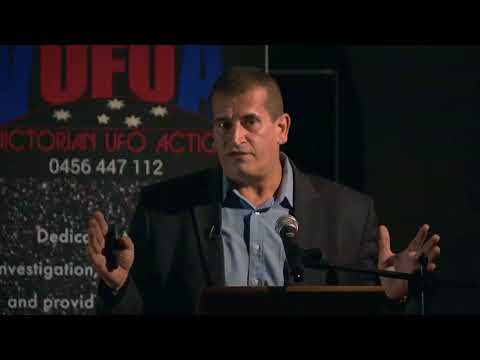
The Hair of Alien
VUFOA-TV, a 2018 Melbourne presentation by Peter Khoury and Bill Chalker covering the case in their own words.
Physical Evidence of Hybrids
The UFOzzie — a summary breakdown of the case and its DNA evidence.
Sources
- Chalker, Bill. "Strange Evidence," International UFO Reporter, Center for UFO Studies, 1999.
- theozfiles: "Peter Khoury and the 'Hair of the Alien' – 20 years on," Bill Chalker's blog. Read online →
- "Hair of the Alien: DNA and Other Forensic Evidence of Alien Abductions," Simon & Schuster publisher page. Read online →
- "Hair of the alien: DNA and other forensic evidence for alien abductions," Internet Archive (full text). Read online →
- "Sample text for Hair of the alien," Library of Congress. Read online →
- "Peter Khoury abduction incident," Grokipedia (secondary, unverified aggregation — cross-referenced against primary Chalker sources). Read online →
- "Alien Abduction of Peter Khoury: Physical Evidence of Hybrids," VibeWire Magazine. Read online →
- "Hair of the Alien: Abduction Case of Peter Khoury," Anomalien. Read online →
- Bill Chalker biography and credentials, Wikipedia. Read online →
- Chalker, Bill. Hair of the Alien: DNA and Other Forensic Evidence of Alien Abductions. Pocket Books/Simon & Schuster, 2005.
- Chalker, Bill. The Oz Files: The Australian UFO Story. Duffy & Snellgrove, 1996.
- Calladine, Chris R., Horace Drew, et al. Understanding DNA: The Molecule and How It Works. Academic Press, 3rd edition.
- Clancy, Susan A. Abducted: How People Come to Believe They Were Kidnapped by Aliens. Harvard University Press, 2005.
- Hufford, David J. The Terror That Comes in the Night. University of Pennsylvania Press, 1982.
- "File: Sydney Harbour Bridge night.jpg," Wikimedia Commons, photo by David Iliff (CC BY-SA 3.0). View file →
See something inaccurate? Have additional information or sources?
Suggest an Edit →Last Updated: August 2026