
Hair of the Alien
DNA and Other Forensic Evidence of Alien Abductions
Core Thesis
Hair of the Alien: DNA and Other Forensic Evidence of Alien Abductions is Bill Chalker's full account of the 1992 Peter Khoury Sydney abduction case and the forensic DNA testing he arranged on a preserved hair sample Khoury gave him in 1996. Chalker's central argument is methodological rather than declarative: rather than asserting the hair proves extraterrestrial contact, the book documents what happens when a genuine, real-world forensic chain of custody and laboratory analysis — led by CSIRO molecular biologist Dr. Horace Drew — is actually applied to claimed abduction physical evidence, reporting the DNA results exactly as they came back, including their genuine ambiguities, rather than overstating their significance. This site's own research draws on the book for two distinct cases: Khoury's own encounter, where the book is the primary published source, and the 1978 Frederick Valentich disappearance, where it is cited more broadly for the regional Australian UAP context Chalker's decades of fieldwork provide.
About the Author
Bill Chalker (b. 1952) is a chemistry and mathematics graduate of the University of New England and one of Australia's most prominent UFO researchers. He was the first outside investigator ever granted access to the Royal Australian Air Force's classified UFO files, interviewed Rev. William Gill directly about the 1959 Boianai encounter, and conducted a detailed 1981 re-interview of George Pedley on the 1966 Tully saucer nest case, documented in his earlier book The Oz Files: The Australian UFO Story (1996).
Chalker's scientific training is directly relevant to how this book was assembled: when Khoury showed him the preserved hair sample in 1996, Chalker did not simply publicize the claim but instead organized what he termed the Anomaly Physical Evidence Group, a team of scientists and forensic investigators willing to work on UFO-related physical evidence. That group's 1998–1999 PCR-based mitochondrial DNA testing, led by Dr. Horace Drew, was first published as "Strange Evidence" in the Center for UFO Studies' International UFO Reporter in 1999, six years before this book expanded the case into full-length treatment with a second round of root-sample analysis conducted in 2005.
Beyond this book and The Oz Files, Chalker has contributed UFO-related writing to mainstream Australian and international outlets including Rolling Stone and Reader's Digest, reflecting a public profile that extends beyond specialist ufological publications into general-audience science and culture journalism.
Historical Context & Origins
By the time this book was published in 2005, claimed physical evidence from abduction cases — implants, ground traces, and biological samples — had circulated within ufology for decades, but genuine independent forensic laboratory analysis of such evidence, using the same standards applied to conventional criminal or medical casework, remained rare. Chalker's own involvement in the Khoury case began nine years earlier, in 1996, when Khoury first showed him the hair sample preserved since the 1992 encounter, giving Chalker time to arrange serious testing rather than rushing a claim to publication.
The book arrived in the same general period as a broader push within ufology toward applying mainstream scientific method to case evidence — a trend this site's own essential-reading library also documents in Physical Traces Associated with UFO Sightings and other forensically minded works. Chalker's specific contribution was building an actual working group of credentialed scientists, the Anomaly Physical Evidence Group, rather than relying on a single sympathetic lab — a structural choice this site's own case file treats as one of the more methodologically serious efforts in the abduction-evidence literature.
The book also arrived amid renewed public and media interest in DNA forensics generally, following the widespread adoption of PCR-based testing in criminal investigation during the 1990s — giving Chalker's application of the same techniques to a UFO case an evidentiary framework readers outside ufology could recognize and evaluate on its own terms.
Core Arguments & Key Concepts
The book's central argument is that claimed abduction physical evidence should be tested with the same forensic rigor applied to any other evidentiary claim, and that the results — whatever they turn out to be — should be reported honestly rather than selectively emphasized. Chalker's own account does not claim the DNA results prove alien contact; he presents the 1998–1999 mitochondrial sequence identified as a rare "Chinese Mongoloid type," noted at the time as inconsistent with the hair's actual light, blonde-to-clear coloration, and the 2005 root-sample follow-up identifying a different "rare Basque/Gaelic type" signature with possible CCR5-delta32 indicators, as genuinely puzzling results requiring further explanation rather than as proof of anything definitive.
A second theme, directly reflected in this site's own Peter Khoury case file, is that CCR5-delta32 is itself "a real, well-documented human genetic variant, not itself exotic" — Chalker's book is careful to distinguish a genuinely unusual finding from an exotic or non-human one, modeling the kind of restraint this site's own research treats as a positive example within the wider abduction-evidence literature.
A third theme is transparency about methodological limitation: Chalker documents that the two rounds of testing, conducted on the hair shaft in 1998–1999 and the hair root in 2005, produced two different mitochondrial signatures — a discrepancy the book discusses openly rather than concealing, since a single, uncontested result would have made a far cleaner but less honest narrative.
A fourth theme, seen in Chalker's own later public conduct beyond the book itself, is skepticism toward inadequate corroborating evidence even when it might seem to support the case's credibility: when Khoury voluntarily underwent a 2010 polygraph examination, Chalker publicly cautioned against treating the results as scientific validation, given the technique's disputed reliability — a stance consistent with the book's own forensically cautious tone.
Key Cases & Evidence Discussed
The Peter Khoury Sydney abduction (July 23, 1992) is this book's central subject. Khoury, then twenty-eight, reported waking to find two unearthly female figures at his bedside in his Sydney home and later found what he believed was a strand of hair from the encounter. He gave the preserved sample to Chalker in 1996, who arranged forensic testing by the Anomaly Physical Evidence Group; CSIRO molecular biologist Dr. Horace Drew led PCR-based mitochondrial DNA analysis in 1998–1999, publishing initial findings as "Strange Evidence" in the International UFO Reporter in 1999, before this 2005 book expanded the case into full-length treatment including a second, 2005 round of root-sample analysis. This site's own case file treats the case as one of the most-cited examples of alleged abduction physical evidence subjected to genuine forensic DNA testing, remaining actively disputed between researchers who find the DNA anomalies significant and skeptics who favor a sleep-paralysis explanation for the underlying experience.
The Frederick Valentich disappearance (October 21, 1978) over Bass Strait, Australia, involved a young pilot who vanished after reporting an unidentified aircraft shadowing his light plane, with no wreckage or remains ever recovered. This site's own case file cites this book not for direct coverage of the Valentich case itself, which the book does not treat as a central subject, but for the regional Australian UAP context Chalker's decades of fieldwork provide, placing the disappearance within a broader pattern of Australian encounters and physical-trace investigations Chalker has documented across his career.
Critical Reception & Controversies
On Goodreads, the book carries a middling 3.39-out-of-5 average from 57 ratings (checked August 2026). Reader reviews are more positive individually than the average number alone suggests: one reviewer called it "highly readable and very interesting," adding that it "emphasizes the need for more and better scientific/forensic investigation"; another praised it as presenting "well presented authentic biological evidence"; a third described it simply as "well written and easy to read" with "lots of evidence and scientific backup."
This site's research attempted to verify an Amazon rating for this title but Amazon's bot-detection system repeatedly blocked automated requests to the listing during this session, returning a CAPTCHA challenge across multiple attempts. Per this site's own Amazon Rating Display Protocol, this gap is disclosed honestly here rather than fabricated or silently omitted.
The book's central limitation, as with any single-case forensic narrative, is that its DNA findings — however genuinely puzzling — rest on a chain of evidence beginning with a hair sample of uncertain, unwitnessed origin rather than a controlled collection process; the two testing rounds' differing mitochondrial results (a 1998–1999 "Chinese Mongoloid type" signature versus a 2005 "Basque/Gaelic type" signature from the same overall sample) is a genuine unresolved inconsistency the book itself does not fully explain, one this site's own case file treats as an open question rather than settled evidence in either direction.
Influence & Legacy
The book's most concrete legacy is as the definitive published record of one of ufology's most frequently cited attempts at genuine forensic evidence: the Khoury hair-DNA testing remains, per this site's own case file, "one of the most-cited examples of alleged abduction physical evidence subjected to genuine forensic DNA testing" nearly two decades after this book's publication.
Chalker's own methodological model — assembling a standing group of credentialed scientists willing to examine UFO-related physical evidence, rather than relying on a single sympathetic lab for a one-off test — has been referenced by later researchers pursuing similar forensic approaches to abduction and physical-trace evidence, extending its influence beyond the specific Khoury case itself.
Within this site's own library, the book sits alongside Chalker's earlier The Oz Files as the second of his works this site's essential-reading collection documents, reflecting his sustained, decades-long contribution to Australian ufology from his original 1978 RAAF file access through this 2005 forensic case study.
The Book
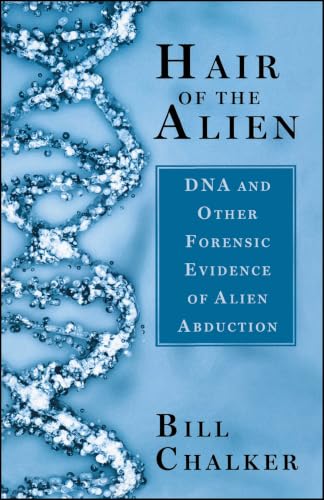
As an Amazon Associate, OverClassified may earn from qualifying purchases made through this link, at no extra cost to you.
Why This Is Essential Reading
Hair of the Alien earns its place on this list as the definitive published account of one of ufology's most genuinely forensic abduction-evidence investigations. Chalker's own scientific training and his decision to organize a standing group of credentialed forensic scientists, rather than relying on a single sympathetic test, gives this site's own Peter Khoury case file its primary published source, while the same book's broader documentation of Australian ufology provided useful regional context for the entirely separate Frederick Valentich disappearance. Its more modest 3.39/5 Goodreads reception reflects a genuinely mixed critical response, but individual reader reviews consistently single out the book's forensic rigor and readability as its strongest qualities. Read as a case study in what happens when real laboratory science is actually applied to claimed abduction evidence — including reporting genuine ambiguity rather than concealing it — this book is essential because it models a standard of evidentiary honesty this site's own research treats as worth emulating across every case it covers.
Related Cases & Theories
Essential Viewing
Sources Cited
- Chalker, Bill. Hair of the Alien: DNA and Other Forensic Evidence of Alien Abductions. Pocket Books/Simon & Schuster, 2005 (ISBN 0-7434-9286-2, cited here).
- "Hair of the Alien: DNA and Other Forensic Evidence of Alien Abductions." Goodreads (rating 3.39/5, 57 ratings, checked August 2026). goodreads.com
- "Hair of the Alien." AbeBooks (ISBN 9780743492867, marketplace listing photograph used for this article's cover image). abebooks.com
- "Hair of the Alien." Simon & Schuster (official publisher page, edition and page-count details). simonandschuster.com
- "Hair of the alien: DNA and other forensic evidence for alien abductions." Internet Archive (full text). archive.org
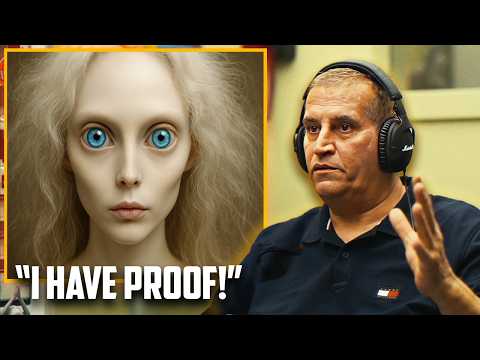
- "Man Has DNA Evidence of Aliens - Peter Khoury - DEBRIEFED ep. 59." Area52, YouTube (video verified via oEmbed). youtube.com
- This site's own resources library: Full Reading List, where this exact 2005 edition is cited across 2 separate case-file pages.
- This site's own key-figures entry: Bill Chalker, for his full biography and site-wide case connections.
- This site's own case file: Peter Khoury Sydney Abduction, this book's primary subject.
- This site's own case file: Frederick Valentich, which cites this book for regional Australian UAP context.
- This site's own key-figures entry: Peter Khoury, the book's central witness.
- This site's own key-figures entry: Horace Drew, the CSIRO molecular biologist who led the DNA testing documented in this book.
- This site's own essential-reading entry: The Oz Files, Chalker's earlier book on Australian ufology.
- Chalker, Bill. "Strange Evidence." International UFO Reporter, Center for UFO Studies, 1999 (the original, shorter published version of the DNA findings this book later expanded).
- Bill Chalker biography and credentials. Wikipedia (used lightly, for basic biographical cross-checking only; not relied upon for case facts, which follow this site's own dedicated case file and primary sources above). en.wikipedia.org
Have corrections, additional research, or peer-reviewed sources? Help improve this entry.
Suggest an Edit