
New Jersey / Northeast Drone Wave
Beginning November 13, 2024, when a contractor at Picatinny Arsenal in Morris County, New Jersey reported "a light rising straight up from the tree line," thousands of nighttime drone and unexplained-light reports swept New Jersey and spread across New York, Pennsylvania, and other Northeastern states over the following weeks. Federal investigators reviewed more than 5,000 reports and found no evidence of a foreign threat or anomalous activity, attributing most sightings to a mix of lawfully operated commercial, hobbyist, and law enforcement drones, misidentified manned aircraft, and stars mistaken for aerial objects. But officials never converged on a single, consistent account: the outgoing Biden administration, the incoming Trump White House, and a later unverified claim from an anonymous defense contractor each offered different explanations, and a March 2025 60 Minutes investigation found that even three four-star generals and a senior member of Congress could not say with confidence where the drones came from.
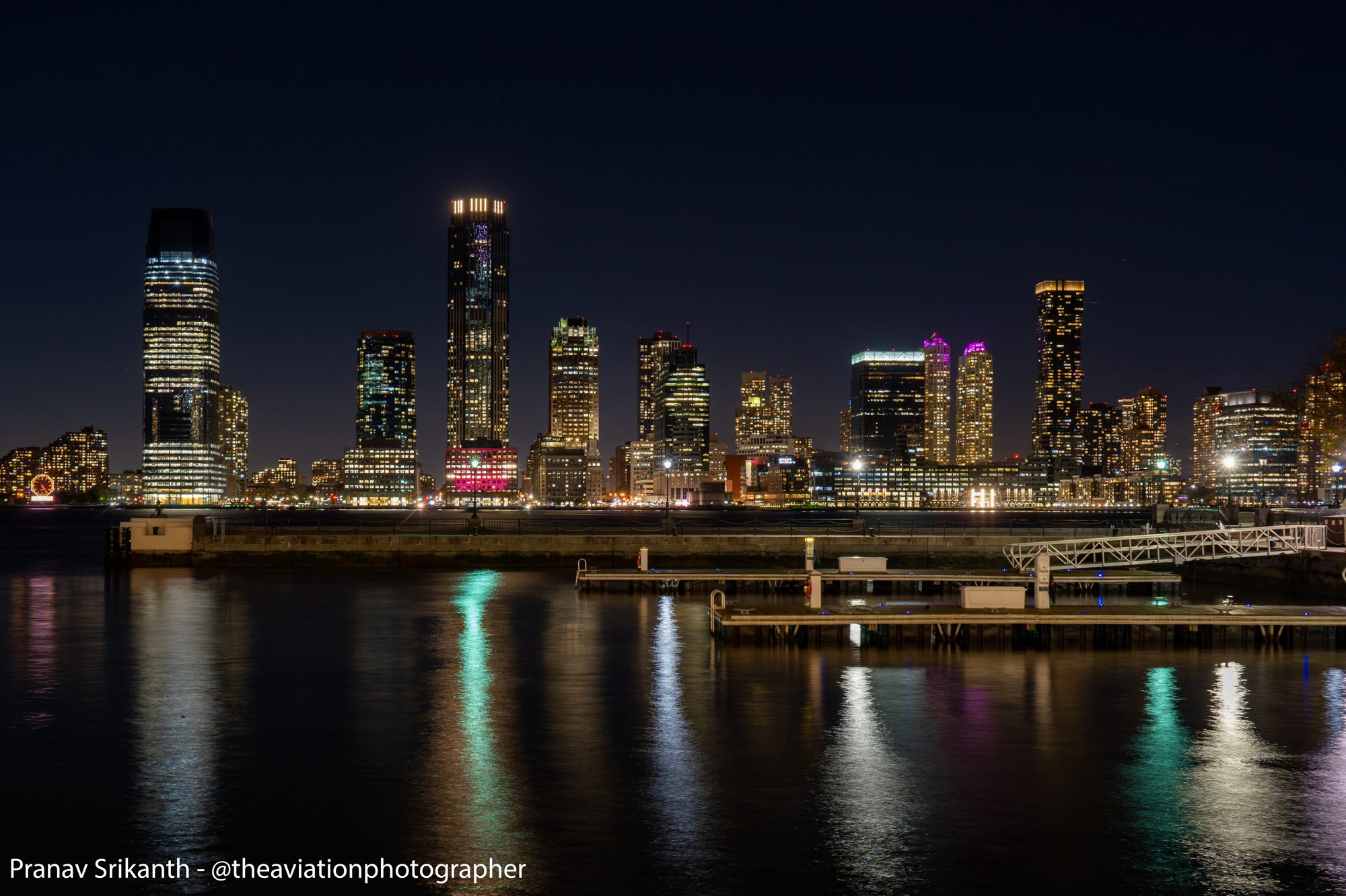
Pictured: Jersey City skyline at night, viewed from New York, October 2023 — illustrative of the New Jersey/New York metropolitan region where drone reports concentrated, not a photograph of any reported sighting. Photo by Pranav Srikanth, Wikimedia Commons (CC BY-SA 4.0).
Theoretical Alignment
This file weights Psycho-Social/Mundane highest because every federal agency that investigated the wave, across two presidential administrations, independently concluded the reports involved conventional aircraft, drones, and celestial objects rather than anything exotic, and because sociologists and psychologists who studied the event's spread identified clear hallmarks of a social panic amplified by social media. The case remains Disputed rather than fully Debunked specifically because officials have never agreed on precisely which drones were operating where, or under whose authority — a genuine, still-unresolved gap between "we found no threat" and "we can fully explain every report," which several of the government's own senior officials have themselves acknowledged.
Background
The wave's first confirmed sighting occurred November 13, 2024, when a contractor at Picatinny Arsenal, the U.S. Army's weapons research and manufacturing facility in Morris County, New Jersey, reported a light rising from the tree line. Suspicious activity reports involving unidentified unmanned aircraft near critical infrastructure in New Jersey began accumulating from November 18 onward, concentrated initially in Morris and Somerset Counties, and the FBI's Newark field office opened a formal investigation on November 20. Over the following weeks, reports spread from North Jersey to nearly every county in the state, then across the Hudson and Delaware rivers into New York, Pennsylvania, Connecticut, Maryland, and Massachusetts, with some New Jersey officials describing as many as 180 individual sightings reported in a single night. By the time the wave peaked in mid-December, similar reports had surfaced in roughly a dozen additional states, including California, Texas, Virginia, and Ohio, though the Northeast — and New Jersey specifically — remained the epicenter both in report volume and in the intensity of the public reaction.
Reports intensified sharply in the first two weeks of December. On December 5, multiple drones were reported over Bernardsville, New Jersey. On December 9, the Army's Picatinny Arsenal and the Navy's Naval Weapons Station Earle in Colts Neck, New Jersey both logged additional incursions; Earle public affairs officer Bill Addison told reporters on December 13, "While no direct threats to the installation have been identified, we can confirm multiple instances of unidentified drones entering the airspace above Naval Weapons Station Earle." A Defense Department official briefing reporters on December 14 acknowledged the military's own uncertainty in blunt terms: "To date, we have no intelligence or observations that would indicate that they were aligned with a foreign actor or that they had malicious intent. But I just got to simply tell you we don't know," while adding that the Pentagon was "just as frustrated with... the irresponsible nature of this activity" as the public.
The scale of public and political reaction was substantial and, by the numbers, arguably outpaced the government's ability to investigate individual reports. By December 10, the FBI reported it had collected more than 3,000 public tips without a full explanation; White House spokesperson John Kirby told reporters on December 16 that the FBI's tip count had grown to roughly 5,000 reported drone sightings over the preceding weeks, of which the Bureau judged only about 100 — roughly two percent — warranted direct follow-up investigation, underscoring how much of the wave's raw volume federal investigators considered low-value or duplicative from the outset. New Jersey Governor Phil Murphy wrote directly to President Biden on December 13 requesting improved interagency coordination, while U.S. Senators Cory Booker, Kirsten Gillibrand, Chuck Schumer, and Andy Kim jointly requested emergency briefings from the FBI, DHS, and FAA. A CBS News/YouGov poll conducted December 18–20 found 78% of Americans believed the federal government was withholding information about the sightings, and more than half of those surveyed said they viewed the drones as a threat to the United States — a striking gap between public perception and the federal government's own repeated public reassurances of no identified threat.
The reaction was not limited to elected officials and federal agencies. Local police departments across North and Central New Jersey fielded a surge of citizen calls throughout December, and several towns, including Bridgewater, held public information sessions to address resident concerns directly. Then-President-elect Donald Trump weighed in repeatedly during the period, at one point suggesting on Truth Social that the military should "shoot down" the unidentified drones if their origin and purpose could not be determined, and separately cancelling a planned visit to his Bedminster, New Jersey golf club after the FAA imposed flight restrictions over the property. The episode also became fodder for mainstream entertainment television, with Stephen Colbert devoting a portion of his December 16 Late Show monologue to the story and Bowen Yang performing a sketch about an anthropomorphized drone on Saturday Night Live on December 21 — a sign of how thoroughly the story had penetrated popular culture within roughly five weeks of the first confirmed sighting.
Complete Timeline
| Date | Event |
|---|---|
| Nov. 13, 2024 | First confirmed sighting: a contractor at Picatinny Arsenal reports a light rising from the tree line. |
| Nov. 18–20, 2024 | Suspicious activity reports accumulate near New Jersey critical infrastructure; FBI Newark opens a formal investigation. |
| Nov. 22, 2024 | FAA issues a two-week flight restriction over Trump's Bedminster, New Jersey golf club. |
| Dec. 3, 2024 | FBI publicly requests reports near the Raritan River as sightings intensify. |
| Dec. 10, 2024 | FBI tells Congress it has collected over 3,000 reports without a complete explanation. |
| Dec. 12, 2024 | White House spokesperson John Kirby states none of the visual reports could be independently verified; Gov. Murphy writes to President Biden. |
| Dec. 13, 2024 | A viral video from former Maryland Gov. Larry Hogan is identified by multiple astronomers as the constellation Orion, not a drone. |
| Dec. 15, 2024 | DHS Secretary Alejandro Mayorkas confirms some reports are genuine drones while others are misidentified manned aircraft; New York deploys a federal drone-detection system. |
| Dec. 16, 2024 | The Department of Defense, DHS, FAA, and FBI issue a joint statement: after reviewing over 5,000 reports, they found "nothing anomalous" and no threat to national security or public safety. |
| Dec. 17, 2024 | TSA documents, released via FOIA, show several high-profile incidents (a Coast Guard report, a medical-helicopter delay, a "gray mist" sighting) had already been internally debunked as misidentified commercial aircraft. |
| Dec. 18–19, 2024 | FAA issues one-month drone-flight bans over 22 New Jersey communities and parts of New York City; laser-pointing incidents targeting aircraft spike to 59 in December, more than all of 2023 combined. |
| Jan. 28, 2025 | White House Press Secretary Karoline Leavitt states the drones were "primarily" FAA-authorized research and hobbyist aircraft and "not the enemy." |
| March 16, 2025 | 60 Minutes airs "Under the Radar," reporting that three four-star generals, a senior member of Congress, and a former senior Biden administration official all told the program they did not know the drones' source. |
| Feb. 2025 (Senate testimony) | NORAD Commander Gen. Gregory Guillot tells the Senate Armed Services Committee the military detected 350 drone incursions over 100 military installations during 2024. |
| Aug.–Oct. 2025 | An anonymous attendee at an Army UAS summit reports that an employee of an unnamed defense contractor privately claimed the company's own aircraft, tested over New Jersey in November 2024, was responsible — a single, uncorroborated secondhand account the Army and Fort Rucker declined to confirm. |
Political and Congressional Response
The wave produced an unusually broad and bipartisan wave of political demand for answers, running in parallel with, and often ahead of, the federal government's own investigative timeline. On December 12, Senators Cory Booker, Kirsten Gillibrand, Andy Kim, and Chuck Schumer sent a joint letter to the FBI, DHS, and FAA requesting an immediate briefing on the New York and New Jersey sightings. Senator Gillibrand argued publicly that "we need the FAA and the FBI and Homeland Security to get on this," while Senator Richard Blumenthal separately suggested the government consider electronic jamming of the unidentified aircraft and Senator Amy Klobuchar called for a full Senate briefing and greater transparency. Representative Mike Waltz, then a sitting Florida congressman already named as the incoming Trump administration's national security adviser, took a similarly urgent tone from across the aisle on Face the Nation on December 15, saying "we need to know who's behind it" and that "I think Americans are finding it hard to believe we can't figure out where these are coming from." Waltz argued the episode exposed a structural problem rather than a single mystery: "But right now, I think law enforcement seems to be... the Department of Homeland Security and the Defense Department are kind of doing this and pointing at each other," he said, adding, "It's pointing to gaps in our capabilities and in our ability to clamp down on what's going on here. And we need to get to the bottom of it."
New Jersey's own congressional delegation was especially vocal, and occasionally directly disputed the administration's public reassurances. Representative Chris Smith publicly criticized John Kirby's December statement characterizing the sightings as no cause for concern, calling it misleading and stating he had spoken directly with a Coast Guard commander who described a dozen or more drones shadowing a 47-foot Coast Guard motor lifeboat — an incident the White House had separately attributed to the crew mistaking commercial aircraft on approach to JFK Airport for drones. The dispute over that single incident captures the broader credibility gap this file treats as central to the case: a sitting member of Congress, citing a direct conversation with a Coast Guard officer, versus a federal spokesperson's public account, with no independently released radar or flight-tracking data that fully reconciles the two versions.
A separate and more clearly resolved controversy involved Representative Jeff Van Drew, who told Fox News on December 11 that he had heard from "high sources" that "there is circumstantial evidence that there is an Iranian mothership off the east coast of the United States and that's launching these drone incursions." Deputy Pentagon Press Secretary Sabrina Singh rejected the claim the same day in unusually direct terms: "There is not any truth to that — there is no Iranian ship off the coast of the United States, and there's no so-called mothership launching drones towards the United States." This file treats the "Iranian mothership" claim as a debunked rumor, not a genuine open question: it was denied on the record by the Pentagon within hours of being raised, no evidence supporting it has surfaced in the year-plus since, and it is a useful marker of how quickly speculation could outrun the available facts during the wave's peak.
The wave also produced concrete, if narrow, legislative action. On December 18, the Senate blocked a broader bipartisan bill, sponsored by Senator Gary Peters and backed by Senate leadership, that would have extended and expanded state and local authority to track and monitor the unidentified drones; Senator Rand Paul blocked the measure on the floor, arguing it risked expanding government surveillance power and could threaten Fourth Amendment rights. Two days later, on December 20 — the day the underlying authority was set to expire — the Senate passed a narrower measure, also sponsored by Peters, extending existing DHS and FBI counter-drone detection and mitigation authority through September 30, 2025. Longer-term legislative efforts continued well past the wave itself: Senators Tom Cotton and Kirsten Gillibrand later co-sponsored the bipartisan COUNTER Act, which clarified the Defense Department's authority to detect and mitigate hostile drones over sensitive military installations and was folded into the fiscal year 2026 National Defense Authorization Act, while several other proposed measures, including the DRONE Act and the DEFENSE Act addressing local law-enforcement drone authority, remained in committee well into late 2025.
The Official Investigation and Its Findings
The joint December 16, 2024 statement from the Department of Defense, DHS, FAA, and FBI represents the most authoritative government assessment of the wave: after reviewing over 5,000 individual reports, federal investigators found no evidence the activity posed a national security or public safety threat, and specifically stated they had not corroborated the visual reports with electronic detection equipment. That same day, in an on-the-record White House press gaggle, John Kirby put the reassurance in the government's own words: "We have not identified anything anomalous or any national security or public safety risk over the civilian airspace in New Jersey or other states in the Northeast," he said, adding that the sightings represented "a combination of lawful commercial drones, hobbyist drones, and law enforcement drones, as well as manned fixed-wing aircraft, helicopters, and even stars that were mistakenly reported as drones." Two days earlier, on December 15, Department of Homeland Security Secretary Alejandro Mayorkas offered a similar but not identical characterization, confirming that some reports involved genuine drone activity while others were misidentified manned aircraft — a formulation that, unlike Kirby's, did not rule out unexplained genuine drone activity as a real component of the wave.
Subsequent FOIA-released TSA documents provided granular detail on how specific high-profile incidents were resolved: the widely discussed Coast Guard motor-lifeboat incident was traced by federal investigators to commercial jets making S-shaped landing approaches into JFK Airport, an approach pattern that can create a visual illusion of stationary or hovering lights when viewed from certain angles at a distance; a "gray mist" sighting near Clinton, New Jersey was attributed with high confidence to wingtip vortex condensation from a Beechcraft Baron; a sighting near the Salem Nuclear Power Plant coincided precisely with the flight paths of a UH-60 Black Hawk helicopter and a Cessna; and a widely circulated report of a medical evacuation helicopter being blocked from transporting a crash victim near Raritan Valley Community College was traced to three aircraft on approach to Solberg Airport nearby. Each of these individually investigated incidents was resolved to a specific, named conventional cause — a level of granularity federal investigators were unable to apply to the great majority of the roughly 5,000 total reports, simply due to the volume involved and the near-total absence of corroborating radar or electro-optical sensor data for most individual sightings.
Celestial and Aircraft Misidentification
A significant fraction of the most viral sighting reports were independently identified by astronomers and aviation experts as ordinary celestial objects or aircraft. Former Maryland Governor Larry Hogan's widely shared December 13 video, cited by many as strong evidence of a genuine drone swarm, was identified by journalist Steven Greenstreet, meteorologist Matthew Cappucci, and University of Maryland Observatory director Elizabeth Warner as showing the constellation Orion, its component stars' apparent motion an optical illusion (the autokinetic effect) produced by staring fixedly at a point of light against a dark sky; flight-tracking data for the same period additionally showed three conventional aircraft in the vicinity of Hogan's Davidsonville, Maryland home at the time. Raritan Valley Community College planetarium director Amie Gallagher offered the same autokinetic explanation independently for several other reports of "hovering" or "erratically moving" lights, noting that a fixed point of light viewed against a featureless night sky can appear to drift or jump even though it has not actually moved. Skeptic and video analyst Mick West, known for his metabunk.org analyses of ambiguous aerial footage, separately argued that ordinary smartphone camera artifacts — digital zoom softening, sensor noise, and rolling-shutter distortion around bright points of light at night — were sufficient to explain the "blinking," "pulsating," or "structured" appearance many viral videos were said to show.
Drone researcher William Austin and Penn Engineering dean Vijay Kumar both concluded, after reviewing widely circulated images and video, that most showed lawfully operating manned aircraft, cell tower lighting, or small consumer drones rather than anything unusual; Austin specifically cautioned that a heavy-handed regulatory response risked harming the legitimate, fast-growing U.S. commercial drone industry in the process of chasing what he believed was mostly ordinary air traffic. George Mason University engineering professor Missy Cummings offered a similar assessment, noting that consumer and hobbyist drones are "actually pretty hard to pick... out of the sky" at night against stars and aircraft, and suggesting many witnesses were seeing some combination of the two without realizing it. Former Republican Congressman Adam Kinzinger, after publicly reviewing a sample of the most-shared videos, concluded bluntly that in his assessment "all of them were airplanes." Bridgewater, New Jersey Police Chief John Mitzak, whose department fielded a large volume of resident calls during the peak of the wave, told local media that "in some cases, residents have mistaken larger aircraft or helicopters for drones, which leads to an overestimation of the number of unmanned aerial vehicles operating in our area," while confirming his department was not disputing that some genuine drone activity had also occurred; he encouraged residents to check public flight-tracking apps before calling in a report, a suggestion several other Northeast police departments echoed by mid-December.
State and Local Responses Across the Northeast
Although New Jersey remained the epicenter, the wave produced substantial independent government responses in every neighboring state. New York Governor Kathy Hochul called for passage of the federal Counter-UAS Authority Security, Safety, and Reauthorization Act and separately announced the state would deploy its own advanced drone-detection system, developed in partnership with the maker of Robin Radar Systems technology already used at some U.S. airports, to help distinguish genuine unidentified drones from misidentified aircraft in real time. New York City police received approximately 120 drone-related calls over the December 14–15 weekend alone; the department later attributed a large share of those calls to a combination of misidentified aircraft, a meteor shower active during the same period, and, in some cases, the planet Venus, which was unusually bright and low on the horizon that December. Senator Chuck Schumer separately requested that a similar federal detection system be deployed to New Jersey to match New York's.
Connecticut State Police deployed their own detection systems and, consistent with the pattern seen elsewhere, attributed most sightings they were able to resolve to manned aircraft or lawfully operated private drones. Massachusetts saw one of the wave's few criminal enforcement actions: Boston Police identified three residents flying drones in restricted airspace near Logan International Airport, and two were arrested on an island in Boston Harbor after officers responded to reports of drone activity near the airport's approach path; separately, ten to fifteen drones were reported over Cape Cod on December 13. In Pennsylvania, Governor Josh Shapiro ordered a State Police investigation into local reports and authorized helicopter pursuit of unidentified drones in specific cases. Virginia Governor Glenn Youngkin confirmed his own administration was investigating reports in the Commonwealth, framing the matter in national-security terms even as Virginia, like its neighbors, produced no confirmed evidence of a genuine security threat. Massachusetts Governor Maura Healey and Connecticut Governor Ned Lamont both separately confirmed their states were coordinating with federal investigators. Notable individual incidents outside New Jersey included a one-hour shutdown of Stewart International Airport in Orange County, New York on December 13 after drone activity was reported near the runway, and a December 9 incident in which six drone incursions were logged over Marine Corps Base Camp Pendleton in California, illustrating that by mid-December the phenomenon — or at least public reporting of it — had become genuinely national rather than purely regional.
State and local police departments across the affected region were placed in an unusually difficult position throughout the wave: legally barred in most cases from shooting down or actively disabling suspected drones, largely without the specialized detection equipment needed to distinguish a genuine unidentified aircraft from a misidentified airliner in real time, and simultaneously facing an unprecedented volume of anxious resident calls. New Jersey Governor Phil Murphy's own office deployed state-procured drone-detection devices during the peak of the wave and reported they had turned up only "scant evidence of threats," a finding broadly consistent with the federal government's own conclusions but one that did little to quiet public concern at the time, since it did not identify a specific, named source for the activity residents were reporting.
The Social Panic Interpretation
Multiple social scientists who studied the event's spread characterized it as a modern social panic with clear historical precedent. Sociologist Robert Bartholomew directly compared the 2024 wave to the World War I-era "German espionage" light-sighting scares that swept New Jersey and Delaware in 1917–18, when residents similarly reported mysterious signal lights they attributed to enemy agents, and argued the modern wave represented a convergence of technophobia (anxiety about a genuinely proliferating and poorly understood drone technology) and a more generalized distrust of government institutions. Science writer Michael Shermer described the phenomenon through the lens of "patternicity" — the well-documented human tendency to find meaningful patterns in ambiguous or meaningless visual noise, especially under conditions of anxiety and uncertainty — and noted that the low resolution and poor lighting of most smartphone night footage left substantial room for imaginative interpretation of otherwise mundane lights.
Other researchers offered closely related but distinct framings. Historian and journalist Max Boot described the episode as an example of "mass hysteria" as "a recurring feature of American life," situating it alongside earlier American panics extending back well before the UFO era. Neurologist William J. Bernstein and psychiatric researcher Gary Small both used the language of "mass delusion" or "shared delusion" to describe how a real, comparatively small number of genuine drone sightings could snowball into thousands of secondary reports once national media attention made the topic a subject of active public expectation. Space photographer Andrew McCarthy proposed the related concept of "social contagion," arguing that once residents were primed to expect drones overhead, ordinary air traffic they would otherwise have ignored was actively reinterpreted as part of the phenomenon. Seton Hall University's Brandon Valeriano and Oklahoma State University aerospace professor Jamey Jacob both pointed to the underlying reality that hobbyist and commercial drone use has become widespread and mostly unremarkable in recent years, with Jacob specifically noting that careless or inexperienced operators flying too close to sensitive sites likely accounted for a genuine, if small, share of the base-security incidents that helped trigger the wider panic, and that social media "largely drove the wave of reports" once the story achieved critical mass.
Empirical data on the wave's online spread supports the social-panic reading. A Montclair State University analysis of social media posts during the wave found fear-driven content dominated the online conversation, reinforcing and amplifying individual reports faster than officials could investigate or respond to them. Public search-interest data tracked a strikingly sharp rise and fall: interest peaked at the maximum measurable level around December 12, at the height of the Hogan video controversy and the first wave of FAA flight restrictions, then collapsed to a small fraction of that peak by mid-January 2025 as the Trump administration's January 28 characterization of the drones as largely authorized and hobbyist activity took hold and daily new sighting reports tapered off — a pattern more consistent with a media-driven attention cycle than with a phenomenon whose underlying cause materially changed on any particular date.
Viral Hoaxes and Deliberate Misinformation
Distinct from the genuine, good-faith misidentifications discussed above, the wave also generated a substantial volume of outright fabricated or deliberately misleading content, which this file treats as a separate category because it involved intentional deception rather than honest error. On Threads, one widely shared video purporting to show a "drone swarm" was in fact roughly two-year-old footage from China showing government disinfectant-spraying drones deployed during COVID-19 pandemic public health operations, repurposed with a new, false caption. A separate Instagram video claiming to show a drone being shot down had been digitally edited to add gunfire sound effects that were not present in the original footage. Pennsylvania State Senator Doug Mastriano posted an image he described as a "crashed drone" recovered near a New Jersey site; the image was quickly identified as a promotional photograph of a TIE fighter replica from the Star Wars franchise. Multiple other widely shared videos labeled as showing the New Jersey drone wave were later identified as unrelated, sometimes years-old, footage of commercial drone light shows unconnected to the actual events of November and December 2024. Popular Science reported that TikTok in particular hosted "some of the most blatant and widely seen fake videos" connected to the sightings, reflecting the platform's role as a primary vector for the wave's viral misinformation.
This file draws a firm distinction between this category of content — verifiably fabricated, recycled, or digitally altered material, none of which has ever been defended as genuine even by the officials and commentators most skeptical of the government's overall handling of the case — and the separate, still-disputed question of whether every individual report during the wave has a fully documented conventional explanation. The existence of confirmed hoaxes does not, by itself, resolve the latter question, and treating the two as interchangeable would understate the genuine uncertainty this file identifies elsewhere. It does, however, meaningfully support the social-panic interpretation: a media environment already saturated with confirmed fakes made it substantially harder for the public, and at times for officials themselves, to evaluate any individual report on its own merits.
The Unresolved Gap: Competing and Unverified Explanations
Despite the strength of the government's conventional-explanation findings for individual incidents, officials have never presented a single, internally consistent account of the wave as a whole, and this file finds that gap significant enough to keep the case rated Disputed rather than Debunked. The outgoing Biden administration's position, as of December 2024, was that most sightings were a mix of authorized and misidentified aircraft with no single unifying cause identified, and Secretary Mayorkas's own December 15 comments left open the possibility that some fraction of the reports involved genuine, unexplained drone activity rather than pure misidentification. The incoming Trump administration's January 28, 2025 statement, delivered by Press Secretary Karoline Leavitt, went further, characterizing the drones as "authorized to be flown by the FAA for research and various other reasons" and stating plainly, "this was not the enemy" — a claim the FAA itself has not independently corroborated with named authorizations, and one in tension with the earlier joint statement's own acknowledgment that investigators could not electronically verify most individual reports.
The March 16, 2025 60 Minutes segment "Under the Radar," reported by correspondent Bill Whitaker, added substantial further weight to the unresolved-gap reading of the case. The segment placed the New Jersey wave in the context of a broader, multi-year pattern of unexplained drone incursions over sensitive U.S. military sites, most notably 17 nights of drone swarms over Langley Air Force Base in Virginia in December 2023, during which retired four-star general Mark Kelly described "20-to-30 sightings, same time every evening" of drones with "reddish, orange flashing lights." Retired General Glen VanHerck, who led NORAD and USNORTHCOM at the time of the Langley incursions, told the program the military faced "the capability gap" in detecting low-altitude drones with Cold War-era radar systems built to track high-altitude aircraft and missiles, not slow-moving objects flying under a few hundred feet, and he explicitly disputed the White House's characterization of the Langley incursions as likely hobbyist activity, citing their scale, duration, and apparent coordination. Senator Roger Wicker, chairman of the Senate Armed Services Committee, told the program that despite access to classified briefings, "the Pentagon and National Security advisors are still mystified." Three four-star generals (two retired, one active-duty), a senior member of Congress, and a former senior Biden White House official all told the program, on the record, that they did not know where the drones came from — a remarkable concentration of senior, credentialed uncertainty for a case the government's own public statements had, by that point, largely characterized as resolved.
The unresolved gap is reinforced by testimony General Gregory Guillot, VanHerck's successor as NORAD/USNORTHCOM commander, gave the Senate Armed Services Committee in February 2025: the military had detected 350 separate drone incursions over 100 different U.S. military installations during 2024 alone, a figure covering incidents well beyond the New Jersey wave itself and indicating that unauthorized drone activity near sensitive federal sites is a substantially larger and more persistent problem than the New Jersey story alone would suggest. In response, Guillot was granted expanded authority in November 2024 to coordinate counter-drone efforts across the military services, and by September 2025 the Department of Defense had begun developing rapid-deployment "flyaway kit" counter-drone systems for threatened installations and hosted a second annual "Falcon Peak" counter-drone technology evaluation exercise.
A separate, later development deserves explicit caution rather than endorsement: in August 2025, at the Army's UAS and Launched Effects Summit at Fort Rucker, Alabama, an attendee reported that an employee of an unnamed private defense contractor privately described a 20-foot, four-winged experimental aircraft the company had tested over New Jersey in November 2024, capable of flight characteristics the attendee said made it resemble a UFO, under what was described as a classified or otherwise non-public government contract. This account is thirdhand, relayed through a single attendee rather than the contractor employee directly, uncorroborated by any other witness, unconfirmed by the Army or by Fort Rucker, and directly in tension with the Trump administration's own "hobbyist and research" explanation offered seven months earlier. This file treats it as a notable but unverified claim rather than an established fact, and flags it specifically because its existence — a fourth, mutually incompatible account of the wave's origin, surfacing nearly a year after the initial sightings — is itself evidence that the case remains genuinely unresolved rather than merely under-communicated.
Key Figures
Phil Murphy
Publicly pressed the Biden administration for better interagency coordination and transparency, while noting state-deployed drone-detection devices found only "scant evidence of threats."
Robert Bartholomew
Characterized the drone wave as a modern social panic directly paralleling New Jersey's own World War I-era "German espionage" light-sighting scares.
John Kirby
Delivered the administration's primary public reassurances throughout December 2024, stating federal investigators had "not identified anything anomalous" while acknowledging the roughly 5,000 tips received included only about 100 the FBI judged worth direct follow-up.
Kirsten Gillibrand
Co-signed the December 12 congressional letter demanding an emergency federal briefing, and later co-sponsored the bipartisan COUNTER Act expanding Defense Department counter-drone authority over military installations.
Gregory Guillot
Told the Senate Armed Services Committee in February 2025 that the military had logged 350 drone incursions over 100 U.S. military installations during 2024, and was subsequently granted expanded authority to coordinate the Pentagon's counter-drone response.
Glen VanHerck
Told 60 Minutes in March 2025 that the military faces a genuine radar "capability gap" against low-altitude drones, and publicly disputed the characterization of the December 2023 Langley Air Force Base drone incursions as merely hobbyist activity.
Andy Kim
Personally observed and photographed suspected drone activity alongside local police at Round Valley Reservoir, then used publicly available flight-tracking data to conclude many of what he had seen were almost certainly conventional aircraft, while stating he did not discount that others present may have seen genuine drone activity he could not fully account for.
Larry Hogan
Reported witnessing and filming "dozens of large drones" over his Davidsonville, Maryland home on December 12, 2024, and publicly demanded federal transparency; his video was subsequently identified by multiple independent experts as the constellation Orion.
The Five Observables Assessment
The Five Observables framework applies only loosely, since the case describes a mass wave of individually mundane sightings rather than a single anomalous craft:
Assessment: No investigation, by any agency, has documented any of the Five Observables for this case. The evidentiary interest lies in the scale of the sighting wave and the persistence of official uncertainty, not in any claim of anomalous performance.
Evidence Assessment
Supporting Genuine, Documented Uncertainty
- Multiple credentialed senior officials across two administrations, including three four-star generals interviewed by 60 Minutes, a sitting Senate Armed Services Committee chairman, and a former senior Biden White House official, have stated on the record they cannot fully explain the wave's origin.
- Successive official explanations (the Biden administration's "combination" framing, Secretary Mayorkas's narrower comments, the Trump White House's "hobbyist and research" claim, and the later unverified contractor claim) are mutually inconsistent, a pattern this file finds genuinely significant rather than merely a communications problem.
- Federal investigators explicitly acknowledged they could not electronically corroborate the great majority of individual visual reports, a real evidentiary gap rather than a rhetorical hedge.
- Independent, credentialed military testimony — General VanHerck's account of the December 2023 Langley Air Force Base incursions and General Guillot's February 2025 count of 350 drone incursions over 100 installations in 2024 — demonstrates that unauthorized drone activity near sensitive federal sites was a genuine, ongoing security concern independent of the New Jersey civilian sighting wave, complicating any account that treats the whole episode as pure misperception.
Supporting a Largely Conventional Explanation
- Every individual high-profile incident independently investigated in detail (the JFK approach, the Salem Nuclear sighting, the "gray mist" report, the Solberg Airport medical-helicopter incident, the Hogan video) was resolved to an ordinary aircraft or celestial cause.
- Documented laser-pointing incidents targeting aircraft, and independently confirmed misidentifications of stars, planets, and commercial jets across multiple states, demonstrate a genuine, measurable social-panic dynamic amplifying the underlying, mostly mundane activity.
- A substantial, separately documented volume of outright fabricated and recycled hoax content (the China disinfectant-drone video, the edited gunfire clip, the TIE-fighter image) shows a media environment actively generating false evidence independent of any genuine underlying phenomenon.
- No physical trace, recovered craft, or confirmed foreign-nexus evidence has ever been produced despite the scale of the federal investigation, and both the Iranian-mothership claim and Chinese-spy-drone speculation were explicitly and promptly denied by the Pentagon.
Why "Disputed"
This case is rated Disputed because it combines two things this archive rates very differently: overwhelming evidence that the individual, specific incidents investigated in detail have ordinary explanations, and a genuine, still-unresolved disagreement among senior, credentialed officials about the event's overall cause and scope. The government's own December 2024 joint statement, the January 2025 White House statement, and the March 2025 60 Minutes reporting are not simply three retellings of the same finding — they represent three different framings from different administrations and sources, none of which fully reconciles with the others, and none of which has produced a single named, verifiable source for the drones that most alarmed residents and officials.
This file's own reading is that the great majority of the wave's roughly 5,000 individual reports almost certainly involved a combination of authorized and hobbyist drones, misidentified manned aircraft, and celestial objects, amplified by a genuine social panic dynamic well-documented by sociologists studying the event. The case does not merit a Debunked rating, however, because that reading remains an inference from the best available evidence rather than a confirmed, complete accounting the government itself has been willing or able to provide, and because senior national security officials with direct access to classified detection systems have themselves publicly declined to claim full understanding of the event.
The four separate, incompatible official and semi-official explanations this file has identified — the Biden administration's "combination" framing, Secretary Mayorkas's narrower account leaving room for genuine unexplained drone activity, the Trump White House's January 2025 "authorized research and hobbyist" characterization, and the uncorroborated 2025 contractor claim — is itself unusual. Most disputed cases in this archive involve a single official explanation contested by outside researchers; this one involves multiple official explanations that do not agree with each other, which is a materially different and, in this file's assessment, more genuinely unresolved situation. Readers should weigh the Debunked-leaning evidence (the successful resolution of every individually investigated high-profile incident, the well-documented hoax content, the clear social-panic dynamics) against the Disputed-preserving evidence (the inconsistent official accounts, the acknowledged detection gap, and the on-the-record uncertainty of multiple four-star generals) and reach their own conclusion; this file's own view is that both sets of evidence are individually solid, which is precisely why a Disputed rating, rather than a rating at either extreme, is the responsible one.
Observer Credibility & Occupational Profile
This case's evidentiary weight rests on an unusually wide and credentialed range of observers: thousands of ordinary residents, multiple state and local police departments, a sitting U.S. Senator (Andy Kim, who personally patrolled and observed drone activity at Round Valley Reservoir), multiple state governors (Phil Murphy, Kathy Hochul, Josh Shapiro, Glenn Youngkin), DHS Secretary Alejandro Mayorkas, a Senate Armed Services Committee chairman (Roger Wicker), and — per 60 Minutes — three four-star generals (two retired, one active-duty), including Glen VanHerck, willing to speak on the record about the military's own detection limitations. The presence of multiple credentialed government and military officials among those expressing genuine uncertainty is a key reason this file does not treat the case as a simple case of public misperception corrected by authoritative government explanation. At the same time, this file weighs that credibility against the demonstrated fact that even highly trained observers — Coast Guard personnel operating a 47-foot motor lifeboat, among others — were, according to the federal government's own account, capable of misidentifying commercial aircraft on a JFK approach path as unidentified drones, a genuine caution against treating occupational credentials alone as a guarantee of accurate identification under difficult nighttime viewing conditions.
Historical Precedents & Archive Matches
This case connects directly to the historical "mystery airship" and phantom-aircraft scares this archive documents elsewhere, particularly the pattern of regional sighting waves amplified by media coverage and social anxiety. Sociologist Robert Bartholomew's explicit comparison to the 1917–18 New Jersey and Delaware "phantom airplane" and "German signal light" scares is especially apt: in both episodes, a wartime or otherwise anxious social climate combined with a genuinely new and poorly understood technology (aircraft in 1917; consumer and commercial drones in 2024) to produce a mass sighting wave in which a comparatively small number of real, mundane incidents were reinterpreted through a lens of external threat. The broader American "mystery airship" wave of 1896–97, likewise documented elsewhere in this archive, follows the same basic template roughly three decades earlier, suggesting the underlying social dynamic is considerably older than aviation technology itself and recurs whenever a new aerial capability enters public awareness faster than public understanding of it can catch up. This case also connects to this archive's other 2024–2025 government UAP program entries, several of which directly reference the drone wave as a catalyst for expanded counter-UAS legislation and military base security reviews, and to the broader pattern of unexplained drone incursions over U.S. military installations — including Langley Air Force Base, Wright-Patterson Air Force Base, and Vandenberg Space Force Base — that predates and postdates the New Jersey wave specifically.
Material Analysis
The case's evidentiary base consists almost entirely of civilian photo and video reports, cross-referenced against flight-tracking, astronomical, and radar data by federal investigators and independent experts. Notably, the government's own TSA documents, released under FOIA, provide the most granular and technically credible resolution of specific high-profile incidents, identifying precise causes (specific aircraft flight paths, wingtip vortex condensation, landing-approach illusions) for several of the wave's most viral reports. This granularity is itself informative about the case's overall evidentiary character: where federal investigators applied real technical analysis — matching a sighting report against a specific aircraft's transponder-logged flight path, or identifying a specific optical or atmospheric mechanism — they consistently produced a fully resolved, named conventional cause. The absence of that same granularity for the great majority of the roughly 5,000 total reports is a function of investigative capacity and available sensor coverage, not evidence that those unresolved reports involve anything unusual; but it does mean the government's public confidence in a fully conventional accounting of the wave outpaces what its own released documentation actually demonstrates report-by-report.
Supporting Continued Legitimate Interest
- The persistence of unresolved uncertainty among credentialed senior officials, documented as late as March 2025, is itself a genuine and unusual data point this archive has rarely encountered at this level of government seniority.
- Independently documented, materially significant drone incursions over military installations nationwide (350 incidents over 100 bases in 2024, per General Guillot's Senate testimony) demonstrate the underlying security concern was real and extended well beyond the New Jersey civilian sighting wave.
Supporting a Largely Conventional Explanation
- Every specific incident subjected to detailed technical analysis was resolved to a conventional cause, and no physical evidence of anything unusual was ever recovered.
- The specific, named individuals responsible for prominent hoax content (the recycled China video, the edited gunfire clip, the misattributed TIE-fighter image) demonstrate that a meaningful share of the most viral "evidence" was never genuine to begin with.
The Conventional Explanation Candidate: A Social Panic Amplifying a Mix of Authorized Drones and Misidentified Aircraft
The leading, and this file's assessed, explanation is that the wave began with genuine, mundane drone and aircraft activity near Picatinny Arsenal and other sensitive sites, and was then dramatically amplified into a mass sighting event by social media, media coverage, and a well-documented social-panic dynamic that caused ordinary aircraft, celestial objects, and even stationary ground lights to be reinterpreted as part of a single mysterious phenomenon.
Authorized and Misidentified Aircraft
The federal government's own detailed FOIA-released analysis directly identified specific conventional causes, including commercial aircraft approach patterns and helicopter flight paths, for several of the wave's most prominent individual reports, and independent aviation and drone experts including William Austin, Vijay Kumar, and Missy Cummings reached broadly compatible conclusions from outside the government, reducing (though not eliminating) the risk that this explanation reflects institutional motivated reasoning rather than genuine technical analysis.
Social Panic and Patternicity
Sociologist Robert Bartholomew's direct historical parallel to New Jersey's own 1917–18 "German espionage" light scares, and Michael Shermer's "patternicity" framework, both independently support a well-documented psychological mechanism by which a small number of genuine drone incidents can generate thousands of secondary misperception reports. The Montclair State University social-media analysis and the sharp, short-lived spike in public search interest around the wave's December peak provide independent, quantitative support for the same underlying dynamic, rather than relying solely on the qualitative judgment of individual researchers.
Legitimate, Unrelated Military Base Security Concerns
This file treats the documented pattern of unauthorized drone incursions over U.S. military installations — at Langley Air Force Base in 2023, and the 350 incidents over 100 bases General Guillot reported for 2024 — as a real and separate security issue rather than as evidence for or against the specific New Jersey civilian sighting wave. It is entirely possible, and in this file's assessment likely, for both things to be true at once: that the New Jersey civilian wave was predominantly a social-panic-amplified mix of authorized and misidentified aircraft, and that the U.S. military simultaneously faces a genuine, unresolved detection and security gap against small drones near sensitive installations. Conflating the two risks either dismissing a real security concern because the adjacent civilian panic was mostly overblown, or treating ordinary civilian misperception as more sinister than the evidence supports.
A Social Panic Amplifying a Mix of Authorized Drones and Misidentified Aircraft — Plausibility Rating: PLAUSIBLE FOR MOST REPORTS; OFFICIAL ACCOUNT REMAINS INCOMPLETE
Related Cases
Confirmed Documents & Official Records
The FBI's own official statement on the investigation's findings and scope.
PUBLIC RECORD (freely accessible)The archived official transcript of National Security Communications Advisor John Kirby's on-the-record briefing, including the exact tip-count and threat-assessment figures quoted throughout this file.
PUBLIC RECORD (freely accessible)Search Government Archives Directly
Further Reading — Recommended Literature
UFOs & Alien Contact: Two Centuries of Mystery
A sociological history of collective delusion in UFO reporting, by the same researcher who directly compared the 2024 drone wave to earlier New Jersey mass-sighting scares.
Why People Believe Weird Things
The origin of "patternicity" and other cognitive mechanisms Shermer directly applied to explaining the drone wave's rapid spread.
Wired for War: The Robotics Revolution and Conflict in the 21st Century
Essential technical and policy background on the proliferation of drone technology underlying the wave's genuine, mundane drone activity.
UFOs: Generals, Pilots, and Government Officials Go on the Record
A compilation of credentialed official UFO testimony, useful context for weighing the credibility of the generals and senators who expressed genuine uncertainty in this case.
Watch the Skies! A Chronicle of the Flying Saucer Myth
A skeptical history of American mass-sighting waves, directly relevant to placing the 2024 drone wave in its historical context.
DISCLOSURE: Some links above are affiliate links. If you purchase through them, OverClassified receives a small commission at no additional cost to you. This helps support independent research.
Essential Viewing
Mysterious Drone Sightings
CNN 10 — contemporaneous coverage during the wave's December 2024 peak.
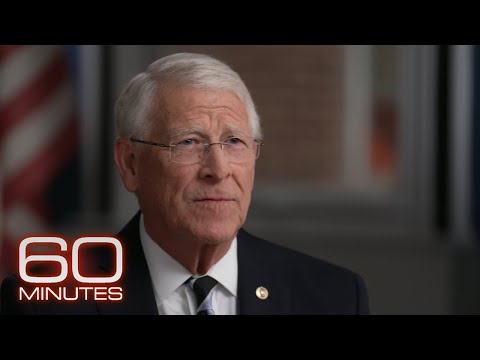
Under the Radar
60 Minutes — the March 2025 investigation in which senior officials acknowledged their own uncertainty.
Sources
- "Joint DHS/FBI Statement on Reports of Drones in New Jersey," FBI. Read online →
- "2024 United States drone sightings," Wikipedia. Read online →
- "Mysterious drone sightings in New Jersey prompt security concerns," CNN. Read online →
- "What do we know about mystery drones flying over New Jersey, New York, Pennsylvania and other East Coast states?" CBS News. Read online →
- "FBI and DHS Debunk New Jersey Drone Reports," DroneLife. Read online →
- "White House says NJ drones 'authorized' by the FAA: 'This was not the enemy,'" 6abc Philadelphia. Read online →
- "How the U.S. is confronting the threat posed by drones swarming sensitive national security sites," CBS News / 60 Minutes. Read online →
- "White House reveals source of mysterious drones seen over New Jersey," Fox News. Read online →
- "New Jersey mystery drones reportedly tests for private contractor," The Hill. Read online →
- "On-the-Record Press Gaggle by White House National Security Communications Advisor John Kirby," The American Presidency Project (UCSB archive). Read online →
- "Iranian 'mothership' isn't behind drone sightings over New Jersey, Pentagon says," NBC News. Read online →
- "Pentagon says 'Iranian mothership' is not behind mysterious drones," Straight Arrow News. Read online →
- "Waltz says federal agencies are 'pointing at each other' to figure out mysterious drone sightings," CBS News. Read online →
- "Larry Hogan says dozens of drones flew over Maryland home: 'Entirely unacceptable,'" Baltimore Sun. Read online →
- "NJ senator says mysterious drones 'almost certainly planes,' slams federal response," The Hill. Read online →
- "Military 'frustrated' with mysterious drone activity in New Jersey," DefenseScoop. Read online →
- "'Multiple' drones entered airspace at New Jersey naval station: Official," ABC7 New York. Read online →
- "Rand Paul blocks Schumer bill on mystery drone detection," Washington Examiner. Read online →
- "At Peters' Urging, Senate Passes Bipartisan Legislation to Prevent Authorities to Address Drone Threats from Expiring," U.S. Senate Committee on Homeland Security & Governmental Affairs. Read online →
- "Cotton, Gillibrand Introduce Bipartisan Bill to Protect Military Installations from Unauthorized Drones," Office of Senator Tom Cotton. Read online →
- Bartholomew, Robert E., and George S. Howard. UFOs & Alien Contact: Two Centuries of Mystery. Prometheus Books, 1998.
- Shermer, Michael. Why People Believe Weird Things: Pseudoscience, Superstition, and Other Confusions of Our Time. Holt Paperbacks, 2002.
- Singer, P.W. Wired for War: The Robotics Revolution and Conflict in the 21st Century. Penguin Press, 2009.
- Kean, Leslie. UFOs: Generals, Pilots, and Government Officials Go on the Record. Harmony Books, 2010.
- Peebles, Curtis. Watch the Skies! A Chronicle of the Flying Saucer Myth. Smithsonian Institution Press, 1994.
- "File: Jersey City skyline at night.jpg," Wikimedia Commons, photo by Pranav Srikanth (CC BY-SA 4.0). View file →
See something inaccurate? Have additional information or sources?
Suggest an Edit →Last Updated: August 2026