
Global Consciousness & Noosphere Hypothesis
Inspired by Pierre Teilhard de Chardin's "noosphere" concept and Princeton's Global Consciousness Project, proposes that UAP activity correlates with periods of heightened collective human attention or crisis, treating the phenomenon as an emergent property of mass consciousness rather than an external visitor.
Statistically Contested, Pattern SuggestiveCore Thesis
The week Sputnik 1 launched and gripped the entire world's attention, roughly fifteen witnesses in a single Texas farm town independently reported a huge glowing object disabling their vehicles' ignition systems — a documented spike this site's own case files trace directly to the same week. Decades later, a network of roughly 130 hardware random-number generators scattered across the globe reportedly registered its largest statistical deviations from pure randomness during history's most emotionally synchronized moments: September 11, 2001, chief among them. If Pierre Teilhard de Chardin's "noosphere" — a real, evolving layer of collective human thought and attention enveloping the planet — is more than a mid-century Jesuit's speculative metaphor, then UAP activity clustering around moments of intense global attention may not be coincidence. It may be the noosphere's most visible symptom.
The Global Consciousness & Noosphere Hypothesis operates at a genuinely different scale than this site's Egregore & Collective Thoughtform Hypothesis, which it should not be confused with. That file addresses sustained, localized belief at specific sites like Bonnybridge and Piedmont Missouri, generating a location-bound paraphysical manifestation. This hypothesis proposes something planetary and time-bound rather than local and place-bound: that UAP reports should cluster statistically around moments of intense, globally synchronized human attention — wars, disasters, historic firsts — regardless of where in the world those reports occur, because the mechanism, if real, operates on the entire noosphere at once rather than on any single location.
This page treats that as an empirically testable claim, and finds it genuinely, unusually testable for a theory on this site: it predicts a specific statistical pattern (report clustering around independently definable global-attention events) that can be checked against the historical record, and one real research program — Princeton's Global Consciousness Project — has spent nearly three decades running an almost structurally identical test for a related but distinct claim, with results that remain seriously disputed within the parapsychology and skeptical research communities alike.
Origins and Development
Pierre Teilhard de Chardin, a French Jesuit priest and paleontologist among the discoverers of Peking Man, wrote The Phenomenon of Man in the 1930s, though Church superiors restricted its publication until after his 1955 death over doctrinal concerns about his synthesis of evolutionary science and Christian theology. The book proposed that evolution tends toward increasing complexity and unified consciousness, culminating in a "noosphere" — a layer of collective human thought enveloping the Earth, analogous to and building upon the biosphere — en route to what he called the Omega Point. Teilhard never connected this concept to UAP phenomena himself, and this file is explicit that his own work makes no such claim; the application here is this site's own speculative extension, in the same spirit as its Directed Panspermia entry extends Crick and Orgel's real proposal into territory its original authors never intended.
The concept's closest empirical descendant is Roger D. Nelson's Global Consciousness Project, founded in 1997–98 after Nelson's tenure as Coordinator of Research at Princeton's Engineering Anomalies Research (PEAR) laboratory. The project maintains a network of roughly 65 to 130 hardware random-number generators, nicknamed "Eggs," stationed around the world and continuously streaming data to Princeton servers. Its central published claim is that this data shows statistically significant deviations from pure randomness during major world events drawing intense, simultaneous human attention — most famously around the September 11, 2001 attacks, with proponents citing odds against chance reported as high as one in a trillion across the project's full twenty-year formal event catalog.
Key Claimed Evidence
- The Levelland/Sputnik correlation: This site's own Levelland case file and Ball Lightning Hypothesis file both document a nationwide spike in UFO reports through October and November 1957, coinciding precisely with the launch of Sputnik 1 and 2 — a documented "1957 UFO flap" the site attributes to Americans newly primed to watch the sky during a period of intense, globally synchronized technological anxiety.
- The Global Consciousness Project's formal event catalog: Nearly three decades of published, pre-registered statistical analysis claiming detectable deviation from randomness during major world-attention events, a research program this file treats as the closest existing empirical test of the noosphere concept, whatever its methodological disputes.
- The Washington D.C. 1952 flap's wartime timing: This site's own Washington D.C. UFO Flap case file documents the most publicized UFO wave of the early Cold War occurring during a period of sustained national anxiety over Soviet capability, reaching the President's desk and the largest Pentagon press briefing since World War II.
- The New Jersey/Northeast Drone Wave's social-media amplification: This site's own 2024 case file documents a modern wave whose scale and persistence were substantially driven by real-time collective attention circulating through social media, a plausible contemporary analog to what a noosphere-driven mechanism would be expected to produce.
- The VASCO project's nuclear-test and UAP-volume correlations: Astrophysicist Beatriz Villarroel's peer-reviewed archival-astronomy program has published statistical analyses reporting that mid-century photographic "transients" cluster in time around above-ground nuclear weapons tests and, more weakly, around contemporaneous UAP report volume — an active, still-disputed research thread this file treats as the closest thing to a formally published UAP-specific analog to the GCP's own methodology.
Government & Military Programs
No government program has ever proposed a noosphere-driven mechanism as an explanation for UAP activity, and Nelson's Global Consciousness Project itself, its most relevant empirical relative, is an independent academic research effort rather than a government program, though it grew directly out of Princeton's PEAR laboratory, which itself received private and university, not federal, funding. This file has located no AARO or Project Blue Book-era document that engages with collective-consciousness explanations in any form, leaving this hypothesis without any government-connected evidentiary anchor of the kind several other theories on this site can claim.
Skeptical Critiques & Limitations
The hypothesis's central and most serious limitation is that its closest empirical relative, the Global Consciousness Project, has itself been directly and substantively challenged by independent researchers. Edwin May and James Spottiswoode conducted their own independent analysis of the GCP's September 11, 2001 data and concluded there was no statistically significant change in randomness during the attacks, finding that the reported deviation existed only within Nelson's own specifically chosen analysis window — a serious methodological criticism suggesting the project's headline result may reflect post-hoc event selection rather than a genuine effect. This file treats that critique as directly relevant to this hypothesis's own credibility, since it undermines the strongest available empirical test of the broader claim that collective human attention measurably affects physical randomness.
The Levelland/Sputnik correlation, while genuinely documented on this site, is also fully explicable through an entirely mundane mechanism this file cannot rule out: heightened media coverage of the "space race" plausibly primed ordinary Americans to look up and notice, and then report, lights they might otherwise have ignored, without requiring any actual increase in the underlying rate of anomalous aerial activity. A correlation between global attention and UFO report volume is consistent with both a genuine noosphere effect and a purely conventional reporting-bias explanation, and this file has found no evidence capable of cleanly distinguishing between the two.
Theory Development Timeline
| Date | Development |
|---|---|
| 1930s | Pierre Teilhard de Chardin writes The Phenomenon of Man, developing the noosphere concept. |
| 1955 | Teilhard dies; The Phenomenon of Man is published posthumously later that year. |
| Jul. 19–27, 1952 | The Washington D.C. UFO Flap occurs during a period of sustained Cold War anxiety. |
| Oct.–Nov. 1957 | The Levelland case and the broader "1957 UFO flap" coincide with the Sputnik 1 and 2 launches. |
| 1980–2002 | Roger Nelson serves as Coordinator of Research at Princeton's PEAR laboratory. |
| 1997–98 | Nelson founds the Global Consciousness Project, deploying the first "Egg" random-number generators. |
| Sep. 11, 2001 | The GCP's most cited formal event; independent researchers May and Spottiswoode later dispute the reported statistical deviation. |
| Nov. 2024 | The New Jersey/Northeast Drone Wave spreads substantially via real-time social-media attention. |
Theoretical Alignment
This hypothesis is deliberately distinct from the Egregore & Collective Thoughtform Hypothesis in scale and structure: that file proposes sustained, place-bound belief generating a local paraphysical manifestation over years or decades, while this file proposes a planetary, time-bound correlation between UAP report volume and globally synchronized attention events, wherever in the world they occur. The two are not mutually exclusive — a specific case could in principle involve both a favorable local "window area" and a moment of heightened global attention — but they make independently testable claims about different variables (place versus timing).
Sensor & Instrumentation Detection Profile
This hypothesis has no sensor signature of its own to evaluate; its only instrumented evidentiary analog is the Global Consciousness Project's network of hardware random-number generators, which measure statistical deviation in quantum-sourced randomness rather than anything resembling a radar or infrared UAP detection. This file treats the GCP's instrumentation as methodologically rigorous in its data collection but contested in its interpretation, per the May and Spottiswoode critique, and notes that no comparable instrumented test has ever been run specifically correlating UAP report timing against the GCP's own event catalog.
Environmental & Geospatial Context
Unlike nearly every other theory on this site, this hypothesis predicts no geographic clustering at all: if a genuine noosphere effect exists, UAP reports should, in principle, be expected to increase globally and simultaneously during a qualifying attention event, regardless of where witnesses are located, rather than concentrating at any particular site. This makes the hypothesis geographically falsifiable in principle — a genuine attention-correlated global spike, evenly distributed rather than regionally clustered, would be a meaningfully different pattern than the location-specific waves (Bonnybridge, Skinwalker Ranch, Hessdalen) that dominate the rest of this site's catalogue.
Observer Credibility & Occupational Profile
Because this hypothesis makes a claim about aggregate report volume and timing rather than about any single witness's credibility, its evidentiary strength rests less on individual observer quality and more on whether the underlying reporting data itself is a reliable measure of genuine anomalous activity rather than of reporting behavior alone. This is a real limitation this file does not minimize: increased public attention during a global crisis plausibly increases both genuine anomalous-activity reports and misidentification reports in equal measure, and no methodology currently available can cleanly separate the two within the historical UFO report record.
Historical Precedents & Archive Matches
The idea that human collective attention or emotion might influence the physical world predates both Teilhard and the GCP by centuries, appearing across mystical and philosophical traditions worldwide under many names; Teilhard's specific contribution was to frame it within a scientifically informed evolutionary cosmology rather than an explicitly religious or occult one, giving it a distinct intellectual lineage from concepts like the tulpa or egregore this site's Egregore Hypothesis file draws on. Within ufology specifically, this file has found no dedicated historical tradition of noosphere-based UAP explanation predating this site's own synthesis, making the Levelland/Sputnik and Washington D.C./Cold War correlations this file's most direct UAP-specific precedents.
Material Analysis
No physical evidence exists, or could exist in principle, that would directly confirm a noosphere-driven mechanism for any specific UAP case; the hypothesis's only quasi-material evidentiary channel is the GCP's statistical randomness data, which is itself contested and does not, even on its proponents' own terms, claim to produce any physical trace tied to a specific UAP sighting. This file treats the hypothesis as evaluable only at the level of aggregate statistical pattern-matching between global-attention events and UAP report volume, not at the level of any individual case.
The Conventional Explanation Candidate
The leading conventional explanation candidate treats the documented correlations as a reporting-bias artifact rather than evidence of a genuine noosphere effect: heightened media coverage during a global crisis or historic event plausibly increases the number of people looking at the sky, primed to notice and report unusual lights, without requiring any actual increase in the underlying rate of anomalous aerial activity. This file treats this explanation as the more parsimonious reading of the Levelland/Sputnik and Washington D.C./Cold War correlations specifically, while noting that the GCP's own claimed effect, if genuinely present in the data (a matter of live scientific dispute), would not be explained by reporting bias, since it measures hardware randomness rather than human testimony.
Supporting This Hypothesis
- This site's own Levelland and Washington D.C. case files document genuine, dated correlations between UFO report spikes and periods of intense global technological and geopolitical anxiety
- The Global Consciousness Project represents nearly three decades of published, pre-registered statistical research into whether collective attention measurably affects physical randomness, giving the broader concept a real, if contested, empirical research program
- The New Jersey/Northeast Drone Wave demonstrates a modern, socially-mediated analog for how rapidly collective attention itself can amplify and sustain a reported anomalous-activity wave
- Teilhard de Chardin's noosphere concept provides a scientifically-framed, non-occult theoretical foundation distinct from purely mystical or folkloric collective-consciousness traditions
Against This Hypothesis
- Independent researchers Edwin May and James Spottiswoode directly disputed the GCP's own headline 9/11 finding, concluding the reported statistical deviation existed only within Nelson's specifically chosen analysis window
- Documented UAP-report/global-attention correlations are fully explicable by ordinary media-driven reporting bias (more people looking up and reporting) without requiring any genuine increase in anomalous activity
- No credentialed researcher, including Teilhard and Nelson themselves, has ever specifically applied either the noosphere concept or GCP methodology to UAP report data
- The hypothesis cannot distinguish, using currently available data, between a genuine collective-consciousness effect and a purely conventional reporting-volume artifact
Theoretical Assessment Profile
Six-domain evaluation of this hypothesis
Key Proponents
Pierre Teilhard de Chardin
Developed the noosphere concept in The Phenomenon of Man, the foundational theoretical framework this hypothesis extends into UAP-specific territory he never addressed.
Roger D. Nelson
Founded the closest existing empirical test of collective consciousness affecting physical randomness, a nearly three-decade research program whose core findings remain seriously disputed.
Beatriz Villarroel
Leads the peer-reviewed VASCO project, whose published statistical analyses report mid-century photographic transients clustering around nuclear tests and, more weakly, UAP report volume — the closest existing formal analog to this hypothesis's central claim.
J. Allen Hynek
His own contemporaneous review of the Levelland case occurred the same week as the Sputnik launches, and his later writing on "flap" clustering more broadly anchors this hypothesis's earliest UAP-specific timing correlation.
Related Cases
Further Reading & Recommended Literature
The Phenomenon of Man
The foundational text proposing the noosphere concept this hypothesis's central mechanism is drawn from.
Connected: The Emergence of Global Consciousness
Nelson's own account of the Global Consciousness Project's methodology and two decades of formally catalogued event data.
UFOs: Generals, Pilots, and Government Officials Go on the Record
A compilation of credentialed testimony useful for weighing how sensor-corroborated cases elsewhere on this site compare against this hypothesis's aggregate-pattern evidence.
The UFO Experience: A Scientific Inquiry
The foundational text on scientifically rigorous UFO classification, including Hynek's own documentation of the 1957 flap this hypothesis draws its earliest correlation from.
Watch the Skies! A Chronicle of the Flying Saucer Myth
A skeptical history of the flying saucer phenomenon, including its documented correlation with periods of Cold War-era collective anxiety.
DISCLOSURE: Some links above are affiliate links. If you purchase through them, OverClassified receives a small commission at no additional cost to you. This helps support independent research.
Essential Viewing
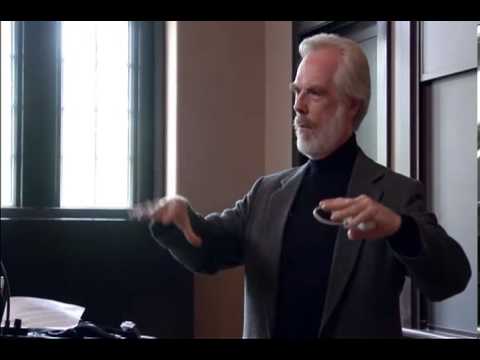
Princeton's Global Consciousness Project
An overview of the Egg network and the project's central statistical claims.
Teilhard de Chardin: The Omega Point and the Noosphere
A walkthrough of Teilhard's evolutionary cosmology and the noosphere concept this hypothesis draws on.
Sources Cited
- Teilhard de Chardin, P. (1955). The Phenomenon of Man. Harper Perennial.
- Nelson, R. D. (2019). Connected: The Emergence of Global Consciousness. ICRL Press.
- "Global Consciousness Project." Wikipedia. en.wikipedia.org
- "Can Random Numbers Tell Us Something about the World's Psychological State?" Texas Monthly. texasmonthly.com
- "Effects of mass consciousness: changes in random data during global events." PubMed. pubmed.ncbi.nlm.nih.gov
- "Global Consciousness Project." Institute of Noetic Sciences. noetic.org
- "Brief Biography, Roger Nelson." Princeton University. noosphere.princeton.edu
- "GCP: Formal Analysis, September 11 2001." Princeton University. noosphere.princeton.edu
- "Theology: The Noosphere Revisited." TIME Magazine Archive. time.com
- This site's own case file: Levelland, for the documented 1957 UFO flap/Sputnik correlation.
- This site's own case file: Washington D.C. UFO Flap, for the Cold War-era correlation.
- This site's own case file: New Jersey/Northeast Drone Wave, for the modern social-media-amplified analog.
- This site's own case file: Beatriz Villarroel & the VASCO Project, for the closest published, peer-reviewed UAP-specific analog to the GCP's methodology.
- Kean, L. (2010). UFOs: Generals, Pilots, and Government Officials Go on the Record. Harmony Books.
- Hynek, J. A. (1972). The UFO Experience: A Scientific Inquiry. Da Capo Press.
- Peebles, C. (1994). Watch the Skies! A Chronicle of the Flying Saucer Myth. Smithsonian Institution Press.
Have corrections, additional research, or peer-reviewed sources? Help improve this entry.
Suggest an Edit