
Wired for War
The Robotics Revolution and Conflict in the 21st Century
Core Thesis
Wired for War is P.W. Singer's 2009 New York Times bestselling survey of the accelerating military use of robotic and autonomous systems, published while Singer directed the Brookings Institution's Center for 21st Century Security and Intelligence. Drawing on hundreds of interviews with engineers, generals, policymakers, and science-fiction writers, the book argues that unmanned and increasingly autonomous systems were not a speculative future but an already-arriving present, one that would reshape not just how wars are fought but the politics, economics, laws, and ethics surrounding war itself. This site's own research draws on it for two case files that cite it directly: the New Jersey/Northeast Drone Wave, where thousands of 2024 nighttime drone reports swept the region without a single agreed-upon federal explanation, and the Palo Verde Nuclear Station Drone Swarm, where an unidentified swarm of five to six large drones surveyed a live nuclear reactor complex over two nights in 2019 -- both cases sitting squarely within the technological and policy trajectory Singer mapped fifteen years earlier.
About the Author
Peter Warren Singer earned a bachelor's degree from Princeton University and a PhD from Harvard, and built his early career at the intersection of academic international relations and practical defense policy: he worked at Harvard's Belfer Center for Science and International Affairs and inside the Office of the Secretary of Defense before joining the Brookings Institution, where he directed the Center for 21st Century Security and Intelligence. In 2008 he served as coordinator of the Defense Policy Task Force for Barack Obama's presidential campaign, giving him direct, contemporaneous exposure to how military-technology questions were actually being weighed at the highest levels of American policy debate at almost exactly the moment Wired for War was being written.
Singer's authorial voice in this book reflects that dual academic-and-policy background directly: the book is dense with interview material -- drawn from engineers building the systems, active-duty and retired military officers using them, and policymakers regulating them -- while remaining readable enough to reach a mainstream New York Times bestseller audience, an unusual combination this site's own research treats as central to the book's continued relevance for general readers rather than only defense-policy specialists.
The book was, notably, not Singer's first foray into the ethics and politics of modern warfare: his earlier books, Corporate Warriors: The Rise of the Privatized Military Industry (2003) and Children at War (2005), had already established him as a researcher willing to take on uncomfortable, under-examined dimensions of contemporary conflict before those subjects reached wide public attention -- a pattern this site's own research treats as directly continuous with Wired for War's own early, prescient treatment of a robotics revolution that most Americans in 2009 still associated primarily with science fiction.
Singer's post-2009 career bore out the book's central wager that this was a durable, expanding subject rather than a one-off study: he went on to write Cybersecurity and Cyberwar: What Everyone Needs to Know (2014), the near-future military novel Ghost Fleet (2015), LikeWar: The Weaponization of Social Media (2018), and the novel Burn-In: A Novel of the Real Robotic Revolution (2020), moving from the Brookings Institution to a strategist role at the New America Foundation and a Professor of Practice appointment at Arizona State University -- a two-decade research arc that Foreign Policy recognized by naming him among its "Top 100 Global Thinkers."
Historical Context & Origins
Wired for War arrived in 2009, roughly midway through the post-9/11 wars in Iraq and Afghanistan, a period in which the U.S. military's actual battlefield use of unmanned aerial vehicles -- Predator and Reaper drones chief among them -- had expanded dramatically from the small, experimental numbers fielded in the 1990s to a large-scale, routine part of American air operations. Singer's own author's note frames the book's central question directly: not whether robots belonged in war, since by 2009 they plainly already did, but what their rapidly compounding numbers and capabilities meant for the politics, economics, laws, and ethics that surround war itself.
The book's technical chapters trace a specific historical throughline this site's own research treats as directly relevant to understanding today's consumer-drone incidents: military robotics did not begin with the 2000s drone wars but with much earlier systems -- Singer's own chapter title "Smart bombs, Norma Jeane, and defecating ducks" gestures at this longer, at times genuinely eccentric history of robotic and automated devices, tracing an arc from early automata and guided munitions through to the networked, increasingly autonomous systems of the War on Terror era.
Singer published the book at a moment this site's own research treats as a specific inflection point for public and policy awareness: before Wired for War, robotic warfare was widely treated in American media and policy discussion as a speculative, science-fiction-adjacent topic; the book's New York Times bestseller status and its broad interview base, including science-fiction authors alongside generals and engineers, helped move the subject into mainstream serious defense-policy conversation years before consumer and hobbyist drone technology became cheap and widespread enough to produce the kind of ambiguous, unresolved public incidents this site's own case files now document.
By the time the technology Singer surveyed had filtered down from military-grade systems to inexpensive commercial and hobbyist drones roughly a decade later, the resulting proliferation created exactly the kind of evidentiary and jurisdictional confusion visible in both case files this book is cited on: multiple simultaneous unidentified aircraft, no single agency with clear primary authority to identify or intercept them, and a public unable to distinguish military test flights, hobbyist activity, and genuinely unexplained incursions from one another -- a governance gap Singer's own 2009 policy chapters had already begun to describe in embryonic form.
Core Arguments & Key Concepts
The book's central and most quoted argument is that robotic and increasingly autonomous military systems represent a change in warfare comparable to gunpowder or the airplane -- not merely a new weapon, but a shift that alters who can fight, how accountability for lethal decisions is assigned, and how publics psychologically experience distant wars they no longer need to send their own citizens' bodies into.
A second major argument concerns autonomy itself: Singer's chapter "Always in the loop?" examines the trajectory from remotely piloted systems, where a human operator makes every targeting decision, toward increasingly autonomous systems that make more decisions independently -- and argues this trajectory raises genuinely unresolved legal and ethical questions about where human accountability sits once a machine, rather than a person, effectively decides whether to use lethal force.
A third argument, developed in the book's "Open-source warfare" and "Losers and Luddites" chapters, anticipates that robotic warfare technology would not remain the exclusive province of major state militaries: Singer argues that falling costs and widening technical accessibility would eventually put militarily significant unmanned systems into the hands of non-state actors, hobbyists, and smaller states alike -- a forecast this site's own research treats as directly, almost eerily validated by the consumer-drone proliferation now underlying incidents like the New Jersey/Northeast Drone Wave, in which the federal government's own joint December 16, 2024 statement could identify "nothing anomalous" in thousands of reports without ever settling who, specifically, was flying what.
A fourth argument, carried through the book's "YouTube war" chapter, examines how remotely operated and recorded warfare changes public experience of conflict itself -- footage from robotic systems circulating as media content changes how distant a war feels to the civilian public watching it, a dynamic this site's own research treats as a direct conceptual precursor to how viral, unverified drone videos -- including the December 13, 2024 Larry Hogan video that multiple astronomers later identified as the constellation Orion rather than any aircraft -- came to dominate public perception of the New Jersey wave faster than any official verification process could keep pace with.
A fifth, more institutional argument, developed in the book's second half through chapters on command and control and the changing demographics of who fights wars, treats the robotics revolution as producing bureaucratic and jurisdictional strain as much as technological change -- multiple agencies with overlapping but incomplete authority, a theme this site's own Palo Verde Nuclear Station Drone Swarm case file documents directly in its own internal NRC records, where an official candidly noted that "restricted airspace will do nothing to stop an adversarial attack," and the NRC ultimately declined to require nuclear licensees to install any drone defenses at all.
Key Cases & Evidence Discussed
The New Jersey/Northeast Drone Wave (November-December 2024) produced over 5,000 reports across New Jersey, New York, Pennsylvania, and neighboring states before the Department of Defense, DHS, FAA, and FBI issued a joint December 16, 2024 statement finding "nothing anomalous" and no threat to public safety -- a conclusion that satisfied few of the wave's own political stakeholders. New Jersey's congressional delegation directly disputed the administration's reassurances: Rep. Chris Smith publicly challenged White House spokesperson John Kirby's characterization of the reports, citing a direct account from a Coast Guard commander describing a dozen or more drones shadowing a 47-foot Coast Guard motor lifeboat, an incident the White House had separately attributed to aircraft misidentification. By March 2025, 60 Minutes' "Under the Radar" segment reported that three four-star generals, a senior member of Congress, and a former senior Biden administration official all told the program they did not know the drones' actual source -- precisely the kind of jurisdictional and evidentiary confusion Singer's own "Open-source warfare" chapter anticipated as an inevitable consequence of proliferating, cheap unmanned systems outrunning any single agency's capacity to track them.
The Palo Verde Nuclear Station Drone Swarm (September 29-30, 2019) involved security officers Daphne Rodriguez and Ismael Garcia independently reporting five to six large drones, spotlights on, approaching the restricted airspace around Palo Verde's Unit 3 reactor on the first night, followed by four similar drones the second night, launching from behind a mountain range that a Maricopa County Sheriff's Office search subsequently failed to locate an operator at. Internal NRC records later released under FOIA showed the agency's own Deputy Director for Nuclear Security and Incident Response, Mark Lombard, informally labeling the week "Drone-a-palooza" in an internal email, and a senior security advisor separately acknowledging that the plant's legal no-fly designation offered no actual physical deterrent. The NRC's own eventual October 30, 2019 technical review concluded U.S. nuclear plants had no "risk-significant vulnerabilities" exploitable by drones and declined to mandate defenses -- a risk-tolerance judgment this site's own research treats as directly testable against the institutional strain Singer's book forecasts as an inevitable byproduct of cheap, widely available unmanned systems outpacing the regulatory frameworks built before their proliferation.
Critical Reception & Controversies
This book carries a strong, well-established Goodreads record: 3.97 out of 5 stars averaged across 2,653 ratings and 255 written reviews, checked August 2026 -- by a wide margin the largest review base of any title checked so far in this site's own essential-reading library, reflecting the book's genuine mainstream commercial reach as a New York Times bestseller rather than a niche specialist audience.
This site's research also attempted to verify an Amazon rating for this title, but Amazon's bot-detection system blocked automated requests to the listing during this session, a persistent pattern encountered across essentially every title checked this session; per this site's own Amazon Rating Display Protocol, this gap is disclosed honestly here rather than fabricated or silently omitted.
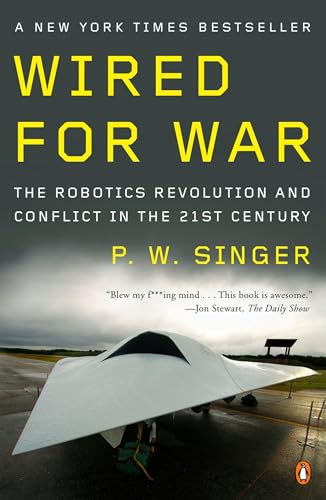
Contemporary reviews at publication were notably enthusiastic even outside specialist defense-policy circles: television host Jon Stewart's on-air reaction to the book -- "Blew my f***ing mind... This book is awesome" -- was prominent enough to be printed directly on later paperback covers, evidence this site's own research treats as a genuinely unusual crossover moment for a book built substantially on interviews with defense engineers and military officers.
The book's own critical reputation has also proven durable specifically because so much of its 2009 forecasting held up under the following decade and a half of actual technological change: the proliferation of cheap consumer and hobbyist drones the book anticipated in its "Open-source warfare" chapter is precisely the technological backdrop against which both of this site's own citing case files -- separated by five years and very different stakes -- now play out, a track record this site's own research treats as meaningfully stronger evidence of the book's continued reference value than any single review score could capture on its own.
Influence & Legacy
The clearest evidence of this book's lasting relevance on this site specifically is its citation record: two case files, five years apart and describing very different stakes -- an unresolved regional drone wave over populated Northeastern U.S. states, and a two-night unidentified drone incursion over a live nuclear reactor complex in the Arizona desert -- both reach for this same 2009 book as essential background on the underlying drone technology and policy landscape, evidence of genuinely broad applicability across this site's own drone-related case files.
Singer's own subsequent career gives the book's influence a documented, traceable line beyond this site's own citations: his 2015 novel Ghost Fleet and 2020 novel Burn-In both extend Wired for War's nonfiction analysis into fictional scenario-building, a technique this site's own research treats as a deliberate continuation of the same underlying project -- using concrete, technically grounded scenarios to make abstract policy questions about autonomous systems legible to a mainstream audience.
Within this site's own case-file research, this book's greatest value lies less in any single predictive claim and more in the durable analytical framework it offers: falling technology costs, widening non-state access, and outpaced regulatory and jurisdictional structures are the same three forces visible in both the New Jersey/Northeast Drone Wave's multi-agency confusion and the Palo Verde incursion's unresolved regulatory risk-tolerance decision, giving readers of either case file a genuinely useful analytical lens written years before either specific incident occurred.
This site's own research also treats the book's continued relevance as a useful corrective against treating either citing case file as unprecedented or inexplicable: both incidents are better understood, per Singer's own decade-and-a-half-old framework, as predictable downstream consequences of an already-underway robotics revolution rather than as genuinely novel mysteries requiring exotic explanation.
The Book
As an Amazon Associate, OverClassified may earn from qualifying purchases made through this link, at no extra cost to you.
Why This Is Essential Reading
Wired for War earns its place on this list as the single most directly technologically prescient title in this site's own essential-reading library: written in 2009 at the height of the drone wars in Iraq and Afghanistan, it forecast with real specificity the falling costs, widening non-state access, and institutional strain that would define the following decade and a half of unmanned-systems proliferation -- forces now visible directly in this site's own New Jersey/Northeast Drone Wave and Palo Verde Nuclear Station Drone Swarm case files. P.W. Singer's combination of rigorous interview-based reporting and genuine mainstream readability -- rare enough that it drew an on-air endorsement from Jon Stewart alongside serious engagement from working defense-policy professionals -- gives this book a dual authority few other titles in this library can claim. Read against either citing case file, it offers something more useful than a verdict on any single unidentified drone: a durable analytical framework for understanding why unidentified drones over sensitive American airspace became, by the mid-2020s, a recurring and structurally unsurprising feature of American life rather than an isolated anomaly.
Related Cases & Theories
Essential Viewing
Sources Cited
- Singer, P.W. Wired for War: The Robotics Revolution and Conflict in the 21st Century. Penguin Press, 2009; this edition Penguin (Non-Classics) paperback (ISBN 978-0-14-311684-4, cited here).
- "Wired for War." Goodreads (3.97 average rating, 2,653 ratings, 255 reviews, checked August 2026). goodreads.com
- "Wired for war." Open Library bibliographic record (Penguin Press, New York, 2009; ISBN-13 978-1-59420-198-1 and 978-0-14-311684-4; LCCN 2009290632; OCLC 277241234). openlibrary.org
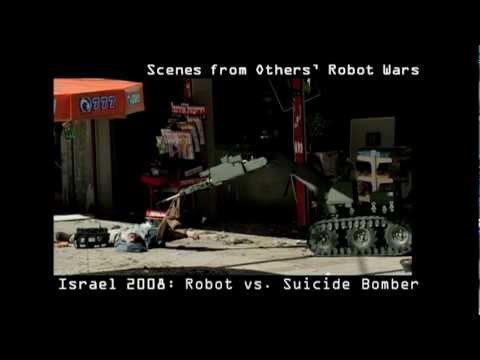
- "Military robots and the future of war | P.W. Singer." TED, YouTube (TED2009 talk, Long Beach, California, February 2009; video verified via oEmbed). youtube.com
- P.W. Singer. Wikipedia (biographical details: Princeton and Harvard education, Brookings and New America positions, bibliography of later books, Foreign Policy "Top 100 Global Thinkers" recognition). en.wikipedia.org
- This site's own resources library: Full Reading List, where this book is cited across 2 separate case-file pages.
- This site's own key-figures entry: P.W. Singer, for his full biography and site-wide connections.
- This site's own case file: New Jersey/Northeast Drone Wave, citing this book directly.
- This site's own case file: Palo Verde Nuclear Station Drone Swarm, citing this book directly.
- This site's own key-figures entry: Daphne Rodriguez, the security official who first reported the Palo Verde drone swarm.
- "60 Minutes: Under the Radar." CBS News, March 16, 2025 (reporting that senior military and administration officials could not identify the New Jersey drones' source; cited in this site's own New Jersey/Northeast Drone Wave case file).
- This site's own essential-reading entry: Why People Believe Weird Things, for a skeptical framework directly applicable to evaluating unverified viral drone footage.
Have corrections, additional research, or peer-reviewed sources? Help improve this entry.
Suggest an Edit