
Bouamama Algerian War UFO Sighting
Shortly after midnight in March 1958, a French Foreign Legionnaire identified in the record only as "N.G." was on solitary sentry duty at a small, fortified outpost near Bouamama, in the Sud-Oranais region of Algeria, during the Algerian War. A whistling sound — "like someone blowing into the neck of a bottle" — preceded the arrival of an enormous, roundish object he estimated at 250 to 350 meters wide, which descended to hover silently 35 to 40 meters above the ground for roughly 45 to 50 minutes, projecting an intense emerald-green conical beam toward the sand. When it departed at what he described as tremendous speed, N.G. reported profound emotional after-effects. His superiors, taking the report seriously enough to search the site (finding no physical trace), sent him to the Val-de-Grâce military hospital in Paris for a week of neurological and psychiatric observation; every test came back normal. The case remained essentially unpublished for twelve years until French UFO researcher Joel Mesnard tracked N.G. down and interviewed him directly in 1970, publishing the only detailed account of the incident in Flying Saucer Review in 1973.

Pictured: Sand dunes in the Algerian Sahara near Taghit, Béchar Province, illustrative of the southwestern Algerian desert terrain where the sighting occurred; not a photograph of the actual outpost. Photo by Abdelli Amal, Wikimedia Commons (CC BY-SA 4.0).
Theoretical Alignment
This file weights Psycho-Social/Mundane highest because the case rests on a single, uncorroborated witness recounting a wartime nighttime experience twelve years after the fact, and because a documented, unresolved discrepancy exists between the witness's account and the geometry of the outpost's second sentry position, who reported nothing despite a partial theoretical sightline. It assigns meaningful weight to Extraterrestrial because the medical record is itself a genuine, if secondhand, piece of corroborating evidence: N.G. underwent a full week of neurological and psychiatric evaluation, including an EEG, specifically because his superiors considered his report credible enough to warrant investigation, and every clinical test came back normal. Interdimensional receives the lowest weight of the three not because it is inherently less plausible than Extraterrestrial as a general framework — this file does not rank the two hypotheses against each other in the abstract — but because nothing specific to N.G.'s account (no reported missing time beyond the encounter's own duration, no repeat contact, no symbolic or communicative content) engages the particular evidentiary hallmarks IDH proponents typically point to, leaving it with no case-specific basis for a higher score here.
Background
The Algerian War (1954–1962) placed large numbers of French military personnel, including French Foreign Legion units, in isolated desert and mountain outposts across the Algerian interior for extended periods, conditions this file notes as directly relevant to assessing this case's evidentiary weight: prolonged, high-stress solitary night duty is a well-documented risk factor for sleep deprivation, hypervigilance, and perceptual anomalies, a consideration this file weighs seriously rather than dismissing. According to the account later published by Joel Mesnard, N.G. was a three-year Foreign Legion veteran described by his superiors as steady and unremarkable, stationed alone on sentry duty at a small, lightly defended outpost near Bouamama, connected to the main camp by a single telephone line.
N.G.'s attention was first drawn upward by a whistling sound, which he later compared to blowing into the neck of a bottle. Looking up, he saw what he described as an enormous, roundish to elliptical object — not perfectly circular when viewed from below — descending toward his position. It came to rest hovering 35 to 40 meters above the ground, its nearest edge approximately 50 meters from where he stood, and remained essentially motionless and silent for the next 45 to 50 minutes, surrounded by a pale green glow with an intense emerald-green conical beam projecting from its center down toward the sand.
The Algerian War's Western Front in 1958
By March 1958, the Algerian War had entered its fourth year and its most heavily fortified phase. French troop strength in Algeria had already surpassed 400,000 by 1956 and remained at comparable levels through 1958, deployed against a National Liberation Front (FLN) that fought largely as a guerrilla campaign of hit-and-run raids and ambushes rather than conventional battle, deliberately avoiding direct engagement with France's numerically and materially superior forces. Beginning in September 1957, the French military answered with the Morice Line, an electrified barrier system named for defense minister André Morice: an approximately 2.5-meter fence carrying roughly 5,000 volts and backed by barbed wire, flanked on each side by minefields around 45 meters wide, and reinforced with alarms, radar, searchlights, and a patrolled interior track. By the account of its own construction, the barrier system eventually ran some 460 kilometers along the Tunisian frontier in the east and a further 700 kilometers along the Moroccan frontier in the west — the same general frontier region, the Sud-Oranais, that includes Bouamama. This file has found no documented basis for placing N.G.'s specific outpost directly on the barrier line itself, and does not claim it was; but the broader military geography is directly relevant regardless, because by 1958 the entire western Algerian frontier zone was garrisoned by an extensive, overlapping network of desert outposts, mobile patrols, and static sentry positions, built specifically to interdict FLN fighters, arms, and supplies attempting to cross from Morocco. French Foreign Legion units, including parachute and infantry regiments, carried a substantial share of this counter-insurgency and border-security burden throughout the war, alongside separate campaigns further east in the Aurès and Kabylia mountains. March 1958 also sat only weeks before a political rupture that would reshape the war's command structure entirely: the May 1958 crisis in mainland France, precipitated by fears that the government in Paris might negotiate a settlement with the FLN, brought down the Fourth Republic and returned Charles de Gaulle to power under a new Fifth Republic constitution. This file does not draw any specific connection between that political upheaval and N.G.'s report, which by all accounts preceded it by roughly two months, but notes it as further evidence of just how volatile and high-stakes the wartime environment surrounding Bouamama already was, independent of anything N.G. himself experienced that night.
This file raises that broader context not to explain away N.G.'s specific report, but because it bears directly on the case's leading conventional-explanation candidate, discussed in full below. A soldier standing solitary watch on a remote, lightly defended outpost in this zone in 1958 was doing so as part of an enormous, taut, continuously active security apparatus, under conditions of genuine and immediate strategic tension: infiltration attempts, ambushes, and firefights along the frontier were a live, nightly possibility for units stationed there, not a background abstraction. That reality supplies an independently documented backdrop of sustained hypervigilance and disrupted sleep for exactly the kind of solitary, high-stakes night sentry duty N.G. was performing when he reported the object.
Guerrilla Warfare and the Psychology of Isolated Watch
The FLN's preference for hit-and-run tactics rather than open engagement had a specific psychological consequence for the French soldiers tasked with static defense: unlike a conventional front line, where an attack typically announced itself well in advance, an isolated Sud-Oranais outpost's garrison had to treat every night as a plausible occasion for a sudden, unannounced raid, with no way to know in advance which night that might be. Standard practice for small, undermanned positions across the Algerian bled was to rotate a limited garrison through solitary or paired sentry postings overnight, maintaining contact with the main camp by field telephone where a post was too small to justify its own radio detachment — precisely the single telephone line Mesnard records as N.G.'s outpost's only link to the larger camp. A lone sentry under those conditions was, by design, isolated, sleep-disrupted by rotating watch schedules, and primed to scan the dark horizon continuously for the one genuine threat — an FLN infiltrator or raiding party — that could arrive at any moment without warning. This file treats that specific combination of isolation, sleep disruption, and trained hypervigilance, verified independently of anything N.G. himself reported, as the foundation of the conventional-explanation candidate this file ultimately favors.
Bouamama: A Frontier Named for a Rebellion
The place-name itself carries a history independent of the 1958 sighting. Bouamama and the surrounding Naâma region of the Sud-Oranais take their name from Cheikh Bouamama (c. 1840–1908), the Algerian religious and resistance leader who led an extended anti-colonial uprising against French rule across southwestern Algeria beginning in 1881 and continuing, in various phases, until his death in 1908. Head of the Ouled Sidi Cheikh confederation and born in Figuig, on what is now the Moroccan side of the border, Bouamama organized and led armed resistance in exactly the arid, sparsely populated frontier terrain where, seven decades later, a French Foreign Legion outpost bearing his name would sit through a very different Algerian war. The parallel is worth noting for what it says about the region's long military character rather than for any direct connection to the 1958 sighting itself: the Sud-Oranais had already been a contested, garrisoned frontier zone for the better part of a century by the time N.G. stood sentry there, first against Bouamama's own 19th-century revolt and then, in 1954–1962, against the FLN. Cheikh Bouamama's own resistance has since been commemorated in Algerian national memory well beyond the region itself, including in filmmaker Benamar Bakhti's 1983 film L'Épopée de Cheikh Bouamama (The Epic of Cheikh Bouamama); this file mentions that later cultural legacy only to underscore that the place N.G. was guarding already carried more than a century of contested history before his own report, of an entirely different kind, was added to the record.
Complete Timeline
The timeline below reconstructs the sequence of events as recorded in Mesnard's 1973 Flying Saucer Review article, the only detailed published source for the case. Where the surviving record is imprecise — as with the exact calendar date of the sighting itself, which Mesnard's account does not preserve beyond "March 1958" — this file notes the gap explicitly rather than supplying an invented specific date. The gap between the March 1958 event and its 1973 publication, more than fifteen years, is itself one of the longest documentation delays of any case in this archive, and should be read alongside the rest of this file's evidentiary assessment.
| Date | Event |
|---|---|
| March 1958, approx. 00:30 | N.G., on solitary sentry duty near Bouamama, hears a whistling sound and observes a large, luminous object descending toward his position. |
| March 1958 (same night) | The object hovers 35–40 meters above the ground for 45–50 minutes, projecting an emerald-green beam; N.G. reports profound calm and a sense of time distortion during the observation. |
| March 1958 (departure) | The object rises to 100–120 meters before departing to the northwest at high speed, again with a whistling sound; N.G. reports feeling sadness followed by a return to normal emotional state. |
| March 1958 (following days) | N.G.'s superiors investigate the site, finding no footprints, scorch marks, or physical trace; N.G. is sent to the Val-de-Grâce military hospital in Paris for a week of neurological and psychiatric evaluation, including an EEG. |
| March 1958 (hospital findings) | All clinical results are normal; doctors find N.G. in good physical and mental health, with no tendency toward alcohol use and no indication of combat-stress abnormality. |
| 1970 | French UFO researcher Joel Mesnard locates and directly interviews N.G., twelve years after the sighting. |
| 1973 | Mesnard publishes the case, "Tranquilizing Visitation at Bouahmama: An Algerian Report of 1958," in Flying Saucer Review, Vol. 19, Special Issue 5, pages 20–21 — the only detailed published account of the incident. |
The Witness's Emotional Account
What distinguishes this case within the broader catalogue of Cold War-era military UFO sightings is N.G.'s own description of his emotional state during the encounter, which Mesnard recorded in unusual detail. N.G. described feeling that "time (was) running very slowly" and compared the experience to "being in another world," reporting profound euphoria and a loss of anxiety while the object remained visible — he specifically recalled the colors as "the most beautiful and relaxing" he had ever seen. When the object departed, he reported an abrupt shift to sadness before gradually returning to his normal emotional baseline. This file notes that such reported affective states are a genuine and recurring feature of a subset of close encounter accounts across otherwise unrelated cases and cultures, a pattern researchers including Jacques Vallée have specifically studied, though this file does not treat the pattern's recurrence as itself evidence of an exotic cause, since compelling psychological explanations (extreme fatigue, isolation, and altered states of consciousness under wartime stress) remain equally consistent with it.
Vallée's Passport to Magonia, cited in this file's Further Reading, is the specific source of that comparative pattern, and it is worth stating plainly what the pattern actually consists of. Vallée's 1969 catalogue collects close encounter and contact narratives from across centuries and cultures — pre-modern folklore, nineteenth-century accounts, and Cold War-era encounter reports alike — and identifies a recurring narrative shape in a subset of them: an initial fear or disorientation giving way to an unusual calm or euphoria during the sighting itself, followed by a sharp emotional deflation, often described as sadness or loss, once the phenomenon departs. N.G.'s own account, as recorded by Mesnard, fits that shape closely. This file treats the fit as genuinely notable but epistemically limited in what it can establish: it demonstrates only that N.G.'s account is not narratively unique, which is consistent with several very different underlying explanations, including a shared, culturally transmitted template for describing intense, disorienting experiences of any real origin, exotic or mundane.
The pattern also sits at the center of a distinction this site tracks elsewhere. Vallée's own theoretical framework, developed later in his career and shaped in part by his collaboration with his one-time colleague J. Allen Hynek, treats the recurring emotional and narrative structure of encounter reports as possible evidence for an "interdimensional" or "control system" model, in which the phenomenon interacts with human consciousness and culture in a patterned way across history. This file does not adopt that interpretation for the Bouamama case specifically — the evidentiary record here is too thin, and too dependent on a single, long-delayed account, to support a claim that ambitious — but it notes the pattern's existence as a legitimate feature of the wider comparative record within which N.G.'s account sits.
The Medical Investigation
N.G.'s superiors' response to his report is, in this file's assessment, the case's most evidentiarily significant element. Rather than dismissing the account, they conducted a ground search of the reported location (finding no physical trace) and referred N.G. to the Val-de-Grâce military hospital in Paris, France's principal military medical facility, for a full week of neurological and psychiatric observation, including an electroencephalogram. Every test returned normal results, and doctors specifically noted N.G. showed no tendency toward alcohol use and no clinical evidence that the strains of wartime Algerian service had affected him. This file treats the referral itself as evidence the chain of command considered the report serious and potentially significant, since a routine hallucination attributed to combat stress would typically not warrant a full week of specialist neuropsychiatric evaluation at a facility in mainland France.
Val-de-Grâce: Where N.G. Was Sent
The choice of hospital is itself informative. Val-de-Grâce began its existence as a royal Baroque abbey, commissioned by Queen Anne of Austria in gratitude for the birth of her son, the future Louis XIV, who as a seven-year-old is said to have laid its cornerstone in a ceremony on April 1, 1645; the church, designed by François Mansart and completed by Jacques Lemercier, remains one of Paris's most significant Baroque religious buildings. The Benedictine community's medical work during the French Revolution spared the site the destruction visited on many other Parisian religious institutions, and on July 31, 1793, the revolutionary government formally converted the abbey into a military hospital, explicitly intended as a model teaching institution for army medicine, surgery, and pharmacy. By 1958, Val-de-Grâce had spent more than a century and a half as France's flagship military medical and teaching hospital, a status it retained until its eventual closure in 2016. Referring N.G. there was therefore not a routine, low-priority disposition to a local garrison infirmary; it was a referral to the most senior specialist military medical institution France had, staffed by the country's leading army physicians, for a full week of neurological and psychiatric workup.
The specific inclusion of an electroencephalogram in that workup is also worth situating in its technological context. EEG technology, developed in the 1920s, remained by the late 1950s a specialized diagnostic technique more closely associated with major teaching and research hospitals than with routine garrison medicine — precisely the kind of resource concentrated at an institution like Val-de-Grâce rather than a standard regional military infirmary. Its use on N.G. is therefore a further indicator, alongside the choice of hospital itself, that his superiors treated the case as warranting a genuinely thorough neuropsychiatric evaluation rather than a cursory fitness-for-duty check.
The Twelve-Year Gap and Mesnard's Investigation
The case went essentially unpublished for twelve years, surfacing only when French researcher Joel Mesnard succeeded in locating and directly interviewing N.G. in 1970. Mesnard's resulting article, published in Flying Saucer Review in 1973, remains the sole detailed source for the incident; Mesnard himself noted he was unable to locate surviving military records of the original investigation, and that French military hospital patient files were routinely purged after ten years, meaning independent verification of the medical examination's specific findings is no longer possible through institutional channels. This file treats the twelve-year gap and record loss as a genuine, significant limitation on the case's verifiability, not merely a formality, while noting that Mesnard's direct, on-record interview with the primary witness is nonetheless a stronger evidentiary basis than a secondhand or anonymous account.
The ten-year retention window Mesnard encountered was not an unusual or targeted policy applied to this specific case; standard French military and hospital administrative practice of the period routinely destroyed patient and unit records after a fixed retention period, for reasons of storage capacity and record-keeping cost rather than any deliberate effort to obscure the Bouamama incident specifically. That distinction matters for how this file weighs the record's absence: a records-retention schedule that predates the case's first publication by roughly three years, and that applied uniformly to French military hospital patients regardless of the reason for their admission, is a mundane bureaucratic explanation for the missing paperwork, not a suspicious one. This file has found no indication in any source consulted that the destruction of N.G.'s hospital file was anything other than routine.
Mesnard's own career gives useful context for weighing his handling of the case. Trained originally as a mathematics teacher before moving into journalism, he came to organized ufology in 1966, working as an investigator for the Groupe d'Étude des Phénomènes Aériens (GEPA), a private French research association founded some years earlier and entirely distinct from the government's later GEPAN. Through the early 1970s — the period spanning his Bouamama interview — Mesnard worked alongside fellow researcher René Fouéré and contributed to GEPA's own journal, Phénomènes Spatiaux, before going on to a much longer second career as owner and editor of Lumières dans la Nuit (LDLN) — coincidentally founded, by Raymond Veillith, in 1958, the same year as the Bouamama sighting itself — which Mesnard directed from 1988 until 2014 and which had become, by the late 1970s, France's leading specialist ufology publication. This file treats Mesnard's decades-long, sustained involvement in organized French ufological research, both well before and long after the Bouamama article, as relevant context for assessing his handling of N.G.'s account: by the time of the 1970 interview he was an experienced field investigator working within an established, if entirely private, research framework, not an isolated amateur encountering the subject for the first time.
French Ufology's Institutional Response, Then and Now
The twelve-year gap between N.G.'s sighting and its first documentation is easier to understand in light of how French ufology was actually organized in 1958 — which is to say, it barely was. Flying Saucer Review, the journal that eventually published Mesnard's account, was founded in London in 1955 by former Royal Air Force pilot Derek Dempster, following a 1954 planning meeting among a small group of British researchers and writers; it operated for decades as an independent, privately run publication rather than an arm of any government or scientific institution. There was, in 1958, no equivalent French government body tasked with collecting, investigating, or publishing reports like N.G.'s at all — a case reported through French military channels had essentially nowhere official to go beyond the chain of command that ordered his hospital evaluation, and no mechanism existed to route a soldier's report to a research journal, French or foreign, without an individual investigator like Mesnard independently locating the witness more than a decade later.
Mesnard's approach was, in this sense, entirely typical of the French ufology of his generation: independent researchers, often journalists or writers working essentially alone or in small informal networks, tracking down witnesses, corresponding with each other, and publishing through amateur or small-circulation outlets, sometimes years after the events they documented. That same amateur, pre-institutional network already had a decade of practice by 1958: researchers like Jimmy Guieu, who headed investigations for Commission Ouranos, one of France's earliest UFO research groups, had spent the mid-1950s personally chasing down witnesses and official contacts on cases such as the January 1954 Marignane airport landing, using nothing but personal persistence, a telephone, and a willingness to publish through commercial rather than institutional channels. Aimé Michel, whose foundational study of French ufology's landmark 1954 sighting wave appeared in English as Flying Saucers and the Straight-Line Mystery the same year as N.G.'s sighting, worked in essentially the same mode — an independent researcher and science writer plotting witness reports, without institutional backing, building his contested "orthoteny" theory of geometrically aligned sightings from a hand-collected case catalogue that later analysis showed had been selectively sampled from a much larger corpus of reports. It was not until 1977, nearly two decades after Bouamama and four years after Mesnard's article appeared in print, that France created its first official government body for the subject: the Groupe d'Études des Phénomènes Aérospatiaux Non-identifiés (GEPAN), founded within the French national space agency, the Toulouse-based Centre National d'Études Spatiales (CNES), at the initiative of engineer Yves Sillard and physicist Claude Poher. That body — renamed SEPRA in 1988 and GEIPAN in its current form since 2005 — remains, decades later, one of the only standing, publicly documented civilian government institutions in the world dedicated to UAP report analysis. Its non-existence in 1958 is not a minor procedural footnote to the Bouamama case; it is a structural reason the case has no official investigative record at all, medical files aside, and had to wait for one freelance researcher's persistence to be documented in any detail.
It is also instructive to consider how a report like N.G.'s would be formally classified under the system GEIPAN eventually developed, imperfect as the comparison is across a six-decade gap. GEIPAN sorts investigated cases into four categories: A, for phenomena perfectly identified; B, for phenomena probably identified; C, for cases that cannot be classified one way or the other because too little data was collected; and D, for cases that remain genuinely unidentified despite an adequate body of investigative data, itself subdivided into D1 and D2 by the strength of that data. In practice, only a small fraction of GEIPAN's fully investigated cases — on the order of two to three percent — land in category D. Bouamama, evaluated against that framework, is a textbook category C rather than category D: not a case where thorough investigation was conducted and still failed to identify a conventional cause, but one where no contemporaneous, structured investigation of the kind GEIPAN performs was ever possible at all, given the twelve-year gap, the absence of any physical evidence collection protocol in 1958, and the total reliance on a single retrospective interview. This file's own "Disputed" rating, and its 39/100 Data Integrity Score, are intended to communicate essentially that same distinction: a case whose weak final evidentiary standing reflects an absence of adequate data rather than a demonstrated resistance to conventional explanation.
Key Figures
N.G. (full identity withheld in the published record)
A three-year Legion veteran on solitary sentry duty near Bouamama who reported the encounter, underwent a week of military hospital observation with normal results, and was directly interviewed by researcher Joel Mesnard twelve years later.
Joel Mesnard
Located and directly interviewed N.G. in 1970, then published the only detailed account of the Bouamama sighting in Flying Saucer Review in 1973.
N.G.'s anonymity in the published record is itself consistent with a distinctive feature of French Foreign Legion service. Since its founding by King Louis-Philippe on March 9, 1831, specifically to support France's conquest and colonization of Algeria, the Legion has operated under the historical practice of anonymat: new recruits could enlist under an assumed name, with the option to request service under their legal name only after a minimum period, typically a year, of satisfactory service. At the start of the Algerian War, the Legion's ranks were themselves remarkably international — contemporary estimates put roughly 45 to 50 percent of Legion personnel as German nationals, with French legionnaires a minority around 15 percent and Italians around 10 percent, consistent with the Legion's broader history: across the century between 1831 and 1962, close to a third of all men who served in it were German. Whether N.G. himself enlisted under an assumed identity, and whether "N.G." represents his legal name, an alias, or simply Mesnard's own editorial initials, is not addressed anywhere in the surviving published record; this file notes the Legion's anonymat tradition only to observe that a source identified purely by initials is neither unusual nor inherently suspicious in this specific institutional context, unlike an anonymous witness account in most other settings.
The Five Observables Assessment
Applying the Five Observables framework to the reported behavior:
Assessment: The reported behavior (sustained silent hover, projected light beam, high-speed departure) is unusual for a single witness's account but includes no instrumented performance data, and this file rates the observables Speculative rather than Present given the complete reliance on one recollection recorded well after the event.
Evidence Assessment
Weighed together, the case's evidence divides cleanly into two categories: institutional response, which is comparatively strong for a single-witness account, and physical or corroborating evidence, which is essentially absent. The two lists below separate these strands explicitly, rather than blending them into a single undifferentiated tally, because this file's overall assessment depends specifically on how much weight a reader assigns to institutional seriousness (a real but indirect form of evidence) relative to the complete absence of anything more direct.
Supporting a Genuine Anomalous Experience
- N.G.'s military superiors took the report seriously enough to conduct a physical search of the site and refer him for a full week of specialist neuropsychiatric evaluation at a major hospital, a level of institutional response inconsistent with a report initially dismissed as a routine hallucination.
- Every clinical finding from the medical examination, including the EEG, was normal, directly undermining the stress-induced-hallucination explanation investigators themselves apparently favored.
- Mesnard's 1970 interview was conducted directly with the primary witness, not secondhand, and the resulting account was published in a serious, long-running UFO research journal rather than a sensationalist outlet.
Supporting a Conventional or Psychological Explanation
- The case rests entirely on a single witness with no corroborating observer, despite the outpost's second sentry theoretically having a partial sightline to the reported object's position — a discrepancy no source has resolved.
- Twelve years elapsed between the event and its first detailed documentation, a gap long enough for memory reconstruction and elaboration to meaningfully affect the account's details.
- No physical trace, photograph, or instrumented reading of any kind exists; the entire evidentiary record is testimonial.
- The extreme conditions of solitary nighttime sentry duty in a combat zone are independently well-documented risk factors for altered perceptual states, even absent any diagnosable psychiatric abnormality.
Why "Disputed"
This case is rated Disputed because it combines a genuinely notable institutional response — a full week of specialist military hospital observation with entirely normal results — with the significant, unavoidable weaknesses of a single-witness account first documented in detail twelve years after the fact. The medical examination is real corroborating evidence in the specific sense that it rules out the most commonly proposed conventional explanation (a stress-induced psychiatric episode) at least as far as 1958-era clinical methods could determine; it is not, however, evidence that anything anomalous actually occurred, since it establishes only that N.G. was not exhibiting clinical psychiatric abnormality, not that his perception of the event was accurate.
The unresolved second-sentry discrepancy noted in the historical record is, in this file's assessment, the single most significant unresolved problem with the case: if the outpost's second sentry position genuinely had even a partial theoretical sightline to the reported object's location, and reported seeing nothing over 45 to 50 minutes, that absence is difficult to reconcile with an object N.G. described as up to 350 meters wide. This file has not located any source that directly addresses or resolves this discrepancy, and treats it as an open evidentiary problem rather than something either supporting or undermining the case conclusively.
The case's evidentiary profile is also, in this file's assessment, as much a product of when and where it happened as of what N.G. reported. A comparable sighting occurring after 1977, inside metropolitan France, involving a witness willing to file a report with the gendarmerie, would today generate a formal GEIPAN case file, with standardized witness interviews, environmental data, and a published classification. N.G.'s report instead moved entirely through wartime military channels, generated no research-grade findings beyond a hospital record that was later purged, and survived at all only because one independent researcher happened to locate the witness twelve years afterward. This file treats that historical accident of timing and institutional context as a meaningful part of why the case remains Disputed rather than more confidently classified in either direction: the absence of stronger evidence is, in real part, an absence of any mechanism that could have produced it, not necessarily evidence about the underlying reality of what N.G. experienced.
Observer Credibility & Occupational Profile
N.G.'s occupational and medical profile is, on the available record, favorable to his credibility: a three-year Foreign Legion veteran described by his own superiors as steady and unremarkable prior to the incident, with no documented history of substance use or psychiatric concern, and a subsequent full clinical evaluation that found no abnormality of any kind. This file finds the case's credibility rests almost entirely on this profile and on the seriousness of the institutional response, since no other independent evidence exists to corroborate the specific details of what he observed.
The Foreign Legion's selection and training standards of the period add further texture to this profile. Legion recruits underwent a formal selection and training pipeline specifically intended to produce disciplined soldiers capable of sustained operations under harsh, isolating conditions — the Sud-Oranais desert postings among the harshest the Algerian theater offered. A three-year veteran, as N.G. was described, had already passed through that pipeline and had accumulated substantial operational experience by March 1958, which this file weighs as mildly favorable to his reliability as an observer: whatever he saw or experienced that night was reported by someone with meaningfully more training in maintaining composure and situational awareness under difficult conditions than an inexperienced conscript would have had. This file stops short, however, of treating military training as any kind of immunity to the well-documented perceptual effects of extreme isolation and sleep disruption discussed in the conventional-explanation analysis below; training changes how a person responds to a perceptual anomaly, not whether the underlying physiological mechanism can occur.
This file also notes what is absent from N.G.'s record, which is itself informative. No source consulted documents any subsequent disciplinary action against him, any instance of N.G. repeating or elaborating the account to further researchers or publications after the 1970 Mesnard interview, or any secondary financial or publicity motive of the kind more common in cases that later drew scrutiny for fabrication. On the available record, N.G.'s account appears exactly once, to exactly one researcher, and was never revisited, embellished, or monetized by the witness himself in the decades that followed — a pattern this file considers modestly favorable to his sincerity, whatever the ultimate cause of the experience he described.
Historical Precedents & Archive Matches
This case belongs to the broader wave of Cold War-era close encounter reports documented across French-language ufology by researchers including Aimé Michel and, later, Joel Mesnard, and shares its emotional/psychological reported after-effects with other close encounter cases this archive documents, a pattern Jacques Vallée specifically analyzed across culturally unrelated accounts.
Beyond the specifically French research tradition, Bouamama also belongs to a much longer-running category this archive documents elsewhere: sightings reported by military personnel actively engaged in, or immediately adjacent to, a live conflict. The Foo Fighters, the still-unresolved luminous aerial phenomena reported by Allied night-fighter crews over the European and Pacific theaters in 1944–45, represent the earliest and best-documented instance of this pattern within the archive: multiple aircrews, across separate squadrons and theaters, independently describing small, maneuverable lights that paced or approached their aircraft under genuine combat conditions. More than two decades after Bouamama, the HMAS Hobart / DMZ Vietnam Incident of 1968 documents a comparable dynamic in a different theater and branch of service: a warship's crew, operating in an active war zone, reporting an anomalous aerial contact under high-alert wartime conditions. None of these cases share a common witness, investigator, or physical evidence chain with Bouamama, and this file does not treat their existence as corroboration of any single explanation for N.G.'s account. What they do establish, as a documented pattern across this archive rather than a claim specific to any one case, is that active military conflict zones — with their combination of genuine external threat, heightened alertness, sleep disruption, and personnel specifically trained and positioned to scan the sky or horizon for hostile activity — recur throughout twentieth-century UFO history as a setting for anomalous aerial reports, for reasons that themselves remain disputed between exotic-phenomenon and heightened-perception explanations.
Taken as a whole, this file's position is that Bouamama is a well-documented example of a poorly-documentable case: the institutional response N.G. received was unusually serious for a single wartime sighting, and nothing in his subsequent medical, disciplinary, or Legion service record gives any specific reason to doubt his sincerity, but the case's evidentiary architecture — one uncorroborated witness, a twelve-year gap before any detailed documentation, a records-retention policy that erased the one piece of institutional paperwork that might have added detail, and an unresolved question about why a second sentry saw nothing — simply cannot support a confident conclusion in either direction. The comparative context this file has assembled, from the Algerian War's military geography to the sleep-deprivation research literature to the later evolution of French ufology into a formal government discipline, is offered specifically to help a reader understand why the case looks the way it does, not to substitute for evidence the historical record itself never generated.
Material Analysis
No physical evidence of any kind exists for this case. The entirety of the surviving record consists of N.G.'s 1970 interview with Joel Mesnard, published in 1973, and secondary summaries derived from it; the original military hospital records were purged after the standard ten-year retention period, and Mesnard himself was unable to locate surviving military investigation documents.
Supporting Genuine Historical Value
- Mesnard's direct 1970 interview with the primary witness, published in a serious research journal, gives this case a stronger sourcing chain than an anonymous or multiply-retold account.
Supporting a Conventional or Psychological Explanation
- The complete absence of physical evidence, the twelve-year documentation gap, and the unresolved second-sentry discrepancy together leave no basis to rule out memory elaboration or an altered perceptual state under extreme wartime isolation.
A note on the sourcing behind this file is warranted given how much of the surrounding context above rests on secondary material rather than Mesnard's original article. This file's account of the sighting's core details — the timeline, the object's described appearance, and the medical evaluation — draws on Mesnard's 1973 Flying Saucer Review piece as reported through two independent secondary summaries, UFO Insight and ThinkAboutItDocs, which this file cross-checked against each other and found materially consistent on every figure that matters (object size, altitude, duration, and the medical findings), with only minor variation in phrasing and in the exact hospital-hovering figures each rendered in feet versus meters. A third secondary source, a Grokipedia entry, was also consulted but is explicitly flagged in this file's Sources list as an AI-generated aggregation rather than an independently reported account, and this file did not rely on it for any claim not independently corroborated by the other two sources or by the Wikipedia "UFO sightings in Africa" article's own citation of Mesnard directly. This file was unable to locate a digitized or archived copy of the original 1973 Flying Saucer Review issue itself, and so cannot certify every phrase attributed to Mesnard's article against the primary text; where a specific figure (such as the roughly 40-degree second-sentry sightline estimate) appeared in only one secondary source rather than being corroborated across sources, this file has flagged that explicitly in the relevant section above rather than presenting it with unwarranted confidence.
It is worth noting, for comparative purposes, how differently a case like this would be investigated today. Since the 1980s, GEIPAN and its predecessor bodies have developed a standardized on-site protocol for French UAP reports involving alleged physical traces — soil and vegetation sampling, precise photographic and geodetic documentation of any marks, chemical analysis where indicated, and formal witness-reliability assessment — most famously applied to the 1981 Trans-en-Provence case (see this archive's Trans-en-Provence 1981 file), one of the only forensically documented ground-trace analyses in UFO history. No such protocol existed in 1958, nor would France's civil space agency have had any jurisdiction over a wartime military incident even if it had; the "investigation" N.G.'s superiors conducted was, by necessity, an informal visual search of the immediate area by military personnel with no specialized forensic training or equipment, looking for the obvious signs — footprints, scorch marks, unusual material or odor — a 1958-era soldier might reasonably be expected to recognize. This file treats the absence of any trace found under those conditions as weak evidence at best, an informal and untrained visual sweep being a low bar for "finding nothing" regardless of the underlying reality, rather than as a meaningful data point against the object's physical reality. Modern trace-evidence protocols specifically test for things an untrained 1958 visual sweep would have had no way to detect even if present: trace-level soil chemistry anomalies, microscopic thermal or magnetic alteration of surface material, and biological markers in adjacent vegetation, the kind of analysis GEPAN forensically applied at Trans-en-Provence more than two decades later. This file raises the comparison specifically to avoid over-reading the negative result at Bouamama: a modern-standard investigation finding nothing would carry real evidentiary weight, but an untrained 1958 visual sweep finding nothing establishes only that no obviously visible surface disturbance was present, a substantially weaker claim.
The Conventional Explanation Candidate: Altered Perceptual State Under Extreme Isolation, With an Unresolved Corroboration Gap
The leading, and this file's assessed, conventional explanation is that N.G. experienced a genuine, vivid perceptual event — whether a hypnagogic episode, a fatigue- and isolation-induced altered state, or a misidentified conventional phenomenon significantly elaborated by extended solitary observation under wartime stress — that his own clinical evaluation could not classify as a psychiatric abnormality because 1958-era neuropsychiatric methods were not designed to detect or rule out such transient perceptual experiences in an otherwise healthy individual.
Extreme Isolation and Sleep Disruption
Solitary nighttime sentry duty in a combat zone is an independently well-documented risk factor for altered perceptual states in psychologically and physically healthy individuals, a mechanism fully consistent with N.G.'s normal clinical evaluation.
This mechanism is not merely speculative. A 2018 qualitative study published in the peer-reviewed journal Military Psychology, based on structured interviews with twelve officers of the Norwegian Armed Forces who had each experienced at least one sleep-loss-induced hallucination, found that hallucinatory episodes clustered specifically around night-time watch-keeping duties characterized by social isolation and low sensory stimulation — conditions the researchers explicitly compared to those documented in classical sensory-deprivation research. Visual hallucinations dominated the officers' reported experiences, followed by auditory and combined multi-modal episodes; officers described needing to actively reason through and check their perceptions to distinguish the hallucination from reality, and negative emotional responses were the most commonly reported affective accompaniment during the episode itself. This file cannot and does not claim that a study of contemporary Norwegian officers describes N.G.'s exact physiological state six decades earlier, but its findings independently corroborate that solitary night sentry duty is a documented, mechanistically plausible trigger for vivid, multi-sensory hallucinatory experience in psychologically healthy military personnel with no diagnosable pathology — precisely the clinical profile N.G.'s own 1958 evaluation returned. This file regards it as the single strongest piece of independent, non-case-specific evidence supporting the conventional-explanation candidate rated below.
The proposed physiological mechanism is itself well established in sleep research, independent of this case specifically: as sleep deprivation accumulates, the brain begins intruding fragments of REM-stage, dream-related neural activity into otherwise wakeful consciousness, a process often described as microsleep or REM intrusion, producing vivid, frequently visual hallucinatory content that a sleep-deprived but conscious observer can experience as continuous with ordinary waking perception rather than as an obviously separate dream state. Combined with the specific sensory conditions of a featureless nighttime desert horizon — itself a classic sensory-deprivation environment, offering the eye almost nothing to fix on for hours at a time — this mechanism supplies a complete, non-exotic physiological pathway by which a psychologically healthy, undamaged nervous system could generate an experience as vivid, sustained, and emotionally significant as the one N.G. described, without requiring either deception or any external physical stimulus.
The Unresolved Corroboration Gap
The documented failure of the outpost's second sentry to report anything, despite a partial theoretical sightline, is this file's strongest single piece of evidence against the object having been an external, physically real phenomenon large and bright enough to have been independently visible. At least one secondary account of the case adds a specific detail worth noting here: it describes the second sentry position as theoretically holding close to a 40-degree line of sight toward the reported object's position, based on the camp's layout, meaning the two men were not simply on opposite, mutually blind sides of the perimeter but in a geometric relationship that should have given the second sentry at least a partial view of an object N.G. described as up to 350 meters wide, hovering for the better part of an hour. This file treats that specific figure as sourced to a secondary, non-primary account rather than to Mesnard's original 1973 article directly, and holds it with appropriate caution; but even allowing for imprecision in the exact angle, the underlying problem it describes — a second observer with some plausible sightline reporting nothing, for an object of the size and duration N.G. described — remains the case's most significant unresolved evidentiary gap.
Altered Perceptual State Under Extreme Isolation, With an Unresolved Corroboration Gap — Plausibility Rating: PLAUSIBLE
Related Cases
Record Status
No French military or government record specific to this case has been publicly released or located. The original unit investigation records were never located by researcher Joel Mesnard, and the Val-de-Grâce hospital's patient files from this period were purged after their standard ten-year retention period, well before the case was first published in 1973.
Search Government Archives Directly
Further Reading — Recommended Literature
Flying Saucers and the Straight-Line Mystery
The foundational English-language text on French Cold War-era ufology, by the researcher whose methods and network directly preceded Joel Mesnard's work.
Passport to Magonia: On UFOs, Folklore, and Parallel Worlds
A cross-cultural catalogue and analysis of close encounter reports, including the emotional and psychological after-effects pattern relevant to N.G.'s account.
The UFO Experience: A Scientific Inquiry
The foundational text establishing the Close Encounter classification system this file applies to the Bouamama case.
A Savage War of Peace: Algeria 1954–1962
The definitive history of the Algerian War, providing essential context for the wartime conditions under which this sighting occurred.
The UFO Encyclopedia: The Phenomenon from the Beginning (3rd ed.)
The standard comprehensive reference work on UFO history, including Cold War-era military and wartime encounters.
DISCLOSURE: Some links above are affiliate links. If you purchase through them, OverClassified receives a small commission at no additional cost to you. This helps support independent research.
Essential Viewing
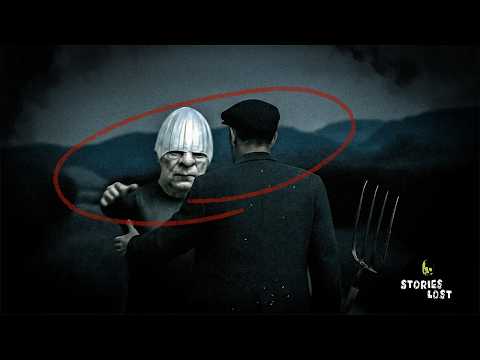
The Kissing Alien: France's 1954 Wave
Stories Lost — context on the French UFO research tradition (Aimé Michel, contemporaneous cases) that produced Joel Mesnard's later work on Bouamama.
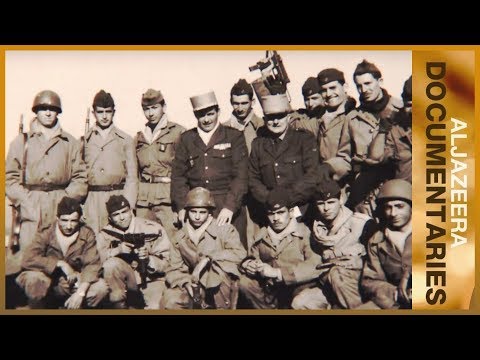
Veterans: The French in Algeria
Al Jazeera English — historical documentary providing background on the Algerian War context of N.G.'s wartime service.
Sources
- "The Algerian War Incident – UFO Sighting Over The Foreign Legion," UFO Insight. Read online →
- "1958: Enormous UFO seen during Algerian War," ThinkAboutItDocs. Read online →
- "UFO sightings in Africa," Wikipedia. Read online →
- Mesnard, Joel. "Tranquilizing Visitation at Bouahmama: An Algerian Report of 1958," Flying Saucer Review, Vol. 19, Special Issue 5 (May–June 1973), pp. 20–21.
- "UFO sightings in Africa," Grokipedia (secondary, AI-generated aggregation — cross-referenced against primary Mesnard/FSR sourcing). Read online →
- "Algerian War," Wikipedia, for background on the conflict's timeline and military conditions. Read online →
- "Cheikh Bouamama," Wikipedia, on the historical namesake of the Bouamama region. Read online →
- Hôpital d'instruction des armées du Val-de-Grâce, official history, French Ministry of the Armed Forces. Read online →
- "Aimé Michel," Wikipedia, on the broader French ufology research tradition Mesnard worked within. Read online →
- Michel, Aimé. Flying Saucers and the Straight-Line Mystery. Criterion Books, 1958.
- Vallée, Jacques. Passport to Magonia: On UFOs, Folklore, and Parallel Worlds. Contemporary Books, 1993 (orig. 1969).
- Hynek, J. Allen. The UFO Experience: A Scientific Inquiry. Da Capo Press, 1998 (orig. 1972).
- Horne, Alistair. A Savage War of Peace: Algeria 1954–1962. New York Review Books Classics, 2006 (orig. 1977).
- Clark, Jerome. The UFO Encyclopedia: The Phenomenon from the Beginning, 3rd ed. Omnigraphics, 2018.
- "File: Sand dunes Taghit Béchar Algeria. al arg.jpg," Wikimedia Commons, photo by Abdelli Amal (CC BY-SA 4.0). View file →
- "Morice Line," Wikipedia, on the Algerian War border-defense barrier system and its extent along the Tunisian and Moroccan frontiers. Read online →
- "French Foreign Legion," Wikipedia, on the Legion's founding, the anonymat enlistment tradition, and its multinational composition during the Algerian War. Read online →
- "Val-de-Grâce," Wikipedia, on the hospital's history as a royal abbey converted to a military teaching hospital in 1793. Read online →
- "Flying Saucer Review," Encyclopedia.com, on the journal's 1955 founding and editorial history. Read online →
- "Its History," GEIPAN (Centre National d'Études Spatiales), on the 1977 founding of GEPAN and its evolution into SEPRA and GEIPAN. Read online →
- "Classification," GEIPAN (Centre National d'Études Spatiales), on the A/B/C/D case-classification methodology referenced in this file's comparative analysis. Read online →
- "May 1958 crisis," Wikipedia, on the French political crisis and the fall of the Fourth Republic, for background on the wartime political context. Read online →
- Pallesen, S., et al. "Sleep deprivation and hallucinations. A qualitative study of military personnel," Military Psychology, Vol. 30, No. 5 (2018). Read online →
- "Joël Mesnard," rr0.org, on Mesnard's career as a GEPA investigator and later editor of Lumières dans la Nuit. Read online →
- "Lumières dans la nuit," Wikipédia (French), on the 1958 founding of LDLN by Raymond Veillith and its later editorship under Mesnard. Read online →
See something inaccurate? Have additional information or sources?
Suggest an Edit →Last Updated: August 2026