
Flying Saucers and the Straight-Line Mystery
Aimé Michel's 1958 Chronicle of France's Record-Setting 1954 UFO Wave Introduces "Orthoteny" — Ufology's Most Influential, and Most Thoroughly Discredited, Statistical Claim
Core Thesis
Flying Saucers and the Straight-Line Mystery is the English-language edition of Mystérieux Objets Célestes, French radio journalist Aimé Michel's 1958 chronicle of the extraordinary autumn 1954 UFO wave that had just swept his country — by later statistical compilation, somewhere near a thousand reports concentrated overwhelmingly into six weeks between mid-September and late October, with single-day peaks of roughly eighty sightings apiece on October 3 and October 15. Rather than simply retelling the wave's best stories, Michel did something no one investigating UFOs at that scale had systematically attempted before: he plotted the date, time and location of each report onto large-scale French road maps and claimed to find that sightings occurring on the same day disproportionately fell along straight geographic lines, a pattern he named "orthoteny" (from the Greek for "stretched straight") and offered as evidence of purposeful, non-random flight paths rather than a summer's worth of scattered misidentification. It was the first serious attempt to argue the UFO question statistically rather than anecdotally — and, within less than a decade of its publication, the book's central claim would be dismantled by exactly the kind of rigorous quantitative scrutiny it had tried to invite, making the book as important today for what it teaches about the risks of pattern-seeking in a small, self-selected dataset as for the wave it chronicles.
About the Author
Aimé Michel was born May 12, 1919, in the small Alpine village of Saint-Vincent-les-Forts, France, and died there on December 28, 1992, at age 73. He held diplomas in psychology and philosophy rather than any physical or statistical science, and worked first as a studio sound engineer before joining the French national radio broadcaster, Radiodiffusion Française, in 1944 — spending the following decades as a journalist, radio producer, and scientific popularizer rather than a credentialed researcher in any field he would go on to write about. That lack of formal scientific training is not incidental to this book's story: Michel was, by his own account and every biographical source that has examined his career, an intelligent and widely read generalist applying self-taught statistical and geographic reasoning to a body of data he had personally assembled, not a trained statistician subjecting it to peer-reviewed method — a distinction his later critics would return to repeatedly.
Michel's engagement with the flying saucer question began in the early 1950s; his first book on the subject, published in French in 1954 and known in English as The Truth About Flying Saucers, appeared while the questions it raised were still confined to a small readership. Everything changed that autumn, when France experienced what remains, by most later tallies, the largest single-country UFO wave that had occurred anywhere up to that time — a wave this site covers in full in its own Great French UFO Wave of 1954 case file. Michel, already positioned as one of the country's few serious saucer-watchers, began collecting and cross-referencing the flood of newspaper and gendarmerie reports as they arrived, eventually assembling the case file that would become Mystérieux Objets Célestes.
The book's most consequential idea, orthoteny, did not originate with Michel working alone at his desk. By his own later account, he developed the concept in conversation with Jacques Bergier, a chemist, wartime intelligence agent and science writer who would go on to co-author the bestselling occult-science compendium The Morning of the Magicians with Louis Pauwels, after the poet and filmmaker Jean Cocteau — a friend and correspondent of Michel's — reportedly suggested he examine whether sighting reports fell into geometric patterns rather than treating them as case-by-case narratives. Working from large Michelin road maps, Michel began plotting the wave's daily reports and believed he found what Cocteau had asked him to look for.
The 1958 English translation, published simultaneously in New York by Criterion Books (credited on some editions to its imprint S.G. Phillips) and carrying a preface by General L. M. Chassin, a NATO air defense coordinator, and an appendix by American researcher Alexander D. Mebane, was prepared and edited by the Research Division of Civilian Saucer Intelligence of New York — giving the book, unusually for a French ufological work of its era, an immediate, credentialed-sounding American institutional packaging even as its actual author remained a self-taught journalist working from newspaper clippings and a set of road maps.
Following orthoteny's rejection by the mid-1960s, Michel redirected his intellectual energy toward the philosophy of science, animal cognition, and Catholic mysticism, joining the editorial board of the French UFO journal Lumières dans la nuit in 1969 and writing extensively for the Catholic magazine France Catholique in his later decades. He remained active in ufology in a more modest capacity through the 1960s and 1970s, conducting one of the earliest and most detailed personal interviews with farmer Maurice Masse after the July 1965 Valensole encounter and publishing its first in-depth account in Flying Saucer Review — work that stands, alongside this book, as the foundation of his reputation as one of European ufology's most methodologically serious early figures, whatever became of his signature theory.
Historical Context & Origins
The autumn 1954 wave that this book chronicles was, by any contemporary standard, an event without precedent: later statistical compilations put roughly 750 of a European total of 961 October sightings alone inside French borders, part of a national total that press estimates and retrospective tallies both place in the 800-to-over-1,000 range for the full August-to-November period, including 200 to 250 close-encounter reports — landings, occupant sightings and physical-trace cases — concentrated overwhelmingly into six weeks between mid-September and late October, with single-day peaks near eighty reports apiece on October 3 and October 15. The wave opened, in the case this site documents in its own dedicated file, with metalworker Marius Dewilde's September 10 encounter at Quarouble, and an earlier close encounter with physical trace evidence had already occurred that January at Marignane airport near Marseille — but by the time the wave crested in October, national and regional newspapers across France were running near-daily sighting reports, the gendarmerie and the domestic intelligence service (the DST) were fielding and investigating dozens of claims directly, and a national magazine had put up a million-franc reward for a genuine flying-saucer photograph.
Michel wrote and published his book directly into the aftermath of that wave, while its material was still fresh enough that he could work largely from his own contemporaneous collection of press clippings, gendarmerie summaries and correspondent reports rather than reconstructed retrospective testimony — a genuine methodological advantage over most books written years or decades after the events they describe, even if it also meant working without the benefit of any settled, verified case inventory. No government body existed yet to perform that verification: France's own official UFO-study office, GEPAN (later GEIPAN), would not be founded until 1977, twenty-three years after the wave and nineteen years after this book appeared, meaning Michel's compilation had to serve, for its own decade, as something close to the closest thing to a systematic public record the wave received.
The book also arrived at a specific moment in the still-young discipline of UFO research generally: existing English-language works, including Edward Ruppelt's 1956 insider account of the U.S. Air Force's own Project Blue Book, were narrative and case-by-case in structure, describing individual sightings and investigations one at a time. Michel's ambition was different and, for 1958, unusually quantitative: rather than arguing that any single sighting was inexplicable, he set out to show that the wave's sightings, considered together as a dataset and plotted geographically, displayed a statistical structure — the orthotenic alignment — that a purely random distribution of misidentifications, hoaxes and hallucinations should not be expected to produce. It was less a ghost story than an attempt at a geographic-statistical argument, the first of its kind that reached a wide readership in the UFO literature.
Core Arguments & Key Concepts
The book's central and title-bearing concept, orthoteny (Michel's own coinage, from the Greek orthos, "straight," and a root meaning "stretched"), holds that UFO sighting locations reported on or about the same calendar day, when plotted on a map, disproportionately fall along straight lines corresponding to great-circle routes across the Earth's surface — lines Michel argued were too numerous and too precisely aligned to be explained by chance clustering of essentially random, independent misidentification reports. His best-known example, the so-called "BAVIC" line connecting Bayonne and Vichy, purported to show six of nine reports filed on a single day, September 24, 1954, falling on or extremely near one straight geographic line, which Michel presented as the book's signature demonstration of the pattern.
Michel's argument for what orthoteny meant, if real, was inferential rather than assertive: he did not claim the alignments proved extraterrestrial visitation outright, but argued that a genuinely purposeful, directed flight path — something moving in a straight line across French airspace over the course of a day, glimpsed at intervals by different, unconnected witnesses along its route — was a more economical explanation for a statistically significant alignment than coincidence, and that coincidence was the explanation orthoteny's critics would eventually need to prove rather than simply assume. This inverted the usual skeptical default, asking readers to treat a geometric pattern in witness reports as itself a form of physical evidence deserving investigation, an approach no earlier popular UFO book had attempted at this scale.
Michel's own presentation of the material was more qualified than the theory's later popular reputation suggests: he explicitly acknowledged in the book that orthoteny's apparent pattern broke down for a residue of "rebel" sightings that could not be fit onto any of his proposed lines, and by later contemporary accounts he treated the system as already showing serious strain by mid-October 1954, within the wave's own timeframe — a candor about the theory's own limits that its most severe later critics would nonetheless argue was not matched by sufficient rigor in how the underlying maps and corridor widths were actually constructed.
Structurally, the book functions as both narrative chronicle and case compilation: alongside the statistical argument, Michel devotes substantial space to describing the wave's individual incidents in the tradition of contemporary reportage — including, in a description later writers have called strikingly consistent across many otherwise unconnected 1954 witnesses, a recurring image of small, silent, large-headed humanoid figures in close-fitting suits, a description this site's own case files on the period, including Marius Dewilde's encounter, independently document. Michel's chronicle helped fix that image in the European public imagination years before American abduction literature developed its own, later and different, humanoid iconography.
The book closes without declaring victory for any single explanatory model. Michel frames orthoteny as an open, falsifiable hypothesis rather than a settled conclusion — a genuinely scientific posture for a piece of popular UFO literature to take in 1958 — but one whose eventual fate depended entirely on statistical work Michel himself was not trained to perform and did not, in this book, attempt with the rigor his later critics would demand.
Key Cases & Evidence Discussed
The Great French UFO Wave of 1954 (Case #211) is this book's actual subject: this site's own country-wide synthesis of the wave explicitly credits Michel's book as the primary period-contemporary source for the episode's statistics, national press coverage, and — as a documented cautionary case study in its own right — the orthoteny theory this article covers in detail, describing it there as "famous and ultimately discredited."
The Marius Dewilde Sighting (Case #065), the September 10, 1954 close encounter at Quarouble that opened the wave Michel's book chronicles, is directly discussed in the book's own case material; this site's own case file on the incident specifically cites Michel's 1958 publication of the case within the larger wave analysis, and notes that six of nine reports filed two weeks later, on September 24, were the reports Michel plotted onto his signature "BAVIC" orthoteny line.
The Marignane Airport Landing (Case #214), a January 4, 1954 close encounter with physical-trace evidence at the airport near Marseille, falls within the same French UFO year Michel's book surveys and is cited on this site's own case file to this exact edition; the recovered metal debris from the case was identified more than a year later as ordinary aircraft anti-static discharge hardware, a mundane resolution of the kind that sits uneasily beside orthoteny's claim of purposeful pattern in the same year's data.
The wave's broader humanoid iconography — small, large-headed, close-fitting-suited entities reported by multiple unconnected 1954 witnesses — is a pattern this book helped document and popularize years before it reappears, in a different register, in later American abduction literature; this site's own Marius Dewilde case file traces that same 1954-wave iconography directly, including French writer Michel Carrouges's 1963 book-length study of it, Les Apparitions de Martiens.
Critical Reception & Controversies
The most consequential and best-documented critical response came from Harvard astronomer Donald H. Menzel, one of American ufology's most persistent professional skeptics, who attacked orthoteny directly and in detail in a running exchange with Michel across several issues of the British journal Flying Saucer Review in the mid-1960s. Menzel's specific technical objections were structural: he documented that Michel had defined his alignment "corridor" width inconsistently across different maps, producing wildly different values for the fraction of total map area the corridors occupied (ranging, in Menzel's own recalculation, from roughly one part in 45 to one part in 92 of the total area), and that Michel had been, in Menzel's words, "extremely careless" in actually drawing the lines — on one of Michel's own published maps, Menzel found he could more than double the number of valid three- and four-point alignments simply by applying Michel's own stated criteria more consistently.
Menzel's most damaging finding was a direct statistical test rather than a methodological complaint: applying a corrected probability formula to Michel's own October 7, 1954 data, Menzel calculated the number of three- and four-point alignments a purely random distribution of the same number of points, scattered across the same map area, would be expected to produce by chance alone — and found the predicted numbers (roughly 48 three-point lines and 7 four-point lines) closely matched the 42 and 6 Michel had actually reported as significant. In other words, once corrected for consistent corridor width and careful line-drawing, orthoteny's own headline data was statistically indistinguishable from what random chance predicts — the same underlying statistical-artifact problem, sometimes compared to the Texas sharpshooter fallacy, that has undone other claimed "pattern" findings drawn from small, retrospectively selected geographic datasets.
The second and, within ufology's own literature, more surprising blow came from a sympathetic quarter: Jacques Vallée, then a young French computer scientist beginning the ufological career that would make him one of the field's most respected researchers, used early computer analysis in his and Janine Vallée's own 1966 book, Challenge to Science: The UFO Enigma, to test whether Michel's proposed alignments could be reproduced by chance. Vallée's conclusion was blunt: the great majority, if not all, of the proposed orthotenic alignments "must be attributed to pure chance" — a verdict from a researcher who had no ideological stake in debunking UFO claims generally, and who went on to become one of the field's most influential voices, which gave the critique a credibility inside ufology that a purely external skeptic's dismissal would not have carried on its own.
By the field's own later reckoning, the theory did not survive this scrutiny. Peter Rogerson's retrospective review for the British journal Magonia concludes that subsequent analysis showed Michel had effectively "sampled the cases to fit his theories" and "massaged dates and locations" in constructing his lines, rendering orthoteny "moribund" by the 1960s — and, by several accounts including the book's own historical reputation, Michel himself eventually accepted that his statistics had been disproved and that orthoteny represented, in his own later assessment, a false trail rather than a vindicated discovery.
Influence & Legacy
The book's most concrete, independently verifiable influence is documented on this very site: this exact 1958 S.G. Phillips edition, under ISBN 0875990770, is cited across resources.html in connection with 4 separate case-file pages — the Great French UFO Wave of 1954, the Marignane Airport Landing, and the Marius Dewilde Sighting among them — reflecting its ongoing use here as a primary period source for France's 1954 UFO year rather than a novelty citation confined to a single page.
Orthoteny's most consequential downstream effect was arguably negative but methodologically foundational: the theory's dismantling by Jacques Vallée's early computer-assisted statistical work helped establish, within ufology's own internal literature, that claimed geographic or numerical patterns in sighting data require actual statistical testing against chance before being treated as evidence of anything — a discipline Vallée carried forward into his own later, far more influential body of work, and one French researcher Jean Sider later revisited directly in his book The 1954 File and the Rationalist Imposture, conducting further computer-assisted re-analysis that this site's own Marius Dewilde case file credits with casting further, significant doubt on Michel's original alignments.
Despite the theory's rejection, Michel's own reputation within the field did not collapse alongside it. Astronomer Pierre Guérin, a CNRS research director in astrophysics who also investigated the 1965 Valensole case Michel would later personally interview witness Maurice Masse about, wrote that Michel "deserved tribute... for having tried an impersonal scientific approach" — a judgment that has held up better across subsequent decades than the specific theory it was written to defend, precisely because it credits Michel's ambition and method rather than his conclusion.
More broadly, the book stands as an early, formative instance of a pattern that recurs throughout ufology's own methodological history: a serious, good-faith attempt to apply quantitative, data-driven analysis to a body of witness testimony, followed by an equally serious quantitative rebuttal that exposed how easily apparent structure emerges from a small, retrospectively assembled dataset. That two-step arc — ambitious pattern claim, followed by rigorous statistical correction — reappears often enough elsewhere in the UFO literature that Michel's book, whatever its own scientific fate, remains a useful reference point for recognizing the same mistake when it resurfaces in other researchers' later work.
The Book
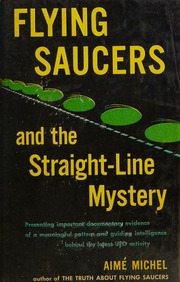
Flying Saucers and the Straight-Line Mystery
Aimé Michel's 1958 Chronicle of France's Record-Setting 1954 UFO Wave Introduces "Orthoteny" — Ufology's Most Influential, and Most Thoroughly Discredited, Statistical Claim
Find on Amazon →As an Amazon Associate, OverClassified may earn from qualifying purchases made through this link, at no extra cost to you.
Why This Is Essential Reading
Flying Saucers and the Straight-Line Mystery earns its place on this list for a reason distinct from almost every other title here: it is essential reading not because its central claim held up, but specifically because it didn't, and because the way it didn't is one of ufology's own most instructive and best-documented methodological case studies. Aimé Michel — a self-taught journalist, not a trained statistician — attempted something genuinely new for 1958: treating a mass UFO wave as a dataset to be analyzed geographically and quantitatively rather than simply narrated case by case, and doing so honestly enough to acknowledge his own theory's "rebel" exceptions within the book itself. That orthoteny was then dismantled, first by Donald Menzel's corridor-width and careless-line-drawing critique and then, more tellingly, by sympathetic researcher Jacques Vallée's own computer-assisted statistical analysis, does not diminish the book's historical importance — it completes it. Read today, the book offers both a vivid, contemporaneous chronicle of the largest UFO wave any nation had produced up to that point and a cautionary tale, verified by the field's own subsequent research, about how readily apparent patterns emerge from small, self-selected geographic datasets — a lesson every reader of this site's own case-file library, still weighing claimed correlations and alignments in UFO data six decades later, would do well to take as seriously as Michel's original, ultimately mistaken, discovery.
Related Cases & Theories
Essential Viewing
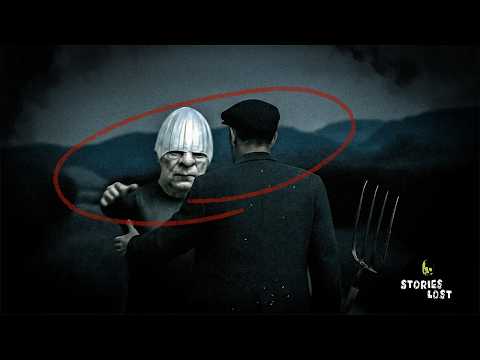
The Kissing Alien – The Encounter That Shocked France
Stories Lost — A documentary account of a 1954 French close encounter set within the wider autumn 1954 wave this book chronicles, covering the era's investigative tradition and Aimé Michel's own contemporary role in it.

Dr. Jacques Vallée: UAP Encounters, Patterns, and the Signals of Intelligence | The Sol Forum #4
The Sol Foundation — Jacques Vallée discussing pattern analysis in UFO data — the same quantitative, statistically rigorous discipline his own early computer-assisted work applied to dismantle Aimé Michel's orthoteny claims in the 1960s.
Sources Cited
- "Aimé Michel." Wikipedia (biography: birth/death dates and place, education, career at Radiodiffusion Française, orthoteny theory, later career on Lumières dans la nuit editorial board). en.wikipedia.org
- Zirger, Michel. "Aimé Michel: Tribute to the Great French Ufologist." New Dawn Magazine (biography, Jacques Bergier and Jean Cocteau connection to orthoteny's origin, Jacques Vallée's critique, Pierre Guérin's tribute quote, death in Saint-Vincent-les-Forts). newdawnmagazine.com
- Rogerson, Peter. "First Read: Aimé Michel and the Straight Line Mystery." Magonia review, reprinted at Pelicanist, June 2014 (book content summary, orthoteny's collapse by the 1960s, "sampled the cases to fit his theories" critique, folkloric legacy assessment). pelicanist.blogspot.com
- Menzel, Donald H. "Orthoteny — A Lost Cause." Flying Saucer Review, republished (abridged) at cantab.net (detailed statistical critique: corridor-width inconsistency, careless line-drawing, corrected chance-alignment calculations closely matching Michel's reported data). cantab.net
- "Flying Saucers and the Straight-Line Mystery." AbeBooks listing for ISBN 9780875990774 / 0875990770 (S.G. Phillips, 1958, first edition, hardcover, bibliographic record). abebooks.com
- "Flying Saucers and the Straight-Line Mystery." Biblio.com listing (Michel, Aimé; Chassin, General L.M. [Preface]; Mebane, Alexander D. [Appendix], Criterion Books, 1958, hardcover, bibliographic detail on preface and appendix contributors). biblio.com
- "Flying saucers and the straight-line mystery." Internet Archive, digitized copy (S.G. Phillips / Criterion Books, 1958; cover art source for this article). archive.org
- "Flying Saucers and the Straight-Line Mystery." Amazon.com (ISBN 0875990770, product listing, edition already cited elsewhere on this site). amazon.com
- "Challenge to Science: The UFO Enigma." Goodreads (Jacques Vallée and Janine Vallée, 1966, bibliographic record for the book containing Vallée's computer-assisted statistical rebuttal of orthoteny). goodreads.com
- "The 1954 French UFO Wave." Parasociology, October 2010 (wave statistics: 750 of 961 European October 1954 sightings occurring in France, October 3 and October 15 peaks, close-encounter category breakdown, explicit acknowledgment of Michel's book as an analytical inspiration). parasociology.blogspot.com
- This site's own resources library: Full Reading List, where this exact 1958 edition (ISBN 0875990770) is cited across 4 separate case-file pages.
- This site's own case file: The Great French UFO Wave of 1954, this book's actual subject and the wave whose statistics and orthoteny theory this article covers.
- This site's own case file: The Marius Dewilde Sighting, for the September 10, 1954 encounter that opened the wave and whose September 24 reports Michel plotted on his "BAVIC" orthoteny line.
- This site's own case file: Marignane Airport Landing, for the January 1954 close encounter within the same French UFO year this book surveys.
- This site's own case file: The Valensole UFO Incident, for the 1965 case Michel personally investigated and wrote up years after this book's publication.
- This site's own key-figures entry: Aimé Michel, for his full biography and case connections.
- This site's own key-figures entry: Jacques Vallée, for his biography and his role in orthoteny's statistical rebuttal.
- This site's own key-figures entry: Donald Menzel, for his biography and his role as orthoteny's principal skeptical critic.
Have corrections, additional research, or peer-reviewed sources? Help improve this entry.
Suggest an Edit