
Pretoria Police Station UFO Encounter
Before dawn on August 28, 1996, officers at the Adriaan Vlok police station in Erasmuskloof, a suburb of Pretoria, South Africa, watched a glowing, disc-shaped object with a pulsating red triangle hover silently overhead for roughly 90 minutes. Officer Nico Stander videotaped it; Sergeant Johann Becker and dozens of colleagues watched it directly; and when the sighting escalated into a major operation involving some 200 police personnel and a Bo-105 helicopter piloted by Superintendent Fred Viljoen, the object reportedly outran the aircraft at full speed, executed unusual undulating movements, and made a vertical ascent near Cullinan while a radar operator at Air Force Base Waterkloof reported corresponding clutter. Similar objects returned over Pretoria on August 31 and September 1. No conventional explanation for the sighting has ever been officially confirmed.

Pictured: Lion Bridge, Pretoria, South Africa, at night, illustrative of the city where the encounter took place; not a photograph of the sighting itself. Photo by Louis Oelofse, Wikimedia Commons (CC BY-SA 3.0).
Theoretical Alignment
This file weights Psycho-Social/Mundane highest because no independent physical trace or instrumented anomaly beyond secondhand radar clutter reports has ever been produced, and because a sighting this widely witnessed by a disciplined, trained workforce would typically be expected to generate more corroborating detail (precise altitude, speed, or size measurements) than has survived in the available record. It assigns meaningful weight to Extraterrestrial because the case combines several evidentiary elements this archive treats as genuinely significant when they co-occur: a large number of trained, on-duty law-enforcement witnesses, contemporaneous video, a credentialed pilot's direct pursuit account, and an independent radar report, none of which any subsequent investigation has managed to fully explain away.
The weighting is also shaped by a named skeptical analysis that this file's research uncovered and treats as directly relevant: the Swedish national UFO research organization UFO-Sverige, through veteran investigator and journalist Clas Svahn, has publicly argued that the object was most likely the planet Venus, misjudged in elevation and pursued by a helicopter that could never have closed the distance regardless of speed (see "The Venus Hypothesis" below). That analysis is a genuine, checkable, named piece of skeptical research rather than an anonymous internet debunking, and this file's Psycho-Social/Mundane weighting reflects it directly. At the same time, the Venus hypothesis is itself a secondary reconstruction produced more than two decades after the fact by an organization with no on-the-ground access to the original witnesses, the police helicopter's flight data, or the Waterkloof radar logs, which is why this file does not treat it as dispositive and continues to assign meaningful weight to the Extraterrestrial hypothesis rather than reclassifying the case as Debunked. A case in which the best available skeptical explanation and the best available witness testimony remain in direct, unresolved tension is, by this archive's own standard, precisely what "Disputed" is meant to capture.
Background
The sighting began in the pre-dawn hours of August 28, 1996, at the Adriaan Vlok police station in Erasmuskloof, a Pretoria suburb. On-duty officer Nico Stander first noticed the object and began recording video; Sergeant Johann Becker, a fellow officer, later gave a detailed account to SABC TV, South Africa's public broadcaster, recalling that the "light was floating in the air. When we went outside to investigate, we realized it was something from another world," and describing "a disc-shaped object slightly glowing. We also noticed what looked like a red triangular light on the disc." What began as a routine overnight observation escalated rapidly once other officers were alerted: according to accounts of the night, the first officers who radioed in a report were initially met with disbelief and laughed at by colleagues on duty elsewhere, before further reports from the neighboring suburb of Centurion made clear that whatever was being observed was not confined to a single vantage point. The response ultimately drew in the Flying Squad (the SAPS's rapid-response tactical unit), a K9 unit, and mobile units from across the greater Pretoria area — roughly 200 personnel in total by the time the object was still visible.
Erasmuskloof itself is a relatively affluent, then-newly developed south-eastern Pretoria suburb built on what had been the Garsfontein farm, and it sits only a short distance from 370 Nossob Street, the Pretoria headquarters of Armscor, South Africa's state-owned armaments and defense-procurement corporation — a detail this file notes as background context rather than as evidence of any connection, since no source locates the sighting itself at or near the Armscor site. The police station at the center of the case bore the name of Adriaan Vlok, who had served as South Africa's apartheid-era Minister of Law and Order from 1986 to 1991 and was, by 1996, a controversial figure from the recently ended apartheid period; he was later convicted in 2007 in connection with a plot against an anti-apartheid activist. The naming is incidental to the sighting itself, but it situates the case squarely within a South African Police Service that was, in August 1996, only two years removed from the country's first democratic elections and still organized under many of its apartheid-era institutional structures and station names. The force itself had also only recently been reconstituted: on January 29, 1995, President Nelson Mandela appointed General George Fivaz as the first National Commissioner of the newly formed South African Police Service, created that year by merging eleven separate former police agencies — including, controversially and significantly, combatants from the ANC's Umkhonto we Sizwe and the PAC's Azanian People's Liberation Army — into a single national force under the South African Police Service Act, 1995. The roughly 200 officers who responded to the Erasmuskloof sighting in August 1996 were therefore serving in an institution barely a year and a half into a difficult, still-unfolding process of organizational transformation, a detail this file considers relevant context for assessing institutional response capacity rather than as evidence bearing on the sighting itself.
The object reportedly remained largely stationary, hovering an estimated 150 feet above the station, for approximately 90 minutes before officers on the ground began actively pursuing it. A South African Police Service Bo-105 helicopter, carrying five officers and piloted by Superintendent Fred Viljoen of the police air wing, launched at approximately 5:30 a.m. and located the object over the nearby suburb of Mamelodi, a large township established in 1953 to the northeast of the city center. Viljoen later told SABC-TV, in a fuller account than is often reproduced, that he saw "a bright light above Mamelodi, a township near Pretoria, about 70 degrees above the horizon," adding: "It is the first time in my life I've ever seen anything like this. At first I thought it was a joke when I was called out, but soon came to realize that this was something I had never experienced before." Describing the chase itself, he said, "We were going after it full speed, and it still outran us. What was very unusual were the undulating motions of the craft. I followed the white disk with the unusual flight patterns in the direction of Cullinan. It travelled at a high speed. We could not keep up with it, and eventually had to give up when lack of fuel became a problem."
The aircraft Viljoen was flying, an MBB/Eurocopter Bo 105 twin-engine light helicopter widely used by police and military air wings worldwide during this period, had a manufacturer-rated maximum speed of approximately 270 km/h — the same figure secondary accounts of this case commonly cite as the object's estimated pursuit speed. This file flags that correspondence as analytically important: the commonly repeated "270 km/h" figure appears to describe the helicopter's own top speed rather than an independently measured or radar-confirmed velocity for the object itself, since no instrument aboard the Bo-105 or at Waterkloof is documented to have logged the object's speed directly. What can be said with more confidence, based on Viljoen's own account, is only that the object outpaced the helicopter at the helicopter's maximum sustained speed — a real and unusual claim from a credentialed pilot, but one that establishes a floor rather than a precise ceiling on the object's true performance.
The story broke locally within hours: SABC-TV aired footage and interviews on August 28, and the Afrikaans-language newspaper Beeld, one of South Africa's largest daily papers, covered the story on consecutive days, with reporter Sandra Coetzee's August 29 article carrying a headline that translates roughly to "UFO flies from Pretoria to Bronkhorstspruit" and her August 30 follow-up headlined, in translation, "UFO at Pretoria remains a mystery." A further Beeld report by journalist Antoinette Pienaar on September 2 covered the renewed excitement after objects were again reported over the following days. The Bronkhorstspruit reference in the first headline is notable in its own right: the road running northeast from Pretoria toward Bronkhorstspruit and Cullinan was also the site of an earlier, unrelated Pretoria police UFO encounter in September 1965, when constables John Locken and Koos de Klerk reported a disc-shaped object resting on the road before rising and departing, leaving a scorched circular mark investigators later measured on the roadway (see "Historical Precedents" below). Whether by coincidence or by the underlying geography of the corridor leading out of the city, Pretoria's two most famous police-witnessed UFO cases, three decades apart, both trace a path along broadly the same stretch of road.
Complete Timeline
The sequence below synthesizes the SABC-TV broadcast account, the contemporaneous Beeld newspaper coverage, and the later English-language summaries (Wikipedia, UFO Casebook, UFOINFO) that drew on both. These sources are broadly consistent on the core sequence of events but do not always agree on minor details such as the precise minute of each phase, and this file has not located a single authoritative minute-by-minute police incident log; the timeline below therefore reflects the most commonly repeated timing across sources rather than an official record.
| Date | Event |
|---|---|
| Aug. 28, 1996, approx. 4:00 a.m. | Officer Nico Stander first observes and begins videotaping the object hovering over the Adriaan Vlok police station. |
| Aug. 28, 1996 (following ~90 min.) | The object remains largely stationary; additional police units and personnel are alerted and respond. |
| Aug. 28, 1996, approx. 5:30 a.m. | A police Bo-105 helicopter, piloted by Superintendent Fred Viljoen with four other officers aboard, launches in pursuit and locates the object over Mamelodi. |
| Aug. 28, 1996 (pursuit) | The object reportedly outpaces the helicopter at speeds estimated near 270 km/h while performing undulating vertical and horizontal movements. |
| Aug. 28, 1996 (chase's end) | The pursuit is abandoned near Cullinan at approximately 10,000 feet when the helicopter's fuel runs low; the object makes a rapid vertical ascent. A radar operator at Air Force Base Waterkloof, in contact with Viljoen, reports corresponding radar clutter in the object's vicinity. |
| Aug. 31 & Sept. 1, 1996 | Similar objects are reported over the Pretoria area on two further occasions in the following days; Beeld reports renewed public excitement on Sept. 2. |
| 1996 (following weeks) | SABC TV broadcasts footage and witness interviews; Beeld covers the story on Aug. 29 and 30; no South African institution ever issues a formal, named conventional explanation for the sighting. |
| April 2020 | Swedish researcher Clas Svahn of UFO-Sverige publishes an analysis proposing the planet Venus, misjudged in elevation, as the object's likely identity. |
The Radar Correlation
The case's most significant evidentiary element beyond witness testimony and video is the reported radar correlation. According to accounts of the helicopter pursuit, Superintendent Viljoen maintained radio contact throughout the chase with radar operators at Air Force Base Waterkloof, one of the South African Air Force's primary installations near Pretoria, who reported detecting corresponding radar clutter in the vicinity of the pursued object. This file treats the correlation as a genuine, if secondhand and not independently re-verified, piece of supporting evidence: unlike most purely visual UFO reports, this account describes a real-time cross-check between an airborne eyewitness and a separate ground-based sensor operator during the event itself, rather than a retrospective attempt to match a witness description to archival radar logs.
Waterkloof is not a minor or improvised installation. Officially opened in 1938 and expanded into a full air base during the Second World War, it sits near Centurion just outside Pretoria and has long been the South African Air Force's busiest base, hosting multiple transport squadrons and, at various points, dedicated intelligence and reconnaissance units. That an operator at a base of this stature was reportedly in a position to report "clutter" during the pursuit lends the claim more institutional weight than a radar report from an ad hoc or civilian source would carry. At the same time, "radar clutter" is a specific and somewhat ambiguous technical term: it ordinarily refers to unwanted or unexplained returns on a radar display — caused by anything from birds and weather to electronic noise, temperature inversions, or genuine aircraft — that a controller flags as inconsistent with expected air traffic. A verbal report of "clutter" in the vicinity of a pursuit is meaningfully different from a preserved, timestamped radar track showing a discrete target performing the specific maneuvers witnesses described, and no such track, tape, or printout from Waterkloof has ever been published or made publicly available for this case.
This distinguishes the Pretoria case from the small number of radar-visual UFO encounters in this archive where the underlying instrumented data was later released or independently examined — for instance, cases in which gun-camera film, cockpit video, or archived radar logs became available for outside review well after the event. Here, the entire radar dimension of the case rests on Viljoen's own secondhand account of what a Waterkloof controller told him over the radio during a fast-moving pursuit, filtered through his own recollection and then through subsequent press summaries. That does not make the claim false, and a credentialed helicopter pilot relaying a real-time radio exchange is a materially stronger form of evidence than an uncorroborated visual report alone; but it does mean the radar correlation functions in this file's assessment as suggestive corroboration rather than independently verifiable proof, and it is the single evidentiary element in this case most in need of primary-source confirmation that has never surfaced.
The aircraft itself is worth a brief technical note, since its capabilities frame what "outran the helicopter" actually means. The Bo 105, developed by the West German manufacturer Bölkow (later part of Messerschmitt-Bölkow-Blohm) and first flown in 1967, was notable among helicopters of its generation for a hingeless, rigid main-rotor system that gave it unusually aerobatic handling for a twin-engine utility helicopter; it was widely exported and adopted by police, military, and emergency-medical operators around the world, South Africa's police air wing among them. A Bo-105 crew failing to close the distance on a target while flying at the aircraft's own rated top speed is a genuinely notable claim about that specific target's behavior — but as the "Background" section above notes, it is also fully consistent with the target simply being far enough away, or moving in a way, that outpaces a helicopter regardless of what that target actually was.
The Failure of Official Explanation
This file's research turned up an important correction worth flagging explicitly. A widely circulated summary of South African UFO history states that "despite inquiries to both the South African Air Force and the Johannesburg planetarium, no rational explanation was provided for these precise and repetitive appearances" — and earlier versions of this file, like several other secondary sources, applied that sentence to the 1996 Pretoria police case. On closer reading, that specific claim actually describes a separate, later Pretoria-area sighting: a July 2010 incident in the suburb of Booysens, in which witness Engela van der Spuy reported a stationary, heart-shaped object with colored lights on two consecutive evenings (see "Historical Precedents" below). No source located for this file documents a formal, named inquiry to the South African Air Force or to a planetarium specifically about the 1996 police sighting, and this file has corrected the earlier conflation accordingly.
What can be said accurately about the 1996 case's aftermath is more modest but still notable: contemporaneous Beeld coverage from the days immediately following the sighting explicitly described the object as remaining a "mystery" (per Sandra Coetzee's August 30 headline), and no source — South African or international, from 1996 to the present — has identified a named SAPS or SAAF official who issued a formal, on-the-record conventional explanation for what the roughly 200 officers involved reported witnessing. That is a real and meaningful gap: it means the case was never formally closed with an accepted mundane cause, unlike some other well-known police or military UFO reports in this archive that were later attributed, rightly or wrongly, to a specific named object, weather phenomenon, or aircraft by an investigating authority. It should not, however, be mistaken for proof that no conventional explanation exists; it means only that none was ever formally, publicly documented by an institution with jurisdiction. As detailed in the following section, that formal gap was later filled, at least provisionally, not by any South African government body but by an independent Swedish UFO research organization working from the surviving video and press accounts more than two decades after the fact.
The Venus Hypothesis: A Named Skeptical Analysis
In April 2020, Clas Svahn — a Swedish journalist who has worked at the newspaper Dagens Nyheter since 1990, served as chairman of the national research organization UFO-Sverige from 1991 to 2013 and again since 2023, and has chaired the Archives for the Unexplained (AFU) in Norrköping, one of the world's largest UFO research archives, since 2017 — published a detailed analysis of the Pretoria case on UFO-Sverige's website, titled (in Swedish) "Helikopterjakten utanför Pretoria," or "The Helicopter Chase Outside Pretoria." The piece was one of a series UFO-Sverige published under the banner "Verkligheten bakom" ("The Reality Behind"), created specifically to correct factual departures the organization identified in a Swedish public-radio series that had dramatized several UFO cases, including this one, for a general audience.
Svahn's central argument is that the object filmed and chased on August 28, 1996 was the planet Venus. His reasoning, as published, runs roughly as follows: Venus was, during this period, an unusually bright presence in the pre-dawn eastern sky, and it is one of the most commonly misreported "UFOs" worldwide precisely because its brightness is disproportionate to its apparent size, making it easy to mistake for a much closer, physically solid light source. The sighting began around 4:00 a.m. in the direction described by witnesses (toward the northeast, low over the horizon), and the general bearing from Mamelodi toward Cullinan that the pursuit followed points, according to Svahn's own calculation, in essentially the same direction Venus would have occupied that morning. He further notes that Officer Becker described the object as roughly 70 degrees above the horizon, but argues that eyewitnesses relatively routinely overestimate elevation angles of this kind, and that the surviving video footage itself shows the light positioned considerably lower in the sky than 70 degrees — more consistent, in his reading, with Venus's actual position. Finally, he points to the sighting's approximately 90-minute duration, ending close to sunrise: a bright planet low in the eastern sky before dawn is exactly the kind of object that would fade from easy visibility once the sun rose and washed it out, independent of anything the object itself was "doing."
Svahn also addresses the helicopter chase directly, and with evident irony: a pilot pursuing a genuinely close, physically maneuvering craft at his aircraft's top speed and failing to close the distance is one thing; a pilot pursuing an object roughly 40 million kilometers away and failing to close the distance is, on this reading, an entirely predictable outcome that requires no exotic explanation for why the "craft" seemed to "outrun" a police helicopter. Svahn notes, based on his own experience interviewing other police officers in Sweden and elsewhere about aerial misidentifications, that officers have mistaken cell-phone towers, rocket launches, and bright stars for unidentified objects in other cases he has personally investigated, and argues that basic astronomy and common misidentification patterns are not part of standard police training, leaving officers — however disciplined and credible as witnesses to what they believe they saw — no better equipped than the general public to distinguish an unusually bright planet from something closer and stranger.
This file treats the Venus hypothesis as the single most substantive, named, checkable conventional explanation ever proposed for this case, and as materially better sourced than the vague, unnamed "planetarium was consulted" claim this file previously (and incorrectly) associated with the 1996 sighting. It is not, however, treated as a final or fully dispositive resolution, for several reasons this file considers fair to weigh on the other side. First, Svahn's analysis was published in 2020, based on archival video, press accounts, and general astronomical reasoning rather than on interviews with the surviving witnesses, the original police helicopter's flight data, or the underlying Waterkloof radar logs, none of which he is documented to have had access to. Second, it does not directly address the radar clutter Viljoen reported from Waterkloof, since a planet produces no radar return of any kind; a full Venus explanation would require that the reported clutter be coincidental, unrelated, or itself misremembered or exaggerated in transmission, which Svahn's piece does not specifically examine. Third, Officer Becker's original account described not just a static light but a "disc-shaped object" with a "pulsating red triangular light," and some contemporaneous descriptions referenced brief green light emissions — details that go beyond what a bright, steady planetary point of light would be expected to produce, even accounting for the atmospheric scintillation and lens artifacts that can make a bright planet appear to flicker, change color, or take on an elongated shape on a consumer video camera at extreme zoom. This file's own Evidence Assessment (below) weighs the Venus hypothesis directly against these countervailing details rather than treating either side as settled.
One further point is this file's own inference rather than any claim made directly by Svahn, and it is offered as interpretive reasoning rather than as an established fact: if Venus is indeed the correct explanation for the August 28 sighting, the same planet would still have been visible and roughly as bright in the same part of the pre-dawn sky on the mornings of August 31 and September 1, when further objects were reported over the Pretoria area. A recurring bright morning object at a broadly similar time and direction on non-consecutive but nearby dates is exactly the pattern one would expect from a slow-moving celestial body remaining in view over a period of days, rather than from a genuinely novel craft choosing to return on two further occasions. This file flags that consistency as a point in the Venus hypothesis's favor, while also noting that no source has independently confirmed the August 31 and September 1 sightings involved the same witnesses, the same specific direction, or the same described appearance as the original August 28 event, which limits how much weight this particular inference can bear on its own.
Key Figures
No dedicated, named police or air force investigative team is documented as having been assigned to this case; the figures below are the individuals whose direct, on-the-record accounts and published research this file's assessment relies on most heavily.
Nico Stander
First observed and videotaped the object at the Adriaan Vlok police station, producing the case's primary visual documentation.
Fred Viljoen
Piloted the Bo-105 helicopter that pursued the object, personally observed its evasive undulating flight, and maintained radio contact with Air Force Base Waterkloof radar during the chase.
Cynthia Hind
Africa's foremost ufologist during the 1990s, known for rigorously investigating (and, in other cases, personally debunking) reported African UFO incidents; documented Southern African cases including this one in her research and publications.
Hind's involvement with this case sits within a much longer career: an English-born researcher who settled in what was then Rhodesia and later Zimbabwe, she served for over a decade and a half as the Mutual UFO Network's regional coordinator for Africa and edited the biannual research bulletin UFO Afrinews. Her investigative method relied heavily on direct witness interviews — she personally interviewed witnesses in the large majority of the cases collected in her books — and she is best known internationally for her field investigation of the September 1994 Ariel School incident in Ruwa, Zimbabwe, in which dozens of schoolchildren described an object landing near their playground. Hind died in 2000. Sergeant Johann Becker, whose SABC-TV account forms much of the primary testimonial record for this case, and Officer Nico Stander, its videographer, are not documented in this archive's records as having given any further public interviews after 1996, and this file has not located evidence that either was formally interviewed by an independent researcher such as Hind for this specific case, as distinct from the SABC broadcast itself.
The Five Observables Assessment
Applying the Five Observables framework to the reported behavior during the helicopter pursuit:
Assessment: The reported flight characteristics (sustained hover, undulating evasive movement, ability to outpace a helicopter, rapid vertical ascent) are unusual for a stationary or slow-moving light source but do not, on the available testimony, clearly exceed the performance envelope of some conventional aircraft or airborne objects under specific conditions; this file rates the observables Speculative rather than Present given the absence of instrumented speed or altitude data.
This case is formally classified in this archive as a Close Encounter of the First Kind (CE-1) under the taxonomy J. Allen Hynek proposed in his 1972 book The UFO Experience: A Scientific Inquiry — a close-range sighting of an apparently solid object without physical interaction, alleged occupants, or a landing trace, as distinct from a Close Encounter of the Second Kind (involving a physical trace) or Third Kind (involving observed occupants). None of those criteria appear in any account of this case. The pairing of a CE-1 sighting with an active air pursuit and a reported radar cross-check is comparatively unusual within this classification; most CE-1 reports in this archive involve a single stationary or briefly moving observation with no aerial follow-up. That combination is a meaningful part of why this file weights the case as Disputed rather than a routine unresolved light report, notwithstanding the significant countervailing weight of the Venus hypothesis discussed above.
Evidence Assessment
Supporting a Genuine Anomaly
- An unusually large number of trained, on-duty law-enforcement witnesses (approximately 200) observed the object, a witness pool with meaningfully higher baseline credibility than an equivalent number of untrained civilian observers.
- A credentialed police helicopter pilot personally pursued the object and described its evasive performance directly and on the record, rather than the account passing through multiple layers of secondhand retelling.
- An independent radar operator at a separate, major military installation (Air Force Base Waterkloof) reported corroborating clutter in real time during the pursuit, a rare form of cross-checked evidence in this archive.
- Contemporaneous witness description included a specific, structured visual detail — a pulsating red triangular light on a disc-shaped body, with reports of brief green emissions — that goes beyond what a simple bright point of light would be expected to produce, even under the video artifacts a bright planet can generate at high camera zoom.
- The story was independently reported at the time by both South Africa's national broadcaster and a major national newspaper (SABC-TV and Beeld), reducing the odds that key details were invented or substantially distorted after the fact.
Supporting a Conventional Explanation
- No physical trace, debris, or recovered material has ever been associated with this case.
- The radar correlation is described only secondhand through the pilot's account, not independently documented with the underlying radar logs or a named, on-record statement from the Waterkloof radar operator.
- Reported speeds and flight characteristics, while unusual for a hovering light, do not clearly exceed what some conventional aircraft, decoy flares, or atmospheric/optical phenomena could plausibly produce under nighttime observation conditions; the commonly cited "270 km/h" pursuit speed matches the Bo-105 helicopter's own known top speed rather than an independently measured figure for the object.
- A named, independent skeptical investigation of this specific case exists: Swedish researcher Clas Svahn of UFO-Sverige has argued the object was the planet Venus, pointing to the sighting's direction, duration, and end near sunrise, and to the tendency of eyewitnesses to overestimate a bright light's elevation angle above the horizon.
- The sighting occurred low over the horizon before dawn and ended close to sunrise, a timing pattern consistent with the visibility window of a bright planet rather than with an object independently choosing to depart.
- No physically instrumented measurement of the object's speed, altitude, or size was ever recorded by any party; every numerical figure associated with the case (150 feet, 270 km/h, 10,000 feet, 70 degrees) derives from unaided witness or pilot estimation rather than radar, laser rangefinding, or triangulated photogrammetry.
Why "Disputed"
This case is rated Disputed because it combines an unusually strong witness and institutional profile — a large body of trained police officers, a credentialed helicopter pilot's direct pursuit account, contemporaneous video, national broadcast coverage, and a reported real-time radar correlation from a separate military radar operator — with the complete absence of physical evidence, independent instrumented confirmation, or a named, on-record conventional explanation from any qualified South African investigating authority. That combination places the case above this archive's Debunked threshold, since no South African institution with jurisdiction ever issued a formal closing report attributing the sighting to a specific mundane cause, while keeping it well short of Verified or Credible, since the radar correlation remains secondhand and the object's reported behavior does not require an exotic explanation once a serious, named skeptical hypothesis (Venus) is weighed against it.
The discovery of Clas Svahn's 2020 UFO-Sverige analysis during this file's research materially changes how "unresolved" this case should be described, without resolving it outright. Before that analysis surfaced, this file's own prior text overstated the case's evidentiary strength by wrongly importing an Air Force/planetarium non-explanation that actually belonged to a different, later Pretoria sighting. Corrected, the honest position is that a serious, named, checkable skeptical case exists and deserves real weight, but it was produced decades after the fact, from secondary materials, by researchers with no access to the original witnesses or the Waterkloof radar data, and it does not fully account for the reported structured visual details (a triangular light pattern, brief color changes) or for the radar clutter Viljoen described. A case where the strongest skeptical explanation and the strongest supporting testimony each leave real, specific gaps in the other is the textbook definition of Disputed as this archive uses the term, rather than either Debunked or Credible.
This file finds the case genuinely comparable to other well-witnessed, radar-adjacent military/police UAP encounters in this archive, and treats the scale of the police response itself — some 200 personnel and a helicopter scramble, an unusually large institutional commitment for what officials could easily have dismissed as a routine light misidentification — as indirect evidence that the officers involved genuinely believed they were observing something outside their normal operational experience, whatever its ultimate physical nature turns out to have been.
Observer Credibility & Occupational Profile
The case's evidentiary strength rests substantially on the occupational profile of its witnesses: on-duty, trained South African Police Service personnel, including a helicopter pilot with direct aviation experience and presumably some familiarity with distinguishing aircraft from other aerial phenomena. Superintendent Viljoen's own on-record account — volunteering that this was "the first time in my life I've ever seen anything like this" and that he initially "thought it was a joke" before concluding it was genuinely unfamiliar — is, in this file's assessment, a credibility-strengthening detail: a career police pilot describing his own reaction with that degree of specificity and self-deprecating candor suggests a genuine, surprised observation rather than motivated reasoning toward an exotic conclusion.
That said, this file weighs a specific and important qualification raised directly by Clas Svahn's analysis: flight training, or general police training, does not typically include instruction in basic observational astronomy or in the specific misidentification patterns that make bright planets, satellites, high-altitude balloons, and distant aircraft lights notoriously easy for even attentive, honest observers to misjudge in both distance and elevation angle. Svahn has documented, from his own casework, police officers elsewhere mistaking illuminated cell-phone towers, rocket launches, and unusually bright stars for unidentified aircraft. A trained pilot is well equipped to judge the performance of another aircraft relative to his own, which is precisely why Viljoen's account of failing to close the distance while at full speed is significant; but neither piloting experience nor general police training is a strong safeguard against misjudging the elevation angle or true distance of a bright celestial object low on the horizon in the dark, which is exactly the specific error Svahn's analysis alleges occurred here. This file treats occupational credibility and susceptibility to this particular class of error as two separate axes rather than collapsing them into a single "trained observers are reliable" or "trained observers are unreliable" verdict: the officers' training makes their account of the chase itself (what the helicopter did, whether it gained ground, how long fuel lasted) highly credible, while saying comparatively little about whether the initial identification of the light source was correct.
The size of the witness pool cuts in a similarly two-sided way. Roughly 200 personnel is an unusually large number of witnesses for a single UFO case in this archive, and it substantially reduces the likelihood that the sighting was a fabrication or a hoax originating with one or two individuals. It does comparatively little, however, to rule out a shared misidentification, since a bright, genuinely unusual-looking light source in the sky before dawn would be visible to, and could plausibly be misjudged in the same way by, every officer looking in its direction — unlike a hoax, which a large distributed witness pool does meaningfully guard against, a shared perceptual error is not something that more witnesses looking at the same light source can independently correct for.
Historical Precedents & Archive Matches
This case shares structural similarities with other radar-visual military and law-enforcement UAP encounters in this archive, particularly cases combining a credentialed pilot's pursuit account with a separate, independently reported radar correlation, though it remains distinguished by the unusually large scale of the responding police force.
Within South Africa's own UFO reporting history, this file identifies three other cases worth noting for comparison, none of which should be conflated with the August 1996 police sighting itself. The earliest is a September 1965 incident on the Pretoria–Bronkhorstspruit road, in which constables John Locken and Koos de Klerk reported a disc-shaped object resting on the roadway ahead of their vehicle before it rose into the air, apparently emitting flame from beneath it, leaving behind a scorched circular mark on the road surface roughly three meters across that investigators later measured; that case, like the 1996 sighting, was never officially resolved, and it later inspired a roadside restaurant, the Flying Saucer Roadhouse, that operated near the site for roughly a decade. The second is the July 2010 Booysens sighting referenced above, in which resident Engela van der Spuy and others reported a stationary, heart-shaped object with orange, pink, blue, and green lights and a downward-projecting white beam, visible for over two hours on two consecutive evenings; this is the case for which formal inquiries to the South African Air Force and the Johannesburg planetarium are documented, without a conventional explanation being confirmed. The third is a November 2015 wave of unexplained green lights reported over Cape Town and, subsequently, Johannesburg and Durban; the South African Astronomical Observatory initially suggested the lights were tests of stadium floodlighting equipment, an explanation stadium officials in Cape Town disputed at the time, leaving that case likewise formally unresolved.
More broadly, Cynthia Hind's decades of Southern and Central African field investigation situate the 1996 Pretoria case within a wider regional pattern this archive treats as relevant context rather than direct evidence: most famously, her investigation of the September 1994 Ariel School incident in Ruwa, Zimbabwe, in which a large group of schoolchildren independently described a landed object and its apparent occupants, remains one of the most widely discussed African UFO cases internationally and helped establish Hind's investigative credibility within MUFON and the broader ufological community prior to her work touching on the Pretoria case.
Internationally, this file's closest structural matches remain the two cases already cross-referenced above: the 1956 Lakenheath-Bentwaters radar-visual encounter over England, in which multiple ground radar stations and an interceptor pilot reported corresponding contacts, and the 1952 Haneda Air Base radar-visual sighting in Japan, in which a control tower crew and an intercepting fighter pilot both tracked an object visually and on radar. Both of those cases, like Pretoria, combine credentialed military or law-enforcement witnesses with a reported radar cross-check and lack a fully confirmed conventional resolution; the Pretoria case's distinguishing feature within that comparison set is the unusually large scale of the responding police force and the fact that its best available skeptical explanation (Venus) was proposed by a named, specific, independent research organization rather than remaining an entirely open question, as in several of its closest archive comparisons.
This file also treats it as methodologically significant that the strongest skeptical case against this file's own earlier framing of the sighting came not from a South African government body, an American skeptical organization, or an anonymous internet debunker, but from a long-established, named foreign UFO research organization with its own decades of institutional history: UFO-Sverige, founded in the 1970s and Sweden's national UFO research body, and its affiliated Archives for the Unexplained, one of the largest dedicated UFO document and artifact archives in the world. That a serious UFO research organization, rather than a purely skeptical or debunking outlet, produced the analysis this file finds most persuasive is itself a useful data point about how this archive should weigh conventional-explanation candidates generally: the source of a proposed explanation, and its transparency about its own evidentiary limits, matters as much as the explanation's headline conclusion.
Material Analysis
The case's primary physical evidence is the approximately two-minute videotape recorded by Officer Nico Stander, which was broadcast on SABC TV on August 28, 1996, and remains the most widely circulated documentation of the incident; excerpts continue to circulate today on video platforms, including the two videos referenced in "Essential Viewing" below, one of which is drawn directly from the original 1996 broadcast footage and the other a later documentary-style summary of the case. No ground trace, debris sample, or other physical material has ever been recovered or associated with the sighting, and this file has not located any published forensic film analysis — frame-by-frame optical measurement, spectral analysis, or comparison against known celestial ephemeris data for the specific time and location — conducted by any independent laboratory, university, or ufological research body specifically on the surviving footage. Clas Svahn's 2020 analysis draws inferences from the footage (particularly regarding the object's apparent elevation angle relative to witness testimony), but it is a qualitative visual comparison rather than a frame-measured photogrammetric study. The two videos linked in "Essential Viewing" below reflect the two main forms in which this footage has reached later audiences: the first is drawn from the original 1996 SABC broadcast itself, preserving the contemporaneous news framing and Becker's own on-camera account, while the second is a later third-party summary produced for an online audience, "UFO Police Helicopter Chase in Africa," which recaps the case and its helicopter pursuit rather than presenting unseen primary footage. This file has not located a copy of the full, unedited two-minute tape described in original 1996 reporting; what circulates today, in both videos, appears to be excerpted or re-broadcast segments rather than the complete original recording.
Supporting Continued Legitimate Interest
- Contemporaneous video recorded by a trained officer, rather than a delayed or reconstructed account, gives this case a genuine documentary record most purely testimonial cases lack.
- The footage was broadcast nationally within hours of the sighting rather than surfacing years later, reducing (though not eliminating) the likelihood of post-hoc alteration.
Supporting a Conventional Explanation
- No independent forensic or technical analysis of the surviving video has been published, and no physical evidence beyond the footage itself exists to test against a conventional hypothesis.
- No frame-measured photogrammetric or ephemeris comparison of the footage against Venus's documented position that morning has been published by any party, meaning the Venus hypothesis, like the extraordinary hypothesis it argues against, currently rests on qualitative visual argument rather than a fully instrumented analysis of the tape itself.
The Conventional Explanation Candidate: Contested
Unlike a case with no proposed explanation at all, this file can now identify one leading, named conventional explanation candidate: Clas Svahn and UFO-Sverige's 2020 case for the planet Venus, detailed above under "The Venus Hypothesis." This file rates that hypothesis as the strongest single candidate presently on record, on the strength of its specificity (a named celestial object, a specific claimed direction match, and a specific claimed timing match to sunrise) and the credentials of the organization proposing it. It is not, however, treated as a confirmed or fully substantiated explanation, both because it was produced without access to primary source materials (the original witnesses, flight data, or radar logs) and because it does not fully account for the reported structured visual detail of a pulsating red triangular light and brief green emissions, nor for the radar clutter Superintendent Viljoen reported from Waterkloof.
Other candidate hypotheses this file has considered, without finding direct supporting evidence specific to this case, include: a signal flare, decoy flare, or other countermeasure device (which could account for a bright, erratically moving light but not easily for a 90-minute stationary hover or for corresponding radar clutter); an experimental or classified aircraft operating from a nearby installation (speculative, and not supported by any specific sourcing located for this file, though the case's proximity to both Waterkloof and the Armscor defense-research complex in Erasmuskloof means this file cannot rule the possibility out on geographic grounds alone); and the possibility that Venus (or another bright celestial object) accounts for the initial stationary sighting while the radar clutter Viljoen described was a genuine, separate, and ultimately unrelated contact — a "double coincidence" explanation that would resolve the visual sighting without requiring the radar report to have been fabricated, mistaken, or misremembered.
Leading Candidate: Venus (misidentification) — Plausibility Rating: CONTESTED, not confirmed
Related Cases
Record Status
No South African Police Service or South African Air Force record specific to this case has been publicly released or located by this file's research, and this file has found no evidence that a formal inquiry was made to the Air Force or a planetarium about the 1996 sighting specifically (see "The Failure of Official Explanation," above, for a correction of an earlier, misattributed version of that claim). No closing report or official determination regarding the 1996 Pretoria sighting has ever been made publicly available by any South African institution.
South Africa's modern freedom-of-information framework, the Promotion of Access to Information Act (PAIA), Act 2 of 2000, gives any requester a constitutional right under Section 32 of the Constitution to request records from public bodies such as the SAPS or the South African Air Force, without needing to state a reason for the request, subject to specified grounds for refusal. Because PAIA was only enacted four years after this sighting, it was not available as a mechanism at the time; it is, however, the correct current channel through which any incident report, radar log, or internal correspondence that may still exist in SAPS or SAAF archives could in principle be sought today. This file has not itself filed a PAIA request for this case.
Search Government Archives Directly
Further Reading — Recommended Literature
UFOs Over Africa
By Africa's foremost ufologist and MUFON's regional coordinator, documenting Southern African UFO cases from the period surrounding this sighting.
UFOs: African Encounters
A further collection of Hind's field-investigated close encounters across South Africa and neighboring countries.
The UFO Experience: A Scientific Inquiry
The foundational text establishing the Close Encounter classification system this file applies to the Pretoria case.
UFOs: Generals, Pilots, and Government Officials Go on the Record
A compilation of credentialed official testimony directly relevant to weighing the credibility of the police and pilot witnesses in this case.
The UFO Encyclopedia: The Phenomenon from the Beginning (3rd ed.)
The standard comprehensive reference work on UFO history, including international police and military encounters.
DISCLOSURE: Some links above are affiliate links. If you purchase through them, OverClassified receives a small commission at no additional cost to you. This helps support independent research.
Essential Viewing
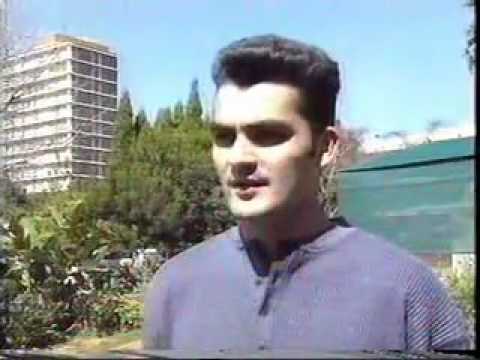
UFO Over Pretoria: Evening News
Contemporaneous South African television news coverage of the sighting.
UFO Police Helicopter Chase in Africa
The African Scientist — a summary review of the case and its helicopter pursuit.
Sources
- "UFO Sighting Report August 28, 1996: Pretoria, South Africa," UFOINFO. Read online →
- "1996 - South Africa Police Chase/Film UFO," UFO Casebook. Read online →
- "Documented by Police: South Africa's Most Convincing UFO Evidence Explained," UFO News. Read online →
- "UFO sightings in South Africa," Wikipedia. Read online →
- "South Africans are talking about Pretoria's famous 1965 UFO mystery again," Briefly.co.za. Read online →
- "UFO Spotting in the Karoo," Karoo Space. Read online →
- "Unsolved: UFO sightings in South Africa," HandWiki. Read online →
- "Documented by Police: South Africa's Most Convincing UFO Evidence Explained," Medium (Cristina Gomez). Read online →
- "UFO stuns Pretoria residents," News24. Read online →
- "10 Unbelievable UFO Sightings in South Africa," Mytour. Read online →
- Hind, Cynthia. UFOs Over Africa. Horus House Press, 1997.
- Hind, Cynthia. UFOs: African Encounters. Gemini Publishing, 1982.
- Hynek, J. Allen. The UFO Experience: A Scientific Inquiry. Da Capo Press, 1998.
- Kean, Leslie. UFOs: Generals, Pilots, and Government Officials Go on the Record. Harmony Books, 2010.
- Clark, Jerome. The UFO Encyclopedia: The Phenomenon from the Beginning, 3rd ed. Omnigraphics, 2018.
- "File: Lion Bridge Pretoria night.JPG," Wikimedia Commons, photo by Louis Oelofse (CC BY-SA 3.0). View file →
- Svahn, Clas. "Helikopterjakten utanför Pretoria" ("The Helicopter Chase Outside Pretoria"), UFO-Sverige, April 2020. Read online →
- Coetzee, Sandra. "VVV vlug van Pretoria na Bronkhorstspruit," Beeld, 29 August 1996, p. 1.
- Coetzee, Sandra. "VVV by Pta bly 'n raaisel," Beeld, 30 August 1996, p. 3.
- Pienaar, Antoinette. "Opgewondenheid oor VVV het nog nie gaan lê," Beeld, 2 September 1996, p. 3.
- "Erasmuskloof," Wikipedia. Read online →
- "Air Force Base Waterkloof," Wikipedia. Read online →
- "Adriaan Vlok," Wikipedia. Read online →
- "Contact Us," Armscor SOC Ltd (confirming Erasmuskloof, Pretoria headquarters address). Read online →
See something inaccurate? Have additional information or sources?
Suggest an Edit →Last Updated: August 2026