
Attack on Moises
On a rainy Sunday evening in May 1991, farmer Moises Campelo was walking home near his family's mountain farm outside Campo Redondo, Rio Grande do Norte, Brazil, when he reported a silent, house-sized, spinning object closing a two-mile gap in seconds and lifting him off the ground twice, leaving him with lasting eye damage. American journalist Bob Pratt documented the case in detail sixteen months later for his 1996 book UFO Danger Zone, presenting it as evidence that the pattern of violent Brazilian UFO encounters he had first investigated at Colares in 1978 had never actually stopped, only stopped attracting Western reporters. This file corrects a factual error in this site's own prior queue description of the case, which placed it in Pará and framed it as a direct continuation of the Colares wave; Pratt's own primary account places it in a different state entirely, roughly 1,000 kilometers away, with no documented connection to Colares beyond both appearing in the same book.
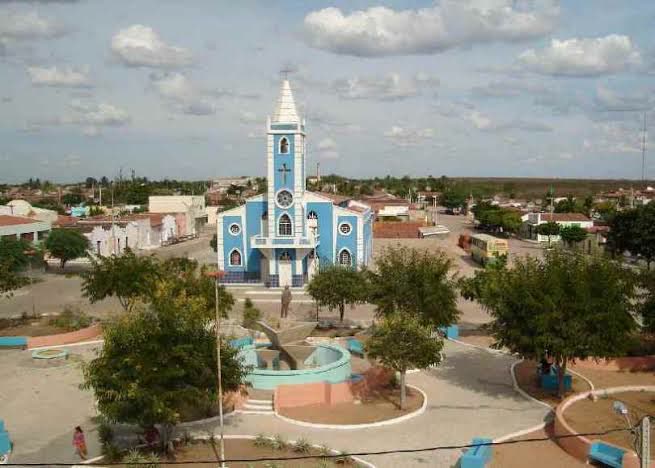
Pictured: the town of Campo Redondo, Rio Grande do Norte, Brazil, near which the encounter reportedly occurred. Not a photograph of Moises Campelo, Sítio Timbaúba, or the object itself. No photograph of any kind associated with this case is known to exist.
Theoretical Alignment
This case's evidentiary profile is dominated by a single, detailed, physically dramatic witness account recorded well after the fact, with no independent corroboration of any kind. The Psycho-Social Hypothesis receives the largest share of alignment on the strength of this structural weakness — a sixteen-month gap between event and interview, a single investigator working through an interpreter, and no second witness to the object itself. The Extraterrestrial Hypothesis retains meaningful alignment on the strength of the account's own internal specificity and consistency (a two-stage encounter with distinct sensory details — heat during the first lift, cold during the second — that Pratt's own text presents as recalled without apparent embellishment across two separate interview sessions).
Background
By 1991, American journalist Bob Pratt had already spent more than a decade investigating Brazilian UFO reports, beginning with his 1978 trip to Colares, in Pará's Amazon Delta, to cover the "chupa-chupa" light-beam attacks that prompted the Brazilian Air Force's Operação Prato investigation — a case this site covers in its own dedicated file, and one Pratt's reporting for the National Enquirer first brought to significant Western attention. Over the following years, Pratt made roughly ten further trips to Brazil between 1978 and 1993, compiling hundreds of witness interviews across a wide geographic range of the country, work that culminated in his 1996 book UFO Danger Zone: Terror and Death in Brazil — Where Next?, covered in depth in this site's own Essential Reading feature.
The Attack on Moises case, which opens that book as its first chapter, came to Pratt's attention by accident: while searching for a different, unrelated witness in the mountainous interior of Rio Grande do Norte state, he learned of Moises Campelo's account through local contacts. This file states plainly what Pratt's own text does and does not claim: the book situates Moises's case as one further example of Pratt's broader thesis that violent or physically consequential UFO encounters recur throughout Brazil across decades, not as a documented continuation of the specific Colares events at the same location or through any shared investigative thread. Rio Grande do Norte and Pará are different Brazilian states, roughly 1,000 kilometers apart, with different geography — Rio Grande do Norte's interior is semi-arid and drought-prone, a marked contrast to the humid Amazon Delta setting of Colares.
This file's own research, which included obtaining and reading Pratt's original chapter directly rather than relying on secondary summaries, found no indication that Moises or his community had any documented awareness of or connection to the earlier Colares wave. Readers encountering this case grouped with Colares in other secondary sources, including this site's own prior queue description before this file's publication, should treat that grouping as an editorial and thematic pairing within Pratt's own book — two separate case studies in the same volume — rather than as evidence of any shared origin, location, or investigative chain connecting the two events.
The term "chupa-chupa," Portuguese for roughly "suck-suck," originated among Colares residents themselves in 1977–78 to describe the sensation of a beam of light drawing blood or bodily fluid from a targeted victim, and it entered the wider Brazilian and international UFO literature specifically through that case, not through any general or preexisting folk category that this present case would also fall under. This file notes the distinction because secondary sources sometimes use "chupa-chupa" loosely to describe almost any Brazilian encounter involving physical injury; Moises's own account, involving levitation and blunt physical effects rather than any light-beam wound or blood loss, does not match the specific chupa-chupa pattern as originally defined, and this file avoids applying that label to it. Readers should treat any secondary summary that calls this case a "chupa-chupa attack" as imprecise at best, since the term properly designates a specific, distinct injury pattern that Moises's own reported symptoms do not share.
Brazil's UFO-reporting history predates both Colares and this 1991 case by decades. The country's most widely cited early close-encounter account is the 1957 case of Antônio Vilas-Boas, a young farmer near São Francisco de Sales in Minas Gerais state, who reported being taken aboard a landed craft and, months later, described the experience in detail to a physician, Dr. Olavo Fontes, whose written report became one of the most widely discussed early abduction-type accounts in the international literature. Brazil's 1958 Trindade Island photographs, taken by a Navy expedition photographer and examined by Brazilian military and civilian analysts, represent another frequently cited early case from the same national tradition. This file raises these earlier cases not to suggest any direct connection to Moises's 1991 account, but to place it within a much longer national pattern of reported encounters that both predates and postdates the specific 1977–78 Colares wave with which it is most often informally paired.
Complete Timeline
This case's timeline is unusually compressed for a file on this site: nearly the entire record consists of a single evening's events, reconstructed by a single investigator more than a year later.
| Date | Event |
|---|---|
| May 1991 (specific date not given by Pratt) | Moises Campelo, walking home after dark near Sítio Timbaúba, reports a silent object closing a two-mile gap in seconds and lifting him twice over the course of roughly 30–45 minutes |
| Sept 1992 | Bob Pratt, working with interpreter Cynthia Luce, conducts his first in-person interview with Moises, roughly 16 months after the event |
| Jul 1993 | Pratt conducts a second, follow-up interview with Moises |
| 1996 | Pratt publishes UFO Danger Zone: Terror and Death in Brazil — Where Next?, with "Attack on Moises" as its opening chapter |
The May 1991 Encounter
By Pratt's account, Moises Campelo — a subsistence farmer in his thirties, working land belonging to his mother near Sítio Timbaúba, a small mountain farm a few miles north of Campo Redondo — was walking home after dark on a warm evening with light rain falling, returning from his brother's house near the local church. Roughly 200 yards along level ground and partway up a long hill, having passed a neighbor's house some five or six minutes earlier, he noticed what he initially took for a car's headlight: a small, bright light on the crest of another mountain approximately two miles to the east.
Within three or four of his own steps, the light was, in his account, suddenly directly above him — having covered the two-mile distance with what Pratt records as "surprising quickness." The object was large and so bright it hurt his eyes; Moises described it as seeming "as large as a house," slowly spinning, and silent throughout its approach.
The First Lift
Moises reported becoming paralyzed almost instantly and feeling intensely hot. He was raised roughly a meter and a half (about five feet) off the ground in an upright, walking posture, unable to speak, cry out, or move — rigid enough, in his account, to crush a package of cookies he had been carrying under his arm without being able to react. He was held aloft for at least five minutes before being, in his own words, "let down very gently," at which point the object withdrew to treetop height nearby, remaining motionless and lit.
The Crawl and the Second Lift
Still unable to stand normally, Moises crawled roughly 100 meters toward home, at one point resting under a small tree. Approximately thirty minutes later, by his account, the object returned and caught him mid-crawl, raising him about three feet off the ground in a crouched position, his head striking overhead branches. This second lift felt distinctly different: rather than heat, he reported intense cold, still paralyzed, his eyes still hurting from the object's light, which he described as visibly "going around and around and around" above him. This second lift lasted, by his estimate, as long as fifteen minutes.
The encounter ended when the object "moved away for good" — the only point in the entire encounter at which it made any sound, a low humming Moises compared to a quiet turbine. He was dropped hard, falling, in his own description, "like a lead weight."
Aftermath
Moises crawled the remaining distance home and banged on his door, described by Pratt as "almost hysterical," unable to speak for roughly fifteen minutes after getting inside. Looking out later, he reported seeing the object once more, now appearing as a large red ball hovering over the local church, rocking slowly like a pendulum.
In the days following the encounter, Moises reported the eye pain worsening rather than resolving, along with the onset of the numbness down his left side that would persist for several months. His family took him to seek medical attention in the following weeks, the first of three attempted hospital visits, each of which, by his account, was cut short by a power failure at the facility before he could be examined and treated. A doctor who did examine him at some point in this process recommended surgical treatment for the eye injury, but Moises never received the operation, and by the time Pratt interviewed him more than a year later, the eye trouble remained unresolved. His fear of the dark and reluctance to go outside alone at night, by his own account, likewise persisted essentially unchanged through both of Pratt's interview visits.
Key Witnesses
Moises Campelo
The case's only direct witness to the object. Interviewed twice by Bob Pratt through interpreter Cynthia Luce, in September 1992 and July 1993, in his own living room with his wife, children, and roughly half a dozen neighbors and relatives present. No other named individual reported directly witnessing the object itself.
Bob Pratt
American investigative journalist who documented the case in a dedicated chapter of his 1996 book, based on two in-person interviews conducted roughly 16 and 26 months after the event, respectively. Pratt's decades of prior Brazilian fieldwork, beginning with his 1978 Colares reporting, gave him an established comparative framework for evaluating the account, though this file treats his own investigative conclusions as one researcher's assessment rather than independent verification. Pratt's approach across his Brazilian fieldwork generally, as documented in his own book's introduction and reflected in his handling of this case, favored direct, in-person interviews conducted as soon as practically possible after learning of a report, in the witness's own home and, where feasible, with family members present — a methodology that produced a large body of firsthand testimony but that, by its own nature, could not retroactively supply the kind of contemporaneous, near-term documentation this particular case lacked by the time it reached him.
Cynthia Luce
An American resident of Brazil since 1975, fluent in Portuguese, who worked alongside Pratt as a co-investigator across numerous Brazilian cases in 1991–92 and served as interpreter during both interviews with Moises. Her role in this case, as in Pratt's other Brazilian fieldwork from the same period, was to bridge the language gap between an English-speaking American journalist and Portuguese-speaking rural witnesses, a function that necessarily introduces an additional interpretive layer between Moises's own original words and their eventual published English-language form, one this file accounts for in weighing the precision of any specific quoted detail.
Moises's Family and Neighbors (Unnamed)
Pratt's account describes Moises's wife, children, and roughly half a dozen neighbors and relatives as present in the room during at least one of the two interviews, offering supporting color and confirming Moises's general demeanor and reputation, but none is identified by name in the published chapter, and none is reported to have personally witnessed the object itself. This file treats their presence as background context for the interview setting rather than as independent corroborating testimony, and classifies them as non-blocking secondary figures consistent with this site's general treatment of unnamed secondary contacts in single-witness cases.
The Five Observables Assessment
Because this case rests entirely on a single witness's account, recorded well after the event, the assessment below documents what was reported rather than any independently confirmed data.
The Five Observables framework is applied to the performance characteristics reported in this case:
Assessment: Twice lifting a human body off the ground with no visible mechanism, and covering roughly two miles in the time it took the witness to take three or four steps, together constitute this case's strongest claimed performance characteristics. Low observability is marked absent since the object was, throughout, described as large, bright, and clearly visible. No claim of hypersonic flight or trans-medium travel appears anywhere in the account; the object's most dramatic claimed capability is the close-range levitation of the witness himself rather than any extreme flight-performance claim.
Evidence Assessment
This case's evidentiary record consists almost entirely of one witness's own detailed, internally consistent account, recorded by one investigator well after the fact, with essentially no independent corroboration of any kind.
Supporting Anomalous Origin
- The account is unusually detailed and internally consistent across its two-stage structure (distinct heat and cold sensations during the two separate lifts), a level of specific, differentiated sensory detail this file's research found harder to attribute to simple confabulation than a single, undifferentiated claim would be
- Moises's account remained consistent across two separate interview sessions roughly ten months apart, per Pratt's own reporting
- A reported eye injury, still unresolved and documented at the time of the second interview, represents a real, physically observable medical condition consistent with (though not proof of) an intense light exposure
- Pratt, an experienced investigator with more than a decade of prior Brazilian fieldwork by this point, judged the account credible after direct, in-person interviews
Supporting Conventional Explanation
- The case rests entirely on one uncorroborated witness; no second person is documented as having seen the object itself
- The first interview occurred roughly 16 months after the event, and the account exists nowhere in any contemporaneous 1991 record this file's research located
- No photograph, physical trace, or recovered material of any kind is associated with the case
- Interviews were conducted through an interpreter, introducing an additional layer of translation between the witness's original account and its published English-language form
- No named medical professional's independent examination or diagnosis of the reported eye injury is documented; the injury and its cause are known only through the witness's own retelling
- No secondary Brazilian press, police, or clinical record from 1991 has surfaced in over three decades, despite the case's inclusion in a published, internationally distributed book since 1996
Weighing these two columns against each other is the central difficulty of this case, and this file's own approach follows the same method applied consistently across its case files generally: neither list is treated as automatically decisive on its own. A detailed, internally consistent, twice-repeated account from a witness with a documented lasting physical and behavioral aftermath is genuinely more evidentially weighty than a vague, single-telling, undetailed claim would be; at the same time, the total absence of any form of independent corroboration — not even a single supporting secondhand account from a family member who can confirm what state Moises was in that night, beyond what Pratt's own text already reports — caps how far that internal consistency alone can move this file's overall assessment. The result is the low-but-not-lowest Disputed rating detailed in the section immediately below.
Why "Disputed"
This case receives a DISPUTED classification, at the lower end of this site's rating range, reflecting a detailed, internally consistent single-witness account that nonetheless lacks any of the independent corroboration — a second witness, a contemporaneous report, a physical trace, a named medical examination — that would allow this file to rate it more confidently in either direction.
The specific, differentiated sensory detail in Moises's account (heat during the first lift, cold during the second; a described change in the object's visible spin; the single moment of audible sound occurring only at final departure) is a genuine point in its favor, distinguishing it from a vaguer, more generic abduction-style narrative. This file weighs that specificity as meaningful but not decisive, particularly given the sixteen-month gap between event and first interview, a period long enough for ordinary memory consolidation and elaboration to have shaped the account's final form even in a genuinely sincere witness with no intent to deceive.
This rating sits well below this site's rating for the Colares / Operation Prato case, which benefits from dozens of independent witnesses, a documented medical treatment record from a named physician, and a formal government investigation — exactly the kind of institutional and multi-witness corroboration this case entirely lacks. The comparison is instructive precisely because the two cases are so often mentioned together: Colares represents this general case category's strongest end, and Moises's own individual case represents its considerably weaker end, despite both appearing within the same investigator's broader body of published Brazilian fieldwork.
Sensor & Instrumentation Detection Profile
No radar, military, or civilian instrumentation of any kind is documented anywhere in the available record for this case. The encounter occurred on a rural mountain farm track after dark, far from any location where such instrumentation would ordinarily be present, and no source indicates any attempt was made, at the time or afterward, to request any instrumented data for the area.
The nearest facility of any relevant military scale is the Brazilian Air Force's Natal Air Base, home to the Northeast's principal fighter and air-defense infrastructure, located roughly 120 kilometers from Campo Redondo on Brazil's Atlantic coast. This file located no indication that any air-defense radar coverage from that base, or from any civilian air-traffic facility in the region, would have realistically extended to detect a low-altitude, close-to-the-ground event over a remote rural farm track, and no source suggests any request for archived radar data from the relevant period was ever made by Pratt, Moises, or any other party. This is consistent with the broader pattern across almost all of this site's rural, non-aviation-adjacent case files: instrumented detection is only available where a monitored facility happens to be operating nearby at the relevant time, and its absence here reflects ordinary geography rather than any specific evidentiary failure.
No photograph or film exists. Unlike some other case files on this site, no source suggests the witness attempted or was prevented from photographing the object; a camera is simply never mentioned as present during a rural evening walk, consistent with the setting — a subsistence farmer walking home after dark in 1991, in an area where personal cameras were far less commonly carried than they would be in a comparable encounter today.
Environmental & Geospatial Context
Rio Grande do Norte's interior is semi-arid, drought-prone terrain, described in Pratt's own book by comparison to roughly a fifth the area of Arizona — a markedly different environment than the humid Amazon Delta setting of Colares, and one this file notes specifically to underscore how geographically distinct the two cases actually are despite their frequent pairing in secondary discussion. Campo Redondo itself is a small farming municipality roughly 119 kilometers from Natal, the state capital.
The reported weather — warm, with light rain falling — is a specific, unremarkable detail consistent with ordinary evening conditions in this region and season, and this file located no source proposing any specific atmospheric or astronomical misidentification candidate (ball lightning, an unusual meteorological phenomenon, a bright planet or star) tailored to this case's own particular reported details, a gap this file states plainly rather than filling with unsupported speculation.
Rio Grande do Norte's interior belongs to Brazil's broader Sertão region, a semi-arid zone stretching across much of the country's Northeast, characterized by thorny caatinga vegetation, irregular seasonal rainfall, and a long regional history of periodic drought that has shaped local agriculture and settlement patterns for generations. Campo Redondo itself sits in the state's agreste transition zone, between the wetter coastal strip near Natal and the drier interior sertão proper, an area of small-scale farms raising subsistence crops and livestock on the same kind of hilly, forested terrain Pratt's account describes around Sítio Timbaúba. May falls within this region's late-autumn period, after the main rainy season typical of the Northeast's coastal and near-coastal zones has begun tapering, which is broadly consistent with Moises's own description of light rain rather than a heavy downpour on the night in question.
This file located no meteorological archive with location-specific historical weather data for Campo Redondo on the exact date of the encounter, since Pratt's own account does not specify a precise calendar date beyond "May 1991," and no source this file located has attempted to identify the specific night in question for the purpose of retrieving contemporaneous weather-station or astronomical records. This represents a further, specific avenue for future research beyond this file's own present scope.
Campo Redondo's own recorded population has, across the decades since 1991, remained in the low thousands, consistent with Pratt's description of a small, close-knit rural community in which a dramatic personal event like Moises's would plausibly have become locally known even without ever reaching any wider regional or national press. This file located no Brazilian newspaper archive coverage of the case from the 1991–93 period, consistent with that expectation: a strictly local event, in a small interior municipality, involving no property damage, no public disturbance, and no request for any official investigation, would not, under ordinary circumstances, be expected to generate press coverage beyond the immediate community, whether or not the underlying report was accurate.
Observer Credibility & Occupational Profile
Beyond his occupation as a subsistence farmer working his mother's land, and his description in Pratt's text (approximately 5'6", 130 lbs, curly black hair, dark eyes, heavy stubble), this file located no further independently verifiable biographical detail about Moises Campelo: no confirmed prior history with UFO reports, no documented reputation within his community either for honesty or for storytelling, and no source beyond Pratt's own account of the interview setting (his living room, with family and neighbors present) describing how the surrounding community regarded his claim.
Pratt's own account notes that Moises remained visibly affected by the experience well over a year later — still afraid to go outside alone at night at the time of the interviews, and still dealing with unresolved eye trouble that three separate hospital visits, aborted each time by power failures, had failed to treat. This file weighs this lasting, practically consequential fear and physical impairment as a genuine, if modest, credibility signal: a fabricated account maintained purely for attention or storytelling would not typically be expected to produce this specific pattern of ongoing, self-reported functional impairment more than a year after the fact, though this file cannot rule out a psychogenic origin for these lasting effects independent of the specific cause the witness attributes them to.
Moises's occupational profile is itself relevant context. Subsistence farming on small family-worked plots was, and largely remains, the dominant economic activity in Rio Grande do Norte's rural interior municipalities, an occupation that in a semi-arid, drought-vulnerable region carries genuine daily exposure to unpredictable weather and, historically, limited access to modern medical infrastructure — a background detail consistent with Pratt's own description of three aborted hospital visits caused by power failures, rather than by any refusal of care or lack of documented medical need. This file finds no indication in any source that Moises had any occupational or social incentive to fabricate a dramatic account: no known involvement with any UFO research organization, publication, or public speaking circuit either before or after the encounter, and no reported financial compensation of any kind for sharing his story with Pratt. The account appears to have remained essentially local and unpublicized for its own sake until it appeared in Pratt's 1996 book, five years after the reported event.
Physical & Material Assays
The reported eye injury — severe swelling, temporary blindness in the affected eye, and lasting bloodshot, unhealed damage still present sixteen months later — is this case's only claimed physical evidence. A doctor is reported to have recommended surgery, but three separate hospital visits were each aborted by power failures, and Moises never received the operation; he reportedly still had eye trouble at the time of his second interview with Pratt in mid-1993. No named physician's independent written diagnosis, medical record, or photograph of the injury has ever been published in connection with this case; the entire claim rests on the witness's own description as relayed through Pratt.
A separately reported, milder effect — numbness on his left side, from waist to hip, lasting three to four months — is documented with the same limitation: no independent medical examination, only the witness's own retrospective description.
This file notes a specific, relevant point of contrast with the Colares cases discussed at length elsewhere on this site: the classic 1977–78 Colares "chupa-chupa" reports specifically involved puncture-like wounds and documented blood loss, treated and recorded by a named attending physician, Dr. Wellaide Cecim Carvalho. Moises's reported injuries — eye damage and temporary numbness — are of an entirely different character, and Pratt's own text does not frame this case as a "chupa-chupa" or blood-loss incident. Any secondary account implying Moises suffered puncture wounds or blood loss consistent with the Colares pattern would be conflating two evidentially distinct claims from within the same book.
In general medical terms, prolonged or intense exposure to a very bright light source is a recognized, if usually reversible, cause of temporary visual disturbance, and severe or prolonged exposure to a sufficiently intense light source can in principle cause lasting corneal or retinal injury, a general category of harm well documented in ordinary clinical literature unrelated to this case. This file raises that general medical possibility only to note that Moises's reported eye symptoms — pain, swelling, temporary blindness, and lasting unresolved damage — are not inherently inconsistent with exposure to an intensely bright light source of whatever origin, whether the specific object he describes or some other bright light he encountered that night. Without any independent clinical examination or diagnosis on record, however, this file cannot move beyond noting that general consistency; it cannot confirm a specific mechanism, rule out an unrelated preexisting or coincidental medical condition, or corroborate the witness's own causal attribution.
Historical Precedents & Archive Matches
These comparisons situate the case within its broader historical genre; none imply that this file's conclusions about any comparison case automatically transfer to Moises's own account, which this site evaluates independently on its own specific evidence.
The case's most obvious point of comparison, discussed at length above, is the Colares / Operation Prato wave of 1977–78, investigated by the same journalist and appearing in the same book, but geographically and evidentially distinct in every specific respect: different state, different decade, different injury pattern, and, most importantly, an entirely different evidentiary structure (Colares's dozens of witnesses and formal government investigation versus Moises's single, retrospectively-interviewed account).
Within the broader genre of close-range levitation and paralysis cases, this account shares structural features with abduction-adjacent case files elsewhere on this site involving reported missing time, paralysis, and physiological aftereffects, though Moises's own account notably lacks any claim of being taken aboard a craft, encountering any occupant or being, or experiencing any missing time beyond the encounter's own directly recalled duration — a genuinely different evidentiary profile than a classic abduction narrative, closer in structure to a close-range physical-effects encounter than to a conscious-memory abduction account.
Antônio Vilas-Boas (1957)
Brazil's own earlier and far more widely studied and frequently cited close-encounter case offers a genuinely useful methodological contrast rather than a direct precedent. In October 1957, Vilas-Boas, then twenty-three, reported being taken aboard a landed craft near his family's farm in Minas Gerais and described a series of physical procedures and an alleged sexual encounter with a female occupant. Unlike Moises's case, the Vilas-Boas account was recorded relatively promptly — within months, not years — by a sympathetic physician, Dr. Olavo Fontes, working on behalf of Brazil's leading civilian ufology organization of the period. That earlier case also, notably, produced a reported physical effect broadly comparable in category to Moises's own claimed injury: Vilas-Boas described skin lesions and later health complaints he and his examining physician attributed to the encounter, without any conclusive independent medical confirmation of causation. The comparison illustrates a recurring feature of the wider genre this file's research surfaced: physically dramatic Brazilian encounter cases spanning more than three decades tend to share a similar evidentiary shape — a single credible-seeming witness, a claimed physical aftereffect, and a sympathetic investigator working without independent corroboration — a pattern this file does not treat as evidence either for or against any individual case's authenticity, but as useful context for calibrating expectations about what kind of evidence this entire case category has historically been able to produce.
Trindade Island (1958)
The Brazilian Navy's 1958 Trindade Island photographs, taken during an official oceanographic expedition and examined afterward by Brazilian military photo analysts who found no evidence of fabrication, represent a rare case from this same national tradition in which physical documentary evidence — rather than only testimony — survived for independent review. This file cites the comparison specifically to highlight what this present case lacks: no photograph, no independent technical examination, and no institutional custody chain of any kind exists for the Moises encounter, in contrast to a case from the same country and roughly contemporaneous broader UFO wave in which such evidence was actually produced and preserved.
The Broader Pattern of Physical-Effects Testimony
Taken together, Vilas-Boas, Trindade, Colares, and this present case together span nearly four full decades of ongoing Brazilian UFO reporting, and this file's own careful review of the pattern across them finds a consistent evidentiary gradient rather than a uniform category. At one end sits Trindade, with surviving physical documentation subjected to institutional technical review; in the middle sits Colares, with dozens of witnesses, a formal military investigation, and a named treating physician's documented patient records; and at the other end sits both Vilas-Boas and this present case, resting almost entirely on a single witness's own retrospective account, however detailed or internally consistent that account may be. This file situates Moises's case at the weaker end of that gradient not because its narrative content is inherently less remarkable than the others, but strictly because of how much or how little independent evidence exists to evaluate it by.
Material Analysis
This case's evidentiary record is entirely testimonial, and this section examines the specific limitations of that single-chain sourcing in detail, alongside the broader context of Bob Pratt's own investigative approach.
A Single-Chain Account
Every secondary source this file's research located — web summaries, forum discussions, a general-audience podcast episode — ultimately traces back to Pratt's own chapter, with no independent 1991-era paper trail of any kind. This file obtained and read Pratt's original text directly rather than relying on secondary paraphrase, and found the account's specific figures (the "house-sized" description, the "two miles" distance, the timing of the two lifts) originate in Moises's own retrospective description as recorded by Pratt, not from any external measurement, second witness, or independent estimate. This is not, on its own, evidence against the account's sincerity, but it does mean every specific numeric detail in this case should be understood as one witness's own recollection, filtered through sixteen months of memory and a single interpreter-mediated interview, rather than as independently established fact.
Pratt's Broader Thesis and Its Limits
Pratt's own stated purpose in placing this case as his book's opening chapter was to argue that violent, physically consequential Brazilian UFO encounters had continued well beyond the 1977–78 Colares flap, simply without the sustained Western press attention Colares itself had received. This is a coherent and, in the most general sense, plausible argument — UFO reports of many kinds have continued to occur in Brazil across the decades since Colares — but this file is careful to distinguish that general, broader claim from the specific evidentiary weight of the Moises case itself. That a phenomenon-category continues to be reported somewhere is a different claim than that any one specific, single-witness, retrospectively-interviewed report within that category is itself well-corroborated, and this file evaluates the Moises case strictly on its own specific evidentiary merits rather than importing credibility from Pratt's broader thesis or from the genuinely stronger Colares case that opens the same general conversation.
The Absence of Skeptical Treatment
This file's research located general skeptical commentary on the broader Colares/chupa-chupa phenomenon (proposals involving suggestion-amplified perceived symptoms, the absence of confirmed radiation readings, and conventional thermal sources for some reported burns), but no named skeptic or scientist has published any specific case study or rebuttal addressing the Moises case itself. This absence is stated plainly rather than papered over: for a case this thinly corroborated, the lack of any independent critical examination beyond this file's own analysis is itself a notable gap in the existing literature.
Memory, Delay, and the Absence of Hypnosis
One methodological detail in this case deserves particular emphasis: nothing in Pratt's account indicates that hypnosis, guided regression, or any other memory-recovery technique was used at any point with Moises. His account was, by all indications, a directly and consciously recalled narrative, told in his own words in his own home, not a memory elicited or reconstructed under hypnotic suggestion. This matters because a substantial body of psychological research — including the work of Elizabeth Loftus on the misinformation effect, cited in this file's sources — has documented specific ways that hypnotic and other suggestive interview techniques can measurably distort or fabricate detailed memories, particularly for emotionally significant events; a directly recalled account, while still subject to ordinary memory decay and reconstruction over time, is not subject to that specific and well-documented distortion risk in the same way. This file weighs the absence of hypnosis as a modest point in the account's favor, while still treating the sixteen-month gap before the first interview as a significant independent source of potential elaboration, wholly apart from any hypnosis-specific concern.
More broadly, memory researchers distinguish between the general gist of an autobiographical memory, which tends to remain relatively stable over long periods even under ordinary conditions, and specific peripheral details, which are considerably more vulnerable to being altered, added, or lost through rehearsal, retelling, and the ordinary passage of time. Applied to this case, the broad shape of Moises's account — a bright object, an experience of being lifted off the ground, a period of fear and physical aftereffects — is the kind of gist-level memory this research suggests would be comparatively stable across sixteen months even in a genuinely accurate retelling. The most specific numeric details — the precise two-mile distance, the exact duration of each lift, the precise height above the ground — are, by the same body of research, exactly the category of peripheral detail most susceptible to unconscious elaboration over an equivalent delay, regardless of whether the underlying core event was itself perfectly mundane or genuinely anomalous. This file applies that general distinction to its own evaluation above, treating the account's core shape as more evidentially significant than any of its individual numeric specifics.
Sourcing Limitations Specific to This Case
- Single witness, single investigator, single interpreter; no second person is documented as having seen the object
- First interview occurred approximately 16 months after the reported event
- No contemporaneous 1991 report, police record, or press account of any kind has been located
- No independent medical documentation of the reported eye injury or numbness beyond the witness's own retrospective description
- No named skeptical researcher has published a specific critical treatment of this particular case
The Conventional Explanation Candidate: An Elaborated Retrospective Account of a Genuine Disorienting Experience
Because no named skeptic has published a case-specific rebuttal, the candidates below represent this file's own original analysis, applying general categories of testimonial evaluation to this case's specific reported details.
The most parsimonious conventional explanation, in this file's own assessment, holds that Moises experienced a genuinely disorienting nighttime event — potentially a specific medical or environmental incident (a fall, a sudden illness, an atmospheric electrical phenomenon, or some other cause this file cannot identify from available sources) — that produced real physical effects (the eye injury, the numbness, the paralysis-like sensation) and that his memory subsequently organized, whether at the time or during the sixteen-month interval before Pratt's first interview, into the detailed, two-stage levitation narrative eventually recorded. This candidate does not require deliberate fabrication; it requires only the well-established general principle that human memory, particularly for a frightening and disorienting experience, can restructure itself considerably over more than a year before being formally elicited by an outside interviewer.
Genuine Anomalous Encounter (At Face Value)
The candidate that treats Moises's account at face value — a genuinely unidentified object performed the specific physical actions he describes — cannot be excluded on the available evidence. The account's internal consistency across two separate interviews and its specific, differentiated sensory detail are genuine strengths this file does not minimize. This file's own assessment gives this candidate real but limited weight, constrained specifically by the case's total dependence on one uncorroborated witness and the absence of any form of independent verification.
Deliberate Fabrication
No specific evidence of deliberate fabrication has surfaced in any source this file located. Pratt's own account describes no financial motive, no prior history of comparable claims from Moises, and lasting, practically consequential fear and physical impairment persisting well over a year after the event — a pattern this file finds difficult to reconcile with a straightforward attention-seeking fabrication, though it cannot rule the possibility out entirely on the available record.
What Would Resolve This Case Further
Moving this case's rating beyond its current low Disputed standing would most plausibly require locating any surviving contemporaneous 1991 record (a local clinic visit, a police report, a church or community record from the days immediately following the event); obtaining independent medical documentation of the reported eye injury, if any exists in Brazilian medical records from the relevant hospital visits; or identifying and interviewing any of the family members or neighbors present during Pratt's own interviews, whose secondhand impressions of Moises's demeanor and reputation could add context this file's own research was unable to independently obtain. None of this material is known to have surfaced in the more than three decades since the event, and given the case's low public profile outside of Pratt's own book, further primary material seems unlikely to emerge without a dedicated Portuguese-language archival research effort specifically targeting Rio Grande do Norte's interior municipalities.
This file also notes what such further research would specifically need to distinguish: a genuine additional witness to the object itself, as opposed to a family member merely confirming that Moises came home frightened and physically affected that night. The latter would corroborate that something distressing happened to him, a point this file already treats as reasonably well established given the consistency of his account and its lasting physical and behavioral effects; it would not, on its own, corroborate the specific anomalous cause he attributes it to. Only a second direct observer of the object, or a surviving contemporaneous document describing the object itself rather than only its aftermath, would meaningfully shift this file's own current evidentiary assessment, and this file will update its own rating if any such material is ever located or brought forward.
Retrospectively Elaborated Genuine Experience
PlausiblePLAUSIBLE. Accounts for the real physical effects while acknowledging the well-established risk of memory elaboration over the sixteen-month gap before formal interview.
Genuine Anomalous Encounter (At Face Value)
InconclusiveINCONCLUSIVE. Supported by the account's internal consistency and specific sensory detail, but untestable given total dependence on one uncorroborated witness.
Deliberate Fabrication
ImplausibleIMPLAUSIBLE as the primary explanation. No documented motive, and a pattern of lasting fear and physical impairment inconsistent with a simple attention-seeking hoax.
Related Cases
The three cases below each share this case's core Brazilian UFO-encounter context, its physiological-injury structure, or both — while differing in ways that usefully illustrate the range within this case category.
Confirmed Documents & Official Records
No Brazilian government, military, or law-enforcement record specifically naming Moises Campelo or this case is known to exist. This case was investigated entirely privately by journalist Bob Pratt and never referred to any official body; it is unconnected to the Brazilian Air Force's declassified Operação Prato files, which concern the separate 1977 Colares case.
Search Government & Official Archives Directly
Further Reading — Recommended Literature
This site's own Essential Reading feature on UFO Danger Zone covers this case's own opening chapter, and Bob Pratt's broader Brazilian investigative career, in more depth than is appropriate to duplicate here; the five titles below broaden that coverage to the wider Brazilian and physiological-encounter UFO literature.
UFO Danger Zone: Terror and Death in Brazil
The primary and essentially sole source for this case, opening as its first chapter, and the most detailed English-language chronicle of physically consequential Brazilian UFO encounters.
UFO Contacts in Brazil
A broader survey of Brazilian UFO cases across the decades, offering national context for evaluating how this case fits within the country's wider reporting history.
UFO Sightings: The Evidence
A foundational skeptical framework for evaluating single-witness testimonial UFO cases generally, useful in the absence of any case-specific skeptical treatment of this file's own subject.
Physical Traces Associated with UFO Sightings
A methodological reference for evaluating physical and physiological trace evidence in UFO cases, relevant to assessing this case's own claimed eye injury and numbness.
The Emergence of a Phenomenon
A comprehensive general reference on the international UFO literature, useful for situating a thinly-documented single-witness case like this one within the broader historical pattern.
DISCLOSURE: Some links above are affiliate links. If you purchase through them, OverClassified receives a small commission at no additional cost to you. This helps support independent research.
Essential Viewing
Sources
- Pratt, Bob. UFO Danger Zone: Terror and Death in Brazil — Where Next? Horus House Press, 1996. Chapter One, "Attack on Moises." Full text at archive.org
- "Violent UFO Encounters in Brazil." Podcast UFO. podcastufo.com
- "Caso Moisés Campelo (1991)." Area51Canal, YouTube. youtube.com
- "Operação Prato." Wikipedia. en.wikipedia.org
- "Colares, Pará." Wikipedia. en.wikipedia.org
- "Campo Redondo." Wikipedia. en.wikipedia.org
- "File: Campo Redondo-RN.jpg." Wikimedia Commons. commons.wikimedia.org
- "UFO danger zone" by Bob Pratt. Open Library. openlibrary.org
- This site's own Colares / Operation Prato case file.
- This site's own Essential Reading feature on UFO Danger Zone.
- Ticchetti, Thiago Luiz. UFO Contacts in Brazil. 2019.
- Sheaffer, Robert. UFO Sightings: The Evidence.
- Phillips, Ted. Physical Traces Associated with UFO Sightings.
- Clark, Jerome. The Emergence of a Phenomenon: UFOs from the Beginning Through 1959. Omnigraphics, 1992.
- Newman, Leonard S. and Baumeister, Roy F. Research on hypnotic and retrospective confabulation in extraordinary-experience narratives, cited via Perspectives on the alien abduction phenomenon, Wikipedia.
- Loftus, Elizabeth. Foundational research on the misinformation effect and memory malleability over time.
See something inaccurate? Have additional information or sources?
Suggest an Edit →Last Updated: August 2026