
UFO Contacts in Brazil
Core Thesis
UFO Contacts in Brazil is Thiago Luiz Ticchetti's 580-page survey of the country's major UFO cases, written from inside Brazil's own domestic ufological research tradition rather than as an outside observer's summary. Covering cases from the 1957 Vilas-Boas-adjacent Ubatuba fragments through Varginha, Colares, and Operation Prato, the book gathers more than two decades of Ticchetti's own field research alongside historical case documentation, several presented, per his own account, in English for the first time. This site's own research draws on the book for two specific, structurally very different Rio de Janeiro-area cases: the Island of Trindade Sighting, this site's own Disputed classification, and the Barra da Tijuca Sighting, classified Debunked.
About the Author
Thiago Luiz Ticchetti was born in 1975 in Santa Cruz, in Brazil's Rio de Janeiro state, to Colonel Luiz Mauro Ticchetti, a Brazilian Air Force fighter pilot — a family background that gave him an early connection to the aviation world his later UFO research would intersect with directly. He has spent more than three decades researching the UFO phenomenon and more than twenty-two years specifically investigating some of Brazil's most prominent cases, including Varginha, Colares, the Antônio Vilas-Boas abduction, and the Ubatuba fragments case documented elsewhere in this site's own research.
Ticchetti's institutional career runs largely through UFO Magazine, which he joined as a volunteer translator in 1997 before rising through the ranks to international coordinator, consultant, and co-editor, becoming the publication's editor in 2023. He served as president of the Brazilian Commission of Ufologists for seven years and now serves as its International Director. In 2017 he was appointed Assistant to the International Director of the Mutual UFO Network (MUFON) in Brazil, and since 2021 he has served as MUFON's National Director for Brazil, placing him at the institutional center of the country's organized ufology community.
This 2019 book sits within a substantial personal bibliography: Ticchetti is credited as author of nine books spanning nearly two decades, including UFO Crashes (2002) and its 2015 sequel, multiple editions of a Guide to Extraterrestrial Typology (2014, 2017, 2018), the three-volume UFO Files: UFO Cases series (2013, 2015, 2018), and a later, more recent 2025 volume, UFO Attacks in Brazil, which this site's own Colares case file cites separately as a distinct work covering some of the same underlying case territory from a different angle.
Historical Context & Origins
This book arrived in 2019, at a point when Ticchetti had already accumulated more than two decades of direct field investigation experience and had risen to senior institutional positions within both Brazilian ufology (the Brazilian Commission of Ufologists) and its American-founded international counterpart (MUFON). That dual institutional standing gave the book access to domestic Brazilian source material — press archives, personal interviews, and Portuguese-language case literature — not always readily available to English-language researchers working from outside the country.
The book's stated aim of presenting several cases in English for the first time reflects a genuine and long-standing gap in the wider UFO literature this site's own research has independently observed: major Brazilian cases like Barra da Tijuca and Trindade are extensively documented in Portuguese-language sources, but English-language treatments have historically depended on a comparatively small number of secondary compilations and translated excerpts, making a dedicated, domestically-authored English survey a genuinely useful contribution regardless of how any individual case within it is ultimately assessed.
The book's own scope extends well beyond the two cases this site's own research draws on directly: per its own publisher description, it also covers the 1996 Varginha case, the Colares "Operation Prato" military investigation, and the Antônio Vilas-Boas abduction already documented elsewhere in this site's own essential-reading library, positioning Ticchetti's survey as a genuinely comprehensive single-volume tour of Brazilian ufology's most significant cases rather than a narrow treatment of any one incident.
The book's 2019 publication also positions it as a contemporary companion to, rather than a replacement for, the deeper single-case investigative work this site's own research draws on for its most detailed Brazilian case files: Kentaro Mori's 2010 computer-enhanced photographic reanalysis of the Trindade images and Olavo Fontes's original 1950s fieldwork on Ubatuba and the Vilas-Boas case both predate Ticchetti's survey by years or decades, meaning his book functions most usefully as a broad, English-accessible entry point into a much deeper existing body of Portuguese-language and specialist research rather than as the primary source for any single case's most granular evidentiary detail.
Core Arguments & Key Concepts
The book's organizing argument is that Brazil's UFO case record deserves to be read as a coherent national tradition in its own right — connected by recurring institutional actors, a shared domestic press culture, and decades of continuity in the country's own ufological research community — rather than as a scattered handful of internationally famous cases (Vilas-Boas, Trindade) disconnected from a broader Brazilian context most English-language readers never see. Placing Trindade and Barra da Tijuca within the same book as Varginha, Colares, and Operation Prato makes that continuity argument structurally, simply by the cases the book chooses to include together.
A second theme, consistent with Ticchetti's own institutional role bridging Brazilian ufology and MUFON's international network, is treating domestic Brazilian sourcing as a genuine evidentiary asset rather than an obstacle requiring translation and validation by outside researchers — a framing this site's own research finds partially but not wholly persuasive: domestic access can surface real primary material outside researchers might miss, but it does not substitute for the kind of independent forensic reanalysis (like Mori's photographic work on Trindade) that ultimately determines how much weight a given case's physical evidence can bear.
A third theme is treating a case's continued domestic cultural resonance as itself worth documenting, independent of whether the underlying evidentiary record supports a genuinely anomalous explanation — a descriptive rather than purely evaluative approach visible in how the book covers Barra da Tijuca, a case this site's own research classifies as a straightforward media fabrication, alongside more evidentially contested cases like Trindade, without necessarily applying the same skeptical weighting this site's own case files apply to each.
Key Cases & Evidence Discussed
The Island of Trindade Sighting (Case File #105, January 16, 1958) is classified Disputed by this site's own research, a meaningfully different evidentiary category than Barra da Tijuca below. The case originated during Brazil's International Geophysical Year oceanographic mission to Trindade Island, roughly 1,140 kilometers off the coast of Rio de Janeiro state, under Captain-of-Corvette Carlos Alberto Bacellar, aboard the training ship NE Almirante Saldanha. This site's own research finds the case's skeptical explanation is unusual in kind: rather than honest misperception of a mundane stimulus, the leading skeptical account involves deliberate photographic fabrication by photographer Almiro Barauna, a category of explanation distinct from the standard psycho-social framework — and one Kentaro Mori's 2010 computer-enhanced reanalysis of the surviving negatives addressed directly, identifying cloud-pattern inconsistencies between exposures 1 and 6 inconsistent with photographer Almiro Barauna's own claimed 14-second interval between shots. This site's own case file preserves a genuinely striking irony central to the case: Barauna, a 41-year-old professional underwater photographer, had years earlier exposed an entirely separate "flying disc" photograph taken near Barra da Tijuca beach as a manufactured hoax, publishing his own reconstruction demonstrating exactly how the fake had been produced — meaning the case's own most famous skeptical fact (that its central witness was demonstrably capable of constructing convincing UFO photo fakes) comes from Barauna's own prior debunking work, not from any outside critic. The 2010 Brazilian television program Fantástico later broadcast an interview with family friend Emília Bittencourt claiming Barauna privately confessed the photographs were staged with two joined kitchen spoons against a refrigerator backdrop, a claim his own nephew Marcelo Ribeiro contradicted the following year with a second, different staging account involving old tram tokens on wire — two mutually inconsistent confession stories this site's own research treats as weakening rather than strengthening the fabrication case, since neither the Navy's own contemporaneous chain-of-custody documentation (Barauna was required to strip to swimming trunks before entering the ship's improvised darkroom, ruling out a switched roll) nor its own later technical assessment (that the evidence "loses its convincing quality due to the impossibility of proving prior photomontage") was ever formally overturned. The photographs' path to publication itself reached the highest levels of the Brazilian government: Navy Minister Admiral Antônio Alves Câmara personally vouched for their authenticity after briefing President Juscelino Kubitschek, who released prints to the press himself, and the story ran internationally within days, including a Los Angeles Times piece headlined "Brazil Has a Secret; Can't Explain It" — a degree of official, presidential-level engagement this site's own research treats as genuinely unusual for a single UFO photograph, whatever its ultimate authenticity.
The Barra da Tijuca Sighting (Case File #093, May 7, 1952) is classified Debunked by this site's own research, aligning roughly 90 percent with a media-hoax/psycho-social framework. O Cruzeiro staff photographer Ed Keffel and reporter João Martins produced five Rolleiflex exposures of a disc over Barra da Tijuca beach, then a remote, largely undeveloped stretch of coastline outside Rio's urban core. This site's own case file documents that no contemporaneous record of the sighting as it happened — as opposed to the finished, already-edited magazine account published ten days later — has ever surfaced, and that the claimed "unrelated assignment" that supposedly brought two staff photographers to a remote beach at exactly the right moment has never been independently corroborated by any editor, photo-desk log, or expense report. Ticchetti's book situates this case within the same national tradition as Trindade and the other cases it covers, though this site's own research treats the two cases as belonging to fundamentally different evidentiary categories — deliberate studio fabrication versus a genuinely disputed, evidentially richer case — a distinction this article preserves rather than blurring the two together.
Critical Reception & Controversies
On Goodreads, this specific edition's page carries a 3.00-out-of-5 average from a single rating (checked August 2026) — an extremely small sample this article discloses honestly rather than treating as any kind of meaningful verdict on the book's overall quality.
This site's research attempted to verify an Amazon rating for this title but Amazon's bot-detection system repeatedly blocked automated requests to the listing during this session, returning a CAPTCHA challenge across multiple attempts. Per this site's own Amazon Rating Display Protocol, this gap is disclosed honestly here rather than fabricated or silently omitted.
A specific, substantive critical point this site's research located concerns translation quality: since Ticchetti's native language is Portuguese rather than English, at least one reader review noted that certain sections of the English-language edition are difficult to parse due to wording problems, while still crediting the book with containing "a lot of good, interesting information" about high-strangeness Brazilian UFO cases. This site's own research treats this as a genuine, disclosed limitation of the English edition specifically, distinct from any question about the underlying research quality of Ticchetti's original case investigations.
The book's most substantial independent validation on this site specifically is its citation record: two case files, spanning a six-year period (1952 to 1958) and two structurally distinct evidentiary categories (Debunked and Disputed), cite Ticchetti's survey directly, reflecting its practical utility as an English-language entry point into Brazil's own domestic ufological case record.
Influence & Legacy
The clearest evidence of this book's lasting relevance on this site specifically is its citation record across two of this site's own case files documenting Rio de Janeiro-area cases from opposite ends of the evidentiary spectrum this catalogue tracks — a Debunked media hoax and a Disputed case with genuinely unresolved photographic evidence — demonstrating real reference scope for a specialist regional survey.
As a book written by a sitting MUFON National Director for Brazil and the International Director of the Brazilian Commission of Ufologists, this survey carries institutional weight beyond its own individual sales or rating figures: it represents, in a genuinely direct sense, the officially connected Brazilian ufological research community's own English-language self-presentation to an international audience, distinct from how outside researchers (American, European) have historically packaged the same underlying Brazilian case record for English readers.
Ticchetti's continued institutional role and ongoing publication record — including the 2025 follow-up UFO Attacks in Brazil this site's own Colares case file cites separately — suggests this 2019 survey functions as one entry in an evolving, still-active body of work rather than a single, finished treatment of Brazilian ufology, meaning later editions or follow-up volumes may continue to shape how this site's own research engages with Brazilian cases going forward.
The Book

UFO Contacts in Brazil
Find on Amazon →As an Amazon Associate, OverClassified may earn from qualifying purchases made through this link, at no extra cost to you.
Why This Is Essential Reading
UFO Contacts in Brazil earns its place on this list as a genuinely useful English-language entry point into a national UFO case record most outside researchers encounter only secondhand, written by an author whose institutional standing — MUFON's National Director for Brazil, International Director of the Brazilian Commission of Ufologists — places him at the direct center of the country's organized ufological research community. Thiago Luiz Ticchetti's more than two decades of field investigation experience give the book real domestic-sourcing value, evident in how this site's own research draws on it for two structurally distinct Rio de Janeiro-area cases: the Disputed Island of Trindade Sighting, where genuinely unresolved photographic evidence keeps the case open, and the Debunked Barra da Tijuca Sighting, a documented magazine hoax. This site's own research discloses honestly rather than glossing over the English edition's real translation-quality limitations and the near-total absence of independently verifiable rating data this session could locate. Read as a broad, English-accessible survey rather than the single deepest source for any one case's most granular evidentiary detail, this book is essential because it makes Brazil's own domestic ufological tradition directly legible to an international audience that has too often encountered it only through secondhand summary.
Related Cases & Theories
Essential Viewing
Sources Cited
- Ticchetti, Thiago Luiz. UFO Contacts in Brazil. Independently Published, 2019 (ISBN 1-79629-198-6, cited here).
- "UFO Contacts in Brazil." Goodreads (rating 3.00/5, 1 rating, checked August 2026). goodreads.com
- "UFO Contacts in Brazil." AbeBooks (ISBN 9781796291988, marketplace listing photograph used for this article's cover image). abebooks.com
- "Thiago Ticchetti - Brazil." International Coalition for Extraterrestrial Research (ICER) (biography: MUFON Brazil role, Brazilian Commission of Ufologists presidency, UFO Magazine editorial history). icer.network
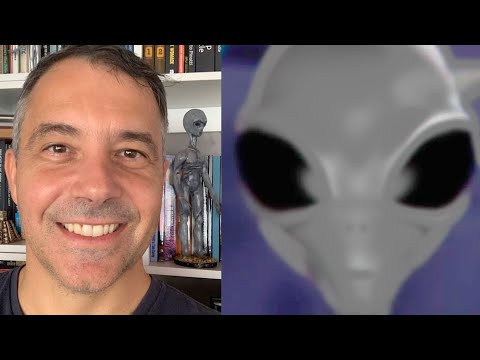
- "Interview with Brazil's Top UFO Researcher Thiago Luiz Ticchetti." THE HANNIBAL TV, YouTube (video verified via oEmbed). youtube.com
- This site's own resources library: Full Reading List, where this exact 2019 edition is cited across 2 separate case-file pages.
- This site's own key-figures entry: Thiago Luiz Ticchetti, for his full biography and site-wide case connections.
- This site's own case file: Island of Trindade Sighting, classified Disputed, which cites this book directly.
- This site's own case file: Barra da Tijuca Sighting, classified Debunked, which cites this book directly.
- This site's own case file: Colares, which cites Ticchetti's separate, later 2025 book UFO Attacks in Brazil.
- "UFOs at close sight: The Trindade island visual and photographic case of 1958." Patrick Gross, ufologie.patrickgross.org (used lightly, for basic cross-checking only; not relied upon for case facts, which follow this site's own dedicated case file and primary sources above; replaces a since-deleted Wikipedia article on the same case). ufologie.patrickgross.org
- This site's own essential-reading entry: Flying Saucer Occupants by Coral and Jim Lorenzen, documenting the earlier Vilas-Boas case within the same Brazilian ufological tradition.
- This site's own key-figures entry: Kentaro Mori, whose independent 2010 photographic reanalysis of the Trindade negatives this article draws on directly.
- This site's own key-figures entry: Almiro Barauna, the Trindade case's central photographer and, separately, the man who exposed an earlier, unrelated Barra da Tijuca hoax photograph years before his own Trindade images were taken.
- "UFO CONTACTS IN BRAZIL." Amazon.com (ISBN 9781796291988, 580 pages, fully illustrated, first English publication of several cases per the publisher's own listing description). amazon.com
Have corrections, additional research, or peer-reviewed sources? Help improve this entry.
Suggest an Edit