
Sensor & Optical Artifact Hypothesis
Argues that many of the most iconic "anomalous" UAP videos are misinterpretations of ordinary optical and sensor phenomena — glare, parallax, rotation, and infrared processing artifacts — as demonstrated by independent frame-by-frame reconstructions of cases like Gimbal and GoFast.
Methodologically Rigorous, Contested ConclusionsCore Thesis
The object in the Gimbal video does not rotate. The camera's own infrared glare, locked to the gimbal-mounted pod's orientation rather than the object itself, does — and once that single optical fact is established, several of the most cited "impossible" UAP videos stop being evidence of anomalous physics and start being evidence of how easy it is to misread instrumentation nobody built for public consumption. This is not a fringe claim; it is a testable one, and independent analysts who disagree about almost everything else in ufology have converged on it for at least one flagship case.
The Sensor & Optical Artifact Hypothesis is unusual among the theories on this site because it does not propose any new physics, craft, or classified program — it proposes that the evidentiary record for several famous cases contains a specific, identifiable optical or sensor illusion that a careful frame-by-frame reconstruction can reveal. Where other theories on this site ask "what could explain an anomaly," this one asks a prior question: "is there actually an anomaly in the raw sensor data, once its own geometry and processing pipeline are accounted for?" For at least one of the site's flagship cases, independent analysts working from opposite starting assumptions have reached a shared answer on part of that question, even while disagreeing sharply on the rest.
This page treats "debunked" and "unresolved" as genuinely different outcomes, and is careful about which cases belong in which category. A video can have a real, demonstrated optical artifact in one specific respect (an object's apparent rotation, for instance) while the broader case — its actual range, altitude, and identity — remains legitimately contested. This site's own Gimbal & GoFast case file is the clearest illustration: it is simultaneously the strongest evidence for this hypothesis's central optical claim and a live demonstration of how much interpretive work remains even after that claim is accepted.
Origins and Development
The hypothesis's modern form traces most directly to Mick West, a former video-game programmer who founded the analysis forum Metabunk.org and became the most prominent independent voice applying frame-by-frame optical reconstruction to Pentagon-released UAP footage. West's foundational contribution was methodological rather than conclusory: rather than simply asserting a conventional explanation, he built interactive glare-and-parallax simulators that let anyone reproduce the reported visual effects from ordinary physical starting conditions — a distant aircraft's infrared signature and a rotating gimbal mount for Gimbal, a slow high-altitude balloon and a fast-moving jet's own parallax for GoFast.
The GoFast case is the hypothesis's cleanest evidentiary win: West's parallax analysis, using the object's own line-of-bearing and altitude/speed telemetry burned directly into the released video, argued for a slow-moving object at high altitude rather than a low-altitude craft outrunning an F/A-18. That conclusion sat as an independent, non-governmental analysis for years before AARO's own 2025 case resolution reached a closely aligned conclusion — a rare instance on this site of an outside skeptical reconstruction being substantially validated by the government's own later review of the same footage.
The Gimbal case has followed a more contested path precisely because it has drawn serious independent analysis from someone who does not share West's overall skeptical priors. Chris Lehto, a retired 18-year USAF F-16 pilot, built his own geometric reconstruction using his flying career's practical familiarity with cockpit instrumentation, and after meeting directly with West to compare methods, publicly stated that West's rotating-glare simulator "checks out" as the explanation for the object's apparent spin. Lehto nonetheless maintained his own independent range estimate placed the object markedly closer than West's reconstruction implied, and continued to classify Gimbal as a genuine unresolved UAP rather than a fully explained aircraft — a rare, well-documented case of two technically serious analysts agreeing on the specific optical mechanism while disagreeing on what it actually proves about the object's identity.
Key Claimed Evidence
- The Gimbal rotating-glare reconstruction: West's interactive simulator demonstrates that a camera-relative infrared glare, tied to the gimbal pod's own orientation rather than the tracked object, reproduces the video's apparent rotation — a mechanism Chris Lehto, an independent and less skeptical analyst, has himself publicly endorsed as sound.
- The GoFast parallax analysis, later echoed by AARO: West's telemetry-based parallax reconstruction argued for a slow, high-altitude object years before AARO's own 2025 official resolution reached a closely aligned conclusion.
- The AARO Reaper Drone Metallic Sphere Video rotation analysis: Independent Metabunk forum measurement found the footage's apparent background rotation consistent with the MQ-9 drone's own orbiting flight pattern, reinforcing Bellingcat's separately published parallax-based balloon conclusion for the same clip.
- The evolving Iraq "Sphere" (Mosul Orb) assessment: West's own public position visibly updated as better data became available, moving from cautious 2023 discussion of a single leaked still image to a specific 2025 statement that the released full video "seems consistent with a large balloon" — a case study in the hypothesis being applied provisionally rather than dogmatically.
Government & Military Programs
Unlike theories that draw on a specific classified program, this hypothesis's government connection runs through AARO's own institutional case-resolution work rather than any dedicated research effort. AARO's 2025 GoFast resolution is the clearest example this file has identified of an official government case closure substantially converging with an independent skeptical reconstruction published years earlier. AARO's broader public reporting has continued to close a meaningful share of referred cases as conventional objects — balloons, drones, and aircraft misidentified under difficult sensor conditions — a pattern consistent with, though not a formal endorsement of, this hypothesis's general approach. No dedicated government program exists specifically to fund frame-by-frame optical reconstruction of released footage; that work has been performed entirely by independent analysts working from public data.
Skeptical Critiques & Limitations
The hypothesis's own strongest case is also its clearest limitation: even where the specific optical mechanism (rotating glare) is broadly accepted, the underlying question of the object's actual range, altitude, and identity is not automatically settled by that agreement. Chris Lehto's own reconstruction is the sharpest illustration available on this site — a technically serious independent analyst who accepts West's glare mechanism for Gimbal's rotation while still maintaining the case represents a genuine unresolved UAP, based on a range estimate that diverges meaningfully from West's own. This gap between "the visual artifact is explained" and "the case is resolved" is the hypothesis's central interpretive risk: an optical debunking that only accounts for one specific reported detail can be, and sometimes is, mistaken for a complete resolution of the underlying case.
The hypothesis is also limited in scope by design: it applies most cleanly to cases built primarily around a single video clip with recoverable telemetry (bearing, range cues, or burned-in flight data), and has comparatively little to say about multi-sensor, multi-witness cases corroborated by independent radar, physical trace evidence, or numerous simultaneous ground observers, where no single optical artifact could account for the full pattern of reports.
Theory Development Timeline
| Date | Development |
|---|---|
| Jan. 21, 2015 | The Gimbal and GoFast ATFLIR videos are recorded during a training exercise off the USS Theodore Roosevelt. |
| 2020 | Mick West publishes the first detailed public parallax analysis of the GoFast video, arguing for a slow, high-altitude object. |
| 2021 | Chris Lehto's own independent frame-by-frame Gimbal analysis, drawing on his F-16 flying career, goes viral and establishes him as a serious independent voice. |
| 2022 | West proposes that Gimbal's apparent rotation is a camera-relative infrared-glare artifact rather than a physical property of the tracked object; Lehto later publicly agrees the mechanism "checks out." |
| Jul. 12, 2022 | The AARO Reaper Drone Metallic Sphere Video is recorded; Metabunk and Bellingcat separately conclude its motion is consistent with a slow balloon and the drone's own orbit. |
| 2025 | West's public assessment of the Iraq "Sphere" (Mosul Orb) footage updates to "seems consistent with a large balloon" once the full video is released. |
| 2025 | AARO's official case resolution for GoFast reaches a conclusion closely aligned with West's 2020 independent parallax analysis. |
Theoretical Alignment
This hypothesis functions as the site's general-purpose "check the mundane explanation first" methodology rather than a theory of what UAP fundamentally are, which places it in a different category from origin-proposing theories like the Foreign Adversary Advanced Technology Hypothesis or the Ball Lightning & Atmospheric Plasma Hypothesis. It is compatible with, and often the necessary first step for, both: before invoking foreign drone technology or atmospheric plasma to explain an anomaly, this hypothesis asks whether the anomaly survives a rigorous optical and sensor reconstruction in the first place. Where it diverges from Ball Lightning specifically is scope — that hypothesis proposes a specific physical phenomenon behind a reported light, while this hypothesis proposes the reported anomaly itself may not physically exist as described, having been introduced by the recording or display process.
Sensor & Instrumentation Detection Profile
This hypothesis is unusual in treating the Sensor & Instrumentation Detection Profile as the primary battleground rather than supporting context: its central claim is that specific, identifiable properties of the recording instrumentation itself — a gimbal-mounted pod's own rotation, an infrared camera's automatic gain and sharpening behavior, a fast-moving aircraft's parallax against a distant background — can generate the reported "anomalous" behavior without any unconventional object being present. The Gimbal video's ATFLIR pod, as this site's own Gimbal & GoFast case file documents, overlays live range, bearing, and closure-rate telemetry directly onto the footage, making it unusually possible to test this hypothesis against burned-in instrument data rather than visual impression alone — exactly the data both West's and Lehto's independent reconstructions used, and exactly why their partial agreement carries more evidentiary weight than an ordinary skeptic-versus-witness dispute would.
Environmental & Geospatial Context
The hypothesis applies most strongly to cases recorded through specialized airborne or shipborne sensor systems operating at the edge of their intended use — targeting pods designed for tracking known aircraft and munitions, not classifying unidentified slow-moving or distant objects, and infrared systems whose automatic processing (gain control, sharpening, false-color rendering) was engineered for weapons employment rather than scientific object identification. Both Gimbal and GoFast were recorded during standard training intercepts over the Atlantic Ocean off Virginia, an environment with substantial conventional air traffic, weather balloons, and commercial aircraft that supports rather than undermines a conventional-object explanation, in contrast to cases occurring in more sensor-sparse or geographically isolated settings.
Observer Credibility & Occupational Profile
The hypothesis's strength does not rest on discrediting the original witnesses — the Navy pilots who filmed Gimbal and GoFast were trained aviators reporting in good faith what their sensors displayed in real time, under operational conditions that gave them no opportunity for the kind of frame-by-frame, telemetry-assisted reconstruction later analysts performed years afterward with the benefit of slow playback and purpose-built simulation tools. This file treats the hypothesis's proponents themselves as an unusually credible observer class for a different reason: both West and Lehto arrived at their reconstructions from opposite starting priors (skeptical and non-skeptical, respectively) using overlapping but independently developed methods, and their partial convergence on the Gimbal rotation mechanism specifically is stronger evidence than either analyst's conclusion would be alone.
Historical Precedents & Archive Matches
Optical and sensor misidentification has a documented history in ufology predating any of this hypothesis's named modern proponents, from Venus misidentifications to radar temperature-inversion anomalies cited in this site's own Cold War-era case files. What distinguishes this hypothesis's modern application is the availability of burned-in digital telemetry and slow-motion frame analysis tools that did not exist for earlier generations of investigators, allowing claims to be tested against recoverable numbers rather than argued from visual impression alone. Bellingcat's open-source parallax analysis of the AARO Reaper Drone footage extends this same evidentiary standard into the open-source-intelligence community, beyond the ufology-specific analyst pool West and Lehto represent.
Material Analysis
By design, this hypothesis requires no physical evidence at all — its entire evidentiary basis is the re-analysis of existing video and sensor data already in the public record, which is simultaneously its greatest practical strength (no recovery, chain-of-custody, or laboratory access is required) and a real limitation (it can only ever address cases with a released, sufficiently detailed video record, and has nothing to say about cases resting primarily on witness testimony, physical trace evidence, or radar data without an accompanying visual clip).
The Conventional Explanation Candidate
For this hypothesis, the "conventional explanation candidate" and the hypothesis itself are the same thing by construction — the substantive question in each specific case is whether the proposed optical or sensor mechanism actually survives scrutiny against the available telemetry, not whether a conventional explanation exists in principle. For GoFast, this file treats the parallax explanation as the leading candidate, given both West's original analysis and AARO's later convergent resolution. For Gimbal, this file treats the rotating-glare mechanism as well-supported for the specific rotation artifact, while treating the object's underlying range, altitude, and identity as still genuinely contested, per Lehto's own documented disagreement with West on that narrower point.
Supporting This Hypothesis
- West's rotating-glare mechanism for Gimbal has been independently endorsed, on that specific point, by Chris Lehto — an analyst with no general skeptical bias toward UAP cases
- West's 2020 GoFast parallax analysis was substantially echoed by AARO's own official 2025 case resolution, a rare instance of independent and government conclusions converging
- The AARO Reaper Drone Metallic Sphere Video's apparent motion was independently confirmed, by two separate analyst groups (Metabunk and Bellingcat), as consistent with mundane explanations using only public telemetry
- The hypothesis is falsifiable and self-correcting in practice: West's own public position on the Iraq "Sphere" case visibly updated once better data became available, rather than remaining fixed
Against This Hypothesis
- Agreement on a specific optical mechanism (Gimbal's rotation) does not resolve the broader case; Lehto's own independent range estimate keeps Gimbal's underlying identity a live dispute even between analysts who agree on the artifact
- The hypothesis applies only to cases with a detailed, released video record and recoverable telemetry, leaving it silent on multi-witness, radar-corroborated, or physical-trace cases
- Independent reconstruction analysis has, in practice, been performed by a small number of specific individuals rather than a broad, formally credentialed scientific field
- Even AARO's own convergence with West's GoFast analysis leaves open whether other, less-scrutinized cases would similarly resolve to conventional explanations if given the same reconstruction effort
Theoretical Assessment Profile
Six-domain evaluation of this hypothesis
Key Proponents
Mick West
Published the foundational parallax analysis of GoFast and the rotating-glare analysis of Gimbal, building interactive simulators that let the mechanisms be independently tested against the released telemetry.
Chris Lehto
Independently validated West's rotating-glare mechanism for Gimbal while maintaining his own distinct range estimate, illustrating the hypothesis's real limits alongside its real strengths.
Sean Kirkpatrick
Led the AARO review process that produced the 2025 GoFast resolution, publicly emphasizing that his office would not "close a case that we cannot defend the conclusions of."
Related Cases
Further Reading & Recommended Literature
Escaping the Rabbit Hole: How to Debunk Conspiracy Theories Using Facts, Logic, and Respect
West's own methodological handbook for evaluating extraordinary claims against ordinary evidence, laying out the reconstruction approach this hypothesis is built on.
UFO: The Inside Story of the US Government's Search for Alien Life Here—and Out There
An extensively researched history of U.S. government UAP investigation, including AARO's own case-resolution process this hypothesis's GoFast evidence draws on.
UFOs: Generals, Pilots, and Government Officials Go on the Record
A compilation of credentialed military testimony, useful comparative context for weighing how often trained observers' real-time sensor readings survive later reconstruction.
The UFO Experience: A Scientific Inquiry
The foundational text on scientifically rigorous UFO classification, directly applicable to distinguishing a genuine sensor anomaly from an artifact of the recording instrument.
Watch the Skies! A Chronicle of the Flying Saucer Myth
A skeptical history of the flying saucer phenomenon, useful comparative context for how often initially "impossible" footage has yielded to careful conventional reconstruction.
DISCLOSURE: Some links above are affiliate links. If you purchase through them, OverClassified receives a small commission at no additional cost to you. This helps support independent research.
Essential Viewing
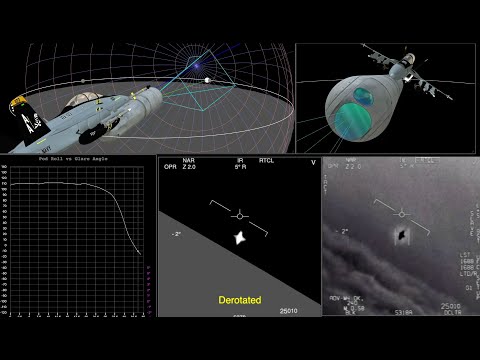
Gimbal UFO: A New Analysis
Mick West's own channel — the rotating-glare simulator directly demonstrating the mechanism this hypothesis's strongest claim rests on.
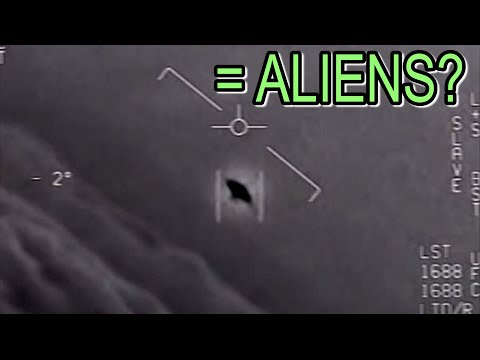
Breakdown of the Pentagon UFO Videos
Cool Worlds Lab — an independent astronomy channel's interview walkthrough of West's Gimbal and GoFast reconstructions.
Sources Cited
- West, M. "Gimbal UFO - A New Analysis." Metabunk. metabunk.org
- "That Navy UFO Footage Has an Optical Explanation." PetaPixel. petapixel.com
- "Famous Navy UFO Video Was Actually Camera Glare, Evidence Suggests." PetaPixel. petapixel.com
- "The Skeptic's Guide to the Pentagon's UFO Videos." Vice. vice.com
- "F-16 Pilot- Chris Lehto analyses Gimbal footage." Metabunk. metabunk.org
- "Gimbal distance and Speed Range Estimates using Lines of Bearing and/or DCS." Metabunk. metabunk.org
- "Middle East 2022 MQ-9 Observed Apparent Spherical UAP (via AARO)." Metabunk. metabunk.org
- "Isn't That A Balloon? Deflating a DoD UFO Video." Bellingcat. bellingcat.com
- "Chris Lehto: Fighter pilot and UAP debunker debunker." OutLooking. kcroes.wordpress.com
- "Ex-Fighter Pilot Chris Lehto Analyzes Controversial Turkey UFO Videos." Vetted. vetted.show
- "Why this UFO video analyst doesn't buy the hype around the Pentagon report." CBC Radio. cbc.ca
- West, M. Escaping the Rabbit Hole: How to Debunk Conspiracy Theories Using Facts, Logic, and Respect. Skyhorse Publishing (2018).
- Graff, G. M. (2023). UFO: The Inside Story of the US Government's Search for Alien Life Here—and Out There. Avid Reader Press.
- Kean, L. (2010). UFOs: Generals, Pilots, and Government Officials Go on the Record. Harmony Books.
- Hynek, J. A. (1972). The UFO Experience: A Scientific Inquiry. Da Capo Press.
- Peebles, C. (1994). Watch the Skies! A Chronicle of the Flying Saucer Myth. Smithsonian Institution Press.
- This site's own case file: USS Roosevelt / Gimbal & GoFast, for the original ATFLIR telemetry and sensor documentation this hypothesis's evidence draws on.
Have corrections, additional research, or peer-reviewed sources? Help improve this entry.
Suggest an Edit