
Foreign Adversary Advanced Technology Hypothesis
Suggests that a meaningful share of modern UAP sightings — including elements of the February 2023 object shootdown wave and the 2025 European drone incursions — reflect genuine Russian or Chinese hypersonic, stealth, or uncrewed-systems development rather than anything exotic, exploiting gaps in Western sensor classification and threat doctrine.
Officially Acknowledged, UnconfirmedCore Thesis
A real and growing share of unresolved UAP sightings — particularly high-performance, sensor-only contacts near military installations, contested airspace, and critical infrastructure — are not exotic craft at all, but genuine Russian and Chinese hypersonic glide vehicles, next-generation stealth aircraft, or uncrewed systems whose specific capabilities remain deliberately classified on both the adversary and U.S. sides, creating an intelligence and sensor-classification gap that gets filled with "unidentified" rather than "unrecognized."
The Foreign Adversary Advanced Technology Hypothesis occupies a distinctive position among the theories on this site: unlike the Extraterrestrial or Ultraterrestrial hypotheses, it requires no exotic physics or non-human intelligence at all, and unlike the Government Deception Hypothesis (which proposes UAP sightings mask domestic classified U.S. programs), this hypothesis locates the technology entirely outside American control. It has also, uniquely among this site's origin theories, been directly and publicly endorsed — in qualified, non-definitive terms — by the founding director of the U.S. government's own official UAP investigative office.
The hypothesis's core claim rests on a genuinely asymmetric information problem: both the United States and its adversaries have strong incentives to keep their most advanced sensor, propulsion, and stealth technology classified, which means a real foreign test article intruding into contested or allied airspace may be observed by U.S. or NATO sensors without ever being matched against a known threat profile — producing an authentic "unidentified" classification for what is, in fact, a perfectly conventional (if highly advanced and secret) piece of hardware.
This page treats the hypothesis as institutionally live rather than fringe, and traces it through four case files already documented in this archive: the confirmed September 2025 Russian drone incursion into Polish airspace (part of the 2025 European NATO Drone Incursion Wave), and the still-unresolved February 2023 Alaska, Yukon, and Lake Huron shootdowns, each illustrating a different point on the spectrum from definitively confirmed foreign technology to genuinely unresolved sensor contact.
Origins and Development
The hypothesis's most significant institutional moment came on April 19, 2023, when Dr. Sean Kirkpatrick, the founding Director of the Pentagon's newly established All-domain Anomaly Resolution Office (AARO), testified before the Senate Armed Services Subcommittee on Emerging Threats and Capabilities — only the second open congressional UFO hearing in fifty years. Asked directly whether some UAP cases might reflect adversary capabilities, Kirkpatrick paused before answering: "No, but I have concerning indicators." He elaborated that China in particular was "less risk averse at technical advancement than we are. They are just willing to try things and see if it works," and stated AARO had "indicators that some are related to foreign capabilities" requiring further investigation with intelligence community partners — while immediately clarifying the concern applied to only "a single percentage" of the roughly 650 cases AARO had analyzed to that point.
The hypothesis gained its most dramatic real-world confirmation not through any UAP-specific investigation but through open warfare: on the night of September 9–10, 2025, 19 to 23 Russian military drones entered Polish airspace during a broader missile and drone assault on Ukraine, and NATO fighter jets shot down several of them — recovered wreckage that was formally, physically, and undisputedly examined and attributed to Russia. This is the hypothesis's only fully confirmed instance in this archive, and it demonstrates the underlying mechanism is real: a hostile foreign power's drone technology did, in fact, enter NATO airspace and initially register as an unidentified aerial threat before being identified.
Defense journalist Tyler Rogoway of The War Zone has separately advanced a related, narrower version of the hypothesis for individual sighting cases: his November 2019 identification of a 1945 U.S. patent for a folding, balloon-borne radar corner reflector as a close visual match for the Navy's "cube in a sphere" encounters connects several high-profile pilot sightings to Cold War-era radar-deception technology — American rather than foreign in that specific case, but methodologically the same argument this hypothesis makes more broadly: that classified, mundane hardware, not exotic craft, explains high-performance sensor contacts. That same methodological approach — testing a sensor anomaly against a specific, physically grounded conventional mechanism rather than assuming it reflects genuinely novel technology — is the organizing principle of this site's own Sensor & Optical Artifact Hypothesis, though that file focuses on optical and camera-relative artifacts rather than deliberately engineered radar decoys.
Key Claimed Evidence
- Sean Kirkpatrick's April 2023 Senate testimony: AARO's founding director stated under oath he had "concerning indicators" that some UAP cases could relate to Chinese capabilities, though he explicitly declined to call this evidence and specified it applied to only a small percentage of analyzed cases.
- The September 2025 Polish airspace incursion: Confirmed Russian military drones, recovered and formally attributed, entered NATO territory and were shot down — direct physical proof the underlying mechanism (foreign drone technology misread by allied sensors as an unidentified threat) genuinely occurs.
- Hypersonic glide vehicle plasma sheathing: Both Russia's Avangard and China's DF-ZF hypersonic glide vehicles generate an ionized plasma sheath at operational speed that can absorb or distort radar returns, a real, documented physical mechanism that could plausibly produce anomalous-seeming sensor signatures independent of any exotic origin.
- The 2025 European drone incursion wave: A monthslong pattern of drone activity across Denmark, Belgium, Germany, and Norway that Danish and NATO officials characterized as likely Russian hybrid warfare, even where individual incidents (such as the Copenhagen Airport closure) were later found by police investigators to lack demonstrable evidence of any drone at all.
- Tyler Rogoway's corner-reflector analysis: A specific, testable technical match between a declassified radar-deception patent and a well-documented Navy pilot sighting pattern, demonstrating that mundane classified hardware can plausibly generate genuinely anomalous-seeming sensor and visual reports.
Government & Military Programs
This hypothesis is unusual on this site for having a genuine, named, on-the-record government advocate rather than only anonymous testimony: AARO's own founding director raised it directly to Congress. At the same time, AARO's subsequent formal reporting has been notably more cautious than Kirkpatrick's testimony in isolation might suggest — the office's Fiscal Year 2025 Consolidated Annual Report explicitly states that "none of the UAP cases resolved by the office to date indicate advanced foreign adversarial capabilities or breakthrough technologies in any domain," a finding that applies specifically to resolved cases and leaves open whether any of AARO's substantial unresolved case backlog (191 cases placed in "active archive" for insufficient data in FY2025 alone) might eventually prove Kirkpatrick's concern correct. NATO's Operation Eastern Sentry, launched September 12, 2025, represents the alliance's institutional response to the one confirmed instance of this hypothesis in this archive, reinforcing eastern-flank air defense specifically against further Russian drone incursions.
Skeptical Critiques & Limitations
The hypothesis's central weakness is the same one that makes it credible: its evidence is, by design, classified on both sides, meaning it can neither be robustly confirmed nor robustly ruled out for any individual unresolved case. Kirkpatrick's own testimony is frequently cited more strongly than its actual content supports — he explicitly said he lacked evidence, described only "indicators," and specified the concern covered a small minority of cases, a nuance regularly lost when the testimony is summarized as "the Pentagon's UFO chief says some UAP are Chinese."
The 2025 European drone wave, the hypothesis's most extensive recent test case, illustrates the opposite risk just as clearly: a genuinely confirmed foreign incursion (Poland) triggered a much larger wave of public alarm and government "hybrid attack" rhetoric across multiple countries, and a months-long Copenhagen Police investigation later concluded it could not demonstrate that any drone activity had occurred at all during the September 22 incident that had originally been cited as the clearest evidence of coordinated Russian activity beyond Poland. This is a direct, documented case of the hypothesis's own logic being applied too broadly: a real foreign threat became the retroactive explanation for events that, on independent investigation, may not have involved any drone at all.
More broadly, the hypothesis explains sensor anomalies and threat classification gaps well, but it does not, on its own, account for reported extreme performance characteristics (instantaneous acceleration, sustained hypersonic maneuvering at low altitude, trans-medium transition) that exceed the publicly known capability of any disclosed Russian or Chinese program, including Avangard and DF-ZF — a gap proponents attribute to additional, still-undisclosed classified development, and skeptics treat as evidence the hypothesis cannot fully explain the highest-strangeness cases in this archive without itself becoming as speculative as the theories it is offered to replace.
Theory Development Timeline
| Date | Development |
|---|---|
| 2019–2020 | China's DF-ZF and Russia's Avangard hypersonic glide vehicles reach initial operational deployment, both engineered to be difficult for conventional radar to track continuously. |
| Nov. 2019 | Tyler Rogoway publishes his corner-reflector patent analysis, establishing the methodological template of classified mundane hardware explaining anomalous sensor reports. |
| Feb. 2023 | The Alaska, Yukon, and Lake Huron object shootdowns occur within a single 72-hour window; none of the three objects are recovered or formally identified. |
| Apr. 19, 2023 | Sean Kirkpatrick testifies to the Senate Armed Services Subcommittee that he has "concerning indicators" some UAP cases may relate to Chinese capabilities. |
| Sept. 9–10, 2025 | Confirmed Russian military drones enter Polish airspace; NATO shoots several down and recovers wreckage, formally attributing the incursion to Russia. |
| Sept. 12, 2025 | NATO launches Operation Eastern Sentry in direct response. |
| Sept.–Dec. 2025 | The broader European drone incursion wave unfolds; some incidents (Kleine Brogel) remain unresolved, while others (Copenhagen) are later found by police to lack demonstrable evidence. |
| 2026 (FY2025 report) | AARO's Fiscal Year 2025 report states no resolved case indicates advanced foreign adversarial capabilities, while leaving a substantial unresolved case backlog open. |
Theoretical Alignment
This hypothesis is functionally the mirror image of the Government Deception Hypothesis: both propose a mundane, classified, human-engineered origin for UAP reports, but this theory locates that origin entirely outside U.S. control, while Government Deception locates it within domestic black programs. It shares its underlying logic with the plasma-sheath radar-distortion mechanism discussed on this site's Plasma Sheath/MHD Propulsion page — both propose that genuine instrumentation and classification limitations, not exotic phenomena, generate the appearance of anomaly.
Sensor & Instrumentation Detection Profile
The hypothesis rests on a specific, physically documented sensor mechanism: hypersonic glide vehicles like Avangard and DF-ZF generate extreme surface heating (estimated above 2,000°C) at operational speed, producing an ionized plasma sheath that can absorb or distort radar returns and reduce detectability from ground-based systems — a genuine technical basis for a fast-moving object producing an intermittent, anomalous-seeming radar signature rather than a clean, continuous track. This same plasma-sheath mechanism is independently discussed on this site's Plasma Sheath / Magnetohydrodynamic Propulsion Hypothesis page as a candidate explanation for UAP luminosity and radar anomalies, illustrating that the same physical phenomenon can be read either as evidence of exotic propulsion or, as this hypothesis argues, as the signature of known but classified hypersonic weapons.
Environmental & Geospatial Context
The hypothesis's core cases cluster overwhelmingly around contested or strategically sensitive airspace: the Beaufort Sea and Yukon Territory in the Arctic approaches to North America, and Kleine Brogel Air Base in Belgium, a site believed to store U.S. tactical nuclear weapons. This geographic pattern is itself part of the proponent case: a hypothesis premised on deliberate foreign reconnaissance or capability testing predicts concentration near exactly the kind of strategic infrastructure these locations represent, rather than the geographically diffuse pattern a genuinely unknown natural or non-human phenomenon might be expected to produce.
Observer Credibility & Occupational Profile
The hypothesis draws its strongest credibility from institutional rather than individual sources: a Senate-testifying AARO director, NATO's Secretary General, and multiple national defense ministries all lend it weight no single eyewitness theory on this site can match. Sean Kirkpatrick's specific credibility is notable for its calibration — a laser and materials physicist by training who was explicit, under oath, about the limits of his own evidence ("I will not close a case that we cannot defend the conclusions of"), a posture this file treats as a meaningfully higher credibility signal than an unqualified claim would have been. Tyler Rogoway's technical analyses carry similar weight for the same reason: he has been consistently careful to frame his matches as testable candidates rather than confirmed identifications.
Historical Precedents & Archive Matches
The hypothesis has a genuinely strong historical precedent in the well-documented Cold War pattern of classified U.S. aircraft (the U-2, the SR-71, the F-117) generating a measurable share of contemporaneous UFO reports before their existence was publicly acknowledged — the same precedent this site's Government Deception and Secret Space Program hypothesis pages discuss for domestic programs, applied here to adversary rather than American technology. The precedent is symmetrical in a way that strengthens the hypothesis: if classified American aircraft plausibly explained a share of Cold War-era sightings, there is no principled reason classified Russian or Chinese aircraft, drones, or hypersonic systems could not do the same for a share of today's reports.
Material Analysis
The hypothesis's evidentiary strength varies sharply by case, from the strongest possible material record to none at all. The Polish incursion produced actual recovered drone wreckage, formally examined and attributed — the single strongest piece of physical evidence for any theory on this site's origin-hypothesis pages. By contrast, none of the three February 2023 shootdown objects (Alaska, Yukon, Lake Huron) were ever recovered, despite extensive multi-agency search efforts, leaving their specific identity, and therefore whether they support or undermine this hypothesis, permanently unresolved.
The Conventional Explanation Candidate
For this hypothesis, the "conventional explanation" and the hypothesis itself are largely the same claim: that classified hypersonic, stealth, or uncrewed foreign systems — not exotic non-human technology — account for the strongest unresolved sensor cases in this archive. Its own best evidence (Poland) is simultaneously its own strongest limiting case: it proves the underlying mechanism is real, while the subsequent European drone wave demonstrates how quickly that real mechanism can be over-applied to explain incidents later found to lack supporting evidence.
Supporting This Hypothesis
- AARO's own founding director testified under oath to having "concerning indicators" regarding Chinese capabilities in a small percentage of cases
- The September 2025 Polish incursion is a fully confirmed instance of foreign drone technology producing an initially unidentified threat contact, with recovered wreckage
- Hypersonic glide vehicles' plasma-sheath effect is a real, documented physical mechanism capable of producing anomalous radar signatures
- Direct historical precedent exists for classified domestic aircraft (U-2, SR-71, F-117) explaining a measurable share of Cold War UFO reports, supporting the plausibility of a foreign mirror case
Against This Hypothesis
- AARO's formal FY2025 report states no resolved case indicates advanced foreign adversarial capabilities
- None of the three February 2023 shootdown objects were ever recovered or identified, leaving the hypothesis unconfirmed for its most prominent U.S. domestic cases
- The broader 2025 European drone wave shows the hypothesis's own logic can be over-applied: a confirmed incident (Poland) helped generate public alarm around a separate incident (Copenhagen) that police later found no evidence for
- The hypothesis does not, on its own, account for reported extreme performance exceeding any publicly known Russian or Chinese program's disclosed capability
- By its nature, the hypothesis's evidence is classified on both sides, making it structurally resistant to independent verification in either direction
Theoretical Assessment Profile
Six-domain evaluation of this hypothesis
Key Proponents
Sean Kirkpatrick
Testified to the Senate in April 2023 that he had "concerning indicators" some UAP cases could relate to Chinese capabilities, while explicitly cautioning this was not evidence and applied to only a small share of cases.
Tyler Rogoway
Advanced the hypothesis's methodological template with his 2019 identification of a declassified radar-deception patent matching the Navy's "cube in a sphere" sightings.
Mark Rutte
Characterized the September 2025 Polish airspace violation as the largest concentration of NATO airspace violations the alliance had witnessed, treating confirmed Russian drone technology as a direct security threat rather than an ambiguous phenomenon.
Glen VanHerck
Led the military response to the February 2023 shootdown wave and publicly acknowledged NORAD could not determine the objects' propulsion or origin, neither confirming nor ruling out a foreign-technology explanation.
Related Cases
Further Reading & Recommended Literature
The Kill Chain: Defending America in the Future of High-Tech Warfare
A former Senate Armed Services Committee staff director's account of the U.S.-China technology gap, direct context for the strategic anxieties underlying this hypothesis.
UFO: The Inside Story of the US Government's Search for Alien Life Here—and Out There
An extensively researched history of U.S. government UAP records, including AARO's founding and its relationship to national-security threat assessment.
UFOs: Generals, Pilots, and Government Officials Go on the Record
A compilation of credentialed official testimony, useful context for weighing Kirkpatrick's Senate statements against the broader UAP testimony record.
The UFO Experience: A Scientific Inquiry
The foundational text on scientifically rigorous UFO classification, directly applicable to distinguishing genuinely unresolved cases from confirmed conventional ones.
Watch the Skies! A Chronicle of the Flying Saucer Myth
A skeptical history documenting how classified Cold War-era aircraft repeatedly generated genuine UFO reports before public disclosure.
DISCLOSURE: Some links above are affiliate links. If you purchase through them, OverClassified receives a small commission at no additional cost to you. This helps support independent research.
Essential Viewing
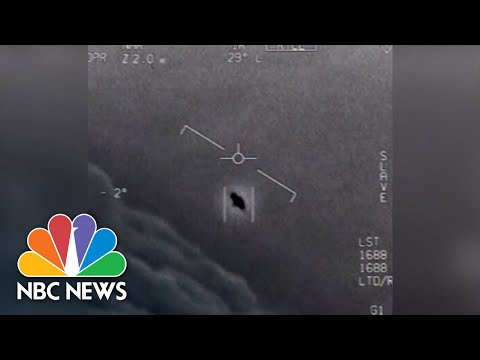
Pentagon's UFO Chief Testifies at Senate Hearing
NBC News — coverage of Sean Kirkpatrick's April 19, 2023 testimony, including his statements on foreign capabilities.
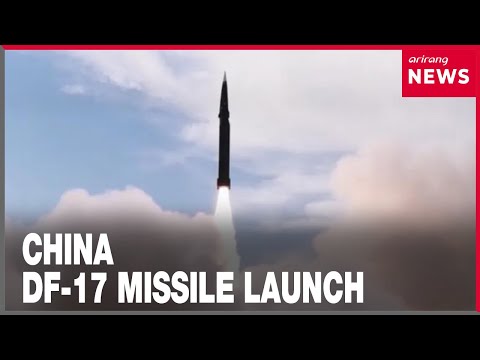
China Releases DF-17 Hypersonic Launch Footage
Arirang News — footage of the DF-17 hypersonic glide vehicle system this hypothesis's sensor-classification mechanism centers on.
Sources Cited
- "Pentagon UFO Czar Says Nothing Indicates Objects Are ET, Some May Be Chinese." The War Zone. twz.com
- "UFO Senate Hearing: Pentagon Official 'Concerned' About China and Russia's 'Advanced Tech.'" Fox News. foxnews.com
- "UFO Intel Report Will Not Reach Definitive Conclusion, Adding to Mystery Over Sightings." ABC News. abcnews.go.com
- "No Evidence of ET? Controversy Erupted After the Senate UAP Hearing. Here's What the Critics Missed." The Debrief. thedebrief.org
- "AARO's Latest UAP Report Finds No Evidence of Exotic Technology, But Mysteries Remain." The Debrief. thedebrief.org
- Fiscal Year 2024 Consolidated Annual Report on UAP, U.S. Department of Defense. media.defense.gov
- "Avangard (hypersonic glide vehicle)." Wikipedia. en.wikipedia.org
- "DF-ZF." Wikipedia. en.wikipedia.org
- "Hypersonic Glide Vehicles: Technology, Design and Use." Warwings Daily. warwingsdaily.com
- "2025 Russian Drone Incursion into Poland." Wikipedia. en.wikipedia.org
- "Operation Eastern Sentry." Wikipedia. en.wikipedia.org
- "After Months of Investigation: No Evidence of Drones Over Copenhagen Airport." Dronewatch Europe. dronewatch.eu
- Brose, C. (2020). The Kill Chain: Defending America in the Future of High-Tech Warfare. Hachette Books.
- Graff, G. M. (2023). UFO: The Inside Story of the US Government's Search for Alien Life Here—and Out There. Avid Reader Press.
- Kean, L. (2010). UFOs: Generals, Pilots, and Government Officials Go on the Record. Harmony Books.
- Hynek, J. A. (1972). The UFO Experience: A Scientific Inquiry. Da Capo Press.
- Peebles, C. (1994). Watch the Skies! A Chronicle of the Flying Saucer Myth. Smithsonian Institution Press.
Have corrections, additional research, or peer-reviewed sources? Help improve this entry.
Suggest an Edit