
UFOs? Yes!
Where the Condon Committee Went Wrong
Core Thesis
UFOs? Yes! Where the Condon Committee Went Wrong is the book a fired member of the University of Colorado UFO Project rushed into print to get ahead of the project's own final report. David R. Saunders, a University of Colorado psychologist and one of the Condon Committee's original principal investigators, was dismissed by Edward Condon on February 9, 1968 — eleven months before the Condon Report reached bookstores — after he and colleague Norman Levine passed coordinator Robert Low's internal "trick" memo to NICAP. Working with Boulder journalist R. Roger Harkins and publishing through World Publishing Company with an introduction by Look writer John G. Fuller, Saunders used the months before the official report's release to make an argument this site's own Case File #227, the Condon Report, still treats as substantially correct: that the project's roughly two years of case-by-case fieldwork had produced a body of internally divided, often genuinely open findings, and that Condon's own forthcoming "Conclusions" chapter would not honestly reflect what his own scientists had found. This article is the first full independent breakdown this site has given the book that made that argument first, from the inside, before the report Saunders was rebutting had even been published.
About the Author
David Robertson Saunders, born in 1923, was a psychologist on the University of Colorado faculty and one of the seven researchers named in the school's original 1966 Air Force contract for what became the Condon Committee. Within the project he pursued two threads that increasingly put him at odds with the study's leadership: a pioneering computerized sighting catalog he called UFOCAT, which he hoped would eventually hold hundreds of individually coded reports for statistical analysis, and an enthusiasm for French researcher Aimé Michel's "orthoteny" theory — the claim, examined at length in this site's own essential-reading breakdown of Michel's Flying Saucers and the Straight-Line Mystery (ER-016) — that UFO sightings within a single wave clustered along statistically meaningful straight lines. Saunders pushed hard for orthoteny's inclusion in the Committee's own analysis; historian Michael Swords's later archival account of the project describes real friction between Saunders and Low over how seriously to weight it, part of a broader pattern of the psychologist increasingly pursuing his own research priorities inside a project whose coordinator wanted something narrower.
The break came over a different document entirely. Physicist James E. McDonald had discovered Low's August 1966 memo in project files in mid-1967 and pressed Condon about it; Saunders and Levine, convinced the memo proved the study's negative outcome had been decided before any case was reviewed, made a copy available to NICAP director Donald Keyhoe. When Condon confronted him, Saunders admitted directly that he had sent it. By his own account in the book this article covers, Condon called the act "disloyal" and told him, "For an act like that you deserve to be ruined professionally" — to which Saunders replied that his loyalty ran to the American public that had funded the study, not to the Air Force that had contracted it. Condon fired both Saunders and Levine on February 9, 1968, a dismissal this site's own Condon Report case file treats as the controversy's single most visible flashpoint, reported nationally three months later in John G. Fuller's Look magazine exposé.
Saunders did not stop building UFOCAT after his firing. He continued the catalog independently and, in 1976, donated his version of it to J. Allen Hynek's newly formed Center for UFO Studies, where it grew under CUFOS stewardship into a working reference database of well over 100,000 catalogued sighting reports used by researchers for decades afterward — arguably his most durable professional legacy in the field, distinct from and longer-lived than the book discussed here. He later worked as a research associate at the University of Chicago's Industrial Relations Center, a career turn that took him outside ufology proper even as UFOCAT continued circulating under CUFOS.
Saunders's co-author, R. Roger Harkins, was a Boulder, Colorado newspaperman — a Boulder Daily Camera writer and freelance investigative journalist working in the university town where the Condon Committee itself was based, giving him direct local access to the unfolding controversy as it broke. Harkins went on to earn a master's degree in communication arts from the University of Colorado in 1970 and worked through the early 1970s as a freelance reporter, later contributing research on oil-shale industry history now held in an archival collection at the State Historical Society of Missouri; he died in 1989 in Pueblo, Colorado. His role on this book was substantial rather than ghostwriting: contemporary catalog listings credit the work jointly to "Saunders and Harkins," combining Saunders's insider access and scientific standing with Harkins's working-journalist's ability to turn the story around fast enough to beat the Committee's own final report into print.
Historical Context & Origins
This book exists because of timing as much as content. The University of Colorado study, formally contracted on October 6, 1966 and coordinated from offices at the University of Colorado's Boulder campus, was not scheduled to publish its official findings until the fall of 1968, with the Bantam mass-market paperback this site covers as Scientific Study of Unidentified Flying Objects (ER-080) not reaching drugstore racks until January 1969. Saunders's firing in February 1968, roughly ten months before either edition of the report appeared, gave him a real head start: a fired insider with direct knowledge of the study's internal disagreements and a copy of its most damaging internal document, free to publish his own account of what the project had actually found well before Condon's own "Conclusions and Recommendations" chapter could frame the story first.
The specific document that made the book possible was Robert Low's memorandum "Some Thoughts on the UFO Project," written August 9, 1966, three weeks before the Air Force's own formal proposal letter and before the University of Colorado contract was even signed. Its language proposing that the study be conducted by investigators with "an almost zero expectation of finding a saucer" while still appearing objective to the public — the passage this site's own Condon Report case file calls "direct, contemporaneous, written evidence" of a predetermined result — sat undiscovered in project files for nearly a year before James E. McDonald found it in mid-1967 and Saunders and Levine subsequently passed a copy to NICAP. Reproducing that memo's full text for a mass audience, months before NICAP's own April 30, 1968 public release and Fuller's May 1968 Look exposé, is the book's single most consequential act of publication.
Saunders wrote from inside a field already primed for exactly this kind of insider account. NICAP, under Donald Keyhoe, had spent years accusing the Air Force's Project Blue Book of institutional cover-up before the Colorado study was even proposed, and the University's own study had been triggered in the first place by the political fallout from the March 1966 Michigan "swamp gas" ridicule of J. Allen Hynek. A book arguing that a second official government-linked UFO study had, like the CIA's 1953 Robertson Panel (Case File #226) before it, produced a public conclusion its own underlying casework didn't support landed in a research community already primed to believe exactly that pattern was real — and, per this site's own case file, largely was.
World Publishing Company released the 256-page hardcover in 1968 with an introduction by journalist John G. Fuller, whose own Look exposé on the Saunders-Levine firing would appear in print that same year; a Signet paperback from New American Library followed the same year for a wider mass-market readership. The Library of Congress catalogued the first edition under LCCN 68-059202, and it predates the modern ISBN system entirely — the same bibliographic circumstance this site's own Condon Report essential-reading entry documents for the official report's own Bantam paperback, published under an ASIN rather than an ISBN a few months later.
Core Arguments & Key Concepts
The book's central evidentiary move is reproducing Low's full "trick" memo for a general readership for the first time, months before NICAP's own public release made the document widely available. Saunders and Harkins present the memo not as an isolated lapse in judgment but as the founding document of the entire study, arguing that its language committed the project, from before its first case review, to producing a conclusion friendly to the Air Force's own institutional preference to close Project Blue Book — the same preference this site's own case file documents independently through Air Force liaison Colonel Robert Hippler's contemporaneous internal correspondence.
Built on top of that founding document, the book's second argument is statistical and personal rather than purely documentary: Saunders contends that the working scientists who actually investigated cases, rather than the study's director, privately reached far more open conclusions than Condon's own summary let on. That claim runs directly parallel to historian Michael Swords's later, independently sourced finding — cited in this site's own Condon Report case file — that 11 of the study's 16 core staff members personally believed UFOs still warranted continued scientific study, a staff division Saunders was describing in real time, from inside the project, a full year before Swords's archival research confirmed it from the outside.
Case by case, the book leans on the specific investigations Saunders himself was most persuaded by during his time on the project, most visibly the 1950 Mariana UFO Film, which this site's own key-figures entry for Saunders already identifies him as "among the staff most convinced" constituted genuine evidence — a position the book uses as a worked example of a case its authors felt the Committee's own investigators treated more seriously in private than the final report's tone would suggest. Saunders's separate, well-documented enthusiasm for Aimé Michel's orthoteny concept, covered in depth in this site's own breakdown of Michel's book (ER-016), forms a related thread: Saunders had pushed unsuccessfully for the Committee to take UFO-wave line alignments seriously as statistical evidence, a fight Michael Swords's later account of the project's internal politics specifically identifies as a source of friction between Saunders and Low.
The book's title itself doubles as its argument's summary: where Condon's still-unpublished report would answer the question of whether UFOs represented a phenomenon worth continued scientific attention with an effective no, Saunders and Harkins answer, from inside the same study, yes — not on the strength of any single dramatic case, but on the claim that the project's own working scientists, examined collectively rather than through their director's single authorized voice, had already reached that conclusion themselves.
Key Cases & Evidence Discussed
This book's organizing subject is the same institutional history this site's own Case File #227, the Condon Report, documents at length: the University of Colorado UFO Project's formation, Low's memo, and the staff divisions that memo helped produce. Where that case file assesses the finished 1968 study's methodology and conclusions with the benefit of the complete published record, this book is a primary document from inside that same story, written by one of its two most consequential dismissed staff members before the record was complete.
The Mariana UFO Film (Case File #058, 1950) is the case this book returns to most directly as an example of internal disagreement, consistent with Saunders's documented position as one of the Committee members most persuaded the footage was genuine — a claim this site's own case file and key-figures entry for Saunders both independently corroborate.
The book's single most important piece of "evidence," in a category distinct from any individual sighting, is Low's own August 1966 memo, reproduced here in full for a mass readership for the first time. This site's own essential-reading entry on the official Bantam Books paperback (ER-080) specifically credits this book with being the first to put the complete memo text in front of general readers, months ahead of NICAP's own public release.
Saunders's advocacy for Aimé Michel's orthoteny concept — the claim that UFO sightings within a wave cluster along statistically significant straight lines, examined on its own terms in this site's breakdown of Michel's founding 1958 book (ER-016) — runs through the book as connective tissue for its larger argument that the Committee dismissed avenues of analysis its own staff considered worth pursuing.
Critical Reception & Controversies
The book's most direct and most consequential critic was a fellow Committee insider writing decades later: Roy Craig, the project's own field-investigation leader, used his 1995 memoir, covered on this site as UFOs: An Insider's View of the Official Quest for Evidence (ER-044), to review specific cases Saunders and Levine had showcased as evidence the Committee wrongly dismissed strong sightings. Craig's own assessments were notably harsh, characterizing individual cases from this book as, in his own words, "utter nonsense," "highly suspect," and otherwise evidentially weak or already adequately explained — a direct, book-length rebuttal from within the same project, aimed squarely at the argument this article's book makes.
Craig's memoir offers a substantially more forgiving reading of Low's own intentions than this book does, arguing the trick memo did not reflect Condon's personal views, which Condon had not learned of for roughly eighteen months, and that characterizing Low as engaged in any kind of plot would be inaccurate. That disagreement, aired across two books written twenty-seven years apart by two people who were both inside the same project, remains the closest thing the Condon Committee controversy has to a direct point-counterpoint exchange between participants rather than outside historians.
Condon's own contemporaneous response was not academic but personal and institutional: by Saunders's own account in this book, Condon called the leak "disloyal" and told him he deserved to be "ruined professionally," and Condon separately maintained that characterizing his own methods as unscientific — the substance of what Saunders and Levine were alleging — was itself libelous, according to contemporaneous newspaper accounts of the dispute. No libel suit was ultimately filed by either side, but the exchange illustrates how personally the controversy this book documents was actually fought, well outside the register of a normal scientific disagreement.
Because the book was rushed into print to precede the official report, it necessarily worked from an incomplete picture of the Committee's own final findings — a limitation this site's own Condon Report case file implicitly notes by showing that later, more careful accountings, including the American Institute of Aeronautics and Astronautics' 1970 subcommittee review and Michael Swords's archival research decades afterward, independently reached conclusions substantially similar to Saunders's own rushed 1968 argument, without needing his book's more polemical framing to get there. That later, independent convergence is arguably the book's strongest vindication, even though it arrived from sources that did not cite this book directly.
Trade and scientific press coverage of the book itself was thin compared to the official report's own reception; contemporary attention centered overwhelmingly on the Saunders-Levine firing as a news story, via Fuller's Look exposé, rather than on formal reviews of Saunders and Harkins's book as a piece of argument in its own right — a narrower critical footprint than the official Condon Report itself received from outlets like Nature and the American Journal of Physics.
Influence & Legacy
This book's most concrete legacy is documentary rather than persuasive: it put the full text of Low's memo in front of a general readership before any other publication did, ensuring that when NICAP formally released the memo on April 30, 1968 and Fuller's Look exposé followed two weeks later, the document's existence and exact wording were already part of the public record this book had helped establish.
Within the small specialist literature specifically about the Condon Committee's internal politics, this book stands as the direct counterpart to Roy Craig's 1995 memoir: together, the two accounts remain the closest thing the controversy has to primary-source testimony from its opposing internal camps, one from the two staff members fired for surfacing the memo, the other from the project's own chief field investigator defending Low and Condon's intentions against exactly this book's argument.
The book's central claim — that the project's own case-by-case findings diverged sharply from Condon's public summary — was substantially validated by later, more methodical work its authors could not have cited at the time: J. Allen Hynek's own published verdict that the Committee "had been unable to furnish adequate explanations for more than a quarter of the cases examined," the AIAA subcommittee's 1970 finding that roughly 30 percent of the report's harder case docket went unexplained, and historian Michael Swords's own archival confirmation of the 11-of-16 staff division — all independently reaching conclusions this book had argued, in cruder and more urgent form, more than a year before any of them appeared in print.
Saunders's own most durable professional legacy grew out of work this book only touches on: the UFOCAT sighting database he began during the project and donated to the newly formed Center for UFO Studies in 1976 continued operating as a working research tool for decades, outliving both the book's immediate controversy and, eventually, Saunders's own active involvement in the field.
On this site specifically, this book's role has so far been that of a citation rather than a subject in its own right: this site's own essential-reading entry on the official Bantam Books paperback (ER-080) already credits it as the 1968 counter-book that first reproduced Low's memo in full, and the key-figures entries for David Saunders, Norman Levine, and Edward Condon all reference it by title — a citation footprint this article converts, for the first time, into a full independent breakdown of the book itself.
The Book
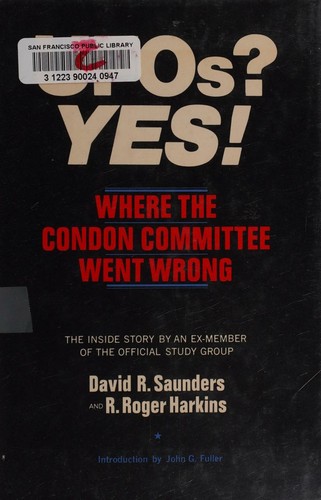
As an Amazon Associate, OverClassified may earn from qualifying purchases made through this link, at no extra cost to you.
Why This Is Essential Reading
UFOs? Yes! Where the Condon Committee Went Wrong earns its place on this list as this site's only entry written by an actual dismissed insider, published while the controversy it describes was still unresolved and the official report it rebuts had not yet reached print. Its case-by-case arguments are, by the account of the project's own field-investigation leader in a later, more forgiving memoir, uneven and sometimes overstated; its central claim — that Robert Low's 1966 memo committed the study to a predetermined conclusion its own working scientists' findings did not support — is nonetheless the same claim this site's own Condon Report case file reaches independently, using evidence Saunders and Harkins could not have cited when they rushed this book into print in 1968. Read alongside that case file, the official report itself, and Roy Craig's counter-memoir, this book is essential not because its every case argument holds up, but because it is the earliest and angriest first draft of an argument later, more careful research substantially confirmed: that the gap between what the Condon Committee's scientists found and what its director told the public was real, and that at least one member of the project saw it clearly enough to risk his career saying so before anyone asked him to.
Related Cases & Theories
Essential Viewing
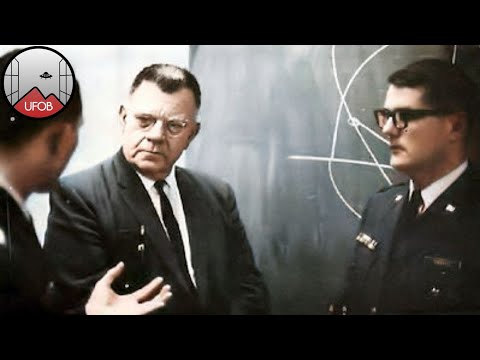
1968 Commentary on the Condon Committee findings with Prof. McDonald & Major Keyhoe
UFOB | Your UAP Library — Archival period commentary recorded in 1968, the same year this book was published, from two of the Condon Committee's most prominent outside critics, physicist James E. McDonald and NICAP director Donald Keyhoe, capturing the controversy this book was written into. Verified via YouTube oEmbed before inclusion.
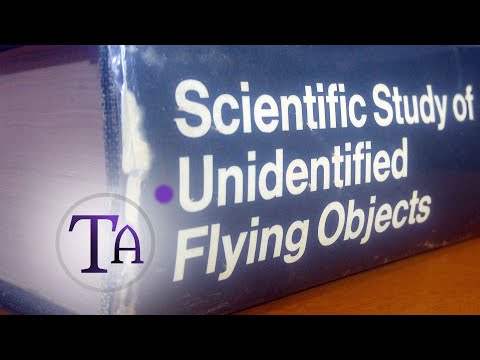
Condon UFO Report (The Scientific Study of UFOs), 1969
Think Anomalous — An overview of the official Condon Report's origins, structure, and reception following its January 1969 release, providing context for the official study this book was written to rebut nearly a year before its publication. Verified via YouTube oEmbed before inclusion.
Sources Cited
- Saunders, David R., and R. Roger Harkins. UFOs? Yes! Where the Condon Committee Went Wrong. World Publishing Company, 1968, 256 pp., hardcover, introd. by John G. Fuller (LCCN 68-059202; no ISBN was ever assigned to this printing). amazon.com
- Saunders, David R., and R. Roger Harkins. UFOs? Yes! Where the Condon Committee Went Wrong. Internet Archive (item ufosyeswherecond0000saun, San Francisco Public Library copy), bibliographic record and cover scan. archive.org
- "UFOs? Yes!" Open Library (edition OL5632987M): publisher, pagination, LCCN, OCLC number, and by-statement crediting John G. Fuller's introduction. openlibrary.org
- "Condon Committee." Wikipedia (Low memo text and dating, McDonald's discovery, Saunders and Levine's dismissal, publication details of this book). en.wikipedia.org
- Swords, Michael D. "The USAF-Sponsored Colorado Project." Project 1947 / Sign Historical Group (Saunders's role, orthoteny dispute with Low, staff divisions, this book's 1968 publication).
- "UFOS at Close Sight: Scientists and UFOs, Dr. David R. Saunders." Patrick Gross ufology archive (Saunders's academic career, UFOCAT's growth under CUFOS, University of Chicago Industrial Relations Center). ufologie.patrickgross.org
- "Science and UFOs: Part 1 — The Condon Committee Con Job." The UFO Chronicles (Saunders's own account of Condon's "disloyal"/"ruined professionally" exchange, as reported in this book). theufochronicles.com
- Low, Robert J. "Some Thoughts on the UFO Project," memorandum, August 9, 1966, hosted by NICAP (full text of the memo this book was the first to reproduce for a general readership). nicap.org
- Fuller, John G. "The Flying Saucer Fiasco." Look magazine, May 14, 1968 (the Saunders-Levine firing reported nationally, three months after this book's authors first broke the memo's contents to a mass audience).
- "Ralph Roger Harkins Collection (R1407)." State Historical Society of Missouri, finding aid (co-author biographical details: journalism career, University of Colorado communication arts degree, death in 1989). files.shsmo.org
- "UFOs? Yes! Where the Condon committee went wrong." Smithsonian Institution Libraries and Archives catalog record (publication statement, John G. Fuller introduction credit). si.edu
- "UFOCAT." Center for UFO Studies (database history: Saunders's 1976 donation to CUFOS and its continued growth as a working sighting catalog). cufos.org
- This site's own case file: The Condon Report (Case File #227), for the full institutional history, the Low memo controversy, and Michael Swords's 11-of-16 staff-division finding this article draws on.
- This site's own essential-reading entry: Scientific Study of Unidentified Flying Objects (ER-080), for the official Bantam Books paperback this book directly rebuts.
- This site's own essential-reading entry: UFOs: An Insider's View of the Official Quest for Evidence (ER-044), Roy Craig's memoir and its direct critical rebuttal of this book's case arguments.
- This site's own essential-reading entry: Flying Saucers and the Straight-Line Mystery (ER-016), for Aimé Michel's orthoteny concept Saunders championed inside the Committee.
- This site's own key-figures entry: David R. Saunders, for his full biography and further case connections.
Have corrections, additional research, or peer-reviewed sources? Help improve this entry.
Suggest an Edit