
Scientific Study of Unidentified Flying Objects
The Bantam Books Paperback of the Condon Report — How to Actually Read the Document That Closed Project Blue Book
Core Thesis
Scientific Study of Unidentified Flying Objects is the January 1969 Bantam Books mass-market paperback of the document universally known as the Condon Report — 965 pages, a $1.95 cover price, and an introduction by New York Times science writer Walter Sullivan, packaging the University of Colorado UFO Project's roughly 1,485-page hardcover final report for a general readership within weeks of its public release. This site's own Case File #227, the Condon Report, already covers the study's history, its internal politics, and the controversy over coordinator Robert Low's leaked "trick" memo in exhaustive detail; this article exists to answer a narrower, more practical question that case file does not: what is it actually like to open this specific book and read it. The honest answer is that the Bantam paperback is a genuinely strange reading experience, because its own internal structure enacts the exact controversy this site's case file documents. Edward U. Condon's dismissive "Conclusions and Recommendations" chapter sits at the very front of the book, stating flatly that "nothing has come from the study of UFOs in the past 21 years that has added to scientific knowledge" — and a reader who stops there, as most of the report's 1969 audience did, walks away with a clean, closed-book verdict. But the roughly 400 pages of case-by-case investigation that follow, written by William Hartmann, Gordon Thayer, and more than thirty other contributing scientists, repeatedly hedge, qualify, and in a genuine minority of cases decline to explain what they investigated at all. Reading the book from cover to cover, rather than stopping at its opening chapter, is the only way to see that gap for yourself.
About the Author
Edward Uhler Condon was born March 2, 1902, in Alamogordo, New Mexico, and by the time the Air Force recruited him in July 1966 to direct the University of Colorado UFO Project, he was one of the most credentialed and most politically battle-tested physicists in the country. He earned his physics degree at the University of California, Berkeley in 1924 and a Ph.D. from Princeton in 1926, taught as an associate professor at Princeton from 1928 to 1937, and directed research at Westinghouse Electric before being appointed director of the National Bureau of Standards in 1945, a post he held until 1951 and used to modernize the agency's research program. He served as president of the American Physical Society in 1946 and of the American Association for the Advancement of Science in 1953, and was a co-namesake, alongside James Franck, of the Franck–Condon principle, a foundational result in quantum chemistry describing molecular electronic transitions.
Condon's path to the UFO study ran directly through one of the ugliest chapters of Cold War loyalty politics. As director of the National Bureau of Standards, he spent 1947 to 1954 as a repeated target of the House Un-American Activities Committee, which branded him a security risk in a 1948 report built almost entirely on guilt-by-association — his past membership in since-relabeled "communist front" organizations and his advocacy for open scientific exchange with Soviet researchers — with committee chairman J. Parnell Thomas publicly calling him the "weakest link" in American security. No evidence of actual disloyalty was ever produced, and government loyalty boards repeatedly cleared him, but his security clearance was revoked and reinstated multiple times before Vice President Richard Nixon publicly touted its final 1954 revocation as a victory over "pro-Soviet" scientists. By 1966, a physicist who had personally endured, and been vindicated against, exactly the kind of institutional suspicion the UFO subject attracted was, in a real sense, an unusually loaded but also unusually credible choice to front a study the Air Force needed the public to trust — a background this site's own Condon Report case file covers at greater length as institutional history, distinct from this article's focus on the finished book.
After stepping back from classified defense work amid the HUAC fight, Condon taught physics at Washington University in St. Louis from 1956 to 1963 before joining the University of Colorado Boulder faculty in 1963. He had no prior UFO-specific expertise when recruited in July 1966, and by the account of colleagues and his own unsent 1967 draft notes, he remained substantially detached from the day-to-day fieldwork his name would become permanently attached to, leaving operational control to coordinator Robert J. Low while personally authoring only the report's opening and closing framing chapters. He retired from the University of Colorado in 1970, the year after the report's publication, and died in Boulder on March 26, 1974, at age 72. The book discussed in this article is, in the most literal sense, the only UFO-related text Condon personally wrote a substantial share of; the roughly 400 pages of individual case investigations that make up its bulk were the independent work of the more than thirty other scientists credited within it, a distinction this article treats as central rather than incidental to understanding what kind of book this actually is.
Historical Context & Origins
The Condon Report did not emerge from a vacuum. Thirteen years earlier, the CIA's 1953 Robertson Panel (Case File #226) had set the template this study would follow in almost every particular: a small group of credentialed physical scientists, convened under government sponsorship, tasked with assessing UFO evidence and arriving at a debunking-oriented conclusion that a leaked internal document later suggested had been substantially predetermined. Where the Robertson Panel's "reduce public concern" admission surfaced only in a 1992 recollection by panel member Thornton Page, decades after the fact, the Condon study's comparable document — Low's August 1966 "trick" memo — is contemporaneous, written before the Air Force contract was even signed, making it, in the words of this site's own case file, "direct, contemporaneous, written evidence" in a way the Robertson Panel's decades-later recollection never was.
The immediate trigger for the University of Colorado study was the March 1966 Michigan "swamp gas" wave and the national ridicule that followed J. Allen Hynek's hastily arranged press-conference explanation, which put real political pressure on the Air Force via a House Armed Services Committee hearing that April. The Air Force Scientific Advisory Board's O'Brien Committee had already recommended contracting the study out to an independent university rather than continuing Project Blue Book's in-house review, and Condon was recruited that July; the University of Colorado's vice president signed the formal $313,000 AFOSR contract on October 6, 1966, and the roughly two years of fieldwork and case analysis this book condenses were coordinated from offices at the University of Colorado's Boulder campus. The book this article covers is the end product of the roughly twenty-five months of fieldwork and analysis that followed, condensed from a nearly 1,485-page hardcover original into 965 mass-market pages by Bantam's editors for the January 1969 paperback release, with an introduction by New York Times science writer Walter Sullivan aimed at orienting a general readership unfamiliar with the study's institutional background.
The single most consequential fact in that institutional background — and the reason this book cannot be read in genuine isolation from this site's own Condon Report case file — is Low's memo, titled "Some Thoughts on the UFO Project" and written three weeks before the Air Force's own formal proposal letter. Its central passage proposed that the study "would be conducted almost entirely by non-believers who...could and probably would add an impressive body of thick evidence that there is no reality to the observations," describing "the trick" of appearing objective to the public while assembling a team with "an almost zero expectation of finding a saucer." That document sat undiscovered in project files for roughly a year before staff members David Saunders and Norman Levine found it, were fired by Condon in February 1968 after its contents began circulating, and went on to co-author the 1968 counter-book UFOs? Yes! The single most valuable outside perspective on how to weigh that memo against the finished report comes from a source this site already covers at length: field-investigation leader Roy Craig's own 1995 memoir, reviewed in this site's UFOs: An Insider's View of the Official Quest for Evidence (ER-044), argues the memo did not reflect Condon's own views, which he had not learned of for roughly eighteen months, and that characterizing Low as engaged in any kind of plot would be inaccurate — a considerably more forgiving reading than this site's own case file gives the memo, and one worth holding in mind while reading the book itself.
Core Arguments & Key Concepts
Because this entry covers a government report rather than an argumentative trade book, its "core arguments" section describes how the document itself is built, not a thesis an author is trying to persuade a reader of. The Bantam paperback opens with Section I, Condon's own four-page "Conclusions and Recommendations" — the single most consequential few pages in the entire volume, and the only part of the roughly 965-page book most contemporary readers, journalists, and the Air Force itself ever actually engaged with in depth. It states plainly that "nothing has come from the study of UFOs in the past 21 years that has added to scientific knowledge," that there is "no direct evidence whatever of a convincing nature" for extraterrestrial visitation, and that "further extensive study of UFOs probably cannot be justified in the expectation that science will be advanced thereby." Section II, a longer "Summary of the Study," restates and elaborates that framing before the book ever reaches a single detailed case investigation.
The bulk of the book — and the part almost entirely absent from how the report is remembered publicly — is organized into case-study sections covering older Blue Book-era sightings, fresh reports investigated during the study period, dedicated photographic-case chapters, and dedicated radar-visual chapters, contributed by William Hartmann, Gordon Thayer, Roy Craig, and more than thirty other credited scientists across the full document. Wikipedia's own sourced account of the report counts 59 individually detailed case studies presented in this section (their locations altered in some instances for legal reasons), a number distinct from — but not in conflict with — this site's own Condon Report case file's broader description of "roughly 90" cases the wider project reviewed across its full docket, including archival entries treated more summarily than the 59 fully written-up chapters. Reading this section is genuinely slower and more technical than reading the opening summary, and it is where the book stops behaving like a press release and starts behaving like an actual multi-author scientific report, with all the hedging, caveats, and internal disagreement that implies.
The book's most important structural fact, and the one this article treats as its central subject, is the documented gap between those two halves. Astronomer J. Allen Hynek, reviewing the finished report, wrote that "the committee had been unable to furnish adequate explanations for more than a quarter of the cases examined" — a verdict later echoed by a formal independent count. Physicist James E. McDonald and, later, a 1970 subcommittee of the American Institute of Aeronautics and Astronautics separately tallied roughly 30 percent of the harder detailed case docket as left without adequate conventional explanation in the report's own text, a figure Condon's own "Conclusions" chapter never stated in those terms. Individual case chapters make the gap concrete rather than abstract: Hartmann's photogrammetric analysis of the McMinnville, Oregon Trent photographs (Case 46 in the report's own numbering) concluded the images were "consistent with the assertion that an extraordinary flying object...flew within sight of two witnesses" while declining to rule out fabrication, and Thayer's analysis of the 1956 Lakenheath-Bentwaters radar-visual case (Case 2) judged the probability of "at least one genuine UFO" as "fairly high," and separately called the Air Force's own explanation for the RB-47 bomber chase "literally ridiculous." None of that specific, hedged, occasionally open-minded language survives into Condon's four-page opening chapter, which is precisely why reading only the opening, as most of the report's public ever did, produces a substantially different impression than reading the whole book.
A reader approaching this specific edition should understand what Bantam's editors did and did not change in condensing roughly 1,485 hardcover pages into 965 paperback pages: the case studies, appendices, and Condon's own conclusions are reproduced essentially intact, with the page reduction achieved primarily through typesetting density rather than content cuts, and Walter Sullivan's introduction is new material specific to this popular edition, written to orient general readers to a study whose institutional politics — the Low memo, the Saunders and Levine firings — were already public knowledge by the time this paperback reached drugstore racks in January 1969, four months before John G. Fuller's Look magazine exposé, which followed in May 1968, but well after NICAP had already released the memo to the press that April.
Key Cases & Evidence Discussed
This book's organizing subject is inseparable from this site's own Case File #227, the Condon Report, which documents the University of Colorado UFO Project's full institutional history — the Low memo, the February 1968 firings of David Saunders and Norman Levine, the National Academy of Sciences review, and the December 1969 closure of Project Blue Book — at a depth this article does not repeat. Where that case file asks whether the study functioned as genuinely independent science, this article's narrower job is describing what a reader actually encounters inside the specific 965-page paperback text itself.
The single most useful companion reading is this site's own UFOs: An Insider's View of the Official Quest for Evidence (ER-044), Roy Craig's 1995 memoir as the project's own field-investigation leader. Craig is a named contributor to the very book this article covers, and his later memoir supplies exactly the working-scientist context a first-time reader of the Bantam paperback lacks: what it felt like to drive to a sighting site within days of a report, how the field teams that produced the case chapters this article discusses were actually organized, and a considerably more forgiving reading of Low's intentions than this site's own case file gives the memo. Reading Craig's memoir alongside this book is the closest a modern reader can get to understanding both what the report says and how the people who wrote it understood their own work.
Within the book's own case chapters, three investigations stand out as the clearest illustrations of the summary-versus-case-study gap this article treats as its central subject: Hartmann's Case 46 study of the McMinnville Trent photographs, Thayer's Case 2 study of the Lakenheath-Bentwaters radar-visual incident, and the study's file on the RB-47 bomber chase, opened only after pilot Lewis Chase confidentially told Craig about his 1957 encounter at a June 1967 Boulder conference. All three receive genuinely open, hedged, non-dismissive treatment inside the book's own case chapters, in each instance more open than a reader who has only heard the report's public reputation would expect.
This book's most direct institutional predecessor on this site is the CIA's 1953 Robertson Panel (Case File #226), which this site's own Condon Report case file already identifies as the closest comparable case of a government-convened scientific body reaching a debunking conclusion under a documented cloud of predetermination. Reading this book against that earlier case file, rather than against a summary of either, is the clearest way to see how directly the Condon study followed a template the Robertson Panel had already set thirteen years before it.
Critical Reception & Controversies
Reception split almost immediately along the same lines the pre-publication controversy over the Low memo had already drawn. The journal Science called the study "the most thorough and sophisticated investigation ever conducted" on the UFO subject, and general-interest press coverage was largely laudatory on the report's release. Nature's March 8, 1969 review was more ambivalent, praising the effort while questioning its proportionality, calling the underlying work "a monumental achievement, but one of perhaps misapplied ingenuity" — a real, published reservation about the report's value distinct from either a debunking or a defense of it.
The most pointed early scientific critique came from someone with unusually direct standing to make it: J. Allen Hynek, Project Blue Book's own longtime scientific consultant, wrote in the Bulletin of the Atomic Scientists that the finished report was "voluminous, rambling, poorly organized" and judged that it "settled nothing," adding that the committee "had been unable to furnish adequate explanations for more than a quarter of the cases examined" — the earliest clear public statement of the summary-versus-case-studies gap this article treats as the book's defining internal tension.
A more technical and more consequential critique came in November 1970, when a subcommittee of the American Institute of Aeronautics and Astronautics published its own independent review, "UFO: An Appraisal of the Problem," in Astronautics & Aeronautics. The subcommittee concluded that Condon's own summary "did not adequately reflect the body of the report," and stated directly that "the opposite conclusion could have been drawn from the Condon Report's content, namely, that a phenomenon with such a high ratio of unexplained cases (about 30 percent) should arouse sufficient scientific curiosity to continue its study" — a named, published professional engineering society's own formal disagreement with the book's headline framing, not an outside advocacy group's objection.
A less widely cited but strikingly direct dissent came from Dr. Thornton Page, writing in the American Journal of Physics in October 1969 — the same Thornton Page who, as a member of the CIA's 1953 Robertson Panel, would later become the only member of that earlier study to go on record about its own predetermined debunking mandate. Page counted that Condon's team had explained only 33 of 56 cases he examined within a particular subset of the report, noting dryly that "this leaves unexplained a larger proportion than the 10% or so which caused all the ruckus" that prompted the study in the first place, and argued for a "middle position" of continued, better-designed study rather than either uncritical belief or Condon's own dismissal — contending that "Condon's carefully written conclusions...do not logically follow from the case studies." That a scientist who had personally participated in one government UFO study's own predetermined-conclusion controversy would identify the same structural problem in this one, independently and in print, is one of the more striking, least-cited pieces of the book's contemporary reception.
Before the report's public release, a twelve-member National Academy of Sciences panel chaired by Yale astronomer Gerald M. Clemence reviewed the study's scope and methodology over six weeks, concluding it was "well chosen, in accordance with accepted standards of scientific investigation" and separately endorsing the judgment that extraterrestrial visitation was "the least likely explanation" for the cases reviewed. That endorsement is real and substantive, a genuinely independent multidisciplinary body reviewing the study's rigor on its own initiative — but, as this site's own Condon Report case file notes at length, the panel's charge was to assess whether the report's methodology was internally sound, not whether Condon's own summary conclusions actually followed from the case-by-case findings his own scientists had produced inside the book this article covers, which is exactly the question Hynek, the AIAA subcommittee, and Thornton Page each separately answered in the negative.
Influence & Legacy
This book's most concrete, immediate influence was governmental rather than scientific: the Secretary of the Air Force's December 17, 1969 memo terminating Project Blue Book cited the Condon Report's conclusions directly as its justification, stating the continued study "no longer can be justified either on the ground of national security or in the interest of science." A fourteen-year Air Force UFO investigation program that had, by that point, logged over 12,000 cases closed on the strength of the four-page "Conclusions" chapter that opens this specific paperback — not on the strength of the roughly 400 pages of hedged, occasionally open case investigations that follow it, a distinction this article treats as the book's single most important legacy fact.
Within the scientific community, the report's influence has been double-edged in a way few single documents manage: it remains, nearly six decades later, the largest, longest, and most institutionally credentialed government-linked UFO study ever conducted in the United States, cited by skeptics as the definitive scientific word on the subject and cited by critics, from the AIAA's 1970 subcommittee to James E. McDonald's Congressional testimony, as a case study in how an institution's summary framing can diverge from its own underlying data. Both readings draw on the same 965-page text, which is precisely why this article's central recommendation — read past the opening chapter into the actual case studies — matters as much today as it did in 1969.
The book's afterlife in the specialist literature runs through its own contributors and critics: Roy Craig's 1995 memoir, covered in this site's own UFOs: An Insider's View (ER-044), remains one of the only sustained insider accounts of what producing this book actually involved; David Saunders and Norman Levine's 1968 counter-book UFOs? Yes! reproduced the Low memo in full as a direct rebuttal to this book's framing; and historian Michael Swords's continued archival research into the project's internal records, including his 2008 discovery of unreported Ubatuba isotope data in Craig's own papers, has kept scholarly attention on the gap between what the project's staff privately believed and what this book's opening chapter told the public.
This exact edition's continuing presence on this site is itself a small piece of that legacy: this specific title is already cited under three separate ASIN/ISBN listings across this site's own resources library, tied to case files including the Mariana UFO Film, McMinnville, the Rex Heflin photographs, Lakenheath-Bentwaters, and the RB-47 bomber chase — a citation footprint this article converts, for the Bantam mass-market paperback specifically, into a full independent breakdown for the first time.
The Book
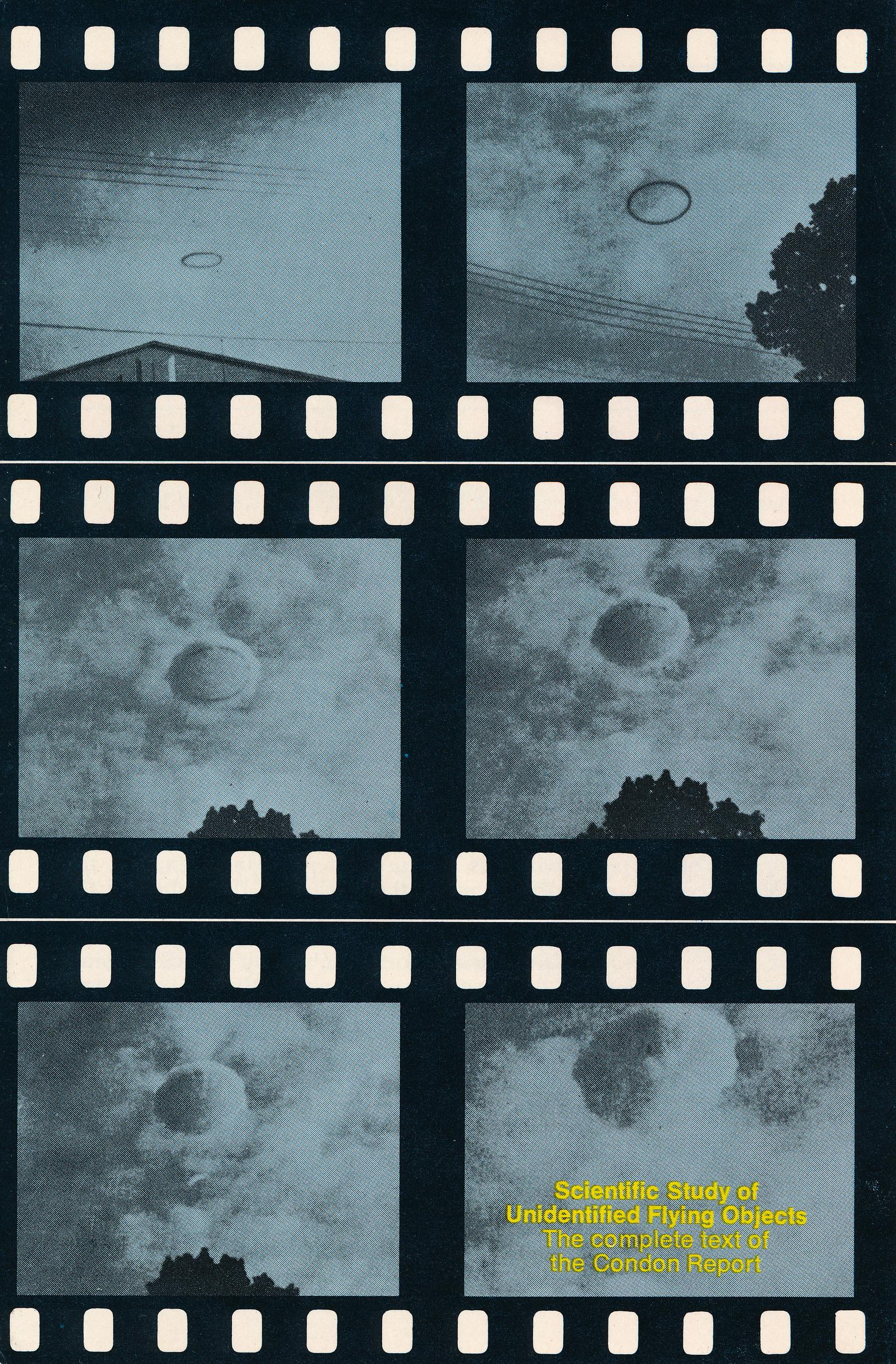
Scientific Study of Unidentified Flying Objects
The Bantam Books Paperback of the Condon Report — How to Actually Read the Document That Closed Project Blue Book
Find on Amazon →As an Amazon Associate, OverClassified may earn from qualifying purchases made through this link, at no extra cost to you.
Why This Is Essential Reading
Scientific Study of Unidentified Flying Objects earns its place on this list not because it is well written — by its own reviewers' account, including J. Allen Hynek's "voluminous, rambling, poorly organized" verdict, it frequently is not — but because it is the single most consequential primary document in this site's entire library, the report the Air Force cited by name when it closed Project Blue Book, and a book whose own internal structure enacts the exact controversy surrounding it. A reader who stops at Edward Condon's four-page opening "Conclusions" chapter, as most of the report's public did in 1969 and largely still does, walks away with a clean, closed verdict; a reader who continues into the roughly 400 pages of case-by-case investigation that follow — Hartmann's hedged McMinnville analysis, Thayer's "fairly high" Lakenheath verdict, the roughly 30 percent of the report's harder case docket the AIAA and Thornton Page independently found left unexplained — encounters a considerably messier, more genuinely scientific document than its public reputation suggests. Read alongside this site's own Condon Report case file for the full institutional history and Roy Craig's insider memoir for the view from inside the project, this book is essential precisely as a primary document: not because its opening conclusions were right, and not because they were a knowing fraud, but because the only way to see the real, documented gap between what this book's own scientists found and what its director told the public is to read the book itself, cover to cover, rather than take either side's summary of it on faith.
Related Cases & Theories
Essential Viewing
Condon UFO Report (The Scientific Study of UFOs), 1969
Think Anomalous — An overview of the Condon Report's origins, structure, and public reception following its January 1969 release, covering the exact document and controversy this article breaks down. Verified via YouTube oEmbed before inclusion.
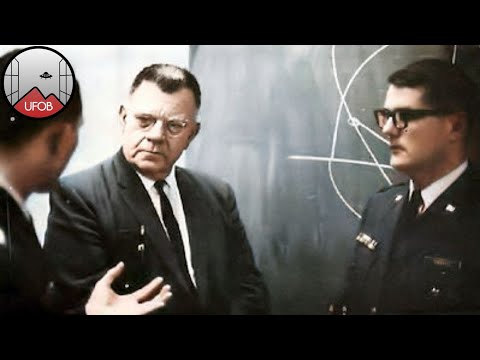
1968 Commentary on the Condon Committee findings with Prof. McDonald & Major Keyhoe
UFOB | Your UAP Library — Archival period commentary from two of the study's most prominent outside critics, physicist James E. McDonald and NICAP director Donald Keyhoe, recorded as the controversy this book's opening chapter provoked was still unfolding. Verified via YouTube oEmbed before inclusion.
Sources Cited
- Condon, Edward U. (dir.), and Daniel S. Gillmor (ed.). Scientific Study of Unidentified Flying Objects. Bantam Books, January 1969, 965 pp., mass-market paperback, introduction by Walter Sullivan (ASIN B000J2VA3K; no confirmed ISBN was ever assigned to this printing). amazon.com
- University of Colorado (Boulder campus). "Final Report of the Scientific Study of Unidentified Flying Objects Conducted by the University of Colorado" (complete original three-volume hardcover edition), Internet Archive.
- National Capital Area Skeptics. "Condon Report, Section I: Conclusions & Recommendations", full-text hosted mirror.
- "Condon Committee." Wikipedia (publication details of the Bantam paperback, the 59 detailed case studies, Hynek's "more than a quarter" unexplained quote, AIAA review). en.wikipedia.org
- American Institute of Aeronautics and Astronautics UFO Subcommittee. "UFO: An Appraisal of the Problem", Astronautics & Aeronautics, November 1970, hosted by Princeton University.
- Page, Thornton. Review of the Condon Report, American Journal of Physics, Vol. 37, No. 10, October 1969. cufon.org
- National Academy of Sciences Ad Hoc Committee. "Review of the University of Colorado Report on Unidentified Flying Objects by a Panel of the National Academy of Sciences", January 8, 1969 (DTIC AD0688541), Internet Archive.
- Fuller, John G. "The Flying Saucer Fiasco." Look magazine, May 14, 1968.
- "Edward Condon and the Cold War Politics of Loyalty." Physics Today / American Institute of Physics. physicstoday.aip.org
- "Edward Condon." Wikipedia (biography: birth/death dates, education, National Bureau of Standards directorship, APS and AAAS presidencies, University of Colorado tenure). en.wikipedia.org
- "Scientific Study of Unidentified Flying Objects, UFOs, Condon Report book offer." Internet Archive (item TNM_Scientific_study_of_unidentified_flying_objec_20171226_0048), source of this article's cover scan of the original January 1969 Bantam paperback front cover. archive.org
- "IMMEDIATE RELEASE, December 17, 1969: Air Force to Terminate Project 'Blue Book.'" U.S. Department of Defense archival release. esd.whs.mil
- University of Colorado Boulder. "The Condon Report: CU Boulder's Historic UFO Study." Coloradan alumni magazine, November 5, 2021.
- This site's own case file: The Condon Report (Case File #227), for the full institutional history, the Low memo controversy, and the National Academy of Sciences review this article does not repeat in depth.
- This site's own essential-reading entry: UFOs: An Insider's View of the Official Quest for Evidence (ER-044), Roy Craig's first-person memoir as this project's own field-investigation leader.
- This site's own key-figures entry: Edward U. Condon, for his full biography and role directing this study.
- This site's own key-figures entry: Dr. Thornton L. Page, reviewer of this book in the American Journal of Physics and, separately, the Robertson Panel member who later disclosed that earlier study's own predetermined mandate.
- This site's own resources library: Full Reading List, where this title is already cited across multiple case-file pages under separate ASIN/ISBN listings for its hardcover and paperback editions.
Have corrections, additional research, or peer-reviewed sources? Help improve this entry.
Suggest an Edit