
UFOs
An Insider's View of the Official Quest for Evidence
Core Thesis
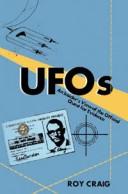
UFOs: An Insider's View of the Official Quest for Evidence is physical chemist Roy Craig's own first-person memoir of serving as chief field investigation leader for the 1966–1968 University of Colorado UFO Project — the study this site's own Case File #227, the Condon Report, documents in full. Written twenty-seven years after the study closed, from Craig's own ranch in southwestern Colorado, the book is not a historian's outside reconstruction but a working scientist's account of what the investigation actually felt like from inside it: driving to sighting sites within days of a report, cross-checking a promoter's story against a minor-league baseball schedule, sitting across from a Nebraska police officer under hypnosis, and watching two of his own colleagues get fired over a memo he had a very different read on than most subsequent historians. Craig's findings track the Condon Report's own dismissive public conclusion — he found conventional explanations for nearly every case he personally investigated — but his book's real value on this site is not its verdicts, which mostly restate what Condon's own "Conclusions and Recommendations" chapter already said. It is what only an insider could supply: a working memory of the project's internal politics, a considered and more forgiving defense of coordinator Robert Low's notorious "trick" memo than the leaked document's own language has generally received, and a chemist's exacting, sometimes genuinely open-minded account of the handful of cases — the RB-47 chase chief among them — that resisted his own considerable skepticism.
About the Author
Roy F. Craig was born May 10, 1924, on Florida Mesa near Durango, Colorado, to Anna and Philip Craig, and grew up attending Durango High School before enrolling at Fort Lewis College's Hesperus campus — studies interrupted by U.S. Army service during World War II. After the war he resumed his education across an unusually wide circuit of institutions: Fort Lewis College, Colorado State University, the University of Colorado, and the California Institute of Technology, before completing a Ph.D. in physical chemistry at Iowa State University in 1952. That degree places him, by pure coincidence of timing and campus, one class year behind physicist James E. McDonald, who earned his own Iowa State physics Ph.D. in 1951 — two scientists trained at the same university within a year of each other who would end up, a decade and a half later, on the sharpest opposite ends of the Condon Committee's most consequential internal fight, McDonald as the outside critic who confronted Low and Condon directly over the trick memo, Craig as the committee insider who later defended them.
Craig's working career before Boulder was itself unusually varied for a UFO investigator: he was a research assistant at Iowa State's Institute for Atomic Research and at Caltech, worked in nuclear weapons manufacturing, and taught physical science at the university level, serving for two years as an associate professor and coordinator of Physical Science in the University of Colorado's Division of Integrated Studies, with an additional stint teaching at Clarkson College. That existing University of Colorado appointment, and a professional reputation the Condon Report's own Appendix X summarized simply as a physical chemist with research-assistant experience at Iowa State and Caltech, made him a natural in-house choice when Edward Condon needed someone to lead the project's actual fieldwork rather than merely its administration — a role distinct from and considerably more hands-on than Condon's own largely detached directorship, as this site's own Condon Report case file documents in detail.
After the study closed in 1969, Craig continued teaching and moved into technical and environmental consulting before retiring to the historic La Boca Ranch south of Ignacio, Colorado, where he spent his later years raising llamas. He did not leave the UFO subject behind entirely: in 1995, drawing on the working files, appointment books, and case notes he had kept since 1966, he published UFOs: An Insider's View of the Official Quest for Evidence with the University of North Texas Press, and he was listed the same decade in Marquis's Who's Who in the World. In 2001 he donated nine boxes of that original material — roughly ten linear feet of field-investigation notes, case writeups, his own 1966–1968 appointment books, physical evidence records, and the manuscript and research notes for his own book — to Texas A&M University's Cushing Memorial Library, where it remains cataloged as the Roy Craig Collection and has since been consulted directly by later researchers, including Michael Swords's own 2008 re-examination of the Committee's Ubatuba isotope data, discussed in this site's own Ubatuba Magnesium Fragments case file. Despite the Condon Report's own skeptical public conclusions, Craig remained candidly open to the subject's larger cultural significance in his later years, remarking that UFO reports had changed popular culture by making people more willing to accept "the probable fact that there are intelligences elsewhere." He died at La Boca Ranch on March 18, 2004, after a struggle with cancer, at age 79.
Historical Context & Origins
The book's entire subject is the study this site's own Condon Report case file covers at length: a University of Colorado UFO Project assembled after the March 1966 Michigan "swamp gas" ridicule put political pressure on the Air Force to hand the subject to an outside academic body, formally contracted on October 6, 1966 under physicist Edward U. Condon's direction. What Craig's memoir adds to that already well-documented institutional history is a working investigator's vantage point on a project whose own coordinator, Robert Low, had privately sketched its intended posture in an internal memorandum dated August 9, 1966 — three weeks before the Air Force's own formal proposal letter and nearly two months before the contract Craig would eventually work under was even signed.
Craig himself was not present for that memo's drafting and, by his own account written decades later, did not learn of its existence or contents until well into the project's second year, when the document that would come to define the entire controversy was already circulating outside the university. His position inside the project was operational rather than administrative: leading field teams that typically paired a physical scientist with a psychologist, a structure the Air Force's own O'Brien Committee had specifically recommended, and traveling to fresh sighting reports as they came in rather than working exclusively from the University of Colorado's Boulder offices at the University of Colorado Boulder campus.
By the time Craig sat down to write his own account in the early 1990s, the Condon Committee's history had already calcified into two entrenched, dueling narratives: Condon's own dismissive 1969 public summary on one side, and dismissed staff members David Saunders and Norman Levine's 1969 counter-report UFOs? Yes! Where the Condon Committee Went Wrong on the other, arguing the study's conclusions had been decided before any case was reviewed. Very few of the project's actual scientific staff ever published their own full-length reflection on the experience; Craig's 1995 book, arriving from a retired investigator writing at some remove from the controversy's original heat, is one of the only sustained insider accounts to sit outside that binary — sympathetic to Condon and Low's institutional predicament without being merely a defense brief, and genuinely skeptical of individual cases without adopting Condon's own more sweeping dismissiveness.
Core Arguments & Key Concepts
Structurally, the book combines detailed narrative accounts of the specific UFO cases Craig personally investigated with a broader history of the UFO phenomenon, the Air Force's earlier Project Blue Book involvement, the rise of civilian UFO organizations, and what Craig himself called the ongoing "UFO Wars" between believers and skeptics — a mix the book's own University of North Texas Press catalog description characterizes as written "in an engaging, humorous style at the same time it records his strictly scientific attitude toward his work," adding that his "findings close the door on the dreams of many UFOlogists, but then his philosophical musings open a big window and let the possibility of the existence of UFOs back in."
Case by case, Craig's own verdicts run overwhelmingly toward conventional explanation. His field investigation of the 1950 Mariana UFO Film is a representative example of his working method rather than his conclusions: rather than dismissing the case outright, he checked Great Falls newspaper archives against the claimed August 15 sighting date and found no home game scheduled for the Electrics that evening — a documented, source-checked discrepancy this site's own Mariana case file still treats as an unresolved wrinkle rather than a settled objection, exactly as Craig himself left it.
The one case Craig's own book treats as a genuine, lasting exception to his general skepticism is the 1957 RB-47 bomber chase, whose central witness, pilot Lewis Chase, had stayed silent about his encounter for a decade before volunteering the account directly to Craig at a June 1967 Boulder conference — the confidential approach that prompted the Committee to open a formal file on the case at all. The multi-sensor corroboration Craig's own fieldwork helped surface there — radar, visual, and onboard electronic countermeasures readings all pointing to the same target — is the same evidentiary combination this site's own RB-47 case file and Condon Report case file both single out as the study's strongest genuinely unresolved finding, independently reinforced by fellow Committee physicist Gordon Thayer's own verdict that the Air Force's official explanation for the case was "literally ridiculous."
The book's most consequential and most carefully argued section, handled with the direct candor only a participant could bring to it, is Craig's own reading of Low's August 1966 "trick" memo. Where outside historians and the project's own dismissed staff have generally treated the memo's language — describing a study that would "appear a totally objective study" while assembling investigators with "an almost zero expectation of finding a saucer" — as direct written proof the study's negative outcome was predetermined, Craig argues the memo did not trouble him because Condon himself had not known of it for roughly eighteen months and it did not reflect Condon's own views. He further contends that characterizing Low as engaged in any kind of plot would be inaccurate, framing Low's actual motivation as institutional and practical — wanting the University of Colorado to secure the Air Force contract and persuading a nervous administration to accept it — rather than a scientific conspiracy to fix the study's findings in advance. It is a considerably more forgiving reading than this site's own Condon Report case file gives the memo, which treats it as "direct, contemporaneous, written evidence" of a predetermined result; presented here without softening either position, the disagreement is itself the most valuable thing an insider's memoir can offer that an outside history cannot.
Craig's book is not evenhanded toward every figure in the controversy, however. Reviewing the specific cases Saunders and Levine had showcased in UFOs? Yes! as evidence the Committee had wrongly dismissed strong sightings, Craig's own assessments are notably harsh, characterizing the cases in his book as, in turn, "utter nonsense," "highly suspect," and otherwise evidentially weak or already adequately explained — a reminder that the book functions, in part, as Craig's own rebuttal of the project's internal dissenters as much as a neutral institutional history.
Key Cases & Evidence Discussed
The book's organizing case is the Condon Committee's work as a whole, documented on this site as Case File #227, the Condon Report — the same roughly 90-case, two-year investigation Craig's own field teams contributed the fresh, current-year sighting reports to, distinguishing his book's first-person account from the study's own dense, multi-author final report.
The Mariana UFO Film (Case File #058, 1950) receives one of the book's most detailed individual case treatments: Craig's own re-investigation flagged the discrepancy between the claimed August 15 sighting date and the Great Falls Electrics' published home-game schedule, a documented chronological puzzle this site's own case file still presents as unresolved rather than disproven.
The RB-47 Bomber Chase (Case File #150, 1957) is the case Craig's own book treats as most resistant to conventional explanation, and the case that entered the Committee's files specifically because pilot Lewis Chase chose to confide directly in Craig at a June 1967 Boulder conference after a decade of public silence.
The Herbert Schirmer Encounter (Case File #154, 1967) is the Committee's only formally investigated contact-type case, and Craig's own field report on Nebraska patrolman Herbert Schirmer — generally supportive of Schirmer's sincerity even while the broader project ultimately filed the case under psychological explanation — became, decades later, a specific target of critical re-reading by historian Michael Swords, discussed below.
The Ubatuba Magnesium Fragments (Case File #157, 1957) connect to Craig through his own chemistry training rather than a personal field trip: as the Committee's field investigation leader, he arranged for the U.S. government's own National Office Laboratory of the Alcohol and Tobacco Division to test a sample via neutron activation and gamma-ray spectroscopy in 1968, producing the most detailed trace-element profile of the material obtained up to that point — laboratory work whose full isotope results, this site's own Ubatuba case file notes, were not correctly reported until Michael Swords rediscovered them in Craig's own papers at Texas A&M forty years later.
Critical Reception & Controversies
The book's own publisher description, from the University of North Texas Press, frames its balancing act plainly: Craig's "findings close the door on the dreams of many UFOlogists, but then his philosophical musings open a big window and let the possibility of the existence of UFOs back in" — a characterization that has circulated largely unchanged across booksellers in the three decades since, suggesting it captures something real about the book's genuinely mixed register of hard-nosed case dismissal and unresolved personal curiosity.
The book drew little attention from major trade review outlets like Kirkus or Publishers Weekly, consistent with its release through a university press with a modest specialist print run rather than a mass-market imprint; its reception has instead played out almost entirely within ufology's own literature and archives rather than in general book criticism, a narrower footprint than more widely reviewed titles on this site's own Essential Reading list.
The most substantive independent critical engagement with the book comes from CUFOS historian Michael D. Swords, whose Fall 2003 International UFO Reporter article "Too Close for Condon: Close Encounters of the 4th Kind" examines Craig's own Schirmer investigation report line by line, calling him "the notoriously overly skeptical Roy Craig" and arguing that even generally supportive phrasing in Craig's report — writing that a polygraph "reportedly showed no indications that the UFO report was other than truthful," rather than stating plainly that Schirmer's answers were truthful — functioned as "little flags which say that Colorado doesn't want to take this sort of thing seriously." Swords further faults the wider Committee, Craig included, for filing away three other contact-type letters — a 1930 roadside encounter, a 1957 bedroom visitation account, and a 1949 "light tunnel" report — without serious follow-up, arguing the project missed a chance to establish what later researchers would recognize as abduction-pattern testimony more than a decade before Budd Hopkins's own work began.
Reader reception, where recorded, has been modest and specialist rather than broad: the book holds a thin rating history on general readership sites, reflecting a memoir whose actual audience has always been researchers and historians of the Condon Committee specifically rather than a general UFO-reading public — a niche the book fills unusually well precisely because so few other Committee insiders wrote comparably full first-person accounts.
Wikipedia's own extensively sourced Condon Committee article draws on Craig's book repeatedly as a primary citation for the project's internal history, including his specific defense of Low's intentions — a sign that, whatever its limited trade-press footprint, the book has become one of the standard documentary sources historians return to for the controversy's internal politics, even where, as with the trick memo, its own author's reading runs more forgiving than the consensus that has formed around the memo's leaked text.
Influence & Legacy
The book's most concrete, independently verifiable influence is documented on this very site: this exact 1995 University of North Texas Press edition, cited under ISBN 0929398947, appears in resources.html in connection with two separate case-file pages — The Condon Report and The Herbert Schirmer Encounter — reflecting its standing here as working primary-source material rather than a novelty citation.
Craig's own research files, donated to Texas A&M University's Cushing Memorial Library in 2001 as the Roy Craig Collection, became a working archive later researchers have directly used: Michael Swords's 2008 re-examination of Craig's original 1968 papers there uncovered that the Condon Committee's own magnesium isotope calculation for the Ubatuba fragments had never been correctly reported in the Committee's published output — a documented case of Craig's personal archive, rather than his published book, correcting the historical record decades after the fact.
Within the small literature specifically about the Condon Committee's internal politics, Craig's book stands as the direct counterpart to Saunders and Levine's 1969 UFOs? Yes! — the two accounts remain the closest thing the controversy has to primary-source testimony from its opposing internal camps, one from the project's chief field investigator defending Low and Condon's intentions, the other from the two staff members fired for surfacing the memo that defense addresses directly.
More broadly, the book's continued citation in general reference sources like Wikipedia's Condon Committee article, nearly three decades after its publication and more than two decades after Craig's own death, has kept a working scientist's first-person account of one of American ufology's most consequential institutional controversies in active circulation for general readers — exactly the kind of primary-source access this site's own case-file library aims to preserve and cross-reference rather than let dissolve into secondhand summary.
The Book
As an Amazon Associate, OverClassified may earn from qualifying purchases made through this link, at no extra cost to you.
Why This Is Essential Reading
UFOs: An Insider's View of the Official Quest for Evidence earns its place on this list for a reason distinct from most other titles here: it is not an outside historian's reconstruction of the Condon Committee, but the working notebook, decades later, of the scientist who actually drove to the sighting sites, checked the baseball schedules, and sat in the room when a coordinator's private memo blew up into the defining scandal of official American UFO research. That primary-source standing is genuinely valuable and, as this site's own Condon Report case file and Michael Swords's own critical 2003 re-reading of Craig's Schirmer report both demonstrate, genuinely contestable — Craig's forgiving account of Robert Low's intentions is a real, documented data point in the controversy, not a final word on it, and his harsh dismissal of Saunders and Levine's counter-cases shows a memoir with its own point of view rather than a neutral chronicle. Read alongside this site's own case files it cross-links most directly — the Condon Report, the Mariana UFO Film, the RB-47 Bomber Chase, the Herbert Schirmer Encounter, and the Ubatuba Magnesium Fragments — it remains essential precisely because so few of the Committee's own scientific staff ever wrote their own full account, leaving Craig's book, however partial its sympathies, as one of the only places a reader can hear the study's internal politics described by someone who was actually there.
Related Cases & Theories
Essential Viewing
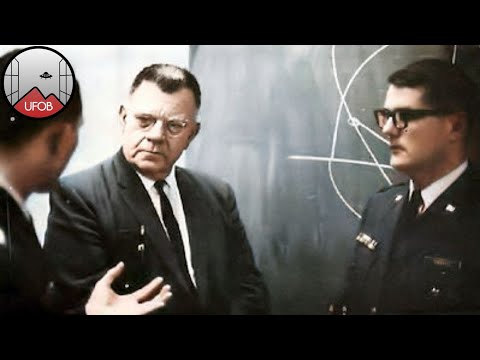
1968 Commentary on the Condon Committee findings with Prof. McDonald & Major Keyhoe
UFOB | Your UAP Library — Archival period commentary on the Condon Committee's findings from two of the study's most prominent outside critics, physicist James E. McDonald and NICAP director Donald Keyhoe, providing the outside-critic counterpoint to Craig's own insider account. Verified via YouTube oEmbed before inclusion.
Condon UFO Report (The Scientific Study of UFOs), 1969
Think Anomalous — An overview of the Condon Report's origins, structure, and public reception following its January 1969 release, covering the same study Craig's field teams worked on and the wider controversy his book addresses from the inside. Verified via YouTube oEmbed before inclusion.
Sources Cited
- Craig, Roy. UFOs: An Insider's View of the Official Quest for Evidence. University of North Texas Press, 1995 (ISBN-13 9780929398945, paperback, cited here matching this site's own resources library citation). amazon.com
- "UFOs: An Insider's View of the Official Quest for Evidence." University of North Texas Press (official catalog page: publisher description, ISBN, page count, price). untpress.unt.edu
- "Roy Craig Collection." Cushing Memorial Library & Archives, Texas A&M University Libraries (finding aid: collection contents, donation, biographical note). findingaids.library.tamu.edu
- "Chief UFO investigator Roy Craig dies." UFO Casebook Files (obituary: birth, death, education, career, La Boca Ranch). ufocasebook.com
- "ISU & UFOs: Two Alumni Who Shaped 1960s UFO Study." Iowa State University Special Collections and University Archives, Cardinal Tales blog, September 2, 2021 (Craig's Iowa State Ph.D., parallel with James E. McDonald). isuspecialcollections.wordpress.com
- Swords, Michael D. "Too Close for Condon: Close Encounters of the 4th Kind." International UFO Reporter, Center for UFO Studies, Fall 2003 (critical re-reading of Craig's Schirmer investigation report and the Committee's unpursued contact cases). cufos.org
- "Condon Report, Appendix X: Authors & Editors." National Capital Area Skeptics (official Condon Report biographical entry for Roy Craig). files.ncas.org
- "Condon Committee." Wikipedia (project history, Low memo, Craig's own account of the memo and of Saunders and Levine's case material). en.wikipedia.org
- Low, Robert J. "Some Thoughts on the UFO Project," memorandum, August 9, 1966, hosted by NICAP (the full text of the "trick" memo Craig's book discusses). nicap.org
- "UFOs: An Insider's View of the Official Quest for Evidence." Goodreads (reader ratings and review). goodreads.com
- "UFOs: an insider's view of the official quest for evidence." Internet Archive (bibliographic record: publisher, year, author birth date, page count). archive.org
- This site's own resources library: Full Reading List, where this exact edition (ISBN 0929398947) is cited across two case-file pages.
- This site's own case file: The Condon Report (Case File #227), for the full study Craig's book gives a first-person account of.
- This site's own case file: The Mariana UFO Film (Case File #058), for Craig's own field investigation and the baseball-schedule discrepancy.
- This site's own case file: The RB-47 Bomber Chase (Case File #150), for the case Craig's book treats as most resistant to explanation.
- This site's own case file: The Herbert Schirmer Encounter (Case File #154), for Craig's own contact-case field report.
- This site's own case file: The Ubatuba Magnesium Fragments (Case File #157), for the 1968 laboratory testing Craig personally arranged.
- This site's own key-figures entry: Roy Craig, for his full biography and further case connections.
Have corrections, additional research, or peer-reviewed sources? Help improve this entry.
Suggest an Edit