
UFOs: A Report on Australian Encounters
The Catalogue-Builder's Book — Keith Basterfield's Revision of a 1981 Classic Into Australia's Standing National Sighting Reference
Core Thesis
UFOs: A Report on Australian Encounters is the general-readership face of one of the most sustained cataloguing efforts in the history of UFO research. Keith Basterfield has spent four decades doing the unglamorous work the field usually skips: assembling systematic, sourced, version-controlled catalogues of Australian sighting reports, physical trace cases, abduction claims, pre-1947 aerial phenomena, and the results of laboratory analyses on alleged UFO fragments — all published openly, all revised as new material surfaces. This book, a revision of his 1981 Close Encounters of an Australian Kind: UFOs — The Image Hypothesis, is where that discipline is turned into a national survey for a non-specialist reader. Its structure tells you what it is: a consideration of the evidence for and against the existence of alien spacecraft, followed by a checklist of Australian UFO sightings from 1968 to 1996 with per-state maps giving precise locations. It is not a book of arguments about what the objects are. It is a book about what was actually reported, where, and when — which in Australian UFO research is the foundation everything else is built on.
About the Author
Keith Basterfield, based in South Australia, is the closest thing Australian ufology has to an institutional memory. His catalogues, hosted openly on the Project 1947 site, are the standing reference for anyone working the Australian record: a catalogue of pre-24 June 1947 Australian unidentified aerial phenomena, now in its seventh version; a catalogue of Australian physical trace cases compiled with Bill Chalker listing 147 cases from 1927 to 1997; a 2005 catalogue of Australian abduction cases; a dedicated listing of reports from the Woomera rocket range; and a systematic 2011 and 2016 search through Australian government records systems for 'Unusual Aerial Sightings,' conducted on behalf of the Australian UFO Research Association.
The most telling item in that list is his most recent: a preliminary catalogue of the results of laboratory analyses on alleged UFO fragments, running from 1897 to 2014, which pulls together the physical-sample record scattered across the international literature into a single sourced document. That catalogue — version 2.3 as of November 2018 — is the kind of resource that ought to be produced by a research institute and is instead produced by one Australian researcher working unpaid. It is also the document any careful reader should consult before accepting a claim about anomalous material in any case anywhere, including cases this site covers.
Basterfield's intellectual position sits somewhere the UFO field is usually uncomfortable with. His original 1981 book was subtitled The Image Hypothesis and argued for a substantially psychological reading of close-encounter reports; his catalogue work is scrupulously neutral, listing cases and their disposition without advocacy; and his later government-records searches were driven by a straightforward question about what the Australian state actually held rather than by an expectation of what it would show. Readers looking for a believer or a debunker will not find either.
The book's own publishing history reflects that trajectory. It began in 1981 as Close Encounters of an Australian Kind, with an explicit psychological hypothesis in its subtitle, and was revised into this more neutral, more catalogue-driven survey for Reed Books — 254 pages, with the revised edition dated February 1, 1999. The change of title is not cosmetic: it marks a shift from arguing a thesis to documenting a record.
Historical Context & Origins
Australia's UFO record has a distinctive shape that this book exists to map. The country combines an enormous sparsely-populated interior, a small number of highly instrumented defence sites, a genuinely independent civilian research tradition dating to the 1950s, and — unusually — a national archive that has released substantial quantities of relevant departmental correspondence. That combination produces a record that is smaller than the American one but considerably cleaner, and it is why Australian cases recur so often in serious international discussion.
The defence dimension is central. The Woomera rocket range, jointly operated with Britain from 1947, generated its own sighting cluster across 1952–55 — including the May 5, 1954 radar-and-visual case this site covers in its Woomera Rocket Range Sighting file, alongside defence physicist Harry Turner's internal 1971 report. Basterfield's dedicated Woomera listing is the reference document for that cluster.
The naval and aviation record is equally significant. The August 31, 1954 Sea Fury incident near Nowra — a Royal Australian Navy pilot's visual sighting independently corroborated by his own base's ground-controlled-interception radar, followed by a four-month press blackout and, nearly two decades later, a review by J. Allen Hynek — is documented in this site's Hawker Sea Fury Sighting file, which relies on Basterfield's archival cataloguing for its reconstruction of the wider 1952–55 sequence.
The 1990s, when this revision appeared, were the point at which Australian ufology's institutional memory was most at risk. The original civilian groups of the 1950s and 1960s were ageing out, their newsletters and case files were scattered across private collections, and the National Archives of Australia's holdings had not yet been systematically searched. Basterfield's response — catalogue everything, publish it openly, version it, keep revising — is why that material survived into the digital era in usable form.
Core Arguments & Key Concepts
The record comes before the theory. Basterfield's governing methodological commitment, and the reason his work has outlasted more exciting contemporaries. A catalogue that lists what was reported, by whom, where, and what happened to the report afterwards is useful to a believer, a sceptic and a historian alike; an argument about what the objects were is useful only to whoever already agrees.
Australia's case record is small enough to be handled exhaustively. This is the practical insight behind the whole project. The American record is too large for any individual to catalogue; the Australian record is not. Basterfield exploited that, and the result is a national record with a completeness no other country's has.
Geography is data. The book's per-state maps giving precise sighting locations are not decoration. Plotting reports against population density, defence installations, flight corridors and observation opportunity is the first analytic step any serious treatment has to take, and presenting the raw geographic distribution to a general reader is an argument in itself about how to think about the subject.
The psychological hypothesis deserves a hearing. Carried forward from the 1981 original, and unusual in a book that is otherwise a case survey. Basterfield takes seriously the possibility that a substantial fraction of close-encounter reports index internal rather than external events — a position that puts him closer to Thomas Bullard's folkloric reading and to the psychosocial school than to the crash-retrieval literature.
Government records are the underused resource. A theme that becomes explicit in Basterfield's later work and is implicit here: the most valuable untapped material is not new sightings but old paperwork sitting unread in national archives. His 2011 and 2016 searches through Australian government records systems acted on that, and they are the model this site's own Vault section follows.
What the checklist format quietly demonstrates. There is an argument embedded in the book's structure that Basterfield never states outright. A national sighting list with dates, places and mapped coordinates makes certain kinds of claim immediately testable and others immediately unsupportable. A reader can see for themselves whether reports cluster around defence installations or around population centres; whether a famous case sits inside a wave or stands alone; whether a given year was busy or quiet. Almost every strong claim made about the Australian record over the past forty years — that sightings track nuclear or defence sites, that waves follow media coverage, that trace cases concentrate in particular regions — is either supported or embarrassed by this kind of raw geographic and chronological presentation, and the book's willingness to just print it is a form of intellectual honesty the genre rarely offers.
Key Cases & Evidence Discussed
The Woomera cluster (South Australia, 1952–55). Basterfield's dedicated listing of reports from the Woomera rocket range is the reference document behind this site's Woomera Rocket Range Sighting case file, which credits his archival cataloguing as the basis for its chronological reconstruction of the wider sequence — including the correction of a widely-repeated but inaccurate 'May 1952' framing to the real May 5, 1954 radar-and-visual event.
The Hawker Sea Fury incident (near Nowra, New South Wales, August 31, 1954). A Royal Australian Navy pilot's sighting corroborated by his own base's GCI radar, followed by a four-month press blackout. This site's case file is stamped Credible and draws on Basterfield's cataloguing alongside the declassified National Archives of Australia files.
The Australian physical trace record. The 147-case catalogue Basterfield compiled with Bill Chalker covers 1927 to 1997 and is the single most complete national trace-case list in existence. Chalker's own The Oz Files is the natural companion volume to this one, and the two researchers' complementary approaches — Chalker with RAAF file access, Basterfield with the civilian and archival record — are why Australian ufology is documented as well as it is.
The Tully saucer nests (Queensland, January 1966). The Tully circular reed depressions remain Australia's best-known physical trace case, and this site covers them in its Tully Saucer Nests file alongside Chalker's dedicated 1996 monograph.
The Westall school sighting (Melbourne, April 1966). The mass-witness case at Westall, involving upward of two hundred students and staff, is the Australian record's largest single-event witness pool and appears throughout the national catalogues. See this site's Westall file.
The 1968–1996 checklist itself. The book's back half, and the reason a general reader should own it rather than only consulting the online catalogues: a chronological, mapped, state-by-state sighting list covering nearly three decades, in one place.
Critical Reception & Controversies
Formal reviews of this book are scarce, which reflects its publishing category — a trade-press national survey in a genre mainstream Australian reviewers largely ignored — rather than any judgement about quality. Its real reception has been functional: the catalogues underneath it are cited across the international literature, and the National Library of Australia holds the book in its permanent collection.
The substantive criticism a reader might make is that the book's cataloguing virtues are also its limits. It is not an investigation of any individual case at depth, it does not resolve anything, and a reader hoping for a definitive treatment of Westall or Tully will need to go elsewhere. Basterfield would not dispute this; the book is explicitly a survey.
The psychological framing carried over from the 1981 edition has always divided Australian readers. Proponents regard 'the image hypothesis' as a premature concession; sceptics regard the case checklist as lending credibility to reports that do not merit it. That both camps have complaints is reasonable evidence the book sits where it claims to.
One genuine limitation worth flagging for anyone using the book today: the sighting checklist ends in 1996, and Basterfield's own subsequent work — particularly the government-records searches of 2011 and 2016 and the fragment-analysis catalogue of 2018 — substantially supersedes parts of it. The online catalogues at Project 1947 are the current versions; the book is the 1990s snapshot.
Against that, the book's central methodological argument has aged extremely well. The 2017–2025 period of American UAP disclosure has been driven almost entirely by document searches, archival releases and records requests rather than by new sightings — exactly the priority Basterfield was arguing for and acting on two decades earlier, from a suburb of Adelaide, with no funding and no institutional support.
A word on the 'image hypothesis' the 1981 edition carried in its subtitle, since it is the most misunderstood part of Basterfield's position. It is not a claim that witnesses are lying, nor the crude 'they saw Venus' dismissal that passes for scepticism in much popular writing. It is a proposal about the mechanism by which a genuinely anomalous but internally-generated perceptual event might be experienced as an external encounter, and it belongs to the same intellectual family as Thomas Bullard's folkloric analysis in The Myth and Mystery of UFOs and the psychosocial school more broadly. Whether it is right is a separate question from whether it is serious, and it is serious.
Influence & Legacy
Basterfield's catalogues are load-bearing infrastructure for this site and for the international literature generally. The physical-fragment analysis catalogue in particular is the reference document against which any claim of anomalous recovered material should be checked — including the Dalnegorsk material discussed in Russia's Roswell Incident, whose Kholodninskoye lead-isotope attribution appears in Basterfield's own compilation.
Within Australian research specifically, the Basterfield–Chalker partnership defined the national standard. Chalker's The Oz Files got the RAAF's classified files; Basterfield built the civilian and archival apparatus around them; and between the two, Australia ended up with a better-documented national UFO record per capita than any other country.
The open-publication model matters as much as the content. Everything Basterfield has produced is freely available, versioned, and dated, with sources named — a practice that is standard in academic disciplines and vanishingly rare in this one. Researchers who complain about the field's citation hygiene should note that at least one person solved the problem by simply doing it properly for forty years.
Within this site's library the book functions as the Australian counterpart to David Clarke's National Archives work for Britain: the standard national reference to consult before any individual case assessment. Its checklist and maps are cited by this site's Woomera and Sea Fury files for exactly that purpose.
There is one more legacy worth naming, and it is about what a single unfunded researcher can accomplish. Basterfield produced a national pre-1947 catalogue, a national trace-case catalogue, a national abduction catalogue, a dedicated defence-range listing, two systematic government-records searches, an international physical-fragment analysis compendium, and this book — across four decades, with no institution, no grant, and no salary attached to any of it. The 2017–2025 UAP disclosure period has produced a great deal of commentary about the need for serious, systematic, documentary UFO research. That research has existed continuously since the 1970s; it has simply been done by people like Basterfield, in their own time, and largely ignored by everyone now calling for it.
The Book
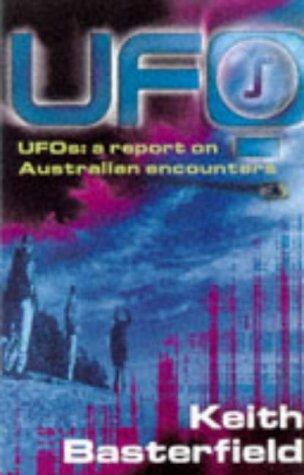
UFOs: A Report on Australian Encounters
The Catalogue-Builder's Book — Keith Basterfield's Revision of a 1981 Classic Into Australia's Standing National Sighting Reference
Find on Amazon →As an Amazon Associate, OverClassified may earn from qualifying purchases made through this link, at no extra cost to you.
Why This Is Essential Reading
The least exciting genuinely important book in the Australian section, and a model of how this subject should be documented. UFOs: A Report on Australian Encounters will not tell you what anyone saw over the outback, and does not try to; what it does is put nearly three decades of Australian sighting reports into a mapped, dated, sourced checklist assembled by the researcher whose open catalogues the rest of the field quietly runs on. Read it for the record and the geography, understand that its checklist stops in 1996 and that Basterfield's own later online catalogues supersede parts of it, and pair it with Bill Chalker's The Oz Files for the classified-file side of the same national story. Anyone assessing an Australian case without consulting Basterfield's catalogues is working from the retellings rather than the record.
Related Cases & Theories
Sources Cited
- Basterfield, Keith. UFOs: A Report on Australian Encounters. Reed Books Australia, 254 pp.; revised edition February 1, 1999. ISBN-10 0730104966 / ISBN-13 9780730104964. amazon.com
- National Library of Australia catalogue record, UFO's: a report on Australian encounters by Keith Basterfield — institutional bibliographic verification. nla.gov.au
- Google Books record, UFOs: A Report on Australian Encounters — bibliographic data. books.google.com
- Google Books record, Close Encounters of an Australian Kind: UFOs — The Image Hypothesis (1981) — the original edition this book revises. books.google.com
- Project 1947, "Online Catalogues and Sighting Summaries" — the index of Basterfield's open, versioned catalogue series. project1947.com
- Basterfield, Keith. "A Catalogue of Pre 24 June 1947 Australian Unidentified Aerial Phenomena," version 7 (June 6, 2017), Project 1947. project1947.com
- Basterfield, Keith, and Bill Chalker. "A Catalogue of Australian Physical Trace Cases" — 147 cases, 1927–1997. project1947.com
- Basterfield, Keith. "Listing of Reports from Woomera, South Australia," Project 1947 — the dedicated Woomera sighting listing. project1947.com
- Basterfield, Keith. "'Unusual Aerial Sightings': A Search Through the Australian Government Records Systems" (2011, revised 2016), compiled for the Australian UFO Research Association. project1947.com
- Basterfield, Keith. "Preliminary Catalogue of Analysis of Alleged 'Fragments' Found in Association with UAP Incidents," version 2.3 (November 28, 2018), covering 1897–2014. project1947.com
- Basterfield, Keith. "A Catalogue of Australian Abduction Cases" (2005), Project 1947. project1947.com
- Chalker, Bill. The Oz Files: The Australian UFO Story. Duffy & Snellgrove, 1996. OverClassified breakdown
- OverClassified case file, Woomera Rocket Range Sighting — the May 5, 1954 radar-and-visual case, the declassified National Archives of Australia files, Harry Turner's internal 1971 report, and the wider 1952–55 Woomera cluster reconstructed from Basterfield's cataloguing.
- OverClassified case file, Hawker Sea Fury Sighting — the August 31, 1954 radar-visual incident near Nowra, the four-month press blackout, and J. Allen Hynek's 1973 review.
- OverClassified case file, The Tully Saucer Nests — Australia's best-known physical trace case.
- OverClassified case file, The Westall School Sighting — the April 1966 mass-witness case.
Have corrections, additional research, or peer-reviewed sources? Help improve this entry.
Suggest an Edit