
The Myth and Mystery of UFOs
A Folklorist's Reckoning with UFOs as Modern Mythology
Core Thesis
The Myth and Mystery of UFOs makes a case that depends on taking its own title literally rather than as a debunker's shrug: Thomas E. Bullard, a working folklorist with a Ph.D. specifically earned studying UFO reports as folklore, argues that the phenomenon is best understood as a living modern mythology — a body of narrative that channels old human concerns (otherworldly visitors, secret realms, apocalyptic threat, promised salvation) into a technological idiom — while insisting throughout that identifying something as myth does not settle whether anything real underlies it. His organizing device is a distinction between the stimulus, the comparatively small, genuinely puzzling residue of well-documented sightings and encounters that resists easy explanation, and the stimulated, the much larger secondary layer of theory, embellishment, belief system, hoax, and cultural narrative that grows up around that residue. Folklore analysis, in Bullard's telling, is the right tool for studying the stimulated material in exhaustive comparative detail; it is explicitly not a tool for explaining away the stimulus, and Bullard closes the book arguing that a scientifically serious residue of cases still demands study on its own terms, whatever that residue eventually turns out to be.
About the Author
Thomas Eddie Bullard was born in North Carolina in 1949 and dates his own interest in the subject to childhood: 1950s science-fiction films first caught his attention, and by 1957 he was following both the Sputnik launch and press coverage of the Levelland, Texas sightings with equal fascination, soon reading Donald Keyhoe, Richard Hall's The UFO Evidence, Fate magazine, and Ray Palmer's Flying Saucers. He joined NICAP and APRO as a teenager in the 1960s, earned his undergraduate degree at the University of North Carolina, and then did something almost no one else active in ufology has done before or since: he went to graduate school specifically to study UFO reports as folklore. At Indiana University he completed a Ph.D. in folklore in 1982 with a dissertation titled Mysteries in the Eye of the Beholder: UFOs and Their Correlates as a Folkloric Theme Past and Present — research that included extensive newspaper archive work documenting the 1896–97 mystery airship wave and other pre-1947 sightings, later compiled as The Airship File (1982).
That credential is worth stating plainly and honestly, because it is genuinely unusual in this field: reference sources describing Bullard's day-to-day professional role consistently identify him as a staff member of the Indiana University library system rather than as tenured teaching faculty, so The Myth and Mystery of UFOs is the work of a doctorally trained folklorist practicing as an independent, largely avocational scholar of ufology — not someone drawing a university salary specifically to study UFOs, and not someone without real disciplinary training either. Formal academic UFO studies posts barely exist in American higher education; Bullard's actual position is closer to the more common ufological pattern of a day job supporting research done on the side, but with a genuinely rare difference: the doctoral-level methodological training behind that research is real and specifically on-topic, not borrowed from an unrelated field.
Bullard's major scholarly reputation rests on the project that came before this book. Around 1982 the Fund for UFO Research commissioned him to catalog and comparatively analyze the growing body of alleged abduction reports, and the result, the two-volume UFO Abductions: The Measure of a Mystery (1987), examined roughly 300 cases and identified recurring structural stages and motifs across accounts gathered from unconnected witnesses — establishing, for the first time, a systematic folkloric typology of the abduction narrative rather than a case-by-case retelling. He followed it with The Sympathetic Ear: Investigators as Variables in UFO Abduction Reports (1995), examining how individual investigators' methods shaped the accounts they collected, and contributed to David M. Jacobs's edited volume UFOs and Abductions: Challenging the Borders of Knowledge (University Press of Kansas, 2000). He has published in the Journal of American Folklore, the Journal of UFO Studies, CUFOS's International UFO Reporter, and the MUFON UFO Journal, presented at the 1992 MIT UFO Abduction Study Conference alongside Budd Hopkins and David Jacobs, and served on the board of the Center for UFO Studies and the advisory board of the Fund for UFO Research.
The Myth and Mystery of UFOs, published when Bullard was 61, is best read as that earlier abduction-specific project's widening: the same comparative-folklore method, extended from one narrative type to the whole of the UFO phenomenon across seven decades. And his scholarship did not stop with this 2010 book — as recently as 2025 he was still reviewing new UFO literature for the peer-reviewed Limina: The Journal of UAP Studies, discussed further below, making him one of the longest continuously active credentialed academic voices anywhere in the field.
Historical Context & Origins
By 2010, UFO literature already had two well-worn folklore-adjacent precedents Bullard's book had to position itself against: Carl Jung's 1958 Flying Saucers: A Modern Myth of Things Seen in the Skies, a psychologist's archetypal reading of the phenomenon as a projection of collective anxiety, and Jacques Vallée's 1969 Passport to Magonia, which argued UFO reports track the same underlying structure as older fairy and demon folklore. Neither book's author, however, held a folklore doctorate: Jung was a psychiatrist and Vallée an astronomer turned computer scientist. Bullard's own 1982 dissertation had explicitly credited both books as direct influences on his decision to apply formal folkloristic method to the subject — a lineage this site's own Passport to Magonia entry documents from the other direction, noting that Bullard and fellow folklorist Peter M. Rojcewicz each completed doctoral dissertations treating UFO reports as folklore, citing Vallée's and John Keel's books as the direct academic point of origin for that line of research.
The book also arrives as a deliberate, decades-later answer to a specific institutional verdict: the 1969 Condon Report, the Air Force–sponsored University of Colorado study that concluded nothing of scientific value could be learned from further UFO study. Kevin D. Randle's 2012 review of the book in the Journal of Scientific Exploration frames The Myth and Mystery of UFOs explicitly as "the important and long-needed counterpoint" to that conclusion, arguing that Bullard makes the case for continued academic study without ever endorsing the extraterrestrial hypothesis outright.
Bullard's own earlier work forms the book's most immediate context. His 1987 UFO Abductions: The Measure of a Mystery had already demonstrated that comparative folklore method could find real structural consistency across hundreds of independently collected abduction accounts. The Myth and Mystery of UFOs, arriving 23 years later, applies that same disciplined comparative approach to the full seven-decade sweep of the phenomenon — sightings, contactee movements, government-secrecy narratives, and abduction reports together — rather than to abductions alone.
The book also landed in a moment when the UFO-literature landscape it was responding to had grown far more crowded than in 1987: Jerome Clark's own encyclopedic reference project was already three editions deep, government-secrecy narratives following the Roswell revival of the late 1980s and 1990s had become their own subgenre, and a wave of skeptical, psychosocially framed books had staked out the opposite pole. Bullard's folklore method was positioned as a genuine third option — neither advocacy nor debunking, but a discipline that takes narrative pattern seriously as data in its own right, whatever it ultimately implies about the reports' underlying reality.
Core Arguments & Key Concepts
The book runs across nine chapters bracketed by an introduction, moving from "Who Goes There? The Myth and the Mystery of UFOs," which lays out the stimulus/stimulated framework, through "The Growth and Evolution of UFO Mythology" and "UFOs of the Past," which push the same comparative method backward into pre-1947 and pre-modern reports, into "From the Otherworld to Other Worlds," tracing how older supernatural folklore (fairies, demons, celestial visitors) supplies the narrative scaffolding later filled in by extraterrestrials. A single extended case study, "The Space Children," then walks the comparative method through one sustained example in depth before the book widens back out to "Secret Worlds and Promised Lands" (government-conspiracy narrative and contactee-era utopian and salvation themes read as their own mythic subtypes) and "Other Than Ourselves" (the varied nature of the reported "others" themselves, set against other legendary non-human beings). The closing pair, "Explaining UFOs: An Inward Look" and "Explaining UFOs: Something Yet Remains," work through psychological and psychosocial explanations before Bullard states his own conclusion: that such explanations carry real, substantial power but do not close the file entirely.
Jerome Clark's own published assessment of the book, quoted on its back cover, singles out Bullard's "eloquent prose" and specifically credits the stimulus/stimulated distinction as the book's central analytical contribution — separating the comparatively narrow set of puzzling, well-documented reports (the stimulus) from the much larger secondary mass of theory, retelling, hoax, and belief that folklore study properly analyzes (the stimulated), without treating that secondary analysis as proof the stimulus itself has been explained away.
Randle's review illustrates how that distinction plays out on specific cases. Bullard discusses the mass sightings of March 3, 1968, in which numerous witnesses across a wide area described a cigar-shaped object with rows of windows — a sighting wave now generally attributed to the atmospheric re-entry and breakup of the Soviet Union's Zond IV spacecraft. Bullard's folkloric point is not simply that the case is explained, but that it illuminates reporting bias itself: witnesses who correctly identified the re-entry felt little need to file a report, while those who read it as an alien craft did, skewing the surviving documentary record toward the anomalous interpretation regardless of what most observers actually concluded. He then uses that same 1968 wave as a comparative anchor for the July 24, 1948 Chiles-Whitted encounter, in which two Eastern Air Lines pilots near Montgomery, Alabama, described an eerily similar cigar-shaped, windowed object — a case for which no equivalent space-debris explanation was available in 1948, though Bullard notes it fits the profile of an unusually bright meteor bolide.
That same method is what generates the book's most consistently noted stylistic trait, for critics and admirers alike: an unusually dense, citation-heavy comparative apparatus that assumes real familiarity with the case literature. Reviewer Joshua Buhs put the criticism directly: Bullard "has little sense of proportion, and so will spend a number of pages on a small incident, getting into the weeds," producing "a density of citations and an assumption that the reader is familiar with a vast array of UFO reports that would seem to restrict the readership to the committed." That is, in effect, the cost of the same comparative rigor Clark and other reviewers praised as the book's core strength — a trade-off the book itself never disguises.
Bullard's stated conclusion in the final chapter, "Explaining UFOs: Something Yet Remains," is deliberately narrower than either a believer's or a debunker's reader might expect. He argues, per Randle's review, that neither the extraterrestrial hypothesis nor purely psychological or psychosocial explanations (including sleep paralysis as a stand-in explanation for abduction reports) fully account for the strongest cases — those with multiple witnesses, radar corroboration, or physical traces — and that ridicule, rather than genuine scientific engagement, has been the field's default response to that residue for decades. The argument is explicitly for continued study, not for any particular verdict about what that study would find.
Key Cases & Evidence Discussed
The Chiles-Whitted Encounter (Case File #066, July 24, 1948) is the book's clearest documented case discussion on this site: Bullard uses the Eastern Air Lines pilots' cigar-shaped, windowed sighting near Montgomery, Alabama as a direct structural comparison to the March 3, 1968 Zond IV re-entry wave, illustrating how visually similar reports separated by twenty years can have entirely different underlying causes — one a documented spacecraft re-entry, the other a case Air Force investigators would later attribute to an unusually bright meteor.
The Great Airship Wave of 1896–1897 (Case File #228) sits at the center of Bullard's chapter on "UFOs of the Past": it was the subject of his own doctoral newspaper research and his 1982 compilation The Airship File, making it the single case in the book's pre-1947 material he had already investigated more directly, and more exhaustively, than almost any other researcher writing on the period.
The book's abduction-related chapters build directly on the comparative case base Bullard assembled for his earlier UFO Abductions: The Measure of a Mystery (1987), a study anchored on the narrative template Antônio Vilas-Boas's 1957 abduction case establishes — capture, medical examination, and a reproductive or genetic motive — a template Bullard's key-figures entry on this site already credits with shaping how later, better-known cases such as the Betty and Barney Hill encounter (Case File #006, 1961) would be read and compared. The Myth and Mystery of UFOs does not re-run that 1987 case-by-case analysis in full, but its treatment of the abduction narrative as a distinct mythic subtype rests on exactly that earlier comparative groundwork.
Beyond individual sightings, the book's "Secret Worlds and Promised Lands" chapter reads government-conspiracy narratives — the MJ-12 documents and their imitators among them — and contactee-era utopian, salvation-themed messaging as two distinct mythic subtypes running through the same seven-decade record, treating both as data about what UFO belief communities need the phenomenon to mean rather than as competing factual claims to be adjudicated case by case.
Critical Reception & Controversies
Trade and specialist reviews were largely favorable and specifically praised the book's scholarly apparatus. Library Journal called it a work of "careful and exhaustive cataloguing of UFOs as historic, modern, spiritual, cultural, and pop myth," while Choice rated it "highly recommended" and singled out its "impressive" bibliography. The London Review of Books credited it with pointing "to an aspect of the natural world not yet explored by science," and Fortean Times echoed the same "careful cataloguing" praise. Biblical scholar Michael Heiser's independent review called it "a wonderful volume" for demonstrating that "virtually all the UFO anecdotal evidence can be found in ancient, medieval, and early modern tales across the globe," while noting that Bullard's own psychosocial explanations, though carrying "high explanatory value," fall short of "complete explanatory power" — a limitation Bullard's own final chapter concedes directly.
Kevin D. Randle's review in the Journal of Scientific Exploration (2012) is the book's most substantive assessment from within organized anomalies research. Randle calls it a book that "walks the fine line between over-the-top scholarship and bottom-of-the-barrel trash" and "belongs on everyone's shelf because of the scholarship and the readability," while admitting he found it "confusing at first" because Bullard's own position — taking sightings seriously as data without endorsing the extraterrestrial hypothesis — is genuinely harder to categorize than either a believer's or a skeptic's book normally is.
That same ambiguity produced sharper criticism among general readers. Goodreads reviewer Bill Weaver argued Bullard "waffles back and forth" between a scientific and a believer's framing and selectively omits case details that complicate his comparative conclusions, while reviewer Dan Zarfati dismissed the book outright as "pompous" and "double-talking," citing internal contradictions and calling it "incredibly difficult and tedious" to read. Joshua Buhs's review, discussed above for its "little sense of proportion" criticism of the book's case-by-case digressions, reaches a similar conclusion from the opposite direction: not that Bullard is inconsistent, but that his comparative thoroughness comes at the direct cost of general readability.
That split reception is, in a real sense, the predictable result of the book's own stated method. A folklorist's refusal to conclude either "it's aliens" or "it's all misperception and hoax" satisfies neither a committed believer nor a committed skeptic looking for a verdict, and reviewers on both ends of that spectrum have read the same stimulus/stimulated framework as either admirably disciplined or frustratingly noncommittal depending on which verdict they arrived expecting.
Influence & Legacy
The book's most direct and current legacy is Bullard's own continued academic activity: as recently as Spring 2025, he reviewed Robert Powell's UFOs: A Scientist Explains What We Know (And Don't Know) for the peer-reviewed Limina: The Journal of UAP Studies (Vol. 2, No. 1) — a review this site's own essential-reading entry on Powell's book already cites as that book's most substantive scholarly notice. Fifteen years after The Myth and Mystery of UFOs, Bullard remains one of the very few people in the field whose academic credentials in a directly relevant discipline are real, current, and still actively being exercised in print.
Within ufology, the book extended Bullard's reputation from the specific, narrower authority he built with UFO Abductions: The Measure of a Mystery (still the standard comparative reference for abduction-narrative structure) to a broader claim on the whole phenomenon — a claim reviewers were more divided on precisely because it required covering seventy years of material rather than one well-bounded narrative type.
The book's academic lineage also runs backward as well as forward. Bullard's own 1982 dissertation explicitly credited Jacques Vallée's Passport to Magonia and John Keel's Operation Trojan Horse as the works that first opened folklore study of UFO reports as a legitimate academic path — a lineage this site's own Passport to Magonia entry documents from the originating end, noting that Bullard and fellow folklorist Peter M. Rojcewicz each turned that opening into a completed Ph.D. dissertation. The Myth and Mystery of UFOs is the fullest single-volume expression of where that academic lineage ultimately led.
More broadly, the book stands as evidence that a folklore-trained, methodologically disciplined reading of the UFO phenomenon can coexist with real academic legitimacy (university-press publication, peer-reviewed journal placement, favorable notice in Choice and Library Journal) without collapsing into either advocacy or dismissal — a narrower, harder-won kind of influence than a bestseller's, but one measurable in the continued, active citation of Bullard's work by other serious researchers writing well over a decade later.
The Book
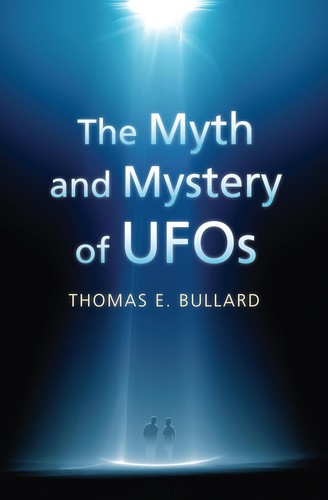
The Myth and Mystery of UFOs
A Folklorist's Reckoning with UFOs as Modern Mythology
Find on Amazon →As an Amazon Associate, OverClassified may earn from qualifying purchases made through this link, at no extra cost to you.
Why This Is Essential Reading
The Myth and Mystery of UFOs earns its place on this list because Thomas E. Bullard is one of the only people who has ever written seriously about UFOs with the specific doctoral training the subject actually calls for, and he uses it to do something genuinely rare in this literature: take seventy years of reports seriously as folklore without treating "it's mythology" as a synonym for "none of this happened." The stimulus/stimulated distinction that Jerome Clark singled out and that this entry has leaned on throughout is not a hedge — it is a working method, applied case by case from the 1896–97 airship wave he personally researched for his dissertation through the Chiles-Whitted and Zond IV comparison Kevin Randle's review walks through in detail. That the book satisfies neither committed believers (Dan Zarfati's "double-talking") nor readers wanting a tighter, more accessible argument (Joshua Buhs's "little sense of proportion") is close to the honest cost of the position Bullard actually holds: real anomalies exist in the record, real mythology has grown up around them, and folklore's job is to study the second without pretending it has explained away the first. Fifteen years on, Bullard's continuing academic output — including his 2025 review for Limina: The Journal of UAP Studies — is itself evidence that this project was never a one-book stance.
Related Cases & Theories
Essential Viewing
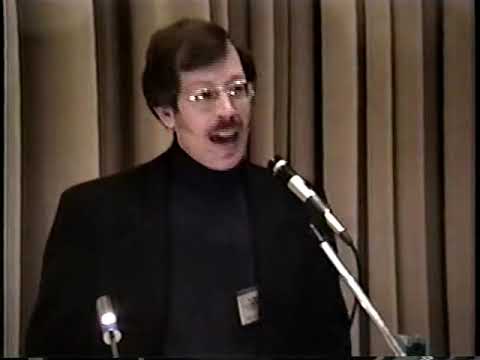
An Analysis of UFO Abduction Stories - Thomas Eddie Bullard (1994)
NICAP Official — Bullard presenting his comparative folklore analysis of abduction narratives at the Science & Politics of UFO Research symposium, verified via YouTube oEmbed — direct video documentation of the same comparative method underlying The Myth and Mystery of UFOs.
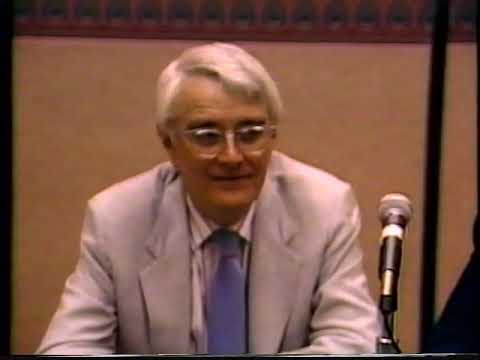
1992 MIT UFO Abduction Study Conference: Bullard, Carpenter, Gottlieb, Hall, Hopkins, Jacobs, et al.
RVMLResourceCenter — Bullard alongside John Carpenter, Richard Hall, Budd Hopkins, David Jacobs, and other leading abduction researchers at MIT's landmark 1992 Abduction Study Conference, verified via YouTube oEmbed before inclusion.
Sources Cited
- Bullard, Thomas E. The Myth and Mystery of UFOs. Lawrence, KS: University Press of Kansas, 2010. 417 pp. ISBN 9780700617296. kansaspress.ku.edu
- "The Myth and Mystery of UFOs." Open Library / Internet Archive bibliographic record (publisher, publish date, pagination, LCCN 2010026289, OCLC 607980782, table of contents). openlibrary.org
- "The Myth and Mystery of UFOs." Amazon.com product listing for ISBN 0700617299 / 9780700617296 (hardcover edition cited on this site). amazon.com
- Randle, Kevin D. Review of The Myth and Mystery of UFOs, by Thomas E. Bullard. Journal of Scientific Exploration, Vol. 26, No. 2 (2012), pp. 457–459. journalofscientificexploration.org
- "Thomas Eddie Bullard." Center for UFO Studies, board/consultant biography page (education, dissertation, career, publications). cufos.org
- "Bio — Dr. Eddie Bullard." NICAP.org (biography: early interest, education, Airship File, Fund for UFO Research commission, publications, board roles). nicap.org
- "Bullard, Thomas E." Occult World (biographical entry citing The Greenhaven Encyclopedia of Paranormal Phenomena, ed. Patricia D. Netzley, 2006; professional role as Indiana University library system staff member). occult-world.com
- Heiser, Michael S. "Myth and Mystery of UFOs: A Review." drmsh.com. drmsh.com
- "The Myth and Mystery of UFOs." Project MUSE / Johns Hopkins University Press listing (publisher description, table of contents). muse.jhu.edu
- "The Myth and Mystery of UFOs by Thomas E. Bullard." Goodreads (reader reviews, including Joshua Buhs, Bill Weaver, and Dan Zarfati). goodreads.com
- Bullard, Thomas E. Mysteries in the Eye of the Beholder: UFOs and Their Correlates as a Folkloric Theme Past and Present. Ph.D. dissertation, Indiana University, 1982. proquest.com
- Bullard, Thomas E. Review of Robert Powell's UFOs: A Scientist Explains What We Know (And Don't Know). Limina: The Journal of UAP Studies, Vol. 2, No. 1 (Spring 2025). researchgate.net
- This site's own essential-reading entry: Passport to Magonia, documenting Bullard's dissertation as one of two doctoral projects directly crediting Vallée's and Keel's books as its academic origin point.
- This site's own essential-reading entry: UFOs: A Scientist Explains What We Know (And Don't Know), citing Bullard's 2025 Limina review.
- This site's own case file: Chiles-Whitted Encounter, the 1948 case Bullard compares directly to the 1968 Zond IV re-entry wave.
- This site's own case file: The Great Airship Wave of 1896-1897, the subject of Bullard's own doctoral newspaper research and The Airship File.
- This site's own key-figures entry: Thomas E. Bullard, for his broader career background and abduction-research case connections.
Have corrections, additional research, or peer-reviewed sources? Help improve this entry.
Suggest an Edit