
UFO Crash at Roswell
The CUFOS Investigation That Built the Modern Crash-Retrieval Case — and the First Site Its Own Authors Later Abandoned
Core Thesis
UFO Crash at Roswell is the book that turned Kevin D. Randle and Donald R. Schmitt into the most prominent Roswell research team of the modern era, three years before their partnership itself came apart. Published by Avon Books in July 1991, it is the first book-length product of a Center for UFO Studies (CUFOS)-sponsored investigation the two men joined in 1988 and pursued in the field starting in 1989 — the same year a September Unsolved Mysteries broadcast on the case drove new witnesses, including the eventually discredited Gerald Anderson, to come forward. Drawing on roughly 200 witness accounts assembled over two years, Randle and Schmitt argue that an extraterrestrial craft crashed on the Foster Ranch outside Roswell, New Mexico, that a second, more dramatic wreck occurred some 150 miles away on the Plains of San Agustin, and that the wreckage displayed at Gen. Roger Ramey's Fort Worth press conference had been secretly substituted for genuine weather-balloon debris. This book matters on this site for a reason that goes beyond its own claims: it is the earlier, CUFOS-era half of Randle and Schmitt's own sixteen-year investigative arc, and by the time the authors published their 1994 revision, The Truth About the UFO Crash at Roswell, they had themselves quietly abandoned the Plains of San Agustin site this book spends chapters establishing — a documented, self-authored retraction that makes this book as valuable for what its own authors later disowned as for what it originally claimed.
About the Author
Kevin D. Randle is covered in full biographical detail in this site's own Project Blue Book Exposed entry (ER-012), so this section focuses narrowly on his role here. In 1991, when this book appeared, Randle was a captain in the Air Force Reserve and a field investigator with a research background stretching back to his teenage years and his first published UFO article in 1972. He and Schmitt joined a CUFOS-organized Roswell investigation team in 1988, and this book — not Project Blue Book Exposed or any of the more than eighty other titles across his career — was the project that made his name synonymous with Roswell in the public imagination for the following three decades.
Donald R. Schmitt is covered in more detail, including the documented credibility problems that emerged later in his career, in this site's own Witness to Roswell entry (ER-065). This entry's angle is different and narrower: in 1991, Schmitt was CUFOS's director of special investigations, a credentialed institutional role, and this book predates by several years the mid-1990s discovery that he had misrepresented parts of his professional background — the episode that eventually ended his partnership with Randle and sent him instead to work with Thomas Carey on Witness to Roswell. Reading this book requires holding two facts in view at once: at the time of its writing, Schmitt's CUFOS credentials were not in public dispute, and the witness whose testimony would prove most damaging to this specific book — Gerald Anderson — was one Randle himself had voiced reservations about even before publication, reservations that Schmitt did not share.
Historical Context & Origins
By the time Randle and Schmitt began investigating in 1988, Roswell had already been reintroduced to the public once, through Charles Berlitz and William L. Moore's The Roswell Incident (1980, ER-094), this site's own entry on the book that first turned Stanton Friedman's 1978 interview with Jesse Marcel into a full-length investigation. That 1980 book had introduced, via secondhand testimony from civil engineer Grady "Barney" Barnett, a second and geographically distant crash site on the Plains of San Agustin — a complication this book inherited and, rather than resolving, actively expanded.
CUFOS organized a formal research team in 1988, and Randle and Schmitt spent 1989 conducting field interviews around Roswell. That same year, a September broadcast of NBC's Unsolved Mysteries devoted two segments to the case, generating a wave of public attention and new witness contacts — among them Gerald Anderson, a Missouri man who came forward claiming to have witnessed the Plains of San Agustin crash as a five-year-old child accompanying his uncle's archaeology party. Randle interviewed Anderson directly on February 4, 1990, and, according to later published accounts, expressed reservations about the claim even before this book's publication; those reservations did not prevent Anderson's testimony from anchoring a significant portion of the finished book's San Agustin chapters.
The book arrived into a considerably more crowded and more skeptical field than The Roswell Incident had a decade earlier. Philip J. Klass's Skeptics UFO Newsletter was by 1991 an established, dedicated venue for scrutinizing exactly this kind of crash-retrieval claim, and Klass would go on to publicly spar with Randle, including a televised exchange on CNN's Larry King Live, over the specific witness claims this book introduced. The book's publication also coincided with, and helped accelerate, a broader early-1990s wave of Roswell publishing that established the case as a fixture of mainstream American UFO culture rather than a niche research topic.
This book's most consequential downstream event was neither a rebuttal nor an award: on July 31, 1994, Showtime aired Roswell, a television movie directed by Jeremy Kagan and written by Arthur Kopit, based on this book and starring Kyle MacLachlan as Jesse Marcel, Martin Sheen, and Dwight Yoakam as Mac Brazel. The film received a Golden Globe nomination for Best Miniseries or Motion Picture Made for Television at the 52nd Golden Globe Awards in early 1995, giving this book's version of the Roswell narrative a mainstream cultural reach no previous Roswell title, including The Roswell Incident, had achieved.
Core Arguments & Key Concepts
The book's central claim is that a genuine extraterrestrial craft crashed on the Foster Ranch northwest of Roswell in early July 1947, after which the Army Air Forces recovered both wreckage and alien bodies before mounting a deliberate cover-up anchored by the weather-balloon explanation issued at Gen. Roger Ramey's Fort Worth press conference. Randle and Schmitt's introduction states their aim directly: to "flesh out the details with a huge collection of first and secondhand accounts, documentary evidence, and reconstruction of the most probable course of events" behind what they present as the true story underneath the Army's public account.
The book's most consequential and most heavily disputed contribution is its expansion of the Plains of San Agustin material The Roswell Incident had first introduced a decade earlier. Where Berlitz and Moore presented Barney Barnett's account as secondhand testimony from a single source, Randle and Schmitt's book adds new claimed corroboration, including Gerald Anderson's own eyewitness account of the same site, and asserts that archaeologist Grady Barnett was present there — even as later analysts, cross-referencing the book's own text against its Foster Ranch chapters, noted that Barnett appears to be placed at both the San Agustin and Foster Ranch sites simultaneously, a chronological contradiction the book itself does not resolve.
The book advances a debris-substitution claim consistent with The Roswell Incident's earlier version: that the wreckage photographed in Gen. Ramey's office for the press was ordinary weather-balloon material secretly swapped in place of the genuine, non-terrestrial debris recovered at the crash site. Randle and Schmitt present this claim as corroborated by multiple military witnesses who describe handling material with properties — unusual lightness, resistance to cutting or burning — inconsistent with 1947-era balloon technology.
Structurally, the book moves from the Foster Ranch debris-field discovery through Jesse Marcel's own account, into the expanded Plains of San Agustin material built substantially around Gerald Anderson's testimony, and closes with a case for sustained military intimidation of witnesses across four decades. Randle and Schmitt's stated methodology — drawing on roughly 200 individual witness contacts gathered through their CUFOS-sponsored fieldwork — represented, at the time of publication, the largest witness base any single Roswell book had yet assembled, a scale of research this site's own resources library citation for the book credits directly.
Key Cases & Evidence Discussed
This book's entire subject is this site's own Roswell Incident (Case File #001, July 1947), and its account of the Foster Ranch debris field, Mac Brazel's discovery, and the Fort Worth press conference reversal tracks the same documentary spine that case file lays out in far greater and more source-disciplined detail.
This site's own The Roswell Incident entry (ER-094), Charles Berlitz and William Moore's 1980 book, is this book's direct predecessor: Randle and Schmitt inherited that book's Plains of San Agustin complication and expanded it considerably, adding Gerald Anderson's eyewitness testimony to Barney Barnett's earlier secondhand account — a decision that would prove to be this book's most significant and most publicly walked-back claim.
This site's own Witness to Roswell entry (ER-065) is this book's direct successor within Randle and Schmitt's own investigative arc, though written sixteen years later and by then co-authored by Schmitt with Thomas Carey rather than Randle. Where this 1991 book built its case around Gerald Anderson and the Plains of San Agustin site, the 2007 book drops that site entirely in favor of deathbed testimony from Brigadier Generals Arthur Exon and Thomas DuBose and Walter Haut's posthumous affidavit — a genuinely different evidentiary foundation reflecting sixteen additional years of investigation, a research-team split, and, as this entry's Critical Reception section documents, this book's own retracted claims.
This site's own Roswell: Inconvenient Facts and the Will to Believe entry (ER-033), Karl Pflock's 2001 skeptical rebuttal, directly engages the crash-retrieval case this book helped build, ultimately concluding the Foster Ranch debris was Project Mogul balloon-train wreckage rather than an alien craft — the most credentialed skeptical answer to the narrative Randle and Schmitt expanded here.
Critical Reception & Controversies
Contemporary trade reception was measured rather than glowing. John Lord, reviewing the book for Voice of Youth Advocates in December 1991, credited the authors' "attention to facts" as the first thing he noticed, but flagged the book's excessive repetition of details as a real structural weakness; he nonetheless concluded it had "no glaring problems" and was "interesting and even exciting" for its intended readership — a review that reads today as considerably more restrained than the marketing built around the book's Showtime tie-in cover.
Skeptic Philip J. Klass, whose Skeptics UFO Newsletter was the era's most sustained venue for scrutinizing Roswell claims, is reported to have initially called this book "the best of the books on Roswell" — faint praise given the thin field it was competing against in 1991 — before the relationship between Klass and the authors deteriorated into open, public conflict, including a televised exchange between Klass and Randle on CNN's Larry King Live. Klass's specific, recurring criticism was that Randle and Schmitt's own claims about the crash location shifted over time: the authors initially concluded a nearly intact saucer with alien bodies had crashed on the Brazel ranch, then later characterized certain of their own book's witness accounts as "tall tales" while still maintaining the underlying crash claim — a pattern of the authors revising their own presented evidence that anticipates, in miniature, the much larger retraction discussed below.
The most consequential critical verdict on this book came from its own authors. Gerald Anderson's testimony, presented in this book as key corroboration for the Plains of San Agustin site, collapsed under scrutiny within a few years of publication: Anderson produced a doctored telephone bill misrepresenting the length of a recorded conversation with Randle, and a diary purportedly kept by his "Uncle Ted" describing the 1947 encounter was later found to have been written in ink that did not exist until after 1974. By their 1994 revision, The Truth About the UFO Crash at Roswell, Randle and Schmitt had concluded that, without independent corroborating evidence, the entire Plains of San Agustin crash story could not be sustained — effectively retracting one of this book's two central crash-site claims within three years of its own publication.
Academic treatment of the book has situated it within the wider evolution of Roswell as a folk narrative rather than assessing its claims on their own terms. Anthropologists Benson Saler, Charles A. Ziegler, and Project Mogul engineer Charles B. Moore, in UFO Crash at Roswell: The Genesis of a Modern Myth (Smithsonian Institution Press, 1997) — a book whose title, notably, echoes this one almost exactly — treat Randle and Schmitt's 1991 account as a distinct, evolved "version" of the Roswell story layered atop Berlitz and Moore's 1980 version, and report that the book's initial commercial success had already exceeded 160,000 copies sold by the time of their own analysis, a sales figure Ziegler's team cites as direct evidence for the stronger commercial incentive later Roswell authors had to embellish the story relative to the original 1947 witnesses.
Influence & Legacy
This book's most visible legacy is cinematic. Its adaptation as Showtime's Roswell (1994), starring Kyle MacLachlan, Martin Sheen, and Dwight Yoakam and nominated for a Golden Globe for Best Miniseries or Motion Picture Made for Television, introduced the crash-retrieval narrative this book assembled to a mainstream television audience far larger than any UFO book's readership alone could reach, and remains the primary reason "Roswell" is a household name in a way "Foster Ranch" or "Project Mogul" are not.
Within Randle and Schmitt's own body of work, this book functions as the opening chapter of a documented, self-revising investigation rather than a settled final account. Their 1994 revision, The Truth About the UFO Crash at Roswell, added new witness testimony and, as this entry's Critical Reception section documents, quietly dropped the Plains of San Agustin site this book had spent chapters establishing — a genuine example, distinct from Kevin Randle's later, broader pattern of publicly revising Roswell claims documented in this site's own Project Blue Book Exposed entry, of an author's stated methodology actually working as intended when new evidence undermined an earlier claim.
The Randle-Schmitt partnership that produced this book did not survive intact. Following the discovery, later in the 1990s, of Schmitt's misrepresented professional credentials, Randle ended their working relationship; Schmitt went on to co-author Witness to Roswell (2007) with Thomas Carey instead, building a substantially different evidentiary case — deathbed general testimony and Walter Haut's affidavit rather than Anderson's now-discredited account — sixteen years after this book's original publication. Read together, this book and Witness to Roswell are less two independent statements of the same case than two successive drafts of it, produced by an investigation that fractured and rebuilt itself in the interval between them.
This exact 1991 Avon edition (ISBN 0380761963 / 9780380761968) is already cited on this site's own resources library in direct connection with the Roswell Incident case file, reflecting its continued standing as a primary reference for the crash-retrieval narrative's early-1990s, CUFOS-era form — distinct from, and earlier than, the version of that narrative Witness to Roswell presents today.
The Book
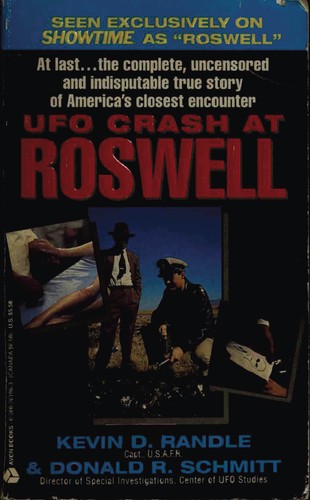
UFO Crash at Roswell
The CUFOS Investigation That Built the Modern Crash-Retrieval Case — and the First Site Its Own Authors Later Abandoned
Find on Amazon →As an Amazon Associate, OverClassified may earn from qualifying purchases made through this link, at no extra cost to you.
Why This Is Essential Reading
UFO Crash at Roswell belongs on this list not as a settled account of what happened in July 1947, but as a rare and unusually well-documented artifact of a UFO investigation revising itself in public. It is the book that made Kevin Randle and Donald Schmitt the most prominent Roswell research team of their generation, the book Showtime turned into a Golden Globe-nominated television movie, and — because its own authors abandoned its Plains of San Agustin site as unsupported within three years of publication — a genuine case study in how crash-retrieval claims get built, tested, and partly dismantled by the very researchers who first advanced them. Read on its own, it is a competently reported but methodologically vulnerable product of its CUFOS-era investigation, built substantially around a witness, Gerald Anderson, whose forged diary and doctored phone bill later became a cautionary tale in Roswell research circles. Read alongside The Roswell Incident that came before it and the authors' own Witness to Roswell that came sixteen years and one broken partnership after it, this book is the essential middle chapter: the version of the Roswell story its own investigators wrote down before they knew which parts of it they would later have to take back.
Related Cases & Theories
Essential Viewing
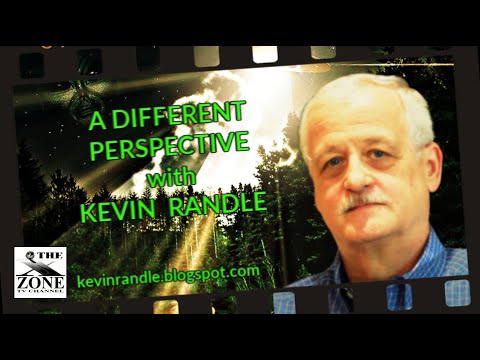
A Different Perspective with Kevin Randle: Guest - Don Schmitt - UFOs in 2021 (Part One)
The 'X' Zone Broadcast Network — This book's own two authors, reunited on Kevin Randle's own research podcast decades after their partnership split, discussing the Roswell case and their investigative history together. Verified via YouTube oEmbed before inclusion.
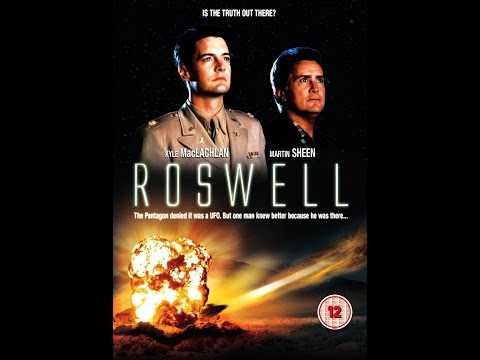
Roswell (1994): An Original Trailer
White Chaddar — The original trailer for Showtime's 1994 television movie Roswell, the Golden Globe-nominated adaptation of this exact book starring Kyle MacLachlan, Martin Sheen, and Dwight Yoakam. Verified via YouTube oEmbed before inclusion.
Sources Cited
- Randle, Kevin D., and Donald R. Schmitt. UFO Crash at Roswell. Avon Books, 1991 (mass-market paperback, ISBN 9780380761968 / 0380761963, matching this site's own resources library citation under this exact edition). amazon.com
- Randle, Kevin D., and Donald R. Schmitt. The Truth About the UFO Crash at Roswell. M. Evans and Company, 1994 (revised edition documenting the authors' abandonment of the Plains of San Agustin site, ISBN 9780871317612). amazon.com
- "UFO Crash at Roswell." Publishers Weekly, book record and trade description (ISBN 978-0-380-76196-8). publishersweekly.com
- Lord, John. Review of UFO Crash at Roswell. Voice of Youth Advocates, December 1991 (contemporary review praising the book's "attention to facts" while flagging repetitive structure).
- Saler, Benson, Charles A. Ziegler, and Charles B. Moore. UFO Crash at Roswell: The Genesis of a Modern Myth. Smithsonian Institution Press, 1997 (academic analysis situating this book as an evolved "version" of the Roswell narrative and citing sales exceeding 160,000 copies). smithsonianbooks.com
- "A Roswell Synopsis? The Case of Gerald Anderson." davidhalperin.net (analysis of Gerald Anderson's testimony, its role in this book, and its later discreditation via a doctored phone bill and forged diary). davidhalperin.net
- "The Roswell Myth." Southern Methodist University Physics Dept. pseudoscience archive (documents the Plains of San Agustin material's evolution across editions, the Grady Barnett dual-location contradiction, and the authors' 1994 abandonment of the San Agustin site). physics.smu.edu
- "Roswell (film)." Wikipedia (1994 Showtime television movie based on this book: cast, director Jeremy Kagan, writer Arthur Kopit, and Golden Globe nomination). en.wikipedia.org
- "Kevin D. Randle." Center for UFO Studies (CUFOS), official biography (1988 CUFOS-sponsored Roswell investigation team, career background). cufos.org
- "Donald R. Schmitt." Center for UFO Studies (CUFOS), official biography (director of special investigations role at time of this book's publication). cufos.org
- "Kevin D. Randle." Wikipedia (biography, bibliography including this title, and Roswell research career). en.wikipedia.org
- This site's own case file: The Roswell Incident (Case File #001), which documents the full 1947 debris-field discovery and government response this book investigates.
- This site's own essential-reading entry: The Roswell Incident (ER-094), Charles Berlitz and William Moore's 1980 predecessor whose Plains of San Agustin material this book directly expanded.
- This site's own essential-reading entry: Witness to Roswell (ER-065), Thomas Carey and Donald Schmitt's 2007 successor account, sixteen years and one broken research partnership after this book.
- This site's own key-figures entries: Kevin Randle and Donald Schmitt, for full biographical detail and further case connections beyond this book.
- This site's own resources library: Full Reading List, where this exact edition (ISBN 0380761963) is cited in connection with the Roswell Incident case file.
Have corrections, additional research, or peer-reviewed sources? Help improve this entry.
Suggest an Edit