
The Hynek UFO Report
A Case-by-Case Reckoning with Project Blue Book's Own Files
Core Thesis
Writing eight years after Project Blue Book's December 1969 closure and freshly armed with the Air Force's own declassified case archive, J. Allen Hynek goes back through roughly 13,000 individual Blue Book files and argues, case by case rather than in the abstract, that the Air Force's twenty-year investigation habitually closed complex reports with cursory, unsupported evaluations because its governing assumption — that UFOs simply could not be real — was settled before any given case was examined. Applying the Nocturnal Light, Daylight Disc, Radar-Visual, and Close Encounter classification system he introduced in 1972's The UFO Experience, Hynek turns what had been a call for open scientific study into a documented, file-by-file critique of the specific government program he had spent two decades officially representing.
About the Author
By the time J. Allen Hynek published this book in December 1977, five years had passed since The UFO Experience first laid out his classification system, and his own institutional position had changed completely. Project Blue Book, the Air Force program he had consulted for since 1952, had been closed for eight years; Hynek was no longer anyone's in-house consultant but the working head of an organization of his own making. He co-founded the Center for UFO Studies (CUFOS) with insurance salesman and former NICAP investigator Sherman J. Larsen in 1973, running it initially out of a room in his own Evanston, Illinois home, and by the time he wrote this book CUFOS had its own field network, its own case database (UFOCAT, cataloguing more than 50,000 reports), and its own reputation — built substantially on CUFOS's first major investigation, the October 1973 Coyne Helicopter Incident.
That institutional independence is what separates this book from its predecessor. In 1976 the Air Force transferred Blue Book's complete case archive — more than 13,000 individual reports across upward of 130,000 pages — to the National Archives, and CUFOS separately obtained its own full microfilm set of the same material. For the first time, Hynek could write from the entire twenty-year record rather than the fraction he had personally investigated or remembered. The book reached stores the same month Steven Spielberg's Close Encounters of the Third Kind opened in theaters, a film for whose title Spielberg reportedly paid Hynek $1,000 directly, on top of a brief on-screen cameo — putting Hynek's own vocabulary back in wide public circulation at the exact moment he turned it into a formal, documented case against the agency that had employed him.
Historical Context & Origins
Project Blue Book closed on December 17, 1969, in the direct wake of the University of Colorado's Condon Report, whose 1968 conclusion that further government-funded UFO study was unwarranted gave the Air Force its justification to shut the program down. For years afterward, the roughly 13,000 individual case files Blue Book had accumulated since 1947 remained difficult for outside researchers — and often for Hynek himself — to review systematically; his 1972 book The UFO Experience was necessarily written more from personal recollection and selective case notes than from the full government archive.
That changed in 1976, when the Air Force declassified and transferred the complete Blue Book case archive, filed under Record Group 341, to the National Archives in Washington, D.C., open to any researcher willing to spend, in Hynek's own description in this book, "hours of tedious work" at a microfilm reader. His Center for UFO Studies, headquartered in Evanston, Illinois near his Northwestern University post, obtained a parallel complete set of the same microfilm, giving Hynek and his CUFOS colleagues open-ended access to material he had spent two decades working with only in fragments while officially based out of Wright-Patterson Air Force Base, Blue Book's home base in Dayton, Ohio.
This book is the direct product of that access. Hynek states in its opening pages that he wrote much of it from the declassified microfilm itself, "adding material from my own personal experience as scientific consultant to Project Blue Book" — reversing the emphasis of his earlier book, which argued in general terms for taking the phenomenon seriously, into a specific, file-by-file audit of how the Air Force's own investigators had actually disposed of that phenomenon on paper.
Core Arguments & Key Concepts
The book's organizing method is procedural rather than theoretical: Hynek works back through Blue Book's own classification categories — Nocturnal Lights, Daylight Discs, Radar-Visuals, and his own three-tier Close Encounter scale first introduced in The UFO Experience — and re-examines specific closed cases against the material the Air Force itself used to close them, rather than proposing any new theory of what the phenomenon ultimately is.
A chapter titled "It Can't Be: Therefore It Isn't" states Hynek's central institutional critique directly: that Blue Book operated from a settled conclusion rather than an open investigation, disposing of complex, multi-witness reports with single-word evaluations like "birds" or "unreliable report" and no supporting rationale on file. Hynek includes his own earlier work among the examples, revisiting an "atmospheric eddy" explanation he had once offered for a well-documented 1947 sighting and came to regret.
A chapter titled "The Air Force Numbers Game" returns to the Battelle Memorial Institute's 1954 statistical analysis of Blue Book cases — this site's own Project Blue Book Special Report No. 14 — and highlights what Hynek considered its most under-reported finding: that cases the study classified "Unknown" differed from "Known" cases by a statistically significant margin in their own recorded characteristics, a result the Air Force's own published summary downplayed rather than pursued further.
A chapter titled "Blue Book End Game: The Condon Report" extends the same critique to the process that killed the program outright, revisiting the 1968 "Trick Memo" controversy: project coordinator Robert Low's internal memo describing how to make the Condon Committee appear objective to the public while privately expecting no positive findings, made public after committee member David Saunders passed it to physicist James E. McDonald, and the subsequent dismissal of Saunders and fellow researcher Norman Levine for insubordination once the memo reached print.
Throughout, Hynek is explicit about his evidentiary basis in a way his earlier, more memoir-driven book could not be: he tells readers the underlying material is available to any "serious student" willing to review the same National Archives microfilm or CUFOS's parallel set, effectively inviting readers to check his case-by-case argument against the primary record rather than take his conclusions on faith.
Key Cases & Evidence Discussed
This book applies, case by case, the classification system this site covers in its own breakdown of The UFO Experience (1972) — the book that introduced it — and reads as something close to a sequel: where that book built the vocabulary, this one spends over 300 pages using it to re-litigate the actual Blue Book file, case by case, against the same government paper trail.
Several individual cases Hynek discusses here are independently documented on this site with citations to this exact 1977 Dell edition: the Long Prairie Incident (Case File #026, 1965), where Hynek's own later writing reflects a report he found interesting enough to retain but never personally field-investigated — a pattern this book itself criticizes as characteristic of Blue Book's under-resourced handling of civilian reports; and the Minot AFB UFO Incident (Case File #048, 1968), one of the multi-witness military cases the book uses to illustrate the Air Force's classification habits.
The book also discusses the Petrozavodsk Phenomenon (Case File #084, 1977), a Soviet case from the same year the book was published, in which Hynek personally received a copy of astronomer Lev Gindilis's report and forwarded it for translation to NASA scientist Richard Haines; the Eagle River Pancake Incident (Case File #025, 1961); and the Hawker Sea Fury Sighting (Case File #109, 1954), built around Hynek's own 1973 interview with witness pilot O'Farrell, whose account he concluded "cannot be explained away."
The Socorro UFO Landing (Case File #029, 1964), a case Hynek had personally field-investigated years before this book's publication and one of the cases The UFO Experience already treated at length, reappears here reassessed against the full declassified Blue Book paper trail rather than Hynek's own field notes alone.
Hynek's institutional critique runs on a direct collision course with the Condon Report (1968), the document whose conclusions forced Blue Book's closure in the first place; this book functions in part as Hynek's extended cross-examination of that report's own methodology, using the newly available Blue Book archive as evidence the Condon Committee itself never fully worked through.
Critical Reception & Controversies
The book did not attract the kind of mainstream scientific-press review its predecessor received — no equivalent exists here to planetary scientist Bruce Murray's 1972 Science review of The UFO Experience — a gap consistent with how quickly sustained UFO research had receded from mainstream science journals' attention by the late 1970s, even as popular interest, driven partly by Close Encounters of the Third Kind, was near its commercial peak.
Reader reception, aggregated on Goodreads at roughly 3.85 out of 5 stars across several hundred ratings and more than 40 written reviews, splits along a consistent line. Some praised its documentary depth: reviewer John Gulczynski called it "exactly what the History Channel TV series isn't — an in depth factual analysis," and another reviewer, Jen, credited it with "authority and insight" into how the government actually investigated sightings. Others found its case-by-case structure exhausting: reviewer Dave Taylor wrote that "after a while, the pattern becomes monotonous ... repetitive and surprisingly uninformative," and reviewer Lisa called it "very dry reading the same type of case report over and over."
That structural criticism is arguably inseparable from the book's own method: because Hynek is working case by case through an actual government archive rather than building a single sustained narrative argument, as The UFO Experience largely did, the book reads more like an annotated case docket than a work of persuasive science writing — a trade-off between evidentiary transparency and readability this article treats as a genuine feature of the book's design, not an incidental flaw its admirers and detractors were simply reacting to differently.
Influence & Legacy
The book's publication coincided almost exactly with the November 1977 theatrical release of Close Encounters of the Third Kind, for which Spielberg licensed the title itself directly from Hynek for a reported $1,000, alongside a brief technical-consulting role and an on-screen cameo — putting Hynek's specific vocabulary, first defined in his 1972 book and applied case-by-case in this one, into wide public circulation at the same moment this book argued that vocabulary described a government investigation that had failed on its own terms.
The book has stayed in print far longer than most UFO titles from its era: MUFON reissued it in 2014 under the expanded title The Hynek UFO Report: The Authoritative Account of the Project Blue Book Cover-Up (a different ISBN from the 1977 Dell edition cited in this article), with forewords contributed by five of Hynek's children — Paul, Scott, Roxane, Joel, and Ross Hynek — keeping the underlying text commercially available nearly four decades after Hynek's death.
On this site alone, this exact 1977 Dell edition (ISBN 0440192013) is independently cited across six separate case-file pages, and two further, bibliographically distinct editions of the same underlying text are cited across additional case files — a citation footprint that reflects how thoroughly this book, alongside The UFO Experience, still functions as a working documentary source for Blue Book-era cases nearly fifty years after publication.
Coming four years after Hynek founded CUFOS, this book cemented rather than launched his transition from Blue Book's internal consultant to its most credentialed outside critic — a role he continued for the remaining decade of his life, through his 1978 address to the United Nations on the UFO question and up to his death of a brain tumor in Scottsdale, Arizona, on April 27, 1986, at age 75.
The Book
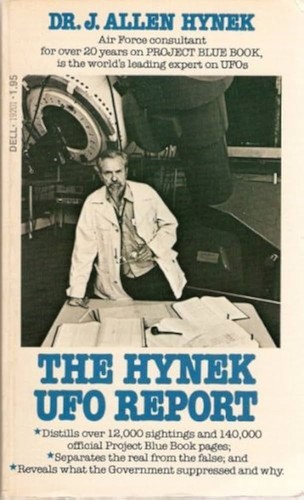
As an Amazon Associate, OverClassified may earn from qualifying purchases made through this link, at no extra cost to you.
Why This Is Essential Reading
The Hynek UFO Report earns its place on this list not for introducing new ideas — the classification system it applies throughout was already fully formed in The UFO Experience five years earlier — but for what it does with those ideas once given full access to evidence: a systematic, citable, case-by-case audit of the exact government program Hynek had spent two decades officially representing. Read against the Condon Report whose conclusions closed Blue Book in the first place, it stands as ufology's closest equivalent to an inside auditor's rebuttal, written by the one person with both the institutional history and, after the Blue Book archive's 1976 declassification, the documentary access to make that comparison directly rather than from memory.
Related Cases & Theories
Essential Viewing
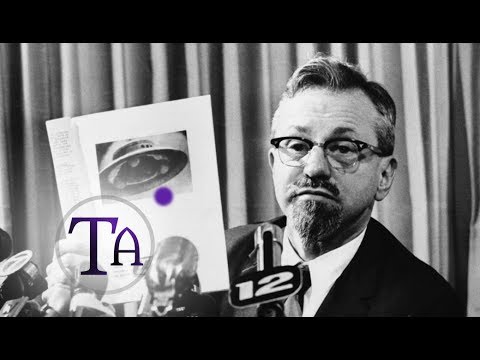
J. Allen Hynek: the Man behind UFO “Project Blue Book”
Think Anomalous — A profile of Hynek's real career against the fictionalized History Channel series, covering his transition from Air Force consultant to independent CUFOS-era critic, the period this book is written from. Verified via YouTube oEmbed before inclusion.
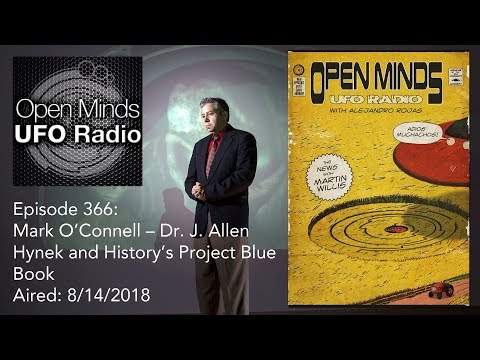
Open Mind UFO Radio - Mark O'Connell: Dr. J. Allen Hynek and History's Project Blue Book Ep. 366
OpenMindsTV — Hynek biographer Mark O'Connell, who researched Hynek's personal and CUFOS archive papers for The Close Encounters Man, discusses Hynek's real Blue Book career and his post-1969 break with the Air Force. Verified via YouTube oEmbed before inclusion.
Sources Cited
- Hynek, J. Allen. The Hynek UFO Report. Dell Publishing, December 1977 (ISBN 0440192013 / 9780440192015, cited here, matching this site's own resources library citations). amazon.com
- "The Hynek UFO Report - Dr J Allen Hynek: 9780440192015." AbeBooks (bibliographic record: Dell Publishing, first printing, 1977, 304 pp.). abebooks.com
- "Full text of 'The Hynek UFO Report.'" Internet Archive (complete scanned text, including prologue, table of contents, and named case evaluations). archive.org
- Hynek, J. Allen. The Hynek UFO Report (full scanned book). Center for UFO Studies. cufos.org
- "J. Allen Hynek." Wikipedia (biography, CUFOS founding, Close Encounters consulting role, death). en.wikipedia.org
- "Center for UFO Studies." Wikipedia (1973 founding with Sherman J. Larsen, Coyne Helicopter Incident as CUFOS's first major case, later history). en.wikipedia.org
- "50 Years Ago: Government Stops Investigating UFOs." National Archives Foundation (Blue Book's December 17, 1969 closure and its case files' later transfer to the National Archives, Record Group 341). archivesfoundation.org
- "The Hynek UFO Report." Goodreads (aggregate rating and reader review quotes cited in this article's Critical Reception section). goodreads.com
- "The Man Who Inspired Steven Spielberg's UFO Obsession." Den of Geek (Spielberg's $1,000 payment to Hynek for the film's title). denofgeek.com
- "Meet J. Allen Hynek, the Astronomer Who First Classified UFO 'Close Encounters'." HISTORY. history.com
- "Condon Report." Wikipedia (the 1968 'Trick Memo' controversy, dismissal of David Saunders and Norman Levine). en.wikipedia.org
- This site's own essential-reading entry: The UFO Experience, for the 1972 book that introduced the classification system this book applies case by case.
- This site's own essential-reading entry: The Condon Report, for the 1968 government study whose conclusions forced Blue Book's 1969 closure.
- This site's own case file: Project Blue Book Special Report No. 14, for the Battelle Memorial Institute statistical study this book's "Air Force Numbers Game" chapter revisits.
- This site's own key-figures entry: J. Allen Hynek, for his full biography and further case connections.
- This site's own resources library: Full Reading List, where this exact edition (ISBN 0440192013) is cited across six case-file pages.
Have corrections, additional research, or peer-reviewed sources? Help improve this entry.
Suggest an Edit