
The Flying Saucers Are Real
The 1950 Bestseller That Invented the Government Cover-Up Narrative
Core Thesis
Expanded from a January 1950 True magazine article that Captain Edward J. Ruppelt later called one of the most widely read and discussed magazine pieces in American publishing history, retired Marine Corps Major Donald E. Keyhoe's The Flying Saucers Are Real was the first mass-market book to argue, case by documented case — the 1947 Kenneth Arnold sighting, the death of Captain Thomas Mantell, the Chiles-Whitted airline encounter — that the objects were extraterrestrial spacecraft under genuine, if erratic, official surveillance by an Air Force that alternately denied their existence and classified its own investigation; selling more than half a million paperback copies within its first year, it converted a fringe curiosity into a mainstream suspicion of government secrecy that every subsequent cover-up narrative in ufology, including Keyhoe's own twelve-year run atop NICAP, would build on.
About the Author
Donald Edward Keyhoe was born June 20, 1897, in Ottumwa, Iowa, and earned a B.S. degree from the United States Naval Academy in 1919, when he was commissioned a second lieutenant in the U.S. Marine Corps and designated a naval aviator. In 1922 a plane crash over Guam badly injured his arm; during the long convalescence that followed, Keyhoe began writing as a hobby, and by 1923 his injury had forced him out of the Corps entirely. He spent the rest of the 1920s in aviation-adjacent work, including a stint managing the punishing cross-country promotional tour that followed Charles Lindbergh's 1927 transatlantic flight, before turning to writing full time — publishing his first book, Flying With Lindbergh, in 1928, alongside pulp aviation fiction for magazines like Flying Aces and freelance nonfiction for Saturday Evening Post, The Nation, and Reader's Digest. He returned to active duty in the Naval Aviation Training Division during World War II and ultimately retired from the Marine Corps with the rank of major.
By the time True magazine editor Ken Purdy assigned him the flying-saucer story in 1949, Keyhoe had roughly a quarter-century of aviation-writing credentials behind him — exactly the combination of military authority and journalistic reach the subject had never had. Keyhoe's own account describes an eight-month investigation drawing on aircraft designers, engineers at the National Advisory Committee for Aeronautics, and contacts inside the Air Force's own nascent saucer investigation, publicly known at the time as "Project Saucer" and privately organized as Project Sign, based at Wright-Patterson Air Force Base in Ohio. The resulting article, cover-dated January 1950 but on newsstands December 26, 1949, ran under the same title as the book that followed it within months.
Keyhoe parlayed the book's runaway success into a second career as ufology's most prominent public advocate. When inventor T. Townsend Brown founded the National Investigations Committee on Aerial Phenomena in October 1956, Keyhoe joined its board; when Brown was removed within months, Keyhoe became NICAP's director in 1957 and held the post for twelve years, building it into the era's leading civilian UFO research organization, with a membership that peaked at roughly 15,000 and a board that eventually included former CIA Director Vice Admiral Roscoe H. Hillenkoetter. He wrote three further UFO books during that period — Flying Saucers from Outer Space (1953), The Flying Saucer Conspiracy (1955), and Flying Saucers: Top Secret (1960) — and became a recurring, sometimes contentious, presence on national television; his January 22, 1958 appearance on CBS's Armstrong Circle Theatre was cut off mid-broadcast as he attempted to discuss a congressional committee's findings, an incident he raised again six weeks later on The Mike Wallace Interview. NICAP's Board of Governors forced Keyhoe into retirement as director in December 1969, replacing him with Colonel Joseph Bryan III; Keyhoe remained a peripheral figure on the UFO-conference circuit afterward, briefly joining MUFON's board in 1981. He died November 29, 1988, in New Market, Virginia, at age 91.
Keyhoe's early UFO writing drew an unusual endorsement from outside the field entirely: psychiatrist Carl Jung, in his own 1958 book on the subject, wrote that Keyhoe's first two books were "based on official material and studiously avoid the wild speculations, naiveté or prejudice of other [UFO] publications" — a notably restrained assessment of a book whose central claim, that the government was actively concealing extraterrestrial visitation, was itself about as unrestrained as ufology got in 1950.
Historical Context & Origins
When Keyhoe began his investigation in 1949, the American public's understanding of flying saucers was barely two years old and almost entirely shaped by newspaper wire reports: Kenneth Arnold's June 1947 sighting near Mount Rainier had coined the term itself, the Roswell debris story had flared and been officially closed within days that same July, and the Air Force's own internal study, Project Sign, had quietly reorganized into the more skeptically postured Project Grudge by early 1949 without any of that internal history reaching the public. No journalist with genuine aviation and military credentials had yet taken the subject on at length; Keyhoe's quarter-century of documented aviation writing, combined with True's large national circulation, gave the story a reach and a credibility no earlier saucer article had carried.
The book's specific occasion for going further than the magazine article was the pattern Keyhoe said his own reporting kept running into: Air Force spokesmen who told him, on the record, that there was nothing to the saucer reports, while simultaneously refusing him access to the files their own investigators were compiling on those same reports. On March 18, 1949, an Air Force spokesman had again publicly denied the objects existed and stated flatly that they were not American guided missiles or experimental aircraft — a denial Keyhoe treated less as an answer than as a data point, one contradiction in a pattern he believed added up to active concealment rather than simple ignorance.
The book also arrived years before any of the government's own UFO history became public. Edward J. Ruppelt's insider account of running Project Blue Book, The Report on Unidentified Flying Objects, was still six years away and would be the first publication to reveal Project Sign's existence and quote its internal Twining Memo outright; Keyhoe had none of that documentary record available to him in 1950 and worked instead from what witnesses, sympathetic contacts, and the Air Force's own public contradictions could supply — a genuinely different evidentiary position than the one Ruppelt, or later Richard Hall's NICAP-compiled The UFO Evidence, would occupy.
Core Arguments & Key Concepts
Keyhoe's central claim, stated in both the magazine article and the book, was that flying saucers were physical interplanetary spacecraft under intelligent control, and that the Air Force's own classified investigation had already reached a similar conclusion internally while its public-relations posture pointed the opposite direction. He read that contradiction — official denial paired with an active, resourced, classified inquiry — as itself the strongest evidence available to a civilian, since an investigation with nothing to investigate, in his framing, would not need to stay secret.
A second argument concerned the historical depth of the phenomenon. Keyhoe assembled reports reaching back to the 18th century and cited a cluster of 19th-century American sightings, including reports from Bonham, Texas, and Fort Scott, Kansas, alongside the 1878 Denison, Texas "saucer" account, to argue that 1947 had not been a beginning but a sudden intensification of something far older — a claim he tied explicitly to the 1945 Trinity atomic test, arguing that visitors who had observed Earth at a low, sporadic rate for roughly two centuries began watching far more closely once humanity demonstrated nuclear weapons.
Structurally, the book tracks the Air Force's own shifting investigative posture as Keyhoe understood it in 1950: an initial fifteen-month period in which "Project Saucer" was, in his words, "buttoned up tight, top secret," followed by what he characterized as a deliberate, managed shift toward "cautious, progressive revelation" — small, calculated admissions designed to prepare public opinion for an eventual disclosure Keyhoe believed the Air Force was withholding rather than lacking. He supported the technological plausibility of that reading by quoting an official April 1949 assessment that "the possibility of intelligent life on the planet Venus is not considered completely unreasonable by astronomers," treating even a hedged official acknowledgment of extraterrestrial life as corroborating evidence for his broader thesis.
The book is also notable for what it does not yet contain relative to Keyhoe's later work: it stops short of naming a specific internal cabal or "silence group" orchestrating the cover-up, a more elaborate claim that would surface in his 1955 sequel, The Flying Saucer Conspiracy. In 1950, Keyhoe's argument is comparatively restrained — an inference from official contradiction and withheld access, not an assertion of a named, organized suppression apparatus — which is part of why even a skeptically inclined reader like Jung could credit the book's first edition with avoiding "wild speculation" even while rejecting its central conclusion.
Underlying all of it is an argument about method as much as content: Keyhoe repeatedly frames his own Naval Academy training and quarter-century of aviation journalism as the qualification that separated his investigation from contactee claims and tabloid coverage, a credibility argument the book uses explicitly to ask readers, and by extension the Air Force, to treat well-attested pilot and radar cases differently than anecdotal ones — the same evidentiary hierarchy Richard Hall would formalize fourteen years later in NICAP's own The UFO Evidence.
Key Cases & Evidence Discussed
The Kenneth Arnold Sighting (Case File #007, June 1947) opens the book's case record: Arnold's report of nine crescent-shaped objects near Mount Rainier, traveling at an estimated 1,200 miles per hour and described as moving "like a saucer skipping across water," is the sighting whose media mistranslation gave the entire phenomenon — and this book's title — its name.
The Thomas Mantell Incident (Case File #038, January 1948), in which a Kentucky Air National Guard pilot died pursuing an unidentified object in his F-51, receives extended treatment as the book's most consequential fatality case, one Keyhoe uses to press directly against the Air Force's own stated explanations.
The Chiles-Whitted Sighting (Case File #066, July 1948), in which two Eastern Air Lines pilots reported a wingless, cigar-shaped craft passing their DC-3 at an estimated 500 to 700 miles per hour, is presented as exactly the kind of trained-witness, instrument-adjacent report Keyhoe argues the Air Force could not credibly wave away.
The Gorman Dogfight (Case File #039, October 1948), North Dakota Air National Guard pilot Lieutenant George Gorman's radar- and control-tower-corroborated pursuit of a maneuvering light over Fargo, receives close attention as one of the earliest cases combining a trained military witness with independent ground corroboration — the specific evidentiary combination Keyhoe treats throughout the book as his strongest category.
The book also reaches back well before the modern era, citing the Denison, Texas "Saucer" Sighting (Case File #300, January 1878) as part of Keyhoe's argument that reports of disk-shaped aerial objects predated aviation itself by decades, supporting his claim of centuries-long extraterrestrial observation rather than a phenomenon invented by the jet age.
The Chicago & Southern DC-3 Sighting (Case File #198, March 1950) — Capt. Jack Adams and First Officer G.W. Anderson Jr.'s report of a disc-shaped, porthole-lit object over Stuttgart, Arkansas, which reached national wire services within hours and Eleanor Roosevelt's own NBC program within a week — came just three months before the book's expanded release, and this site's own case file for the sighting notes that Keyhoe's book quotes the Adams-Anderson wire-story statement directly, folding the freshly publicized encounter into the broader wave of 1950 pilot sightings it was already documenting.
Critical Reception & Controversies
Contemporary sales figures were themselves a form of reception: the book sold more than half a million paperback copies at twenty-five cents each within roughly its first year, an extraordinary commercial performance for a subject that had, until Keyhoe's own True article a few months earlier, been treated mostly as a novelty item in daily newspapers. Reader reception has held up moderately well across the following seven decades: on Goodreads the book carries a 3.78-star average from 284 ratings and 30 written reviews, with one reader calling it "almost certainly the first UFO conspiracy book ever written, or, if not, certainly the first one to become a bestseller," while another, more skeptical reviewer countered flatly that "just because an answer doesn't present itself doesn't mean it was something paranormal."
The book's most consequential critical response came from within the Air Force's own later institutional history. Edward J. Ruppelt, who ran Project Blue Book from 1951 to 1953 and was consequently positioned to judge Keyhoe's factual claims against the classified record Keyhoe never had access to, offered a genuinely two-sided verdict in his own 1956 memoir: he credited the True article's cultural impact directly, but concluded of Keyhoe's larger interpretive leap that "Keyhoe had based his conjecture on fact, and his facts were correct, even if the conjecture wasn't" — crediting the reporting while rejecting the extraterrestrial-cover-up inference built on top of it.
The book's most sustained scientific critic was Harvard College Observatory director Donald H. Menzel, whose own 1953 book, Flying Saucers, argued that the reports Keyhoe and others relied on reflected the misinterpretations of untrained observers rather than any genuine anomaly requiring an extraterrestrial or cover-up explanation. Keyhoe pushed back directly and specifically in later writing, reporting that Project Blue Book had confirmed Menzel never requested, and therefore never actually read, three of the specific pilot-sighting case files he nonetheless offered public explanations for — a rare instance of a documentable factual dispute between the era's leading advocate and its leading skeptic.
Historian Curtis Peebles, whose own critical history of the field, Watch the Skies!, treats Keyhoe's cover-up thesis at length, argued that if the Air Force genuinely possessed the kind of definitive extraterrestrial proof Keyhoe's framework implied, that evidence would logically have surfaced somewhere in the classified CIA and Air Force briefing papers historians have since had access to — papers that, in Peebles's account, contain no such smoking gun. Peebles's broader assessment situates Keyhoe not as a fabricator but as a genuine believer whose method — treating official secrecy and contradiction as itself proof of a cover-up — became, through this book's outsized commercial success, the default interpretive lens for most of the UFO cover-up writing that followed it.
A more sympathetic contemporary read also survives the book's mixed reputation: Carl Jung's 1958 assessment credited Keyhoe's first two books specifically for staying grounded in "official material" rather than indulging in speculation for its own sake — a notably charitable framing from a reader who did not, in the end, accept the extraterrestrial-visitation conclusion those books were built to support.
Influence & Legacy
The book's most concrete, independently verifiable influence is documented on this very site: this exact 2006 Cosimo Classics edition, along with a separate listing for the original text under a different retailer's edition record, is cited across resources.html in connection with two case-file pages — the Chicago & Southern DC-3 Sighting, whose page notes that Keyhoe's book quotes the March 1950 Adams-Anderson wire-story statement directly just three months after the encounter, and the Denison, Texas 1878 "Saucer" Sighting, whose page cites this book directly for its treatment of that pre-aviation-era report.
The book's clearest and most durable legacy is the government-cover-up narrative itself. Before 1950, the dominant question about flying saucers was simply whether they were real; Keyhoe's bestseller reframed the question as whether the government was telling the public the truth about something it already knew — a reframing that became the organizing premise for NICAP under Keyhoe's own twelve-year directorship, for Richard Hall's 1964 The UFO Evidence, and for essentially every subsequent popular UFO book arguing an active, ongoing government concealment, up to and including the whistleblower testimony this site's own case files on modern disclosure figures continue to track.
Keyhoe's own later books extended the argument this one first made commercially viable: Flying Saucers from Outer Space (1953) and The Flying Saucer Conspiracy (1955) each sharpened the cover-up thesis further, while his twelve years running NICAP gave the argument an institutional home capable of lobbying Congress directly — a lobbying campaign that helped produce the House Armed Services Committee's April 1966 UFO hearing, the most direct congressional inquiry of that decade.
Because its original 1950 U.S. copyright was never renewed, the book fell into the public domain decades ago, and its full text is now freely available through Project Gutenberg, the Internet Archive, and Wikisource — a form of open access that has kept Keyhoe's original argument, not just later summaries of it, continuously available to new readers, including through the free public-domain audiobook now available via LibriVox.
The Book
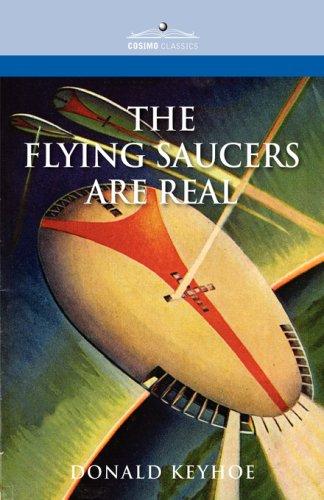
The Flying Saucers Are Real
The 1950 Bestseller That Invented the Government Cover-Up Narrative
Find on Amazon →As an Amazon Associate, OverClassified may earn from qualifying purchases made through this link, at no extra cost to you.
Why This Is Essential Reading
The Flying Saucers Are Real earns its place on this list as a point of origin rather than a definitive account: it is the book that took a two-year-old newspaper novelty and turned it, for a mass paperback audience of more than half a million buyers, into a specific and durable argument — that the U.S. Air Force already knew what flying saucers were and was managing public disclosure of that knowledge rather than honestly investigating an open question. Nearly every element of ufology's subsequent cover-up literature, including Keyhoe's own NICAP-era writing and, later, Richard Hall's more evidentially disciplined The UFO Evidence, works from a premise this book was first to popularize at scale. Its limitations are equally real and equally instructive: Keyhoe worked without access to the classified record later insiders like Edward Ruppelt would eventually disclose, and his central method — reading official contradiction and secrecy as proof of concealment — is precisely the inferential move Curtis Peebles and other historians have since identified as the pattern's own weakest link. Read as what it actually is, a retired Marine aviator's investigative magazine feature expanded to book length under commercial pressure, it remains the essential founding document for understanding where the government-cover-up argument in ufology came from, and why it took hold so quickly.
Related Cases & Theories
Essential Viewing
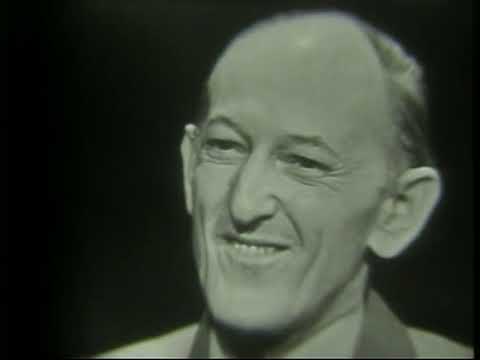
Donald E. Keyhoe Interview - The Mike Wallace Interview (Mar. 8, 1958)
UAPEDIA — Archival footage of Keyhoe's March 1958 television interview with Mike Wallace, recorded eight years after this book's publication, in which he discusses UFO secrecy directly in his own voice, including the on-air censorship incident from his Armstrong Circle Theatre appearance weeks earlier.
The Flying Saucers are Real by Donald KEYHOE read by Roger Melin, Part 1/2 (Full Audiobook)
LibriVox Audiobooks — A free public-domain audiobook reading of the book's actual 1950 text, made possible because the original edition's U.S. copyright was never renewed.
Sources Cited
- "The Flying Saucers Are Real." Wikipedia (publication details, content summary, sales figures, reception). en.wikipedia.org
- "Donald Keyhoe." Wikipedia (biography: Naval Academy, Marine Corps service, Lindbergh tour, aviation writing career, True magazine article, NICAP directorship 1957–1969, television appearances, death). en.wikipedia.org
- Keyhoe, Donald E. "The Flying Saucers are Real." Project Gutenberg (public-domain full text, eBook #5883, original 1950 chapters and Air Force classification history). gutenberg.org
- "DONALD E. KEYHOE: THE FLYING SAUCERS ARE REAL — TRUE MAGAZINE, JANUARY 1950." Project 1947 (facsimile and summary of the original True magazine article that preceded the book). project1947.com
- "Remembering Donald Keyhoe and the Birth of Ufology." Blue Blurry Lines, December 2019 (career background, Ken Purdy's assignment of the True article, expansion into book form, Ruppelt's later assessment). blueblurrylines.com
- "The Flying Saucers Are Real." Open Library / Internet Archive (Cosimo Classics, 2006 reprint edition, ISBN 9781596058774, bibliographic record and cover art). openlibrary.org
- "The Flying Saucers Are Real by Donald E. Keyhoe." Goodreads (reader ratings and reviews, 3.78-star average, 284 ratings, 30 reviews). goodreads.com
- "Watch the Skies!: A Chronicle of the Flying Saucer Myth." Curtis Peebles (Smithsonian Institution Press, 1994) — assessment of Keyhoe's cover-up thesis against the declassified CIA/Air Force record, cited via this site's own Essential Reading breakdown.
- Ruppelt, Edward J. The Report on Unidentified Flying Objects. Doubleday, 1956 (Ruppelt's assessment of Keyhoe's article and book, and of Keyhoe's factual accuracy versus his interpretive conclusions), cited via this site's own Essential Reading breakdown.
- Jung, C.G. Flying Saucers: A Modern Myth of Things Seen in the Skies. 1958 (Jung's assessment of Keyhoe's first two books as grounded in "official material" rather than speculation).
- "National Investigations Committee On Aerial Phenomena." Wikipedia (NICAP founding 1956, Keyhoe's directorship 1957–1969, board composition, membership figures, forced retirement). en.wikipedia.org
- This site's own resources library: Full Reading List, where this book is cited across two separate case-file pages under two distinct edition listings.
- This site's own case file: The Chicago & Southern DC-3 Sighting, for the March 1950 case whose page cites this book's use of the Adams-Anderson wire-story statement directly.
- This site's own case file: The Denison, Texas 1878 "Saucer" Sighting, for the 19th-century case whose page cites this book directly.
- This site's own key-figures entry: Donald Keyhoe, for his full biography and case connections.
Have corrections, additional research, or peer-reviewed sources? Help improve this entry.
Suggest an Edit