
The Case for the UFO
The 1955 Book Whose Annotated Copy Accidentally Created the Philadelphia Experiment Legend
Core Thesis
A trained astronomer who never finished his doctorate and spent most of his working life selling automobile parts and shooting expedition photographs, Morris K. Jessup wrote The Case for the UFO as an appeal to scientific authority: flying saucers, he argued, were a real physical phenomenon that deserved the same rigorous study as any other unsolved problem in physics, propelled by manipulation of gravity along lines suggested by Einstein's then-unfinished Unified Field Theory, and evidenced by a centuries-deep Fortean catalog of falls, disappearances, levitations, and megalithic ruins his own book organizes chapter by chapter. The book's actual arguments made only a modest splash in 1955. Its accidental legacy did not: a stranger's copy of this exact book, annotated in the margins and mailed anonymously to the Office of Naval Research later that same year, became the documented starting point of the entire Philadelphia Experiment legend — a chain of consequence Jessup could not have anticipated when he wrote it, and one this entry traces in full alongside the book's own, considerably stranger, original claims.
About the Author
Morris Ketchum Jessup was born March 2, 1900, near Rockville, Indiana, and developed an early fascination with astronomy that carried him to the University of Michigan in Ann Arbor, where he earned a Bachelor of Science in the subject in 1925. He went on to earn a Master of Science in 1926 through observational work at the university's Lamont-Hussey Observatory in Bloemfontein, South Africa, and began doctoral studies in astrophysics — but abandoned his dissertation in 1931 and never completed a PhD. That unfinished credential matters for assessing everything that follows: although later publishers and fans routinely billed him as “Dr. Jessup,” and he is sometimes described as having taught astronomy and mathematics at Michigan and at Drake University, Wikipedia's own sourced account treats both claims as erroneous, with no documented teaching appointment on record at either institution. Jessup's actual career, for most of his working life, was in automobile-parts sales and photography — not astrophysics.
That photographic work did put him in genuinely interesting places. In 1923 he served as photographer on a U.S. Department of Agriculture survey expedition into the Brazilian Amazon alongside botanist Carl D. LaRue and plant pathologist James Weir, assessing the feasibility of rubber cultivation in research that Henry Ford's engineers would later draw on for the ill-fated Fordlandia plantation. Through the rest of the 1920s and into 1930 he took part in expeditions to the Yucatan and to Cuzco, Peru, documenting Inca and Mayan ruins firsthand — fieldwork with no formal archaeological training behind it, but which left him with a lasting, specific fascination: his conviction, developed from looking at stonework he believed no period technology could have moved, that Peru's megalithic ruins had been built with assistance from some kind of advanced, non-human agency. That conviction, formed years before he ever wrote about flying saucers, becomes one of the load-bearing arguments of the book examined here.
Jessup turned to UFO writing relatively late, in the years following Kenneth Arnold's 1947 sighting and the wave of press coverage it touched off, and The Case for the UFO (1955) became by far his best-known and most commercially successful book. He followed it with three more titles from the same publisher in quick succession — UFO and the Bible (1956), The UFO Annual (1956), and The Expanding Case for the UFO (1957), the last of which tried to connect transient lunar phenomena to earthbound UFO reports — but none matched the first book's reception, and his publisher eventually declined further manuscripts. His personal life deteriorated in step with his professional one: his wife, Rubye, left him in 1958; a serious car accident afterward left him with a slow, difficult recovery; and a planned expedition he had hoped would revive his standing collapsed when the University of Michigan withdrew its participation. Friends who spoke with him in this period described him as increasingly unstable and despondent, details that matter directly for the account of his 1959 death given later in this entry.
Historical Context & Origins
Jessup wrote The Case for the UFO into a UFO-literature market that was only beginning to take shape. Donald Keyhoe's cover-up-focused bestseller and Frank Scully's since-discredited Aztec crash book had each appeared five years earlier, in 1950, but Jessup's approach to the subject was structurally different from both: rather than building a case from specific recent sightings and alleged government secrecy, he assembled his argument almost entirely from historical anomaly reports, organized in an openly Fortean structure borrowed from Charles Fort's catalogs of unexplained phenomena. The book is explicitly divided into four parts — “The Case for the UFO's,” opening with a chapter literally titled “If It Waddles…?”; “Meteorology Speaks,” with chapters on “Falling Ice,” “Falling Stones,” and “Falling Live Things”; “History Speaks,” covering “Disappearing Ships and Crews,” “Teleportation or Kidnapping?,” and “Levitation”; and “Astronomy Speaks,” closing with a chapter simply titled “The Case Is Proved!” — a structure that reads less like an investigative report and more like an extended, credential-backed argument that centuries of scattered, dismissed weirdness added up to a single coherent, ongoing phenomenon.
The book's specific occasion for going to print was commercial as much as intellectual: Citadel Press had a genuine appetite for saucer books following Keyhoe's and Scully's 1950 sales numbers, and Jessup's actual Master's-level astronomy credential, however incomplete his doctorate, gave the publisher a marketable claim to scientific authority that neither Keyhoe's military background nor Scully's Hollywood gossip column could offer. Jessup leaned into that framing directly, positioning his central argument as an appeal to the scientific and military establishment specifically — that gravity-control research deserved the funding and seriousness the government was instead pouring into conventional rocketry — rather than a populist accusation of cover-up in Keyhoe's mold.
None of this historical positioning anticipated what actually made the book historically important. Jessup finished writing it with no idea that, within months of its 1955 publication, an anonymous reader's marked-up copy would begin a completely separate chain of events, discussed in full below, that would eventually eclipse the book's own arguments in cultural significance by a wide margin.
Core Arguments & Key Concepts
Jessup's central physical claim was that UFO propulsion worked through manipulation of gravity fields, grounded loosely in Einstein's then-unresolved Unified Field Theory: he proposed that electrons within molecular structures generate small-scale gravitational fields analogous to planetary orbits, and that “dead spots,” nodes, or vortices of neutral gravity — what he called “gravitational spots” — exist at points of equilibrium between the Earth, Moon, and Sun, a lay approximation of what astronomers would recognize as Lagrange points, which he argued were logical places to look for UFO activity or even a hidden UFO base. He used this framework to make an explicit policy argument: that the U.S. government's investment in conventional rocketry was comparatively wasted effort next to the gravity-control research he believed the UFO evidence justified funding instead.
The book's evidentiary method was almost entirely Fortean rather than investigative — it works by accumulation rather than by building a small number of rigorously documented cases. Its “Meteorology Speaks” and “History Speaks” sections catalog falls of ice, stones, and organic matter from the sky; historical accounts of disappearing ships, crews, and aircraft; reports of levitation and unexplained ground marks, including the 1855 “Devil's Footprints” case from Devonshire, England; and legends of ancient aerial phenomena, treating the sheer volume and historical spread of these reports as itself the strongest available argument that something genuinely anomalous was recurring across centuries, independent of the 1947-onward modern sighting wave that gives the book its title chapter, “The Incredible Decade.”
A second major argument, developed at length in the book's astronomy section and drawn directly from Jessup's own 1920s fieldwork in Peru, extends the UFO question backward into deep history: Jessup contended that megalithic stonework at Inca sites — blocks he believed no conventional period technology could have moved or fitted so precisely — had been erected with assistance from extraterrestrial visitors in what he called “antediluvian” times, and he pointed to crater formations he had observed on the Mexican plateau as further physical evidence of ancient off-world contact. Published thirteen years before Erich von Däniken's far more commercially successful Chariots of the Gods? (1968) and twenty-one years before Zecharia Sitchin's The 12th Planet (1976), Jessup's argument makes him one of the earlier popular writers to fuse UFO speculation directly with what this site's own Ancient Astronaut Hypothesis entry treats as the paleocontact thesis — a lineage von Däniken's own vastly larger readership has mostly obscured.
The book closes, characteristically, with an unhedged rhetorical flourish rather than a qualified summary: its final chapter is titled, simply, “The Case Is Proved!” — a confidence the cumulative Fortean catalog preceding it does not, by any conventional evidentiary standard, actually earn, and a title this entry's Critical Reception section returns to directly.
Key Cases & Evidence Discussed
The Kenneth Arnold Sighting (Case File #007, June 1947) anchors the book's “The Incredible Decade” chapter as the opening event of the modern sighting wave Jessup was writing into — the case that, as this site's own dedicated case file documents, launched the entire postwar UFO era and every official investigation that followed it.
The 1855 “Devil's Footprints” case from Devonshire, England — a night of inexplicable hoofprint-like tracks reported across dozens of miles of snow-covered ground — appears in the book's “Marks and 'Footprints'” chapter as one of Jessup's recurring examples of a historical anomaly report he treats as corroborating evidence for an ongoing, non-human presence, decades before ufology adopted it as a stock reference case in its own right.
The book's “Disappearing Ships and Crews” and “Disappearing Planes” chapters catalog historical vanishings — vessels and aircraft lost without adequate explanation — nearly a decade before the term “Bermuda Triangle” itself entered popular use in 1964; Jessup's chapter-length treatment of the same broad category of maritime and aviation disappearance is, at minimum, a direct structural forerunner of the disappearance-catalog genre that later Triangle literature would popularize at far greater commercial scale.
The book's single most consequential real-world “case,” though, is not anything printed in its 1955 pages but what happened to a copy of it afterward: later that same year, a reader identifying himself as Carl M. Allen — later also using the name Carlos Miguel Allende — mailed an annotated copy of this exact book, its margins covered in handwritten notes in three shades of ink discussing gravity fields and alleged Navy experiments, to the Office of Naval Research. Starting in January 1956 he sent Jessup a series of increasingly elaborate follow-up letters claiming firsthand knowledge of a secret October 1943 experiment at the Philadelphia Naval Shipyard that had allegedly rendered the destroyer escort USS Eldridge invisible and teleported it to Norfolk, Virginia, and back — the origin point of the Philadelphia Experiment legend, examined in full in this site's own T. Townsend Brown case file (Case File #192), which treats the Allen letters and their aftermath at length.
Critical Reception & Controversies
Contemporary reception was modest but real: The Case for the UFO sold well enough to be Jessup's clear commercial high point, in an American publishing market already primed by Keyhoe's and Scully's 1950 books, though his subsequent titles sold progressively worse and his publisher eventually stopped accepting his manuscripts outright — a decline this entry's About the Author section connects directly to his 1958–59 personal collapse. Modern reader reception has settled into mild, divided appreciation across the seven decades since: the book carries a 3.68-star average from 92 Goodreads ratings and 13 written reviews, with one reader praising it as approaching the subject with genuinely “out-of-box” thinking for its era, while another, more skeptical review noted flatly that the book “jumps to conclusions and uses circumstantial evidence as cold, hard proof” — a criticism that lands squarely on the book's Fortean-accumulation method rather than any single fabricated claim.
That skeptical read tracks closely with how historians of the field have assessed the book's actual argumentative rigor: its evidentiary method is cumulative rather than selective, treating volume of anomaly reports as a substitute for verification of any individual one, and its confident closing chapter title, “The Case Is Proved!,” overstates what a catalog of historically unverified falls, disappearances, and folklore can actually establish by any conventional scientific standard — the same gap between rhetorical confidence and evidentiary weight that runs through most Fortean-tradition UFO literature of the period.
A separate, and more pointed, line of criticism concerns Jessup's own presented credentials rather than his arguments: publishers and later fans routinely referred to him as “Dr. Jessup,” and the book's own marketing leaned on his astronomy background as its central claim to authority, but Jessup never completed the doctorate he began, abandoning his dissertation in 1931, and spent most of his actual working life as an automobile-parts salesman and photographer rather than a practicing scientist — a discrepancy Wikipedia's sourced biography treats directly rather than glossing over, and one this entry treats the same way in its own About the Author section above.
The book's reputation today is also inseparable, for better or worse, from what happened to a stranger's copy of it in 1955 and 1956 — a sequence of events entirely outside Jessup's own arguments or intentions that this entry's Influence & Legacy section below addresses directly, and which has done more to keep this specific title in print and in circulation than anything Jessup actually wrote in it.
Influence & Legacy
The book's most significant documented legacy is the Philadelphia Experiment legend, and the chain connecting the two is unusually well-documented for a piece of ufological mythology. After Carl M. Allen's annotated copy reached the Office of Naval Research and his follow-up letters reached Jessup directly through 1956, ONR officers — reportedly out of internal curiosity rather than any institutional endorsement — arranged for the Varo Manufacturing Corporation, a Texas defense contractor in Garland, Texas, to reproduce the annotated book in 1957. Widely cited secondary accounts put the print run at roughly 127 mimeographed copies, though some sources place the number closer to 100 or even 25; whatever the exact figure, the resulting “Varo Edition” circulated hand-to-hand within a small community of UFO researchers and fringe-physics enthusiasts for two decades before writer Vincent Gaddis's 1965 book Invisible Horizons became the first mass-market publication to mention the story at all, still without attaching any specific named individual to it beyond Allen himself.
The legend reached a genuinely mass audience only in 1979, when Charles Berlitz and William L. Moore published The Philadelphia Experiment: Project Invisibility — the same author pair who would go on to co-write 1980's influential The Roswell Incident — followed by a 1984 feature film that embedded the legend, and eventually the physicist T. Townsend Brown's name along with it, permanently in American popular culture. None of that later elaboration existed in Jessup's own 1955 text or in Allen's original 1955–56 correspondence; this site's own T. Townsend Brown case file traces that entire second-order mythology, and its documented fabrication, in full.
Jessup did not live to see any of that later mass-market development. He died on April 20, 1959, found in his station wagon in a park in Dade County, Florida, with a hose running from the exhaust pipe through a partly open window — a death officially ruled a suicide by carbon-monoxide poisoning. The documented context around it is substantial and mundane: his marriage had already ended, a serious car accident had left him in a difficult recovery, his book sales and his publisher relationship had both collapsed, and friends who spoke with him in his final months described him as despondent and reported that he had discussed suicide with them repeatedly. Some later conspiracy accounts — including elements of Berlitz and Moore's own 1979 book — have speculated that Jessup's death was connected to what he supposedly knew about the Philadelphia Experiment or the Varo Edition affair; no primary evidence supports that connection, and this entry, consistent with this site's own T. Townsend Brown case file, treats it as unsubstantiated speculation rather than an established fact, while noting plainly that it exists and continues to circulate.
The book's second, quieter legacy runs through the ancient-astronaut tradition rather than the Philadelphia Experiment: Jessup's Peru-derived argument that megalithic construction implied outside technological assistance anticipates, by more than a decade, the far more commercially successful paleocontact arguments of Erich von Däniken and Zecharia Sitchin, placing this book among the earlier popular-press entries in a lineage this site's own Ancient Astronaut Hypothesis and The 12th Planet entries track in more recent form.
The Book
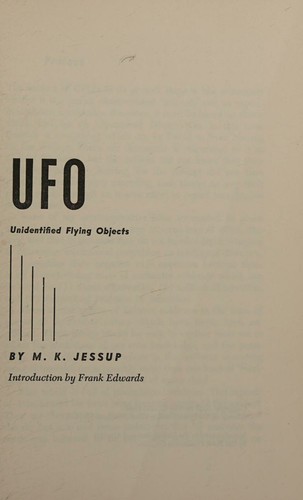
The Case for the UFO
The 1955 Book Whose Annotated Copy Accidentally Created the Philadelphia Experiment Legend
Find on Amazon →As an Amazon Associate, OverClassified may earn from qualifying purchases made through this link, at no extra cost to you.
Why This Is Essential Reading
The Case for the UFO earns its place on this list less for the rigor of its own arguments — a Fortean catalog of falls, disappearances, and gravity speculation that its own closing chapter title, “The Case Is Proved!,” oversells by any conventional evidentiary standard — and more for what happened to a stranger's copy of it within months of publication. This is the exact, documented, traceable text that Carl M. Allen annotated and mailed to the Office of Naval Research in 1955, the book the Varo Manufacturing Corporation reprinted for a small, curious military readership in 1957, and the seed from which the entire Philadelphia Experiment legend — and, decades later, its false attachment to T. Townsend Brown's name — directly grew. Jessup, a genuinely trained astronomer who never finished his doctorate and spent most of his working life selling car parts, wrote a book arguing that gravity science deserved the same seriousness as rocketry; what he actually produced was ufology's clearest documented case study in how a piece of fringe mythology can graft itself onto a real text, a real author, and, eventually, a real author's own unexplained and genuinely tragic death. Read alongside this site's own T. Townsend Brown case file, which the Allen letters and the Varo Edition ultimately produced, it belongs here as essential primary-source reading for understanding exactly where that legend began.
Related Cases & Theories
Essential Viewing
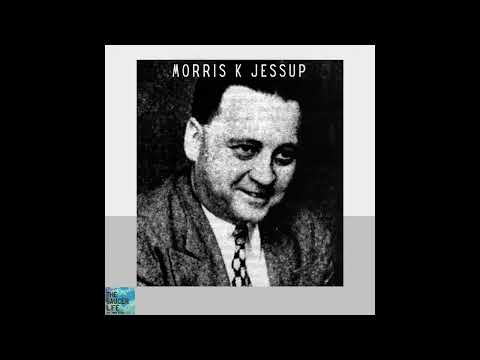
Morris K Jessup
Robert G UFO — A biographical overview of Jessup's life and career leading up to and following the annotated-copy affair, verified via YouTube oEmbed before inclusion.
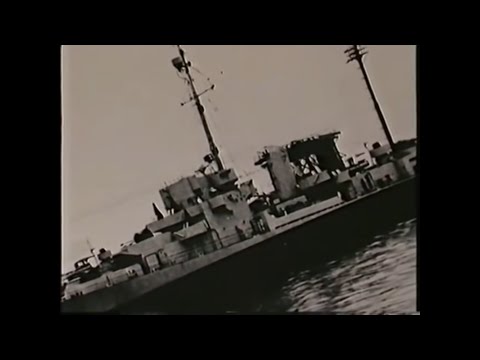
The Philadelphia Experiment History's Mysteries Documentary
That's Weird Man — Archival television documentary coverage of the Philadelphia Experiment legend this book's annotated copy set in motion, including the USS Eldridge claims and the Allen letters, verified via YouTube oEmbed before inclusion.
Sources Cited
- "Morris K. Jessup." Wikipedia (biography: birth/death, education, career, expeditions, bibliography, the Allende/Varo Edition affair, death circumstances and conspiracy claims). en.wikipedia.org
- Sanchez, Cristina. "Solving a UFOlogical 'Murder': The Case of Morris K. Jessup." Skeptical Inquirer, August 2021 (detailed reconstruction of Jessup's death, the physical evidence, his documented personal and financial struggles, and assessment of the murder-conspiracy claims). skepticalinquirer.org
- "Above Kook Status: The strange case of Morris K. Jessup and the 'VARO edition' of 'The Case for the UFO'." The Daily Grail, April 2022 (detailed account of the annotated copy, the three annotators, and the Varo Manufacturing Corporation reprint). dailygrail.com
- "The Scientist: Morris K. Jessup and the Philadelphia Experiment." The Quester Files (biographical and career detail, book content summary). thequesterfiles.com
- "Biography:Morris K. Jessup." HandWiki (summary biography and bibliography, sourced from Wikipedia). handwiki.org
- The Case for the UFO. Internet Archive, item caseforufo0000mkje (original 1955 Citadel Press first edition scan; bibliographic record, page count, title-page image). archive.org
- The Case for the UFO. Open Library edition record OL44798553M (1955 Citadel Press, cover image source). openlibrary.org
- THE CASE FOR THE UFO – Varo Edition – M. K. Jessup. Internet Archive full-text scan of the 1957 Varo Manufacturing Corporation annotated reprint (table of contents, chapter titles, annotation content). archive.org
- "The Case For the UFO: Unidentified Flying Objects." Amazon.com product listing (Jessup, Morris K.; introduction by Frank Edwards; supplementary material by Ivan T. Sanderson; ISBN 9781518745560, matching this entry's edition cited). amazon.com
- "The Case for the UFO by Morris K. Jessup." Goodreads (reader ratings and reviews, 3.68-star average, 92 ratings, 13 reviews). goodreads.com
- This site's own case file: T. Townsend Brown & Electrogravitics (Case File #192), for the full documented history of the Allen letters, the Varo Edition, and the Philadelphia Experiment legend this book's annotated copy originated.
- This site's own case file: The Kenneth Arnold Sighting (Case File #007), for the 1947 case this book's own "Incredible Decade" chapter opens with.
- This site's own theory entry: Ancient Astronaut Hypothesis (Paleocontact), for the broader paleocontact lineage this book's Peru chapters anticipate.
- This site's own key-figures entry: Morris K. Jessup, for his full biography and case connections.
- This site's own key-figures entry: Carl M. Allen ("Carlos Miguel Allende"), for the full documented account of the annotated copy and follow-up letters.
Have corrections, additional research, or peer-reviewed sources? Help improve this entry.
Suggest an Edit