
Behind the Flying Saucers
The 1950 Bestseller That Invented the Crashed-Saucer-With-Bodies Narrative — and Turned Out to Be a Hoax
Core Thesis
Behind the Flying Saucers is Variety humor columnist Frank Scully's 1950 expansion of two columns he had published the previous October and November, relaying oil promoter Silas Newton's claim — sourced to an anonymous government scientist Newton called only “Dr. Gee” — that the U.S. government had secretly recovered a 99.99-foot flying saucer and sixteen dead humanoid crewmen from a mesa near Aztec, New Mexico, in March 1948. The book sold roughly 60,000 copies and became, for a brief period, one of the most talked-about titles in the young field of flying-saucer literature — before San Francisco journalist J.P. Cahn spent 1952 tracing the story to its actual source and found that “Dr. Gee” was Phoenix electronics dealer Leo GeBauer, that a sample of the supposedly indestructible alien metal Newton had been showing to investors tested as ordinary aluminum, and that the entire crashed-saucer story existed to lend a false aura of exotic legitimacy to a fraudulent magnetic oil-detection scheme Newton and GeBauer were separately running. Both men were convicted of fraud and conspiracy in Denver in December 1953. This entry treats the book neither as a hidden truth nor as a mere curiosity, but as what the documentary record actually supports: the founding text of the modern crash-retrieval-with-bodies narrative in American UFO literature, and simultaneously one of the field's clearest, best-documented cautionary tales about what happens when credulous journalism meets a genuinely skilled confidence operation.
About the Author
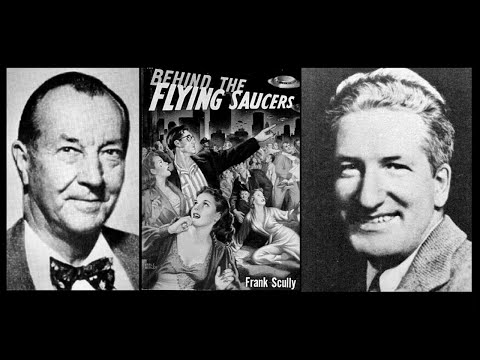
Francis Joseph Xavier Scully was born April 28, 1892, in New York City, and died June 23, 1964, in Palm Springs, California, at age 72. He studied journalism at Columbia University, worked as a reporter for The New York Sun, and by the 1930s had become a long-running columnist for Variety, the entertainment-industry trade paper, where his “Scully's Scrapbook” column delivered witty, gossipy commentary on Hollywood, show business, and popular culture for decades. He was not a scientist, an investigator, or a beat reporter covering aviation or the military — the professional background that gave contemporaries like retired Marine Corps Major Donald Keyhoe at least some claim to technical fluency was entirely absent from Scully's own resume. What he did have was a long-standing enthusiasm for Charles Fort's catalogs of unexplained phenomena and a showman's ear for a good story, both of which served him poorly when a source with a genuine financial motive to deceive him arrived at his door.
Beyond his Variety column, Scully was a prolific and eclectic author: his books include the “Fun in Bed” convalescence series (starting in 1932, with a preface by physician Logan Clendening), Rogues' Gallery (1943), Blessed Mother Goose, Cross My Heart, and This Gay Knight, alongside a screenwriting credit on the 1957 American release of a French film. His career was not limited to entertainment writing, either: he supported Upton Sinclair's 1934 California gubernatorial campaign and founded an Authors' League on Sinclair's behalf, served nine months in 1939 as an administrative assistant to the director of California's Department of Institutions before being dismissed, and afterward testified publicly about abusive conditions at the Whittier State School for Boys, for which he was tried and acquitted of misappropriation charges. In 1956 — four years after his own crashed-saucer sourcing had been publicly exposed as fraudulent — he was inducted as a Knight of the Pontifical Order of St. Gregory the Great, an honor unrelated to, and unaffected by, the Aztec episode.
Newton met Scully socially in the Hollywood circles both men moved in and, along with GeBauer, relayed the Aztec story and several related crashed-saucer claims directly to him; Scully's own papers at the University of Wyoming's American Heritage Center indicate Newton's original account described not one but three recovered saucers in New Mexico and a fourth in Arizona, only one of which Scully developed at length in the book. As J.P. Cahn's investigation closed in during 1952, Scully — almost certainly acting on his attorney's advice — drafted a “Private and Confidential Memo on J.P. Cahn” accusing the reporter of attempted blackmail and calling him “a louse in the blouse of journalism.” He never publicly retracted the story, and reaffirmed his belief in the Aztec crash as late as his own 1963 autobiography, In Armour Bright, published the year before his death. Cahn's own later, considerably more measured recollection was that Scully “turned out to be an absolutely super guy,” genuinely and sincerely outraged that his account would be questioned — the reaction, in Cahn's own reading, of a true believer rather than a knowing accomplice in Newton and GeBauer's underlying financial fraud. No evidence located in this site's research, or in Cahn's own contemporaneous reporting, connects Scully directly to the doodlebug scheme itself, and he was never charged alongside Newton and GeBauer.
Historical Context & Origins
Scully published his first Aztec columns in Variety in October and November 1949, roughly two and a half years into the American public's post-1947 fascination with flying saucers. Kenneth Arnold's June 1947 sighting had already coined the term and launched a national wave of press coverage; the original Roswell debris story had flared and been officially closed within days that same July, then gone essentially dormant as a public narrative for the better part of three decades; and the Air Force's own internal investigation had already cycled from Project Sign into the more skeptically postured Project Grudge without any of that internal history reaching the public. A national audience primed by two years of sighting reports, and with no organized skeptical fact-checking apparatus yet built around saucer claims specifically, was, in this environment, unusually receptive to a story combining national-security secrecy, extraterrestrial visitors, and physical recovered evidence.
1950 turned out to be the genre's breakout year at the bookstore, and it produced two bestsellers occupying opposite ends of the same new market. Months before Scully's book reached stores, retired Marine Corps Major Donald Keyhoe had expanded his own January 1950 True magazine investigation into The Flying Saucers Are Real, a book this site's own research treats as comparatively careful and source-disciplined for its era, resting on aviation credentials and documented official contradictions rather than a single anonymous informant. Scully's book, arriving that September from Henry Holt and Company, took the opposite evidentiary path: its entire factual foundation rested on the word of two men Scully had met socially and never independently verified, filtered through an unnamed “Dr. Gee” whose credentials Scully also never checked. Where Keyhoe's book has held up as a flawed but genuinely reported founding document, Scully's became, within two years of publication, the object lesson in what happens when a popular writer with no relevant investigative background takes a source's word for a story too good to check.
The book's specific occasion for expanding beyond the original columns was simple commercial opportunity: reader interest in the columns' claims, combined with the wider market Keyhoe's own reporting had already begun opening for saucer books, made a full-length treatment an easy sell to Henry Holt. Scully had no reason, at the time of writing, to doubt Newton and GeBauer's account; the doodlebug fraud scheme the story existed to support would not become public for another two years, and Scully's own Fortean sympathies and journalistic instincts — tuned for entertainment-industry color rather than source verification — left him with no methodological defense against a genuinely capable confidence operation.
Core Arguments & Key Concepts
The book's central claim, as Scully recorded it from Newton and “Dr. Gee,” was that a 99.99-foot lenticular craft, every dimension “divisible by nine,” crashed on a mesa near Aztec, New Mexico, in March 1948, its hull intact enough that investigators recovered sixteen dead crew members dressed in 1890s-style clothing, stocked with “concentrated food wafers” and “heavy water,” and probably originating from Venus. The craft's claimed propulsion system — travel along “Magnetic Lines of Force which originate in the sun and revolve around their planets and their moons, keeping the universe in magnetic balance” — reads, in retrospect, less like physics than like a pitch for the same “magnetic” oil-detection technology Newton and GeBauer were simultaneously marketing to investors, a resemblance this site's own case-file research treats as more than coincidental.
A second, less-examined argument runs through the book's structure: Scully did not present Aztec as an isolated event but as one of several recovered-saucer incidents Newton's account described, including claims of additional crashes elsewhere in New Mexico and one in Arizona. Only the Aztec claim received sustained development and later scrutiny; the others never generated independent corroboration, press follow-up, or a documented site, and this site's own research found no case file, contemporaneous news account, or subsequent investigation addressing them as anything more than an undeveloped extension of the same fabricated narrative.
Structurally, the book's persuasive strategy depends entirely on borrowed authority: Newton's own self-presentation as a successful oilman and geophysicist, and “Dr. Gee”'s presentation as one of a rotating group of roughly eight government scientists briefing Newton under strict security, gave Scully's readers two layers of unverifiable credential standing between the book's claims and any actual evidence. Scully himself supplied the third layer — a national entertainment-trade byline and a genuine, if credulous, journalistic voice — without ever supplying the fact-checking that byline implied.
The book's evidentiary posture is worth stating plainly, because it is the crux of everything that followed: every specific detail in Scully's account — the craft's dimensions, its propulsion theory, its planet of origin, the crew's clothing and provisions — originates with two men later criminally convicted of an unrelated but directly connected fraud built on this same story. No named, on-record eyewitness to any crash appears anywhere in the book's text.
Key Cases & Evidence Discussed
The Aztec, New Mexico Crash Claim (Case File #238, claimed March 1948) is not merely a case this book touches on — it is the book's entire subject. This site's own case file for the incident treats Scully's book as the mechanism that carried Newton and GeBauer's invented story from two 1949 Variety columns to a national, roughly 60,000-copy audience, and covers in detail the fraud investigation, criminal conviction, and decades of failed rehabilitation attempts the book's claims eventually produced.
The Farmington Saucer Armada (Case File #210, March 1950) is a genuinely documented, evidentially unconnected mass sighting — hundreds of residents across three days reporting dozens of maneuvering objects over a town roughly sixteen miles from Aztec — that became entangled with Scully's promotional framing at the time. Scully's own dramatic description of the Farmington case, later quoted at length by skeptic Donald Menzel, called it “the greatest exhibition of magnetic flight that has ever happened in this universe” — a promotional flourish this site's own research treats as a disclosed credibility concern about the case's popular legacy, distinct from the on-the-record newspaper witnesses Farmington's own case file documents independently.
The book's claim of additional, undeveloped crashed-saucer incidents elsewhere in New Mexico and in Arizona — per Newton's original account to Scully, preserved in the Frank Scully Collection at the University of Wyoming's American Heritage Center — never produced a corresponding case file on this or any other UFO research site this research consulted, and appears nowhere in the documentary record beyond that original, unverified attribution.
Critical Reception & Controversies
The book's reception is inseparable from the investigation that undid it. San Francisco journalist J.P. Cahn spent much of 1952 tracing Scully's story to its source for True magazine, and his single most consequential piece of work was disarmingly simple: he requested a sample of the supposedly “indestructible” alien metal Newton had been showing to skeptics and potential investors, and had it independently tested. It was ordinary aluminum. Cahn also identified “Dr. Gee” definitively as Leo GeBauer, a Phoenix radio-and-television-parts dealer with no verifiable advanced scientific credentials, and documented the fraudulent magnetic “doodlebug” oil-detection scheme the crashed-saucer story existed to support. His article, “The Flying Saucers and the Mysterious Little Men,” appeared in True's September 1952 issue and effectively ended the story's credibility within the UFO research community of the day; a six-page follow-up, “Flying Saucer Swindlers,” appeared in August 1956, documenting additional fraud victims and the case's legal aftermath.
The criminal record settled the matter beyond any reasonable dispute available to a book review. Silas Newton and Leo GeBauer were arrested on October 14, 1952, over the fraudulent sale of doodlebug devices to Denver industrialist Herman A. Flader, and convicted of fraud and conspiracy in a Denver courtroom in December 1953 — a resolution notably lenient in sentencing (probation and restitution rather than jail time) but an actual court conviction directly tied to the same scheme Scully's book had unwittingly publicized. Harvard astronomer Donald Menzel, the era's most prominent scientific skeptic, subsequently quoted Scully's own florid prose at length in his own writing as an illustration of exactly the kind of unverified, promotionally overheated claim his skeptical methodology existed to counter.
Later historians have generally treated the book less as a live controversy than as a settled case study. Curtis Peebles's critical history Watch the Skies!, cited elsewhere on this site for its assessment of ufology's cover-up literature, situates the Aztec story among the field's clearest examples of a fabricated claim achieving mass commercial success despite — or arguably because of — its total lack of independent corroboration. When researchers Scott and Suzanne Ramsey, Frank Thayer, and Frank Warren attempted a documented rehabilitation of the story in their 2012 book The Aztec Incident (with a foreword by Stanton Friedman), skeptic Robert Sheaffer's contemporaneous review in Skeptical Inquirer credited the Ramseys' documentary industriousness while noting pointedly that no version of their argument explains why anyone should trust the word of “obvious liars like Newton and Gebauer” over an investigation whose core factual findings — the doodlebugs were worthless, the “indestructible” metal was aluminum, “Dr. Gee” was an unqualified electronics dealer — the book itself never actually disputes.
Reader reception on Goodreads has remained modestly positive across the book's scattered editions, carrying a combined average in roughly the high-3s (around 3.97 across aggregated ratings as of this writing), with reviewers split between treating it as a period artifact — one describing it as “written in a style evocative of 1950s hard-bitten reporting” — and, more concerningly, a small but persistent minority still describing the Aztec story as an unresolved mystery “bigger than Roswell,” a framing this site's own research and the criminal record both directly contradict. It is worth stating plainly, given how contested UFO history often is: this is not a case with competing, roughly balanced interpretations. The FBI's investigative record, Cahn's forensic reporting, the National Archives, and a Denver criminal conviction all point the same direction, and no subsequent proponent work, including the well-funded 2012 revival attempt, has disturbed any of the exposé's central factual findings.
Influence & Legacy
The book's most significant and durable legacy is a narrative template rather than any surviving factual claim: it is widely credited among UFO historians, proponent and skeptical alike, as the first mass-market American book to popularize the “crashed saucer with recovered alien bodies” story — a full generation before the Roswell incident, itself essentially dead as a public story between 1947 and the mid-1970s, was revived and eventually eclipsed it as the culture's dominant crash-retrieval myth. Every later crash-retrieval narrative in American ufology, Roswell's own included, occupies a template this book was first to popularize at commercial scale, even though its own specific factual claims were conclusively discredited within two years of publication.
This site's own resources library cites the 2012 Inner Light/Global Communications reprint of this exact book twice, in direct connection with the Aztec, New Mexico Crash Claim and Farmington Saucer Armada case files — the clearest, most concrete measure of this book's continuing relevance to this site's own research, distinct from its broader cultural footprint.
The story Scully's book carried has proven strikingly resistant to its own exposure. Researcher William Steinman and co-author Wendelle Stevens published UFO Crash at Aztec in 1987, arguing the crash was genuine and the fraud conviction a smear; the book won little support even within proponent circles. A far more resourced revival came from Scott and Suzanne Ramsey, Frank Thayer, and Frank Warren, who spent more than $500,000 of their own money over 25 years, traveled to 27 states, and collected over 55,000 documents for their 2012 book The Aztec Incident, published with a foreword by Stanton Friedman. Neither rehabilitation attempt has disturbed the exposé's core factual findings, a pattern this site's own research treats as itself part of the book's legacy: seven decades on, Scully's story continues to attract periodic revival efforts precisely because its founding narrative — a secret government recovery, withheld from the public — remains emotionally durable independent of its evidentiary collapse.
Beyond ufology specifically, the book has become a standing case study in the risks of source-driven journalism without independent verification: a nationally bylined columnist, working entirely from two sources he never independently checked, produced a bestselling work of nonfiction that took a professional investigative journalist three years to unravel and a criminal court to formally resolve — a sequence of events this site's own research treats as at least as instructive for what it demonstrates about credulous reporting as for anything it claims about flying saucers themselves.
The Book
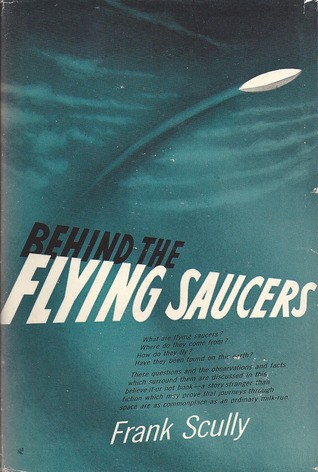
Behind the Flying Saucers
The 1950 Bestseller That Invented the Crashed-Saucer-With-Bodies Narrative — and Turned Out to Be a Hoax
Find on Amazon →As an Amazon Associate, OverClassified may earn from qualifying purchases made through this link, at no extra cost to you.
Why This Is Essential Reading
Behind the Flying Saucers earns its place on this list not as reliable evidence of anything extraterrestrial, but as the specific, identifiable point of origin for a narrative template — the secretly recovered saucer, the dead alien crew, the government cover-up — that would go on to define the genre's most famous story a generation later, and as one of the best-documented cautionary tales in the entire history of American UFO journalism. Frank Scully was, by the most credible contemporaneous account available (J.P. Cahn's own), a genuine believer rather than a knowing accomplice in Silas Newton and Leo GeBauer's underlying financial fraud; that distinction matters for understanding the man, but it does not rescue the book's claims, every one of which traces back to two sources later convicted, in a court of law, of building an unrelated fraud on this exact story. Read alongside this site's own Aztec, New Mexico Crash Claim case file, which the book essentially is about, it belongs on this list as the essential primary text for understanding where ufology's crash-retrieval mythology began, why it took hold so completely, and how thoroughly — and how early — it was actually resolved.
Related Cases & Theories
Essential Viewing
Sources Cited
- "Frank Scully." Wikipedia (biography: birth/death dates, Columbia journalism education, New York Sun and Variety career, other books, political history, honors, death). en.wikipedia.org
- "Aztec crashed saucer hoax." Wikipedia (case history, the 1949 Variety columns, the 1950 book, the 1952 Cahn exposé, the fraud conviction). en.wikipedia.org
- "Frank Scully and Flying Saucers." American Heritage Center, University of Wyoming, 2021 (the Frank Scully Collection, book sales figures of roughly 60,000 copies, Scully's continued belief in his UFO claims). ahcwyo.org
- Cahn, J.P. "The Flying Saucers and the Mysterious Little Men." True, September 1952 (scanned reproduction) — the original exposé identifying "Dr. Gee" as Leo GeBauer and the aluminum-sample test. physics.smu.edu
- Cahn, J.P. "Flying Saucer Swindlers." True, August 1956 (scanned reproduction) — follow-up documenting additional fraud victims and the case's legal aftermath. physics.smu.edu
- Sheaffer, Robert. "The Frank Scully ‘Crashed UFO’ Hoax." debunker.com (summary of Cahn's investigation, Scully's reaction, and Cahn's own retrospective assessment of Scully as a sincere believer). debunker.com
- Sheaffer, Robert. "Aztec Saucer Crash Story Rises from the Dead?" Skeptical Inquirer, Nov/Dec 2012 (review of the 2012 Ramsey/Thayer/Warren revival attempt and case history). skepticalinquirer.org
- Plazak, Dan (guest post). "Facts About Silas Newton's Claimed ‘Successful’ Oil Discoveries." Bad UFOs blog (Newton's real drilling and financial record). badufos.blogspot.com
- "Of Flying Saucers and Fraud: The Silas M. Newton Story." Denver Public Library Special Collections & Archives (victims, sentencing, and later fraud history). history.denverlibrary.org
- Federal Bureau of Investigation. "UFOs and the Guy Hottel Memo" (the FBI's own account of the March 1950 memo describing a garbled version of Newton's multiple-saucer claims). fbi.gov
- "Behind the flying saucers." Open Library / Internet Archive edition record (Henry Holt and Company, 1950, xv + 230 pp., LCCN 50009662; item behindflyingsauc00scul) — bibliographic record and source of this article's cover scan. openlibrary.org
- "Behind The Flying Saucers: The Truth About The Aztec UFO Crash." Amazon.com product listing (Inner Light/Global Communications, 2012 pbk. repr., ISBN 9781606110201/1606110209, matching this site's own resources-library citation under this exact edition). amazon.com
- "Behind the Flying Saucers by Frank Scully." Goodreads (aggregated reader ratings and reviews across editions). goodreads.com
- Peebles, Curtis. Watch the Skies!: A Chronicle of the Flying Saucer Myth. Smithsonian Institution Press, 1994 — historical assessment of the Aztec/Scully episode, cited via this site's own Essential Reading breakdown.
- This site's own case file: The Aztec, New Mexico Crash Claim, the fully documented incident this book is centrally about, including the fraud investigation, criminal conviction, and later rehabilitation attempts.
- This site's own case file: The Farmington Saucer Armada, the genuinely documented, evidentially unconnected 1950 mass sighting Scully's own promotional framing became entangled with.
- This site's own key-figures entry: Frank Scully, for his full biography and case connections.
- This site's own resources library: Full Reading List, where this exact 2012 edition (ISBN 1606110209) is cited in connection with two case files.
Have corrections, additional research, or peer-reviewed sources? Help improve this entry.
Suggest an Edit