
High Strangeness
UFOs from 1960 Through 1979
Core Thesis
High Strangeness: UFOs from 1960 Through 1979 is Jerome Clark's reference-grade survey of what this site's own resources library calls "the UFO phenomenon's most active two decades," published as Volume 3 of Clark's original three-volume UFO Encyclopedia project and covering, in roughly one hundred alphabetical entries, the close encounters, crash-retrieval claims, sighting waves, hoaxes, and abduction cases of ufology's most consequential twenty-year stretch. The book picks up chronologically exactly where this site's own previously documented The Emergence of a Phenomenon (Volume 2 of the same series, covering the beginning of the phenomenon through 1959) leaves off, together forming a continuous, decades-spanning reference spine that this site's own case files draw on repeatedly. This site's own research cites this specific volume directly for two structurally very different American cases from within its own twenty-year window: the Loring AFB Nuclear Storage Area intrusion of October 1975 and the Wanaque Reservoir Incident of January 1966, treating the book as essential context for situating each within the full national pattern of reporting Clark's encyclopedia format was specifically built to catalog.
About the Author
Jerome Clark (b. 1946) is one of American ufology's most prominent historians, whose multi-edition UFO Encyclopedia project — of which this book is the third and final original volume — remains one of the field's standard reference works. This site's own key-figures entry documents his broader career in some detail: on the 1948 Gorman Dogfight, Clark judged the Air Force's weather-balloon explanation "seems plausible" while calling the case, after Mantell, "the most overrated UFO report in the early history of the phenomenon" — a notably skeptical assessment from within the UFO research community itself rather than from an outside critic, and one that speaks directly to the same evidentiary discipline this three-volume encyclopedia project was built around.
Clark's own investigative fieldwork, not merely his editorial and reference work, gives this book's broader project real credibility. In 1977, working independently, he investigated and corroborated an elderly Kansas woman's claim that rancher Alexander Hamilton's famous 1897 "cattle lasso" airship story had been invented specifically to win a local "liars' club" tall-tale contest — establishing it as the best-documented confirmed hoax within the wider 1896-97 mystery airship wave, and demonstrating a willingness to debunk a story within his own field's foundational canon when the evidence supported it. That same evidentiary discipline, applied at encyclopedia scale across a full twenty-year span, is this specific 1996 volume's organizing principle.
This book represents the middle-career culmination of what would become an even longer Clark bibliography: this site's own essential-reading library already documents his later single-volume synthesis The UFO Book (1997, published the year immediately following this volume) and the modern, multi-edition The UFO Encyclopedia (whose third Omnigraphics edition in 2018 extended the catalog, across roughly 1,200 pages, all the way through the 2017 New York Times AATIP story that reopened mainstream interest in the subject). Read across all four titles, Clark's body of work traces an unusually direct, book-length record of how the field's own documentary standards evolved from the 1990s three-volume format this specific book belongs to, through to the post-2017 disclosure era.
Clark's professional background outside pure ufology also matters to how this specific book should be read: he spent years as an editor for Fate magazine, one of the longest-running American periodicals covering paranormal and anomalous phenomena, and has served on the board of the Center for UFO Studies (CUFOS), the organization J. Allen Hynek founded to bring more scientific rigor to the field. That combination of long-form popular-magazine editorial experience and direct institutional involvement with CUFOS gave Clark both the writing discipline and the case-access network needed to compile a genuinely comprehensive twenty-year encyclopedia rather than a narrower, more anecdotal survey.
Historical Context & Origins
The specific two-decade window this book covers, 1960 through 1979, was not an arbitrary editorial choice but the period in which, as this site's own resources library puts it, "ufology was established as a field of inquiry" in a way it had not quite been during the more scattered, press-driven waves of the 1940s and 1950s that Clark's companion volume The Emergence of a Phenomenon covers. The 1960s and 1970s saw the founding or maturation of the major American civilian investigative organizations — NICAP and APRO chief among them — whose case files this book draws on directly, alongside the U.S. Air Force's own Project Blue Book (which formally closed in December 1969) and, in its aftermath, J. Allen Hynek's establishment of the Center for UFO Studies in 1973 as an explicitly more scientifically rigorous successor to purely military-run investigation.
This same twenty-year period also produced the Cold War's most operationally serious UFO reports: a sustained cluster of incidents at Strategic Air Command nuclear weapons facilities across the northern United States and Canada, of which this site's own Loring AFB case file — occurring in October 1975, squarely inside this book's covered window — is one of the best individually documented examples. That the book's own scope closes in 1979 places it just short of the full extent of that later 1970s nuclear-security wave, but its 1975 coverage captures the wave at its most intensely documented point, backed by surviving base radar logs and priority USAF message traffic rather than witness recollection alone.
The book's opening year, 1960, followed closely on the heels of the most consequential single structural change in how the American public encountered UFO reports: the rapid postwar expansion of both commercial aviation and, more specifically, a media environment increasingly willing to run breaking, visually striking unexplained-phenomena stories — the same environment this site's own research has documented driving press amplification in cases as geographically distant as the 2007 Kolkata sighting covered in UFOs Over India. Clark's own encyclopedia format, organizing a full twenty years of reports into roughly one hundred alphabetically arranged entries, reflects a deliberate editorial response to that same media-driven proliferation: rather than attempting a single narrative thread through two decades of increasingly voluminous reporting, the reference format lets readers navigate directly to whichever specific case, wave, or investigative organization they need.
By the time this book was published in 1996, the field itself had also matured institutionally in ways the book's own reference apparatus reflects: NICAP had ceased significant activity by the mid-1980s, APRO had folded in 1988, and the Center for UFO Studies Clark himself served on the board of had become the dominant surviving civilian investigative body — meaning this volume was compiled retrospectively, with the benefit of hindsight about which of the era's competing organizations, explanations, and controversies had proven durable and which had not, rather than written in real time as the period's own events unfolded.
Core Arguments & Key Concepts
The book's central organizing argument, implicit in its encyclopedia structure, is that the 1960-1979 period cannot be reduced to a single narrative or a handful of headline cases — its roughly one hundred entries, covering close encounters of the first, second, and third kind, alleged crash-retrievals, full-scale regional sighting waves, documented hoaxes, and early abduction claims, treat comprehensive documentary coverage itself as more valuable than a curated highlight reel privileging only the most famous incidents.
A second theme, consistent with Clark's own demonstrated willingness to debunk cases within his own field (as with the 1897 Hamilton hoax), is that a serious reference work must document skeptical explanations, retracted official statements, and unresolved evidentiary problems with the same rigor it applies to the most compelling cases — this site's own Wanaque Reservoir case file reflects exactly that kind of evenhandedness, documenting that the U.S. Air Force itself offered three separate, mutually contradictory explanations for the sighting and retracted two of them, a level of institutional inconsistency a less disciplined reference work might have smoothed over rather than preserved.
A third theme is the book's implicit argument for taking the civilian investigative organizations of the era seriously as primary sources in their own right, not merely as advocacy groups to be quoted skeptically: NICAP investigator Gordon Lore's formal January 1966 interviews with Wanaque's mayor and named witnesses, and APRO's own independent case writeup in the APRO Bulletin months later, represent exactly the kind of contemporaneous, professionally conducted fieldwork this book's encyclopedia format was built to catalog and cross-reference across hundreds of individual cases.
A fourth theme, reflected directly in the Loring AFB material this site's own case file draws from the book, is that the Cold War institutional context surrounding a sighting is itself essential evidence, not incidental color: understanding why Strategic Air Command responded to an unidentified object near a nuclear weapons storage area with a Security Option 3 alert and priority messages to the National Military Command Center requires understanding the base's actual strategic function and the genuine foreign-incursion anxieties of the period, not just the raw witness testimony about lights in the sky.
A fifth, more general theme running through the book's twenty-year scope is continuity and pattern-recognition across individually scattered incidents: by cataloging a full two decades within a single reference work, Clark's format lets readers notice recurring structural features — repeated nuclear-facility intrusions, recurring reservoir and water-body sightings, the consistent involvement of the same handful of civilian investigative organizations — that would be far harder to discern from any single case treated in isolation.
Key Cases & Evidence Discussed
The Loring AFB Nuclear Storage Area intrusion (October 27-28, 1975) unfolded at Loring Air Force Base near Limestone, Maine, home to what was, by most accounts, the largest nuclear weapons storage area in the entire Strategic Air Command. On the first night, Staff Sergeant Danny K. Lewis, patrolling the weapons storage area's northern perimeter, watched a silent, low-flying object showing a red navigation light and white strobe descend to within 300 yards of the igloo-covered nuclear bunkers; base radar tracked it for roughly 40 minutes before it vanished toward Grand Falls, New Brunswick, just 12 miles across the Canadian border. The following night it returned in a different form: B-52 crew chief Sergeant Steven Eichner and other airmen watched a reddish-orange, cigar-shaped object hover completely silently just five feet above the ground near the runway. Base commander Colonel Richard E. Chapman declared a Security Option 3 alert, priority messages went up the chain of command to the National Military Command Center at the Pentagon, and a Maine Army National Guard UH-1 helicopter crewed by Chief Warrant Officers Bernard Poulin and Eugene Herrin flew repeated search missions without ever visually acquiring the intruder ground personnel were simultaneously reporting by radio — a genuine air-search-versus-ground-report mismatch this site's own case file treats as a significant, unresolved evidentiary tension rather than glossing over. This site's own case file identifies the Loring intrusions as "the best-documented single incident in the broader Northern Tier wave of nuclear-base UFO reports that swept Strategic Air Command installations that autumn," the same wave that, two weeks later, reached Canadian Forces Station Falconbridge in Ontario, and cites this book directly for placing "the Loring intrusions within the full national context of mid-1970s reporting" that Clark's encyclopedia format was specifically designed to provide. The wave's documentary trail extended well beyond the base itself: a November 11, 1975 CINCNORAD message named Loring alongside Wurtsmith, Malmstrom, and Minot Air Force Bases and Canadian Forces Station Falconbridge as connected sites of a single wave of "suspicious object" sightings dating from October 28, and the case resurfaced in the national press in 1979 — squarely inside this book's own covered window — when the New York Times reported that Air Force investigation of the Loring sightings "did not reveal a cause," alongside revelation of an internal Air Force communications directive instructing staff to avoid publicly linking the wave's incidents unless specifically asked. Researchers Lawrence Fawcett and Barry Greenwood later devoted a dedicated chapter, "Intrusions at Loring AFB – 1975," to the case in their 1984 book Clear Intent: The Government Coverup of the UFO Experience, drawing on FOIA-released Air Force message traffic and later interviews with participants including helicopter pilot Bernard Poulin — exactly the kind of sustained, multi-decade documentary follow-through this site's own case file treats as rare and valuable in a field where most reports receive only contemporaneous coverage and are never revisited with declassified primary sources.
The Wanaque Reservoir Incident (January 11, 1966, with recurrences through October 1966) began when Mayor Harry T. Wolfe, three councilmen, the borough's civil defense director, and multiple sworn police officers stood together at a sandpit above the frozen Wanaque Reservoir in New Jersey and watched a silent, color-shifting object hover, dart, and beam light into the ice for nearly three hours — an extraordinarily high-credibility witness group by any evidentiary standard, given that a sitting mayor and multiple police officers were present simultaneously rather than a single private citizen. This site's own case file documents that the case drew formal investigation from both major national civilian UFO organizations of the era within weeks: NICAP investigator Gordon Lore traveled to the Wanaque police station on January 14, 1966 to formally interview witnesses including Mayor Wolfe and local newspaper editor Howard Ball, while APRO published its own independent case writeup, "The Wanaque Reservoir Incident," in the APRO Bulletin that May or June. The case's evidentiary record grew more contested rather than less over time: the U.S. Air Force offered three separate, mutually contradictory explanations — a Stewart AFB helicopter, a McGuire AFB weather balloon, and a Pentagon-proposed Venus/Jupiter alignment — and itself retracted two of them, while a later witness account described an unidentified Air Force officer instructing two officers to stop discussing the case and a photograph allegedly confiscated as "government property," a suggestive if uncorroborated indicator of official interest beyond routine press inquiries. This site's own resources library cites this book directly as "covering exactly the decade in which Wanaque occurred, providing essential context on how NICAP and APRO investigated and categorized flap-period sightings like this one" — precisely the kind of institutional and comparative context Clark's encyclopedia structure is built to supply. The case did not end with the January flap: on October 10, 1966, nine months later, Wanaque Reservoir Police Sergeant Ben Thompson, a six-year veteran of the reservoir force, encountered a similarly described object on solo patrol near Cooper's Swamp, describing it distinctively as resembling "a basketball with the center scooped out and a football thrust through it," descending as low as 150 feet before fleeing when Thompson activated his patrol car's red dome light — the same night an off-duty Pompton Lakes officer and his wife independently reported a similar sighting, and switchboards again flooded with roughly 150 calls in a single evening. This site's own case file documents a genuinely striking coda to the sighting record that surfaced only decades later: in 2018, researcher Anthony Bragalia located and interviewed retired officer Charles Theodora, who had been a twenty-year-old reservoir patrolman during the 1966 sightings, and who described personally photographing the object before Police Chief John Casazza ordered him to surrender the photograph as "government property," followed by a meeting with an unidentified Air Force officer after which Theodora and Sergeant Thompson say they were instructed to never discuss the sightings again. This site's own case file weighs that account carefully as suggestive rather than proven — a single witness's decades-later recollection with no surfaced corroborating document — while noting the underlying pattern of an unrecorded military presence advising local officers to stay silent recurs often enough across this catalogue's other cases to be documented rather than dismissed.
Critical Reception & Controversies
On Goodreads, the book carries a 3.5-out-of-5 average from a small sample of 4 ratings (checked August 2026) — a genuinely modest sample size this site's editorial practice discloses honestly rather than treating as a robust critical consensus, consistent with the thin public review record this site's research has found for several other specialist reference-format UFO titles from small academic and library-market publishers like Omnigraphics.
This site's research attempted to verify an Amazon rating for this title but Amazon's bot-detection system repeatedly blocked automated requests to the listing during this session, returning a CAPTCHA challenge across multiple attempts. Per this site's own Amazon Rating Display Protocol, this gap is disclosed honestly here rather than fabricated or silently omitted.
As a library- and reference-market hardcover from Omnigraphics rather than a mass-market trade paperback, this book was likely never positioned to generate the kind of broad consumer review volume a popular narrative UFO book might, since its natural audience — researchers, journalists, and library reference collections needing to look up a specific case or organization — is smaller and less inclined toward public online reviewing than general readers working through a book cover to cover. This site's own case-file citation record, drawing on the book for two independently verifiable, well-documented cases spanning a full decade of its twenty-year scope, arguably represents a more meaningful quality signal for a reference work of this kind than a consumer star rating would.
The book's own internal evenhandedness, discussed above in the context of the Wanaque Air Force's contradictory explanations, is itself a form of critical self-discipline worth noting as a reception-relevant point: a reference work willing to document its subject's own official explanations failing and contradicting each other, rather than either suppressing that inconvenient detail or overstating its significance, demonstrates an editorial standard this site's own research treats as a meaningful proxy for reliability in the absence of a larger formal review record. The same standard is visible in how the book's material on Loring has aged: independent researchers Fawcett and Greenwood revisited the case in book-length detail in 1984, and a modern retrospective as recent as November 2024 continues to treat the underlying 1975 documentary record as genuinely unresolved rather than settled — a durability this site's own research treats as a more meaningful long-term quality signal than any single decade's star-rating average could provide.
Influence & Legacy
As Volume 3 of Clark's original three-volume UFO Encyclopedia project, this book's most concrete legacy is structural: together with the Volume 2 predecessor this site's own essential-reading library already documents, The Emergence of a Phenomenon, it forms a continuous, two-book documentary spine covering the entire modern UFO era from its 1896-97 airship-wave origins through 1979 — a reference architecture later editions and successor projects, including Clark's own subsequent single-volume The UFO Encyclopedia, would build directly on and extend.
This site's own citation record for the book — spanning the Loring AFB nuclear-security intrusion of 1975 and the Wanaque Reservoir multi-witness sighting of 1966, cases nearly a decade apart involving entirely different types of witnesses, evidentiary records, and institutional responses — demonstrates the book functioning exactly as an encyclopedia-format reference should: as a durable cross-reference tool useful for structurally very different cases across its full twenty-year scope, rather than a narrative history whose relevance is concentrated around one or two headline incidents.
Within the broader landscape of 1990s UFO reference publishing, this book's specific contribution was closing out a comprehensive, library-market-oriented documentary project at a moment, 1996, that sat just before the field's late-1990s and 2000s shift toward internet-based case archives and, eventually, the post-2017 mainstream disclosure era Clark's own later UFO Encyclopedia editions would go on to document — making this volume a genuine historical snapshot of how the field's most serious reference-minded historian assessed his subject's most consequential twenty years, compiled with the specific hindsight of the mid-1990s but before the field's next major institutional transformation began.
The Book
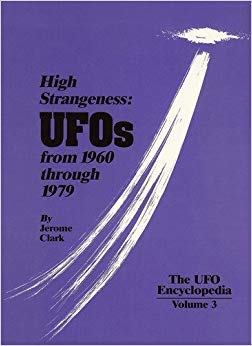
As an Amazon Associate, OverClassified may earn from qualifying purchases made through this link, at no extra cost to you.
Why This Is Essential Reading
High Strangeness earns its place on this list as the third and final volume of Jerome Clark's original UFO Encyclopedia project, and as a genuinely comprehensive reference for the twenty-year period this site's own resources library correctly identifies as the phenomenon's most active. Clark's encyclopedia format gives this site's own Loring AFB Nuclear Storage Area case file the full Cold War institutional context needed to understand why a Security Option 3 alert and Pentagon-level notification followed a single silent object near a nuclear weapons bunker, while the same book's documentation of NICAP and APRO's parallel, contemporaneous investigations gives the Wanaque Reservoir Incident case file its clearest picture of how a high-credibility, multi-witness sighting was actually investigated by the era's leading civilian organizations. Its modest Goodreads sample size reflects the realities of a library-market reference hardcover rather than any indication of the underlying scholarship's quality, and the book's own willingness to document the U.S. Air Force's contradictory, self-retracted Wanaque explanations models exactly the kind of evidentiary evenhandedness this site's own research treats as the mark of a genuinely reliable source. Read as the concluding half of a two-volume documentary spine covering the entire modern UFO era through 1979, this book is essential because it lets readers place individual, well-documented American cases within the full twenty-year national pattern that produced them.
Related Cases & Theories
Essential Viewing
Sources Cited
- Clark, Jerome. High Strangeness: UFOs from 1960 Through 1979. Omnigraphics, 1996 (ISBN 1-55888-742-3, cited here).
- "High Strangeness: Ufos from 1960 Through 1979." Goodreads (rating 3.5/5, 4 ratings, checked August 2026). goodreads.com
- "High Strangeness: Ufos from 1960 Through 1979 (UFO ENCYCLOPEDIA)." AbeBooks (ISBN 9781558887428, marketplace listing photograph used for this article's cover image). abebooks.com
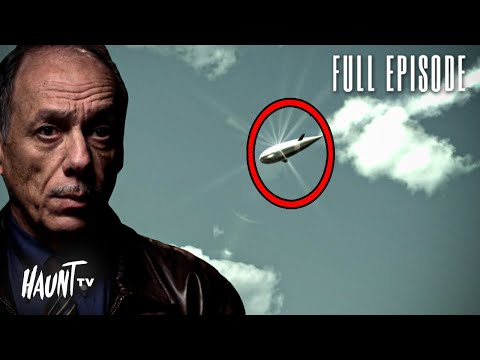
- "Orange UFO Hovers Over Nuclear Weapons at Loring AFB." HauntTV, YouTube (video verified via oEmbed). youtube.com
- This site's own resources library: Full Reading List, where this exact 1996 edition is cited across 2 separate case-file pages.
- "Nuclear Night Watch: The Mysterious 1975 Loring Air Force Base UFO." Above the Norm News, November 1, 2024 (independent modern retrospective on the case). abovethenormnews.com
- Fawcett, Lawrence & Greenwood, Barry. Clear Intent: The Government Coverup of the UFO Experience. Prentice Hall, 1984 (Chapter: "Intrusions at Loring AFB – 1975," cited in this site's own Loring case file).
- This site's own key-figures entry: Jerome Clark, for his full biography and site-wide case connections.
- This site's own case file: Loring AFB Nuclear Storage Area, which cites this book for national wave context.
- This site's own case file: Wanaque Reservoir Incident, which cites this book for NICAP/APRO investigative context.
- This site's own essential-reading entry: The Emergence of a Phenomenon, Volume 2 of the same original UFO Encyclopedia series.
- This site's own essential-reading entry: The UFO Book, Clark's 1997 single-volume synthesis.
- This site's own essential-reading entry: The UFO Encyclopedia, Clark's later modern multi-edition reference.
- "Jerome Clark." Wikipedia (used lightly, for basic biographical cross-checking of his Fate magazine and CUFOS career only; not relied upon for book content, which follows this site's own dedicated sources above). en.wikipedia.org
Have corrections, additional research, or peer-reviewed sources? Help improve this entry.
Suggest an Edit