
CEFAA: Chile's Official UAP Investigation Committee
On October 3, 1997, following two consecutive nights of anomalous lights reported by control-tower personnel at Chacalluta Airport in Arica, Chile's Dirección General de Aeronáutica Civil (DGAC) signed Resolution No. 01599 creating CEFAA — the Comité de Estudios de Fenómenos Aéreos Anómalos — under founding director Col. Enzo Di Nocera García. What followed was not a smooth, continuous three-decade institution: CEFAA fell into a genuine six-year dormancy between 2002 and 2008 under an intervening director, was revived and restructured in 2010, weathered a 2020 academic critique from its own profiled director admitting the committee's evidentiary standard was "too restrictive," and was administratively renamed SEFAA in 2021. Across that uneven history, the committee has nonetheless built a genuinely unusual model — pairing DGAC technical staff and volunteer university scientists with observers from every branch of Chile's armed forces and national police to formally review pilot, air-traffic-control, radar, and citizen UAP reports — that this file weighs in full against a direct comparison to France's GEIPAN and Uruguay's CRIDOVNI, and against the three real Chilean cases (El Bosque, Collahuasi, and the Chilean Navy helicopter video) that made CEFAA's name internationally.
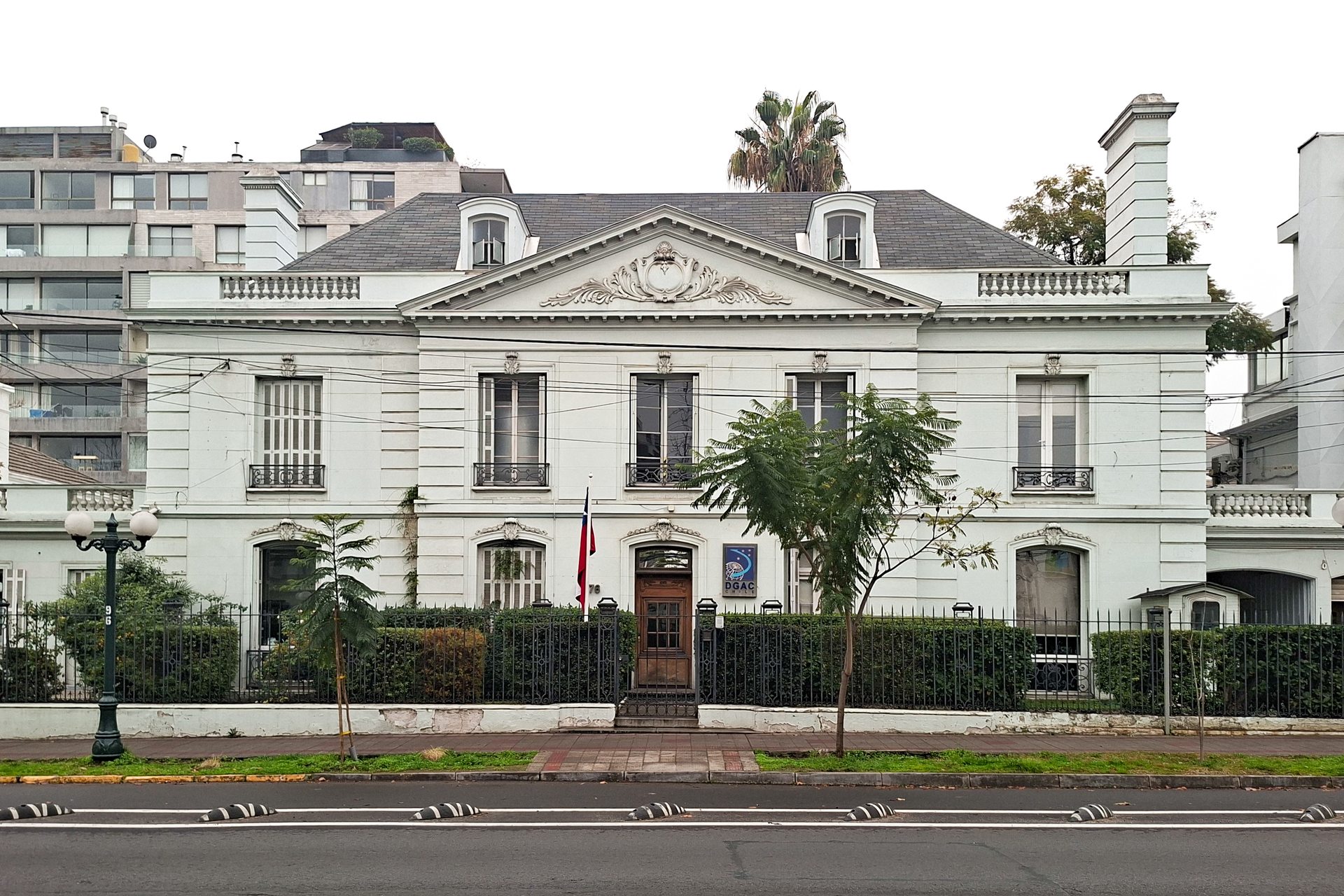
Pictured: a departmental building of Chile's Dirección General de Aeronáutica Civil (DGAC) in Providencia, Santiago — the civil aviation authority that has been CEFAA/SEFAA's parent agency since 1997 — not a photograph of SEFAA's own current offices, which sit in the Cerrillos district. No rights-clear photograph of SEFAA's own Cerrillos facility, nor of any of the anomalous objects the committee has investigated, is known to be freely licensed for reproduction here. Photo by Wikimedia contributor Carlos Figueroa Rojas, taken July 9, 2025, licensed CC BY-SA 4.0.
Theoretical Alignment
This case file documents an investigative institution across nearly three decades and well over a thousand individual reports, not a single observed craft or encounter, so the standard ETH/IDH/PSH alignment grid does not meaningfully apply and all three are marked N/A rather than forced into a rating. CEFAA's own institutional position on the underlying question is explicit and repeated across its public statements: as former director Hugo Camus Palacios put it directly, "our objective is not to investigate UFOs or extraterrestrial beings" — the committee studies FANI (Fenómenos Aéreos Anómalos, "Anomalous Aerial Phenomena") strictly for aviation-safety purposes and takes no institutional position on the ultimate nature of its unresolved residue. Individual cases CEFAA has investigated — the Collahuasi Mine sighting chief among them — carry their own Theoretical Alignment ratings on their own case files; this file's subject is the investigating body itself.
Background
Chile's institutional engagement with anomalous aerial phenomena did not begin in 1997. On July 9, 1968 — itself following a run of sightings reported around Arica in March of that year — the "Comisión Chilena para Estudios de Fenómenos Espaciales No Identificados" (Chilean Commission for Studies of Unidentified Space Phenomena) was formed under Col. Sergio Bravo Flores, director of Chile's National Meteorological Office, with support from the Scientific Society of Chile. Air traffic controller Gustavo Rodríguez Navarro, who had already been informally compiling sighting reports, contributed foundational casework to the effort. That first commission operated for roughly seven years before ceasing activity in 1975 after Bravo's departure — a full 22-year gap during which Chile had no standing government body engaging the subject at all, a fact this file treats as directly relevant context for evaluating CEFAA's own later institutional interruptions rather than a settled, permanent government commitment interrupted only once.
The specific, proximate trigger for CEFAA's 1997 creation was a fresh wave of sightings almost three decades later, in the same northern city that had prompted the 1968 commission. Over two consecutive nights in late March and early April 1997, residents of Arica reported unexplained moving lights in the night sky — sightings independently corroborated by air-traffic-control personnel and by the head of Arica's own Chacalluta Airport, corroboration significant enough, given its institutional source, that DGAC's own retrospective materials describe the episode as creating "a favorable scenario" for formally institutionalizing the government's response. Combined with a smaller run of reports the DGAC had already logged in 1996, the Chacalluta sightings gave Chile's civil aviation authority both the immediate cause and the accumulated case volume to justify a standing committee rather than another ad hoc inquiry.
CEFAA's placement inside DGAC — Chile's civil aviation regulator, roughly the country's equivalent of the U.S. FAA — rather than inside the Chilean Air Force's intelligence apparatus or a classified defense program, is the single most consequential structural decision in the committee's history. It is the direct reason CEFAA has been able to publish named-director findings, quarterly case releases, and even internal methodological disagreements relatively openly compared to most other countries' UAP-adjacent efforts, and it explains why the committee's founding charter frames its mission explicitly in aviation-safety terms — to determine whether reported phenomena pose any risk to Chilean air operations — rather than in terms of scientific curiosity about the phenomena's ultimate origin.
Complete Timeline
| Date | Event |
|---|---|
| March 1968 | A wave of sightings around Arica prompts the first formal Chilean government response to the subject. |
| July 9, 1968 | Col. Sergio Bravo Flores, director of Chile's National Meteorological Office, establishes the "Comisión Chilena para Estudios de Fenómenos Espaciales No Identificados" with support from the Scientific Society of Chile; air traffic controller Gustavo Rodríguez Navarro contributes early case compilation. |
| 1975 | The 1968 commission ceases operating following Bravo's departure, leaving Chile without any standing government UAP-study body for the next 22 years. |
| Late March–early April 1997 | Control-tower personnel and the director of Chacalluta Airport in Arica independently report anomalous lights over two consecutive nights, the direct trigger for CEFAA's formal creation. |
| October 3, 1997 | DGAC Director General Gonzalo Miranda Aguirre signs Resolution No. 01599, formally establishing CEFAA (Comité de Estudios de Fenómenos Aéreos Anómalos) under founding director Col. Enzo Di Nocera García, based at the Air Force's Escuela Técnica Aeronáutica (ETA) in Quinta Normal, Santiago. |
| 1998 | Di Nocera is succeeded as director by retired Air Force brigadier general Ricardo Bermúdez Sanhueza, beginning his first term. |
| February 2002 | Bermúdez's first term as director ends. |
| March 2002 | General de Brigada Aérea Hernán Henríquez Cobaise assumes the directorship; per DGAC's own official history, CEFAA enters a genuine "etapa de latencia" (dormancy stage) that will last six years. |
| March 31, 2008 | Henríquez's tenure, and CEFAA's dormancy period, come to an end. |
| 2009 | Bermúdez returns as director, beginning his second term. |
| December 15, 2009 | DGAC Resolution No. 02/0/01937 restructures CEFAA as an independent unit reporting directly to the DGAC's General Secretariat, separate from the Air Force Technical School; staff transition to permanent, dedicated investigative roles effective January 1, 2010. |
| November 5, 2010 | Seven independent cameras at a Chilean Air Force change-of-command ceremony at El Bosque Air Base capture an anomalous object crossing jet formations, opening what becomes the El Bosque Air Base UFO Video case. |
| April 2012 | At the FIDAE international air and space fair in Santiago, Bermúdez and Uruguay's Col. Ariel Sánchez Ríos sign a formal mutual cooperation agreement between CEFAA and CRIDOVNI, one of the first of its kind between two Latin American government UFO-investigation bodies. |
| Mid-April 2013 | Roughly 35 workers at the Collahuasi copper mine watch a silvery disc hover and maneuver for about two hours; the case behind the Collahuasi Mine UFO Sighting. |
| February 22, 2014 | A formal report and two surviving photographs of the Collahuasi object finally reach CEFAA, roughly ten months after the sighting itself. |
| November 11, 2014 | A Chilean Navy AS-532 Cougar helicopter records roughly nine minutes of FLIR video of an unidentified object near San Antonio–Quintero, opening the Chilean Navy Helicopter Video investigation. |
| July 7, 2014 | Chilean outlets report DGAC/CEFAA's formal acknowledgment that it has no conventional explanation for the Collahuasi object. |
| 2016 | Bermúdez's second term as director ends; José Lay, CEFAA's international affairs director, serves as interim director pending a permanent replacement. |
| January 5, 2017 | Journalist Leslie Kean publishes the Chilean Navy video and CEFAA's findings on The Huffington Post; Bermúdez states publicly, "We do not know what it was, but we do know what it was not." |
| January 7–11, 2017 | Independent investigator Mick West and Metabunk forum collaborators identify a specific climbing airliner, Iberia flight IB6830, as a rigorously argued conventional explanation for the helicopter video — a finding CEFAA has never formally accepted or rebutted. |
| September 2017 | Historian and scientific journalist Hugo Camus Palacios, a former DGAC official, joins CEFAA as director through open public competition. |
| October 4, 2018 | CEFAA marks its 21st anniversary; DGAC's own published account describes the committee's core staff as a director plus two investigators, supported by an external multidisciplinary committee of astronomers, geographers, physicists, psychologists, nuclear chemists, aerospace-medicine specialists, air traffic controllers, meteorologists, and Armed Forces representatives. |
| 2020 | CEFAA formalizes a digital case-management database and begins publishing investigated and resolved cases on its own website quarterly; annual case volume reaches 362, a roughly 300% increase over pre-pandemic years. |
| 2020 | Anthropologists Diana Espírito Santo and Alejandra Vergara publish an academic profile of CEFAA and director Camus in Antípoda. Revista de Antropología y Arqueología, in which Camus describes the committee's own evidentiary standard as "too restrictive." |
| October 18, 2021 | DGAC repeals Resolution No. 01599 and renames the committee SEFAA (Sección de Estudios de Fenómenos Aéreos Anómalos), moving it from the General Secretariat to the DGAC's Communications Subdepartment; by September 2021 the agency has logged 1,675 total case reports since 1997. |
| August 2022 | Camus departs the directorship after five years; journalist Patricio Abusleme, author of a national survey of Chilean UFO cases, steps in as SEFAA's interim coordinator. |
| January 2023 | Additional original CEFAA case documents on the Chilean Navy helicopter video — correspondence, witness intake forms, advisory reports, and flight-track data — are obtained from the DGAC and published by the YouTube channel Omega Click, confirming the file's classification remains unrevised. |
| February 2025 | SEFAA launches official social media accounts as part of its continuing public-outreach program. |
| 2025–2026 | SEFAA continues quarterly case publication and educational outreach (including presentations at Santo Domingo Aerodrome in June 2025 and La Independencia Aerodrome, Rancagua, in May 2026), reporting roughly 10–20 new sighting reports monthly — close to one per day — through its own online reporting form, described in Chilean press as "a unique tool of its kind in Latin America." |
From CEFAA to SEFAA: A Genuinely Interrupted Institution
It would be easy to read CEFAA/SEFAA as a single, smoothly continuous 29-year institution; the honest record is more uneven than that, and this file treats that unevenness as substantively important rather than a footnote. Between March 2002 and March 31, 2008 — nearly a third of the committee's total lifespan to date — CEFAA was led by Gen. Hernán Henríquez Cobaise, and DGAC's own official retrospective describes this exact period in blunt terms: "el CEFAA entró en una etapa de latencia" (CEFAA entered a dormancy stage). This site's own earlier published research into three Chilean CEFAA cases had, until this file's research, consistently and inaccurately described Ricardo Bermúdez as leading the committee in one unbroken stretch from 1997 or 1998 through 2016; that framing has now been corrected across this site (see this file's own Sources) once cross-verified directly against DGAC's own published institutional history, which is unambiguous that Bermúdez served two separate terms — 1998 to February 2002, then 2009 to 2016 — with Henríquez's six dormant years in between.
The December 2009 restructuring that ended the dormancy period was itself a deliberate institutional decision, not a passive resumption: DGAC Resolution No. 02/0/01937 moved CEFAA out from under the Air Force Technical School and made it an independent unit reporting directly to the DGAC's own General Secretariat, with its staff becoming permanent and dedicated to investigative work for the first time as of January 1, 2010. Every major case this file (and this site) documents in detail — El Bosque (2010), Collahuasi (2013), and the Chilean Navy helicopter video (2014) — was investigated after this 2010 revival, under Bermúdez's second term, meaning CEFAA's actual internationally visible track record rests almost entirely on a six-year window (2010–2016) rather than the full 29 years the committee's founding date alone might suggest.
The 2021 rename to SEFAA was a smaller administrative shift by comparison — a move from the General Secretariat to the DGAC's Communications Subdepartment, alongside the name change itself — but it coincided with a genuinely more turbulent leadership period than the Bermúdez-Camus era it followed: Camus's five-year tenure ended in August 2022 with no immediate permanent successor, and journalist Patricio Abusleme — himself a published, independently critical civilian researcher of Chilean UFO cases rather than a career DGAC official — stepped into the interim coordinator role. This file's own research found no subsequent, clearly documented permanent successor named in public DGAC materials as of 2026; SEFAA's own current public-facing communications (quarterly case releases, educational outreach, a February 2025 social-media launch) continue uninterrupted, but this file states plainly, rather than guessing, that it could not conclusively verify who currently holds the section's day-to-day leadership role.
How CEFAA Investigates: Case Intake and Methodology
CEFAA's own published process centers on a single defining structural fact: its investigations depend almost entirely on the availability of audiovisual evidence. SEFAA's own "Quiénes somos" page states the requirement directly — investigations rely on "registros audiovisuales (audios, fotografías, videos)" for scientific analysis, meaning a report consisting of witness testimony alone, without any accompanying recording, is far less likely to receive the committee's full multi-disciplinary review than one arriving with photographs, video, or radar data attached. Reports reach CEFAA/SEFAA principally through three channels: pilots and air traffic controllers operating inside Chilean-controlled airspace, who file through DGAC's own existing aviation-safety reporting infrastructure; military and police personnel, who can escalate reports through their own chains of command; and, since the committee's dedicated online reporting form went live, ordinary citizens submitting directly through sefaa.dgac.gob.cl.
Once a report with usable audiovisual material is received, CEFAA's process draws on a genuinely broad external committee rather than resolving cases through its tiny paid core alone. As of the committee's own October 2018 anniversary materials, that core consisted of a director plus two dedicated investigators, backed by external multidisciplinary specialists spanning astronomy, geography, physics, psychology, nuclear chemistry, aerospace medicine, air traffic control, meteorology, aeronautical research, pilot inspection, aeronautical engineering, digital image analysis, and liaison representatives from every branch of Chile's armed forces. This is the same structural pattern visible in the committee's two most sensor-rich cases: the Collahuasi photographs were distributed to a consulting meteorologist and photo-analysis specialists working in parallel, while the Chilean Navy video drew on an even wider bench — astrophysicist Luis Barrera, a nuclear chemist, a meteorologist, an Air Force photogrammetric analyst, a DGAC aeronautic engineer, a digital-imaging specialist from Chile's National Museum of Aeronautics and Space, and, notably, French analyst François Louange, an independent consultant who has worked with GEIPAN since 2007.
The committee's own director, in a formal statement quoted alongside the Collahuasi case's release, described the process as pulling in "several analysts working with us," characterizing the scientists involved as generally skeptical by professional disposition rather than predisposed toward an exotic conclusion. That skeptical, mundane-explanation-first posture is itself consistent with CEFAA/SEFAA's own repeatedly stated self-conception: the committee is explicit that its purpose is aviation-safety review, not UFO or extraterrestrial-contact research, and its own director has publicly characterized the great majority of investigated reports as resolving to satellite passes, aircraft, meteorological phenomena, bird or insect activity, or, in at least one documented instance, nothing more than a smudge on a camera lens.
Notable Cases in CEFAA's Own Archive
CEFAA/SEFAA's cumulative case count reached 1,675 reports by September 2021, and its current pace of roughly 10–20 new reports per month means that total has grown substantially since. The overwhelming majority resolve to conventional explanations; only a small minority, by the committee's own long-standing estimate of roughly 3% of logged reports, are ever formally classified as instances the committee cannot explain by conventional means. Three cases account for nearly all of CEFAA's international visibility, and each is covered as its own full standalone case file on this site.
The El Bosque Air Base UFO Video (November 5, 2010) was the committee's first major post-revival case: seven attendees at a Chilean Air Force change-of-command ceremony independently filmed a jet flyover, and a metallic, dome-shaped object was later discovered weaving between the formations during slow-motion review. CEFAA's own astronomers estimated apparent speeds near 10,000 km/h and ruled out meteor, space-debris, bird, and aircraft explanations, though the case remains genuinely disputed a decade later, with the committee's own analysts split on whether the object was ever more than an insect near the camera lens. The Collahuasi Mine UFO Sighting (April 2013) is CEFAA's clearest example of methodical process-of-elimination work under real evidentiary constraints: a roughly ten-month reporting delay and a single uncorroborated photographer, set against a year-long multi-disciplinary review that specifically and individually ruled out lenticular cloud, drones, known aircraft, and weather balloons before the committee's own director publicly stated the object "no calza con nada conocido" (doesn't match anything known). The Chilean Navy Helicopter Video (November 11, 2014) remains CEFAA's single most internationally publicized case: two years and at least eight committee meetings, a credentialed cross-disciplinary panel, three independent radar systems that all failed to detect the object, and a formal "Unidentified Aerial Phenomenon" finding publicly released by Bermúdez in January 2017 — a finding CEFAA has never formally revised despite independent investigator Mick West identifying a specific, GPS-corroborated commercial airliner within five days of the video's public release.
A note on reading any specific CEFAA classification as evidence: Wherever this file or any other on this site cites CEFAA/SEFAA's own "unidentified" or "explained" finding for a specific case as evidence bearing on that case's genuineness, that finding should be weighed as one serious input among several, not as a final or infallible verdict either way. CEFAA is a genuinely more scientifically credentialed body than most government UAP programs, and its findings are not casually assigned — but, like any small, chronically resource-limited government committee, it operates under real institutional constraints (a tiny paid core, a documented six-year dormancy period, and, per its own former director's own words, an admittedly "too restrictive" evidentiary standard) that can shape a specific case's outcome, and its own unrevised "unidentified" classification for the Chilean Navy video has never been formally reconciled with a rigorously argued, publicly available conventional explanation. Treat a specific case's CEFAA/SEFAA rating as informative, not dispositive.
Funding, Staffing, and Chile's Latin American UAP Network
CEFAA/SEFAA has never operated with anything resembling a large dedicated budget or staff. Its own October 2018 anniversary materials describe a paid core of just a director plus two investigators — a figure this file found no evidence has grown substantially in the years since, though it also found no specific, itemized public budget figure for the committee, a genuine information gap this file states plainly rather than estimating. That tiny paid core is, as with GEIPAN's comparable French model, deliberately supplemented by a much larger volunteer and partner network: an external multidisciplinary committee spanning roughly a dozen scientific and technical fields, plus liaison access to every branch of Chile's armed forces and national police, DGAC's own aviation data, and Chile's national meteorological service.
What distinguishes CEFAA from most comparable bodies worldwide is its position at the center of a genuine, still-developing Latin American institutional network. Uruguay's CRIDOVNI, founded in 1979, predates CEFAA by roughly eighteen years and remains the region's oldest such body; in April 2012, at the FIDAE international air and space fair in Santiago, then-director Ricardo Bermúdez and CRIDOVNI's Col. Ariel Sánchez Ríos signed a formal mutual cooperation agreement — among the first of its kind between two Latin American government UFO-investigation bodies — committing both institutions to exchange case information on scientifically significant reports and to share investigative methodology, including protocols for pilots and air traffic controllers encountering anomalous phenomena in flight. That bilateral relationship sits within a broader four-nation regional pattern that has since grown to include Peru's OIFAA/DIFAA (founded December 2001) and Argentina's CIAE (founded 2019). This file found no evidence of any equivalent formal cooperation agreement between CEFAA/SEFAA and the United States' All-domain Anomaly Resolution Office (AARO), unlike CRIDOVNI's own separately documented 2025 AARO engagement — a genuine, specific asymmetry in the two Chilean and Uruguayan committees' respective international relationships that this file states plainly rather than assuming parity.
Controversies and Criticism
CEFAA/SEFAA's public reputation, both within Chile and internationally, rests substantially on its post-2010 case record and its comparatively transparent, non-military institutional framing — but a close, direct reading of the committee's own documented history and of the one substantial academic study to examine it closely surfaces real, specific limitations this file does not minimize.
The Six-Year Dormancy Period
The clearest documented institutional weak point in CEFAA's history is not a specific scandal but a genuine, multi-year operational lapse: the 2002–2008 period under Gen. Hernán Henríquez Cobaise, which DGAC's own official history describes plainly as a dormancy stage. This is not a minor footnote — it represents roughly one-fifth of the committee's total lifespan to date, and it means CEFAA's genuinely internationally credible track record (the El Bosque, Collahuasi, and Chilean Navy investigations) is concentrated almost entirely within the single decade following the committee's 2009–2010 revival, rather than distributed evenly across a full 29-year institutional history.
An Academic Critique: "A Standard for Falsification, Not for Proof"
The most substantial outside scholarly engagement with CEFAA's own methodology comes from anthropologists Diana Espírito Santo and Alejandra Vergara, whose 2020 article in Antípoda. Revista de Antropología y Arqueología profiled then-director Hugo Camus Palacios directly. The authors characterize CEFAA's approach as employing what they call an "exclusionary perspective," and report that Camus himself, in interview, candidly admitted the committee's own evidentiary standard for classifying a case as genuinely unexplained is "too restrictive," such that UFO-related data "cannot possibly measure up." Espírito Santo and Vergara's own analytical conclusion is pointed: CEFAA's process, as they characterize it, reflects "a standard for falsification, not for proof," lacking clear theoretical criteria for what would actually constitute positive UFO evidence even in principle — a structural critique distinct from, and arguably more fundamental than, a simple accusation of bias in any individual case.
This file treats that critique as substantively important and directly corroborated by CEFAA's own director's own words, but also notes what it does not show: it is not evidence that CEFAA's specific case-by-case conclusions (Collahuasi's "extremely interesting object," the Chilean Navy video's unrevised "Unidentified Aerial Phenomenon" finding) are wrong, only that the committee's own institutional framework may be structurally disposed to require more than any given case can realistically supply before it will formally register as "proof" of anything anomalous. A committee whose explicit self-description centers on aviation-safety review rather than open-ended anomaly research arguably could not function any other way without abandoning its founding mandate entirely.
The Unresolved Chilean Navy Case
This site's own independently researched Chilean Navy Helicopter Video case file documents a second, more specific weakness directly relevant to CEFAA's institutional track record: the committee's own two-year, eight-meeting investigation appears never to have cross-checked archived commercial flight-tracking data against the sighting's own timestamp and coordinates — a basic verification step independent citizen investigators performed within five days using entirely public information, identifying a specific, GPS-corroborated airliner (Iberia flight IB6830) as the most likely explanation. CEFAA has never formally accepted or rebutted that identification in any subsequent case-status update, quarterly report, or public statement, even after additional original case documents were obtained and published in January 2023 confirming the file's classification remained unrevised years later. This file reads that institutional silence as genuinely ambiguous rather than obviously damning — it may reflect ordinary bureaucratic inertia around reopening a formally closed multi-expert file rather than deliberate stonewalling — but treats it as a real, documented gap in CEFAA's methodological rigor nonetheless.
Weighing the Record Honestly
Set against these genuine limitations, CEFAA/SEFAA's strengths are also real and independently verifiable: a formal, multi-disciplinary review process that does specifically and individually test mundane candidate explanations rather than dismissing or accepting cases wholesale (the meteorologist's clear-sky finding and the drone rejection in the Collahuasi case are concrete examples); documented responsiveness to institutional reform, evidenced by the 2009–2010 restructuring that ended the dormancy period and by the committee's own 2020 digital case-management modernization; and a genuinely unusual, still-functioning regional leadership role within Latin America's small community of comparable government bodies. The more defensible reading of the full evidence, which this file's own Conventional Explanation Candidate section develops in full below, is that CEFAA is a small, chronically under-resourced institution whose actual investigative quality has varied substantially across three distinct organizational eras (1997–2002, the 2002–2008 dormancy, and 2009–present) rather than a monolithically rigorous or monolithically biased body operating at constant capacity throughout its full history.
Current Status
As of this file's research (August 2026), CEFAA's successor SEFAA remains an active section within DGAC, headquartered in the Cerrillos district of Santiago and reporting through the DGAC's Communications Subdepartment. Its jurisdiction spans Chile's entire 32-million-square-kilometer airspace, from Arica in the north to the South Pole, and it continues to receive roughly 10 to 20 new sighting reports monthly — close to one per day — through its own dedicated online reporting form, described in Chilean press as "a unique tool of its kind in Latin America." This file's research could not conclusively identify SEFAA's current permanent director or coordinator in public DGAC materials as of 2026, following Hugo Camus's August 2022 departure and Patricio Abusleme's subsequent interim coordinatorship — a genuine information gap this file states honestly rather than guessing at. SEFAA's most recent visible institutional activity centers on continued educational outreach (presentations at regional aerodromes in 2025 and 2026) and a February 2025 launch of official social media accounts, continuing the same public-facing, quarterly-transparency model the committee adopted following its 2009–2010 revival.
Key Figures
Brig. Gen. Ricardo Bermúdez Sanhueza
A retired Chilean Air Force brigadier general who led CEFAA across two separate terms, the second of which (2009–2016) encompasses essentially every internationally visible case the committee has produced — El Bosque, Collahuasi, and the Chilean Navy helicopter video. Personally announced the Navy video's findings in January 2017, stating, "We do not know what it was, but we do know what it was not," and signed CEFAA's 2012 cooperation agreement with Uruguay's CRIDOVNI.
Col. Enzo Di Nocera García
An Aviation Colonel who served as CEFAA's actual founding director following DGAC Resolution No. 01599, overseeing the committee's first year of operation from its original base at the Air Force's Escuela Técnica Aeronáutica before being succeeded by Bermúdez in 1998.
Hugo Camus Palacios
A historian and scientific journalist who joined CEFAA as director in 2017 through open public competition, oversaw the committee's 2021 restructuring and rename to SEFAA, and candidly told academic researchers the committee's own evidentiary standard was "too restrictive" — a rare instance of a sitting government UAP-body director publicly acknowledging a structural limitation in his own institution's methodology.
José Lay
CEFAA's international affairs director throughout the 2010s, who served as the committee's public-facing spokesperson for the Collahuasi case and as interim director following Bermúdez's 2016 departure, pending Camus's 2017 appointment.
Patricio Abusleme
A Chilean journalist and published national UFO historian who stepped into SEFAA's interim coordinator role following Camus's August 2022 departure — a rare case of an independent civilian researcher, previously cited by this site's own Collahuasi and Chilean Navy case files as an outside historical source, later serving inside the government body he had documented.
Luis Barrera
An astrophysicist on CEFAA's external multidisciplinary committee who evaluated and ruled out meteor and space-debris explanations for the 2014 Chilean Navy helicopter video, on the grounds that the object's extended duration and controlled, level flight profile were inconsistent with a ballistic trajectory — one of the few findings in that case to command genuine internal committee consensus.
Diana Espírito Santo
Co-author, with Alejandra Vergara, of the 2020 Antípoda journal article that profiled CEFAA director Hugo Camus directly and characterized the committee's evidentiary approach as functioning as "a standard for falsification, not for proof" — the most substantial outside academic engagement with CEFAA's own methodology this file's research located.
The Five Observables Assessment
Assessment: The Five Observables framework rates the performance envelope of a single observed craft. This case file documents a government investigative institution across nearly three decades and well over a thousand individual cases, not one encounter, so all five observables are honestly marked N/A rather than forced into a rating. Readers interested in observable-based analysis of specific phenomena CEFAA has itself investigated should consult the individual case files linked throughout this page, especially the Chilean Navy helicopter video.
Evidence Assessment
Supporting CEFAA/SEFAA's Institutional Credibility
- Nearly 29 years of operation inside a real, named civil aviation authority, with a genuinely reformed and modernized decade (2010–present) following a documented internal restructuring
- A real multi-disciplinary review process, verified in detail across the Collahuasi and Chilean Navy cases, that specifically and individually tests mundane candidate explanations (lenticular cloud, drones, meteors, space debris) rather than accepting or dismissing cases wholesale
- A genuinely broad external committee spanning astronomy, nuclear chemistry, meteorology, psychology, photogrammetry, and liaison access to every branch of Chile's armed forces and national police
- A leadership role in a real, still-active four-nation Latin American UAP-institution network, including a formal 2012 cooperation agreement with Uruguay's CRIDOVNI
- An unusually transparent public-facing model by the standards of most government UAP programs: quarterly published case releases since 2020, a dedicated online public reporting form, and a genuinely candid former director willing to discuss the committee's own methodological limits on the record
- Selectivity that cuts against a credulity bias: roughly 97% of logged reports resolve to conventional explanations, per the committee's own long-standing published estimate
Supporting Skepticism of CEFAA/SEFAA's Track Record
- A documented six-year total dormancy (2002–2008) under an intervening director — roughly one-fifth of the committee's total lifespan — a fact this site's own earlier published research had inaccurately omitted until this file's verification
- A tiny paid core staff (director plus two investigators, per the committee's own 2018 published figures) with no specific, itemized public budget ever located by this file's research
- The most substantial outside academic study of the committee (Espírito Santo & Vergara, 2020) found its own director admitting the evidentiary standard is "too restrictive," and characterized the committee's process as "a standard for falsification, not for proof"
- CEFAA's own two-year, multi-expert Chilean Navy investigation appears never to have cross-checked archived commercial flight-tracking data, a basic verification step independent citizens performed within five days — and the resulting rigorously argued conventional explanation has never been formally accepted or rebutted
- No formally documented permanent director since Camus's August 2022 departure, as best this file's research could determine, an apparent leadership gap of several years
Why "Credible"
This case is stamped CREDIBLE — not because every individual finding in CEFAA's archive is correctly classified, and not as an endorsement of any specific conclusion the committee has reached about any specific sighting, but because the institution itself, evaluated on its own real, independently verifiable record, meets a genuinely substantive bar for a small government scientific body: a real, multi-disciplinary review process demonstrably applied and individually tested against mundane candidate explanations across its three major published cases; a documented instance of structural self-correction (the 2009–2010 restructuring that ended a six-year dormancy); a functioning, formalized role in a genuine regional institutional network; and an unusually transparent public-facing model, including a director candid enough to publicly acknowledge his own committee's methodological limits on the academic record.
The score is not higher because this file's own research turned up real, specific, and independently corroborated weaknesses that a purely celebratory account would omit: a genuine six-year total operational dormancy representing a fifth of the institution's life; a tiny, seemingly unchanged paid staff with no public budget transparency this file could locate; a substantial academic critique, corroborated directly by the committee's own former director's words, that its evidentiary framework may be structurally incapable of registering a case as positive proof of anything anomalous; an unrevised, two-year "unidentified" finding on its flagship case that has never engaged with a specific, rigorously argued, publicly available rebuttal; and an apparent multi-year gap in confirmed permanent leadership since 2022. A score in the credible-but-not-top-tier range reflects that honest balance, and this file's own necessary correction of prior published inaccuracies about Bermúdez's tenure — found only through this file's own direct verification against DGAC's official history — is itself a small, concrete illustration of exactly the kind of institutional record-keeping gap this section documents.
Sensor & Instrumentation Detection Profile
Rather than a single case's sensor readings, this section documents CEFAA/SEFAA's own institutional investigative toolkit — the closest equivalent for an organization rather than an incident. CEFAA does not operate any dedicated sensor network of its own; instead, it draws entirely on evidence submitted by reporters and on partner-agency data accessed case-by-case. Its working "sensor suite" consists of: witness-submitted photographs, video, and audio recordings, required as the committee's own baseline evidentiary standard; DGAC's own aviation radar and flight-log data, accessible for cases involving civil air traffic; Chilean Air Force and Navy military radar and sensor data (including, in the 2014 case, a helicopter's own onboard WESCAM MX-15 HD FLIR turret), accessible for military-sourced reports; the National Meteorological Service's atmospheric data, used to test cloud-formation and weather-related explanations; and, on a case-by-case consulting basis, external photogrammetric and digital-imaging analysis, including French GEIPAN-affiliated analyst François Louange's IPACO software applied to the 2014 helicopter video. This composite, submission-dependent toolkit is both a genuine strength (real access to military and civil aviation sensor data most private researchers cannot obtain) and a real limitation (CEFAA's own tiny core staff has no independent detection capability of its own and depends entirely on what a reporter happens to capture and on partner-agency cooperation for every case that requires corroboration).
Environmental & Geospatial Context
CEFAA/SEFAA's jurisdiction is unusually vast: the whole of Chile's 32-million-square-kilometer airspace responsibility, stretching from Arica in the far north to the South Pole, encompassing some of the most geographically extreme and climatically varied terrain any single national UAP body anywhere in the world is tasked with covering. The committee's own three most-documented cases illustrate that range directly: the Collahuasi sighting occurred at roughly 4,200–4,300 meters elevation in the high Andean Atacama Desert, one of the driest, clearest-skied environments on Earth and the same broader corridor that hosts major international astronomical observatories; the Chilean Navy video was recorded over the Pacific coastal corridor between San Antonio and Quintero, roughly 90–120 km west of Santiago; and the El Bosque case took place at a Santiago metropolitan air base. This geographic breadth is consistent with the general pattern across national UFO databases worldwide that reporting volume correlates more strongly with population density and reporting-channel accessibility (proximity to airports, military installations, and internet access for the online reporting form) than with any single environmental or geological hot-spot theory, and CEFAA's own case archive spans desert, coastal, and urban environments without any documented regional concentration this file's research could identify as anomalous in itself.
Observer Credibility & Occupational Profile
Rather than rating a single incident's witnesses, this section assesses the credentials of CEFAA/SEFAA's own investigative personnel — the closest institutional equivalent. CEFAA's directors have consistently held senior institutional credentials: founding director Enzo Di Nocera and longest-serving director Ricardo Bermúdez were both retired Chilean Air Force officers holding brigadier general rank, while more recent director Hugo Camus Palacios brought a historian's and scientific journalist's academic training rather than a military background, reflecting the committee's civil (rather than purely military) institutional character. The committee's external multidisciplinary bench, verified in detail across its Collahuasi and Chilean Navy investigations, includes credentialed astrophysicists (Luis Barrera), nuclear chemists, meteorologists, Air Force photogrammetric analysts, DGAC aeronautic engineers, and digital-imaging specialists from Chile's National Museum of Aeronautics and Space — a genuinely credentialed and formally trained investigative bench by the standards of most government UAP programs worldwide. Set against that strength is the same real constraint documented throughout this file: a paid core of only a director plus two investigators means the depth of any individual case's investigation depends heavily on which external specialists happen to be available and how much unpaid or lightly compensated time a chronically small-staffed committee can actually secure from them.
Physical & Material Assays
CEFAA's own archive contains no recovered physical trace material from any of its three major documented cases — a pattern consistent with the great majority of visual and photographic UFO sightings worldwide. The Collahuasi case's entire physical evidentiary record consists of two photographs taken on an ordinary consumer compact camera, subjected to digital-filtering analysis by CEFAA's own photo-analysis specialists that surfaced a luminosity pattern the committee's analysts concluded was inconsistent with simple solar reflection. The Chilean Navy case's physical record is roughly nine minutes of WESCAM MX-15 HD FLIR thermal video, analyzed by an Air Force photogrammetric specialist and an independent French analyst using dedicated photogrammetric software, but with no recovered debris or sample of any kind. The El Bosque case rests entirely on standard consumer video footage from seven independent cameras. In none of CEFAA's three major cases has the committee ever recovered, tested, or laboratory-analyzed a physical specimen — a genuine structural limitation of the committee's own evidentiary base, distinct from and in addition to the "audiovisual records only" intake standard discussed above.
Historical Precedents & Archive Matches
CEFAA's closest institutional comparators are a small handful of other government UAP-study bodies, and the comparison is directly instructive on several axes. France's GEIPAN, operating continuously since 1977 inside the national space agency CNES, has run for roughly 20 years longer than CEFAA and, crucially, without CEFAA's documented six-year total dormancy — GEIPAN's own worst institutional period (a 1983–1988 funding and profile retrenchment) involved reduced activity and public visibility, not a formally acknowledged complete "etapa de latencia." GEIPAN also maintains a fully public, individually browsable case database of 3,381+ classified cases with a formal, published A/B/C/D1/D2 classification methodology; CEFAA/SEFAA publishes investigated and resolved cases quarterly but has not built an equivalent granular, publicly searchable case-level archive, a real transparency gap between the two committees despite both sharing a civilian (rather than military-intelligence) institutional framing. Uruguay's CRIDOVNI, CEFAA's own direct 2012 cooperation partner, predates it by roughly 18 years and, unlike CEFAA, has documented a 2025 formal cooperation engagement with the United States' AARO. The U.S. Department of Defense's AARO itself, established in 2022, commands a vastly larger budget and staff than CEFAA has ever had but has operated for a small fraction of CEFAA's institutional lifespan and, as of this writing, has not matched either GEIPAN's or CEFAA's practice of civilian-agency, aviation-safety-framed public engagement. Taken together, CEFAA occupies a genuinely distinctive middle position: more institutionally continuous and more scientifically credentialed than most national UFO-reporting programs, but with a documented interruption and staffing scale that fall well short of GEIPAN's own uninterrupted, more heavily resourced model.
Material Analysis
The clearest window into how CEFAA's methodology actually functions on physical and photographic evidence remains the Collahuasi Mine case. CEFAA's photo-analysis specialists applied digital filtering to the two surviving photographs, surfacing structural detail (a circular ring perimeter, a raised central element) and a luminosity signature the analysts concluded was inconsistent with simple reflected sunlight — an intensely bright central point, four faint radiating rays, and apparent light originating from the object's shadowed underside. That published finding remains the strongest piece of genuinely analytical (as opposed to purely testimonial) evidence in CEFAA's own archive, though it rests on just two static images from a single ordinary camera, with no controlled, contemporaneous instrument ever measuring the object's true luminosity, distance, or composition. The Chilean Navy case underwent a comparable but more technically involved process: French analyst François Louange applied his own IPACO photogrammetric software, working with input from GEIPAN, to reconstruct the object's likely position and behavior from the two-dimensional FLIR footage — concluding, within CEFAA's own official case file, that the object was "probably" a landing airliner, a candidate the committee's own Chilean researchers directly and specifically rejected on radar, meteorological, and flight-schedule grounds before the case was ultimately left formally unresolved.
Supporting Genuine Institutional Analytical Capability
- Collahuasi's digital-filter photo analysis and the Chilean Navy video's IPACO photogrammetric reconstruction both represent real, documented technical analysis, not bare witness impression
- CEFAA's process for both cases specifically tested and individually rejected multiple named conventional candidates rather than defaulting to a single blanket dismissal or acceptance
- The committee's willingness to bring in an outside French GEIPAN-affiliated analyst for the Chilean Navy case shows genuine institutional openness to external technical expertise beyond its own small paid core
Supporting Limits on That Capability
- Neither major case involves any recovered physical specimen; all analytical work is performed on secondhand photographic or video records rather than direct physical evidence
- The Chilean Navy case's own official CEFAA-commissioned analysis (Louange's landing-airliner theory) was itself later superseded in technical rigor by an entirely independent, non-CEFAA analysis (West's IB6830 identification) that the committee has never formally engaged with
- CEFAA's small paid core means all of this analytical work depends on the voluntary availability of external specialists rather than dedicated in-house forensic capacity
The Conventional Explanation Candidate: Assessing CEFAA's Own Track Record
This case has no single anomalous event to explain conventionally. Its equivalent analytical question, adapted for an institutional subject, is: how should CEFAA/SEFAA's real institutional interruptions, its small scale, and the specific criticisms leveled at it by its own former director and by outside academic researchers actually be interpreted? Four candidate explanations have been advanced by CEFAA itself, by its academic critics, and by this file's own independent research. None is fabricated; each draws on named, sourced material described above.
Genuine, if Uneven, Institutional Competence
CEFAA's own implicit self-account, supported by direct verification of its Collahuasi and Chilean Navy case files: the committee's multi-disciplinary review process, when actually mobilized (as it demonstrably was in both major cases), individually and specifically tests conventional explanations rather than dismissing or accepting reports wholesale, and its 2009–2010 restructuring represents genuine, documented institutional self-correction rather than empty reform rhetoric. This file's own research found the committee's published methodology internally consistent and specific rather than vague, and its formal cooperation agreements with other Latin American bodies indicate real, ongoing institutional seriousness rather than a purely symbolic government office.
A Structurally "Too Restrictive" Evidentiary Framework
The critique advanced directly by CEFAA's own former director Hugo Camus and analyzed by anthropologists Espírito Santo and Vergara: that the committee's evidentiary standard is built in a way that functions as a test for ruling cases out rather than a framework capable of registering genuine positive evidence, regardless of how rigorously any individual investigation is conducted. This file finds this candidate unusually well-corroborated among the four, since it rests directly on the committee's own director's own on-record statement rather than an outside researcher's inference alone.
Chronic Small Scale as the Root Cause of Uneven Reach
This file's own independent contribution, drawn directly from its research into CEFAA's actual staffing figures: a paid core of a director plus two investigators, with no located public budget and dependent entirely on the voluntary availability of an external multidisciplinary bench, cannot plausibly deliver uniformly exhaustive investigation across an average of roughly one new report per day, regardless of the sincerity or skill of the people doing the work. The specific, documented gap in the Chilean Navy investigation — never cross-checking archived flight-tracking data, a step independent citizens performed in five days — is more parsimoniously explained by a small, resource-limited committee's practical triage decisions than by either deliberate bias or institutional incompetence.
Ordinary Institutional Politics and Bureaucratic Reorganization, Not a Coordinated Agenda
The 2002–2008 dormancy, the 2009–2010 restructuring, the 2021 SEFAA rename, and the apparent multi-year leadership gap since Camus's 2022 departure are each better explained, in this file's assessment, as the kind of ordinary bureaucratic drift, personnel-dependent culture shift, and administrative reorganization that affect any small government committee over nearly three decades, rather than as evidence of a single, sustained, coordinated institutional agenda in either direction.
Genuine, if Uneven, Institutional Competence
Highly PlausibleDirectly supported by this file's own verification of CEFAA's documented review process across its Collahuasi and Chilean Navy cases, and by the genuinely completed 2009–2010 institutional restructuring.
A Structurally "Too Restrictive" Framework
Highly PlausibleDirectly corroborated by CEFAA's own former director's on-record admission to academic researchers, not merely an outside critic's inference — among the most well-substantiated candidates this site has assessed for any institutional case file.
Chronic Small Scale as Root Cause of Uneven Reach
Highly PlausibleConsistent with the committee's own published staffing figures (director plus two investigators) set against roughly one new report per day, and with the specific, documented verification gap in its own flagship Chilean Navy case.
Ordinary Institutional Politics, Not a Coordinated Agenda
PlausibleConsistent with the specific, well-documented timeline of the dormancy period, restructuring, and rename, all explicable through ordinary DGAC administrative decisions without requiring any deliberate agenda toward either credulity or debunking.
Related Cases
Confirmed Documents & Official Records
The DGAC's own published institutional history of CEFAA, including its full directors' timeline (Di Nocera, Bermúdez's two terms, Henríquez's dormancy-era directorship, and Camus), the exact 2002–2008 dormancy dates, and the December 2009 restructuring resolution — the primary source this file's leadership-timeline correction is drawn from.
UNCLASSIFIEDDGAC's own official published booklet on Chile's institutional approach to anomalous aerial phenomena investigation, providing primary-source background on CEFAA's methodology and mandate.
UNCLASSIFIEDSEFAA's current official web presence, publishing investigated and resolved cases quarterly, plus its dedicated online public reporting form and institutional "Quiénes somos" background page.
UNCLASSIFIEDSEFAA's own published history page, covering the October 3, 1997 founding resolution (No. 01599) and the committee's later administrative restructuring and 2021 rename.
UNCLASSIFIEDSearch Government Archives Directly
Further Reading — Recommended Literature
UFOs in Chile: Chronicles of Real Encounters with Unidentified Flying Objects and Their Alleged Occupants
Written by the journalist who would later serve as SEFAA's own interim coordinator, compiling thirteen prominent Chilean UFO cases and the national institutional context CEFAA operates within.
UFOs, the Absurd, and the Limit of Anthropological Knowledge
By the anthropologist whose 2020 journal article profiled CEFAA director Hugo Camus directly and produced this file's central academic critique of the committee's evidentiary standard.
UFOs: Generals, Pilots, and Government Officials Go on the Record
By the journalist who first brought CEFAA's Chilean Navy helicopter video findings to international attention in 2017, situating Chile's institutional model within a broader pattern of credentialed government officials engaging seriously with UAP.
UFOs and Government: A Historical Inquiry
A scholarly, multi-author history of official government UAP investigation programs worldwide, useful for placing CEFAA's own civil-aviation-authority model in comparative institutional context.
UFOs In Central and South American AirSpace
Compiles declassified military records and period press coverage on UAP activity across Latin America, including the regional context behind CEFAA, CRIDOVNI, and their neighboring institutional counterparts.
DISCLOSURE: Some links above are affiliate links. If you purchase through them, OverClassified receives a small commission at no additional cost to you. This helps support independent research.
Essential Viewing
OVNIS: 25 años del Comité CEFAA
La Voz del Norte Chile's 2022 news report marking CEFAA's 25th anniversary, covering the committee's history and case work.
Reportajes T13: Ovnis en Chile, los últimos registros
Chilean network Teletrece's news feature on Chile's recent UFO case record and the government's own investigative role.
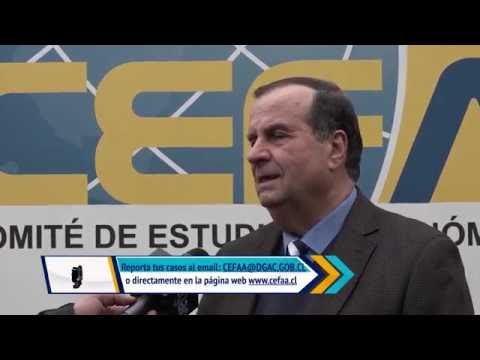
CEFAA: Te invitamos a reportar Fenómenos Aéreos Anómalos
DGAC's own official video inviting pilots and citizens to submit reports directly to the committee, explaining its intake process.
Sources
- DGAC (Chile). "CEFAA: Un Modelo Investigativo de Fenómenos Aéreos Anómalos" (full directors' timeline, dormancy period, restructuring). dgac.gob.cl
- DGAC (Chile). "Fenómenos Aéreos Anómalos y la Investigación Oficial en Chile," official publication, September 2019. dgac.gob.cl
- DGAC (Chile). "CEFAA Celebra 21 Años de Vida" (2018 anniversary, staffing and committee composition). dgac.gob.cl
- SEFAA (Chile), official site and institutional history. sefaa.dgac.gob.cl
- SEFAA (Chile). "Quiénes Somos" (mission, jurisdiction, methodology). sefaa.dgac.gob.cl
- La Tercera. "Hasta 20 avistamientos mensuales: la historia de los objetos voladores no identificados en Chile cumple 55 años." latercera.com
- La Voz del Norte. "Periodísta Hugo Camus dejó la dirección de la Sección de Estudios de Fenómenos Aéreos Anómalos - ex CEFAA." lavozdelnorte.cl
- Espírito Santo, Diana; Vergara, Alejandra. "The Possible and the Impossible: Reflections on Evidence in Chilean Ufology." Antípoda. Revista de Antropología y Arqueología, No. 41 (2020), pp. 125–146. redalyc.org
- Blog Altovuelo (piloto). "Origen del CEFAA hoy llamado SEFAA." blogaltovuelo.blogspot.com
- ALA Noticias. "CEFAA: Un Modelo Investigativo de Fenómenos Aéreos Anómalos." ala.aero
- Wikipedia (Spanish). "Sección de Estudios de Fenómenos Aéreos Anómalos" (used for orientation only; primary claims independently verified against DGAC's own official sources above). es.wikipedia.org
- Wikipedia (Spanish). "Comité de Estudios de Fenómenos Aéreos Anómalos" (used for orientation only; primary claims independently verified against official sources above). es.wikipedia.org
- This site's own case file, "Collahuasi Mine UFO Sighting," for the fullest treatment of CEFAA's photo-analysis methodology. OverClassified
- This site's own case file, "Chilean Navy Helicopter Video," for CEFAA's most internationally publicized investigation and the unresolved conventional-explanation dispute. OverClassified
- This site's own case file, "El Bosque Air Base UFO Video," for CEFAA's first major post-2010 case and its still-disputed insect-versus-anomaly analysis. OverClassified
- This site's own case file, "CRIDOVNI: Uruguay's Air Force UFO Commission," for CEFAA's 2012 cooperation agreement and the broader Latin American UAP-institution network. OverClassified
- This site's own case file, "GEIPAN: France's Official UAP Investigation Unit," for direct comparative institutional context. OverClassified
- Abusleme, Patricio. UFOs in Chile: Chronicles of Real Encounters with Unidentified Flying Objects and Their Alleged Occupants (2021), for national historical and institutional context, including the author's own later SEFAA interim coordinatorship.
- Kean, Leslie. Huffington Post, January 5, 2017 (Chilean Navy video public release and CEFAA findings). huffpost.com
- Metabunk (Mick West). "Explained: Chilean Navy 'UFO' video — Aerodynamic Contrails, Flight IB6830" (the independent conventional-explanation analysis CEFAA has never formally engaged with).
- Newsweek. "Chile Can't ID Mysterious Aircraft Caught on Video." newsweek.com
- YouTube (La Voz del Norte Chile). "OVNIS: 25 años del Comité CEFAA" (2022). youtube.com
- YouTube (Teletrece / T13). "Reportajes T13: Ovnis en Chile, los últimos registros." youtube.com
- YouTube (DGAC Chile). "CEFAA Te invitamos a reportar fenómenos Aéreos Anómalos." youtube.com
- Wikimedia Commons. "File:Departamento de Informática DGAC, Providencia, Santiago 20250709.jpg," photo by Carlos Figueroa Rojas, CC BY-SA 4.0, hero image source. commons.wikimedia.org
See something inaccurate? Have additional information or sources?
Suggest an Edit →Last Updated: August 2026