
The USO Hypothesis
Proposes that a meaningful subset of UAP encounters represent craft, or a permanent presence, operating in and from Earth's oceans — citing decades of Navy sonar contacts, a leaked 2019 sensor video of a sphere descending into the Pacific with no wake, and a retired rear admiral's Congressional warning that the ocean, not the sky, is where the U.S. military's transparency gap is widest.
Mixed Evidentiary RecordCore Thesis
Objects displaying UAP-like performance characteristics — sudden acceleration, no discernible propulsion, apparent immunity to water pressure and drag — have been detected entering, exiting, and operating beneath the ocean's surface with a frequency and consistency that argues for a real phenomenon distinct from marine life or submarine misidentification, and that the ocean's opacity to conventional surveillance may make it the more logical operating environment for any non-human or unconventional technology, not the sky.
The USO Hypothesis (Unidentified Submerged Object) is the aquatic counterpart to the broader UAP debate: the claim that a subset of reported encounters involve objects operating in, or transitioning between, air and water in ways that exceed the performance of any known submarine, torpedo, or marine animal. Proponents argue the hypothesis deserves particular weight because water is a categorically harder environment to fake, hoax, or casually misidentify a large solid object within than open sky — sonar, unlike a camera, returns a physical distance and bearing to a genuine object, not merely a point of light — while critics counter that water is also the medium most prone to instrumentation artifacts, thermoclines, and known-but-startling marine phenomena that a sonar operator, unfamiliar with them, might reasonably misread as something else.
Unlike most theories on this site, the USO Hypothesis is not organized around a single charismatic witness or a single dramatic piece of footage. It instead rests on a loose confederation of independently sourced incidents spanning six decades and at least four navies, tied together retrospectively by researchers, and more recently given its most credentialed modern advocate in retired Rear Admiral Tim Gallaudet, a 32-year U.S. Navy veteran and former acting Administrator of NOAA who testified to Congress in November 2024 that the Department of Defense's silence on underwater unidentified objects was itself a "giant red flag."
This page treats the hypothesis's evidentiary record as genuinely mixed rather than uniformly strong or weak: it draws on four case files already documented in this archive — the USS Omaha Underwater Object (2019), the Puerto Rico ASW Range Sonar Contact (1963), the Shag Harbour Incident (1967), and the Island of Trindade Sighting (1958) — each independently rated, and each illustrating a different point on the spectrum from institutionally corroborated to entirely unverifiable.
Origins and Development
The hypothesis's foundational text is Scottish-born naturalist and zoologist Ivan T. Sanderson's 1970 book Invisible Residents: The Reality of Underwater UFOs. Sanderson, who had founded the Society for the Investigation of the Unexplained (SITU) in 1967, compiled reports of glowing objects entering and exiting the ocean from nearly every coastline on Earth and proposed that an intelligent, non-human presence — which he termed "OINTS," for Other Intelligences — had established itself in the deep ocean, potentially twice as old as Homo sapiens and possessing independently developed spaceflight capability. Sanderson explicitly linked the OINTS concept to his earlier, better-known "anomaly zones" theory (the 1972 Saga magazine article "The Twelve Devil's Graveyards Around the World," which proposed a worldwide grid of geographic clusters, including the Bermuda Triangle, with elevated rates of unexplained disappearances), arguing the two phenomena were connected: many of his named "vile vortices" sat directly over deep ocean trenches.
The hypothesis remained a minority, low-visibility interest within ufology for nearly four decades, sustained mainly through Sanderson's own SITU network and scattered case compilations, until researcher Carl W. Feindt revived and substantially expanded it with his self-published 2010 book UFOs and Water: Physical Effects of UFOs on Water Through Accounts by Eyewitnesses. Feindt, who preferred the term "Water UFOs" to USO on the grounds that "submerged" should apply only to fully underwater objects rather than the more common pattern of objects transiting the air-water interface, compiled several hundred water-adjacent cases and presented his findings at a MUFON symposium in Denver and on History Channel's Deep-Sea UFOs and Deep-Sea UFOs: Red Alert documentary specials, giving the hypothesis its widest mainstream cable-television exposure to date before his death in 2019.
The hypothesis gained its most credentialed modern advocate with retired Rear Admiral Tim Gallaudet, a former Oceanographer of the Navy and acting Administrator of NOAA, whose written testimony to the House Oversight Committee in November 2024 explicitly invoked USOs and "transmedium" objects, directly citing the 2019 USS Omaha incident as an example of the phenomenon the Department of Defense was, in his assessment, failing to adequately investigate or disclose. Gallaudet's combined Navy and NOAA background — oceanography and national-security clearance in the same career — gives the hypothesis an advocate uniquely positioned to speak to both the phenomenon's claimed physical characteristics and the institutional secrecy surrounding it.
Key Claimed Evidence
- The USS Omaha sensor video (2019): Leaked footage, later authenticated by the Pentagon as genuine Navy sensor data, showing a spherical object hovering over open water off San Diego before descending into the ocean with no discernible splash-consistent deceleration — the hypothesis's single strongest piece of institutionally acknowledged evidence.
- The Puerto Rico ASW Range sonar contact (1963): As recounted in Sanderson's 1970 book, a claim that Navy sonar operators tracked an object accelerating from a stationary position to over 150 knots and diving to 27,000 feet during a real, documented anti-submarine warfare exercise — though Sanderson himself, by his own account, could never independently confirm the story or identify a named source.
- Shag Harbour (1967): Multiple named civilian and RCMP witnesses watched a lighted object descend into the Atlantic off Nova Scotia; a Royal Canadian Navy dive team searched the site for days and found no wreckage, and yellow foam later observed on the water was independently attributed to natural wave action rather than any craft residue.
- Trindade Island (1958): A Brazilian Navy expedition photographer captured images of a disc-shaped object during an International Geophysical Year oceanographic voyage, later drawing renewed scrutiny after family members made conflicting hoax claims decades afterward.
- The Baltic Sea Anomaly (2011–present): A sonar-mapped seafloor formation off Sweden frequently cited by USO proponents as evidence of a submerged structure; multiple independent scientific expeditions have concluded it is a natural glacial or bedrock formation, though some later re-analyses have disputed that conclusion, keeping the case open in USO-advocacy circles even as mainstream geology treats it as resolved.
Government & Military Programs
Unlike several other theories on this site, the USO Hypothesis has a genuine, on-the-record institutional advocate rather than only anonymous or pseudonymous testimony: Tim Gallaudet's November 2024 written Congressional testimony explicitly names USOs and transmedium phenomena as a category the Department of Defense's existing UAP reporting apparatus (principally AARO) has under-prioritized relative to airborne sightings. The U.S. Navy's own institutional position, as reflected in its routine operational classification of unidentified sonar contacts, treats the vast majority of such returns pragmatically — as whales, sharks, other marine life, or foreign submarines — a stance the Navy has not publicly revised despite Gallaudet's testimony. No formal government investigation, report, or task force has been established specifically for USO or transmedium claims as distinct from the broader AARO mandate, and AARO's own public reporting to date has not singled out a maritime domain finding beyond routine case counts.
Skeptical Critiques & Limitations
The hypothesis's evidentiary base is uneven in a way that matters directly to how much weight any single case can bear. The Puerto Rico ASW Range story, its single most dramatic performance claim (150+ knots underwater, a 27,000-foot dive), rests entirely on Sanderson's secondhand 1970 account: no named witness, no cited document, and an explicit acknowledgment from Sanderson himself that he could never confirm the story independently, a red flag by the evidentiary standard this archive applies to every other case. The Baltic Sea Anomaly, one of the hypothesis's most visually compelling modern touchstones, has been examined by multiple independent scientific sonar and sub-bottom profiling expeditions, the majority of which concluded it is a natural glacial deposit or bedrock outcrop whose sonar signature was distorted by the Baltic's unusual salinity and temperature gradients — precisely the kind of instrumentation artifact skeptics argue explains a large share of USO reports generally, even though a minority of more recent re-analyses have disputed that the formation sits naturally within the surrounding seabed layers.
Marine biologists and sonar specialists note that the ocean hosts a wide range of genuinely startling, well-documented natural phenomena capable of producing anomalous-seeming sonar and visual returns to an untrained or surprised observer: bioluminescent plankton blooms (\"milky seas\"), large baleen whale pods moving in coordinated patterns, methane seep bubble plumes rising from the seafloor, and internal waves at thermocline boundaries that can produce false solid-object returns on active sonar. None of these mechanisms has been rigorously, case-by-case ruled out for the specific incidents proponents cite, a gap that cuts in both directions: it means the hypothesis has not been rigorously confirmed, but it also means no specific case in this analysis has been rigorously and completely explained away either, beyond the general availability of a plausible mundane candidate.
Theory Development Timeline
| Date | Development |
|---|---|
| Jan. 16, 1958 | A Brazilian Navy expedition photographer captures the Island of Trindade images during an International Geophysical Year oceanographic voyage. |
| March 1963 | The claimed Puerto Rico ASW Range sonar contact allegedly occurs during a real Navy anti-submarine warfare exercise. |
| 1967 | Ivan Sanderson founds the Society for the Investigation of the Unexplained (SITU). |
| Oct. 4, 1967 | The Shag Harbour Incident: multiple witnesses watch an object descend into the Atlantic off Nova Scotia; a Royal Canadian Navy dive search finds no wreckage. |
| 1970 | Ivan Sanderson publishes Invisible Residents: The Reality of Underwater UFOs, coining the "OINTS" framework and establishing the hypothesis's founding text. |
| 2010 | Carl Feindt publishes UFOs and Water, substantially reviving and expanding the hypothesis's case catalog. |
| 2011 | Sonar operators discover the Baltic Sea Anomaly, which is rapidly adopted by USO proponents as a claimed submerged structure. |
| July 15, 2019 | The USS Omaha's sensors record a spherical object descending into the Pacific off San Diego; the footage later leaks publicly. |
| 2019 | Carl Feindt dies; obituaries and tribute articles credit him as the leading modern USO researcher. |
| Nov. 2024 | Retired Rear Admiral Tim Gallaudet testifies to Congress, explicitly citing USOs and the USS Omaha incident as evidence of an under-investigated maritime UAP domain. |
Theoretical Alignment
The USO Hypothesis functions less as a competing origin theory than as a domain-specific lens that can be applied under several of this site's other frameworks: an aquatic craft could equally be extraterrestrial, ultraterrestrial (Sanderson's own OINTS concept is explicitly a variant of an indigenous, Earth-native intelligence, closely paralleling the Ultraterrestrial Hypothesis), or a genuinely advanced human or foreign-adversary underwater drone program. It aligns most directly with this site's broader Water Proximity Analysis data project, which found a statistically disproportionate share of UAP case locations sit near oceans, lakes, or rivers — a pattern the USO Hypothesis offers one specific causal explanation for, though the data project itself remains agnostic on cause.
Sensor & Instrumentation Detection Profile
USO claims occupy an unusual evidentiary position relative to airborne UAP claims: active sonar, in principle, returns a genuine range and bearing to a physical object rather than merely a point of light, making a hoax or simple misidentification of "nothing at all" comparatively harder to produce by accident. In practice, however, sonar is also uniquely vulnerable to environmental artifacts specific to water — thermoclines, salinity gradients, biological returns from fish schools or whale pods, and bubble plumes from seafloor seeps — that can generate solid-seeming false contacts. The USS Omaha case is the hypothesis's strongest instrumentation-grade evidence specifically because it combines a visual sensor record (not sonar alone) with Pentagon acknowledgment of the video's authenticity, a combination the Puerto Rico and Trindade cases lack entirely.
Environmental & Geospatial Context
The hypothesis's core cases span a wide geographic and oceanographic range: the Puerto Rico Trench, the deepest point in the Atlantic Ocean; the coastal waters off Shag Harbour, Nova Scotia; the remote South Atlantic waters surrounding Trindade Island, Brazil; and the Pacific Ocean off San Diego, where the USS Omaha (LCS-12) recorded its 2019 encounter. This geographic spread is itself part of the proponent case — deep trenches, remote islands, and heavily trafficked naval exercise zones are not an obviously connected set of locations unless a genuinely mobile, ocean-wide phenomenon links them — while skeptics note the same spread is equally consistent with a common, geographically universal set of sonar and visual misidentification triggers rather than any single unified cause.
Observer Credibility & Occupational Profile
The hypothesis's observer base spans a genuinely wide credibility range across its core cases. The USS Omaha video was recorded by active-duty Navy sensor operators and later acknowledged as authentic by the Pentagon, the strongest institutional credibility any case in this analysis carries. Shag Harbour's witnesses included multiple named civilians and Royal Canadian Mounted Police officers who filed contemporaneous reports. The Trindade photographs were taken by an official Brazilian Navy expedition photographer during a documented scientific voyage. The Puerto Rico ASW Range claim, by contrast, names no witness at all and rests entirely on Sanderson's own secondhand account — the weakest evidentiary foundation of the hypothesis's four core cases, and one this site's own case-file rating for that incident reflects with a Disputed rating.
Historical Precedents & Archive Matches
The hypothesis draws precedent from a genuinely long and cross-national historical record: reports of glowing objects entering the sea appear in mariners' logs and folklore predating the modern UFO era, and multiple national navies — American, Canadian, Brazilian, and, per various secondhand Cold War-era claims, Soviet — have separately generated USO-adjacent incidents across six decades, a breadth that gives the hypothesis more independent, cross-institutional data points than several single-witness theories on this site. The precedent cuts both ways, however: it is equally consistent with a genuinely worldwide, recurring natural or instrumentation-based phenomenon (unusual bioluminescence, sonar thermocline artifacts, marine animal behavior) misread similarly by unrelated observers across cultures and decades, rather than a single unified non-human presence.
Material Analysis
No physical sample, wreckage fragment, or recovered material of any kind has ever been produced in connection with any core USO case. The Shag Harbour dive search, conducted by the Royal Canadian Navy over several days immediately following the sighting, is the most rigorous physical search effort any case in this analysis has received, and it recovered nothing beyond a patch of yellow foam later independently attributed to natural wave action. The USS Omaha video remains the hypothesis's strongest evidentiary artifact precisely because it is a genuine, Pentagon-acknowledged sensor recording rather than a claimed physical object — but a recording of an unidentified object is a categorically different, and weaker, form of evidence than a recovered and independently analyzed physical sample, which the hypothesis entirely lacks.
The Conventional Explanation Candidate
For the hypothesis's weaker individual cases, particularly the uncorroborated Puerto Rico ASW Range claim and the scientifically contested Baltic Sea Anomaly, the leading conventional explanation candidates are sonar and sensor misidentification of natural marine and geological phenomena — thermocline distortion, biological sonar returns, and glacially formed seafloor structures — combined with, in Sanderson's specific case, an admitted absence of independent source verification. For the hypothesis's strongest case, the USS Omaha video, no fully satisfying conventional explanation candidate has been publicly confirmed by the Navy or AARO; the object's behavior (a stable hover followed by descent into water without a wake-consistent splash pattern) remains the aspect of the hypothesis this site's own case-file rating classifies as genuinely open rather than resolved in either direction.
Supporting This Hypothesis
- The USS Omaha video is a genuine, Pentagon-acknowledged Navy sensor recording, not testimony alone
- A retired Rear Admiral and former NOAA acting Administrator has formally testified to Congress that the maritime UAP domain is under-investigated
- The Shag Harbour Incident involved multiple named civilian and RCMP witnesses and a documented, multi-day official Royal Canadian Navy search response
- Core cases span six decades and at least three separate navies, a broader independent evidentiary base than many single-witness theories
Against This Hypothesis
- The hypothesis's most dramatic performance claim (Puerto Rico, 150+ knots, 27,000-foot dive) rests on an uncorroborated secondhand account its own original source admitted he could not verify
- Multiple independent scientific expeditions have concluded the Baltic Sea Anomaly is a natural glacial or bedrock formation, not a structure
- No physical sample, wreckage fragment, or recovered material has ever been produced for any core case, despite a rigorous multi-day search at Shag Harbour
- Water is uniquely prone to sonar and visual instrumentation artifacts (thermoclines, bioluminescence, biological returns) capable of producing anomalous-seeming false contacts
- The U.S. Navy's own routine operational classification of unidentified sonar contacts as marine life or foreign submarines has not been formally revised despite Gallaudet's testimony
Theoretical Assessment Profile
Six-domain evaluation of this hypothesis
Key Proponents
Ivan T. Sanderson
Coined the hypothesis's founding "OINTS" framework in his 1970 book Invisible Residents, linking it explicitly to his earlier "anomaly zones" theory of geographic clusters like the Bermuda Triangle.
Carl W. Feindt
Revived and substantially expanded Sanderson's catalog with his 2010 book compiling several hundred water-adjacent UFO cases, presented at MUFON and featured on History Channel's Deep-Sea UFOs documentary specials.
Tim Gallaudet
The hypothesis's most credentialed modern advocate, whose November 2024 Congressional testimony explicitly cited the USS Omaha incident and called the Pentagon's limited maritime-domain UAP investigation a "giant red flag."
Related Cases
Further Reading & Recommended Literature
Invisible Residents: The Reality of Underwater UFOs
The hypothesis's founding text, introducing the "OINTS" framework and linking underwater UFO reports to Sanderson's broader anomaly-zones theory.
UFOs and Water: Physical Effects of UFOs on Water Through Accounts by Eyewitnesses
The modern era's most comprehensive USO case catalog, compiling several hundred water-adjacent UFO reports from around the world.
UFOs: Generals, Pilots, and Government Officials Go on the Record
A compilation of credentialed official testimony, useful context for weighing Tim Gallaudet's Congressional statements on USOs.
UFO: The Inside Story of the US Government's Search for Alien Life Here—and Out There
An extensively researched history of U.S. government UAP records, including the institutional context behind AARO's maritime-domain reporting gaps.
The UFO Experience: A Scientific Inquiry
The foundational text on scientifically rigorous UFO classification and witness evaluation, directly applicable to weighing the hypothesis's uneven case catalog.
DISCLOSURE: Some links above are affiliate links. If you purchase through them, OverClassified receives a small commission at no additional cost to you. This helps support independent research.
Essential Viewing
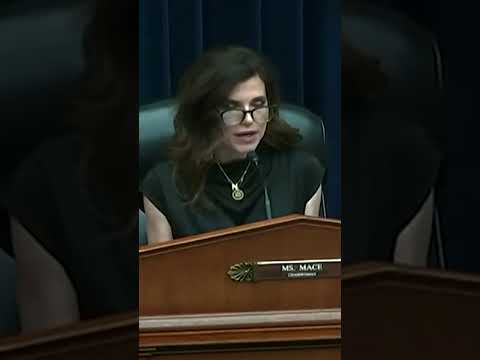
Retired Admiral Gallaudet on UAP Confirmation
NBC 10 WJAR — Tim Gallaudet discusses his personal confirmation that UAPs are real, tracing back to a January 2015 encounter.
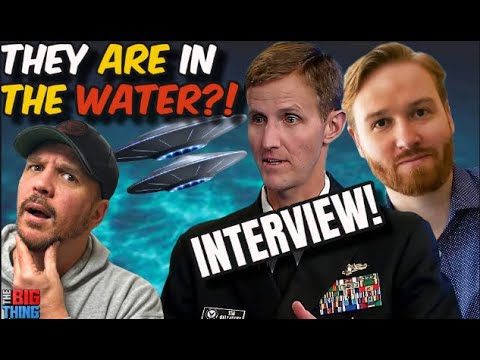
Gallaudet Discusses USOs Directly
An extended interview in which Gallaudet directly addresses USOs, the Sol Foundation, and the maritime UAP transparency gap.
Sources Cited
- Sanderson, I. T. (1970). Invisible Residents: The Reality of Underwater UFOs. World Publishing.
- Feindt, C. W. (2010). UFOs and Water: Physical Effects of UFOs on Water Through Accounts by Eyewitnesses.
- "Unidentified submerged object." Wikipedia. en.wikipedia.org
- "Remembering Carl Feindt." (2019). National UFO Center. nationalufocenter.com
- Written Testimony by Dr. Tim Gallaudet, Rear Admiral, U.S. Navy (Ret.), U.S. House Committee on Oversight and Accountability, November 2024. oversight.house.gov
- "'UFOs are hiding underwater, not in the sky': Retired Navy officer Tim Gallaudet criticizes DoD." Business Today. businesstoday.in
- "Underwater UFO capability 'jeopardizes US maritime security,' ex-Navy officer says." Fox News. foxnews.com
- "Ex-Navy Admiral Says 'Transmedium' UFOs 'Are Nothing Short Of World Changing'." BroBible. brobible.com
- "UFOs and UAPs should be studied by the U.S., experts tell congressional hearing." NPR. npr.org
- "Secrets of the Baltic Sea Anomaly: UFO or Hoax?" Ancient Origins. ancient-origins.net
- "The Baltic Sea Anomaly: A Decade of Unanswered Questions on the Seafloor." Above the Norm News. abovethenormnews.com
- "Baltic Sea Anomaly CONFIRMED Not Natural by Scientists." Medium. medium.com
- Kean, L. (2010). UFOs: Generals, Pilots, and Government Officials Go on the Record. Harmony Books.
- Graff, G. M. (2023). UFO: The Inside Story of the US Government's Search for Alien Life Here—and Out There. Avid Reader Press.
- Hynek, J. A. (1972). The UFO Experience: A Scientific Inquiry. Da Capo Press.
- "Timothy Gallaudet." Wikipedia. en.wikipedia.org
- "Interview with Carl Feindt ~ the UFO/Water connection." Alien Hub. alienhub.com
Have corrections, additional research, or peer-reviewed sources? Help improve this entry.
Suggest an Edit