
Vampiros Extraterrestres na Amazônia
Daniel Rebisso Giese's 1991 Study of Brazil's Chupa-Chupa Wave
Core Thesis
Vampiros Extraterrestres na Amazônia (in English, "Extraterrestrial Vampires in the Amazon") is a 162-page Portuguese-language study of the 1977 "chupa-chupa" wave in the Brazilian states of Pará and Maranhão, published in Belém in 1991. Its author, Daniel Rebisso Giese, was a biomedical scientist working for the Pará state health service and the head of a local UFO research group. The book reconstructs the wave in order, from the first newspaper reports in July 1977 to its fading that December, using the regional press, interviews with residents, doctors, reporters and military men, and material from the Brazilian Air Force investigation later known as Operação Prato. Its center is Colares Island, where residents said beams of light from flying objects burned them. Giese argues that the events were physically real, that the Air Force documented them thoroughly, and that the state then chose to say nothing. It appeared six years before the officer who ran the operation gave his account on the record, and eighteen before any files reached the national archive. A Brazilian scholar writing in 2017 still judged it the most complete book on the subject. A note on this breakdown: it was not written from the book itself, which is out of print and which this site could not obtain through a legitimate channel. It rests on library catalog records, an unofficial English translation of Giese's own 1989 magazine article on the same research, a notice in Revista UFO printed when the book appeared, a 2017 master's dissertation that cites the book by page, and other secondary accounts. Statements about the book's contents are attributed to whichever of those they come from.
About the Author
The published record on Daniel Rebisso Giese is thin, and the sources do not fully agree. Revista UFO, the Brazilian magazine that announced the book, described him as Bolivian by birth, a biomedical scientist, and an employee of the Pará state government in the health field. A 2010 report in the Belém newspaper Diário do Pará likewise called him a Bolivian biomedical scientist and writer. The biographical note printed with his 1989 article in the same magazine, as translated into English by Ed Stewart, calls him a biologist and professor working in the state health system in Belém. Two later academic writers differ again: Phillippe Fernandes's 2017 dissertation calls him a journalist and ufologist in a footnote, and João Francisco Schramm's 2016 dissertation calls him a physician. The earliest sources, written by people who worked with him, are followed here. This site found no birth date.
His ufology was organized. The 1989 note says he had been president of the Centro de Investigação e Pesquisas Exológicas (CIPEX) since its founding and was then a director of the Grupo Ufológico da Amazônia (GUA) in Belém; a footnote adds that CIPEX was founded in Curitiba and moved to Belém with him. By the time the book came out, Revista UFO was calling him president of GUA and one of its own consultants. The magazine also said his public-health job brought him into professional contact with dozens of witnesses and reported victims, a claim this site could not check.
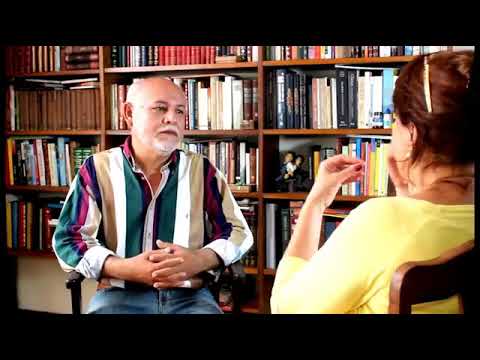
He stayed with the subject. The Diário do Pará report of October 30, 2010 has him leading a group of researchers to Santo Antônio do Tauá to look into new sightings. In 2017, forty years after the wave, he gave a filmed interview to the anthropologist and ufologist Lallá Barretto, who published it on her site in May 2021 and introduced him as the first ufologist to research the chupa-chupa. As far as this site could find, the 1991 book is his only one. Goodreads lists a single title under his name.
Historical Context & Origins
The wave the book describes ran through the second half of 1977. According to Fernandes, who follows Giese's chronology, the first reports came from the Maranhão press near the Gurupi River in July; by October the stories had reached the Pará coast and then Belém; and the reports fell away in December. Giese's 1989 article quotes the newspapers directly. On July 12, 1977 the Jornal da Bahia carried a wire story about a light said to be sucking blood from people around Bragança and Viseu. On July 16, O Liberal of Belém compared objects seen along the Pará-Maranhão border to a UFO photographed in Montevideo. On October 8 it began a series on attacks near the town of Vigia, and on October 16 it first used the name chupa-chupa, roughly "suck-suck." In Maranhão, Giese writes, people simply called the thing the aparelho, the machine.
This site's Colares case file covers the military response in detail. In outline, the 1st Regional Air Command in Belém sent intelligence personnel into the affected towns in late 1977. Portuguese and English Wikipedia date the first mission to October 20 through November 11 and a second to November 25 through December 5. Captain Uyrangê Hollanda took over operational command in November. Brazil was under military rule, and none of it was announced.
What Giese could know in the 1980s therefore depended on leaks. A footnote to his 1989 article says the Air Command's photographs were first printed in 1985, in issues 5 and 7 of the magazine Ufologia Nacional & Internacional, the forerunner of Revista UFO, and that the article itself was drawn from those issues and updated. The magazine's editor was Ademar José Gevaerd; Hollanda later recalled having talked with Gevaerd in 1987 or 1988, while still on active duty, and said the magazine printed material from that conversation without his authorization. According to Portuguese Wikipedia, the first leaked operation report was published in the magazine's UFO Documento series in September 1991, the same year as the book.
Foreign researchers were arriving at the same time. Bob Pratt, an American reporter, had talked with Hollanda as early as 1981, according to Portuguese Wikipedia, though his UFO Danger Zone did not appear until 1996. Jacques Vallée traveled to Belém in 1988, interviewed the Colares doctor, and wrote about the wave in Confrontations (1990). Giese's book appears to have been the first long treatment written from inside Pará, in Portuguese, by someone who lived there. Whether it was strictly the first book is less clear: Diário do Pará called it the first work on the chupa-chupa, but the Revista UFO notice says it far surpassed smaller works on the subject circulating since the 1980s.
The Library of Congress catalogs it under Falangola Editora of Belém, as do the academic works that cite it, while the Portal da Operação Prato, a Brazilian reference site on the case, lists it as the author's own edition. The Revista UFO notice may explain the difference: it remarks that Brazilian UFO authors were then generally paying for their own books, and says this one was sold in a few bookstores or by mail from GUA's post office box. No ISBN appears in any record this site checked.
Core Arguments & Key Concepts
The wave can be reconstructed from the record. Fernandes summarizes the book's method: Giese widened the frame from Colares to the whole affected region of Pará and Maranhão, built the narrative on interviews with doctors, journalists, military personnel and residents, drew on newspaper files and reports on the case, and told it chronologically from the phenomenon's appearance to its disappearance. Giese's 1989 article describes the first stage as a survey of the Belém papers A Província do Pará, O Liberal and O Estado do Pará, done at the city's public library. He admits there that money and time kept him from covering Maranhão's press or all of Pará.
The injuries were deliberate, but the "vampire" claim is unproven. The book's title is stronger than its author's stated position. In the conclusions to the 1989 article Giese writes that the burns were not accidental and that people were targeted, by preference while they slept. He then concedes that there is no complete proof that blood was taken from anyone. What he offers in its place is clinical: he says examinations by the Colares doctor showed lowered hemoglobin, that victims had the weakness, fainting and headaches of people who have lost blood, and that small puncture marks were found where the light had struck. Whether the book keeps this wording this site cannot say; the Portal da Operação Prato describes it as discussing possible explanations.
The small lights were probes. Witnesses described both large craft and small, very bright balls of light that flew low, moved fast, threw beams and followed people. Giese's article classes the small ones as remotely operated probes. He also collects the few descriptions of occupants, short to medium in height with greenish, wrinkled skin, compares them to the kappa of Japanese folklore, and cites the Argentine researcher Fabio Zerpa on a similar report from southern Argentina.
The Air Force knew and kept quiet. This is the argument Revista UFO singled out as the gravest. In the 1989 article Giese says the command's instructions were to study the phenomenon seriously, gather everything relevant and avoid public comment; that the teams collected hundreds of reports and about 200 photographs, most of them at Baía do Sol on Mosqueiro Island and at Colares; and that a report of about 500 pages, with photographs, drawings, maps, interview records and press clippings, went to the armed forces general staff. Fernandes, citing page 116 of the book, reports Giese's explanation of why it stayed secret: some members of the commission considered releasing it, but censorship and the pressure of the military regime made the moment wrong, the conclusions were not fully satisfactory, and the Air Force did not want to expose itself to ridicule.
Not every visitor is benign. The Revista UFO notice reads the book as proof that some of the intelligences behind UFOs are harming riverside populations in Pará, Amazonas and elsewhere, a position it says few ufologists would accept in public. Giese's 1989 conclusion is more guarded. He calls the wave a large-scale operation in places chosen for their isolation, and suggests its purpose was possibly research on, or biological manipulation of, human beings, adding that he cannot say to what end. He marks that step as speculation himself.
Key Cases & Evidence Discussed
The first lights, Viseu and the Maranhão border. Fernandes quotes a passage from page 13 of the book describing an ordinary evening in the town of Viseu interrupted by distant lights that moved silently, changed color and were taken by the more religious onlookers as a sign of the end times. Page 36, which Fernandes reproduces, is a map of the Pará municipalities affected.
Colares: exodus and vigils. Giese's article describes the island, about 70 kilometers northeast of Belém, as a fishing and farming community where the fear grew strong enough that a good part of the population left to stay with relatives elsewhere; Fernandes cites page 53 of the book for the same point. Those who stayed kept watch with bonfires and firecrackers. Giese's group interviewed residents including the carpenter Carlos Cardoso de Paula, who described a small ball of fire entering through the roof ridge and moving along his leg until he cried out.
The doctor's patients. Wellaide Cecim Carvalho ran the island's health unit in 1977, aged 22 according to Fernandes. Citing pages 80 and 81 of the book, Fernandes writes that she treated at least 35 people for injuries to the chest and face. He adds that she at first read the cases as hallucination or collective delusion, and wondered whether the wounds were self-inflicted, before the similarity of accounts from people living far apart changed her mind.
Claudomira and Newton. Two Colares witnesses anchor the clinical picture. Claudomira Rodrigues da Paixão, called Mirota, told Giese she was sleeping in a hammock by a window at a cousin's house when a pale green beam came down on the left side of her chest; she could not scream, felt heat, and found herself burned. Newton de Oliveira Cardoso said he woke at night in Mocajatuba with a burn on the left side of his neck and was weak and dizzy for a long time afterward. Fernandes, who cites pages 85 and 88 for these interviews and dates the first to the late 1980s, found a 1977 newspaper report of a "dona Clodomira" seeking treatment that he believes is the same woman, and interviewed Cardoso himself; he says the man's account had not drifted from the one Giese published.
Baía do Sol, May 1978, and a correction. Portuguese Wikipedia, citing the book, describes how Giese handled a well-known later story. O Estado do Pará reported in June 1978 that a beam of light had woken a reporting team sheltering in their car on Mosqueiro Island and that they photographed the encounter. Giese interviewed the journalist Biamir Siqueira and the photographer José Ribamar. Ribamar confirmed the light and an object overhead, but said he took no photographs at all, and Giese wrote that the newspaper account needed correcting. The episode shows him checking a dramatic claim against the witness and reporting the plainer answer.
The Air Force material. The Portal da Operação Prato says the book reproduces Air Force photographs from the operation along with maps and newspaper extracts, and Fernandes reproduces from page 150 an image of cylinder-shaped objects photographed in 1977. Writing in 2003, Scott Corrales cited the book for the statements that the teams gathered photographs, film and audio recordings and that attempts to chase the objects by helicopter failed.
Critical Reception & Controversies
This site found no independent review of the book. The only contemporary notice located is the one in issue 19 of Revista UFO, which called it serious, current and complete and said its technical grounding would satisfy demanding readers. That notice is not disinterested: it names Giese as a consultant to the magazine and offers the book through its own mail-order insert. Goodreads showed one rating and no written reviews when checked in October 2026.
Later writers praise it as a source without testing it. Corrales called it a landmark. Fernandes called it the most complete book on the subject published to that point, said of one later book on Colares that it added no new detail, and relied on it for witness testimony. But his dissertation is a study of memory and imagination, and it takes no position on what the lights were.
The strongest criticism is of the evidence the book rests on, not of the book, and it began in 1977. Fernandes documents how the Belém press turned to doctors in mid-November. A psychiatrist, José Cutrim, attributed the episodes to collective neurosis in insecure people. Zoghbi, having examined three young women in Belém, told A Província do Pará that no extraterrestrial being was attacking anyone, that frightened people should see a psychologist, and that the media should stop spreading insecurity. Zoghbi had put the marks on one 18-year-old patient down to her own hands in a moment of panic. Giese's article rejects that, arguing the wounds were deep, concentrated and unlike fingernail marks, and dismisses such statements generally as convenient explanations.
The Air Force's own papers pointed the same way on the injuries. Fernandes quotes the operation's reports describing Colares as in a state of collective hysteria, its people of low cultural and economic level and easily influenced by the media. Portuguese Wikipedia summarizes a report by two Air Force doctors who visited on October 26 and 27, 1977 and examined two women who said they had just been struck: it attributed their symptoms to an adrenaline response to fear, spread through the community by word of mouth. That passage of the encyclopedia article is flagged as needing a citation. One leaked report, as quoted by Portuguese Wikipedia, nonetheless stated that the lights were plainly present and intelligently directed, which is why both sides cite the military papers.
The medical testimony has also grown with time. As quoted by Portuguese Wikipedia, the doctor's statement to the Air Force team in 1977 referred to four cases she had attended, with first-degree burns and tiny perforations. The figure of at least 35 patients comes from Giese's book a decade later, and the encyclopedia notes that in later interviews she significantly broadened what she had said in 1977. This site found no published clinical records or blood counts from the health unit, so the hemoglobin findings Giese cites rest on her word as relayed by him. The Colares interviews in his article and book appear likewise to have been recorded up to a decade after the events.
The photographs are disputed as well. In his 1997 interview with Ademar José Gevaerd and Marco Antonio Petit, Hollanda said that for roughly two months the team's negatives showed nothing, until, by his account, he found a way to bring the images out, after which more than 500 pictures were printed. Portuguese Wikipedia reports that in October 2007 the son of Sergeant Flávio Costa, a member of the team, said he had manipulated and enlarged points of light during developing so that they looked like flying saucers, and that an intelligence-service report released in 2009 says the team's chief identified the most impressive photograph as Venus. This site's article on Thiago Luiz Ticchetti's UFO Attacks in Brazil discusses the tampering claim further. Giese, writing in 1991, could not have addressed any of this.
A last limit is the author's own position. He led a UFO group, and his 1989 article treats the ufological nature of the wave as settled. His stated practice of keeping only the most coherent testimony is also a selection, and the reader cannot see what was left out.
Influence & Legacy
The book's influence has been indirect and mostly Brazilian. It has never, as far as this site can find, been translated or reprinted. The Portal da Operação Prato lists it as unavailable for sale, no Amazon listing for it could be found in October 2026, and the Library of Congress catalog shows a single copy in offsite storage. What English-language readers know of Giese's work comes from Ed Stewart's translation of the 1989 article, posted to Usenet in February 1994 and now hosted by the French researcher Patrick Gross.
Inside Brazil it became the reference that later work starts from. Portuguese Wikipedia's article on the operation cites it. Fernandes's 2017 dissertation at the Federal University of Rio de Janeiro uses its map, its photographs and its interviews. The Portal da Operação Prato places it first in its list of books on the case, ahead of Pratt, Vallée and later Brazilian titles such as Jorge Bessa's 2016 memoir of the intelligence service's role and the reporter Carlos Mendes's Luzes do Medo (2019).
Events overtook it in two stages. In 1997 Hollanda gave his long interview to Revista UFO and died later that year; his account, not Giese's, became the version the world knows. Then, according to Portuguese Wikipedia, a petition campaign begun by Brazilian ufologists in 2004 led to the Air Force sending its first files on the operation to the Arquivo Nacional in Brasília on April 23, 2009, with former intelligence-service papers following that year. Researchers can now compare Giese's description of a roughly 500-page report with what was actually released and leaked.
Its most durable contribution may be the witnesses. Giese recorded Claudomira, Newton Cardoso and others while their memories were roughly ten years old, not forty, and Fernandes found at least one of those accounts stable three decades later. Colares has since made the story part of its identity, down to an alien-themed carnival group that Fernandes describes, and the testimony Giese collected is one of the few fixed points behind that folklore.
The Book
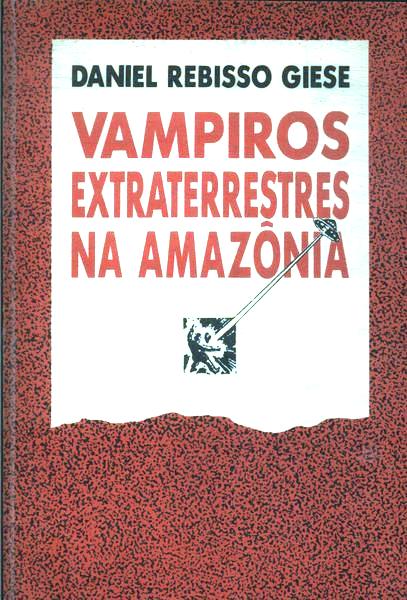
Vampiros Extraterrestres na Amazônia
Daniel Rebisso Giese's 1991 Study of Brazil's Chupa-Chupa Wave
Find on Amazon →As an Amazon Associate, OverClassified may earn from qualifying purchases made through this link, at no extra cost to you.
Why This Is Essential Reading
Vampiros Extraterrestres na Amazônia belongs on this list as what appears to be the earliest full study of the Colares wave by a researcher based in Pará, and as the place where several of the case's witness statements were recorded at length. Daniel Rebisso Giese worked from newspapers and interviews, corrected at least one inflated press story, and admitted that the blood-taking his title advertises was never proven. Those are real merits. The book is also the work of a committed ufologist, written before the files were open, before the photograph-tampering claim and before anyone compared the doctor's 1977 statement with her later ones; its interviews were gathered about a decade late, and the only notice of it this site found came from a magazine the author advised. Read it, if you can find a copy, next to Bob Pratt and Jacques Vallée for the same witnesses seen by outsiders, and next to the 1977 medical verdicts it argues against. This site has not read the full text and will revise this assessment when it has.
Related Cases & Theories
Essential Viewing
Sources Cited
- Giese, Daniel Rebisso. Vampiros extraterrestres na Amazônia. Belém, Pará: Falangola Editora, 1991. 162 p., ill., maps, 21 cm. Library of Congress catalog record, LCCN 93832205 (no ISBN listed). Book not consulted directly. lccn.loc.gov
- "Vampiros extraterrestres na Amazônia." Open Library work and edition record (Falangola Editora, Belém, 1991, 162 p., paperback, Portuguese). The cover image attached to this record is an unrelated photograph and was not used. openlibrary.org
- Giese, Daniel Rebisso. "The Phenomenon 'Chupa-Chupa' in Amazonia." UFO (Brazil) no. 7, vol. 2, April-June 1989, pp. 13-18. Unofficial English translation by Ed Stewart, posted to Usenet February 17, 1994; hosted by Patrick Gross (press chronology, Colares interviews, Air Force operation, conclusions, author note and footnotes). ufologie.patrickgross.org
- "Edição 19 - Biblioteca Ufológica." Revista UFO, issue 19 (online archive copy, undated; notice of the book at publication, author biography, price and ordering details). In Portuguese; paraphrased in translation here. ufo.com.br
- Fernandes, Phillippe Sendas de Paula. Luzes misteriosas cruzam os céus da Amazônia: memória e imaginário no fenômeno Chupa-Chupa. Master's dissertation, Escola de Comunicação, Universidade Federal do Rio de Janeiro, 2017, 151 leaves (assessment of the book; citations of Giese 1991, pp. 13, 36, 53, 80-81, 85, 88, 116, 122-123, 150; 1977 press and medical statements; military report language). PDF hosted by the Portal da Operação Prato. operacaoprato.com
- "Livros e Trabalhos Acadêmicos sobre a Operação Prato." Portal da Operação Prato (book list with description of the Giese book, 162 pp., listed as the author's own edition and unavailable for sale; source of the cover scan). operacaoprato.com
- "Operação Prato." Wikipédia, a enciclopédia livre (mission dates, medical mission report, 1977 statement of Dr. Wellaide Cecim Carvalho de Oliveira, 2007 photograph claim, intelligence-service report, 2008-2009 file transfers to the Arquivo Nacional, Giese's Baía do Sol interviews; several passages flagged there as needing citations). pt.wikipedia.org
- "Operação Prato." Wikipedia (English summary: mission dates, command, 1997 interview and Hollanda's death). en.wikipedia.org
- "Uyrangê Hollanda: Coronel rompe silêncio sobre UFOs." Interview by A. J. Gevaerd and Marco Antonio Petit, Revista UFO, October 1997 (Hollanda on the operation, the photographs, and his earlier conversation with Gevaerd). ufo.com.br
- "Ufólogos visitam Tauá para investigar OVNIs." Diário do Pará / DOL, October 30, 2010 (Giese described as a Bolivian biomedical scientist and author of the 1991 book). dol.com.br
- Barretto, Lallá. "Lallá Barretto entrevista o ufólogo Daniel Rebisso Giese, pioneiro das investigações sobre a Operação Prato." May 16, 2021 (introduction to a 2017 filmed interview). lallabarretto.com
- Corrales, Scott. "Saucers and Soldiers? The Amazon Scenario Examined." Institute of Hispanic Ufology, posted January 7, 2003; hosted by Patrick Gross (cites the book on the operation's recordings and helicopter pursuits). ufologie.patrickgross.org
- Schramm, João Francisco. A Força Aérea Brasileira e a investigação acerca de objetos aéreos não identificados (1969-1986). Master's dissertation, Universidade de Brasília, 2016 (refers to Giese in passing as a physician). PDF hosted by the Portal da Operação Prato. operacaoprato.com
- "Daniel Rebisso Giese." Goodreads author page (one title; one rating, no reviews, checked October 2026). goodreads.com
- Vallée, Jacques. Confrontations: A Scientist's Search for Alien Contact. Ballantine, 1990 (1988 field trip to Belém and interview with the Colares doctor; see this site's own breakdown).
- Pratt, Bob. UFO Danger Zone: Terror and Death in Brazil. Horus House Press, 1996; Portuguese edition Perigo Alienígena no Brasil, Biblioteca UFO, 2003 (see this site's own breakdown).
Have corrections, additional research, or peer-reviewed sources? Help improve this entry.
Suggest an Edit