
Brazil's Official Night of UFOs
On the night of May 19–20, 1986, ground radar at São José dos Campos Airport, São Paulo's Guarulhos control, and CINDACTA I in Brasília tracked as many as 21 unidentified radar returns moving over São Paulo, Rio de Janeiro, and Minas Gerais states. An executive Xingu carrying Embraer founder and incoming Petrobrás president Ozires Silva saw the lights, and five interceptors were scrambled: two Northrop F-5E Tiger IIs from Santa Cruz Air Force Base and three Dassault Mirage IIIs (FAB designation F-103E) from Anápolis Air Force Base. The pilots' results were mixed: some reported lights and radar contacts that kept their distance or moved away abruptly, others reported nothing. Four days later, on May 23, 1986, Brazil's Minister of Aeronautics, Brigadier Octávio Júlio Moreira Lima, held a press conference at the Ministry of Aeronautics in Brasília, attended by the five pilots and the controllers on duty, and told reporters, "technically, I'd tell you gentlemen that we have no explanation." It remains one of the only times any national government has held a public press conference to discuss an active military UFO intercept while the case was still open.
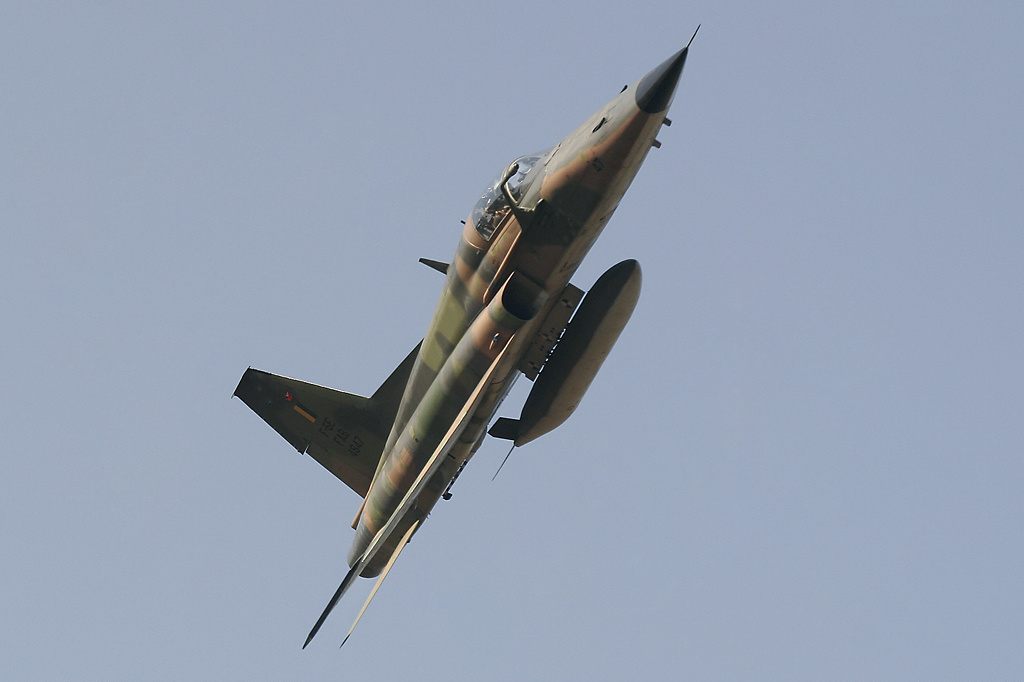
Pictured: a Brazilian Air Force Northrop F-5E Tiger II of the 1º/1º Grupo de Aviação de Caça (1st Fighter Aviation Group) — not a photograph of the actual May 19, 1986 intercept, but the real type and operating squadron lineage of the two F-5Es that Lt. Kleber Caldas Marinho and Capt. Márcio Brisolla Jordão flew that night from Santa Cruz Air Force Base. No verified photograph or film of the objects taken by a pilot or controller has been released.
Theoretical Alignment
The Official Night of UFOs is unusual in this catalogue for how much of its weight rests on institutional, not popular, testimony: the account that carries the case is not a crowd of frightened civilians but named fighter pilots, air traffic controllers, a decorated aviation executive, and ultimately the Minister of Aeronautics himself, publicly declining to offer any conventional identification. That combination pushes the Extraterrestrial Hypothesis score meaningfully higher than most radar-visual cases in this archive, without approaching certainty, because no photograph, recovered fragment, or unambiguous instrument trace corroborates any pilot's account beyond his own cockpit tape and memory. The Psycho-Social Hypothesis is scored modestly rather than dismissed, reflecting the genuine national media excitement the case generated in the days after May 19 — sensational headlines, a nickname ("the flying saucer festival") drawn from a tower operator's own radio quip, and considerable pressure on the Ministry to say something definitive by May 23. The core military witnesses, however, were on duty in separate cockpits and control rooms. The Interdimensional Hypothesis finds essentially no support in the documentary record; nothing in any pilot or controller account describes anything resembling a dimensional transition, only sudden, extreme changes in apparent velocity and heading.
Background
By May 1986, Brazil's Air Force had spent nearly a decade with unusually direct institutional exposure to the UFO question. Operação Prato, the FAB's official 1977 investigation into the Colares wave, had already produced hundreds of photographs, hours of Super-8 film, and, per its own commanding officer's later account, converted skeptical intelligence officers into believers after they personally observed low-altitude craft over the Amazon delta — though that program's findings were still classified in 1986 and became widely known only after Captain Hollanda's 1997 interview with Ademar Gevaerd and Marco Petit. Brazil in May 1986 was also a country in the middle of a fragile democratic transition: President José Sarney had taken office barely a year earlier following the death of president-elect Tancredo Neves, ending more than two decades of military rule, and the armed forces — including the Air Force — still held substantial institutional weight and public visibility even as civilian government reasserted itself. Brazil's air defense infrastructure was, by regional standards, genuinely sophisticated: the Integrated Center for Air Defense and Air Traffic Control (CINDACTA I), headquartered in Brasília, had been operational since the 1970s specifically to give the FAB continuous radar coverage of the country's most strategically important southeastern airspace — exactly the region, encompassing São Paulo's industrial heartland, Rio de Janeiro, and the Paraíba Valley aerospace corridor, that would fill with unidentified returns on the night of May 19.
It was against this backdrop — a military still culturally accustomed to taking aerial anomalies seriously as a matter of national air-defense procedure, a recently reopened civilian press eager to report on anything extraordinary after decades of dictatorship-era censorship, and a capable integrated radar network — that Sergeant Sérgio Mota da Silva, on duty in the control tower at São José dos Campos Airport, began watching strange lights shortly after 18:30 on the evening of May 19, 1986.
Complete Timeline
| Date | Event |
|---|---|
| 1977 | The Brazilian Air Force runs Operação Prato, an official military investigation into the Colares "Chupa-Chupa" UAP wave in Pará — an institutional precedent for taking 1986's events seriously. |
| March 15, 1985 | José Sarney is sworn in as acting president after president-elect Tancredo Neves is hospitalized before his scheduled inauguration. |
| April 21, 1985 | Tancredo Neves dies; Sarney becomes Brazil's first civilian president in 21 years in his own right. |
| May 19, 1986, ~18:30 | Sergeant Sérgio Mota da Silva, on duty in the control tower at São José dos Campos Airport, São Paulo, begins watching a red-orange light entering from the northwest sector near Guarulhos, using binoculars and radar (Portal Vigília, from the 2015 audio release). |
| ~19:00–20:15 | São José dos Campos reports primary radar targets and CINDACTA reports up to eight targets around 20:00 (Gross). Around 20:00 Brasília calls the São José tower and Mota da Silva answers: "Welcome to the flying saucer festival." The total eventually cited is 21. |
| ~21:08 | An EMB-121 Xingu (PT-MBZ) inbound from Brasília to São José dos Campos, carrying Ozires Silva and Alcir Pereira, reports bright red lights; the crew breaks off its approach to try to close on them, makes repeated landing attempts, and lands around 21:30. |
| ~21:39 | Santa Cruz Air Force Base goes on alert for unidentified radar plots around São José dos Campos. |
| 22:23–22:34 | The first F-5E, flown by Lt. Kleber Caldas Marinho, is scrambled and takes off from Santa Cruz Air Force Base, Rio de Janeiro, at 22:34. |
| 22:48–22:50 | The first Mirage III, flown by Capt. Armindo Sousa Viriato de Freitas, takes off from Anápolis Air Force Base, Goiás (22:48); the second F-5E, flown by Capt. Márcio Brisolla Jordão, takes off from Santa Cruz (22:50). |
| ~22:50–23:15 | Guided by Anápolis approach radar, Viriato closes to about one nautical mile of a radar target, which then vanishes and reappears farther away. He has no visual contact. |
| ~22:40–23:30 | Lt. Kleber reports a radar contact and a white light 10–12 miles ahead that changes to red and green and climbs to about 33,000 ft; the target heads out toward the Atlantic and he returns at minimum fuel. |
| 23:17–23:36 | Capt. Jordão sees a red light that goes out as he approaches; later the controller reports 13 radar plots behind his F-5E, and when he turns 180 degrees he sees nothing. Mirages flown by Capt. Rodolfo da Silva Souza (23:17) and Capt. Júlio Cézar Rozenberg (23:36) take off from Anápolis. |
| ~23:30–01:00, May 20 | Contacts continue intermittently, with recurring mismatches between what pilots could see and what their radar or ground radar registered. |
| ~01:00, May 20 | The fighters are back at base and the detections end; the minister later gave the window as roughly 20:00 to 01:00. |
| May 20–22, 1986 | News of the intercepts breaks in the Brazilian press. |
| May 23, 1986, 16:30 | Moreira Lima holds a press conference at the Ministry of Aeronautics in Brasília, with the five pilots, the controllers on duty and CODA chief Major Ney Antônio Cerqueira; he promises a full report within 30 days. |
| June 2, 1986 | Interim Air Defense Command chief Brigadier José Pessoa Cavalcanti de Albuquerque signs the FAB report, which concludes that the phenomena "are solid and reflect, in a certain way, intelligence," since they could keep their distance from observers and fly in formation, and were "not necessarily manned." |
| September 10, 1986 | In Veja, Brig. Cavalcanti rejects the space-debris explanation: "It could have been space debris, but it wasn't only that" (quoted by Gross). |
| 1993 | Capt. Armindo Sousa Viriato de Freitas, interviewed on TV Globo's Globo Repórter, estimates one target's peak escape velocity at roughly Mach 15 — a figure not present in any 1986 radar log and drawn entirely from his own recollection nearly seven years later. |
| 2004–2005 | Revista UFO editor Ademar Gevaerd leads the "UFOs: Freedom of Information Now" campaign; on May 20, 2005, the Air Force receives a committee of ufologists in Brasília and lets them examine UFO files at CINDACTA I and COMDABRA. |
| September 25, 2009 | The June 2, 1986 report is declassified and released through Brazil's National Archive, 23 years after Moreira Lima promised a report within 30 days. |
| October 22, 2015 | After a request by researcher Edison Boaventura Júnior, Brazil's National Archive makes 16 audio tapes public through its SIAN system; eight cover May 19, 1986, and the set runs to just under 13 hours (Portal Vigília). |
| May 22, 2016 | TV Globo's Fantástico airs an extended 30th-anniversary retrospective built around the newly released audio recordings. |
| January 2022 | BBC News Brasil publishes a long retrospective with new interviews, including Sérgio Mota da Silva, who says the number of objects seen that night "was much higher than 21." |
The First Sightings at São José dos Campos
The night's documented record begins with a single air traffic controller doing his job. Shortly after 18:30 on May 19, 1986, Second Sergeant Sérgio Mota da Silva, on duty in the control tower at São José dos Campos Airport in the Paraíba Valley of São Paulo state, began watching what he called a "farolzinho" (a little light), red-orange, entering from the northwest sector near Guarulhos about three degrees above the horizon, using binoculars and his radar (Portal Vigília, drawing on the tapes released in 2015). Accounts give different times for the escalation: Patrick Gross's compilation has the tower reporting three primary radar targets around 19:00 and CINDACTA up to eight targets around 20:00, and the Wikipedia summary has Mota da Silva seeing three bright lights hovering at about 20:15, which turned red, yellow, green and orange and seemed to approach when he dimmed the runway lights. Around 20:00 Brasília called his tower, and he answered: "Brasília? Boa noite! Bem vindo ao festival dos discos voadores" ("Brasília? Good evening! Welcome to the flying saucer festival"). At one point the tower counted 13 objects; the total later cited was 21. Mota da Silva told BBC News Brasil in 2022 that "the number of objects sighted that night was much higher than 21," and he added that the Air Force counted only sightings that had simultaneous radar and visual confirmation (gov.br).
Ozires Silva's Xingu Sighting
At about 21:08 the case acquired its most prominent civilian witness. An Embraer EMB-121 Xingu twin-turboprop, registration PT-MBZ, was inbound from Brasília to São José dos Campos carrying Ozires Silva, the founder of Brazil's aircraft manufacturer Embraer, who was returning from a meeting with President José Sarney and was due to take over as president of the state oil company Petrobrás. Sources differ on who was flying: BBC News Brasil (2022) and the Wikipedia summary say Silva himself was at the controls with Alcir Pereira as co-pilot, while Patrick Gross and Portal Vigília describe Pereira as the commander. The crew reported bright red lights east of the airport, and Silva later described them as "big red stars." With Brasília's authorization and the tower's guidance, the Xingu broke off its approach, turned 180 degrees and tried to close on the lights. Gross puts the chase at about 25 minutes and says the aircraft made three landing attempts before landing at São José dos Campos around 21:30. According to BBC News Brasil, Pereira, visibly frightened, warned that "everyone who tries to chase something like that ends up disappearing." Silva described the target as a "luminous point" and "very huge," and he has said he had never seen anything like it.
The F-5E Interceptions from Santa Cruz
At about 21:39 Santa Cruz Air Force Base, outside Rio de Janeiro, went on alert for unidentified radar plots around São José dos Campos, and the Air Defense Operations Center (CODA) decided to scramble fighters. The first F-5E Tiger II of the 1st Fighter Group (callsign JB17 in the Wikipedia summary) was scrambled at 22:23 and took off at 22:34 under Lieutenant Kleber Caldas Marinho. According to the Revista Asas account, he flew at Mach 0.7 with his lights off and saw a white light that sometimes turned red and green; when he lit his afterburner and accelerated to Mach 0.95, the radar showed the target turning abruptly toward the Atlantic. The Wikipedia summary has the light climbing to about 33,000 ft while staying 10–12 miles ahead; his closest approach was about 18.5 km, and he turned back at minimum fuel. He asked whether a foreign aircraft carrier was off the coast (BBC News Brasil). Asked about the experience, he said: "I wasn't afraid because I like the unknown" (quoted by Gross). The second F-5E took off at 22:50 under Captain Márcio Brisolla Jordão. He found many stationary radar contacts and saw a red light near São José dos Campos that disappeared as he approached, and his radar showed diagonal lines over the Paraíba Valley that cleared when he left the area (Revista Asas). Later the controller reported numerous plots "at six o'clock" (behind his aircraft); BBC News Brasil says 13 were on the radar, seven on one side and six on the other. When Jordão turned 180 degrees, he saw nothing.
The Mirage III Interceptions from Anápolis
More than 800 km to the northwest, three Dassault Mirage III interceptors (FAB designation F-103E) took off from Anápolis Air Force Base in Goiás after Anápolis reported radar echoes west of the base around 22:09. CINDACTA's operations center did not see these contacts. The first, at 22:48, was flown by Captain Armindo Sousa Viriato de Freitas (callsign Jaguar 116). Working only from the Anápolis approach radar, he closed to about one nautical mile of a contact, which then vanished and reappeared about 23 km away. He had no visual contact (Revista Asas; Wikipedia). On the released tapes, the controller tells him that other intercepts showed the same pattern: "there's a contact, you get close to the contact, and it increases the distance" (as quoted on Metabunk). In a 1993 Globo Repórter interview, nearly seven years later, Viriato estimated that one target accelerated to about Mach 15: "If there is a plane that can reach that speed, I'm not aware of it" (BBC News Brasil). That figure is a later estimate, not a value from any released 1986 radar record. Captain Rodolfo da Silva Souza took off at 23:17. Revista Asas says he could see the ground but not the target, which repositioned behind him or passed over or under the Mirage whenever he maneuvered, and a controller on the tapes reports a plot "always at your 6 o'clock." Captain Júlio Cézar Rozenberg took off at 23:36. Revista Asas says he relied only on the Anápolis approach radar, got within about 1.8 km of a target and saw nothing. The sources disagree about these two sorties: BBC News Brasil says Souza and Rozenberg had no visual or radar contact at all, and the Wikipedia summary says the later Mirages reported no further contacts.
Radar Ghosts, Interference, and Contradictions
What distinguishes this case from a simple "jets chased lights" narrative is how openly the participants described its inconsistencies. Sergeant Mota da Silva later summarized the pattern: "Sometimes the pilots had visual contact with the targets, but the radars recorded nothing," and at other times the radar picked up objects the pilots could not see (BBC News Brasil; gov.br). Some contacts appeared on the Anápolis approach radar but not on CINDACTA's screens. Revista Asas also notes equipment malfunctions reported both in the fighters and at the CINDACTA I operations center, and Jordão's radar showed diagonal lines over the Paraíba Valley. These could be genuine interference or an equipment fault, and the released record does not settle which. At the May 23 press conference, CODA chief Major Ney Cerqueira said, "The appearance and disappearance of these objects on the radar screens are unexplained," and added that "the Air Force has not closed the case" (quoted by Gross). The open admission of instrument confusion matters both ways. It argues against every report being a simple radar phantom with nothing visible behind it, and it also undercuts any claim that the radar returns alone prove physical objects with fixed positions.
The May 23 Press Conference in Brasília
At 16:30 on May 23, 1986, Minister of Aeronautics Brigadier Octávio Júlio Moreira Lima held a press conference in Brasília, attended by the five fighter pilots and the controllers on duty (gov.br). According to Gross's compilation, he said that at least 20 objects had been detected by Brazilian radar between about 20:00 on May 19 and 01:00 on May 20. He also said: "Radar detects only solid metallic bodies and heavy (mass) clouds," and "Radar doesn't have optical illusions." Asked whether the objects were extraterrestrial, he gave the lines that have defined the case ever since: "It's not about believing or not. We can only give out technical information. There are several hypotheses. Technically, I'd tell you gentlemen that we have no explanation." He promised a full report within 30 days, and it did not become public for 23 years. Major Ney Cerqueira, CODA's chief, spoke to the radar contradictions described above. Later retellings say that Brigadier Sócrates da Costa Monteiro, then commanding the IV Regional Air Command in São Paulo and later Minister of Aeronautics (1990–1992), said that the objects jumped from about 240 to 1,500 km/h in fractions of a second and that the Air Force had filmed the events. This file could not trace those remarks to a 1986 newspaper or to the press conference itself, and no such film has been released. Several statements often attributed to the conference could not be confirmed in any source checked, including a claim that the sky was clear, speeds of "3,600 km/h," and the phrase "incredible rapidity." Ozires Silva was a witness aboard the Xingu, not a speaker at the conference.
Silence, Rumor, and the Long Wait for Disclosure
The thirty-day report Moreira Lima promised on May 23 did not appear for a very long time. In Veja on September 10, 1986, Brigadier José Cavalcanti of the Air Defense Command rejected the space-debris explanation then circulating: "It could have been space debris, but it wasn't only that" (quoted by Gross). Later retellings say that the participants were discouraged from discussing the case and that an "electronic warfare" or test explanation was floated. Metabunk posters say Moreira Lima himself mentioned an enemy electronic-warfare tactic as one hypothesis, but this file found no primary record of either claim. In 2004 Revista UFO editor Ademar Gevaerd launched the "UFOs: Freedom of Information Now" campaign. On May 20, 2005, the Air Force received a committee of ufologists in Brasília and let them examine UFO files at CINDACTA I and COMDABRA (Gevaerd's own account, via Patrick Gross). The report dated June 2, 1986 was released on September 25, 2009, through the National Archive, 23 years after it was written (gov.br). On October 22, 2015, after a request by researcher Edison Boaventura Júnior, the National Archive made 16 audio tapes public through its SIAN system. Eight of them cover May 19, 1986, and the whole set runs to just under 13 hours (Portal Vigília). The tapes let the public hear Mota da Silva's "flying saucer festival" call and the pilots' exchanges with ground control for the first time.
Key Witnesses
Brigadier Octávio Júlio Moreira Lima
Led the May 23, 1986 press conference in Brasília, confirming radar detection of "at least 20" objects between about 20:00 and 01:00, saying that "radar doesn't have optical illusions," and stating that, technically, the Air Force had "no explanation." He promised a report within 30 days, and it was released only in 2009.
Major Aviator Ney Antônio Cerqueira
Spoke at the May 23 press conference about the case's central technical puzzle: "The appearance and disappearance of these objects on the radar screens are unexplained." He added that "the Air Force has not closed the case" (quoted by Gross).
Brigadier Sócrates da Costa Monteiro
Later retellings say he spoke in 1986 about the case, stating that such sightings had been recorded for years, that the objects jumped from about 240 to 1,500 km/h in fractions of a second, and that the Air Force had filmed the events. This file could not trace those remarks to a 1986 newspaper or confirm that he spoke at the May 23 press conference, and no film has been released.
1st Lt. Kleber Caldas Marinho
First fighter airborne, taking off at 22:34. Reported a radar contact and a white light, sometimes red and green, 10–12 miles ahead that climbed and turned toward the Atlantic as he accelerated to Mach 0.95. He closed to about 18.5 km at best and returned at minimum fuel. Quoted by Gross: "I wasn't afraid because I like the unknown."
Captain Márcio Brisolla Jordão
Took off at 22:50. He saw a red light near São José dos Campos that went out as he approached, and his radar showed diagonal lines over the Paraíba Valley. Later the controller reported 13 plots behind his aircraft (seven on one side and six on the other, per BBC News Brasil), but when he turned 180 degrees he saw nothing.
Captain Rodolfo da Silva Souza
Took off from Anápolis at 23:17, the second Mirage of the night. According to Revista Asas, he could see the ground but not the target, which kept repositioning behind him or passing over or under him whenever he maneuvered. BBC News Brasil, by contrast, says he had no visual or radar contact.
Captain Armindo Sousa Viriato de Freitas
First Mirage airborne (22:48). Guided by the Anápolis approach radar, he closed to about one nautical mile of a radar target, which then vanished and reappeared farther away. He had no visual contact. In a 1993 Globo Repórter interview, nearly seven years after the event, he estimated the target's peak speed at about Mach 15. That is a retrospective, non-instrumented figure.
Captain Júlio Cézar Rozenberg
Took off at 23:36, the third Mirage. Revista Asas says he relied only on the Anápolis approach radar and got within about 1.8 km of a target without seeing anything. BBC News Brasil says he had no visual or radar contact.
Ozires Silva
A former Air Force officer and aeronautical engineer, he saw bright red lights from an executive Xingu while returning from a meeting with President Sarney, the day before taking over as Petrobrás president. BBC News Brasil says he was flying the aircraft himself. He described the lights as "big red stars." He was a witness that evening, not a spokesman at the later press conference.
Commander Alcir Pereira
Flew with Ozires Silva that night. BBC News Brasil calls him the co-pilot, while Gross and Portal Vigília call him the commander. The Xingu broke off its approach to São José dos Campos to follow the lights and made repeated landing attempts. According to BBC News Brasil, a frightened Pereira warned that "everyone who tries to chase something like that ends up disappearing."
Sergeant Sérgio Mota da Silva
A second sergeant in the São José dos Campos tower, he watched lights from shortly after 18:30 and answered Brasília's call with "Brasília? Boa noite! Bem vindo ao festival dos discos voadores," the line that gave the night its nickname. In 2022 he told BBC News Brasil that the number of objects seen "was much higher than 21," and that the Air Force counted only sightings with simultaneous radar and visual confirmation.
Brigadier José Pessoa Cavalcanti de Albuquerque
Signed the June 2, 1986 FAB report, released in 2009. It concluded that "the phenomena are solid and reflect, in a certain way, intelligence," because they could keep their distance from observers and fly in formation, and it said they were "not necessarily manned." In Veja (September 10, 1986) he rejected the space-debris explanation, saying debris would fall in one direction at constant velocity, unlike the varied radar speeds recorded (as quoted by Gross).
The Five Observables Assessment
The Five Observables framework, developed by former AATIP director Luis Elizondo, is used to classify UAP encounters by performance characteristics exceeding known technology of their era. Applied to the Official Night of UFOs, the framework returns a genuinely mixed result reflecting the case's unusual combination of strong witness corroboration and internally contradictory instrumentation:
Assessment: Instant Acceleration is rated present because several radar-guided intercepts, and the FAB's own 1986 report, describe targets that varied speed from hovering to supersonic, accelerated or decelerated suddenly, and opened distance as fighters closed. The report summarises the phenomena as able to vary speed from subsonic to supersonic and hover, and to make sharp 90-degree turns. Hypersonic Velocity is rated only speculative, because the case's one hypersonic figure, Captain Viriato's "Mach 15," is an estimate he gave on television in 1993, not a number from any released 1986 radar record. Anti-Gravity Lift is rated speculative: no pilot described any propulsion, but the reported hovering followed by abrupt acceleration is suggestive without being conclusive. Low Observability is rated absent because several of the lights were visually conspicuous, though some radar contacts were never seen at all. Trans-Medium travel is rated absent: no witness described a transition between air, water, or space.
Evidence Assessment
Supporting Anomalous Origin
- Fighter pilots from two different air bases reported radar contacts that kept their distance or pulled away as they closed, and two of them (Marinho and Jordão) also saw lights. Their accounts are supported by the controller tapes released in 2015.
- Ozires Silva, an aviation executive and former Air Force officer, and his co-pilot saw red lights from a separate aircraft more than an hour before the first fighter took off.
- Ground radar at several installations (São José dos Campos, Anápolis approach radar and CINDACTA) logged unidentified targets, 21 in the commonly cited total, and Sergeant Mota da Silva has said the number of objects seen was higher still.
- Brazil's Minister of Aeronautics confirmed the radar detections and the pursuits publicly within days, rather than issuing a denial or playing the event down.
- The FAB's own June 2, 1986 report, written for internal use and held for 23 years, concluded that the phenomena "are solid and reflect, in a certain way, intelligence."
Supporting Conventional Explanation
- No photograph, gun-camera frame or film of the objects from any pilot or controller has been released, despite later reports that Brigadier Sócrates Monteiro said the Air Force had filmed the events.
- The case's own participants repeatedly described radar and visual channels contradicting each other — a pattern more consistent with a mix of separate, misidentified stimuli (aircraft, radar ducting, celestial objects, possible interference) than with a single class of solid craft.
- The single specific hypersonic velocity figure most associated with the case (Mach 15) comes from one pilot's unaided recollection given in a 1993 television interview, not from any surviving 1986 instrument record.
- Re-entering space debris was proposed at the time (Geoffrey Perry's Salyut-7 suggestion and NASA's Solarwind satellite in the Brazilian press), and several of the later Mirage sorties produced no contact at all. Some radar plots were seen on local approach radar but not on CINDACTA.
Why "Credible"
The Official Night of UFOs is rated CREDIBLE. The core events are documented by the Brazilian government itself: radar at several sites logged unidentified targets for about five hours, five fighters were scrambled, a tower controller and the crew of a civilian aircraft saw lights, the Minister of Aeronautics said publicly four days later that the Air Force had no explanation, and the Air Force's own report, written in 1986 and released in 2009, called the phenomena "solid" and said they reflected "in a certain way, intelligence." The audio tapes released in 2015 let anyone check the exchanges. The case is not rated Verified because the evidence that anything unusual was physically present is weaker than the popular retellings suggest. Only two of the five pilots reported seeing a light, and their lights did not behave like the radar targets in any documented, measured way. The three Mirage pilots relied on approach radar and saw nothing, and two of them may have had no contact at all. Several radar plots appeared on one radar but not on another, and equipment malfunctions were reported on the night. The most dramatic figures, such as Viriato's "Mach 15," come from interviews years later. No photograph or film has been released. Space debris and radar artefacts were proposed at the time and have not been ruled out for every contact.
Sensor & Instrumentation Detection Profile
This is one of the most heavily instrumented cases in the catalogue by number of detection systems, and also one of the most internally inconsistent. The São José dos Campos tower, Guarulhos, the Anápolis approach radar and CINDACTA I all reported unidentified returns at various times, though not always the same ones: the contacts Anápolis reported around 22:09 were not seen by CINDACTA's operations center, according to the Wikipedia summary. The two F-5Es carried intercept radar. Marinho reported a radar plot together with his light, and Jordão saw many stationary contacts and diagonal lines on his scope. The Mirage pilots were guided largely by the Anápolis approach radar, and Viriato reported a contact that vanished and reappeared about 23 km away as he closed. The case's central sensor problem, described by controller Sérgio Mota da Silva and acknowledged by CODA chief Major Ney Cerqueira, is the mismatch between radar and eyesight: pilots sometimes saw lights the radar did not show, and radar sometimes showed targets the pilots could not see. Revista Asas reports equipment malfunctions in both the fighters and the CINDACTA I operations center that night. No gun-camera film or tower photograph of the objects has been released.
Environmental & Geospatial Context
The weather on the night of May 19, 1986 is not documented in the sources checked; the often-repeated statement that the minister stressed a clear sky could not be confirmed. Geospatially, the case spans one of the busiest stretches of airspace in South America: the Paraíba Valley (Vale do Paraíba) between São Paulo and Rio de Janeiro, home to São José dos Campos's aerospace industry, including Embraer, whose founder was aboard one of the witness aircraft that night. The interceptors launched from opposite ends of a wide triangle: Santa Cruz Air Force Base on Rio de Janeiro's western outskirts, and Anápolis Air Force Base more than 800 km northwest in Goiás, near Brasília. Ground observers at the Air Force's sergeants' school (EEAR) in Guaratinguetá also reported sightings (Revista Asas). Halley's Comet had passed perihelion in February 1986, and debris from the Soviet Salyut-7 station and NASA's Solarwind satellite was discussed in the Brazilian press as a possible cause.
Observer Credibility & Occupational Profile
Few cases in this catalogue concentrate as much on-duty professional testimony into a single night. The five fighter pilots were active-duty Air Force officers scrambled under orders from the Air Defense Operations Center (CODA): Lieutenant Kleber Caldas Marinho and Captain Márcio Brisolla Jordão in F-5E Tiger IIs, and Captains Armindo Sousa Viriato de Freitas, Rodolfo da Silva Souza and Júlio Cézar Rozenberg in Mirage IIIs. Not all of them saw anything, and they reported as much. On the ground, Second Sergeant Sérgio Mota da Silva, the São José dos Campos tower operator whose "Welcome to the flying saucer festival" gave the night its nickname, was a trained controller on duty. The most senior civilian witness, Ozires Silva, was the founder of Embraer and a former Air Force officer and aeronautical engineer, and he saw the lights from his Xingu together with Alcir Pereira. At the institutional level, Minister of Aeronautics Brigadier Octávio Júlio Moreira Lima and CODA chief Major Ney Antônio Cerqueira went on the public record within days. That degree of senior government exposure was not matched in later Brazilian cases such as Varginha.
Physical & Material Assays
No physical specimen, wreckage fragment or trace evidence connected to the May 19 objects has ever been recovered, tested or publicly described. This is a radar-and-eyewitness case, not a physical-evidence case. Its hard record is documentary: the June 2, 1986 report signed by interim Air Defense Command chief Brigadier José Pessoa Cavalcanti de Albuquerque, released through Brazil's National Archive in 2009, and the 16 audio tapes of controller and pilot communications released in 2015. No radiation, burn or biological effect on any witness was reported, which separates this case from more dramatic Brazilian episodes such as the 1977 Colares "Chupa-Chupa" wave.
Historical Precedents & Archive Matches
The Official Night of UFOs did not occur in an institutional vacuum. Nine years earlier, the Brazilian Air Force had already run a sustained, official military UAP investigation of its own: Operação Prato (Operation Saucer), led by Captain Uyrangê Hollanda Lima, into the 1977 Colares "Chupa-Chupa" light-attack wave in Pará state — meaning that by 1986, the FAB already possessed a genuine institutional memory of taking UAP reports seriously enough to scramble resources and open a formal file, rather than dismissing every report on arrival. A decade later, the January 1996 Varginha incident would produce Brazil's better-known creature-encounter case and two further formal Army investigations, but notably took the Brazilian government nearly thirty years to discuss with anything like the openness Moreira Lima brought to the microphone on May 23, 1986. Internationally, the case's radar-visual structure — ground radar, multiple scrambled interceptors, onboard airborne radar, and a persistent radar/visual mismatch — closely parallels the pattern of Cold War-era Western radar-visual flaps such as the 1952 Washington, D.C. flap and the 1957 RB-47 Bomber Chase, though Brazil's choice to hold an open press conference while the case remained unresolved — rather than issuing a delayed, carefully worded press release, as the U.S. Air Force typically did — has no close American analogue in this catalogue.
Material Analysis
No physical specimen, wreckage or trace evidence connected to the May 19, 1986 objects has ever been recovered or publicly described. The case rests on radar returns, eyewitness testimony and the surviving documentary and audio record. Unlike Brazil's other major files, such as the injuries claimed at Colares or the disputed medical claims in Varginha a decade later, it produced no burns, samples or fragments. The closest thing to physical evidence is the typed June 2, 1986 report, now in the National Archive, and the audio tapes released in 2015. The film that Brigadier Sócrates Monteiro reportedly said the Air Force had shot has never been released, so that claim remains unconfirmed.
Supporting a Genuinely Unusual Stimulus
- Radar contacts that kept their distance or jumped away as fighters closed were reported on more than one sortie and from more than one radar, and two pilots also saw lights. A single unrelated cause for all of this would be hard to find.
- The FAB's own June 2, 1986 report, not intended for publication when it was written, reached a "solid" and "in a certain way, intelligent" conclusion rather than a mundane one.
Supporting a Mundane, Multi-Cause Origin
- No physical trace, photograph, or film has ever been produced despite 40 years of subsequent research interest and a specific official claim that film existed.
- The scale of the event, 21 radar targets across four states over about five hours with equipment malfunctions reported, fits several separate conventional causes (aircraft, celestial objects, radar propagation anomalies, space debris) folded into one popular narrative at least as well as it fits one unified phenomenon.
The Conventional Explanation Candidate: Re-Entering Space Debris
Re-Entering Space Debris
InconclusiveThe most technically specific conventional explanation offered at the time came from British space-tracking researcher Geoffrey Perry, who proposed that boxes of debris ejected from the Soviet space station Salyut-7 re-entered over central-western Brazil that night. The re-entry of NASA's Solarwind satellite was also discussed in the Brazilian press (Gross). Re-entering debris produces bright, moving, sometimes multi-fragment lights, so it is a reasonable candidate for some of the visual reports. It falls short as a full explanation because, as Brigadier José Cavalcanti of the Air Defense Command told Veja in September 1986, a debris box tracked on radar would keep falling in one direction at constant velocity, while the radar speeds recorded that night ranged from very slow to very fast. He concluded: "It could have been space debris, but it wasn't only that." A single re-entry also does not explain contacts spread over about five hours. It is plausible for isolated sightings but was rejected by the Air Force as an account of the night as a whole.
Radar Propagation Anomalies and Aircraft/Celestial Misidentification
InconclusiveA second, more diffuse candidate holds that some combination of radar propagation anomalies, ordinary air traffic, bright stars and planets, and equipment faults could account for a meaningful share of the 21 radar plots, particularly contacts seen on one radar but not another. This candidate does not require a single unified phenomenon, and the documented radar/visual mismatches and equipment malfunctions are what an intermittent propagation or equipment problem would produce. Brazilian press hypotheses at the time ranged from meteors and ball lightning to radar malfunction and spy planes. The candidate struggles with the visual reports: the tower, the Xingu crew and two F-5E pilots saw lights that they could not identify as aircraft, stars or planets.
Classified Military Exercise or Electronic Warfare Testing
InconclusiveA third candidate, mentioned in later retellings and on skeptical forums, is that the contacts were electronic-warfare activity or a test, Brazilian or foreign. If true, this would explain the instrument confusion and some contacts that appeared on one radar but not another. No documentation of such an exercise has surfaced, the FAB's own June 2, 1986 report did not identify one, and a jamming test would not explain the lights seen by the Xingu crew and the tower.
Related Cases
Confirmed Documents & Official Records
The formal FAB report on the May 19, 1986 incident, signed by interim Air Defense Command chief Brigadier José Pessoa Cavalcanti de Albuquerque, held classified for 23 years before its public release.
UNCLASSIFIED (declassified 2009)The Brazilian federal government's own official retrospective summary of the case, referencing the National Archive's holdings including 16 released audio recordings of pilot-controller communications.
UNCLASSIFIEDSearch Government Archives Directly
Further Reading — Recommended Literature
UFOs: Generals, Pilots, and Government Officials Go on the Record
Testimony from senior military officers and officials worldwide on cases their governments could not explain; useful context for Brazil's 1986 openness. (This site has not checked whether the book discusses the 1986 Brazilian case directly.)
UFO Danger Zone: Terror and Death in Brazil
The product of nearly two decades of Brazilian fieldwork by an American journalist, centred on the 1977 Colares wave and the violent northern cases; background for Brazil's wider UFO history.
UFOs and Government: A Historical Inquiry
An international historical study of how national governments have handled UAP reports, useful for contrasting Brazil's unusually open May 23, 1986 press conference against most countries' far more guarded institutional responses.
The UFO Encyclopedia, 4th Edition
The definitive general UFO reference work, cataloguing the Official Night of UFOs alongside the full sweep of major 20th-century radar-visual cases for cross-case comparison.
Above Top Secret: The Worldwide U.F.O. Cover-Up
A landmark survey of international UFO cases and government secrecy practices published in the years immediately following the 1986 Brazilian wave, useful context for how unusual Brazil's public transparency was by comparison.
DISCLOSURE: Some links above are affiliate links. If you purchase through them, OverClassified receives a small commission at no additional cost to you. This helps support independent research.
Essential Viewing
Brazil's "Night of the UFOs" — 5 Fighter Jets Scrambled (1986)
A detailed narrative walkthrough of the intercepts and the May 23 press conference from Eyes On Cinema, a reputable ufology research channel.

BBC News Brasil: The Night 21 UFOs Invaded Brazilian Airspace
BBC News Brasil's own video retrospective on the incident and the fighters that pursued the objects.
CNN 360°: Testimonies of Brazilian Pilots During the "Night of the UFOs"
CNN Brasil segment featuring direct pilot testimony from the 1986 intercepts.
The Day the FAB Chased 21 UFOs: The Official Night Revealed
An aviation-history channel's detailed reconstruction of the individual fighter sorties, timeline, and radar picture.
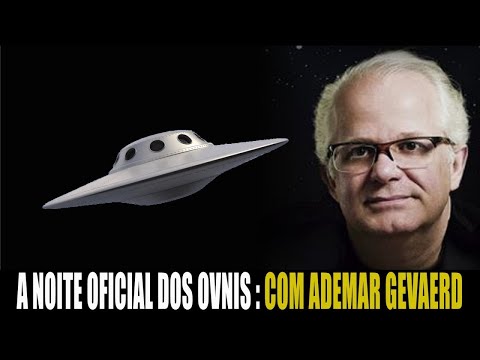
The Official Night of UFOs Remembered, feat. Ademar Gevaerd
A retrospective interview featuring Revista UFO's Ademar Gevaerd, whose 2005 Freedom of Information campaign helped bring the case's archives to light.
Sources
- "1986 Brazilian UFO incident," Wikipedia. en.wikipedia.org
- "Noite dos discos voadores," Wikipédia (Portuguese). pt.wikipedia.org
- CNN Brasil. "Noite dos OVNIs: Brasil já teve caças da FAB perseguindo objetos voadores," February 13, 2023. cnnbrasil.com.br
- Portal Vigília. "Brasília? Boa noite! Bem-vindo ao festival dos discos voadores," November 1, 2015. vigilia.com.br
- Revista UFO / ufo.com.br. "A Noite Oficial dos UFOs no Brasil, 30 anos depois." ufo.com.br
- Government of Brazil (Portal Gov.br). "Official UFO Night in Brazil," 2022. gov.br
- UFO Insight. "The 'Night Of UFOs' — The 1986 Brazilian Air Force Chase." ufoinsight.com
- Gross, Patrick. "UFOs at close sight: Jets chase UFOs over Brazil in 1986." ufologie.patrickgross.org
- UFO Evidence. "Jet Chase Over Brazil — Brazil — May 19, 1986." ufoevidence.org
- Revista Asas / edrotacultural.com.br. "Há 40 anos, FAB caçou alvos na 'Noite Oficial dos Óvnis'." edrotacultural.com.br
- Click Petróleo e Gás (English edition). "The night the Brazilian Air Force hunted UFOs in the sky of Brazil." en.clickpetroleoegas.com.br
- Metabunk. "Brazilian UFO Flap of 1986 — 'Night of Lights' / 'Official UFO Night'" (skeptical discussion thread; quotes portions of the released tapes). metabunk.org
- Arquivo Nacional do Brasil (National Archive of Brazil). Declassified Air Defense Command Occurrence Report, dated June 2, 1986, released September 25, 2009 (PDF). sian.an.gov.br
- Kean, Leslie. UFOs: Generals, Pilots, and Government Officials Go on the Record, Harmony Books, 2010 (general context; not checked for coverage of this case).
- "Ozires Silva," Wikipedia. en.wikipedia.org
- "Ademar José Gevaerd," Wikipedia. en.wikipedia.org
- "CINDACTA," Wikipedia. pt.wikipedia.org
- Gevaerd, A. J. Account of the May 20, 2005 meetings with the Brazilian Air Force, hosted by Patrick Gross. ufologie.patrickgross.org
- Wikimedia Commons. "Brazilian Air Force Northrop F-5E Tiger II.jpg" (Guilherme Bystronski, CC BY-SA 4.0). commons.wikimedia.org
- Clark, Jerome. The UFO Encyclopedia, 4th Edition, Relevant Information LLC.
- Good, Timothy. Above Top Secret: The Worldwide UFO Cover-Up, William Morrow, 1988.
- Pratt, Bob. UFO Danger Zone: Terror and Death in Brazil, Horus House Press, 1996.
- BBC News Brasil. "A noite em que 21 óvnis invadiram o espaço aéreo brasileiro e foram perseguidos por caças da FAB," January 14, 2022 (republished by Correio Braziliense; read there). correiobraziliense.com.br
Corrections (October 2026)
This page was corrected in October 2026 after checking it against the government's 2022 retrospective (gov.br), the BBC News Brasil retrospective (2022), the Revista Asas sortie-by-sortie account, Portal Vigília's report on the 2015 audio release, Patrick Gross's compilation (which quotes the 1986 press and Veja), and quotations from the tapes posted on Metabunk. The main corrections: the first Mirage to take off (22:48) was flown by Captain Viriato, not Captain Rodolfo da Silva Souza, who took off at 23:17. Viriato's contact was radar only, with no visual sighting. Captain Jordão's 13 contacts were radar plots behind his aircraft that he could not see when he turned, not lights flying in formation beside him. Rodolfo and Rozenberg saw nothing, and BBC News Brasil says they had no contact at all. BBC News Brasil and the Wikipedia summary say Ozires Silva was flying the Xingu himself, with Alcir Pereira as co-pilot. The 2015 audio release was 16 tapes, eight covering May 19 and just under 13 hours in total, not "seven hours" of the night itself. The FAB report's conclusion is now quoted exactly ("solid and reflect, in a certain way, intelligence"). Major Cerqueira's quote is replaced with his recorded words.
Following this review, the rating was changed from Credible 82 to Credible 70 (October 27, 2026), because the higher rating had rested partly on claims corrected or removed above.
Removed or softened as unconfirmed in any source checked: the minister's "the sky was clear," "3,600 km/h" and "incredible rapidity"; Brigadier Sócrates Monteiro speaking at the press conference (his reported remarks about filming and 240–1,500 km/h are now attributed to later retellings); his "regular occurrence" interview as minister; Alcir Pereira's "never seen anything like it" and "too agile, impossible that there was a human inside" quotes; Lt. Marinho's "speeds and maneuvers impossible" quote; Captain Rodolfo's "practically visual with the ground" quote; Captain Jordão's off-duty exam-study anecdote; Captain Rozenberg's "three intercept attempts over a 54-minute flight"; FAB tail numbers 4848, 4849 and 4913; a 21:20 CODA notification; a 01:45 end time; a May 25, 1986 Fantástico broadcast; Moreira Lima's 1997 interviews and his briefing of President Sarney that night; "roughly 50 pages" examined in 2005; a 2023 documentary with "over one million viewers"; astronomer Ronaldo Mourão's Halley's Comet explanation; pilots being privately told of "electronic warfare" testing; Viriato's target speed of "850 mph" (Gross gives Mach 1.1 for Marinho's F-5E); and the claim that the case was "never formally closed."
See something inaccurate? Have additional information or sources?
Suggest an Edit →Last Updated: August 2026