
UFOs and Ufology
The First 50 Years — A 1997 Anniversary Survey Written From the Earth Lights and Psycho-Social Side of the Argument
Core Thesis
UFOs and Ufology: The First 50 Years is an anniversary survey with a thesis, and the thesis is the reason to read it and the reason to be careful with it. Published by Facts on File in 1997 to mark half a century since Kenneth Arnold's sighting, its 192 heavily illustrated pages run from 1947 to 1997 across Roswell, crop circles, abduction accounts, the conspiracy literature and the phenomenon's effect on Western culture. Paul Devereux and Peter Brookesmith write from an openly held position: that geophysical light phenomena of the kind Devereux calls earth lights, together with psycho-social processes, account for a great deal more of the record than the extraterrestrial hypothesis does. That is a legitimate argument, it is well made, and it is not a neutral history.
About the Author
Paul Devereux is the principal advocate of the earth lights hypothesis and the author of Earth Lights (1982) and Earth Lights Revelation (1989), both treated separately in this library. His argument is that a proportion of what is reported as UFO activity consists of naturally generated luminous phenomena associated with geological stress in particular landscapes, and that these have a long pre-modern reporting history under other names.
That position places him in a specific and unusual location in the field. Devereux is not a debunker — he holds that the underlying phenomenon is real, physical and unexplained — and he is not an advocate of extraterrestrial visitation. He is arguing for a third thing, which means he takes fire from both directions and has been doing so for forty years.
Peter Brookesmith is a British writer and editor with a long involvement in the popular anomalies literature, and his contribution here is visible in the book's structure and prose: it is well organised, briskly written and unusually well illustrated for a book of this kind, with a hundred and twenty photographs across 192 pages.
The pairing produces a particular register. Devereux supplies the geophysical argument and the long-chronology material; Brookesmith supplies the historical survey, the cultural analysis and the sceptical treatment of the conspiracy literature. Where they overlap is in a shared impatience with the extraterrestrial hypothesis, and that impatience is audible throughout.
The honest qualification, and readers have made it, is that the book does not observe the neutrality its anniversary-survey framing implies. Reviewers have objected that the authors advance their own position while dismissing researchers they disagree with, and that criticism is fair as a description of the book's manner even if the underlying arguments are sound.
Historical Context & Origins
1997 was the fiftieth anniversary of both Arnold's June 1947 sighting and the Roswell recovery, and it produced a wave of commemorative publishing. Most of it was celebratory or investigative; a survey arguing that the field had spent five decades pursuing the wrong hypothesis was a deliberate intervention rather than a contribution to the party.
The moment was also a low point for the extraterrestrial case. The alien autopsy film had been broadcast in 1995 and was collapsing; the MJ-12 documents were widely regarded as fabricated; the Air Force had published its Roswell reports attributing the debris to Project Mogul and the reported bodies to test dummies; and the abduction literature was losing its evidential foundation as hypnotic regression came under sustained experimental attack.
Crop circles had gone the same way even faster. Doug Bower and Dave Chorley's 1991 admission that they had made the original English formations, followed by the emergence of an entire circle-making subculture, had transformed the phenomenon from an unexplained physical mystery into a documented case study in how a mystery gets manufactured and then defended. Devereux and Brookesmith use it as exactly that.
The earth lights hypothesis itself dates from Devereux's 1982 book and drew on a scientific literature that was genuinely active: reports of earthquake lights, laboratory work on luminous discharge from stressed rock, and Michael Persinger's tectonic strain theory, which this library covers through Space-Time Transients. Whatever its ultimate standing, it was an attempt at a physical explanation with a testable mechanism.
The psycho-social hypothesis was by 1997 the dominant framework in British ufology and had almost no American constituency. That national divergence matters for reading this book: it is a British argument, made by British authors, published simultaneously in New York into a market where the crashed-saucer narrative was at its commercial peak.
The conspiracy strand the book treats had reached its own high-water mark in the same decade. The X-Files ran from 1993, the abduction and cover-up literature was selling in enormous quantities, and the claim that the American government held recovered non-human technology had become the field's organising proposition. A survey written against that current in 1997 was writing against a great deal.
The book's fifty-year frame also allows something most treatments do not: an assessment of the field as an activity rather than of the phenomenon as a mystery. Half a century of organisations, investigators, publications, controversies and failures is enough of a record to ask what ufology has actually produced, and the authors ask it.
Core Arguments & Key Concepts
A significant part of the record is geophysical, and there is a mechanism. The earth lights argument in its strongest form. Luminous phenomena associated with geological stress are physically plausible, have laboratory analogues, correlate with particular landscapes and fault structures, and have a reporting history that long predates aviation. Devereux's case is that this accounts for a substantial fraction of nocturnal-light reports and that the field has ignored it because it is insufficiently interesting.
Most of what remains is psycho-social, and that is not a dismissal. The book's second pillar. Expectation, cultural transmission, media amplification, misperception under stress and the social construction of a shared interpretive frame are real, well-studied processes that generate exactly the reporting patterns the record shows. Treating them as explanations rather than as insults is the position, and it is defensible.
Crop circles are the field's clearest failed test and should have been treated as one. The most effective single argument in the book. An unexplained physical phenomenon was investigated for a decade, elaborate theories were built on it, its makers came forward, and a substantial part of the research community declined to accept the result. That sequence is available for examination and it tells you something about the field's error-correction that no argument about Roswell can.
Fifty years of ufology has produced no confirmed instance of anything. The survey's cumulative judgement, and the one that is hardest to answer. Half a century of organisations, field investigation, photographic analysis, document research and witness testimony has not yielded a single case that has survived independent examination, and a discipline with that record has to explain itself.
The cover-up narrative is a cultural product with a traceable history. Brookesmith's strand. The conspiracy literature is treated not as a claim to be adjudicated but as a phenomenon with its own chronology, incentives and mechanisms of propagation — which is the right analytical move and one the field almost never makes about itself.
The weakest feature is the treatment of the strongest cases. Earth lights explain nocturnal luminous phenomena in geologically active terrain. They do not explain radar-visual cases over open ocean, structured objects observed by aircrew in daylight, or the instrumented military material that has emerged since. A survey that leans this hard on one mechanism owes the residual cases more attention than 192 pages allow.
Its second weakness is tone, and readers have said so. The book advances its own position while treating researchers it disagrees with dismissively, which is a real complaint about a volume presenting itself as a fifty-year history. A reader who wants to know what the extraterrestrial case's best advocates actually argued will not learn it here.
Key Cases & Evidence Discussed
Kenneth Arnold, June 1947. The origin point of the fifty-year frame and, in the authors' reading, the moment a set of pre-existing reporting traditions acquired a new name and a new interpretive frame.
Roswell, July 1947. Treated as a cultural history rather than as an evidential question — how a 1947 debris recovery became, thirty years later, the field's founding narrative. This site's case file covers the incident itself.
Crop circles, 1978–1997. The book's most effective case study: the English formations, the decade of increasingly elaborate theorising, Bower and Chorley's 1991 admission, the circle-making subculture that followed, and the research community's substantial refusal to accept the outcome.
The abduction literature. The Hill case and its successors, the hypnotic-regression methodology that generated most of the corpus, and the experimental psychology that was dismantling it as the book went to press.
Earth lights and the geological correlation. Devereux's own material: luminous phenomena reported in geologically active landscapes, their long pre-modern history under local names, and the fault-structure correlations he argues underlie a substantial part of the nocturnal-light record.
The Hessdalen and Marfa-type light phenomena. The recurring localised light displays that are the earth lights hypothesis's best cases — and, in this site's Hessdalen file, the only ones subject to sustained instrumented monitoring.
The MJ-12 documents and the conspiracy corpus. Treated as a documented episode in the field's own history rather than as an open question — the authors regard the matter as settled and are writing about why it took so long.
The alien autopsy film, 1995. The most recent failure available to them at the time of writing, and a demonstration of the same pattern the crop circle chapter establishes: a claim collapses, and a portion of the community continues to defend it.
Critical Reception & Controversies
The book was published simultaneously in New York and London by mainstream reference and trade houses and received the modest general-interest reception such anniversary volumes get. It has never had an academic assessment and has not been reprinted.
Reader reception has been consistently divided along a single line, and the division is instructive. Readers who share the authors' scepticism find the research thorough and the writing engaging; readers who do not find the book biased, and specifically object that the authors promote their own position while denouncing those they disagree with. Both descriptions are accurate.
The bias complaint deserves to be taken seriously rather than waved away, because the book's framing invites it. A volume titled UFOs and Ufology: The First 50 Years, published by a reference house, illustrated like a survey and organised chronologically, presents itself as a history. It is an argument, and the mismatch between packaging and contents is a fair thing to object to.
The substantive criticism of the earth lights position is that it is a partial explanation being asked to do total work. Devereux's mechanism is physically plausible and applies well to recurring localised light displays in geologically active terrain. It does not address structured daylight objects, radar-visual correlation, or aircrew observation at altitude, and those cases are the ones the field's serious defenders have always rested on.
The psycho-social half has aged better than the geophysical half. The processes the authors invoke — expectation, transmission, media amplification, retrospective narrative construction — have been repeatedly demonstrated in the intervening thirty years, most conclusively in the collapse of the abduction literature's evidential basis and in the documented history of the crop circle affair.
The book's central negative claim — that fifty years produced no confirmed instance of anything — remains substantially true at seventy-nine years, and the current official interest has not yet altered it. What has changed since 1997 is the quality of the instrumented material and the fact that governments now acknowledge unexplained observations, and a survey written from this position in 2026 would have to engage with evidence that did not exist when it was written.
The fair placement is as a well-made statement of the British sceptical position at its most confident moment, illustrated far better than its competitors, and useful precisely because it is a partisan document rather than despite it. Read it knowing what it argues.
Influence & Legacy
The book's durable contribution is the crop circle chapter, which crystallised an argument the field has still not absorbed. A phenomenon was investigated, theorised, defended and then explained by its own creators, and a substantial part of the research community carried on regardless. That is a demonstration about error-correction, not about circles, and it applies to everything else in the subject.
It also stands as the most accessible statement of the earth lights hypothesis for a general reader. Devereux's own 1982 and 1989 books are the primary texts; this is where the argument reached the widest audience, and its illustrations do more to make the geographic correlation intelligible than the prose in either.
For the history of the field, the book is a useful marker of how confident the British sceptical position was in 1997 and how badly the extraterrestrial case was doing at that moment. Read against the post-2017 material, it also marks the point from which the argument has moved: the instrumented naval evidence of the last decade is a class of material the authors did not have and would have had to address.
Its cautionary legacy is about the reach of a good mechanism. Earth lights is a real hypothesis with a real physical basis and it explains a genuine subset of reports; the temptation to extend a working explanation across an entire heterogeneous corpus is exactly the error the authors correctly identify in the extraterrestrial camp, and they are not immune to it.
The Book
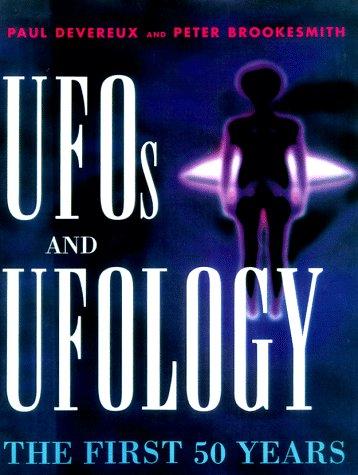
UFOs and Ufology
The First 50 Years — A 1997 Anniversary Survey Written From the Earth Lights and Psycho-Social Side of the Argument
Find on Amazon →As an Amazon Associate, OverClassified may earn from qualifying purchases made through this link, at no extra cost to you.
Why This Is Essential Reading
Read it, and read it as advocacy rather than as the survey it looks like. UFOs and Ufology: The First 50 Years is a well-organised, unusually well-illustrated fifty-year history written from an openly held position — that geophysical light phenomena and psycho-social processes account for most of the record — and its packaging as an anniversary reference volume oversells its neutrality. Readers have objected to the tone and they are right. What the book gets right is substantial: the crop circle chapter is the clearest demonstration in print of what happens to this field when a mystery is solved and the community declines to accept it, and the cumulative judgement that fifty years produced no confirmed instance of anything was true in 1997 and has not yet been falsified. What it gets wrong is scope: earth lights explain recurring luminous displays in geologically active terrain and do not touch structured daylight objects or radar-visual cases, and the book leans on the mechanism much harder than it will bear. Read it with Devereux's own Earth Lights for the hypothesis at full strength, and against something written from the other side.
Related Cases & Theories
Sources Cited
- Devereux, Paul, and Peter Brookesmith. UFOs and Ufology: The First 50 Years. Facts on File, New York, 1997. 192 pp. with 120 photographs; bibliographical references pp. 186–190 and index. UK edition Blandford, 1998. ISBN-10 0816038007 / ISBN-13 9780816038008. amazon.com
- Internet Archive holding, UFOs and ufology: the first 50 years — the scanned Facts On File 1997 New York edition, confirming publisher, place, date, the Blandford UK origin noted on the title-page verso, and the bibliography at pp. 186–190. archive.org
- Open Library edition record, ISBN 0816038007 — bibliographic verification and cover-art source. openlibrary.org
- Open Library author record for Paul Devereux — his full bibliography, including Earth Lights (1982) and Earth Lights Revelation (1989). openlibrary.org
- Goodreads edition record, UFOs and Ufology — edition data, reader ratings, the publisher description covering fifty years of the phenomenon from crop circles to alien abductions, and the reader criticism that the authors advance their own earth-lights and psycho-social position while denouncing researchers they disagree with. goodreads.com
- AbeBooks catalogue record, ISBN 9780816038008 — edition and format verification. abebooks.com
- Wikipedia, "Paul Devereux" — his career, the earth lights hypothesis and his published work. en.wikipedia.org
- Wikipedia, "Tectonic strain theory" — the geophysical mechanism underlying the earth lights argument, and its scientific assessment. en.wikipedia.org
- Wikipedia, "Michael Persinger" — the researcher whose work on geological stress and anomalous experience underpins the physical side of the book's argument. en.wikipedia.org
- Wikipedia, "Crop circle" — the English formations, Doug Bower and Dave Chorley's 1991 admission, the circle-making subculture that followed, and the phenomenon's status as the book's central case study. en.wikipedia.org
- Wikipedia, "Roswell incident" — the case whose fiftieth anniversary the book was published for and which it treats as cultural history. en.wikipedia.org
- Wikipedia, "Kenneth Arnold UFO sighting" — the June 1947 event from which the book's fifty-year frame runs. en.wikipedia.org
- Wikipedia, "Majestic 12" — the documents the book treats as a settled episode in the field's own history rather than as an open question. en.wikipedia.org
Have corrections, additional research, or peer-reviewed sources? Help improve this entry.
Suggest an Edit