
Earth Lights Revelation
UFOs and Mystery Lightform Phenomena — Paul Devereux's 1989 Sequel Expands the Piezoelectric "Earth Lights" Hypothesis Into Ufology's Most Developed Geophysical Alternative to Craft
Core Thesis
Earth Lights Revelation: UFOs and Mystery Lightform Phenomena is British earth-mysteries writer Paul Devereux's 1989 expansion and revision of the 1982 book, Earth Lights, that first coined the term: the proposal that a genuine, if narrow, subset of UFO sightings — specifically the silent, self-luminous, hovering or drifting orbs reported for centuries near geological fault lines — are not visiting spacecraft but a poorly understood natural phenomenon generated by piezoelectric and triboluminescent charge migrating up through stressed, quartz-bearing rock and ionizing the air above it. Rather than simply repeating the 1982 book's argument, this 266-page follow-up (239 pages of text plus sixteen pages of plates, published by Blandford with contributing research from David Clarke and Andy Roberts) folds in seven years of new field data and, crucially, incorporates neuroscientist Dr. Michael Persinger's independently developed Tectonic Strain Theory — the statistical link between seismic activity and UFO-report clustering, and Persinger's proposed mechanism by which the same electromagnetic fields might induce temporal-lobe effects in nearby witnesses. The result is the fullest single statement of what this site's own Earth Lights & Tectonic Strain Hypothesis theory page still treats as an active, if narrowly scoped, naturalistic framework: a real, laboratory-confirmed physical mechanism (stressed rock does measurably emit light and generate transient electric fields) stretched, by Devereux's own admission at points in the text, further than the underlying geophysics alone has yet been shown to support.
About the Author
Paul Devereux was born in 1945 and grew up in Leicester, England, before studying at Ravensbourne College of Art and Design in London, where his early work in abstract expressionist painting gave way to a lifelong interest in the geometry and siting of ancient monuments. He has no formal training in geophysics, seismology, or any physical science — a fact this article treats as material rather than omits, since it bears directly on how his central hypothesis has been received by the mainstream earth-science researchers whose peer-reviewed work he draws on. In 1976 Devereux took over as editor of The Ley Hunter, the journal most closely associated with Britain's "earth mysteries" research tradition, a post he held until 1996, and the following year he launched the Dragon Project at the Rollright Stones in Oxfordshire, a long-running instrumented study of claimed anomalous energies at a prehistoric stone circle that became the direct methodological precursor to the earth-lights research this book documents.
Devereux's authorship of this specific subject is unusually concentrated: by at least one independent reference source's own account, he is the author of "the only two full books" ever published on earth lights specifically — the original 1982 Earth Lights: Towards an Understanding of the UFO Enigma (Turnstone Press) and this 1989 sequel — making him, whatever the merits of his conclusions, the field's uncontested primary chronicler rather than one voice among many. This book's title page itself credits two named contributing researchers beyond Devereux: David Clarke, then a working journalist who would go on to complete a PhD in folklore at the University of Sheffield in 1999 and later become an Associate Professor at Sheffield Hallam University and a consultant curator on the Ministry of Defence's UFO-files release project with the UK National Archives, and Andy Roberts, Clarke's frequent co-author. Their joint later work, including The UFOs That Never Were (2000) and Out of the Shadows (2002), places two credentialed, methodically skeptical researchers in this earlier book's own research credits — a detail this site's own David Clarke key-figures entry does not yet mention, since Clarke's contribution here came years before the archival and journalistic work that entry documents.
In the decades after this book's publication, Devereux moved into a broader and more conventionally credentialed research career than his earth-mysteries origins might suggest: he became a research associate at the Royal College of Art from 2007 to 2013, is a Research Fellow with the International Consciousness Research Laboratories group at Princeton University, and co-founded and still edits Time and Mind: The Journal of Archaeology, Consciousness and Culture, a peer-reviewed academic publication. His later archaeoacoustics research, examining the acoustic properties of megalithic sites including Stonehenge, has appeared in genuinely peer-reviewed venues — a trajectory this article notes because it complicates any simple dismissal of Devereux as a purely fringe writer, even as this book's own central UFO-explanatory claim remains, as detailed in Critical Reception below, one that mainstream geophysics has never endorsed at the scale Devereux proposes it.
Historical Context & Origins
This book's institutional prehistory begins not in ufology but in seismology and rock mechanics, a lineage this site's own Earth Lights & Tectonic Strain Hypothesis theory page traces in detail: geophysicist John S. Derr published an early scholarly review of earthquake-light observations in the Bulletin of the Seismological Society of America in 1973, nearly a decade before Devereux's original book gave the phenomenon its UFO-adjacent name. Devereux's own 1977 Dragon Project at the Rollright Stones supplied his direct methodological bridge from earth-mysteries fieldwork to the geophysical claim this book makes, and the 1982 publication of Earth Lights coined the term and first proposed that fault-line-associated luminosity constituted a single, worldwide phenomenon.
Independently of Devereux, cognitive neuroscientist Dr. Michael Persinger had already formalized a parallel and, by most retrospective accounts, earlier-dated physical hypothesis: working with Gyslaine Lafrenière, Persinger published Space-Time Transients and Unusual Events in 1977, statistically linking historical UFO and poltergeist reports to regional seismic and geomagnetic activity under what he named the Tectonic Strain Theory. This book's central contribution to the earth-lights literature is synthetic rather than original on that front: it is the first Devereux book to fold Persinger's statistical and neuropsychological research directly into the earth-lights framework, seven years after Persinger's own initial publication and three years after geophysicists Brian Brady and W. Rowell provided the theory's first laboratory test, publishing data in Nature in 1986 showing that stressed, fracturing rock does measurably emit light and generate transient electric fields — direct experimental confirmation of a real mechanism, even though Brady's own results showed the effect was far too weak on its own to explain a large, sustained, minutes-long discrete light.
The book also arrived three years into the operational life of Norway's Project Hessdalen, the instrumented field study of Norway's Hessdalen valley that electrical engineer Erling Strand had formally organized in 1984 after a 1981–1984 wave of unexplained lights; Devereux served on the advisory committee for Strand's first Hessdalen field report, giving this book's 1989 publication a direct, documented institutional tie to what remains, per this site's own Hessdalen Lights case file, the longest continuously running instrumented study of recurring anomalous lights anywhere in the world.
Structurally, this book is best read as the field's own mid-course correction rather than a simple sequel: where the 1982 original announced a new theory, this 1989 revision is explicitly written to defend, refine, and in places qualify that theory against seven years of new field reports, laboratory data, and Persinger's competing statistical model, giving it a more hedged, evidence-weighing tone than a first-edition manifesto typically carries.
Core Arguments & Key Concepts
The book's central physical claim is that quartz-bearing rock subjected to the mechanical stress of tectonic strain generates measurable electrical charge through the piezoelectric effect, and that during periods of seismic build-up this charge migrates along geological fault lines — which act as natural conductors — to discharge into the atmosphere at specific surface points, ionizing the air into a self-luminous plasma. Devereux's own presentation is not identical to Persinger's more strictly seismic-correlation model: by at least one comparative overview of the two researchers' work, Devereux frames the light-generating process as a chain reaction of electrical forces operating jointly in the atmosphere and the crust, rather than attributing it solely to measurable seismic activity, a nuance this article flags because it shows the two researchers' theories, though frequently discussed together, are not a single unified model even within this book's own synthesis.
The book's second major argument, and its clearest departure from the 1982 original, is the incorporation of Persinger's neuropsychological research: the same electromagnetic fields proposed to generate the visible light are argued to be capable, at close range, of inducing temporal-lobe effects in human observers, producing the sense of presence, missing time, and elaborate contact narratives that some earth-lights witnesses report without requiring those narratives to involve an actual intelligently controlled craft or entity. This is the mechanism this site's own Earth Lights & Tectonic Strain Hypothesis page describes in more developed form as "Neurological Temporal Lobe Interaction," and this book is the specific publication that theory page credits with first bringing Persinger's work into Devereux's own framework.
Devereux builds his case study by study rather than through statistical proof alone, and his best-documented example is the Egryn Lights, a wave of luminous phenomena reported in Wales in 1904 and 1905: Devereux mapped the sighting locations against local geological surveys and identified a striking correlation with the Mochras Fault, with reported sightings clustering along the fault line and declining in frequency with distance from it — the book's clearest instance of the geographic pattern-matching method its central thesis depends on. He extends the same reasoning, more speculatively, to suggest that seismic activity in the Cascade Range may have contributed to Kenneth Arnold's foundational June 1947 sighting, and discusses the long-running Marfa Lights of West Texas within the same worldwide catalogue of recurring, fault-associated luminosities the book compiles from Britain, North America, and Scandinavia.
The book is explicit, at multiple points, about what its own mechanism cannot explain: Devereux does not claim earth lights account for radar-tracked, high-velocity, or structurally solid UFO reports, restricting his thesis to slow-moving, silent, self-luminous phenomena consistent with an unbounded plasma rather than a metallic hull — the same narrow scope this site's own Earth Lights & Tectonic Strain Hypothesis page applies when weighing the theory against cases like the USS Nimitz encounter. That self-imposed limitation, stated candidly within the book rather than added by later critics, is treated in this article as evidence the argument was built to be falsifiable rather than to explain the UFO phenomenon in its entirety.
Where the book is more vulnerable, and where even sympathetic later commentary has pressed it, is in how far Devereux extends the pattern-matching method itself: having found a genuine correlation at Egryn, the book applies the same interpretive lens to a much larger, more heterogeneous set of worldwide light reports whose underlying data quality and independent verification vary considerably case to case, a methodological question this article's Critical Reception section addresses directly rather than treating the Egryn case as representative of the whole catalogue.
Key Cases & Evidence Discussed
This site's own Earth Lights & Tectonic Strain Hypothesis theory page (Theory File ELT-001) is the direct successor document to this book on this site: its own Origin & History section states plainly that Devereux "incorporated Persinger's neuropsychological research into his 1989 book Earth Lights Revelation, completing the theory's modern form," and its own Key Proponents section credits both of Devereux's earth-lights books as "the foundational texts of the hypothesis" — making this the single most important cross-link in this article, since the theory page functions as this book's ongoing, continuously updated case-file record.
This site's own Hessdalen Lights case file (Case File #155) documents the Norwegian valley whose Project Hessdalen this book's author served on the founding advisory committee for, and the case file's own Further Reading section already cites this exact 1989 edition, describing it as Devereux's "follow-up synthesis, incorporating Michael Persinger's neuropsychological research and expanded case studies, situating Hessdalen within the wider global Earth Lights research tradition it helped establish."
This site's own Piedmont Missouri Wave case file (Case File #152) raises this book's framework as a named Conventional Explanation Candidate for the Project Identification wave's more static light sightings, rating the earth-lights mechanism "Inconclusive" for that specific case: "geophysically plausible in principle and supported by a real, independently developed research tradition (Devereux, Persinger), but no dedicated geological or seismic survey ties this mechanism to Piedmont's own terrain specifically" — a caveat this article treats as representative of how the theory is applied across this site's own case-file library generally, as a candidate explanation rather than a proven one.
Within the book's own pages, the Egryn Lights (Wales, 1904–1905) and their mapped correlation to the Mochras Fault remain Devereux's most concretely documented case, while his more speculative discussion connecting Cascade Range seismicity to Kenneth Arnold's 1947 sighting and his cataloguing of Texas's long-running Marfa Lights situate this book's case material within the same worldwide "spooklight" tradition this site's own case files treat with varying degrees of documented evidentiary support.
Critical Reception & Controversies
The book's most substantive contemporary review came from John Rimmer, writing in the British journal Magonia (issue 35, January 1990) within months of publication. Rimmer's assessment was genuinely mixed rather than dismissive: he called it "a fascinating and important book" that mattered more to ufology than the era's contemporary abduction literature, while pressing specific, named objections — questioning why American "spook lights" cluster along railway lines while British earth-lights reports do not, whether the presence of researchers themselves might influence where and how often sightings cluster, and criticizing Devereux's consciousness-interaction claims directly, describing them as an example of "cultural conditioning influencing the perception of an ambiguous stimulus" rather than evidence of a genuine electromagnetic effect on witness cognition.
A more directly statistical critique came from Canadian researcher Chris Rutkowski, whose analysis of Manitoba UFO reports found more than 500 sighting reports from a province with comparatively little seismic activity — a geographic result that runs directly against the fault-line correlation this book's central thesis predicts, and one this site's own Earth Lights & Tectonic Strain Hypothesis page implicitly acknowledges in its own Evidence Grid when it notes that "plenty of seismically active regions report no unusual lights" even where the correlation holds elsewhere.
The book's own underlying physical mechanism has real, if narrowly scoped, laboratory support and a real, documented limitation: Brian Brady and W. Rowell's 1986 Nature paper, which this book cites, confirmed that stressed quartz-bearing rock genuinely does emit light and generate transient electric fields, but Brady's own measured values were, by this site's own theory-page assessment, "orders of magnitude too weak to sustain a large, minutes-long discrete light" — a scaling gap between laboratory confirmation and the book's much larger claimed real-world phenomenon that no subsequent instrumented study, including four decades of Project Hessdalen data, has fully closed.
Devereux's own book is candid about at least some of this uncertainty rather than presenting the theory as settled: independent reference summaries of the work note that he himself questioned whether the geographically and phenomenologically diverse light reports gathered under the earth-lights umbrella necessarily represent a single, unified process rather than several distinct natural phenomena being grouped together under one convenient label — a self-critical admission this article treats as unusual candor for a book making an extraordinary explanatory claim, and one that sits alongside Rimmer's independent observation that the theory's reach exceeded what its own case studies, taken individually, could fully support.
Reader reception on Goodreads has settled into a moderately positive but qualified consensus (3.94 out of 5 from a small pool of 16 ratings): one reviewer compared the book's conclusion that "the mystery lies within us" to Julian Jaynes's bicameral-mind hypothesis while judging the supporting evidence ultimately inconclusive, and another found the case-by-case detail thorough but felt the book "could have been condensed" — a criticism of the earth-lights literature's characteristic exhaustiveness that recurs across multiple independent reviews of Devereux's work.
Influence & Legacy
This book's clearest, most concretely documented legacy on this site is its ongoing role as the standing citation for the Earth Lights & Tectonic Strain Hypothesis wherever this site applies that framework: it is already cited, under varying ISBNs reflecting its separate hardcover and paperback printings, across this site's own resources library in connection with the Hessdalen Lights case file, the Piedmont Missouri Wave case file, and this site's own Earth Lights & Tectonic Strain Hypothesis theory page itself — a three-page citation footprint this article's own publication corrects into a single authoritative breakdown for the first time.
Paul Devereux's documented seat on the advisory committee for Erling Strand's first Hessdalen field report gives this book's author a direct, institutional connection to the single longest-running instrumented field study of recurring anomalous lights in the world, a connection this site's own Hessdalen Lights case file and Earth Lights & Tectonic Strain Hypothesis theory page both build directly on when tracing Project Hessdalen's own methodological origins.
As one of only two full-length books ever devoted specifically to the earth-lights hypothesis — the other being Devereux's own 1982 original — this book stands as the field's most complete single statement of the theory, cited by name in this site's own theory page as one of the two texts that "remain the foundational texts of the hypothesis," and it is the specific publication credited there with folding Michael Persinger's Tectonic Strain Theory into Devereux's own earlier, purely geophysical framework.
Beyond ufology specifically, this book's author went on to a research career that lent the earth-lights hypothesis an unusual degree of adjacent institutional credibility for a UFO-explanatory theory: Devereux's later peer-reviewed archaeoacoustics work, his editorship of the academic journal Time and Mind, and his Princeton ICRL research fellowship do not validate this book's central UFO claim, but they distinguish Devereux's overall trajectory from writers whose earth-mysteries work remained confined to purely popular, non-academic publishing for their entire careers.
The Book
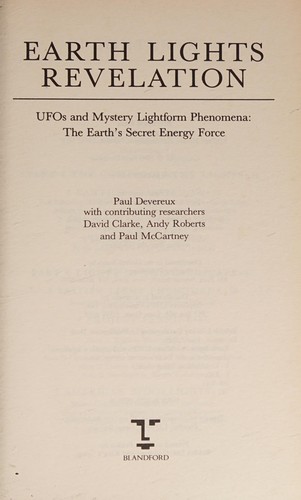
Earth Lights Revelation
UFOs and Mystery Lightform Phenomena — Paul Devereux's 1989 Sequel Expands the Piezoelectric "Earth Lights" Hypothesis Into Ufology's Most Developed Geophysical Alternative to Craft
Find on Amazon →As an Amazon Associate, OverClassified may earn from qualifying purchases made through this link, at no extra cost to you.
Why This Is Essential Reading
Earth Lights Revelation earns its place on this list as the single most complete statement of one of naturalistic ufology's most carefully scoped hypotheses: not a claim that most or all UFO reports have a mundane geophysical origin, but a narrower, falsifiable argument that a specific subset of silent, self-luminous, fault-line-associated lights may be a real, if poorly understood, product of the Earth's own crust rather than either visiting spacecraft or simple misidentification. What makes this 1989 revision essential rather than merely historically important is that it is Paul Devereux's own most self-aware statement of the theory — folding in Michael Persinger's competing statistical model, incorporating Brian Brady's real but limited laboratory confirmation of the underlying piezoelectric mechanism, and, per independent reference accounts, questioning within his own pages whether the disparate phenomena he catalogues truly belong under one theoretical roof. Read alongside this site's own Earth Lights & Tectonic Strain Hypothesis theory page, which continues to track the four decades of Hessdalen instrumentation this book's author helped set in motion, and against John Rimmer's contemporary, respectfully critical Magonia review and Chris Rutkowski's later Manitoba statistical rebuttal, this book demonstrates the same evidentiary discipline this site applies throughout its own case-file library: a real physical mechanism, confirmed at laboratory scale, is not the same thing as proof that the mechanism explains the much larger phenomenon it has been invoked to explain, and a reader who conflates the two has misread what even this book's own author, at points, declined to claim outright.
Related Cases & Theories
Essential Viewing
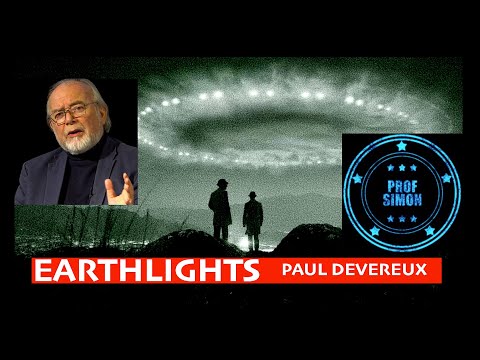
Earthlights: Paul Devereux on Tectonic Strain Luminosities
Prof Simon — Science Filmmaker — Paul Devereux explains how piezoelectric currents generated by strain in quartz-bearing rock may produce self-luminous plasma phenomena mistaken for UFOs, directly summarizing the mechanism this book develops at length. Verified via YouTube oEmbed before inclusion.
Acoustic Archaeology, Ringing Stones & Earth Lights - Paul Devereux
Cuyamungue Institute — A longer-form talk in which Devereux discusses his broader earth-mysteries research career, including the earth-lights hypothesis this book develops alongside his later archaeoacoustics work, in his own words. Verified via YouTube oEmbed before inclusion.
Sources Cited
- Devereux, Paul. Earth Lights Revelation: UFOs and Mystery Lightform Phenomena: The Earth's Secret Energy Force. Blandford Press, 1989 (ISBN 0713720298 / 9780713720297, cited here matching this site's own resources library citation on the Hessdalen Lights case file). archive.org
- "Earth lights revelation." Open Library bibliographic record (publisher: Blandford, distributed in the United States by Sterling Pub. Co., 1989, 239 pages plus 16 plates, bibliography pp. 227–234). openlibrary.org
- "Earth Lights Revelation: Ufo's and Mystery Lightform Phenomena: The Earth's Secret Energy Force." Biblio.com listing (Devereux, Paul; David Clarke and Andy Roberts credited as contributing researchers; Blandford, paperback printing October 1990, ISBN 9780713722093). biblio.com
- "Earth lights revelation: UFOs and mystery lightform phenomena: the earth's secret energy force." Amazon.com product listing (ISBN 9780713720297, hardcover edition, edition and publisher confirmation). amazon.com
- "Earth lights revelation: UFOs and mystery lightform phenomena: the earth's secret energy force" by Paul Devereux. Goodreads (reader ratings: 3.94/5 from 16 ratings, and reader reviews cited in this article's Critical Reception section). goodreads.com
- "Paul Devereux." Wikipedia (biography: birth year 1945, Leicester upbringing, Ravensbourne College of Art and Design, editorship of The Ley Hunter 1976–1996, Dragon Project founding, Royal College of Art and Princeton ICRL affiliations, Time and Mind journal). en.wikipedia.org
- "Paul Devereux." Ancient Origins author profile (career summary: earth-mysteries research pioneer, editor of The Ley Hunter, archaeoacoustics research, more than 40 years in the field). ancient-origins.net
- Rimmer, John. Review of Earth Lights Revelation. Magonia, issue 35, January 1990; republished as "Earthlights Revisited." (Source of the "fascinating and important book" and "cultural conditioning" quotes, and the railway-line and researcher-presence critiques). mrobsr.blogspot.com
- "Earthlights." David Darling's Internet Encyclopedia of Science (mechanism summary, John Derr/USGS steam-sheath charge model, Devereux's Egryn Lights/Mochras Fault mapping, description of Devereux as author of "the only two full books" on the subject). daviddarling.info
- "Earth Lights: Spooklights and Ghost Lights, etc." (case survey including the Egryn Lights/Mochras Fault correlation, the Kenneth Arnold/Cascade Range and Marfa Lights discussions, Chris Rutkowski's Manitoba statistical critique, and Brian Brady's laboratory-scale limitation). inamidst.com
- "The Tectonic Strain Theory (TST)." occultusregnum.com (comparative overview of Persinger's and Devereux's independently developed models, including Devereux's own description of a chain reaction of atmospheric and crustal electrical forces). occultusregnum.com
- Maugé, Claude. "Persinger's Tectonic Strain Theory: Strengths and Weaknesses." Magonia, 1986; archived at Magonia Magazine Blogspot (broader critical assessment of Tectonic Strain Theory data reliability and predictive limitations, cited here for comparative context on how the same skeptical literature treated the theory's statistical foundations). magoniamagazine.blogspot.com
- "David Clarke." Sheffield Hallam University staff profile (PhD in Folklore, University of Sheffield, 1999; Associate Professor, Department of Media Arts and Communication; MoD UFO-files project consultant/curator, 2008–2013). shu.ac.uk
- This site's own theory page: Earth Lights & Tectonic Strain Hypothesis (Theory File ELT-001), for the theory's full development timeline, physical mechanism breakdown, and ongoing case-file applications this book directly informed.
- This site's own case file: Hessdalen Lights (Case File #155), for Project Hessdalen's instrumented history and this book's author's documented advisory-committee role in its founding.
- This site's own case file: Piedmont Missouri Wave (Case File #152), for this book's framework applied as a named Conventional Explanation Candidate.
- This site's own key-figures entry: Paul Devereux, for his full earth-lights research career and further case connections.
- This site's own key-figures entry: David Clarke, for his later archival and journalistic UFO research career following his contribution to this book.
- This site's own resources library: Full Reading List, where this book is cited across the Hessdalen Lights, Piedmont Missouri Wave, and Earth Lights & Tectonic Strain Hypothesis pages.
Have corrections, additional research, or peer-reviewed sources? Help improve this entry.
Suggest an Edit