
UFO Contact at Pascagoula
The Original First-Person Account of the 1973 Pascagoula River Abduction
Core Thesis
UFO Contact at Pascagoula is Charles Hickson's own account, co-written a decade after the fact with investigator William Mendez, of the night of October 11, 1973, when Hickson and 19-year-old Calvin Parker reported being taken aboard a craft by robotic, claw-armed entities while fishing on the Pascagoula River. Rather than building an argument or a theory, the book's real function is archival: it sets Hickson's own retelling of the encounter, in his own words, alongside transcripts of the original sheriff's-department interviews and the hypnotic-regression sessions conducted by J. Allen Hynek and James Harder, giving readers the closest thing available to a primary source for a case this site's own Pascagoula Abduction case file treats as one of the most thoroughly documented close encounters in American UFO history.
About the Author
Charles Hickson was born in Jones County, Mississippi on April 16, 1931, and served in the U.S. Army during the Korean War, earning five battle stars. By October 1973 he was a 42-year-old foreman at a Pascagoula shipyard — identified in his obituary as the since-closed Walker Shipyard, a detail worth noting alongside this site's own case file, which frames the city's shipbuilding economy around the larger Ingalls Shipbuilding yard. He had no prior public connection to ufology; his decision to report the October 11, 1973 encounter to the Jackson County Sheriff's Office, and later to co-author this book, made him instead a reluctant and, at times, uneasy minor celebrity. In the months after the incident he appeared on The Dick Cavett Show, The Mike Douglas Show, To Tell the Truth, and The Tonight Show Starring Johnny Carson; by 1974 he was describing ongoing contact with the beings and meeting with ancient-astronaut author Erich von Däniken, and in January of that year he was arrested for public drunkenness while wandering along a highway — episodes this article notes plainly rather than omits, since Hickson's own life in the decade between the encounter and this book's 1983 publication was visibly strained by the fame it brought him. He remained in Gautier, Mississippi for the rest of his life, was predeceased by his wife Blanche in 2004, and died of a heart attack on September 9, 2011 at age 80, having never changed the core details of his account.
William Mendez, Hickson's co-author, is a considerably more obscure figure, and this article states that plainly rather than inventing a fuller biography than the record supports. Surviving bookseller descriptions of the book identify him only as a "mid-western college professor" who spent several years investigating the case independently, making repeated trips to Mississippi to interview Hickson's and Parker's friends, coworkers, and family members before the two men agreed to collaborate on a book-length account. No independent academic biography, institutional affiliation, or other published work under his name appears to survive in accessible bibliographic databases, which places him closer to the self-taught, single-case investigator model common among 1970s–80s ufology than to a credentialed research scientist — a distinction this site applies consistently across its Essential Reading list rather than reading unearned authority into a byline.
The book's publication itself reflects a third, uncredited but bibliographically documented contributor: Wendelle Stevens, the retired U.S. Air Force lieutenant colonel and prolific UFO-book publisher, whose Tucson, Arizona imprint produced the 1983 first edition. Library of Congress-derived catalog records list the publisher of record simply as "Charles Hickson," reflecting the book's genuinely self-published, limited-run character (2,000 numbered hardcover copies), while contemporary bookseller listings credit Stevens's own operation as the imprint that actually typeset, printed, and distributed it — a small but real cataloging discrepancy this article notes rather than resolves in favor of either source, since both descriptions capture something true about how small-press UFO books reached readers in the early 1980s.
Historical Context & Origins
The book arrived exactly a decade after the event it documents, into a UFO-publishing landscape shaped heavily by the 1973 wave itself. That autumn had already produced Travis Walton's 1975 book The Walton Experience (later retitled Fire in the Sky), covered separately in this site's own Fire in the Sky breakdown, and a decade of continued media appearances, hypnosis sessions, and skeptical scrutiny had already been applied to the Pascagoula case by the time Hickson and Mendez finally committed a full account to print in 1983 rather than in the immediate aftermath of the encounter.
Nineteen eighty-three was also the year Philip J. Klass published his own UFOs: The Public Deceived, which included a chapter arguing the Pascagoula case was a hoax — meaning Hickson's own account and its most prominent skeptical rebuttal reached print in the same year, from opposite ends of the same decade-long dispute over what had actually happened on the riverbank.
Publishing through Wendelle Stevens's small Tucson operation, rather than through a mainstream trade publisher, was itself a common route for case-specific UFO testimony in this period: Stevens's imprint specialized in exactly this kind of limited-run, collector-oriented first-person account, aimed at an already-engaged UFO-research readership rather than a general trade audience — which helps explain both the book's 2,000-copy print run and its long absence from a wide retail market until later print-on-demand reprints made it accessible again.
Core Arguments & Key Concepts
The book is structured less as an argument than as an assembled record. Its spine is Hickson's own first-person narrative of the October 11, 1973 encounter — the whirring sound, the blue light, the three robotic, claw-armed entities, the floating examination aboard the craft — substantially matching the account documented in this site's own Pascagoula Abduction case file. Around that narrative, the book reproduces transcripts of the original Jackson County Sheriff's Office interviews and of the hypnotic-regression sessions J. Allen Hynek and James Harder conducted with both men within days of the report, giving readers primary transcript material rather than a purely retrospective retelling filtered through a decade of media appearances.
The book's implicit central claim is corroborative rather than explanatory: it does not attempt to identify what the craft or its occupants were, or advance a developed extraterrestrial or interdimensional theory of the case. Instead it leans on Hickson's consistency — the same core details repeated across the original 1973 interviews, the hypnosis transcripts, and this 1983 retelling ten years later — as the book's real evidentiary argument, alongside Hynek's on-the-record assessment, delivered within 36 hours of the report, that the two men were "absolutely honest" and had experienced something "very real" and "frightening," a line since inscribed on the case's own 2019 historical marker at Pascagoula's Lighthouse Park.
Because so much of the book consists of reproduced transcript material rather than original narrative prose, its structure is also its most-noted flaw among readers: aggregated reviews describe much of the book as hypnotic-regression transcripts covering ground "already discussed" earlier in the text, and several reviewers flag the first edition's editing and proofreading as rough — a fair criticism of the book's execution that this article does not paper over, distinct from any question about the underlying case.
Key Cases & Evidence Discussed
The book's entire subject is this site's own Pascagoula Abduction (Case File #016, October 11, 1973), which lists this exact book in its own Further Reading section as "the original account co-authored by abductee Charles Hickson." Because the book is Hickson's own first-person telling rather than a later researcher's synthesis, it functions as a primary source underlying the case file's own narrative sections rather than a secondary analysis of them.
Calvin Parker, the second witness, published his own separate account, Pascagoula – The Story Continues, in 2019 — forty-six years after the encounter and following decades of the psychological trauma this site's own case file and key-figures entry both document. Readers should treat this entry as covering Hickson's much earlier 1983 account specifically, not the fuller two-witness record the pair's books together represent.
Philip J. Klass's UFOs: The Public Deceived (1983), cited directly in this site's own case file as "the leading skeptical perspective on the Pascagoula incident," argues the opposite case in the same publication year, disputing the polygraph evidence and identifying inconsistencies across Hickson's various retellings of the entities' appearance.
This site's own Fire in the Sky entry, covering Travis Walton's 1975 account of his own 1975 Arizona abduction, offers the closest direct comparison on this reading list: another primary-witness, first-person abduction narrative published by the abductee himself within a few years of a polygraph-tested, heavily publicized 1970s encounter.
Critical Reception & Controversies
As a limited-run, self-published hardcover from a small specialist imprint, UFO Contact at Pascagoula never received trade-press review coverage from outlets like Publishers Weekly or Kirkus Reviews, and its critical record today rests almost entirely on aggregated reader response. Goodreads shows an average rating of approximately 3.97 out of 5 across roughly three dozen ratings and under ten written reviews — a positive but modest, niche-audience reception consistent with a self-published single-case testimony rather than a mainstream bestseller.
Where reader reviews are critical, they focus overwhelmingly on the book's execution rather than the underlying case: multiple reviewers flag persistent typographical errors and rough copyediting in the original edition, with one aggregated review calling the proofreading "atrocious" despite finding the underlying story "fascinating," and another noting that later chapters largely repeat, via hypnotic-regression transcripts, details already established earlier in the book.
On the substance of the case itself, the book's most direct and durable critic is Philip J. Klass, whose own 1983 UFOs: The Public Deceived — covered separately in this site's own UFOs: The Public Deceived breakdown — argued that Hickson's account contained shifting details — describing the entities' mouths as "slits" in some tellings and "holes" in others — and disputed the strength of the October 1973 polygraph result, noting Hickson later declined a second examination by an examiner Klass considered more rigorous.
A more recent and more measured skeptical treatment comes from investigator Joe Nickell, writing in the May/June 2012 issue of Skeptical Inquirer. Rather than arguing outright hoax, Nickell proposed that Hickson and Parker — who may have been drinking beforehand, by Hickson's own later admission — could have experienced a hypnagogic, dreamlike state at the pier, with Parker's corroboration shaped by suggestibility given his own initial account of losing consciousness almost immediately. This third position, distinct from both straightforward hoax and straightforward genuine-encounter readings, is a case-analysis argument rather than a critique of this specific book, but it directly addresses the same core testimony the book itself reproduces.
Influence & Legacy
The book's most durable legacy is as the case's primary printed source in Hickson's own words, a status this site's own case file reflects by citing it directly among the case's Further Reading. Long out of print in its original 2,000-copy hardcover run, it has since resurfaced through print-on-demand paperback and Kindle reprints, keeping Hickson's original testimony in circulation well beyond the collector market its first edition was aimed at.
The case it documents received formal civic recognition on June 22, 2019, when the City of Pascagoula unveiled a historical marker at Lighthouse Park describing the incident as "the best documented case of alien abduction" and quoting J. Allen Hynek's conclusion that the two men had experienced something "very real" — the same assessment this book itself was written substantially to preserve and expand upon in Hickson's own words. Calvin Parker attended the dedication alongside members of Hickson's family, eight years after Hickson's own death.
Within the broader literature on the case, the book's role has been as raw testimony other writers build on and respond to rather than as an analytical framework of its own: Klass's contemporaneous rebuttal, Nickell's later hypnagogic-state analysis, and Calvin Parker's own 2019 account all engage directly with the same original testimony this book was the first to publish in full, book-length form.
The Book
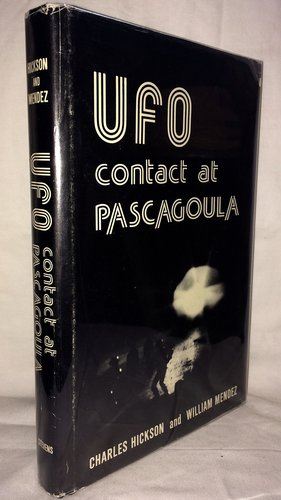
UFO Contact at Pascagoula
The Original First-Person Account of the 1973 Pascagoula River Abduction
Find on Amazon →As an Amazon Associate, OverClassified may earn from qualifying purchases made through this link, at no extra cost to you.
Why This Is Essential Reading
UFO Contact at Pascagoula earns its place on this list for the plainest possible reason: it is the primary witness's own account of a case this site's own Pascagoula Abduction case file treats as one of the most thoroughly documented close encounters in American UFO history, published in Hickson's own words alongside the original interview and hypnosis transcripts rather than reconstructed secondhand by a later researcher. Its limitations are real and worth stating as plainly as its value: William Mendez remains a thinly documented co-author, the first edition's proofreading was genuinely rough, and the book advances no developed theory of what actually happened on the riverbank, resting its case on consistency and Hynek's sincerity assessment rather than new physical evidence. Read against Philip Klass's same-year hoax argument and Joe Nickell's later hypnagogic-state hypothesis, it is the necessary starting document — the account every subsequent defense or rebuttal of the Pascagoula case has had to engage with directly, because it is where Charles Hickson's own testimony was first set down in full and in his own words.
Related Cases & Theories
Essential Viewing
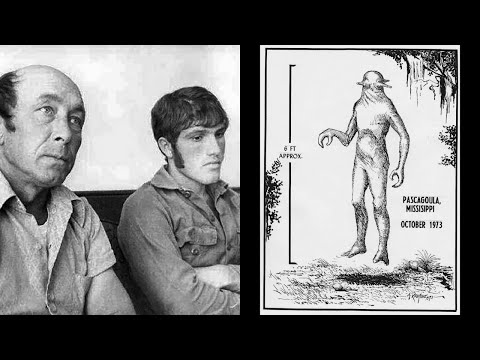
Charles Hickson talks about his UFO sighting and alien abduction in Pascagoula, October 11, 1973
Eyes On Cinema — Archival interview footage of Charles Hickson discussing the encounter, verified via YouTube oEmbed before inclusion.
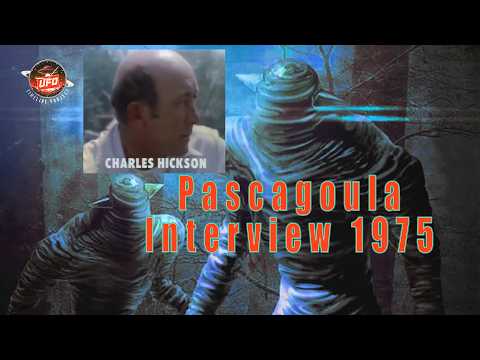
UFO News: The Pascagoula Abduction Interview (1975) Original W5 TV Broadcast News
UFO Timeline Project — Original 1975 CTV W5 broadcast news footage of Charles Hickson discussing the case, verified via YouTube oEmbed before inclusion.
Sources Cited
- Hickson, Charles & Mendez, William. UFO Contact at Pascagoula. Wendelle Stevens Publishing, Tucson, AZ, 1983 (ISBN 0960855866 / 9780960855865, 1st ed. hardcover, limited to 2,000 copies). amazon.com
- "UFO Contact at Pascagoula." AbeBooks / Sagebrush Press listing (bibliographic details: publisher, Tucson place of publication, 1983 date, 1st edition limited to 2,000 copies, 6 x 9¼ in. hardcover, and quoted endorsement from Dr. J. Allen Hynek: "Absolutely honest"). abebooks.com
- "Ufo Contact at Pascagoula." Open Library edition record OL11627349M (publisher of record, page count, May 1983 publish date, ISBN identifiers). openlibrary.org
- "UFO Contact at Pascagoula." Goodreads (aggregated rating and reader review excerpts, including comments on the book's editing quality). goodreads.com
- "Charles Hickson (Author of UFO Contact at Pascagoula)." Goodreads author profile. goodreads.com
- "Pascagoula incident." Wikipedia (case chronology, television appearances, polygraph history, and skeptical commentary from Philip Klass and Joe Nickell). en.wikipedia.org
- "Charles Hickson Sr., UFO abduction figure, dies." The Commercial Dispatch, September 14, 2011 (death date, age, and biographical details). cdispatch.com
- "Gautier man made famous by alien abduction dies at 80." WLOX, 2011 (obituary details, identifying Hickson as a foreman at the closed Walker Shipyard). wlox.com
- Charles Hickson obituary. Legacy.com / Mississippi Press, September 2011 (birth date, family, Korean War service, death date of September 9, 2011). legacy.com
- Nickell, Joe. "Famous Alien Abduction in Pascagoula: Reinvestigating a Cold Case." Skeptical Inquirer, Vol. 36, No. 3, May/June 2012 (hypnagogic-state hypothesis and inconsistencies in Hickson's retellings). skepticalinquirer.org
- "Historical marker unveiled honoring possible alien abduction in Pascagoula." WLOX, June 23, 2019 (June 22, 2019 dedication at Lighthouse Park, marker text, and Calvin Parker's attendance). wlox.com
- This site's own case file: The Pascagoula Abduction (Case File #016), which cites this book directly in its own Further Reading section.
- This site's own key-figures entry: Charles Hickson.
- This site's own key-figures entry: Calvin Parker.
- This site's own key-figures entry: J. Allen Hynek.
- This site's own key-figures entry: Philip J. Klass.
- This site's own key-figures entry: Wendelle Stevens, the book's Tucson-based publisher.
Have corrections, additional research, or peer-reviewed sources? Help improve this entry.
Suggest an Edit