
Pascagoula – The Story Continues
New Evidence & New Witnesses: Calvin Parker's Follow-Up to His Own Long-Delayed First Account of the 1973 Pascagoula River Abduction
Core Thesis
Pascagoula – The Story Continues is Calvin Parker's 2019 follow-up to his own 2018 debut memoir, Pascagoula – The Closest Encounter: My Story — the book that finally broke 45 years of near-total public silence about the night of October 11, 1973, when Parker, then 19, and his older coworker Charles Hickson reported being taken aboard a craft by robotic, claw-armed entities while fishing on the Pascagoula River. Where that 2018 debut was Parker's own delayed first-person account, this second book, assembled with a foreword by veteran UK researcher Philip Mantle and an afterword by scientist Dr. Irena Scott, is explicitly framed as an evidence-gathering sequel: it adds a previously unpublished riverside eyewitness, reproduces an October 1973 document from James Harder's APRO files describing puncture-like marks on both men, and collects six hypnotic-regression transcripts spanning 1973 to 2019 — material this site's own Pascagoula Abduction case file treats as a second, independently sourced layer of documentation for a case Hickson's own much earlier 1983 book had already put into print in his words alone.
About the Author
Calvin Parker was born in 1954 and was 19 years old, newly employed at a Pascagoula shipyard and recently engaged, on the night of October 11, 1973. Where Hickson, the elder of the two witnesses, leaned into the resulting attention — national television appearances, meetings with ancient-astronaut author Erich von Däniken, an eventual book of his own in 1983 — Parker's path ran in almost the opposite direction. By his own later account, reported by Country Roads Magazine, the aftermath cost him repeated jobs as reporters tracked him down, pushed him toward what he described as a nervous breakdown and a brief divorce from his wife (the couple later remarried), and led him to adopt an alias and relocate his family more than once to escape recognition. He had once considered becoming a preacher, a plan he set aside in the belief that the controversy attached to his name would undermine any pulpit he stood behind. For roughly 45 years he kept the fuller details of the encounter even from his own family, breaking that silence only in 2018, at his wife Waynette's urging, with Pascagoula – The Closest Encounter: My Story — not covered in this article, which concerns this book's 2019 sequel specifically.
This book's own author credit is Calvin Parker alone, but Amazon's own bibliographic metadata for both of Parker's books lists a second name beside his: Philip Mantle, the British UFO researcher and small-press publisher whose Flying Disk Press imprint brought both books to print. Surviving retailer listings describe Mantle's role here as foreword author and publisher rather than co-writer of the narrative itself, and a separate scientific afterword is credited to Dr. Irena Scott — a division of labor this article states as plainly as the record supports, rather than either inflating Mantle into a full co-author or erasing his contribution, since the same kind of small-press cataloging ambiguity shaped how this site's own UFO Contact at Pascagoula breakdown had to describe Wendelle Stevens's role in publishing Hickson's own 1983 book.
Parker did not entirely vanish from UFO research during his decades of public silence: Wikipedia's account of the case notes he founded a company called UFO Investigations in 1993 to produce television segments on the subject and later attended UFO conventions, a detail worth holding alongside his own description of avoiding the case publicly, since the two are not strictly contradictory — a private, working-level interest in the field is not the same as being willing to retell his own story on the record. He attended the June 22, 2019 unveiling of Pascagoula's Lighthouse Park historical marker, telling a WLOX reporter it was "emotional for me" and that he "would break out in tears" trying to describe it, eight years after Hickson's own 2011 death. Parker died of kidney cancer at his home in Mississippi on August 24, 2023, at age 68, survived by his wife Waynette.
Historical Context & Origins
This book arrived in 2019, one year after Parker's own 2018 debut and eight years after Charles Hickson's 2011 death left Parker as the case's sole living primary witness. Where Hickson's own 1983 book, UFO Contact at Pascagoula, had been written a decade after the encounter while both men were alive and the case was still a live media story, this book was written into a very different landscape: a 46-year-old case whose surviving witness had spent most of those decades avoiding, rather than courting, public attention.
The book's publication followed directly on the momentum of the June 22, 2019 dedication of a City of Pascagoula historical marker at Lighthouse Park, an event Parker attended and one that gave the case a degree of formal civic recognition neither witness had received in 1973. That same renewed public attention is the immediate occasion this book responds to: rather than simply reissuing Parker's 2018 account, it gathers what its subtitle calls 'new evidence & new witnesses' that had surfaced or been re-examined in the year since that debut, including a fresh hypnotic-regression session conducted with researcher Kathleen Marden on September 14, 2019.
Publishing through Philip Mantle's small Flying Disk Press imprint — itself part of a long tradition of case-specific UFO testimony reaching readers through specialist small presses rather than mainstream trade publishers — put this book in a similar commercial position to Hickson's own 1983 release: a limited-audience, collector- and researcher-oriented title rather than a book aimed at a general trade readership, reflected in a Goodreads rating base of only two dozen ratings as of this article's research.
Core Arguments & Key Concepts
The book's organizing idea is corroboration through accumulation rather than a single new argument: having broken his own silence in 2018, Parker uses this second book to assemble everything that had come to light or been revisited in the year since, rather than retelling the core encounter narrative a second time. Its most-cited new element is a document reproduced from James Harder's APRO case files, dated October 13, 1973 — two days after the encounter — describing what investigators at the time interpreted as puncture-like marks on both Hickson and Parker, material some researchers have since referred to informally as the case's 'smoking gun' physical-evidence document, though this article treats that label as a researcher characterization rather than a settled finding.
A second major strand is testimonial rather than documentary: the book presents an account from an independent witness, identified in it as Maria Blair, who says she was on the opposite riverbank that night and saw both the humanoid figures and the craft's departure. Because this testimony surfaced decades after the fact and was gathered specifically for this book, this article notes — consistent with how skeptical researchers have treated Parker's own later-added recollections — that a corroborating account collected 46 years after an event carries different evidentiary weight than testimony recorded in the days immediately following it, even when offered in good faith.
The book's third structural element is its transcript record: six hypnotic-regression sessions presented together for the first time, spanning Parker's own session recorded just three days after the 1973 encounter, a 1993 session conducted by researcher Budd Hopkins, a September 14, 2019 session conducted by Kathleen Marden, and three separate sessions with Hickson from 1974, 1985, and 1989. Placed side by side rather than scattered across four and a half decades of separate publications, the collection lets a reader trace how both men's descriptions of the entities and the examination did, and did not, shift across a 46-year span — the same kind of consistency-as-evidence approach Hickson's own 1983 book had built around its own decade-shorter set of transcripts.
Key Cases & Evidence Discussed
The book's entire subject is this site's own Pascagoula Abduction (Case File #016, October 11, 1973), the same incident covered by Hickson's own earlier book. Because this is Parker's second-witness account rather than a later researcher's synthesis, it functions as a companion primary source to the case file's own narrative sections, alongside — not in place of — Hickson's 1983 testimony.
This site's own UFO Contact at Pascagoula breakdown, covering Hickson and William Mendez's 1983 book, is the direct companion piece to this article: that entry's own Key Cases section flagged this exact book as "a candidate for its own future, separate Essential Reading breakdown," a gap this article fills. Readers are pointed there for the earlier, contemporaneous 1983 account and to this article for Parker's own much later record.
Philip J. Klass's 1983 UFOs: The Public Deceived, which argued the Pascagoula case was a hoax and is discussed at greater length in this site's own UFO Contact at Pascagoula entry, remains the case's most prominent contemporaneous skeptical treatment; this 2019 book does not directly rebut Klass but implicitly answers his consistency critique by placing 46 years of testimony from both men on the record together.
Joe Nickell's 2012 Skeptical Inquirer hypnagogic-state hypothesis, which proposed Hickson and Parker experienced a dreamlike state at the pier rather than a genuine abduction, is a case-analysis argument this book's new hypnosis and witness material engages with directly even though it does not name Nickell specifically, since both center on the same underlying question of how much weight decades-old and newly recovered testimony can bear.
Critical Reception & Controversies
As a second self-published title from a small specialist imprint, Pascagoula – The Story Continues received no trade-press review coverage and has an even smaller aggregated reader base than Hickson's earlier book: Goodreads lists an average rating of approximately 4.13 out of 5 from 23 ratings and a single written review, consistent with a niche researcher-audience release rather than a book aimed at general readers.
Where a reader response is on record, it engages with the emotional weight of the material rather than its documentary claims: the one published Goodreads review on file responds directly to Parker and Hickson's ordeal, telling Parker "I am so sorry that you both had to endure this devastating event" — reader engagement of a different character than the methodological critiques leveled at Hickson's own 1983 book, though the sample size here is too small to treat as representative.
The book's new evidentiary claims have not received the kind of dedicated point-by-point skeptical rebuttal that Philip J. Klass devoted to Hickson's original account, in part because Klass died in 2005, well before this book's 2019 publication. The closest existing skeptical framework remains Joe Nickell's 2012 Skeptical Inquirer piece, written seven years before this book appeared and therefore addressing the pre-2019 record rather than this book's own new witness and document material directly.
This article notes, without treating it as a rebuttal of the book's sincerity, a limitation inherent to its own structure: because Maria Blair's corroborating witness account and Parker's own most detailed later recollections were gathered decades after 1973, standard eyewitness-memory concerns about suggestion, retelling, and the passage of time apply to this newer material in a way they do not to the contemporaneous 1973 police interviews and initial hypnosis sessions Hickson's earlier book had reproduced.
Influence & Legacy
The book's most concrete legacy is as the fuller documentary record of Parker's own side of the case, filling a gap this site's own UFO Contact at Pascagoula breakdown had explicitly flagged as missing from its coverage. Alongside Parker's 2018 debut, it establishes a second, independent first-person account of the Pascagoula case to sit beside Hickson's 1983 book, giving researchers two witnesses' testimony in their own words rather than one.
The case's public profile continued to grow after this book's 2019 publication: a four-part docuseries, Pascagoula 73, produced by Danny Weir and written by Weir together with this book's own foreword author, Philip Mantle, followed in subsequent years, and Netflix's 2024 anthology series Files of the Unexplained opened its first season with an episode titled "File: Pascagoula Alien Abduction," which closed with a memorial card for Parker, who had died the previous August.
Within the case's broader literature, this book functions as the hinge between Parker's own 2018 debut and later treatments: it is the first place the APRO puncture-wound document, the Maria Blair testimony, and the 1974-through-2019 hypnosis transcripts appear together in one publication, material subsequent researchers and documentarians covering the case have drawn on directly rather than needing to re-assemble from scattered archives.
The Book
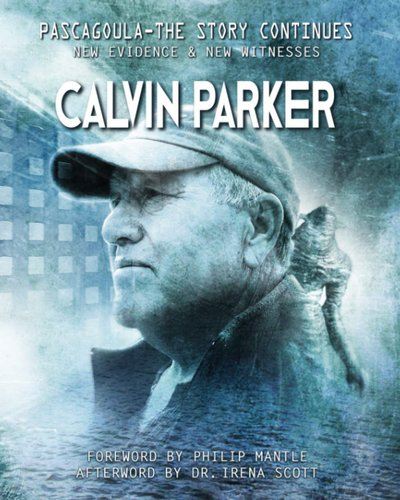
Pascagoula – The Story Continues
New Evidence & New Witnesses: Calvin Parker's Follow-Up to His Own Long-Delayed First Account of the 1973 Pascagoula River Abduction
Find on Amazon →As an Amazon Associate, OverClassified may earn from qualifying purchases made through this link, at no extra cost to you.
Why This Is Essential Reading
Pascagoula – The Story Continues earns its place on this list as the necessary second half of the Pascagoula case's own witness record — not a restatement of Charles Hickson's 1983 account, but Calvin Parker's own follow-up to the 2018 book that finally broke 45 years of a silence shaped by real personal cost: lost jobs, a strained marriage, an assumed alias, and an abandoned calling to the ministry. Its limitations are worth stating as plainly as its value: its new corroborating witness and its most detailed later hypnosis material were gathered decades after the fact, its critical reception is thinner and less developed than the record built up around Hickson's earlier book, and Philip Mantle's exact role sits closer to publisher-and-foreword-author than co-writer despite some retailer listings crediting him alongside Parker. Read together with Hickson's own 1983 account and against Joe Nickell's hypnagogic-state hypothesis, it is the book that lets both Pascagoula witnesses speak for themselves, in their own words, on the record — the second half of a two-witness testimony this site's own case file treats as one of the most thoroughly documented close encounters in American UFO history.
Related Cases & Theories
Essential Viewing
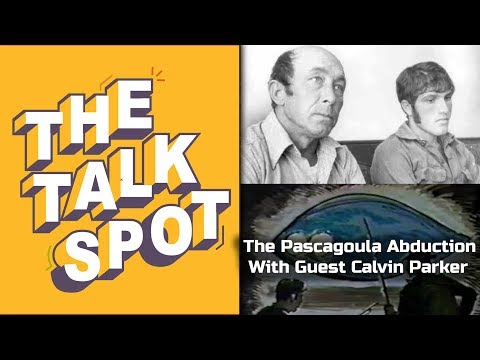
The Pascagoula Abduction Incident (With Guest Calvin Parker)
U Cast Studios — Interview with Calvin Parker recorded around the release of this book, discussing the case and its new material. Verified via YouTube oEmbed before inclusion.
The Pascagoula Calvin Parker Alien Abduction Interview
THE AWAKENED SHOW — Later interview with Calvin Parker revisiting the 1973 encounter and his own account of it. Verified via YouTube oEmbed before inclusion.
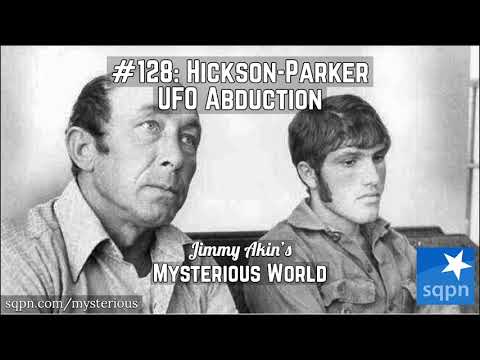
Calvin Parker, Charles Hickson UFO Abduction (Pascagoula 1973)
Jimmy Akin's Mysterious World — In-depth researcher discussion of the Pascagoula case covering both witnesses' accounts. Verified via YouTube oEmbed before inclusion.
Sources Cited
- Parker, Calvin. Pascagoula – The Story Continues: New Evidence & New Witnesses. Flying Disk Press, 2019 (ISBN 1688698620 / 9781688698628, 1st ed. paperback, 441 pp., foreword by Philip Mantle, afterword by Dr. Irena Scott). amazon.com
- "PASCAGOULA – THE STORY CONTINUES: New Evidence & New Witnesses." AbeBooks (bibliographic details: publisher listed as Independently Published / Flying Disk Press, 2019 publication date, 441 pp. paperback). abebooks.co.uk
- "Pascagoula – the Story Continues." Open Library work OL30251272W / edition OL41585200M (publisher of record, 441-page pagination, 2019 publish date, ISBN identifiers). openlibrary.org
- "PASCAGOULA – THE STORY CONTINUES: New Evidence & New Witnesses." Goodreads (aggregated rating of 4.13/5 from 23 ratings, reader review excerpts). goodreads.com
- "Pascagoula Alien Abduction: The story continues with Calvin Parker's new book." WLOX, October 1, 2019 (publication timing, new-witness content, and direct Parker quotes on the book's added detail and motivation). wlox.com
- "Meet the Author: Calvin Parker with 'Pascagoula-The Story Continues.'" WLOX video, October 4, 2019. wlox.com
- "Historical marker unveiled honoring possible alien abduction in Pascagoula." WLOX, June 23, 2019 (June 22, 2019 Lighthouse Park dedication, Parker's attendance and on-record quote). wlox.com
- "An Interview with Calvin Parker: The Pascagoula Alien Abduction." Country Roads Magazine (biographical detail on Parker's decades of silence, job losses, nervous breakdown, and abandoned plan to become a preacher). countryroadsmagazine.com
- "Calvin Parker, who claimed he was abducted by aliens in Pascagoula in 1973, has died." WLOX, September 2, 2023 (death date, age, cause of death, survived by wife Waynette). wlox.com
- "Calvin Parker, Pascagoula Abductee, has Died!" MUFON, September 11, 2023 (biographical and case-history recap). mufon.com
- "Pascagoula incident." Wikipedia (case chronology, Parker's 1993 UFO Investigations company, 2018 book, and 2019 marker dedication). en.wikipedia.org
- "Calvin Parker – Pascagoula UFO Abduction." de173.com (book content descriptions for both Parker titles, including the APRO puncture-wound document and six-transcript hypnosis record). de173.com
- Nickell, Joe. "Famous Alien Abduction in Pascagoula: Reinvestigating a Cold Case." Skeptical Inquirer, Vol. 36, No. 3, May/June 2012 (hypnagogic-state hypothesis, cited as this site's own UFO Contact at Pascagoula entry also cites it). skepticalinquirer.org
- "'Files of the Unexplained' Episode 1 'Pascagoula Alien Abduction.'" IMDb, 2024 (Netflix anthology episode covering the case, closing memorial card for Parker). imdb.com
- This site's own case file: The Pascagoula Abduction (Case File #016).
- This site's own Essential Reading companion entry: UFO Contact at Pascagoula, covering Charles Hickson's 1983 account of the same case.
- This site's own key-figures entry: Calvin Parker.
- This site's own key-figures entry: Charles Hickson.
- This site's own key-figures entry: James Harder.
Have corrections, additional research, or peer-reviewed sources? Help improve this entry.
Suggest an Edit