
The Secret Space Program and Breakaway Civilization
Richard Dolan's Standalone Statement of the Terrestrial Alternative
Core Thesis
This is a small book carrying a large idea. Richard Dolan introduced the term "breakaway civilization" in 2009, inside the second volume of UFOs and the National Security State; this eighty-page volume, adapted from his lecture at the Secret Space Program conference and issued in 2016 as the first of his lecture series, is the argument set out on its own. The claim is that seventy years of compartmented defence research, unaudited spending and privately held reverse-engineering have produced not merely a technology gap but a social one — a segment of the military-industrial world with access to science the rest of us do not have, operating outside democratic oversight and, in Dolan's framing, effectively a separate civilisation. It is the most serious terrestrial alternative to the extraterrestrial hypothesis, and this site maintains a dedicated theory file on it.
About the Author
Richard M. Dolan holds an M.A. in history from the University of Rochester, where his graduate work was on Cold War strategy and diplomacy, and he is the most consistently document-driven historian working in this subject.
His major work is the two-volume UFOs and the National Security State — volume one covering 1941–1973 with a foreword by Jacques Vallée, and volume two covering 1973–1991. Those books are built from declassified documents and are the reason his name carries weight.
The breakaway concept emerged from that documentary work rather than being imposed on it. Dolan spent years tracing how UFO-related material moved through the American security apparatus, and the hypothesis is his answer to a question the documents kept raising: where does this material go once it stops appearing in the record?
This particular volume is a different kind of object from the histories. It is a lecture adapted for print — eighty pages, no apparatus, an argument delivered rather than documented — and it should be read as the summary statement rather than as the evidence.
The lecture series format is itself worth noting. Dolan issued several of these short volumes through his own press to put individual arguments in circulation cheaply, and they function as position papers rather than as monographs.
It is fair to say that Dolan's later output has moved further from the archival method that made his reputation. This book sits at the hinge: the idea in it grew out of documents, and the book itself is not a documentary work.
Historical Context & Origins
The hypothesis exists because of a real problem with the extraterrestrial explanation, and it is worth stating the problem before the solution. High-performance UAP reports require an origin, and the ETH answers by importing one from another star system — which is a large claim to hang on observational data whose range estimates are contested.
The terrestrial alternative asks whether the origin could be closer, and the historical grounds for taking it seriously are strong. The Manhattan Project concealed an effort involving over 130,000 people from Congress and from the sitting Vice President, which establishes that compartmentation at civilisation-altering scale is achievable.
Operation Paperclip then moved hundreds of German aerospace and rocketry specialists into American military research between 1945 and 1959, and the National Security Act of 1947 built the CIA and the modern classification system around them.
The postwar record supplies repeated proofs of concept for long-term secrecy. The U-2 was developed at a remote Nevada site and became public only when Francis Gary Powers was shot down in May 1960; the CORONA satellite programme flew more than a hundred missions under a scientific cover story and stayed classified until 1995; the F-117 first flew at Groom Lake in June 1981 and was not acknowledged until November 1988.
Those are the load-bearing historical examples, and they establish the mechanism. What they do not establish is duration — each was concealed for years or decades, not for seventy, and each eventually surfaced.
There is a second, less-cited line of context that matters for judging the idea, and it concerns money. The theory's financial premise is not a fringe claim: the Department of Defense has failed every full financial audit it has attempted since the first one in 2018, with vast sums of assets unreconciled. That is a documented administrative fact reported by the department itself.
What it does not do is what the theory needs it to. An unreconciled balance sheet means the department cannot account for where money and property are, which is a real governance failure and a matter of accounting practice rather than of concealed programmes. Treating it as a located budget for hidden research converts an absence of records into a positive finding, and that step is not supported by anything in the audit reports themselves.
Bob Lazar's 1989 account of reverse-engineering work at S-4 gave the theory a claimed firsthand description of the workforce such a programme would need, and it remains contested in every particular.
The 2023 congressional testimony of David Grusch — that recovered craft and material are held under programmes walled off from oversight, supported in outline by retired Army Colonel Karl Nell — moved the institutional half of the argument from anecdote to sworn statement, seven years after this book appeared.
Core Arguments & Key Concepts
Classified aerospace runs decades ahead of public science. The premise, and it is straightforwardly true at the ordinary scale — stealth, reconnaissance satellites and high-altitude aircraft all existed for years before the public knew. The theory's move is to extend the gap from decades to something closer to a century in propulsion and energy.
The money exists and is not accounted for. The Pentagon has repeatedly failed its financial audits with enormous sums unreconciled, and the theory reads that as the funding channel for special access and unacknowledged special access programmes.
Private contractors are the mechanism of concealment. The sharpest structural point in the whole framework. Material and work held by private companies are outside the Freedom of Information Act, so moving a programme into a contractor is not merely convenient but is the specific means by which it leaves the public record.
The gap is social, not just technical. Dolan's actual contribution, and the reason the term is "civilization" rather than "programme." A group with different science, different funding, different laws and no accountability to the society it emerged from has, on this argument, become a distinct culture.
This explains UAP without requiring visitors. The framework's appeal: it accounts for high-performance craft, extreme secrecy and official evasion using nothing but documented human institutions.
It does not explain everything, and Dolan does not claim it does. An important qualification frequently lost in secondhand summaries. Dolan's own position has generally been that a breakaway group may exist and may be working on technology that is genuinely non-human in origin — the two hypotheses are not exclusive.
The oversight problem is the real subject. Strip out the craft entirely and what remains is a documented question about unaudited spending, contractor-held classification and the limits of congressional access. That question stands whatever is or is not in the hangars.
Key Cases & Evidence Discussed
The Manhattan Project. The wartime template: over 130,000 personnel, concealed from Congress and from Vice President Truman — the proof that compartmentation at civilisation-scale is possible.
Operation Paperclip, 1945–59. The transfer of German aerospace expertise into American classified research, and the seed of the aerospace-classification culture the theory describes.
The U-2 and CORONA programmes. Secrecy sustained for years and decades respectively — and, in both cases, secrecy that eventually ended.
The F-117 at Groom Lake. First flight June 1981, public acknowledgement November 1988: a seven-year gap between an operational aircraft and its existence being admitted.
Bob Lazar and S-4, 1989. The claimed insider account of a compartmented reverse-engineering workforce — the institutional blueprint the theory needs, and a claim this site's case file treats with the scepticism its evidential problems require.
Wright-Patterson AFB. The recurring destination in crash-retrieval accounts, and the node at which material is said to enter the classified system.
David Grusch's testimony, July 2023. Sworn congressional testimony that contractors hold recovered material outside oversight — the strongest institutional support the theory has received, and still testimony rather than material.
The Pentagon audit failures. Repeated since 2018, with vast sums unreconciled — documented fact, and the point at which the theory's financial argument becomes checkable.
Critical Reception & Controversies
Within the field the breakaway framework is taken seriously, which is unusual, and it is taken seriously because of who proposed it. Dolan's archival reputation carried the idea into discussions where a less documented author would have been dismissed.
The book itself is a lecture, and should be assessed as one. It is short, unfootnoted and rhetorical in construction, and a reader looking for the evidence behind the argument has to go back to the two-volume history.
The strongest objection is about containment, and it is the one this site's theory file puts first. A programme of this scale needs thousands of engineers, technicians, test pilots and security staff across seventy years. Every comparable secret has leaked or ended — the U-2, CORONA and the F-117 all became public, and the Manhattan Project was penetrated by foreign intelligence while it was running.
The economic objection is the second and is harder to answer than it looks. Military breakthroughs reliably filter into the civilian economy because there is money in them — radar, jet propulsion, GPS, the internet. A group holding field propulsion or unlimited energy for seventy years, and commercialising none of it, is behaving in a way no institution in history has behaved.
The third objection is internal to the phenomenon. If UAP are American classified craft, then the incidents in which objects shut down ICBM flights — the material Robert Salas and others have documented — would be one branch of the US government conducting electronic warfare against another branch's nuclear deterrent. That is not a small implication.
The performance objection sets the framework's ceiling. It handles sharp-edged, radar-trackable, inertia-obeying craft well, and strains badly against reports of instantaneous reversals at extreme velocity. The 2004 Nimitz encounters are the usual test case and the framework does not comfortably contain them.
One defence of the framework deserves stating because it is the strongest one available. Every containment objection assumes the secret is a discrete artefact that either leaks or does not. If instead what is held is a research culture — distributed across contractors, compartmented so that no participant sees the whole, and covered by contractual as well as classification obligations — then there is no single thing to leak, and the participants may not know enough individually to blow a whistle usefully. That is a real answer to the containment problem, and it is the shape of Dolan's actual argument rather than the cartoon version usually attacked.
It does not, however, answer the economic objection, which is the one that keeps standing. Distributed compartmentation explains how a capability could stay unannounced; it does not explain why every one of the companies holding a piece of it would forgo the largest commercial opportunity in industrial history for seventy years running.
The comparison worth making is with Joseph Farrell's Covert Wars and Breakaway Civilizations and Nick Cook's The Hunt for Zero Point. Cook, a Jane's aviation editor, went looking for the same programmes with journalistic method and came back with less than the theory requires — which is informative.
Influence & Legacy
The term has escaped the book, which is the clearest measure of its influence. "Breakaway civilization" is now standard vocabulary in UAP discussion, used by people who could not name where it came from, and it has given the terrestrial explanation a label the extraterrestrial hypothesis previously had all to itself.
It has also had an effect Dolan probably did not intend. Because the framework explains high-performance craft without visitors, it is now routinely deployed by people who want the UAP subject to be interesting without being extraterrestrial — a rhetorical convenience rather than a position, and one that borrows the theory's respectability while skipping its evidential problems.
Its more durable contribution is the reframing of secrecy as a social fact rather than an administrative one. Once you ask what a permanently compartmented technical elite does to the society around it, you are asking a political question that does not depend on any craft existing.
The 2023 hearings gave the institutional half of the argument its strongest moment. Sworn testimony that contractors hold material outside congressional reach is exactly what the framework predicted, and it arrived through the ordinary machinery of oversight rather than through the UFO literature.
What remains unresolved is the part that always was. The theory's documented components — unaudited spending, contractor-held classification, a real and recurring gap between classified and public aerospace — are not in dispute and would matter even if no anomalous craft existed anywhere. The undocumented component is the leap from that machinery to working field propulsion held in secret for seventy years, and nothing in this book or anywhere else closes it. Read the framework for the questions it makes askable, and keep the two halves apart.
The Book
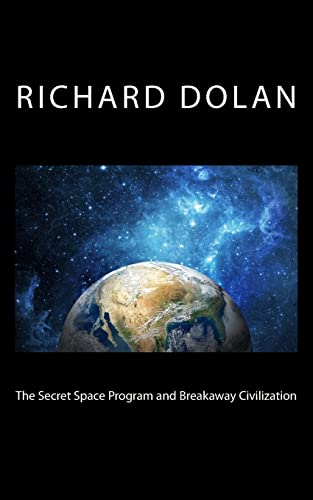
The Secret Space Program and Breakaway Civilization
Richard Dolan's Standalone Statement of the Terrestrial Alternative
Find on Amazon →As an Amazon Associate, OverClassified may earn from qualifying purchases made through this link, at no extra cost to you.
Why This Is Essential Reading
Short, useful, and not the evidence. This eighty-page lecture volume is where Richard Dolan's breakaway-civilization argument stands on its own, and it is worth reading because the idea is the most serious terrestrial alternative anyone has put forward: that seventy years of compartmented research, unaudited money and privately held classification have produced a technical elite that is effectively a separate culture. The framework's documented half is strong — the Pentagon really does fail its audits, contractors really are outside FOIA, and classified aerospace really has run decades ahead of public knowledge more than once. The undocumented half is the leap to working exotic propulsion concealed for seven decades, and the objections to it are serious: every comparable secret has surfaced, no institution in history has sat on a commercialisable breakthrough that long, and the framework cannot contain the higher end of the reported performance envelope. Read this for the argument and go to the two-volume history for the documents it grew out of — and read this site's theory file, which sets out the objections in full.
Related Cases & Theories
Sources Cited
- Dolan, Richard M. The Secret Space Program and Breakaway Civilization. Richard Dolan Lecture Series, Volume 1. CreateSpace Independent Publishing Platform, August 2016, 80 pp. ISBN-10 1537132555 / ISBN-13 9781537132556. amazon.com
- Open Library record, ISBN 9781537132556 — the 2016 CreateSpace edition, 80 pages, and cover art. openlibrary.org
- AbeBooks catalogue record, ISBN 9781537132556 — independent bibliographic listing and cover-art source; also identifies the volume as Volume 1 of the lecture series. abebooks.com
- Barnes & Noble catalogue record — independent retail listing of the title. barnesandnoble.com
- Goodreads edition record — edition history and reader reception. goodreads.com
- Google Books record — catalogue metadata for the title. books.google.com
- Wikipedia, "Operation Paperclip" — the 1945–59 transfer of German aerospace and rocketry specialists into US military research. en.wikipedia.org
- Wikipedia, "Special access program" — the SAP and unacknowledged-SAP structures the theory identifies as the concealment mechanism. en.wikipedia.org
- Wikipedia, "Lockheed U-2" — developed in near-total secrecy and public only after the May 1960 shoot-down of Francis Gary Powers. en.wikipedia.org
- Wikipedia, "Corona (satellite)" — over a hundred reconnaissance missions flown under a scientific cover story and declassified only in 1995. en.wikipedia.org
- Wikipedia, "Lockheed F-117 Nighthawk" — first flight at Groom Lake in June 1981, public acknowledgement November 1988. en.wikipedia.org
- Wikipedia, "Bob Lazar" — the 1989 S-4 claims cited by the theory as a firsthand account of a compartmented workforce, and the evidential problems with them. en.wikipedia.org
- Wikipedia, "David Grusch UFO whistleblower claims" — the July 2023 congressional testimony that contractors hold recovered material under programmes outside oversight. en.wikipedia.org
- Wikipedia, "Manhattan Project" — the wartime precedent for concealing an effort of over 130,000 personnel from Congress, and its penetration by foreign intelligence while running. en.wikipedia.org
- Wikipedia, "National Security Act of 1947" — the statute that created the CIA and the modern classification framework the theory depends on. en.wikipedia.org
Have corrections, additional research, or peer-reviewed sources? Help improve this entry.
Suggest an Edit