
The Cygnus Mystery
Unlocking the Ancient Secret of Life's Origins in the Cosmos
Core Thesis
The Cygnus Mystery: Unlocking the Ancient Secret of Life's Origins in the Cosmos is Andrew Collins's attempt to do for the constellation Cygnus what Robert Bauval's 1994 Orion Correlation Theory had done for Orion a decade earlier: identify a single star pattern as the hidden key to how an entire range of ancient cultures, separated by thousands of miles and thousands of years, understood the origin of life and the destination of the soul. Collins's argument runs from Paleolithic cave art at Lascaux, where a real (and contested) 1998 academic hypothesis by German prehistorian Michael Rappenglück proposed the star Deneb might appear in a 17,000-year-old painted scene, through the star's brief tenure as Earth's pole star around 15,000 BCE, to claims that the three main pyramids at Giza were laid out to mirror Cygnus's "wing" stars rather than Orion's belt, that the T-shaped pillars of Göbekli Tepe target Deneb's setting point, and that cosmic rays emitted by the real binary star system Cygnus X-3 helped accelerate human neurological evolution during the Ice Age — a chain of claims that moves, largely without acknowledging the shift, from a genuine but narrow and disputed archaeoastronomical hypothesis about one cave painting into a sweeping, unfalsifiable claim that a single constellation sits "at the root of all the world's religions." This entry treats each link in that chain on its own evidentiary terms, as Collins's own argument rather than settled archaeology, and sets it against the direct, documented pushback it has drawn — including from Bauval, the very theorist whose Orion correlation Collins's book was written to displace.
About the Author
Andrew Collins was born January 25, 1957, in Bedford, England, and has lived for most of his adult life in Leigh-on-Sea, Essex. By his own account on his personal website, he had an "uneventful school career" and was barred from sitting the English O-level exam over his poor writing ability — a detail he has not hidden, and one worth setting against a subsequent career built entirely on writing more than fifteen books. He holds no university degree and no credential in archaeology, ancient history, astronomy, or any adjacent discipline; his own biographical pages describe him as self-taught, and his formal working life began not in research but as an export shipping clerk in London.
Long before The Cygnus Mystery, Collins had an entirely separate career as a UFO investigator, one this site has already documented in detail elsewhere. In 1978 he compiled the original investigative report on the Aveley Abduction, a October 1974 case near Aveley, Essex that he called "probably the most important British case ever" and that this site's own key-figures entry on Collins credits him with bringing to hypnotic regression under Dr. Leonard Wilder. He went on to co-edit the magazine Strange Phenomena from 1979, then became one of the founders of "psychic questing," a discipline he has described as using psychic impressions to locate lost artefacts and solve landscape mysteries; his 1988 book The Black Alchemist, built around the October 1979 "Green Stone affair," sold roughly 15,000 copies and was reissued by Random House in 1992, with a sequel, The Second Coming, following in 1993.
Collins's pivot toward ancient-mysteries writing dates to 1996's From the Ashes of Angels, a five-years-in-the-making argument that civilization began in what is now southeastern Turkey and that the biblical "Watchers" and Nephilim preserved a folk memory of a real, historically situated culture there — the same region, as it happens, where Göbekli Tepe would later be excavated. Gods of Eden (1998) and Gateway to Atlantis (2000, locating Atlantis in Cuba rather than the Bahamas or Antarctica) followed before The Cygnus Mystery appeared in 2006. Collins has described first visiting Göbekli Tepe in 2004, two years before this book's publication and roughly seven years before the site's 2011 National Geographic cover story brought it to a mainstream audience; he has continued publishing on it since, through 2014's Göbekli Tepe: Genesis of the Gods (co-billed with Graham Hancock) and 2018's The Cygnus Key, and reports co-discovering an unrecorded cave system beneath the Giza plateau with researcher Nigel Skinner-Simpson in 2008. None of this body of work has been peer-reviewed or engaged with by professional archaeology on its own terms; professional archaeologist Carl Feagans, reviewing Collins's 2024 book Karahan Tepe on his own field-archaeology blog, characterized Collins's general method as "extend[ing] beyond the concrete archaeological evidence" through "subjective interpretations and post-hoc alignments without corroborating evidence" — a critique of a later book, not this one, but one this entry's Critical Reception section shows recurring in The Cygnus Mystery specifically as well.
Historical Context & Origins
The Cygnus Mystery arrived in 2006, twelve years after Robert Bauval and Adrian Gilbert's 1994 book The Orion Mystery had popularized the Orion Correlation Theory — the claim that the three main pyramids at Giza mirror the three stars of Orion's belt — and eight years after Graham Hancock's Fingerprints of the Gods (1995) had carried that same theory to a mass audience. By the mid-2000s the Orion Correlation Theory was the single most recognizable archaeoastronomical claim in popular alternative-history publishing, and Collins's book is explicitly structured as a direct rival to it: rather than propose a wholly new site or civilization, he argues that the existing, already-famous Giza alignment puzzle has been assigned to the wrong constellation, and that Cygnus, not Orion, is the pattern imperial Egypt and a string of older cultures actually built toward.
The book also predates by several years the event that would make its central setting, Göbekli Tepe, a household name: German archaeologist Klaus Schmidt had been excavating the site since 1995, but it remained a specialist concern until National Geographic's widely read 2011 cover story "The Birth of Religion" and the site's 2018 UNESCO World Heritage inscription. Collins's own first visit in 2004 and this book's 2006 publication place him among the earliest popular-press writers to build an argument around Göbekli Tepe, years ahead of the site's mainstream archaeological celebrity — though, as this entry's Critical Reception section documents, being early to a real site is a separate matter from the specific astronomical claims Collins built on top of it.
Underneath its speculative superstructure, the book leans on one genuine, published academic hypothesis: Munich-based prehistorian Michael Rappenglück's 1998 doctoral proposal that a painted scene in the Lascaux cave complex — the so-called Shaft Scene, showing a bird-headed man, a bird on a pole, and a wounded bison — might encode the Summer Triangle stars Deneb, Vega, and Altair as they appeared roughly 17,000 years ago, when precession placed the pole close to Cygnus. Rappenglück's own hypothesis is narrow, contested within archaeoastronomy, and confined to a single painted panel; this site's own Essential Reading entry on The Chinese Roswell and its entry on The Space-Gods Revealed both document the broader pattern this book repeats — a genuinely credentialed, narrowly stated piece of research pressed into service as the foundation for a much larger, unfalsifiable claim about world religion and human origins.
Finally, the book sits inside a specific, personal rivalry rather than a purely abstract theoretical dispute. Collins and Bauval have exchanged detailed rebuttals of one another's Giza correlation claims on their own websites since the book's publication, a documented back-and-forth this entry's Critical Reception section examines directly — making The Cygnus Mystery one of the few ancient-astronaut-adjacent bestsellers whose central claim was publicly contested not primarily by outside skeptics, but by the rival theorist it was written to unseat.
Core Arguments & Key Concepts
Collins's foundational claim is that Deneb, Cygnus's brightest star, briefly served as Earth's pole star around 15,000 BCE, owing to the roughly 25,772-year precessional wobble of Earth's axis, and that this celestial fact was encoded by Paleolithic peoples into cave art and, later, into monumental architecture across separate, unconnected cultures. He builds this claim outward from Rappenglück's Lascaux hypothesis, asserting that "the veneration of Cygnus as a bird associated with cosmic life and death goes back 17,000 years" — a considerably stronger and more specific claim than Rappenglück's own published proposal, which identifies possible star correspondences in one painted panel without asserting a continuous 17,000-year cult of Cygnus worship.
At Giza, Collins argues that the three main pyramids' layout matches the three principal "wing" stars of Cygnus more closely than Orion's belt, directly challenging Robert Bauval's Orion Correlation Theory. This is presented as a rival archaeoastronomical correlation rather than a rejection of the broader premise that the pyramid field encodes a star pattern at all — Collins accepts Bauval's basic method of mapping monuments onto constellations, he simply argues Bauval mapped the wrong one.
At Göbekli Tepe, Collins argues that the twin central T-shaped pillars found in several of the site's stone enclosures were oriented toward the setting point of Deneb on the local horizon around the time of the site's construction roughly 11,500 years ago, and that this was a deliberate act of religious architecture built around the same Cygnus-as-gateway cosmology he traces back to the Paleolithic. Klaus Schmidt's own excavation team did not endorse this astronomical reading as part of their published findings on the site's construction and purpose.
The book's most scientifically ambitious — and most speculative — claim involves Cygnus X-3, a real X-ray binary star system roughly 37,000 light-years from Earth that does emit high-energy cosmic rays detectable by modern instruments. Collins proposes that periodic bursts of cosmic radiation from this source bombarded Earth during the Ice Age and directly accelerated human neurological evolution, tying this mechanism to a broader panspermia-adjacent claim that ancient peoples somehow retained a folk memory of life's cosmic origin. He extends this argument, in the book's final chapters, into a discussion of altered states induced by entheogenic mushroom use as a channel through which this "cosmic" knowledge was supposedly transmitted — a section reader reviews (cited below) single out as a poorly integrated final pivot even by the standards of the book's earlier chapters.
Beyond these central claims, Collins surveys Dogon cosmology in Mali, Native American star lore — material he would later expand into the 2014 book Path of Souls, co-written with Gregory Little, on the Milky Way's "Great Rift" as a death-journey landmark in several Native American traditions — and recurring bird imagery in world mythology, reading each as independent corroboration of a single, globally diffused Cygnus cult rather than as separately evolved cultural traditions that happen to share the general human habit of storytelling about the night sky.
Key Cases & Evidence Discussed
This book is not built around named UFO or paranormal incident case files in the way many entries on this list are; its evidentiary base is a set of archaeological sites and mythological traditions rather than eyewitness cases. The clearest connection to this site's own case-file material runs instead through its own author: this site's Aveley Abduction case file (Case File #286) documents the entirely separate investigation Andrew Collins ran decades before he became a full-time ancient-mysteries author, arranging the case's hypnotic regression sessions and compiling its original 1978 report — a body of work this entry's About the Author section covers in full and does not repeat here.
This site's own Crypto-Terrestrial Hypothesis theory file (Theory File CTH-001) cites this exact 2006 edition directly, drawing on its survey of global myths about subterranean and "hidden" ancestral races for comparative cultural background — material Collins presents alongside, but distinct from, the book's central Cygnus/Deneb argument.
This site's own Ancient Astronaut Hypothesis theory file (Theory File AAH-001) situates the broader interpretive framework this book extends: like Chariots of the Gods? and The Space-Gods Revealed, both already covered in this site's Essential Reading library, Collins's book reads specific archaeological monuments as encoded messages from a lost, more knowledgeable source — though Collins's own version substitutes a cosmic-ray-driven evolutionary mechanism for the visiting-spacecraft mechanism those two books' authors favored.
The book's real intellectual sparring partner is Robert Bauval's Orion Correlation Theory, most fully popularized in The Orion Mystery (1994) and Graham Hancock's Fingerprints of the Gods (1995), neither of which currently has its own dedicated entry on this site. Collins's direct challenge to that theory, and Bauval's own documented rebuttal of Collins in turn, is covered in full in this entry's Critical Reception section below.
Critical Reception & Controversies
The most detailed, checkable critique of this book's central methodology comes from skeptical researcher and ancient-astronaut historian Jason Colavito, in a blog post titled "Paleolithic Constellations: A Follow-Up on the Cygnus Mystery." Colavito's central finding is that Collins overstates what Michael Rappenglück's genuine, published Lascaux hypothesis actually claims: Rappenglück's own research, Colavito writes, "does not state that the Paleolithic people identified this star (singular) with a complete constellation," while Collins's book treats a single identified star as evidence for full constellation-level recognition. Colavito further notes that "in terms of sheer numbers, the Pleiades, being multiple in number, seem to have attracted more attention than the single star of Deneb" in the broader Paleolithic astronomical record, undercutting the claim that Cygnus specifically was privileged above other star groups. On the book's central chain of inference across millennia, Colavito concludes that the evidence "does not require the logical leap of assuming a continuity of belief — much less one focused on one set of stars not emphasized above any other — across tens of thousands of years," and states plainly that he knows "of no myth, belief, or practice that can be traced back unbroken to Paleolithic times." He also flags a specific visual problem: the Lascaux bird figure itself "bears no resemblance to the spread-eagle avian form of either ancient or modern forms of the constellation" Cygnus.
This book's most pointed rebuttal, however, comes not from an outside skeptic but from the rival theorist whose work it was written to displace. Robert Bauval, originator of the Orion Correlation Theory that Collins's Cygnus-Giza correlation directly challenges, published a detailed online response after this book's release arguing, in substance, that ancient Egyptians showed no documented religious or astronomical interest in Cygnus specifically, and that mapping the pyramid field onto a constellation the Egyptians themselves left no textual or iconographic record of privileging undercuts Collins's correlation on its own evidentiary terms — the same kind of after-the-fact pattern-matching critique that has followed Bauval's own Orion theory. Griffith Observatory director E.C. Krupp, one of the more prominent professional astronomers to formally examine the Orion Correlation Theory, separately measured the actual angle between the Giza pyramids' layout and true north at roughly 47–50 degrees, against Bauval and Gilbert's claimed 38-degree "perfect match" to Orion's belt — a documented instance, within the same Giza-correlation dispute Collins's book joined, of a claimed sky-to-ground alignment not holding up to independent measurement, regardless of which constellation is proposed.
Collins's non-credentialed background is a documented, relevant fact rather than an ad hominem aside, by his own account: no university degree, no training in archaeology, astronomy, or ancient history, and a body of work that has never undergone academic peer review or been engaged with by professional Egyptology or archaeology on its own terms. Professional archaeologist Carl Feagans, reviewing Collins's later book Karahan Tepe: Decoding a Neolithic Mystery (2024) on his own field-archaeology blog, characterized Collins's recurring method as "selectively choosing data to support predetermined conclusions rather than following evidence" and relying on "subjective interpretations and post-hoc alignments without corroborating evidence" — a critique of a different, later book, disclosed here as such, but one that names the same interpretive pattern this entry's Core Arguments section documents running through The Cygnus Mystery specifically: a real academic source (Rappenglück) stretched into a claim its own author never made, applied to a real site (Göbekli Tepe) whose actual excavators never endorsed the astronomical reading built on top of it.
Reader reception has been more favorably mixed than the specialist critique above might suggest: the book holds a 3.90-of-5 average across roughly 100 Goodreads ratings, with several reviewers praising its Dogon and Native American comparative material and Collins's extensive personal fieldwork, while others single out its final chapters specifically — one representative review describes the book's last fifty pages as an abrupt, poorly connected "discussion about mushroom cults, radiation beaming down from Cygnus" that the earlier three hundred pages had not adequately set up.
Influence & Legacy
This book's most concrete, independently verifiable influence is documented on this very site: this exact 2006 edition, under ISBN 1842931938, is cited directly on this site's own Crypto-Terrestrial Hypothesis theory file, drawn on there for its comparative survey of global hidden-race folklore.
Within Collins's own bibliography, the book's central Cygnus argument proved durable rather than a one-off: he returned to it directly in 2018's The Cygnus Key: The Denisovan Legacy, Göbekli Tepe and the Birth of Egypt, which Jason Colavito also reviewed at length and critiqued on similar evidentiary grounds, and extended its Native American material into 2014's Path of Souls, co-written with Gregory Little, which develops the Milky Way "Great Rift"-as-death-journey theme this book introduces into a full study of North American mound-building cultures.
The book's Göbekli Tepe material rode the site's subsequent rise to mainstream fame: Collins has continued to appear as an on-camera commentator connecting the site to his Cygnus thesis on productions including History's Ancient Aliens and The UnXplained with William Shatner, carrying a claim first published in 2006, well before Göbekli Tepe's 2011 National Geographic breakout, into the same paleocontact media ecosystem this site's Chariots of the Gods? entry documents Erich von Däniken opening in 1968.
The book's most distinctive legacy, though, is the public, documented dispute it opened with Robert Bauval: unlike most ancient-astronaut-adjacent bestsellers, whose central claims draw criticism primarily from outside academic or skeptical circles, The Cygnus Mystery drew a detailed, specific rebuttal from the very theorist — Bauval, of Orion Correlation Theory fame — whose own popular claim it was written to unseat, giving this particular Giza-correlation dispute an unusually well-documented back-and-forth between two writers working from the same broad interpretive framework rather than from opposite sides of a mainstream-versus-fringe divide.
The Book
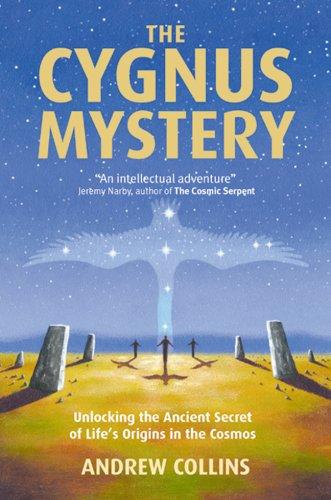
As an Amazon Associate, OverClassified may earn from qualifying purchases made through this link, at no extra cost to you.
Why This Is Essential Reading
The Cygnus Mystery earns its place on this list less for the soundness of its central claim than for how clearly it demonstrates a recurring move in ancient-astronaut-adjacent publishing: taking one genuine, narrowly stated piece of academic research — here, Michael Rappenglück's contested 1998 hypothesis about a single Lascaux cave panel — and building an unfalsifiable, world-spanning argument on top of it that the original research never claimed to support. Andrew Collins brings genuine, extensive fieldwork to the project, including some of the earliest popular-press attention paid to Göbekli Tepe years before its 2011 mainstream breakout, and his direct challenge to Robert Bauval's Orion Correlation Theory produced one of the few publicly documented, specific rebuttals in this genre from a rival theorist rather than an outside skeptic. But the book's own evidentiary record, laid out honestly in this entry's Critical Reception section, is unforgiving: Jason Colavito's direct documentation of how far Collins's constellation-wide claims outrun Rappenglück's single-star hypothesis, Bauval's own rejection of the Cygnus-Giza correlation on the ancient Egyptians' own documented silence about Cygnus, and archaeologist Carl Feagans's identification of the same "post-hoc alignments without corroborating evidence" pattern recurring across Collins's later work. Read against those specific, named objections, this book is essential less as reliable archaeoastronomy than as a case study in exactly how far a real, credentialed academic hypothesis can be stretched once it leaves the hands of the researcher who actually tested it — by an author whose own, entirely separate career investigating the Aveley Abduction shows he was capable of far more disciplined, source-anchored fieldwork than this book's central thesis ultimately delivers.
Related Cases & Theories
Essential Viewing
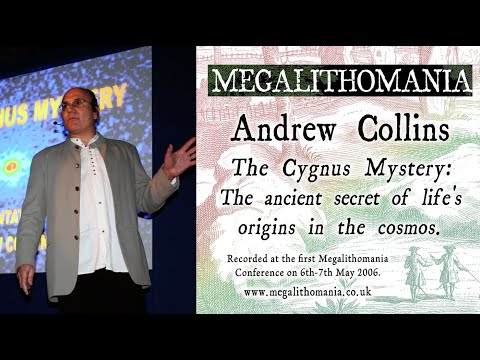
The Cygnus Mystery | Life's Origins in the Cosmos | Andrew Collins | Megalithomania 2006 (Audio)
MegalithomaniaUK — Andrew Collins's own conference lecture on this book's thesis, delivered the same year it was published — a direct primary-source presentation of the Deneb, Göbekli Tepe, and cosmic-ray claims this entry examines. Verified via YouTube oEmbed before inclusion.
Andrew Collins - The Cygnus Mystery
LegaliseFreedom1 — A further recorded interview with Collins walking through the book's central Cygnus/Deneb argument and its challenge to Robert Bauval's Orion Correlation Theory at Giza. Verified via YouTube oEmbed before inclusion.
Sources Cited
- Collins, Andrew. The Cygnus Mystery: Unlocking the Ancient Secret of Life's Origins in the Cosmos. Watkins Publishing, London, 2006 (ISBN 1842931938 / 9781842931936, cited here, matching the edition already cited by Amazon link on this site's Crypto-Terrestrial Hypothesis theory file). archive.org
- Colavito, Jason. "Paleolithic Constellations: A Follow-Up on the Cygnus Mystery." jasoncolavito.com (documented critique of Collins's use of Michael Rappenglück's Lascaux hypothesis). jasoncolavito.com
- "Collins, Andrew." Atlantipedia.ie (biographical summary: psychic questing background, Atlantis-in-Cuba claim, Cygnus-Giza correlation vs. Orion, Colavito's "lukewarm" response). atlantipedia.ie
- "About me." andrewcollins.com (author's own biographical page: birth date and place, O-level exam detail, shipping-clerk career, Leigh-on-Sea residence). andrewcollins.com
- "Andrew Collins, author, b. 1957 — full biography." andrewcollins.com (career timeline: Strange Phenomena, psychic questing founding, The Black Alchemist, From the Ashes of Angels, Göbekli Tepe visits since 2004, full bibliography). andrewcollins.com
- "Cygnus vs Orion at Giza — Bauval Answered." andrewcollins.com (Collins's own account and rebuttal of Robert Bauval's published response to this book's central Giza correlation claim). andrewcollins.com
- Feagans, Carl. "Review of Andrew Collins' Karahan Tepe: Decoding a Neolithic Mystery." ahotcupofjoe.net (professional archaeologist's assessment of Collins's recurring interpretive method, cited here for the documented pattern it names, not as a review of this specific title). ahotcupofjoe.net
- "Robert Bauval." Wikipedia (Orion Correlation Theory background, E.C. Krupp's measured-angle critique of the Giza–Orion correlation). en.wikipedia.org
- "The Cygnus Mystery: Unlocking the Ancient Secret of Life's Origins in the Cosmos." Goodreads (reader ratings and reviews, including critical reader response to the book's final chapters). goodreads.com
- "Cygnus Mystery." Open Library (bibliographic record, ISBN 1842931938 / 9781842931936, Watkins Pub Ltd, 336pp). openlibrary.org
- "The Cygnus Mystery: Unlocking the Ancient Secret of Life's Origins in the Cosmos." AbeBooks (bibliographic record for the related Watkins 2007 hardcover printing, ISBN 9781842932025, used for this entry's cover art). abebooks.com
- "The Cygnus mystery: unlocking the ancient secret of life's origins in the cosmos." Internet Archive (scanned copy, catalog record). archive.org
- "Path of Souls: The Native American Death Journey." Amazon.com (Andrew Collins and Gregory Little's 2014 collaborative extension of this book's Milky Way/Cygnus death-journey material into Native American mound-culture research). amazon.com
- This site's own theory file: Crypto-Terrestrial Hypothesis (Theory File CTH-001), which cites this exact edition (ISBN 1842931938) directly.
- This site's own case file: The Aveley Abduction (Case File #286), the 1974 case Andrew Collins investigated and reported on decades before this book's publication.
- This site's own key-figures entry: Andrew Collins, for his Aveley-era biography and case connections beyond this book.
Have corrections, additional research, or peer-reviewed sources? Help improve this entry.
Suggest an Edit