
The Chinese Roswell
UFO Encounters in the Far East from Ancient Times to the Present
Core Thesis
The Chinese Roswell: UFO Encounters in the Far East from Ancient Times to the Present takes the ancient-astronaut argument Erich von Däniken made famous worldwide in Chariots of the Gods? (1968) and applies it specifically, and at book length, to China — a national focus rare enough in the largely Western-centered ancient-astronaut publishing tradition that it remains one of Hartwig Hausdorf's most distinctive contributions to the genre. A German travel-industry professional rather than an archaeologist, historian, or Sinologist by training, Hausdorf argues across the book's three central case studies — the legendary "White Pyramid," a 1,000-foot structure reportedly sighted near Xi'an by American pilots in the 1940s; the sealed, mercury-filled tomb of China's first emperor, Qin Shi Huang; and the Bayan Kara Ula stone discs, the so-called Dropa stones this site's own Dropa Stones case file documents as a fabricated 1962 hoax — that China's imperial-era monuments and its state secrecy around them conceal physical evidence of prehistoric extraterrestrial contact. Hausdorf's own account of the book's origin is inseparable from his day job: he built his China-focused travel agency's group tours around the same sites, and wrote from the position of a guide leading readers past official Chinese archaeology rather than a specialist checking it. That access produced vivid, often first-person travel narrative; it did not produce, on the documented record, the kind of source discipline the claims themselves would require, and this entry treats the book's specific factual record — including a demonstrably fabricated news-agency quotation traced directly to Hausdorf's own writing — as seriously as it treats the book's place in ancient-astronaut publishing history.
About the Author
Hartwig Hausdorf was born December 11, 1955, in West Germany. His formal education was in landscape and regional planning and ecology at the Fachhochschule Weihenstephan, followed by a tourism degree at the Fachhochschule München (Munich), where his diploma thesis examined tourism's potential role in development aid — credentials in land-use planning and the travel industry, not in archaeology, Sinology, ancient history, or any other discipline his later books would depend on. After working for a travel company specializing in East Asia, Hausdorf ran his own China-focused travel agency and organized group tours until 1999, giving him something few Western ancient-astronaut authors of his generation had: repeated, guided, on-the-ground access to the specific Chinese sites his books describe, gained through his profession rather than through any research appointment or institutional affiliation. Since 2002 he has worked full-time as a freelance author and lecturer.
That career produced an unusually large body of work: by his own publisher's count, roughly 27 to 30 books across 18 languages, making Hausdorf one of the most prolific living authors in the ancient-astronaut genre, second in name recognition within German-language "Prä-Astronautik" (pre-astronautics) publishing perhaps only to Erich von Däniken himself. The connection between the two men is direct and documented rather than merely stylistic: Hausdorf's 1994 German-language debut, Die weiße Pyramide: außerirdische Spuren in Ostasien ("The White Pyramid: Extraterrestrial Traces in East Asia," Langen Müller), carried a foreword by von Däniken, and it was that book's East Asian material — the White Pyramid legend, Qin Shi Huang's tomb, the Bayan Kara Ula stone-disc story — that Hausdorf's English-language publisher, the small Boca Raton press New Paradigm Books, repackaged for an American readership in 1998 as The Chinese Roswell, borrowing the Roswell name's mass-market recognition rather than translating a book that had used it originally.
Hausdorf's own German Wikipedia entry is worth noting as a data point in its own right: as of current review, the article carries a standing editorial notice stating it is not adequately supported by citations and reads largely as "reine Selbstdarstellung" (pure self-presentation) — that is, Hausdorf's public biography is substantially sourced to Hausdorf's own author pages and publisher copy rather than independent verification, a pattern this entry flags rather than launders, and one worth bearing in mind when weighing the specific factual claims examined in Critical Reception below. He has continued publishing steadily into the 2020s, with titles including Mars Mysterien (2020) and Verschollen (2022), and has held listed inclusion in Marquis' Who's Who in the World since 2004.
Historical Context & Origins
By 1998, the ancient-astronaut genre von Däniken's Chariots of the Gods? had opened three decades earlier was a mature, saturated Western publishing category, and one still overwhelmingly organized around a small rotating set of sites — the Nazca Lines, the Egyptian pyramids, Easter Island, the Piri Reis map — that The Space-Gods Revealed had already spent 1976 checking claim by claim. China, despite being home to one of the world's longest continuously documented civilizations and an imperial tomb-building tradition without close parallel elsewhere, remained comparatively under-served by that literature, in part because sustained Western travel access to interior Chinese archaeological sites had only become practically possible following the country's post-1970s economic reforms. Hausdorf's own travel-industry career put him in that specific gap at the specific moment access opened, and The Chinese Roswell is best read as the point where a genuinely under-covered national case study met an author whose qualifications were logistical and commercial rather than scholarly.
The book's English-language title itself is a marketing decision worth noting on its own terms: 1997 had just carried the fiftieth-anniversary wave of American Roswell coverage, and New Paradigm Books' choice to retitle Hausdorf's East Asian material "The Chinese Roswell" for its 1998 U.S. release borrowed that brand recognition directly, positioning an unrelated set of Chinese claims under the single most recognizable proper noun in American UFO culture rather than under Hausdorf's own German title or any more specifically descriptive alternative.
Hausdorf's direct institutional and personal lineage to von Däniken — a foreword contribution to Hausdorf's 1994 debut, not merely a shared genre — places this book structurally close to what this site's own The Space-Gods Revealed entry calls the "space-gods" publishing tradition, but working in the opposite direction from that book's rebuttal project: where Ronald Story assembled credentialed specialists to check von Däniken's claims individually, Hausdorf extended von Däniken's own method — and, per his book's own foreword, his direct endorsement — into a national case study von Däniken's original survey had only touched in passing.
The book also arrived alongside, though not verifiably as a direct response to, a fresh wave of China-specific "unexplained" claims reaching Western audiences in the mid-1990s, most prominently the 1996 discovery of the so-called Baigong pipe formations near Delingha, Qinghai — a genuinely separate case, since this site's research found no confirmed reference to the Baigong site in The Chinese Roswell itself, but one that illustrates the same broader pattern this book exemplifies: a real Chinese geological or archaeological feature, reported first in Chinese state media, arriving in Western fringe literature stripped of the caveats and follow-up analysis that accompanied it at home.
Core Arguments & Key Concepts
On what he and earlier Western reports called the "White Pyramid," Hausdorf argues that a roughly 1,000-foot pyramidal structure reportedly sighted from the air near Xi'an by U.S. Army Air Corps pilot James Gaussman in the 1940s, and separately described in a widely syndicated 1947 account by TWA's Maurice Sheahan, represents a single enormous artificial monument whose scale and technical sophistication exceed what the Qin, Han, or any other historically documented Chinese dynasty could plausibly have built — and that Chinese authorities have deliberately restricted Western access to the broader tomb-mound field north of Xi'an specifically to keep the structure from independent examination. Hausdorf conducted his own expeditions to the region in the early 1990s in pursuit of the structure and, by his own account, was turned back by Chinese military patrols without locating anything matching the legendary description.
On the tomb of Qin Shi Huang, China's first emperor, Hausdorf frames the mausoleum's continued non-excavation — and ancient Chinese historian Sima Qian's roughly first-century-BCE account of rivers of mercury built into the tomb's floor plan to represent China's waterways — as evidence that something in the sealed chamber exceeds a 3rd-century-BCE state's plausible technological or scientific capacity, tying the First Emperor's documented, obsessive historical quest for physical immortality to the broader ancient-astronaut contact narrative rather than to the well-attested alchemical and ritual practices of the actual historical court.
On the Bayan Kara Ula stone discs — the Dropa stones this site's own Dropa Stones case file traces to a fabricated 1962 German magazine article credited to a nonexistent author and a nonexistent Tokyo news agency — Hausdorf revives and extends the narrative for a 1990s readership, presenting his own March 1994 conversation with the Banpo Museum's director, in which the director reportedly told him all traces of the discs had been ordered destroyed, as corroborating evidence that Chinese authorities had suppressed physical proof of a Dropa people's crash-landing roughly 12,000 years ago. That conversation is, per this site's own case-file research, single-sourced, unwitnessed, and undocumented outside Hausdorf's own retelling.
Beyond the book's three central case studies, Hausdorf reads recurring dragon imagery across Chinese art, mythology, and imperial iconography as a garbled cultural memory of ancient aerial craft or their occupants — the same interpretive move this site's own The Spaceships of Ezekiel entry documents Josef Blumrich applying to the Book of Ezekiel's wheels and living creatures — and catalogues a series of contemporary, 1990s-era Chinese UFO sighting reports as evidence of continuity between the claimed ancient contact and an ongoing modern presence, generally treating the absence of an organized Chinese state UFO-investigation apparatus comparable to the U.S. Air Force's Project Blue Book as suppression rather than as the simple absence of equivalent institutional infrastructure.
Key Cases & Evidence Discussed
This site's own Dropa Stones case file (Ancient Record File #007) is this book's single most direct point of contact with this site's existing research: that file's own timeline names Hausdorf specifically, dating his and co-author Peter Krassa's March 1994 trip to China, his unwitnessed conversation with Banpo Museum director Professor Wang Zhijun, and — per that file's sourced account of the record — credits The Chinese Roswell as the specific vector by which the fabricated "Beijing Academy for Ancient Studies" attribution for the Dropa stones' supposed decipherer entered general circulation, sixty years after the claimed 1938 discovery and thirty-six years after the story's first documented appearance in print.
This site's own Shen Kuo's Flying Pearl case file (Ancient Record File #021) supplies a useful contrast rather than a direct overlap: it examines a genuinely ancient, contemporaneously recorded Chinese account of an 11th-century aerial phenomenon, set down by one of the era's most credentialed scientific minds and weighed there against a documented natural explanation (ball lightning). Nothing in the available bibliographic or review record indicates Hausdorf's book engages with Shen Kuo's account directly, a gap worth noting given how central genuinely ancient Chinese textual records could have been to a book with this title's explicit "ancient times" framing.
The book's von Däniken lineage connects it directly to this site's own Chariots of the Gods? and The Space-Gods Revealed entries: von Däniken's foreword to Hausdorf's 1994 German debut is a documented, direct professional endorsement, not an inferred stylistic resemblance, and this site's own Ancient Astronaut Hypothesis theory file situates that broader framework's general claims, method, and reception independent of any single national case study.
The mausoleum of Qin Shi Huang and its surrounding Terracotta Army, real, extensively excavated, and among the most thoroughly documented archaeological complexes in China, form the case study where the gap between Hausdorf's framing and the mainstream archaeological record is widest: the tomb mound's non-excavation is an openly discussed conservation and preservation decision, driven by the same concerns that have kept parts of Tutankhamun's tomb complex and numerous other major world heritage sites from full excavation, not a documented instance of concealment.
Critical Reception & Controversies
The most direct, checkable critical finding against this specific book comes from skeptical researcher and ancient-astronaut historian Jason Colavito, whose blog post "China's Alien Hybrid Dwarf Village: Philip Coppens and Hartwig Hausdorf Falsify a Newspaper Quote" traces a specific fabrication to Hausdorf's own writing. In a 1997 lecture and again in The Chinese Roswell, Hausdorf wrote that "in Sichuan Province, Central China, some 120 dwarfish beings were discovered — with the tallest among them to be 3 ft. 10 inch, and the smallest adult to be 2 ft 1 inch," attributing the report to the Associated Press in November 1995. Colavito demonstrates that the phrase "dwarfish beings" never appeared in any genuine AP article on the subject; the actual, Xinhua-sourced Chinese state media reporting described 32 of 120 villagers in the affected community as living with dwarfism, and Chinese scientists at the time attributed the condition to environmental mercury contamination of local drinking water — a real, documented public-health story Hausdorf's retelling both mischaracterized in scale and stripped of its scientific explanation, while misattributing his own paraphrase to a Western wire service that never reported it that way. Colavito further documents that later ancient-astronaut writer Philip Coppens repeated Hausdorf's fabricated attribution without independently checking it, a textbook case of one author's uncorrected error propagating forward through a genre that rarely audits its own citation chains.
The book's central physical claim, the White Pyramid, fares no better against the independently documented archaeological record. The roughly 38 pyramidal burial mounds located 25 to 35 kilometers northwest of Xi'an on the Guanzhong Plains in Shaanxi Province are real, extensively surveyed, rammed-earth mausoleums built for Qin, Western Han, and later Tang dynasty emperors and their consorts — dated, catalogued structures whose builders, construction methods, and occupants are documented in the Chinese archaeological record rather than mysterious. Contemporary Western science reporting at the time of the original 1947 sighting story already described them accurately: Science News Letter's period coverage characterized the mounds as "built of mud and dirt" and "more like mounds than the pyramids of Egypt," explicitly rejecting the exaggerated scale of the Gaussman and Sheahan accounts more than seventy years before Hausdorf's own expeditions repeated the search. No archaeologist, Chinese or Western, and no satellite survey conducted in the decades since, has ever located a 1,000-foot white, jewel-capped structure matching the legendary description — including, by his own published account, Hausdorf's own on-the-ground search.
Hausdorf's non-archaeological training is itself a documented, relevant fact rather than an ad hominem aside: his formal education, in landscape planning, ecology, and tourism, gave him no disciplinary grounding in archaeology, Sinology, epigraphy, or ancient history, and no book he has published has undergone academic peer review or been engaged with in the archaeological or Sinological literature on its own scholarly terms. His own German Wikipedia entry's standing citation-insufficiency notice — flagging the article as substantially self-sourced — extends the same pattern of unverified self-presentation this entry documents in the book's specific factual claims to Hausdorf's public biography more broadly.
On the Bayan Kara Ula stone discs specifically, this site's own Dropa Stones case file supplies the fullest available account of why the underlying claim cannot be sustained independent of anything Hausdorf personally added to it: no disc has ever been produced for laboratory examination by any institution anywhere; the scholars credited with the discs' original 1938 discovery and later decipherment cannot be traced to any real academic record; and the earliest identifiable version of the entire narrative, a July 1962 article in the German magazine Das vegetarische Universum, carries a byline matching no known writer and cites a Tokyo news agency that has left no trace in any press record. Hausdorf's single-sourced, unwitnessed 1994 museum-director conversation adds a further unverifiable layer to a story that was already, on the documentary evidence, fabricated at its point of origin.
Influence & Legacy
The book's most concrete, traceable legacy is textual rather than televised: per the sourced account in this site's own Dropa Stones case file, The Chinese Roswell is the specific point at which the fabricated "Beijing Academy for Ancient Studies" institutional attribution entered the Dropa stones' English-language retelling, a detail absent from earlier versions of the story that later popular accounts have continued to repeat as though it were an established part of the original 1938–1962 narrative rather than a 1998 addition.
Hausdorf's claims reached a mass American television audience directly: the History Channel's Ancient Aliens franchise, which this site's own The Spaceships of Ezekiel entry documents crediting Josef Blumrich by name in its 2014 episode "Alien Transports," featured Hausdorf directly discussing the Bayan Kara Ula stone discs in its Season 12 episode "The Alien Disks" (2017) — a direct, decades-later television extension of this specific book's central claim into the same paleocontact media ecosystem Chariots of the Gods? had opened in 1968.
Within ancient-astronaut publishing specifically, Hausdorf's roughly 27-to-30-book output across 18 languages has made him one of the genre's most prolific living authors and its most consistent specialist in East Asian claims, filling a national-focus niche that von Däniken's own worldwide-survey method, and Ronald Story's point-by-point rebuttal of it in The Space-Gods Revealed, both largely left uncovered — a genre-level gap this book was arguably the first English-language text to fill at book length.
Colavito's specific documentation of the fabricated AP attribution, and of Philip Coppens's subsequent uncritical repetition of it, has become itself a small, citable case study within skeptical ancient-astronaut historiography of how unverified claims move between authors in the genre — an outcome Hausdorf's book did not intend but has nonetheless supplied, independent of whatever else its readers take from its central China-focused argument.
The Book
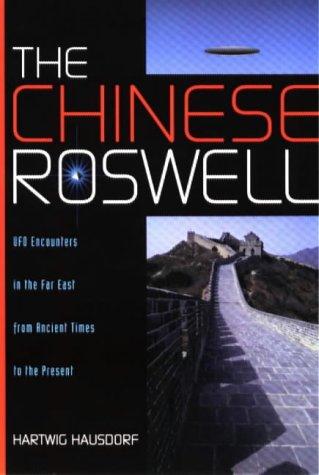
The Chinese Roswell
UFO Encounters in the Far East from Ancient Times to the Present
Find on Amazon →As an Amazon Associate, OverClassified may earn from qualifying purchases made through this link, at no extra cost to you.
Why This Is Essential Reading
The Chinese Roswell earns its place on this list less as reliable archaeology than as a documented case study in how the ancient-astronaut method travels: Hartwig Hausdorf, a travel-industry professional with a von Däniken-endorsed debut book and no training in archaeology, history, or Sinology, took the interpretive playbook Chariots of the Gods? had already made a worldwide bestseller and applied it, at book length and for the first time in English, specifically to China — filling a real gap in a genre that had otherwise left one of the world's longest-documented civilizations comparatively unexamined. That gap-filling is real; so is the specific, checkable factual record this entry has laid out alongside it: the White Pyramid Hausdorf's own expeditions failed to locate, the dated and well-documented Han and Tang tomb mounds his central claim mischaracterizes as unexplained, the single-sourced museum conversation this site's own Dropa Stones case file traces back to a fabricated 1962 hoax, and Jason Colavito's direct documentation of a fabricated Associated Press attribution in the book's own pages. Reading this book alongside that case file, and alongside The Space-Gods Revealed's claim-by-claim rebuttal of the wider genre it extends, is the clearest way to see both why a China-specific ancient-astronaut text was a genuine gap in the English-language literature, and why the specific text that filled it does not survive contact with the documentary record it claims to be reporting.
Related Cases & Theories
Essential Viewing
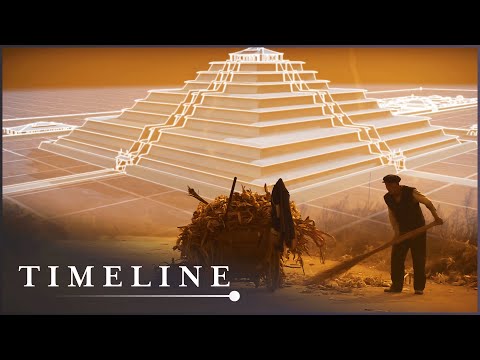
China's Mega Tombs: One Of The Biggest Mortuary Complexes On Earth | China's Pyramids
Timeline - World History Documentaries — A documentary treatment of the real, dated Han and Tang dynasty tomb mounds northwest of Xi'an — the actual archaeological identity behind the "White Pyramid" legend this book's central claim mischaracterizes as unexplained. Verified via YouTube oEmbed before inclusion.
What are the Baigong Pipes? || A Chinese Mystery
Second-Hand Heroes — A survey of the Baigong pipe formations near Delingha, Qinghai — a separate but contemporaneous Chinese "mystery" claim from the same mid-1990s period as this book, included here for the genre context described in this entry's Historical Context section. Verified via YouTube oEmbed before inclusion.
Sources Cited
- Hausdorf, Hartwig. The Chinese Roswell: UFO Encounters in the Far East from Ancient Times to the Present. New Paradigm Books, 1998 (ISBN-13 9781892138002, trade paperback). amazon.com
- "Hartwig Hausdorf." Wikipedia (German-language) (biography: education, career, bibliography, standing citation-insufficiency notice). de.wikipedia.org
- Colavito, Jason. "China's Alien Hybrid Dwarf Village: Philip Coppens and Hartwig Hausdorff Falsify a Newspaper Quote." jasoncolavito.com (documented exposure of the fabricated 1995 AP attribution repeated in this book). jasoncolavito.com
- "The Chinese Roswell." AbeBooks (bibliographic record, ISBN 9781892138002 / 189213800X, New Paradigm Books, 1998). abebooks.com
- "The Chinese Roswell." Open Library (bibliographic record: publisher, publication date, page count). openlibrary.org
- "The Chinese Roswell: UFO encounters in the Far East from ancient times to the present." Internet Archive (scanned copy, catalog record: publisher, ISBN, page count, subject headings). archive.org
- "Chinese pyramids." Wikipedia (identification and dating of the Xi'an-area burial mounds as Qin, Han, and Tang imperial mausoleums; 1947 Gaussman/Sheahan White Pyramid story; contemporary Science News Letter coverage). en.wikipedia.org
- "In Search of the Fabled 1,000-ft White Pyramid of Xian in China." Ancient Origins (White Pyramid legend history, Hausdorf's own 1990s expeditions). ancient-origins.net
- "Great White Pyramid of Xi'an, China." Historic Mysteries (legend origin and dating, Maoling mausoleum identification). historicmysteries.com
- "Die weiße Pyramide: Außerirdische Spuren in Ostasien." AbeBooks / Amazon.com (bibliographic record for Hausdorf's 1994 German debut, ISBN 9783784424828, Langen Müller, foreword by Erich von Däniken). amazon.com
- "Ancient Aliens" — "The Alien Disks" (TV Episode, 2017), Season 12, Episode 15. IMDb (credits Hartwig Hausdorf discussing the Bayan Kara Ula stone discs). imdb.com
- "The Chinese Roswell." Goodreads (book description, publication details, reader reception). goodreads.com
- "Baigong pipes." Wikipedia (1996 discovery, thermoluminescence dating, fossilized-tree-root scientific explanation — contemporaneous China-focused claim discussed here for genre context, not confirmed as book content). en.wikipedia.org
- This site's own case file: The Dropa Stones (Ancient Record File #007), for the full documented history of the Bayan Kara Ula stone-disc hoax this book revives, including Hausdorf's own 1994 trip and this book's role in the story's later embellishment.
- This site's own case file: Shen Kuo's Flying Pearl (Ancient Record File #021), for a genuinely ancient, contemporaneously recorded Chinese aerial-phenomenon account this book does not appear to engage with.
- This site's own essential reading entry: Chariots of the Gods?, for the 1968 von Däniken book whose method and direct personal endorsement (via his foreword to Hausdorf's 1994 debut) this book extends to China.
- This site's own essential reading entry: The Space-Gods Revealed, for Ronald Story's 1976 claim-by-claim rebuttal of the broader ancient-astronaut method this book applies to a new national case study.
- This site's own key-figures entry: Hartwig Hausdorf, for his broader career and the site's existing Dropa Stones connection.
- This site's own resources library: Full Reading List, where this title was previously cited via its Dropa Stones case-file backlink.
Have corrections, additional research, or peer-reviewed sources? Help improve this entry.
Suggest an Edit