
Leap of Faith
An Astronaut's Journey Into the Unknown
Core Thesis
Leap of Faith: An Astronaut's Journey Into the Unknown is the memoir of Gordon Cooper, the Mercury Seven astronaut who flew Faith 7 in 1963 and commanded Gemini 5 in 1965. He wrote it with journalist Bruce Henderson, and HarperCollins published it in the summer of 2000. It is two books under one cover. About half is an insider's account of the early American space program. The rest argues that unidentified craft are real, that some are probably extraterrestrial, and that the U.S. military has hidden what it knows. Cooper rests that case mainly on two episodes from his Air Force years: a 1951 pursuit of saucer-shaped objects over West Germany and a 1957 film shot on the lakebed at Edwards Air Force Base. The book matters as the fullest first-person statement by the most famous American pilot to make such claims. It is also a study in how a story changes with retelling, because the surviving record of the 1957 incident, and the recollections of the men who served with Cooper in 1951, do not match what he wrote. A note on this breakdown: it was written from the publisher's description, contemporary reviews and secondary summaries that cite the book by page, not from a full reading of the text.
About the Author
Leroy Gordon Cooper Jr. was born in Shawnee, Oklahoma, on March 6, 1927. The publisher's description says he learned to fly with his father at the age of eight and soloed at twelve, and that aviators such as Amelia Earhart and Wiley Post were overnight guests in the family home. He served briefly in the Marine Corps after high school, attended the University of Hawaii, and was commissioned in 1949, transferring to the Air Force that September. In 1950 he was posted to Neubiberg Air Base near Munich, where he flew F-84 and F-86 fighters for about four years and became a flight commander in the 525th Fighter Bomber Squadron. He earned a degree in aerospace engineering from the Air Force Institute of Technology in 1956, went through the test pilot school at Edwards, and stayed on there as a test pilot and project manager.
NASA chose him as one of the seven Mercury astronauts in April 1959. On May 15, 1963 he flew Faith 7, the last and longest Mercury mission: 22 orbits in a little over 34 hours. Late in the flight an electrical failure knocked out his automatic systems, and he brought the capsule down by hand. In August 1965 he commanded Gemini 5 with Pete Conrad, an eight-day flight that set an endurance record, with Neil Armstrong on the backup crew. He never flew again. He retired from NASA and the Air Force as a colonel on July 31, 1970, having logged 222 hours in space, after being passed over for an Apollo command.
His later career was varied. Before and after leaving NASA he ran or advised companies in auto racing, boat building, telemetry, treasure-hunting equipment and aircraft design, and from 1973 to 1975 he was a vice president for research and development at the Walt Disney Company, working on EPCOT. From the mid-1970s he also became the best-known astronaut to say publicly that UFOs were real. He died of heart failure at his home in Ventura, California, on October 4, 2004, aged 77.
Bruce Henderson, credited on the jacket after the word "with," is a journalist and the author of more than twenty nonfiction books. His best-known earlier title was And the Sea Will Tell, a true-crime account written with prosecutor Vincent Bugliosi that reached number one on the New York Times hardcover list. He served in the Navy during the Vietnam War, worked as an investigative reporter and magazine editor, and has taught writing at USC and Stanford. Robert Pearlman of collectSPACE described him as Cooper's collaborator. How the work was divided between the two men is not something this site has been able to document.
Historical Context & Origins
Cooper's public views on UFOs changed over time, and the memoir is the end point of that change. A Northern Irish planetarium's review of astronaut UFO stories quotes him telling an interviewer in 1960, "I don't take UFO's seriously." Two years later he sounded more open. In June 2026 the Pentagon released an audio excerpt of a November 1962 interview with Walter Cronkite in which, according to a FOX 9 report on the file, Cooper said that "a large number of exceptionally well-qualified people have seen objects" that lacked a logical explanation.
The stories that fill the book first appeared in the 1970s. Cooper described the Germany sightings and the Edwards film in recorded interviews with Lee Spiegel, on the Merv Griffin Show in spring 1978, and in an interview with OMNI published in March 1980. In 1978 he also lent his name to the campaign by Grenada's prime minister, Eric Gairy, to have the United Nations study the subject. A letter from Cooper prepared for the UN's November 27, 1978 discussion said he believed that "extraterrestrial vehicles and their crews are visiting this planet."
The same years showed how freely his name was being used. Promotional material for Close Encounters of the Third Kind carried a quotation attributed to Cooper about NASA concealing alien contact. Cooper called it "entirely a fabrication" and sued Columbia Pictures in August 1978, according to James Oberg, who documented the episode. Writers including Frank Edwards and Leonard Stringfield had meanwhile put into print a story that Cooper saw a UFO from orbit in 1963, which he always denied.
By 2000 the Mercury astronauts were the subject of settled legend, shaped by Tom Wolfe's The Right Stuff and the film made from it, and the publisher's description noted that Cooper was one of four of the seven still living. The book was marketed on both halves of his reputation. Pearlman reported that the publisher promoted its treatment of "hot-button issues" such as Area 51 and UFOs, and that the only endorsement on the jacket came from late-night radio host Art Bell. One further point of timing matters for everything below: Oberg's detailed investigation of Cooper's UFO stories, begun in 1979, was written years before the memoir, so the book's version of events came after the main objections to it were already on record.
Core Arguments & Key Concepts
Astronauts did not see UFOs in space. The book's first move is a debunking. Publishers Weekly reported that Cooper states that neither he nor any other astronaut saw a UFO in orbit, and Pearlman noted that an early chapter appears to put the space-encounter stories to rest. This is consistent with what Cooper had said for decades. He told OMNI that the only astronaut who saw anything that "might have been a UFO" was Jim McDivitt, whose 1965 sighting is covered in this site's Gemini IV case file.
Military pilots have seen and chased unexplained craft. Cooper's own claim is terrestrial. He writes that as a fighter pilot in Germany in 1951 he and others pursued formations of saucer-shaped objects flying above the reach of their jets, and he relays what the BookPage reviewer called tales "passed on to him from the brotherhood of pilots." The argument is one of credibility: trained observers in high-performance aircraft are hard to dismiss.
Physical evidence existed and disappeared. The Edwards episode is offered as proof that the government collects UFO evidence and keeps it. In the memoir's telling, a camera crew filmed a saucer on the lakebed, Cooper was ordered to send the negatives to the Pentagon, and nothing was ever heard again. The publisher's description folds this into "the U.S. military's long-time UFO cover-up." That is a harder line than Cooper took earlier. In 1980 he told OMNI that if UFO information was being suppressed, it was "certainly not by the U.S. Air Force."
Unconventional sources of knowledge deserve a hearing. The second half of the book goes well beyond sightings. Publishers Weekly describes Cooper's unsuccessful attempt in the late 1970s to start a research company built on the ideas of Nikola Tesla, including wireless transmission of energy, with a partner named Valerie Ransone who said she received telepathic transmissions from extraterrestrial sources. Pearlman describes an institute that credited human achievements to an advanced civilization communicating by telepathy. Cooper presents himself as an engineer willing to test strange claims, not as a convert.
The space program was a human enterprise. The other half of the book makes a quieter argument: that early spaceflight depended on pilots and was shaped by personalities. Booklist's reviewer wrote that "small-group politics of mission assignments" cost Cooper an Apollo flight and that his portraits of fellow astronauts are "not all of them kind." The description also promises his friendships with Gus Grissom and Wernher von Braun, and a claim that photographs he took of Area 51 during his Gemini mission led to a conversation at the White House. This site has not checked that last claim against the text or any other record.
Key Cases & Evidence Discussed
Faith 7, May 15–16, 1963. The Mercury flight is the strongest material in the book and the least disputed. Cooper fell asleep on the pad during the countdown, flew 22 orbits, and became the first American to spend more than a day in space. On the nineteenth orbit a power failure took out his automatic control system, carbon dioxide levels rose and the cabin heated. He worked out his reentry attitude from star positions, lines drawn on the window and his wristwatch, and splashed down about four miles from the recovery ship. He told Pearlman in 2000 that everything electronic was lost because the systems were all connected.
Gemini 5, August 1965. Cooper and Conrad spent nearly eight days in orbit, 120 revolutions, on a flight troubled by a fuel-cell pressure drop and failed thrusters. Pearlman singled out the chapter on the two astronauts' first meeting with Soviet cosmonauts as a story he had not heard before.
Neubiberg, West Germany, 1951. In earlier interviews, quoted at length by Oberg, Cooper said a weatherman tracking a balloon first spotted groups of metallic, saucer-shaped objects at great height; that they came over in formations for the better part of two days, moving east to west; and that the base put up F-84s and F-86s that could not climb high enough to reach them. The memoir places his first sighting over West Germany in 1951 and, per Publishers Weekly, describes him chasing the objects.
Edwards Air Force Base, May 3, 1957. As the memoir tells it, Cooper sent two cameramen, James Bittick and Jack Gettys, to a site on the dry lakebed with an Askania cinetheodolite. They came back that morning describing a silent, "saucer-like" craft that hovered, set down about fifty yards away on three landing legs, and left as they approached. Cooper says he phoned the Pentagon, was told to develop the film without making prints and send it by locked courier pouch, looked at the negatives first and found them to match the men's account. He never heard another word and assumed the film went to Project Blue Book at Wright-Patterson AFB. This site's Edwards AFB Canberra Photograph file discusses how this dated story became tangled with an unrelated 1954 photograph.
The Mercury 9 "UFO." The story Cooper rejects is worth knowing, because it was once the most famous one attached to him. Frank Edwards wrote in 1967 that Cooper saw an object approach his capsule over the Muchea tracking station in Australia, and the tale grew in later books, including The Edge of Reality by J. Allen Hynek and Jacques Vallée; Stringfield's version added a radar blackout at Woomera. Oberg traced a supposed transcript to a passage in which Cooper was describing an auroral glow, and NBC told him in 1979 it could find no record of the broadcast said to have reported it.
Ransone, Tesla and the desert rendezvous. The strangest chapters concern Cooper's partnership with Valerie Ransone. Publishers Weekly reports that he agreed to a telepathically arranged meeting with a UFO in the Arizona desert, and that the meeting was called off. Also due to attend, the review says, was "Atlas missile aerospace engineer Dan Fry," who claimed to have ridden aboard a UFO in 1950. That is Daniel Fry, one of the best-known contactees of the 1950s. The review calls this the point where the story "gets a lot weirder."
Critical Reception & Controversies
Reviews at publication were friendly to the astronaut and uneasy about the ufology. Publishers Weekly called it an "engaging memoir" that would challenge skeptics and believers alike, and praised its inside view of NASA's politics and close calls. Booklist's Roland Green called it "slightly schizoid," half spaceflight memoir and half UFO argument, while finding the cover-up case persuasively made. BookPage gave it a starred review; James Neal Webb wrote that Cooper "has a great story to tell" but spends almost a third of the book on UFOs and falls in with "people of dubious credibility."
The space-history community was cooler. Pearlman, reviewing for collectSPACE in July 2000, admired the Mercury and Gemini chapters but found it hard to understand how someone with Cooper's technical training could accept alien-contact claims on anecdotal evidence, and wrote that this made him wonder how far to trust the NASA chapters. In the interview that accompanied the review Cooper was more cautious than his book, saying, "I am not 100% convinced that all of these reports are true."
The most damaging criticism concerns Edwards, and it rests on the witnesses. Atmospheric physicist James E. McDonald, a UFO proponent, interviewed Bittick, Gettys and range director Frank E. Baker and summarized the case in his 1968 congressional statement. In that account the men saw a golden, domed disc already moving away from them, photographed it perhaps thirty times, and lost sight of it at about five miles. Nothing lands. McDonald does not mention Cooper. The prints were taken by base authorities, and the men were told the same day that they had seen a weather balloon distorted by desert air, which they did not accept. McDonald added that he sent the case to the Colorado project behind the Condon Report, which did not pursue it.
Oberg, a former NASA flight controller and the author of UFOs and Outer Space Mysteries, went further. He reports that Gettys sent him his file on the sighting and told him in 1982, "I am amazed that Gordon Cooper said the object landed." Gettys, by Oberg's account, had not known Cooper was on the base. Oberg found that the photographs had gone to Blue Book as regulations required, that two were printed in Brad Steiger's 1976 Project Blue Book, and that an Edwards information officer wrote in June 1957 that the object was "conclusively identified as a balloon" being tracked from a nearby weather unit. Oberg also quotes Cooper telling OMNI of the incident, "I didn't get to see anything personally." Gettys himself never accepted the balloon answer, so the object's identity is still argued. What the record does not support is a landing, a vanished film, or a central role for Cooper.
On Germany, Oberg obtained the declassified unit histories of the 86th Fighter Wing and found nothing resembling the event. A Munich journalist told him local newspapers and police records were silent. He then wrote to veterans of Cooper's squadron and the base weather staff; more than a dozen replied, including a former squadron commander and weather officers, and none recalled it. One pilot, John Bonner, did remember seeing high objects on two occasions, but in terms that did not fit Cooper's description. Oberg also reported a secondhand 1963 version of the story set in the American West. His conclusion was that the event "simply cannot have occurred as Cooper has described it." He was careful to add that Cooper's honesty was not in question, and he blamed UFO promoters, Timothy Good's Above Top Secret among the books he named, for repeating the stories without checking them. Nothing in the reviews consulted here suggests the memoir engages with any of this.
Influence & Legacy
The memoir fixed the Edwards story in its most dramatic form. Before 2000 it existed as interview fragments; afterwards it had a date, two named cameramen, a landing on three legs and a Pentagon phone call, all under an astronaut's byline. That version is now widely repeated, usually without the McDonald interviews or the Air Force's balloon identification beside it. Cooper retold his sightings for the 2003 documentary Out of the Blue and maintained until his death the following year that the government was withholding information.
The book has also stayed in print in one form or another. A paperback followed the hardcover, and Open Road Media reissued it as an ebook in October 2018. Reader response remains warm: Amazon showed 4.5 stars from 234 ratings when checked for this article. In 2017 the Discovery Channel series Cooper's Treasure followed Darrell Miklos as he searched for shipwrecks using notes Cooper is said to have made from orbit, which brought the astronaut's post-NASA interests to a new audience.
Its place in the literature is as a credential. Cooper is routinely cited as the most senior American flier to endorse the extraterrestrial hypothesis, and the Pentagon's 2026 release of his 1962 remarks to Cronkite shows his interest was older than his fame as an advocate. The book is the long form of that endorsement. Whether it adds evidence is another matter. On the reviews and summaries consulted here, it adds no document, photograph or named corroborating witness to what he had already said in interviews, and the two men it does name gave a different account of what they saw.
It also offers a practical lesson for researchers. This site's own Edwards file had to untangle a placeholder that borrowed Cooper's May 3 date for a different year and a different event. Stories attached to famous names drift, and the drift here began with the famous name himself.
The Book
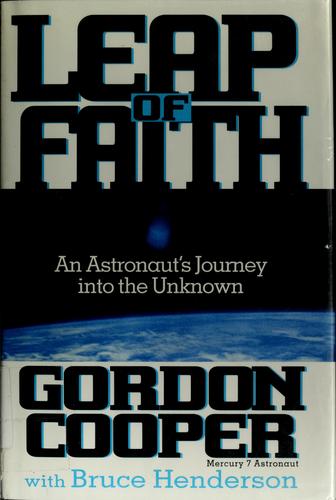
As an Amazon Associate, OverClassified may earn from qualifying purchases made through this link, at no extra cost to you.
Why This Is Essential Reading
Leap of Faith earns its place on this list as a primary source, not as evidence. For the space program it is a readable account by one of seven men who could write it, and the Faith 7 chapters stand on a well-documented record. For UFO history it is the definitive statement of what Gordon Cooper came to believe, and it is to his credit that he used it to deny the orbital sighting others invented for him. But its two central cases are weak where they can be checked. The Edwards cameramen described an object flying away, not landing, and their photographs reached Blue Book; the men who flew with Cooper in Germany remembered nothing like his account. Read it with James Oberg's study and James McDonald's 1968 summary open beside it. This site has not yet read the full text, and this assessment will be revised when it has.
Related Cases & Theories
Essential Viewing

Declassified UFO file: Walter Cronkite interview with NASA astronaut Gordon Cooper
FOX 9 Minneapolis-St. Paul — Audio excerpt of a November 1962 Walter Cronkite interview with Cooper, released by the Pentagon in June 2026, in which he discusses unexplained objects reported by qualified observers. It predates both his spaceflights and the claims in the memoir. Verified via YouTube oEmbed before inclusion.
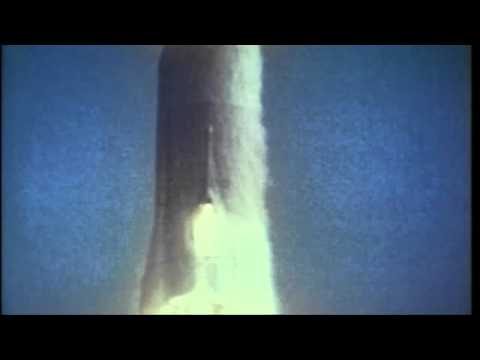
Gordon Cooper's Mercury Mission Faith 7
NASA Video — NASA historical footage of the May 1963 Faith 7 flight, the mission at the center of the memoir's spaceflight chapters. Verified via YouTube oEmbed before inclusion.
Sources Cited
- Cooper, Gordon, with Bruce Henderson. Leap of Faith: An Astronaut's Journey Into the Unknown. HarperCollins, 2000 (ISBN 0060194162 / 9780060194161; 288 pages). Publisher's description, Booklist review by Roland Green and Art Bell endorsement read from the listing. amazon.com
- "Leap of Faith: An Astronaut's Journey Into the Unknown." Publishers Weekly review, May 29, 2000 (HarperCollins, $25, 288 pp., ISBN 978-0-06-019416-1). publishersweekly.com
- Pearlman, Robert. "'Faith' regained: Gordon Cooper interview." collectSPACE, July 17, 2000 (review of the book and reader-question interview with Cooper). collectspace.com
- Webb, James Neal. Starred review of Leap of Faith. BookPage, August 2000. bookpage.com
- Oberg, James. "In Search of Gordon Cooper's UFOs." Research begun 1979; text as archived by UFO Evidence, dated October 4, 2004 (Mercury 9 legend, Edwards 1957, Neubiberg 1951, Columbia Pictures lawsuit, OMNI and Spiegel interview quotations). Oberg's own site was unreachable during research for this article. ufoevidence.org
- McDonald, James E. Prepared statement, "Case 41. Edwards AFB, May 3, 1957," in Symposium on Unidentified Flying Objects, U.S. House Committee on Science and Astronautics, July 29, 1968 (interviews with James D. Bittick, John R. Gettys Jr. and Frank E. Baker). files.ncas.org
- "Gordon Cooper." Wikipedia (biography, mission data, and summary of the memoir's Edwards account citing Cooper & Henderson 2000, pp. 81–86). en.wikipedia.org
- "Bruce Henderson (author)." Wikipedia (career, bibliography, teaching). en.wikipedia.org
- "Mercury-Atlas 9." Wikipedia (Faith 7 mission record). en.wikipedia.org
- Johnston, Colin. "Astronauts, Aeroplanes and UFOs." Astronotes, Armagh Observatory and Planetarium, July 30, 2012 (Cooper's 1960 statement; skeptical summary of the Germany and Edwards stories). armaghplanet.com
- Greenewald, John. "Astronaut Gordon Cooper Talks About UFOs." The Black Vault, April 6, 2016 (video of a 1990s television interview with biographical summary). theblackvault.com
- Gross, Patrick. "Gordon Cooper" (collected statements, including the text of his 1978 message to the United Nations as printed in UFO Universe, November 1988). ufologie.patrickgross.org
- "Declassified UFO file: Walter Cronkite interview with NASA astronaut Gordon Cooper." FOX 9 Minneapolis-St. Paul, June 12, 2026 (Pentagon release of a November 1962 audio excerpt). youtube.com
- "Leap of Faith." Apple Books listing for the Open Road Media ebook reissue, October 23, 2018 (publisher description; reprints the Publishers Weekly review in full). books.apple.com
- "Leap of Faith: An Astronaut's Journey Into the Unknown." Open Library edition record and cover scan, ISBN 0060194162. openlibrary.org
- "Gordon Cooper interview." OMNI, March 1980, p. 106 (quoted here from Oberg's article and from a 1994 Usenet transcription of the excerpt; original magazine not consulted).
- Steiger, Brad, ed. Project Blue Book. Ballantine, 1976 (two Edwards AFB photographs reproduced between pp. 360 and 361, per Oberg; see this site's own breakdown).
Have corrections, additional research, or peer-reviewed sources? Help improve this entry.
Suggest an Edit