
Intimate Alien
The Hidden Story of the UFO
Core Thesis
Intimate Alien: The Hidden Story of the UFO makes the case that the UFO, far from being primarily a question of aerospace engineering or hoax detection, is — in David J. Halperin's own words — "in essence, a religious phenomenon": seeing one, or believing one has been abducted by one, is "a religious event, an experience of the numinous that arises — spontaneously, it would seem — from our internal worlds." Halperin, a retired scholar of Jewish mysticism and biblical visionary literature, applies that same academic toolkit — honed over two decades studying how ancient prophets described encounters with the divine — to twentieth-century flying saucer reports, deliberately asking a hermeneutical question, "What do they mean?", instead of the ufological question, "What are they, and where do they come from?" Following the path C.G. Jung opened in 1958, Halperin reads the UFO as a modern myth in the technical, Jungian sense: not a falsehood, but a symbol-laden narrative through which individuals and cultures process what they cannot otherwise face. "UFOs are visitors," he writes, "not from outer space, but from our own inner space" — and, in the book's own summary of itself, "the UFO mystery is…the mystery of us."
About the Author
David J. Halperin (b. 1946) is Professor Emeritus of Religious Studies at the University of North Carolina at Chapel Hill, and the genuinely unusual thing about his authority to write this particular book is that he did not arrive at the UFO subject as an outside academic observer: in the 1960s he was himself a teenage UFO investigator, running his own short-lived ufological journal and taking the subject with total seriousness at an age when most enthusiasts grow out of it rather than into a career studying it. He has said in interviews that the fascination was never purely about the sky: it was "bound up with the dilemma I found myself in as a teenager, watching my mother slowly die in a way that was unacknowledged. The UFOs gave me a means of grappling with that" — a direct, autobiographically sourced instance of exactly the psychological mechanism Intimate Alien later argues operates in UFO believers generally.
His formal academic training ran in a strikingly adjacent direction: Semitic languages at Cornell, rabbinics at the Hebrew University of Jerusalem, and a 1977 Ph.D. in Near Eastern Studies from the University of California, Berkeley, with a dissertation on ancient Jewish "merkavah" mysticism — the visionary tradition built on the prophet Ezekiel's vision of a divine chariot-throne. From 1976 until his retirement in 2000 he taught the history of Judaism in UNC's Department of Religious Studies, publishing five scholarly books on Jewish mysticism and messianism, including The Merkabah in Rabbinic Literature, The Faces of the Chariot: Early Jewish Responses to Ezekiel's Vision, and Seeking Ezekiel: Text and Psychology. That specialty is not incidental to this book: Halperin spent decades as a credentialed scholar of the same Ezekiel's-wheel visionary material this site's own Spaceships of Ezekiel entry covers from Josef Blumrich's very different, literal-hardware angle — giving Halperin a rare vantage point from which to argue that Ezekiel's vision and a modern abduction account belong to the same genre of inner experience rather than to two unrelated kinds of evidence.
For most of his academic career Halperin kept his teenage ufology quiet, aware of the professional cost of the association: "even when I was not admitting that I was a ufologist — like when I was applying for jobs in academia — the subjects that I was drawn to were connected to the themes of ufology," he has said. The cost was not hypothetical. In 1995, after he submitted a scholarly paper connecting UFO abduction narratives to religious traditions of heavenly ascent, one peer reviewer wrote that they assumed the paper "is a joke," adding that "if it's serious, then the author should be prosecuted for criminal malpractice" — a documented, first-person data point for exactly how unwelcome serious academic engagement with ufology still was inside religious studies as recently as the mid-1990s, a quarter-century before Intimate Alien and Diana Walsh Pasulka's American Cosmic found receptive university-press homes.
Halperin's re-entry into the subject in public came first through fiction: his 2011 novel Journal of a UFO Investigator (Viking Press) fictionalizes a teenage boy's own UFO investigation and troubled home life in a small Pennsylvania town near Philadelphia, drawing directly and openly on Halperin's remembered adolescence, and was translated into Spanish, Italian, and German. Intimate Alien, published nine years later, is that novel's direct nonfiction counterpart: the same lived material and the same underlying psychological argument, this time made explicitly, with Halperin's full scholarly apparatus and his own case history as evidence rather than as thinly veiled narrative.
Historical Context & Origins
Halperin published Intimate Alien in March 2020, in Stanford University Press's "Spiritual Phenomena" series, one year after Diana Walsh Pasulka's American Cosmic (Oxford University Press, 2019) had already demonstrated that a credentialed religious-studies scholar could publish serious academic engagement with UFO belief at a major university press. The two books were reviewed jointly by Benjamin E. Zeller in the Journal of the American Academy of Religion in March 2021 — a pairing the journal itself treated as natural, since both arrived from the same discipline within roughly a year of each other, applying religious-studies method rather than ufological investigation to the same broad subject.
Where Pasulka's approach was ethnographic fieldwork among living believers, Halperin's was textual, historical, and depth-psychological — closer in method to Jung's 1958 Flying Saucers: A Modern Myth of Things Seen in the Sky than to Pasulka's participant-observation, and informed directly by Halperin's own decades of prior scholarship on how the ancient prophet Ezekiel's visionary encounter with a divine chariot-throne was received, reinterpreted, and mythologized across centuries of rabbinic literature. His 2021 conference paper for the International Association for Jungian Studies, "Anatomy of a Vision: A Psychological Approach to the Papua New Guinea UFO Sightings, June 26–27th, 1959," applying that same lens to the Father Gill sighting at Boianai, previewed the book's method on a single case before the book generalized it across the whole history of American ufology.
The book landed in a UFO literature still overwhelmingly organized around either belief in literal extraterrestrial visitation or flat skeptical debunking, with comparatively little serious academic middle ground between them; Halperin's explicit refusal of both positions — he no longer believes UFOs are physically real spacecraft, but is not interested in mocking the people who report them — positioned the book, like Pasulka's, as neither ufology nor anti-ufology but a third thing: an attempt to explain what the belief itself is doing for the people who hold it, using the same interpretive tools religious studies applies to any other visionary tradition.
Structurally, the book moves chronologically and thematically across the history of American UFO culture — from Kenneth Arnold's 1947 sighting and the Roswell crash story, through the Men in Black and Shaver Mystery traditions, to the Betty and Barney Hill abduction and the wave of abduction narratives, including Whitley Strieber's, that followed it into the 1980s and 1990s — treating each not as a claim to be adjudicated but as a text to be read for what it reveals about the era and the individuals who produced it.
Core Arguments & Key Concepts
Halperin's central methodological move is to treat the UFO encounter as belonging to the same category of human experience as the visionary and mystical traditions he spent his academic career studying: an eruption of numinous, symbol-laden material from what Jung called the collective unconscious, given contemporary form by a culture soaked in spaceflight and Cold War anxiety rather than by the angels and chariots available to Ezekiel's era. The book is explicit that this is not an accusation of lying or delusion in any pejorative sense; it is an argument that the psychological reality of the experience, and its meaning to the person who has it, is the proper object of study — a stance this site's own Psycho-Social Hypothesis theory file discusses as one branch of a wider tradition of non-literal, non-debunking explanations for the phenomenon.
Halperin's own scholarly specialty gives that argument an unusually direct textual anchor: decades spent analyzing how the prophet Ezekiel's chariot-throne vision was received and reinterpreted across ancient and medieval Jewish mysticism let him treat Ezekiel's account and a twentieth-century abduction narrative as data points in the same longer human tradition of visionary encounter, a genuinely different move from the one this site's own Spaceships of Ezekiel entry documents in Josef Blumrich, who read the same biblical chapter as a literal engineering blueprint for a physical spacecraft. Where Blumrich's book argues Ezekiel witnessed real hardware, Halperin's argues the entire genre — ancient prophetic vision and modern UFO abduction alike — is the mind's own machinery for processing what it cannot otherwise face, making the two books, cited back to back on this site, a rare direct methodological contrast built on the identical source text.
The book's most detailed and most debated single case study is the Betty and Barney Hill abduction of 1961, the account this site's own case file identifies as the foundational modern abduction narrative. Working from the hypnosis transcripts recorded by psychiatrist Benjamin Simon, Halperin argues that Barney Hill's account in particular — his abject terror, and the imagery of capture, restraint, and physical examination aboard the craft — channels a far older collective trauma: as an African-American man born decades before the civil rights movement's legal victories, Halperin reads Barney's abduction narrative as an unconscious re-enactment of the historic terror of capture and transport into slavery, with Betty's own account, as his white wife, carrying a correspondingly different psychological charge. It is one of the book's most explicitly argued and most methodologically exposed claims — a direct psychoanalytic reading of a specific named couple's trauma rather than a generalized theory, and reviewers, discussed below, have engaged with it as such.
Halperin applies the same hermeneutic elsewhere in ways this site's own case-file library already documents independently: his own essay "Antonio Villas-Boas and the Astounding She-Monster: A Zeitgeist Tale," cited directly on this site's Vilas-Boas case file, reads the 1957 Brazilian contactee's account of an alien seductress as an expression of an archetypal "dangerous, beautiful, otherworldly female" figure with roots reaching back centuries before flying saucers existed, while his conference paper on the Father Gill sighting at Boianai reads that multi-witness 1959 event as a collective vision shaped jointly by bright planets glimpsed through moving cloud and by the religious expectancy of a mission community with deep roots in the region's cargo-cult tradition.
Key Cases & Evidence Discussed
The Betty and Barney Hill Abduction (Case File #006, 1961) receives the book's most sustained individual case treatment, with Halperin's hypnosis-transcript reading of Barney Hill's terror as channeled racial trauma standing as one of the book's signature, and most contested, arguments.
The Antônio Vilas-Boas Abduction (Case File #153, 1957) is discussed through Halperin's own essay reading the entity Vilas-Boas described as an archetypal seductress figure — the same essay this site's own case file for the incident cites directly, making this one of the clearest points of overlap between this book and this site's existing case-file library.
The Father Gill Sighting at Boianai (Case File #062, 1959) is the subject of Halperin's own dedicated conference paper for the International Association for Jungian Studies, reading the multi-witness encounter as a collective vision rather than either a hoax or a literal spacecraft — already documented at length on this site's own key-figures entry for Halperin.
Kenneth Arnold's 1947 sighting (Case File #007) and the Roswell Incident (Case File #001, 1947) supply the book's historical starting point, treated as the founding myths from which the rest of American UFO culture — including the Men in Black and Shaver Mystery traditions the book also covers — visibly grew.
Critical Reception & Controversies
Academic religious-studies reception was largely favorable and substantive. Ethan Doyle White, reviewing for Reading Religion, the American Academy of Religion's official review site, situated the book within "a growing willingness on the part of scholars of religion and related disciplines to delve into this phenomenon, an important — if often neglected — facet of modern Western culture." Writing in the Journal of the American Academy of Religion alongside his review of Pasulka's American Cosmic, Benjamin E. Zeller judged that "scholars of religion will find it quite illuminating of the ufological culture," adding that a reader need not accept the entirety of Halperin's Jungian apparatus to accept his narrower, better-supported claim that "a collective unconscious fed the experience, memory, and mythic continuation of UFO folklore." Benjamin D. Crace, reviewing for Nova Religio in 2022, described the book as a nonfiction expansion of Halperin's own 2011 novel, offering "personal reflections and a wide survey of the field of ufology through the lens of a scholar of religion."
Reception from within the ufology-research press was warm but more pointed on questions of overreach. John Rimmer, the skeptical British ufologist, reviewing for Magonia Review of Books, called Halperin "a sympathetic guide to the ufological world" who "writes as an insider and from personal experience, and brings the depth of his academic knowledge to the topic" without "drowning the reader in academic jargon," but questioned whether reading Ezekiel's vision as a UFO-adjacent precedent risked becoming, in his words, a kind of cultural appropriation of ancient religious material for a modern subject it was never meant to explain — concluding the book rewards readers already familiar with the subject more than newcomers.
Anna Lutkajtis, then a Ph.D. candidate at the University of Sydney, reviewing for the Alternative Spirituality and Religion Review, raised a related methodological concern from the opposite direction: that Halperin's depth-psychological readings of other people's UFO experiences risk projecting his own well-documented personal search for meaning — rooted, by his own account, in his mother's death — onto subjects who may have entirely different psychological material driving their own encounters. She nonetheless judged the book "so beautifully argued that even the most rational-scientific readers might find themselves being persuaded," recommending it to readers interested in "the role that myth plays in shaping our collective cultural reality."
The book also drew engagement from outside religious studies entirely: skeptic Michael Shermer devoted a full episode of The Michael Shermer Show to a direct conversation with Halperin about the book shortly after its release, a measure of the book's reach into skeptical as well as academic and ufological circles, even though Shermer's own public skepticism about literal UFO claims sits at some distance from Halperin's own psychological, non-debunking framing.
Influence & Legacy
As a 2020 book, Intimate Alien's downstream influence is still modest and genuinely hard to separate from that of Pasulka's American Cosmic, published the year before and reviewed jointly with it in the Journal of the American Academy of Religion — the clearest documented evidence that the two books are already being read, by the discipline that matters most for assessing this kind of claim, as companion contributions to the same emerging academic subfield rather than as isolated, unrelated titles.
Within that narrower academic conversation, the book's clearest legacy so far is standing as a credentialed, textually rigorous counterweight to Pasulka's fieldwork-based approach: where American Cosmic demonstrated that ethnography could take UFO belief seriously as lived religion, Intimate Alien demonstrated that the same could be done through close textual and psychoanalytic reading of specific historical cases, giving religious-studies scholars two distinct, mutually reinforcing methodological templates rather than one.
Halperin has continued to carry the book's argument into public academic and para-academic venues since 2020, including a talk for UNC's own Institute for the Arts and Humanities ("UFOs are a Myth. Myths are Real"), an invited session with the C.G. Jung Society of the Triangle Area, and a flash-talk appearance at Rice University's Archives of the Impossible conference — keeping the book's Jungian, non-debunking framework in active circulation within both religious-studies and Jungian-psychology circles rather than letting it settle as a closed, one-time publishing event.
On this site specifically, Halperin's own scholarship already functions as working infrastructure independent of this article: his "Astounding She-Monster" essay is cited directly on the Vilas-Boas case file, and his Boianai conference paper is documented at length on his own key-figures entry — this article is the first to gather that existing, scattered site-wide presence into a single dedicated breakdown of the book those individual pieces of research both grew out of.
The Book

As an Amazon Associate, OverClassified may earn from qualifying purchases made through this link, at no extra cost to you.
Why This Is Essential Reading
Intimate Alien earns its place on this list for a combination this site's other essential-reading titles cannot quite match: a genuinely credentialed academic press book by a scholar whose specific, decades-deep expertise — ancient Jewish visionary literature and the reception history of Ezekiel's own chariot-throne encounter — maps with unusual precision onto the UFO abduction narrative's own structure, combined with the rare, disarming fact that David J. Halperin is not an outside observer applying theory to a subject he has only read about, but a former teenage UFO investigator explaining, with the benefit of forty years' remove and a full scholarly toolkit, what his own adolescent fascination was actually doing for him. His reading of the Betty and Barney Hill abduction as channeled racial trauma is exactly the kind of specific, falsifiable, genuinely risky interpretive claim too much writing about UFOs as "myth" or "religion" avoids making. Read alongside Pasulka's American Cosmic, the two books make the strongest case currently available on this site that a serious academic study of UFO belief — not of UFOs themselves — is not only possible but already underway, from two different disciplinary directions that happened to reach university presses one year apart.
Related Cases & Theories
Essential Viewing
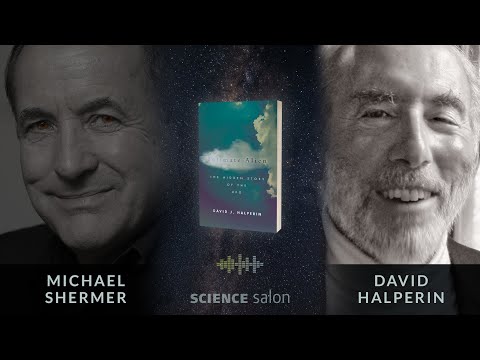
Michael Shermer with David J. Halperin — Intimate Alien: The Hidden Story of the UFO
Skeptic — A full-episode conversation between skeptic Michael Shermer and Halperin about the book's psychological, non-debunking case for UFOs as modern myth, verified via YouTube oEmbed before inclusion.

David J. Halperin, "Intimate Alien: The Hidden Story of the UFO" (Stanford UP, 2020)
New Books Network Book of the Day — A New Books Network interview with Halperin walking through the book's central argument and its academic context, verified via YouTube oEmbed before inclusion.
Sources Cited
- Halperin, David J. Intimate Alien: The Hidden Story of the UFO. Stanford University Press, 2020 (ISBN 9781503607088 / 1503607089, cited here, matching the edition already cited on this site's own resources library).
- "Intimate Alien." Stanford University Press, official book page (publisher description, 304 pp., "Spiritual Phenomena" series). sup.org
- "About David Halperin." davidhalperin.net (author's own biography: teenage ufology, academic career, bibliography). davidhalperin.net
- Halperin, David J. "Antonio Villas-Boas and the Astounding She-Monster: A Zeitgeist Tale." davidhalperin.net (essay cited directly on this site's own Vilas-Boas case file). davidhalperin.net
- "How to See a UFO with David J. Halperin." INDY Week (interview: family background, teenage ufology, career, and the book's argument, with direct quotes). indyweek.com
- "David J. Halperin on why UFOs tell us more about life on Earth than outer space." Religion News Service, April 17, 2020. religionnews.com
- Doyle White, Ethan. Review of Intimate Alien: The Hidden Story of the UFO. Reading Religion (American Academy of Religion). readingreligion.org
- Zeller, Benjamin E. "American Cosmic: UFOs, Religion, Technology. By D. W. Pasulka; Intimate Alien: The Hidden Story of the UFO. By David J. Halperin." Journal of the American Academy of Religion, Vol. 89, No. 1, March 2021, p. 368. academic.oup.com
- Crace, Benjamin D. Review of Intimate Alien: The Hidden Story of the UFO. Nova Religio: The Journal of Alternative and Emergent Religions, Vol. 26, No. 1, August 2022, pp. 109–111. online.ucpress.edu
- Lutkajtis, Anna. Review of Intimate Alien: The Hidden Story of the UFO. Alternative Spirituality and Religion Review, Vol. 11, No. 2, 2020, pp. 255–257. pdcnet.org
- "REVIEWS." davidhalperin.net (author's own collected review pull-quotes, including John Rimmer's Magonia Review of Books review). davidhalperin.net
- "Intimate Alien: The Hidden Story of the UFO – Two Reviews, an Interview." davidhalperin.net (author's own roundup of the Rimmer and Lutkajtis reviews plus a podcast interview). davidhalperin.net
- "Intimate Alien: The Hidden Story of the UFO." Open Library edition record (ISBN 9781503607088, Stanford University Press, 2020; original publisher and date). openlibrary.org
- "Intimate Alien: The Hidden Story of the UFO (Spiritual Phenomena)." Amazon.com product listing for ISBN 1503607089 / 9781503607088 (edition cited here, matching this site's own resources library citation). amazon.com
- "UFOs are a Myth. Myths are Real, with David Halperin." UNC Institute for the Arts and Humanities (talk description, book context). iah.unc.edu
- "David J. Halperin." Archives of the Impossible, Rice University (flash-talk speaker biography). impossiblearchives.rice.edu
- This site's own case file: Antônio Vilas-Boas Abduction, which cites Halperin's "Astounding She-Monster" essay and this exact 2020 edition of this book directly.
- This site's own case file: Betty and Barney Hill Abduction, for the primary case this book's racial-trauma reading is built on.
- This site's own case file: The Father Gill Sighting, for the Boianai case Halperin's own conference paper analyzes.
- This site's own essential-reading entry: American Cosmic, Diana Walsh Pasulka's 2019 companion work in the same academic religious-studies-of-ufology subfield.
- This site's own essential-reading entry: Flying Saucers, C.G. Jung's 1958 archetypal framework this book applies to specific named cases.
- This site's own essential-reading entry: The Spaceships of Ezekiel, Josef Blumrich's literal-hardware reading of the same biblical vision Halperin's own scholarly career was built on reading psychologically.
- This site's own key-figures entry: David J. Halperin, for his Boianai/Father Gill analysis and broader site-wide connections.
- This site's own resources library: Full Reading List, where this exact edition (ISBN 1503607089) is cited on the Vilas-Boas case file.
Have corrections, additional research, or peer-reviewed sources? Help improve this entry.
Suggest an Edit