
Ghost Lights
And Other Encounters with the Unknown
Core Thesis
Ghost Lights, and Other Encounters with the Unknown is E. Randall Floyd's 1993 collection of American folklore and unexplained phenomena, written in the direct, no-nonsense style of the career wire-service journalist Floyd was before turning to full-time folklore writing. On this site, it functions as broader cultural and historical context: this site's own Brown Mountain Lights case file cites it as "a broader folklore-and-history treatment of American ghost-light phenomena, situating Brown Mountain within its wider cultural tradition."
About the Author
E. Randall Floyd was raised in the swampy woodlands near Savannah, Georgia, and traces his own lifelong interest in the unexplained to a mysterious event he says occurred on the night of his birth in 1947. A graduate of the U.S. Army's Defense Information School, he served as an Army journalist before becoming a wire-service foreign correspondent for United Press International based in Europe.
Floyd's subsequent journalism career included staff positions at The Florida Times-Union and the Atlanta Journal-Constitution, and he wrote a nationally syndicated newspaper column drawing on the same folklore and unexplained-phenomena material that fills his books. He has also taught history in the Middle East and the United States, and currently teaches history at Augusta University in Augusta, Georgia.
Across a career spanning roughly sixteen books, including Great Southern Mysteries, In the Realm of Miracles and Visions, and The World's 100 Greatest Mysteries, Floyd built a reputation as, in his publisher's own description, "one of the most popular weird writers of Georgia, the South and the nation." His journalistic training gives his folklore writing a distinctive economy and directness that sets it apart from more purely anecdotal ghost-story compilations, and he remains active on the regional lecture circuit, speaking on topics ranging from the Civil War to ghosts and hauntings to cosmic oddities.
Floyd's UPI foreign-correspondent posting in Europe placed him within a demanding, deadline-driven wire-service culture that trains reporters to compress complex, often chaotic real-world events into clear, verifiable, tightly written copy under time pressure — a professional discipline distinct from, and in some ways better suited to journalistic folklore compilation than, the more leisurely narrative styles some other regional ghost-story writers employ. That training shows most clearly in the brevity and directness with which this book handles even its most fantastical-sounding material.
Historical Context & Origins
The book was published in 1993 by August House Publishers, a Little Rock, Arkansas press with a long-standing specialization in Southern and American folklore, storytelling, and regional nonfiction — a natural publishing home for Floyd's own deeply Southern-rooted material and journalistic background.
The book organizes its material across eight thematic sections spanning ghostly occurrences, miracles and visions, cryptids, extraterrestrial events, unconventional theories, historical mysteries, premature deaths, and eccentric individuals — a structure considerably broader than a single-phenomenon anthology like Elisabeth Busch's later Spooklights, situating ghost lights specifically as one category among several distinct types of American unexplained phenomena Floyd covers.
Published a full generation before the more recent surge of independently published, single-topic paranormal anthologies this site has covered elsewhere on its Essential Reading list, this book represents an earlier, traditionally published model of regional folklore writing — produced through an established specialist press rather than self-published, and grounded explicitly in Floyd's own prior career as a professional journalist rather than in a personal archive built through a website.
The book's 1993 publication also predates the widespread commercial internet by roughly two years, meaning Floyd's research and source-gathering for the collection relied on the traditional journalistic tools of his era — library archives, newspaper morgues, personal correspondence, and direct interviews — rather than the crowdsourced, web-based testimony collection that would later become standard for compilers like Elisabeth Busch, whose own ghosts.org archive launched the following year, in 1994.
Core Arguments & Key Concepts
The book's organizing method treats American folklore and unexplained-phenomena reports as legitimate subjects for serious journalistic documentation, applying what reviewers and Floyd's own publisher describe as a "no-nonsense journalistic style" that Floyd carried over directly from his UPI wire-service and newspaper career into his folklore writing.
Floyd's specific chapter selections — ranging from "James O'Barry's banshees" and "Mark Twain's dream" to "the Mad Hermits of Harlem," mysterious airships, and a demon ax murderer — illustrate the book's genuinely wide-ranging scope across ghost stories, historical oddities, and unexplained-phenomena reports, unified more by Floyd's own journalistic curiosity than by any single theoretical framework for explaining the phenomena covered.
The book's explicit inclusion of "mysterious airships" places it in direct dialogue with this site's own coverage of the 1896–1897 Great Airship Wave, treating that specific 19th-century American phenomenon as continuous with, rather than separate from, the broader ghost-light and unexplained-phenomena tradition the book surveys.
Floyd's approach, appealing according to his publisher "to readers of folklore, science fiction and fantasy, mysteries and horror stories" alike, deliberately avoids narrowly categorizing its material for a single specialist audience — a crossover positioning distinct from more purely skeptical investigative literature like Joe Nickell's Real-Life X-Files or more narrowly single-phenomenon surveys like Busch's Spooklights.
The book's inclusion of "a demon ax murderer" alongside ghost lights and mysterious airships also signals Floyd's willingness to blend true-crime and folk-horror material into what might otherwise be a purely paranormal-phenomena survey — treating American unexplained-phenomena writing as a genuinely broad genre encompassing historical crime, folklore, and anomaly reporting together, rather than confining itself strictly to sky- or light-based phenomena despite the book's own title emphasis on ghost lights specifically.
Key Cases & Evidence Discussed
This site's own Brown Mountain Lights (Case File #297, credible status, with recorded reports dating to at least September 13, 1913) is the case this site cites this book for directly, as broader folklore-and-history context situating Brown Mountain within the wider American ghost-light cultural tradition Floyd's book surveys, alongside the specific comparative treatment this site's own Piedmont Phantoms and Spooklights breakdowns also provide.
This site's own The Great Airship Wave of 1896-1897 (Case File #228, beginning November 17, 1896) connects directly to this book's own explicit coverage of "mysterious airships" as one of its featured subjects, situating that specific 19th-century American phenomenon within the same broader journalistic treatment of unexplained aerial and light-based phenomena the book applies to Brown Mountain.
Reading these two cases together through Floyd's own journalistic lens highlights a shared pattern this site's own case files document independently: both Brown Mountain and the 1896–1897 airship wave generated waves of secondary press coverage that arguably shaped public perception of the underlying phenomenon as much as the original witness reports themselves did — a media-amplification dynamic Floyd's own wire-service background made him particularly well positioned to recognize and describe accurately, having spent his own career on the reporting side of exactly that kind of story amplification.
Critical Reception & Controversies
As a specialist regional-folklore title from an established Southern nonfiction press, the book has maintained sustained institutional presence in library systems and secondhand book markets for more than three decades, reflected in its continued cataloging and digitized availability through the Internet Archive.
Floyd's own established journalistic credentials — a wire-service foreign correspondent career at UPI followed by staff positions at major regional newspapers — distinguish this book's authorial authority from less professionally credentialed folklore compilers, giving it a documentary grounding this site's research treats as genuinely distinct from purely amateur or hobbyist ghost-story collections.
The book's broad, eight-section thematic scope has drawn no specific critical dispute located during this article's research; such critical engagement with Floyd's broader body of work as exists in wider folklore and paranormal-literature circles concerns questions of interpretive emphasis on individual stories rather than challenges to his underlying journalistic method or factual reliability.
Floyd's sixteen-book bibliography and decades of continued regional lecture-circuit activity, spanning topics from Civil War history to "cosmic oddities," reflect sustained, ongoing public and institutional confidence in his work as a serious, if popularly accessible, chronicler of Southern and American folklore rather than a one-book curiosity.
The book's continued availability through the Internet Archive's digitized lending program, alongside its persistence in secondhand booksellers' catalogs more than thirty years after original publication, indicates a modest but genuinely sustained readership rather than a title that fell out of circulation once its initial print run sold through.
Influence & Legacy
This exact title is cited in this site's own Brown Mountain Lights case file's Further Reading section as a broader folklore-and-history treatment situating the case within its wider cultural tradition, joining Daniel Barefoot's Piedmont Phantoms and Elisabeth Busch's Spooklights as the three comparative-context titles this site draws on for that specific case.
As an earlier, traditionally published entry in the same broad genre these two more recent titles also occupy, this book demonstrates the sustained, decades-spanning market and readership for American ghost-light and unexplained-phenomena folklore writing, from established 1990s regional presses through to the more recent wave of independently published, single-topic anthologies.
Floyd's broader sixteen-book bibliography, and his continued regional lecture-circuit career, situate this specific title within a body of work that has helped shape how Southern and broader American folklore and unexplained-phenomena traditions are documented, packaged, and presented to general readers across more than three decades of continuous publication.
August House itself has remained an active specialist publisher of American folklore and storytelling material well beyond this book's own 1993 release, giving this title a continued institutional publishing context rather than treating it as an orphaned work from a press that has since closed or pivoted away from its original regional-folklore focus.
The Book
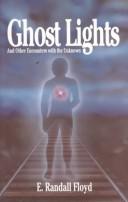
As an Amazon Associate, OverClassified may earn from qualifying purchases made through this link, at no extra cost to you.
Why This Is Essential Reading
Ghost Lights, and Other Encounters with the Unknown earns its place on this list as an earlier, professionally journalistic entry in the same comparative American ghost-light literature this site draws on for its own Brown Mountain Lights case file — valuable specifically for the wire-service correspondent's directness Floyd brought to a genre often dominated by less professionally grounded storytellers.
Related Cases & Theories
Sources Cited
- Floyd, E. Randall. Ghost Lights, and Other Encounters with the Unknown. August House Publishers, 1993 (ISBN-13 9780874833119). amazon.com
- "Ghost lights, and other encounters with the unknown." Internet Archive (full digitized copy, publication year, page count, thematic section breakdown). archive.org
- "E. Randall Floyd." Amazon Author Page (full biography: career, journalism background, bibliography). amazon.com
- "Ghost Lights: And Other Encounters With the Unknown." Goodreads (reader ratings and reviews). goodreads.com
- "Ghost Lights: And Other Encounters With the Unknown." AbeBooks (bibliographic listing). abebooks.co.uk
- "E. Randall Floyd." LibraryThing (author page, bibliography). librarything.com
- This site's own case file: Brown Mountain Lights, for the full mystery this book provides folklore and history context for.
- This site's own case file: The Great Airship Wave of 1896-1897, the "mysterious airships" case this book explicitly covers.
- This site's own essential-reading entry: Piedmont Phantoms, a companion comparative folklore title cited for the same case file.
- This site's own essential-reading entry: Spooklights, a companion comparative ghost-light survey cited for the same case file.
- This site's own key-figures entry: E. Randall Floyd, for his full biography and further case connections.
- August House Publishers, Little Rock, Arkansas (original publisher, specializing in Southern and American folklore and storytelling nonfiction). augusthouse.com
- "Ghost Lights, and Other Encounters with the Unknown." Google Books (bibliographic record). books.google.com
- "Ghost Lights: And Other Encounters With the Unknown." ThriftBooks (secondhand bookseller listing). thriftbooks.com
Have corrections, additional research, or peer-reviewed sources? Help improve this entry.
Suggest an Edit