
Piedmont Phantoms
Core Thesis
Piedmont Phantoms is Daniel W. Barefoot's regional folklore collection gathering one supernatural story from each of the forty counties in North Carolina's populous central Piedmont region, originally published in 2002 as the second volume of his three-book North Carolina's Haunted Hundred series and reissued in 2019 with a new foreword by WRAL's Scott Mason. On this site, it serves as comparative cultural context rather than direct investigative source material: this site's own Brown Mountain Lights case file cites it as "a regional North Carolina folklore collection including spook-light and unexplained-phenomena stories from across the Piedmont, useful comparative cultural context."
About the Author
Daniel W. Barefoot was born in Charlotte, North Carolina, on March 18, 1951, and graduated Phi Beta Kappa from the University of North Carolina at Chapel Hill in 1973 before earning his Juris Doctor from the UNC School of Law. His professional life spans law, politics, and folklore in roughly equal measure: he served three terms in the North Carolina House of Representatives, representing the 44th district from 1998 to 2002, and has more recently served as city attorney for Lincolnton, North Carolina.
Alongside his legal and political career, Barefoot built a substantial parallel body of work as a historian and folklorist, authoring roughly a dozen books including four North Carolina travel guides, a biography of Confederate general Robert Hoke, and Spirits of '76, a collection of Revolutionary War-era ghost stories. His self-described additional identity as a magician places him, like several other figures this site has covered, among a small group of paranormal-adjacent writers whose own background includes hands-on experience with staged illusion.
Barefoot's best-known work is the North Carolina's Haunted Hundred trilogy — Seaside Spectres (the coastal region), this book (the Piedmont), and Haints of the Hills (the mountainous west) — collectively drawing one ghost story from each of North Carolina's one hundred counties, a genuinely comprehensive folklore-collection project spanning the state's entire geography. All three volumes were reissued in 2019 under the Haunted North Carolina branding with new forewords by Scott Mason, WRAL television's long-running "Tar Heel Traveler" and author of three North Carolina guidebooks in his own right.
Barefoot's combination of legal training and folklore scholarship is an unusual pairing that shapes his approach across the trilogy: rather than presenting stories purely as entertainment, his background as a practicing attorney and elected legislator brings a documentarian's instinct for sourcing and attribution to material that, in less careful hands, might be presented with looser regard for provenance. His self-described work as a magician additionally gives him, like several other researchers this site has covered, a practitioner's understanding of how effects of apparent supernatural origin are staged and perceived.
Historical Context & Origins
The book was originally published in 2002 by John F. Blair, Publisher, a Winston-Salem-based press with a long-standing specialization in North Carolina and broader Southern regional history, folklore, and travel writing — the same publisher behind all three Haunted Hundred volumes and their later reissues.
The book's 2019 reissue, carrying the new Haunted North Carolina branding and Scott Mason's foreword, arrived roughly seventeen years after original publication, reflecting sustained publisher confidence in the trilogy's ongoing commercial and cultural relevance rather than a one-time regional curiosity.
As a folklore anthology built explicitly around county-by-county coverage — one story for each of the Piedmont's forty counties — the book documents the specific geographic distribution of North Carolina's ghost-story and unexplained-phenomena tradition at a level of comprehensiveness few other single volumes attempt, situating individual famous cases like the Brown Mountain Lights within a much larger regional storytelling ecosystem rather than presenting them as isolated curiosities.
North Carolina's Piedmont region itself, stretching from the state's central counties toward the foothills of the Blue Ridge Mountains, has a settlement history dating back to the 18th century, with many of the communities Barefoot draws stories from tracing continuous local oral tradition back multiple generations. That settlement depth gives the book's forty county-by-county entries a genuine historical range, from colonial and Revolutionary War-era legend through 20th-century reports, within a single unified regional survey.
Core Arguments & Key Concepts
The book's organizing premise treats regional ghost and spook-light folklore as a legitimate subject of serious documentation in its own right, gathering stories "told around campfires, in grandma's attic, and on nighttime drives on the backroads of the Piedmont" into a single durable published record rather than leaving them to informal oral transmission alone.
Barefoot's specific inclusion of "unidentified flying objects" alongside ghosts, witches, demons, and spook lights within the same forty-county survey reflects a broader folklore-studies approach that treats UFO reports as continuous with, rather than categorically separate from, older regional traditions of unexplained lights, hauntings, and supernatural encounters — a framing distinct from, but genuinely complementary to, more narrowly UFO-focused investigative literature.
Individual stories the book documents range widely in tone and subject, from "Capitol Haunts," the Wake County entry describing an unoccupied elevator moving between floors and unexplained sounds inside the North Carolina State Capitol building, to "Ghostly Legacy of the Swamp Fox," the Robeson County story concerning the spirits associated with the Revolutionary War figure who betrayed General Francis Marion — illustrating the collection's genuine range across historical eras and phenomenon types rather than a narrow focus on any single category of the supernatural.
A further entry, "The Hunter at the Zoo," the Randolph County story, exemplifies the collection's willingness to root supernatural legend in specific, named, verifiable local institutions rather than vague or unlocatable settings — a pattern consistent across the trilogy that gives even its more clearly legendary entries a concrete geographic anchor a reader could, in principle, visit and evaluate for themselves.
Many of the stories the publisher describes as "never before widely circulated in print" reflect Barefoot's own original fieldwork collecting oral testimony directly from residents across the Piedmont's forty counties, giving the collection independent documentary value as a folklore-preservation project beyond simply compiling previously published material.
The book's treatment of unidentified flying objects within a broader ghost-story anthology also reflects a specific editorial choice about audience and framing: rather than isolating UFO reports into a separate, more technically investigative context, as dedicated ufology literature typically does, Barefoot presents them to a general regional-folklore readership alongside witches, demons, and hauntings — a presentation that treats the reader's interest in unexplained phenomena as continuous across categories, rather than assuming UFO reports require a fundamentally different reading audience or evidentiary framework than a ghost story.
Key Cases & Evidence Discussed
This site's own Brown Mountain Lights (Case File #297, credible status, with recorded reports dating to at least September 13, 1913) is the case this site cites this book for directly, as comparative cultural context for how a specific, well-documented spook-light phenomenon like Brown Mountain's sits within North Carolina's much broader regional folklore tradition of unexplained lights, hauntings, and supernatural encounters that this book surveys across all forty Piedmont counties.
This site's own Marfa Lights (Case File #298, reports dating to January 1883) offers a useful out-of-state comparison for readers of this book: both Brown Mountain and Marfa represent long-running, place-specific American "ghost light" traditions predating modern UFO culture, each eventually accumulating both serious scientific investigation and the kind of enduring popular folklore this book's own county-by-county format is specifically designed to document and preserve.
Reading Brown Mountain specifically within this book's broader Piedmont context also highlights how unusual the case actually is relative to its surrounding folklore tradition: while most of the book's forty county entries concern one-time hauntings or single-location legends passed down through a small number of families or communities, Brown Mountain's lights have drawn sustained outside scientific attention going back to the 1922 USGS survey, a level of formal investigative interest few of this book's other entries have received — a distinction this book's own broad, egalitarian county-by-county format does not itself draw out, but which becomes clear when the Brown Mountain entry is read against its neighbors.
Critical Reception & Controversies
As a regional folklore title from a specialist Southern-interest publisher, the book has not attracted extensive mainstream literary review coverage, but its sustained commercial life — an original 2002 edition followed by a full 2019 reissue with new foreword across all three trilogy volumes — indicates consistent reader demand across nearly two decades.
The book's reputation rests substantially on Barefoot's own established credibility within North Carolina regional folklore and history writing specifically: a decade-spanning bibliography of North Carolina travel guides, historical biography, and folklore collections, plus his public profile as a former state legislator and practicing attorney, distinguish him from more anonymous or purely commercial ghost-story compilers.
Scott Mason's 2019 foreword, contributed by a working North Carolina broadcast journalist with his own independent reputation for statewide travel and human-interest reporting, functions as a form of updated editorial endorsement, situating the reissued trilogy within contemporary North Carolina media and travel culture rather than treating it as a fixed historical artifact.
No source located during this article's research disputes the book's basic folkloric accuracy or Barefoot's good-faith documentation of the oral traditions it records; as with any folklore collection, individual stories necessarily reflect community memory and storytelling tradition rather than independently verified fact, a limitation inherent to the genre rather than a specific flaw in this book's execution.
The 187-page length of the original edition, covering forty separate county stories, necessarily limits each individual entry's depth — readers seeking the kind of exhaustive single-case investigation Joe Nickell brings to Brown Mountain specifically in Real-Life X-Files will find this book's format oriented instead toward breadth across the whole Piedmont region, a genre difference rather than a shortcoming relative to more narrowly focused investigative titles.
Influence & Legacy
This exact title is cited in this site's own Brown Mountain Lights case file's Further Reading section as useful comparative cultural context, distinguishing its role there from the more directly investigative sources like Joe Nickell's Real-Life X-Files that this site cites for the case's evidentiary record specifically.
As part of the broader North Carolina's Haunted Hundred trilogy, this book contributes to a genuinely comprehensive statewide folklore-preservation project — one story from each of North Carolina's one hundred counties across all three volumes — that few other American states have received in comparably systematic published form.
The trilogy's 2019 reissue under new branding, alongside Barefoot's continued output of related titles, suggests the collection continues actively shaping how North Carolina's regional ghost-story and spook-light traditions are packaged and preserved for new generations of readers, tourists, and researchers rather than functioning purely as a historical snapshot of its original early-2000s publication moment.
Barefoot's broader bibliography of North Carolina travel guides also gives this book and its two companion volumes a practical afterlife beyond pure reading entertainment: readers using his guidebooks to plan actual travel through the Piedmont's forty counties can encounter the same local folklore this book documents as part of a broader regional-tourism and heritage-preservation ecosystem, connecting supernatural storytelling directly to the same kind of place-based cultural identity this site's own Bonnybridge and Brown Mountain coverage has both documented in other contexts.
The Book
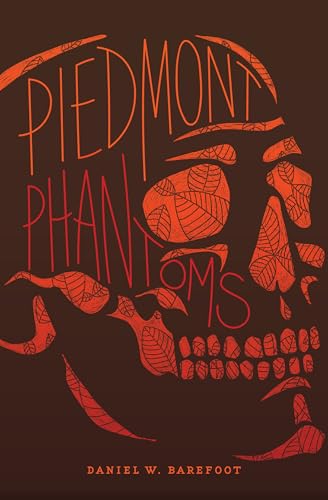
Piedmont Phantoms
Find on Amazon →As an Amazon Associate, OverClassified may earn from qualifying purchases made through this link, at no extra cost to you.
Why This Is Essential Reading
Piedmont Phantoms earns its place on this list not as investigative UFO literature but as valuable comparative folklore context: it situates this site's own Brown Mountain Lights case file within North Carolina's much broader regional tradition of documented ghost stories, spook lights, and unexplained phenomena, helping readers understand why a single famous mystery like Brown Mountain sits atop a far larger, systematically preserved body of local supernatural storytelling.
Related Cases & Theories
Sources Cited
- Barefoot, Daniel W. Piedmont Phantoms. John F. Blair, Publisher, 2002 (2019 Haunted North Carolina reissue, ISBN-13 9781949467147). amazon.com
- "Piedmont Phantoms." Blair Publisher (official publisher page, description, notable stories). blairpub.com
- "Piedmont Phantoms." Goodreads (original 2002 publication date, page count, reader ratings). goodreads.com
- "Piedmont Phantoms (North Carolina's Haunted Hundred, Volume 2)." Amazon (original edition bibliographic listing). amazon.com
- "Haints of the Hills: North Carolina's Haunted Hundred Mountains." Goodreads (trilogy context, third volume). goodreads.com
- "Seaside Spectres." Blair Publisher (trilogy context, first volume). blairpub.com
- "Piedmont Phantoms." AbeBooks (bibliographic listing, cover art source). abebooks.com
- This site's own case file: Brown Mountain Lights, for the full mystery this book provides folklore context for.
- This site's own case file: Marfa Lights, for a comparative American "ghost light" tradition.
- This site's own essential-reading entry: Real-Life X-Files, Joe Nickell's more directly investigative treatment of Brown Mountain and other paranormal claims.
- This site's own key-figures entry: Daniel W. Barefoot, for his full biography and further case connections.
- North Carolina General Assembly, biographical record of Daniel W. Barefoot's service in the North Carolina House of Representatives, 44th district, 1998–2002.
Have corrections, additional research, or peer-reviewed sources? Help improve this entry.
Suggest an Edit